Choosing the right size for a polyester rug can significantly impact both the look and functionality of your space. A well-proportioned rug helps define areas, anchor furniture, and enhance comfort while maintaining a visually balanced layout. Whether you need a small accent piece or a large area rug, selecting the right dimensions ensures that your rug complements the room rather than overwhelming or underwhelming it.
In this article, we’ll walk you through essential size considerations, room-specific recommendations, and practical tips to help you find the perfect polyester rug for your home. By understanding these key factors, you can choose a rug size that blends style and functionality.

Assessing the Space
To choose the right size for a polyester rug, start by carefully assessing your space. Measure the area where the rug will be placed, taking into account the room’s dimensions and fixed elements such as doorways, vents, and built-in furniture. Accurate measurements help ensure the rug fits proportionally; neither too small to feel disconnected nor too large to overwhelm the layout.
Next, consider how the rug will interact with your furniture. The right rug size should help define the layout, whether it’s anchoring a seating area, framing a dining setup, or creating structure within an open-plan space. Thoughtful placement can make the room feel more balanced and cohesive, rather than fragmented.
It’s also important to think about how the space is used. Larger rugs work well in areas where comfort and coverage are priorities, while more compact sizes are better suited for transitional spaces like entryways or hallways. By aligning rug size with both layout and function, you can choose a polyester rug that fits naturally within the room and enhances its overall flow.

Common Rug Sizes
Choosing the right size for a polyester rug starts with understanding how different dimensions affect coverage, scale, and proportion within a space. Each size interacts differently with the room, influencing how open, balanced, or grounded it feels. Knowing these distinctions helps you select a rug that fits naturally within your layout.
Small Polyester Rugs
Small polyester rugs, typically around 3' x 5' to 4' x 6', provide minimal coverage and are best suited for compact areas or as accents. Their smaller scale works well in entryways, under small tables, or beside a bed, where they add warmth without dominating the space. They’re also ideal for introducing texture or color in a subtle, proportional way.
Medium Polyester Rugs
Medium polyester rugs, commonly sized 5' x 8' or 6' x 9', provide moderate coverage, making them a great fit for smaller living areas or bedrooms. They can help establish a defined zone while still allowing surrounding floor space to remain visible, maintaining a balanced, open feel. This size works well when you want structure without fully covering the room.
Large Polyester Rugs
Large polyester rugs, such as 8' x 10' or 9' x 12', provide substantial coverage and help unify larger areas. Their size allows multiple pieces of furniture to sit comfortably within the rug’s boundaries, creating a more cohesive and well-proportioned layout. This makes them ideal for spaces where you want the rug to unify the entire area.
A great example of this is Edward Martin’s Haverford Rug in Platinum / Bronze, as featured in the photo above, which anchors the entire seating arrangement. By extending beneath the sofa, chairs, and coffee table, it visually connects each element, reinforcing a balanced and integrated living space while adding warmth and subtle texture.
Oversized Polyester Rugs
Oversized polyester rugs, typically 10' x 14' and larger, like our Pascal Rug in Brick / Multi, can maximize coverage and create a fully integrated look. They extend across most of the floor, reducing visual breaks and making the room feel more expansive and seamless. This size works best in large or open-plan spaces where a seamless, continuous look is desired.

Room-Specific Guidelines
Once you’ve chosen a general size, the next step is to determine how the rug should be placed within each room. Proper positioning, spacing, and clearance ensure the rug fits comfortably around furniture while supporting both function and flow.
Living Room
In the living room, the rug should be positioned to align with the seating arrangement. Ideally, it fits under all furniture, or at a minimum, beneath the front legs of sofas and chairs. This placement creates consistent spacing and ensures the rug integrates naturally with the layout rather than feeling separate.
As seen with our Hutchinson Polyester Face Rug in Burgundy / Khaki, featured above, this approach helps create a cohesive, grounded look while adding warmth and texture to the space. In open-concept layouts, a well-placed rug can also define the seating area, making it feel more structured and inviting.
Dining Room
For dining areas, the rug should extend at least 24 inches beyond all sides of the table. This allows enough clearance for chairs to move in and out without catching on the edges. Proper spacing ensures both functionality and a clean, well-framed look around the dining set.
Bedroom
In bedrooms, the rug is typically positioned under the bed, extending evenly on the sides and foot. This creates balanced spacing and ensures soft coverage where it’s most needed. Alternatively, runners can be placed alongside the bed to provide comfort without requiring a larger rug.
Hallways and Entryways
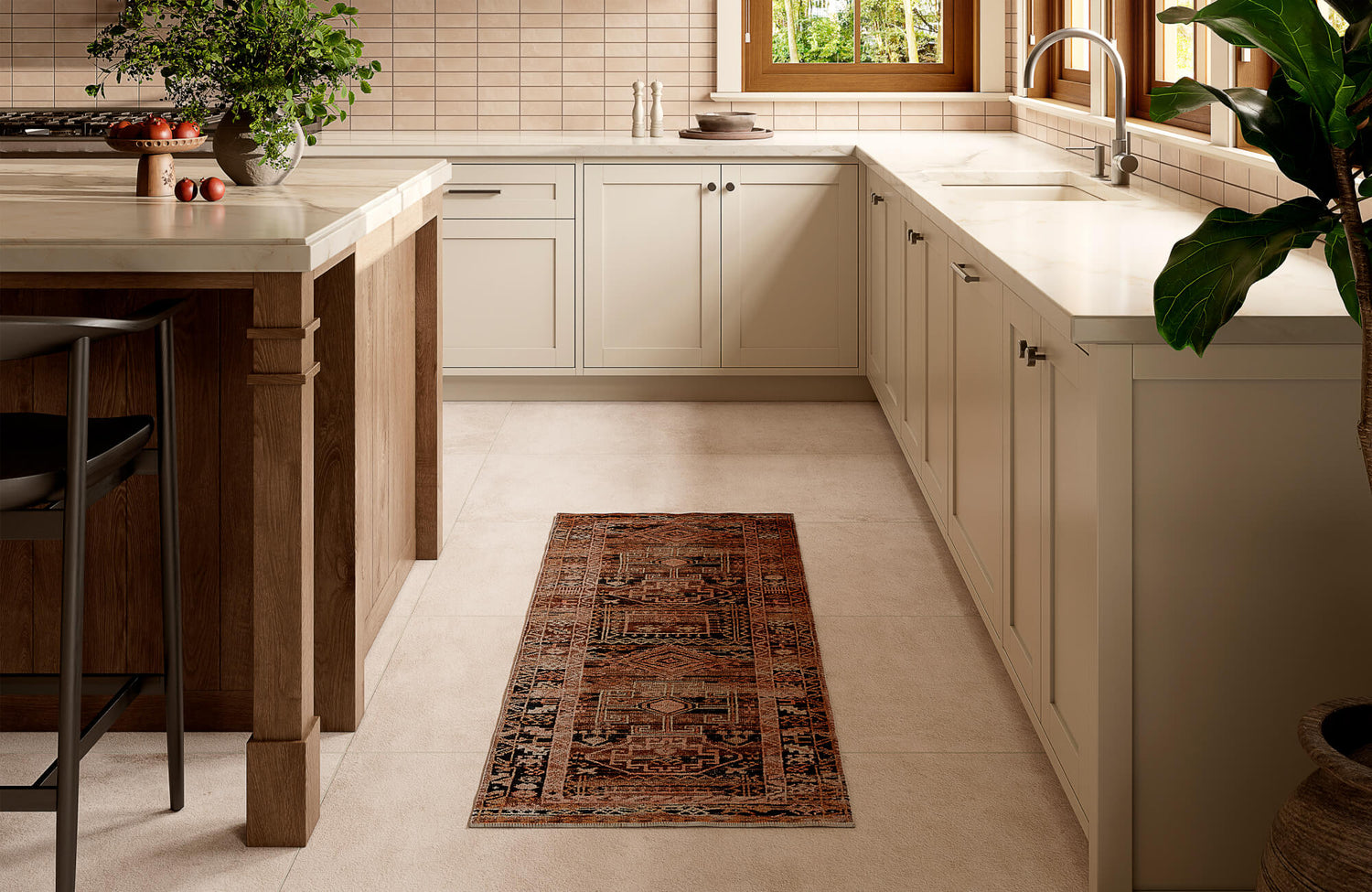
In hallways, runner rugs should be centered with even spacing on both sides to maintain proper proportion. A runner such as the Charlise Rug in Natural / River works well in this setting, offering a balanced fit within narrow layouts while adding warmth. In entryways, the rug should fit comfortably within the space while allowing doors to open freely. Ensuring adequate clearance around edges helps maintain both function and visual balance.

Additional Factors to Consider
Beyond size and placement, a few additional factors can influence which polyester rug size works best in your space. Elements like shape and pile height affect how a rug fits around furniture, interacts with the layout, and supports everyday use. Considering these details helps ensure your chosen size feels both practical and visually balanced.
Rug Shape and Pile Height
Rug shape plays an important role in how a chosen size fits within a room. Rectangular rugs are the most common and work well for anchoring furniture layouts. Round or oval rugs are better suited for smaller or more open areas where softer edges help maintain flow. Square rugs, on the other hand, are ideal for symmetrical layouts, where proportions need to feel even and balanced. Choosing the right shape ensures the rug size complements the room rather than disrupting its layout.
Pile height also influences how practical a rug size is for a given space. Low-pile polyester rugs are better for larger or frequently used areas, as they allow for easier movement and fit well under furniture. This is well illustrated by Edward Martin’s Pascal Rug in Platinum / Mist, as featured in the photo above, which has a 0.25-inch pile height offering a smooth, low-profile surface ideal for maintaining clearance and ease of movement. High-pile rugs, while softer and more comfortable, are often better suited to smaller or more relaxed spaces where clearance and movement are less of a concern. Matching the pile height and the rug size further helps ensure both comfort and functionality.
Considering Multiple Rugs
Using multiple rugs can also help when a single size doesn’t suit the layout. In larger rooms, using multiple rugs helps define separate zones, such as a seating area and a reading nook—without relying on a single oversized piece. This approach gives more flexibility in choosing sizes that better match each section of the space.
When layering rugs, it’s important to maintain proportion and spacing. Each rug should fit comfortably within its designated area without overlapping too much or leaving awkward gaps. Keeping sizes balanced ensures the overall layout feels cohesive rather than cluttered.
Choosing the Perfect Rug Size for Your Space
Choosing the right size for a polyester rug starts with understanding your space, furniture layout, and the level of coverage you need. By measuring carefully and choosing a size that fits comfortably in the room while allowing for proper spacing and placement, you can achieve a balanced and well-proportioned look.
Considering factors like layout, function, and even shape or pile height also helps ensure the rug works seamlessly in your space. With the right approach, you can confidently choose a polyester rug size that enhances both comfort and overall design. If you need guidance, feel free to contact us or explore our design services—our team is here to help you find the perfect fit.