Choosing the right rug size for a queen bed plays an important role in how well the bed fits within the room and how comfortable the space feels day to day. The size you choose affects what areas of the floor are covered, how the bed is visually anchored, and how the surrounding furniture relates to it. In this article, we’ll walk you through how rug size influences layout, placement, and everyday use, helping you understand what works best for different room sizes and furniture arrangements so you can choose a piece that fits your space with confidence.

Queen Bed Dimensions and Layout Basics
Before choosing a rug size, it’s important to understand how a queen bed relates to the bedroom as a whole. When you see how the bed, its frame, and the surrounding floor space interact, rug decisions become clearer and feel more intentional rather than uncertain.
Standard Queen Bed Measurements
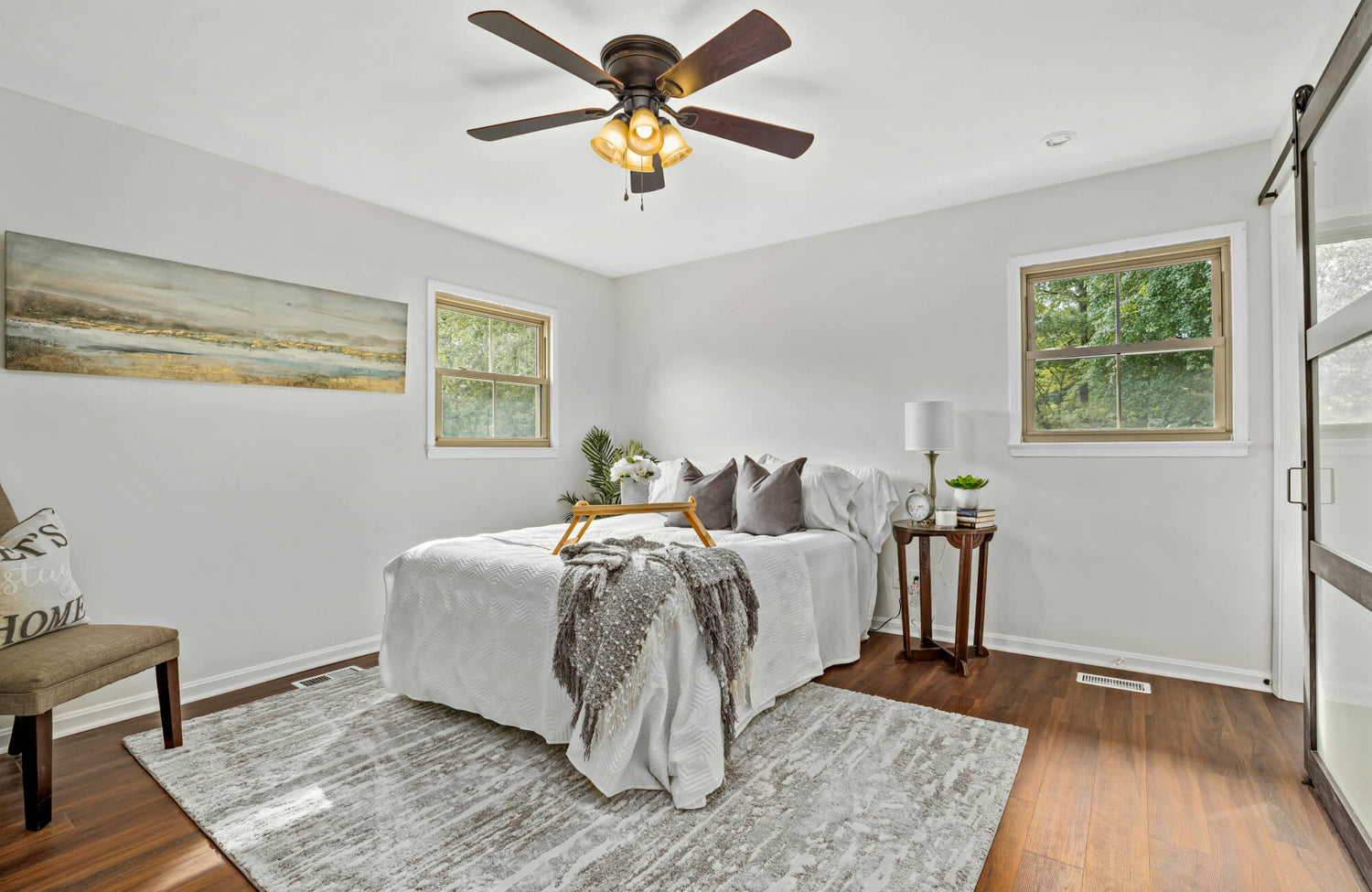
A standard queen mattress measures 60 inches wide by 80 inches long, but it does not fully represent the bed’s visual footprint. Most bed frames add extra width and length, particularly upholstered or platform styles with broader rails or extended headboards. This is clearly illustrated in the photo featured above, where the Hutchinson Rug in Sage / Graphite extends beyond the full bed frame rather than stopping at the mattress edge, helping the bed feel properly anchored within the space. When planning for a rug, it helps to look at the entire bed, not just the mattress. Overlooking the frame can lead to a rug that feels too small or appears misaligned once the bed is fully in place.
How Clearance Space Affects Rug Sizing
Aside from the bed itself, the surrounding floor space plays an equally important role. As you move around the bed, especially along the sides and at the foot, having enough coverage makes the space feel more comfortable and usable. When a rug extends into these areas, it reads as intentional and supportive. In contrast, if it stops too close to the bed, it can feel abrupt underfoot and visually disconnected from the layout.
Room Shape and Bed Orientation
The shape of the room plays a subtle yet important role in rug sizing. For example, in a long rectangular room, a rug that echoes that shape helps the bed feel centered and well placed. In contrast, in a square room, slightly wider rug proportions help prevent the bed from feeling confined. Likewise, when the bed is centered on the main wall, symmetry comes naturally. If it is positioned off-center because of windows or doors, the rug can help restore visual balance.

Popular Rug Size Options for Queen Beds
Once the room basics are clear, it becomes easier to explore specific rug sizes. Each option creates a distinct feel underfoot and frames the bed differently. The right choice depends on how much coverage you prefer and how spacious the room feels overall.
8x10 Rugs
An 8×10 rug is often the smallest size that works comfortably with a queen bed. It usually extends beyond the sides and foot of the bed without overpowering a modest bedroom. This size works well in more compact spaces, helping the rug anchor the bed visually while maintaining balance. When positioned carefully, it also adds softness where you step most often without covering more floor area than needed.
As an example, a piece like our Haverford Rug in Platinum / Bronze offers sufficient coverage around a queen bed while keeping the room feeling open and well-proportioned.
9x12 Rugs
A 9×12 rug creates a more expansive feel and is often a natural fit for primary bedrooms with additional space. The generous coverage on all visible sides of the bed helps the room feel grounded and cohesive. This size allows the rug to define the sleeping area rather than simply sit beneath the bed. It also provides ample surface underfoot, making the space feel more comfortable and intentional as you move around the bed.
For a room that benefits from this broader scale, our Davies Rug in Ash / Sand is a fitting example, offering wide coverage that supports the bed and surrounding furniture while maintaining a calm, balanced look.
Oversized Rugs Beyond Standard Dimensions
In larger bedrooms, standard rug sizes can sometimes feel limiting. Oversized rugs allow the bed and surrounding furniture to sit comfortably within a single, unified zone. This approach is especially useful when the bedroom includes additional elements such as seating or a bench at the foot of the bed. Rather than leaving furniture visually separated on a bare floor, an oversized rug helps bring the space together in a calm, cohesive way.

Rug Placement Styles That Change the Look of the Room
Rug size alone does not determine how it feels in a bedroom. Placement is just as important, and even small adjustments in positioning can noticeably change the overall look and balance of the space.
Fully Under the Bed Placement
Placing a rug fully under the bed creates a strong sense of symmetry and structure. This approach works particularly well when the bed is the primary focal point. By extending evenly on all sides, the rug acts as a visual foundation that reinforces balance. It also ensures that each step around the bed lands on a soft surface, enhancing the overall comfort.
Two Thirds Under the Bed Placement
A two-thirds placement positions the rug beneath the lower portion of the bed, leaving the headboard and upper frame off the rug. This option is practical when you want a strong visual presence without committing to a very large rug. It works particularly well in rooms with limited floor space near the headboard wall. When aligned with care, it offers coverage where it matters most while keeping the layout feeling intentional and well resolved.
Side and Runner Rug Alternatives
In some rooms, particularly those with tighter dimensions or unconventional layouts, a full rug under the bed may not be the most practical option. In these situations, side rugs or runners can soften the areas along the bed edges without interfering with doors or built-in features. They also allow you to introduce texture and warmth without committing to a single large rug. When used thoughtfully, they add comfort where you stand while keeping the room feeling flexible and visually open.
In a layout where runners make more sense than a full area rug, Edward Martin’s Charlise Rug in Cream / Fog is a practical choice; it can add softness along the sides of a queen bed while keeping the space feeling light and unobtrusive.

Matching Rug Size to Bedroom Size and Proportions
A rug should relate not only to the bed but to the room as a whole. When proportions are off, even a well-chosen rug can feel out of place. By focusing on scale, the rug can support the bedroom’s layout rather than compete with it.
Small Bedrooms with Queen Beds
In smaller bedrooms, restraint plays an equally important role. A rug that is too large can crowd the space, while one that is too small may feel disconnected from the layout. Choosing a size that extends just beyond the bed adds comfort without overwhelming the rest of the floor. With thoughtful placement, a smaller room can feel more intentional and less constrained.
Medium to Large Bedrooms
As room size increases, there is more opportunity for generous rug borders. Wider extensions can help anchor the bed so it does not feel lost within the open space. This added coverage creates a stronger visual connection between the bed and the surrounding furniture. In these rooms, the rug can clearly define the sleeping area, bringing a sense of order and calm to the larger footprint.
Ceiling Height and Visual Weight
Ceiling height subtly influences how a rug is perceived within a bedroom. For example, in bedrooms with higher ceilings, larger rugs help ground the space and keep it from feeling bottom-heavy. In doing so, the added presence near the floor helps balance the room vertically. By contrast, in rooms with standard ceiling heights, a well-proportioned rug maintains balance without adding unnecessary visual weight near the floor.

Functional Comfort Considerations Beyond Visual Appeal
While appearance matters, comfort and everyday use are just as important. A well-sized rug should support how you use the space, not just how it looks.
Morning Step Comfort Zones
One of the easiest ways to evaluate rug size is to notice where your feet land when you get out of bed. A rug that extends far enough to catch that first step makes mornings feel more comfortable and less abrupt. This area can be thought of as a comfort zone, and its size plays a key role in how well the rug supports daily use. Otherwise, when the rug falls short, the transition from bed to floor can feel noticeably less inviting.
Noise Reduction and Insulation
Rugs also influence how a bedroom sounds and feels, particularly in multi-level homes. Larger rugs can help soften sound and add an insulating layer underfoot. Over time, this added softness can make the room feel more comfortable and settled. As a result, the space feels quieter and warmer, supporting rest without drawing attention to the rug itself.
Furniture Stability and Rug Edges
Proper rug sizing helps keep furniture steady and rug edges flat. For instance, when nightstands or benches sit partially on a rug, uneven support can lead to wobbling or curled edges. As a result, both comfort and visual flow within the space can be disrupted. By contrast, a rug that comfortably accommodates surrounding furniture stays in place more reliably and feels more integrated within the room.

Choosing Rug Size Based on Bedroom Furniture Layout
While the bed is often the centerpiece, it is rarely the only piece of furniture in the room. A rug that complements the rest of the layout helps the space feel deliberate and complete.
Nightstands and Rug Alignment
Whether nightstands sit fully on the rug or completely off it depends on the rug size and overall layout. What matters most is maintaining consistency. This can be seen in the photo above, where Edward Martin’s Hutchinson Rug in Graphite / Olive aligns cleanly with the bed while the nightstand sits just outside its edge, creating a balanced, orderly look. When both nightstands relate to the rug in the same way, the room feels visually calm and intentional rather than pieced together. This approach also simplifies placement decisions and avoids uneven visual weight on either side of the bed.
Benches and Ottomans at the Foot of the Bed
Furniture at the foot of the bed adds another layer to consider when choosing rug size. In this context, a rug that extends far enough to include this piece helps define the sleeping area as a cohesive zone. It also creates a stronger visual flow between the bed and the surrounding furniture. By contrast, when the rug stops short, the bench or ottoman can feel disconnected from the rest of the arrangement.
Dressers and Seating Areas
In bedrooms with dressers or small seating areas, rug placement can either separate or connect different zones. In some cases, it makes sense for the rug to remain focused on the bed. In others, allowing it to extend into nearby areas creates a more unified layout. The right approach depends on how you use the room from day to day.
Making the Right Rug Size Choice for Your Queen Bed
Choosing the right rug size for your queen bed begins with understanding how the bed fits within the room and how you use the space day to day. In most bedrooms, rugs in the 8x10 to 9x12 range work well, with the best option shaped by room size, furniture placement, and the amount of floor coverage you prefer. When the rug complements the bed, supports movement around it, and aligns with the overall layout, it naturally enhances comfort and visual balance. By considering proportions, placement, and function together, you can choose a rug size that makes the bedroom feel cohesive, comfortable, and thoughtfully designed.
If you would like guidance tailored to your space, our design services can help you determine the right rug size and placement with confidence. Contact us to work with a design expert who can help bring your bedroom layout together in a way that feels both functional and well considered.