An inviting patio begins with outdoor dining chairs that balance comfort, durability, and refined design. From all-weather teak and powder-coated aluminum to woven resin and performance fabrics, the right patio dining chairs enhance both the functionality and visual atmosphere of outdoor living spaces. Choosing high-quality outdoor dining furniture requires careful consideration of material longevity, patio proportions, climate compatibility, and overall outdoor aesthetics. When thoughtfully selected, seating helps create an outdoor dining environment that feels cohesive, sophisticated, and naturally connected to the surrounding architecture.

Leticia Dining Chair in Cream pairs its softly curved upholstery effortlessly with the sleek black dining table, while its streamlined silhouette and open-frame proportions create a balanced outdoor dining arrangement complemented by Sloane 24x24 Matte Porcelain Tile in Pebble
Start With The Right Patio Layout And Chair Proportions
Outdoor dining chairs should complement the patio's scale, circulation, and architectural composition. Thoughtful furniture placement allows outdoor dining spaces to feel more open, organized, and visually connected to the surrounding environment.
Defining Dining Zones Within The Patio
Outdoor dining chairs help establish clear functional zones within the patio, shaping how the space is used throughout the day. Dining areas positioned near outdoor kitchens or grilling stations often benefit from streamlined chair arrangements that support smoother movement between preparation and seating zones. Meanwhile, patios intended for extended social gatherings may incorporate more substantial silhouettes that visually anchor the dining table within the larger outdoor setting. Consistent chair spacing also improves circulation while preserving a cleaner, more structured layout. Organizing outdoor seating according to movement flow and entertaining function creates a patio environment that feels intentional and well-composed.
Scaling Outdoor Dining Chairs To Patio Size
The proportions of outdoor dining chairs should align carefully with the dimensions of the patio to prevent the arrangement from appearing visually crowded. For instance, compact balconies and smaller patios generally benefit from slimmer chair profiles and open-frame construction that maintain visual lightness throughout the space. Armless silhouettes also allow additional seating capacity while preserving comfortable circulation around the dining table. In larger outdoor environments, broader seating proportions can establish a stronger architectural presence without overwhelming the surrounding layout. Maintaining consistency between furniture scale and patio dimensions helps create a more balanced and visually integrated outdoor composition.
Coordinating Dining Chairs With Outdoor Tables
Outdoor dining chairs should relate proportionally to the dimensions, materials, and overall visual weight of the dining table itself. Chairs that appear overly bulky beside a narrow table can disrupt the overall composition, while undersized seating may feel disconnected within larger dining arrangements. Matching finishes such as teak, powder-coated aluminum, or woven resin also strengthen continuity across the patio environment. In addition, seat height and arm clearance should align with the table structure to preserve comfortable functionality during meals. When dining chairs and tables feel proportionally connected, the entire outdoor arrangement appears more refined and intentionally curated.
Maintaining Comfortable Circulation Around Dining Areas
Outdoor dining layouts should allow enough circulation space for guests to move comfortably around the table without disrupting nearby seating or architectural features. Maintaining approximately 36 inches of clearance around dining arrangements generally improves accessibility while preserving a more open visual flow throughout the patio. Chairs with oversized frames or wide armrests may also restrict movement in narrower outdoor environments, particularly near pathways or entry points. Moreover, lightweight dining chairs can simplify repositioning during gatherings when seating arrangements need to adapt to changing group sizes. Prioritizing circulation alongside furniture placement allows outdoor entertaining spaces to feel more comfortable, efficient, and visually organized.

Marinell Outdoor Dining Chair in Faux Hyacinth pairs well with the sculptural Linea Round Dining Table in Bone, 63", as its woven texture and solid wood frame demonstrate how natural materials can complement outdoor environments
Choose Materials That Match Your Patio Style And Outdoor Conditions
Material selection influences not only the appearance of outdoor dining chairs but also how they age within different environmental conditions. Choosing durable outdoor furniture materials helps preserve both structural integrity and long-term patio aesthetics.
Aluminum Outdoor Dining Chairs
Powder-coated aluminum remains one of the most widely used materials in modern outdoor dining furniture because it combines lightweight maneuverability with strong corrosion resistance. Unlike ferrous metals, aluminum does not rust when exposed to humid or moisture-rich outdoor environments. High-quality aluminum dining chairs also often feature welded frame construction that improves long-term rigidity and minimizes structural movement over time. Electrostatic powder-coating systems further create a protective barrier against ultraviolet exposure, oxidation, and surface abrasion. These characteristics allow aluminum outdoor dining chairs to integrate seamlessly into contemporary patio settings while maintaining a clean architectural appearance.
Teak Outdoor Dining Chairs
Teak outdoor dining chairs are valued for their dense hardwood composition and naturally occurring oils that help resist moisture and environmental wear. For example, grade-A teak harvested from mature heartwood offers greater dimensional stability and reduced susceptibility to cracking or warping over time. As the wood gradually oxidizes under sunlight exposure, it develops a soft silver-gray patina associated with luxury outdoor furnishings. Mortise-and-tenon joinery further reinforces structural consistency while highlighting traditional woodworking craftsmanship. These qualities allow teak outdoor dining chairs to balance organic warmth with enduring outdoor performance across a wide range of patio styles.
Wicker And Resin Wicker Dining Chairs
Wicker-style outdoor dining chairs introduce texture and visual softness into patio environments while maintaining a relaxed and approachable aesthetic. Modern resin wicker constructed from high-density polyethylene offers greater resistance to fading, cracking, and moisture absorption compared to natural woven fibers. Handwoven HDPE wicker wrapped around powder-coated aluminum frames further improves structural consistency within humid or sun-exposed outdoor conditions. Open-weave constructions also encourage airflow, allowing seating surfaces to remain cooler during warmer weather. Because of their layered texture and casual sophistication, resin wicker dining chairs integrate especially well within coastal and resort-inspired patio designs.
Polywood And Recycled Plastic Chairs
Polywood outdoor dining chairs are manufactured from recycled high-density polyethylene engineered to resist moisture, splintering, and salt-air exposure. Unlike painted wood furniture, color pigmentation extends throughout the material itself, allowing scratches and surface wear to remain less visually apparent over time. This nonporous composition also minimizes maintenance requirements because the material does not require sealing or refinishing. In addition, polywood furniture maintains structural consistency even in climates exposed to frequent rain or fluctuating temperatures. These characteristics make recycled plastic outdoor dining chairs especially practical for homeowners seeking low-maintenance outdoor seating with lasting visual durability.

Calandor Outdoor Dining Chair in Vintage White pairs beautifully with Verdanta Outdoor Dining Table in Aged Grey, 60" as its sculptural woven silhouette and all-weather construction complement outdoor environments exposed to sunlight and changing seasonal conditions
Consider Your Climate Before Selecting Outdoor Dining Chairs
Environmental exposure strongly influences how outdoor dining furniture performs and ages over time. Selecting materials suited to specific climate conditions helps preserve both appearance and long-term patio functionality.
Coastal Outdoor Spaces
Coastal patios expose outdoor furniture to salt-laden air and persistent humidity that can accelerate corrosion on unprotected surfaces. Marine-grade aluminum and stainless steel are often preferred because they resist oxidation more effectively under saline environmental conditions. Teak also performs exceptionally well near coastal regions due to its naturally dense grain structure and oil-rich composition. Resin wicker materials further minimize moisture absorption while maintaining flexibility and color consistency under direct sunlight. These climate-adapted materials allow coastal outdoor dining spaces to maintain both visual refinement and long-term reliability.
Humid Outdoor Environments
High humidity levels increase the likelihood of trapped moisture, mildew formation, and surface deterioration across outdoor furnishings. Quick-drying sling seating and breathable woven materials help improve airflow while reducing prolonged moisture retention after rain or condensation. Solution-dyed fabrics also maintain greater color stability within humid climates compared to standard upholstery textiles. In addition, powder-coated aluminum and HDPE resin materials reduce the risk of swelling, cracking, or environmental degradation caused by excess moisture exposure. Incorporating moisture-conscious outdoor furniture materials further helps patios remain cleaner, more comfortable, and visually composed throughout humid seasons.
Sunny And Open-Air Patios
Patios exposed to prolonged sunlight require outdoor dining chairs engineered for ultraviolet stability and surface temperature control. Lighter furniture finishes, for instance, reflect solar radiation more effectively, helping seating surfaces remain cooler during direct sun exposure. UV-stabilized coatings also preserve color integrity while minimizing fading and brittleness over time. Breathable sling fabrics and woven seating systems further support airflow, allowing outdoor dining arrangements to remain more comfortable during warmer conditions. Together, these environmental adaptations contribute to a patio environment that remains functional and visually refined throughout extended sun exposure.

Vetra Dining Chair pairs effortlessly with the Maris Teak Rectangular Dining Table, 96" x 42" as its airy metal frame, rope-wrapped arm detailing, and tailored cushions introduce layered texture and contemporary contrast that complement the table’s warm architectural teak form within a cohesive patio design
Style Outdoor Dining Chairs Within The Patio Design
Outdoor dining chairs should contribute to the overall visual language of the patio rather than functioning as isolated furniture pieces. Coordinated styling allows outdoor dining spaces to feel layered, cohesive, and architecturally intentional.
Matching Outdoor Dining Chairs To Patio Design Styles
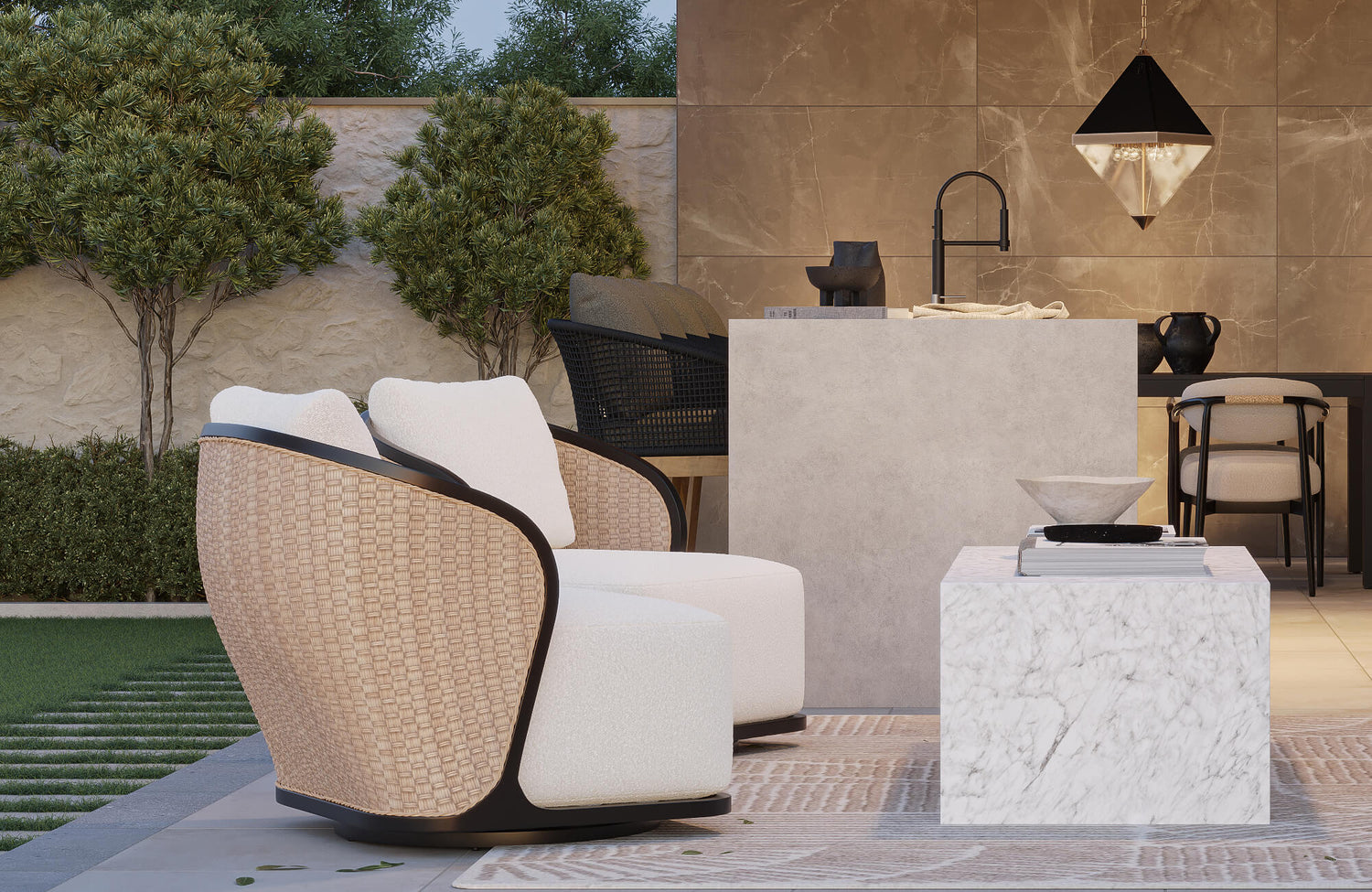
Contemporary patios often emphasize streamlined silhouettes, matte finishes, and restrained material palettes that support a clean architectural aesthetic. Coastal and resort-inspired outdoor spaces typically incorporate woven textures, light-toned finishes, and softer organic forms that feel airy and relaxed. Transitional patio environments frequently blend these styles by combining teak, rope weaving, and powder-coated aluminum within a balanced material composition. Rustic spaces may also feature slatted hardwood construction and warmer, earthy tones that reinforce traditional craftsmanship. Aligning outdoor dining chairs with the broader architectural vocabulary of the patio establishes greater material continuity throughout the space.
Mixing Outdoor Dining Chair Styles For Visual Depth
Layering multiple outdoor dining chair styles within the same arrangement can introduce greater visual dimension and a more curated atmosphere. One common approach involves placing larger captain’s chairs at each end of the dining table while using slimmer side chairs along the perimeter. Combining woven textures with smoother metal finishes also creates a subtle contrast without disrupting overall continuity. Neutral upholstery palettes and consistent seat heights further help unify varied silhouettes within a cohesive dining composition. These layered seating arrangements establish a patio environment that feels more collected, balanced, and professionally styled.
Selecting Outdoor Furniture Finishes And Color Palettes
Finish selection influences both the visual character and material continuity of outdoor dining spaces. Neutral palettes such as greige, charcoal, sand, and soft white provide greater adaptability across evolving outdoor décor styles while maintaining timeless appeal. Matte powder-coated finishes additionally diffuse light more softly while concealing fingerprints and minor surface wear more effectively than glossy alternatives. Natural teak introduces organic warmth that contrasts beautifully against stone, concrete, or woven textures commonly found within patio environments. When coordinated carefully, these finishes establish a sophisticated outdoor atmosphere with greater visual depth and architectural cohesion.
Designing An Outdoor Dining Space That Feels Cohesive And Inviting
Choosing the best outdoor dining chairs involves balancing material longevity, patio proportions, climate compatibility, and overall outdoor aesthetics. Thoughtfully selected seating enhances not only functionality but also the visual continuity of the surrounding outdoor environment. From compact balconies to expansive entertaining patios, outdoor dining chairs should feel proportionally integrated within the broader architectural composition of the space. Investing in durable outdoor dining furniture with carefully coordinated finishes and materials ultimately helps create a patio environment that feels refined, welcoming, and designed for lasting open-air living.
For homeowners seeking a more personalized approach to patio styling, Edward Martin’s design services can help create outdoor dining spaces that feel cohesive, elevated, and thoughtfully curated. To explore material selections, furniture coordination, and layout recommendations tailored to your space, contact us for expert outdoor design guidance!