The backsplash may seem like a small detail, but it plays a big role in how your bathroom vanity looks and performs. More than just a stylish accent, it shields the wall from daily splashes, soap residue, and moisture damage while framing the vanity as a centerpiece. The right choice ties together countertops, fixtures, and mirrors, turning a functional area into a polished design feature. In this article, we’ll explore what makes a backsplash important, the best materials and styles to consider, and how to choose one that perfectly complements your vanity.

What Is a Bathroom Vanity Backsplash?
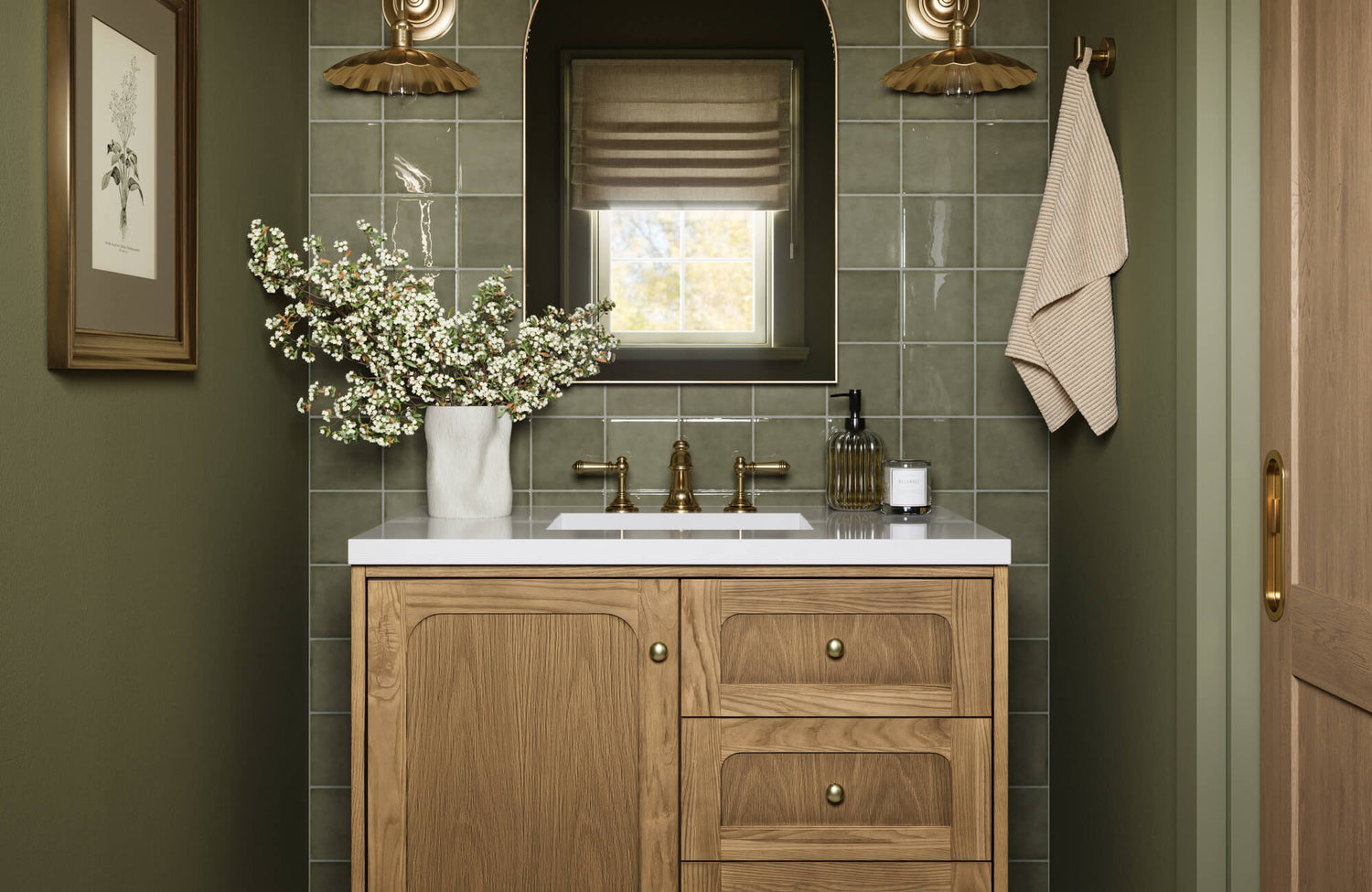
A bathroom vanity backsplash is more than just a decorative accent; it’s a practical feature designed to protect and define the space around your sink. By acting as a barrier, it shields the wall from splashes, soap residue, and daily wear that come with regular use. At the same time, it frames the vanity, giving it a more finished and intentional look. This combination of function and design is what makes the backsplash an essential part of bathroom planning, and a great example of this can be seen above with our Abigail 48" Single Vanity in Light Natural Oak with 3 cm White Zeus Quartz Top paired with the Maisie 4x4 Glossy Ceramic Tile in Pistachio.
The primary purpose of a backsplash is to guard against moisture damage while visually anchoring the vanity. Since bathrooms are exposed to water more often than any other room, even small splashes can lead to stains, peeling paint, or mold if the wall is left unprotected. A well-placed backsplash prevents those issues while outlining the vanity as a focal point. In this way, it serves both a protective and stylistic role. The result is a bathroom that feels polished and durable at the same time.
When it comes to size, backsplashes can range from the common 4-inch strip to a full wall extension that runs up to the mirror. The standard option is subtle and functional, offering just enough protection while keeping the focus on the vanity itself. A taller backsplash, however, creates a more dramatic effect, especially when it spans the entire wall behind the vanity. This approach not only emphasizes the height of the room but also reinforces the vanity as the centerpiece. Choosing between these coverage styles depends on how much impact you want the backsplash to have in your overall design.

Matching Your Vanity With the Right Backsplash
The backsplash should always complement the vanity rather than compete with it. A thoughtful pairing ties the entire bathroom together, making the vanity feel like a natural focal point. Below, we’ll look at how style, materials, and hardware choices influence the right backsplash for your space.
Vanity Style (Modern, Traditional, Transitional)
The style of your vanity sets the tone for the backsplash you choose. A sleek, modern vanity often works best with clean-lined backsplashes that emphasize simplicity, while traditional vanities pair well with classic tiles or designs that add depth and character. Transitional styles fall in between, offering flexibility with backsplashes that combine timeless appeal and subtle modern touches. For example, a transitional vanity with shaker doors might look best with a neutral tile that has soft detailing. This alignment ensures the vanity and backsplash create a unified look.
A great example, as seen above, is our Bridgette 72" Double Vanity in Whitewashed Oak with 3 cm White Zeus Quartz Top, paired with the Maisie 2.5x16 Glossy Ceramic Tile in Ocean. Together, they highlight how a transitional vanity style can achieve balance when matched with a backsplash that feels both fresh and timeless.
Countertop Materials (Quartz, Marble, Wood, etc.)
Your countertop material should guide the look and feel of your backsplash. Quartz counters, with their sleek and consistent patterns, often pair best with backsplashes that add texture or contrast. Marble, with its dramatic veining, benefits from simpler backsplash choices that won’t compete visually. For wood counters, a backsplash that highlights warmth and complements the natural tones creates a balanced finish. This pairing ensures the vanity feels cohesive from top to bottom.
It’s also worth considering whether the countertop material itself can extend upward as the backsplash. Quartz and marble slabs, for example, are often used for both surfaces to create a seamless and luxurious effect. Tile, on the other hand, can introduce variety while still supporting the countertop’s color scheme. For wood tops, a backsplash made of tile or stone provides protection while preventing a heavy, overly natural look. Each choice should highlight the countertop while completing the overall vanity design.
Coordinating With Fixtures and Hardware
Fixtures and hardware act as the finishing touches that connect the vanity and backsplash. Faucets, handles, and even mirror frames all influence which backsplash design feels most at home. For instance, polished chrome fixtures pair seamlessly with glossy tiles, while matte black hardware often looks best with softer, textured finishes. Brass or bronze fixtures add warmth, making them a natural partner for backsplashes with earth tones or warm stone. Matching these details ensures every element speaks the same design language.
Small hardware details can also inspire backsplash accents. A vanity with brushed nickel pulls, for example, can be tied together with a backsplash that incorporates subtle metallic accents or cooler tones. Conversely, bold fixtures may require a more understated backsplash so they remain the focal point. Thinking about these connections avoids visual clutter and creates a space that feels thoughtfully curated. When fixtures, hardware, vanity, and backsplash all work together, the bathroom design feels complete and balanced.

Popular Materials for Vanity Backsplashes
Materials shape both the look and the practicality of a bathroom vanity backsplash. The right choice balances durability, water resistance, and design harmony with your vanity. Below are some of the most reliable and stylish options to consider.
Ceramic and Porcelain Tile
Ceramic and porcelain tile are among the most popular backsplash choices thanks to their versatility and water resistance. They’re easy to clean, affordable, and available in countless shapes and finishes to suit different vanity styles. Porcelain, in particular, offers extra durability, making it ideal for high-moisture bathrooms. These tiles also handle daily splashes without staining or warping. For homeowners who want both practicality and variety, ceramic and porcelain remain a dependable choice.
Natural Stone (Marble, Quartzite, Granite)
Natural stone backsplashes bring a timeless, upscale look while also offering strength and durability. Marble provides elegance with dramatic veining, while granite and quartzite deliver toughness that withstands heavy use. These materials naturally resist water but may require sealing to maintain their protective qualities. When paired with vanities, stone adds texture and depth that instantly elevates the design. While more maintenance is involved, the luxury feel is often worth it for many homeowners.
Glass Tile
Glass tile creates a reflective surface that enhances brightness around the vanity. It’s naturally resistant to water and stains, which makes it a hygienic and low-maintenance option. The glossy finish also adds depth and a clean, modern feel to bathroom designs. Because glass tiles reflect light, they can help smaller bathrooms feel more open and airy. Their combination of style and practicality makes them a smart choice for vanities in both compact and larger spaces.
Quartz or Engineered Stone Slabs
Quartz and other engineered stone slabs are valued for their consistency, strength, and low maintenance. They’re non-porous, which means they resist water, staining, and bacteria; perfect for busy family bathrooms. Many homeowners choose to extend their quartz countertop into the backsplash for a seamless, cohesive look. This creates a streamlined effect while simplifying cleaning routines. With durability and elegance combined, quartz slabs are a highly practical match for modern vanities.

Style and Design Considerations
Beyond protection, the backsplash plays a big role in defining how the vanity is perceived as a design feature. The right choices in color, pattern, and placement can elevate the vanity from a simple fixture to the visual centerpiece of the bathroom. Here are some ways to ensure your backsplash adds both personality and harmony.
Color and Pattern Choices
Color and pattern are often the first things people notice about a backsplash. Neutral tones create a clean backdrop that allows the vanity to stand out, while patterned or textured tiles can inject personality and depth. For example, soft grays or whites work well with bold vanities, while mosaics or geometric patterns can liven up simpler designs. Coordinating shades with the vanity’s countertop and cabinetry ensures cohesion without overwhelming the space. The goal is to make the backsplash feel integrated rather than disconnected.
Balancing Bold vs. Subtle Styles
Choosing between a bold or subtle backsplash depends on how much emphasis you want the vanity area to carry. Bold designs with striking colors or patterns can make the vanity wall the focal point of the room. Subtle backsplashes, on the other hand, keep the look streamlined and let other design elements, such as fixtures or mirrors, take center stage. For instance, a dramatic stone backsplash pairs well with minimalist vanities, while simple subway tile balances ornate cabinetry. Striking the right balance ensures the bathroom feels cohesive rather than cluttered.
How Backsplashes Frame the Vanity Mirror
The backsplash also influences how the vanity mirror is perceived, since the two often sit side by side. A backsplash that extends up to or around the mirror creates a seamless, framed effect that highlights both elements. This approach can draw the eye upward, making the bathroom feel taller and more open. On the other hand, stopping the backsplash just below the mirror creates a cleaner, more understated look. Either way, the relationship between the backsplash and the mirror plays a key role in shaping the vanity’s presence.

Practical Tips for Installation and Care
Even the most stylish backsplash won’t deliver its full value without proper installation and maintenance. Paying attention to the way it’s fitted, sealed, and cleaned ensures it not only looks good but also lasts for years to come. Here are some practical considerations to keep in mind when planning a backsplash for your vanity.
DIY vs. Professional Installation
Installing a backsplash can seem straightforward, but the level of detail often makes a professional a safer choice. A contractor ensures accurate measurements, clean cuts, and proper sealing, which are especially important in moisture-heavy bathrooms. DIY installation is possible, but it requires patience and the right tools, particularly if you’re working with delicate or patterned materials. Mistakes in alignment or sealing can shorten the lifespan of the backsplash. Choosing between DIY and professional work comes down to skill level, budget, and how important precision is to the final design.
Grout, Sealants, and Moisture Protection
Grout and sealants are just as important as the tile or slab itself in protecting the wall behind your vanity. High-quality grout helps prevent water from seeping between tiles, while sealants provide an additional layer of defense against stains and moisture. For natural stone, sealing is especially critical to avoid discoloration or damage over time. Even with non-porous materials like porcelain, proper grouting prevents mold or mildew from developing. Regularly checking and maintaining these elements keeps your backsplash looking sharp and performing well.
Cleaning and Long-Term Care
Routine cleaning is essential for keeping a backsplash fresh and functional. Non-abrasive cleaners are best, since harsh chemicals can damage finishes or weaken grout lines. For example, a mild soap solution or a vinegar-and-water mix works well for most tile surfaces. Wiping down the backsplash regularly helps prevent buildup from toothpaste, soap, or water spots. With consistent care, your backsplash will continue to protect your vanity wall while maintaining its polished look.

When to Consider a Full Wall Backsplash
Sometimes a small strip of backsplash isn’t enough to highlight the vanity or protect the walls behind it. Extending the backsplash to cover the full wall can add drama, durability, and a more polished look. Below are a few situations where this approach makes the most sense.
Compact Bathrooms That Need a Bigger Statement
In smaller bathrooms, a full wall backsplash can visually expand the space and make the vanity area stand out. Covering the entire wall draws the eye upward, creating a sense of height and openness. This bold design choice also eliminates the break between countertop and mirror, producing a seamless finish. For example, extending tile or stone behind a floating vanity can make the bathroom feel more upscale. In compact spaces, the full wall effect helps the vanity become a striking focal point.
Family Bathrooms With Heavy Moisture Use
Bathrooms that see a lot of activity often benefit from more coverage behind the vanity. Splashes from kids, constant handwashing, and daily routines put extra stress on walls, and a full backsplash provides better protection. By extending coverage, you reduce the risk of water stains, peeling paint, or hidden moisture damage. It also makes cleaning easier, since the wall is shielded by a non-porous surface. For busy family homes, this option adds peace of mind along with style.
Creating a Spa-Like Look Above the Vanity
A full wall backsplash can also transform an ordinary bathroom into a spa-inspired retreat. Extending materials like marble, glass, or textured tile behind the vanity creates a luxurious, immersive look. This design choice pairs especially well with vessel sinks or statement mirrors, where the backdrop enhances the overall atmosphere. For instance, a full slab of quartz behind the vanity gives the bathroom a calming, high-end feel. If your goal is a relaxing, spa-like environment, a full wall backsplash delivers both elegance and impact.
Making the Right Choice for Your Vanity
The backsplash you choose for your bathroom vanity should strike the right balance between practicality and design. From protecting walls against daily splashes to framing the vanity as a centerpiece, the right backsplash makes a noticeable difference in both function and style. Whether you prefer a subtle 4-inch strip or a dramatic full-wall treatment, your choice sets the tone for how the vanity fits within the entire bathroom.
If you’re unsure where to begin, a design consultation can help you narrow down options that work best with your vanity’s style, countertop, and fixtures. Our team will guide you through materials, finishes, and layouts so your backsplash doesn’t just protect—it elevates the overall look of your bathroom. With the right plan, your vanity area can combine durability, ease of care, and timeless beauty in one cohesive design.