Explore the best ways to care for your bathroom vanity top, so it stays clean, polished, and damage-free for years to come. Whether you’re working with natural stone, wood, or a solid surface, each material has its own care needs that go beyond the occasional wipe-down.
In this guide, we’ll walk through simple daily habits, weekly routines, and the products to use (and avoid) depending on your vanity top’s surface. You’ll also find seasonal care tips and signs it’s time to call in a pro, so your bathroom stays both functional and looking its best.

Understand Your Vanity Top Material First
Every vanity surface has its own care needs depending on what it’s made of. Some materials handle moisture or cleaners better than others, so it’s worth knowing what you’re working with. This way, you can maintain both its function and finish for the long run.
Quartz Vanity Tops
Quartz is known for its durability and resistance to stains, making it a low-maintenance option for busy bathrooms. Since it doesn’t require sealing, it’s ideal for those who want a straightforward cleaning routine. Still, it’s important to avoid harsh or abrasive products, as these can dull the surface over time and leave behind a cloudy finish. A pH-balanced cleaner and a soft microfiber cloth are usually all you need for daily upkeep.
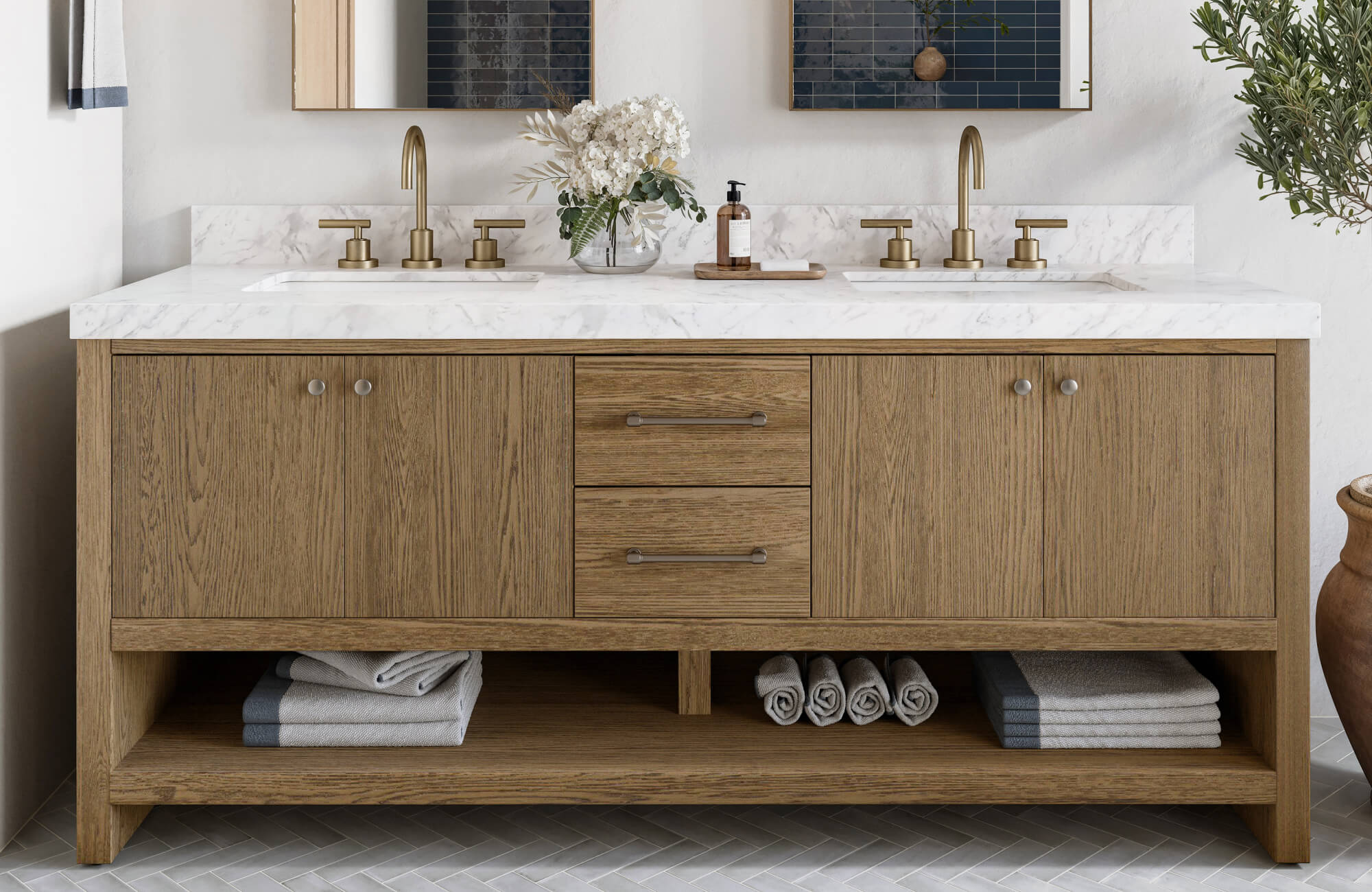
Also, quartz is heat-resistant but not heatproof. Setting hot curling irons or straighteners directly on the surface can lead to permanent discoloration or cracking. It’s a good idea to use a trivet or heat pad for any hot tools. With simple habits, quartz surfaces like our 3 cm White Zeus Quartz Top on the Delilah 72" Double Vanity in Seaside Oak, as seen above, can retain their shine and function for many years.
Marble Vanity Tops
Marble adds timeless beauty and elegance, but it comes with more delicate care needs than engineered surfaces. Its porous nature makes it vulnerable to staining and etching, especially from acidic substances like toothpaste, lemon juice, or some skincare products. Because of this, it’s important to clean up spills immediately and avoid using general household cleaners. A stone-safe, pH-neutral product paired with a soft cloth is your best daily companion.
To maintain marble’s finish over time, regular sealing is a must. The sealant helps create a barrier against moisture and stains, but it does wear down with use. Check yearly to see if water still beads on the surface—if not, it’s time to re-seal. With proper attention, marble can stay beautiful without becoming a maintenance headache.
One beautiful example of manageable marble style is our Gemma 36" Single Vanity in Washed Blonde Oak Veneer with Carrara Marble Top. It’s crafted with a solid oak frame, softened by curved corners and vintage-inspired spindle legs. The integrated marble sinktop, moisture-resistant sealant, and compact 36" width make it ideal for smaller bathrooms, balancing form and function with ease.
Granite Vanity Tops
Granite offers a strong, durable option for vanity tops, and its naturally varied patterns can bring character to any bathroom. It stands up well to most daily use and is less likely to scratch or chip than softer stones. That said, it still benefits from occasional sealing to protect against moisture seepage and long-term wear. Using mild soap and water or a stone-specific cleaner is usually enough for daily maintenance.
Even though granite is hard, it’s best to steer clear of harsh chemicals like bleach or acidic cleaners, as they can erode the protective sealant. For tougher spots, try a paste of baking soda and water rather than something abrasive. With minimal effort, granite can offer years of resilience and style.
Porcelain Vanity Tops
Porcelain is a highly practical choice for bathrooms thanks to its non-porous surface and resistance to staining. It handles everyday splashes, spills, and personal care products with ease. Cleaning is simple; use a non-abrasive cloth or sponge and a mild cleaner to keep the finish looking fresh. If something sticks, a bit of diluted vinegar or baking soda paste usually does the trick without damaging the glaze.
Although durable, porcelain isn’t immune to damage. It can chip or crack if a heavy object falls directly on the surface, so be mindful of handling items like glass jars or tools near the sink. Still, for most homeowners, porcelain’s ease of care and sleek appearance make it a reliable long-term pick.
Solid Surface Vanity Tops
Solid surface countertops are made from acrylic or resin composites, giving them a seamless look that’s ideal for modern bathrooms. They’re mold- and mildew-resistant, which is a big plus in humid spaces. Daily cleaning requires nothing more than a soft cloth and a gentle all-purpose cleaner. They’re also repairable; light scratches or scuffs can often be buffed out with a household product or fine abrasive pad.
However, solid surface materials can be more vulnerable to heat and scratching than natural stone. Always use a heat pad for hot styling tools and avoid cutting directly on the surface. With proper care, these countertops strike a good balance between easy maintenance and visual appeal.
You can see the practical benefits of this material in our Easton 72" Double Vanity in Whitewashed Walnut with Glossy White Composite Stone Top. The composite stone top is designed to resist stains and mildew while offering a crisp, modern finish. Our Easton vanity delivers clean lines and long-lasting function, ideal for larger bathrooms that balance style and everyday utility.
Wood Vanity Tops
Wood offers a rich, warm look that adds character to bathrooms, but it requires a bit more care than other materials. Because it’s porous and sensitive to moisture, sealing is essential to keep water from soaking in and causing stains or swelling. Even with sealing, you should quickly wipe up any standing water or spills. Use a wood-specific cleaner to keep the finish looking its best without drying it out.
Humidity can also affect wood over time, so it’s best for bathrooms with good ventilation. Try to keep the space well-ventilated to avoid warping or mold. If you love the look of natural materials and are willing to stay on top of upkeep, a wood vanity top can be a beautiful and rewarding choice.
Why Material Matters for Long-Term Maintenance
The material of your vanity top affects everything from cleaning routines to long-term durability. For instance, porous surfaces like marble and wood require more upkeep and attention, while engineered options like quartz and solid surface offer easier maintenance. The finish also plays a role, matte surfaces may hide fingerprints but show buildup more easily, while glossy ones highlight streaks or scratches.
Also, different materials react to cleaners and moisture in very specific ways. Using the wrong product can shorten the lifespan of your vanity top or lead to costly repairs down the line. By understanding your material’s unique needs early on, you can extend its appearance and performance for years to come.

Daily Habits That Keep Your Vanity Looking New
A few mindful habits each day can help keep your vanity top in excellent shape. Routine care not only prevents long-term damage but also preserves the finish and overall look. Small efforts now save you time and trouble later.
Wipe Spills Immediately—Especially Around Faucets
Moisture tends to collect around faucet bases and sink edges, which can lead to water spots, mildew, or even surface warping if ignored. Quickly drying these areas with a soft cloth after each use helps prevent buildup and protects more delicate materials like wood or marble. For instance, wiping away toothpaste drips or water splashes right after brushing makes your vanity easier to maintain overall. It's a simple habit that pays off in both appearance and durability.
Use Soft Cloths and Non-Abrasive Cleaners
Choosing the right cleaning tools matters just as much as the cleaners themselves. Soft microfiber cloths are ideal for gently removing dirt and residue without scratching the surface. Non-abrasive, pH-balanced sprays help maintain shine, especially on materials like quartz, porcelain, or solid surface tops. Avoid rough sponges or gritty cleaners, as they can dull or etch your vanity finish over time.

Best Products to Use (and Avoid) on Your Vanity Top
Using the right products makes a big difference when it comes to preserving your vanity’s appearance and durability. Certain materials react differently to common cleaners, so knowing what’s safe (and what’s too harsh) helps you avoid accidental damage.
Mild Dish Soap and Warm Water
A mix of mild dish soap and warm water is one of the safest daily cleaning solutions for most surfaces, including quartz, ceramic, and laminate. It effectively lifts everyday grime without wearing down finishes or leaving behind residue. For best results, use a soft cloth or sponge to gently wipe the area and then dry it with a clean towel.
Also, avoid overly hot water and harsh scrubbing pads that can dull polished surfaces or cause micro-scratches over time. This method is great for quick cleanups, especially in shared bathrooms, without relying on stronger chemicals that may be unnecessary for light messes.
pH-Neutral Stone Cleaners
If your vanity top is made of natural stone like marble or granite, pH-neutral stone cleaners are your best bet. These formulas help clean without etching or dulling the finish, which is especially important for porous materials that are prone to staining. They’re also a good fit for quartz surfaces, which don’t need sealing but still benefit from gentle care.
Avoid acidic options like vinegar, lemon-based solutions, or anything bleach-heavy. These can wear down sealants and even discolor natural stone over time. Using the right cleaner consistently helps extend the lifespan of your stone surface and keeps it looking vibrant.
Microfiber Cloths and Soft Sponges
Cleaning tools matter just as much as the cleaners you use. Microfiber cloths and soft sponges are ideal for wiping down vanity tops because they’re gentle, effective, and don’t scratch even polished finishes. They're also reusable, making them a smart and sustainable option.
Avoid stiff brushes, steel wool, or textured scrub pads, these can leave permanent marks or remove surface sealants. Also, rinse cloths thoroughly before reuse to prevent spreading debris or grit that might scratch more delicate materials like marble or laminate.
Baking Soda for Gentle Spot Treatment
Baking soda can be a helpful tool for treating toothpaste splatters, soap residue, or light stains, especially on ceramic or laminate surfaces. Mix it into a paste with a bit of water and apply it sparingly to the affected spot, then gently rub and rinse clean.
That said, don’t let the mixture dry on the surface, especially if you're working with more porous stone. Overuse or improper application can cause surface dullness or buildup, so it's best reserved for occasional touch-ups rather than everyday cleaning.

Weekly and Monthly Cleaning Tips
A regular routine helps you stay ahead of grime and buildup. Tailoring your cleaning habits to your vanity top’s material keeps it in good shape and prevents long-term issues. These weekly and monthly check-ins are also a great time to catch small signs of wear, like loose caulk, early stains, or dull spots, before they turn into more expensive problems.
On a weekly basis, focus on areas that tend to collect residue, such as grout lines, faucet bases, and corners. These spots often trap dried toothpaste, soap, or skincare products that don’t always get wiped up during daily cleanups. A soft-bristle brush, like an old toothbrush, can help loosen buildup gently. This quick habit also cuts down on deeper scrubbing later.
Each month, take a little more time to spot-clean and assess your vanity’s overall condition. For example, if any minor stains remain, a baking soda and water paste can lift them from non-porous materials without scratching. Just don’t let the paste dry out, and always rinse well to avoid a cloudy film. Avoid harsh cleaners like bleach or rough scrubbers; they might deliver fast results, but they can damage the finish or seal over time.

What to Avoid When Cleaning Your Vanity Top
Small cleaning habits can make a big impact, especially when they go wrong. Understanding what to avoid is just as important as knowing the right steps, helping you protect your vanity top from avoidable damage over time.
Harsh Chemicals and Abrasive Tools
Strong cleaning agents like bleach, ammonia, or acidic products can break down sealants or leave dull patches on stone surfaces. These ingredients may also cause discoloration or clouding, especially on polished or glossy finishes. Likewise, abrasive tools, such as steel wool or stiff scrub brushes, can leave behind tiny scratches that collect grime and make the surface harder to clean in the future. Even a single harsh scrub can compromise the top layer of protection on your vanity. It’s always safer to reach for soft cloths and gentle cleaners, even when tackling tough messes.
Letting Water Pool or Soak at Seams
Standing water may seem harmless at first, but over time, it can seep into seams, edges, or unsealed areas, especially on wood or solid surface vanities. This moisture can cause swelling, warping, or mold growth beneath the surface. It’s particularly risky around faucets and backsplashes where water tends to collect unnoticed. For instance, a slow drip or splash zone left unwiped can lead to damage that isn’t visible until it becomes a bigger problem. Make a habit of wiping down damp areas regularly, especially after use.

Seasonal and Annual Maintenance
Even low-maintenance vanity tops benefit from periodic attention. Seasonal upkeep, like resealing or surface checks, helps catch minor issues before they become bigger problems. These small steps go a long way in preserving both the look and durability of your bathroom vanity.
When and How to Reseal Natural Stone Tops
Natural stone surfaces like marble and granite should be resealed regularly to maintain their resistance to stains and moisture. A simple at-home test, like placing a few drops of water on the surface, can help you know if it’s time. If the water absorbs quickly instead of beading, that’s your cue to reseal. You don’t need to DIY the whole process either, there are professionals who specialize in resealing stone safely and efficiently. Also, staying ahead of this step helps extend your vanity’s lifespan and avoids costly repairs later.
Inspecting for Cracks, Loose Caulk, or Mold
It’s a good habit to scan your vanity top seasonally for small cracks, lifting caulk, or early signs of mold. Focus on areas around seams, backsplash joints, and faucet bases where moisture tends to collect. For instance, discoloration or a musty smell near caulking can signal hidden mold. Also, loose caulk can let in water that weakens the adhesive or damages the substrate over time. Catching these details early allows for quicker fixes and often means you can skip bigger, messier repairs down the road.

When to Call a Professional
Some vanity issues are simply too risky or complex to handle on your own. Whether it’s structural damage or signs of deeper wear, knowing when to involve a pro can make all the difference. In many cases, professional help ensures the fix lasts and protects your bathroom investment.
Signs Your Vanity Top Needs Professional Repair
If you spot warping, deep-set stains that won’t lift, or cracks that extend across the surface, it might be time to call in an expert. These signs often point to underlying issues like water damage, failed sealants, or structural movement beneath the top. Also, loose joints or separating backsplash seams may seem minor, but can lead to much larger problems if left unchecked. A professional can assess whether the material can be salvaged or if replacement is the better option. Acting early helps prevent further damage and saves you from more expensive repairs down the line.
Benefits of a Pro Touch for Long-Term Results
Bringing in a specialist means you get more than just a quick fix; you get precision work that’s tailored to your surface. Professionals have the right tools and techniques to restore shine, re-seal stone properly, and handle refinishing without damaging the material. For example, they can level out uneven spots or reinforce weakened joints with long-lasting adhesives. Also, when dealing with unique or older vanities, their experience ensures subtle issues aren’t missed. If you’re unsure about the condition of your vanity top, expert insight often gives you peace of mind and a cleaner finish.
Keep Your Vanity Top Looking Its Best
Caring for your bathroom vanity top doesn’t have to feel like a chore, as long as you understand your material and stick to a routine. With the right habits, gentle products, and occasional upkeep, you can keep your surface looking clean, smooth, and damage-free for years. Whether you're working with natural stone, porcelain, or wood, small daily and monthly steps make a lasting difference.
If you’re planning a bathroom upgrade or need help choosing a material that fits your lifestyle, our design team is here to guide you. Contact us to book a design consultation and get expert advice tailored to your space, style, and maintenance needs.