



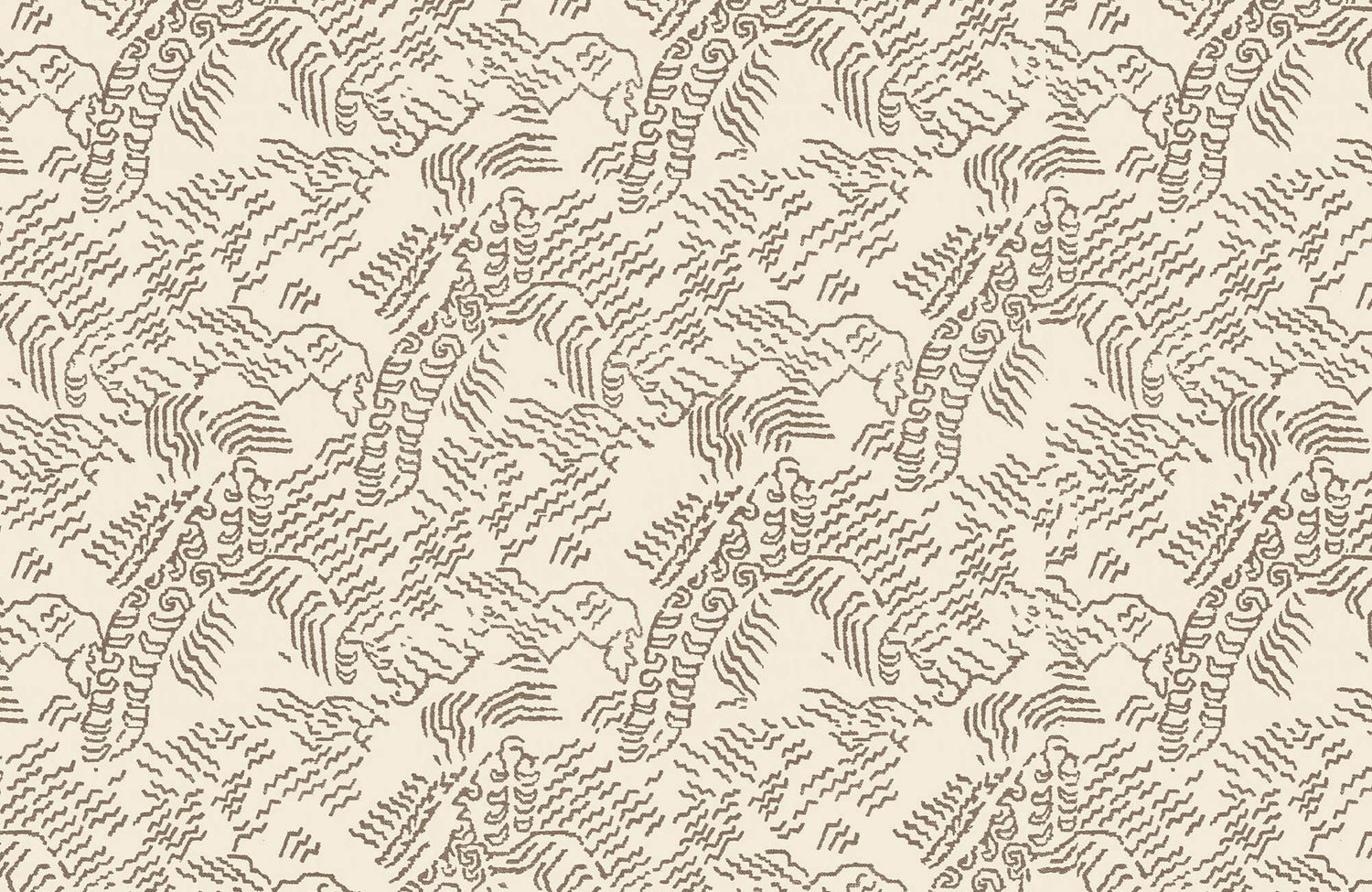
Modern wallpaper offers a refined way to shape a room through texture, pattern, color, and scale. From woven grasscloth effects and embossed surfaces to metallic details, botanical prints, and mural-style designs, today’s wallcoverings bring depth and character that go beyond a standard painted finish.
The cost to install modern wallpaper depends on the material, wall size, room layout, surface condition, and installation labor. A peel-and-stick accent wall is typically more affordable than a full-room application with grasscloth, textured wallpaper, or a custom mural, making it important to understand the main cost factors before planning a wallpaper installation budget.

Litchfield Wallpaper in Tan brings a warm grasscloth-inspired texture to the wall, showing how modern wallpaper can create a high-end look while keeping the overall design clean, versatile, and budget-conscious
Average Cost To Install Modern Wallpaper
The average cost to install modern wallpaper typically ranges from $500 to $1,500 for many standard residential projects. Smaller accent walls may cost around $200 to $400, while larger rooms, full-room applications, or premium wallcovering projects can reach $2,000 or more.
On a square-foot basis, professional wallpaper installation often ranges from about $5 to $10 per square foot, including labor and standard installation requirements. Simpler projects with basic materials may fall between $3 and $8 per square foot, while detailed pattern matching, tall walls, wallpaper removal, surface repair, and specialty adhesives can raise the total cost.
Because wallpaper is installed in panels or rolls, the final budget should also include a material allowance. Even with accurate measurements, extra wallpaper is often needed for trimming, alignment, and future repairs, especially when working with directional prints, murals, or noticeable pattern repeats.

Windsor Wallpaper in Olive I, a kind of traditional paste wallpaper, highlights how material, pattern, and finish can shape the look and cost of modern wallpaper, with its tailored stripe design adding depth to a polished dining space
Wallpaper Material Costs By Type
Wallpaper material plays a major role in the overall cost because each product has a different price point, durability level, and installation method. Basic wallpaper and peel-and-stick options are usually more affordable. In contrast, vinyl, grasscloth, textured wallpaper, metallic finishes, and custom murals tend to cost more because they require more careful handling and, in many cases, more specialized installation.
Peel-and-Stick Wallpaper
Peel-and-stick wallpaper is usually one of the more budget-friendly modern wallpaper options. Material costs typically range from $1 to $4 per square foot, while total installed costs, including labor, may range from about $2 to $6 per square foot. For a small accent wall, this can place the project around $200 to $400, depending on the wall size and product quality.
This type of wallpaper comes with a self-adhesive backing, so it does not require traditional paste. It is often used for rental spaces, accent walls, nurseries, home offices, and other areas where flexibility matters. Although it can reduce labor costs and may be suitable for DIY installation, it still needs a clean, smooth, and dry wall surface to adhere properly.
Traditional Paste Wallpaper
Traditional paste wallpaper generally costs more to install than peel-and-stick wallpaper because it requires adhesive application, careful panel placement, and more technical handling. Standard paper or non-woven wallpaper may cost around $2 to $5 per square foot installed, depending on the product, wall condition, and labor rate. For a standard room, this can often place the total project in the $500 to $1,500 range.
Depending on the product, adhesive may also be applied directly to the wall or to the wallpaper backing before installation. This process requires control over paste coverage, booking time, seam alignment, trimming, and drying behavior. Traditional wallpaper is commonly used in bedrooms, dining rooms, foyers, living rooms, and other areas where homeowners want a more permanent and polished wall treatment.
Vinyl Wallpaper
Vinyl wallpaper usually falls in the mid-range for modern wallpaper costs. Installed pricing may range from about $3 to $8 per square foot, depending on the thickness, backing type, and finish. Vinyl-coated wallpaper installation is commonly estimated at around $3.70 to $8.20 per square foot, including labor and materials.
Vinyl wallpaper is known for its durability, washability, and resistance to everyday wear, making it a practical choice for kitchens, bathrooms, laundry rooms, mudrooms, hallways, and other busy areas. Some vinyl wallcoverings have a paper backing, while others use fabric backing or solid vinyl construction. Heavier vinyl products may require stronger adhesive and more careful seam work, especially in rooms exposed to humidity.
Grasscloth and Natural Fiber Wallpaper
Grasscloth and natural fiber wallpaper are typically among the more expensive wallcovering options. Material and installation together can often range from about $6 to $15 per square foot, depending on the fiber, weave, backing, and installer experience. Because these materials are delicate and more difficult to handle, a grasscloth project can easily move toward the higher end of a standard wallpaper budget or exceed $1,500 in larger rooms.
These premium wallcoverings are made from materials such as jute, sisal, hemp, raffia, seagrass, or other woven fibers. They bring organic texture and natural variation to a room, but they also require careful installation because adhesive can stain the surface, and seams are often more visible. For this reason, grasscloth is best suited if you want texture, depth, and an artisanal finish rather than perfect pattern uniformity.
Textured, Metallic, or Specialty Wallpaper
Textured, metallic, embossed, flocked, cork, silk, mural, and other specialty wallpapers usually sit at the higher end of the cost range. Installed pricing can start around $5 to $10 per square foot for some specialty designs, while custom murals, silk wallcoverings, or high-end designer wallpapers can reach $10 to $20+ per square foot, depending on material quality and installation complexity.
These products often require careful handling because the surface can crease, scratch, dent, or show adhesive marks if installed incorrectly. Specialty wallpaper may also involve more detailed layout planning, especially when metallic finishes emphasize wall imperfections, textured products require specific adhesive, or mural panels need to be installed in sequence.

Botanique Wallpaper in Winter shows why detailed layouts can influence installation labor, as its botanical pattern requires careful alignment around mirrors, sconces, corners, and vanity details
Labor Costs For Wallpaper Installation
Professional wallpaper installation costs usually range from about $4 to $10 per square foot, although some projects may cost more when the room has a complicated layout, tall walls, detailed trim, or specialty wallpaper. Some installers charge by the square foot, while others price by roll, room, wall, or hourly labor. Smaller projects may also include a minimum service fee to cover travel, setup, layout planning, surface review, and cleanup.
Labor becomes more expensive when a room has architectural details that slow down installation. Windows, doors, built-in shelves, crown molding, chair rails, fireplaces, vanities, outlets, switch plates, and tight corners all require careful cutting and placement. Tall walls, stairways, ceilings, and irregular angles can also increase the installation cost because they require more time, equipment, and precision.
The value of professional labor is most noticeable in the finished surface. A skilled wallpaper installer understands how to place seams, control adhesive, trim clean edges, and keep panels straight, helping reduce issues such as bubbling, lifting seams, crooked lines, adhesive staining, and mismatched patterns.

Petaline Wallpaper in Taupe I demonstrates how modern wallpaper can define a bedroom with warmth and pattern, especially when used above wall tile to add softness and visual interest
Cost To Install Wallpaper By Room
The cost to install wallpaper by room can vary widely because each space has a different wall area, moisture level, and installation difficulty. Smaller or simpler areas may start around $400 to $800, while larger rooms or premium full-room installations can reach $1,500 to $3,000 or more, depending on the material, labor, and prep work involved.
Powder Room
A powder room is usually small, but it often requires detailed installation work. Because of the compact layout, installers may need to cut around a vanity, sink, mirror, toilet, lighting, plumbing fixtures, and narrow corners. Even with limited square footage, a powder room wallpaper project can often fall around $500 to $1,200, especially when using premium wallpaper or working around multiple fixtures.
Because the walls are smaller, powder rooms are popular spaces for bold wallpaper, luxury prints, metallic finishes, and textured wallcoverings. The material cost may be manageable compared to a larger room, but the labor cost can remain significant because precision is essential in such a tight space.
Bedroom
Bedroom wallpaper costs depend on whether the design is limited to one accent wall or applied throughout the entire room. An accent wall behind the bed may cost around $250 to $600, depending on the wallpaper and wall size. A full bedroom installation can often range from $800 to $1,800, especially when the room has multiple walls, windows, doors, or a patterned wallpaper that needs careful alignment.
Bedrooms are also well-suited for soft botanical prints, geometric wallpaper, linen textures, neutral grasscloth, abstract patterns, and mural-style designs. The final cost will depend on the wall height, pattern scale, material type, and amount of coverage needed to complete the look.
Living Room
Living rooms often have larger wall surfaces, so wallpaper installation can cost more than in smaller spaces. A living room accent wall may start around $400 to $800, while a larger or full-room installation can reach $1,500 to $3,000 or more, depending on the wallpaper type and room layout.
Wide, uninterrupted walls may be easier to install than smaller walls interrupted by many architectural features. However, fireplaces, built-ins, windows, archways, and media walls can add complexity because they require more measuring and trimming. For a more budget-conscious project, wallpaper can be used on a single focal wall instead of every wall.
Dining Room
Dining room wallpaper installation often ranges from about $800 to $2,000, depending on the wall height, room size, and presence of trim. Costs may be lower when wallpaper is installed only above wainscoting or chair rails, since less wall area is covered. However, detailed millwork can still require careful cutting, which may keep labor costs from dropping too much.
Dining rooms are common spaces for wallpaper because the material can create a more finished and decorative atmosphere. When wallpaper is installed above paneling, the installer must make clean cuts along trim lines so the transition between wallpaper and millwork looks intentional.
Bathroom
Bathroom wallpaper installation often costs around $500 to $1,500, depending on the room size, ventilation, wall condition, and wallpaper material. Moisture-resistant or washable vinyl wallpaper may cost more than basic wallpaper, but it is often a better choice for humid spaces because it can handle everyday use more effectively.
Wallpaper can work well in bathrooms when installed away from direct water contact. It is generally better for powder rooms, vanity walls, toilet areas, and well-ventilated bathrooms rather than shower enclosures or surfaces that are frequently splashed.

Porter Wallpaper in Olive Night I pairs a textured dark ground with repeating horse illustrations, showing how pattern scale, surface finish, and design detail can affect both material needs and installation planning
Factors That Affect Modern Wallpaper Installation Cost
The final cost of modern wallpaper installation is shaped by more than the price of the wallpaper. Wall dimensions, product quality, surface condition, pattern complexity, and installation method all influence how much time, material, and skill the project requires.
Room Size and Wall Coverage
Room size affects cost because larger surfaces require more wallpaper and more labor. A full-room installation will usually cost more than an accent wall because it involves more square footage, corners, seams, and edge trimming.
Wall height is also important. Standard walls are easier to install than tall walls, vaulted areas, stairwells, or double-height spaces. When ladders, scaffolding, or additional setup are required, labor costs can increase.
Wallpaper Type and Quality
Wallpaper quality affects both the material price and the level of skill needed for installation. Basic printed wallpaper is usually more affordable, while grasscloth, commercial-grade vinyl, embossed wallpaper, metallic finishes, silk wallcoverings, and custom murals tend to cost more.
Higher-end wallpaper often requires more careful handling because some materials can stretch, crease, stain, or show imperfections easily. Investing in proper installation helps protect the material and ensures the finished surface looks clean and intentional.
Wall Condition
Wall condition can significantly change the project cost. Wallpaper performs best on walls that are smooth, clean, dry, and properly primed. If the wall has cracks, dents, nail holes, peeling paint, heavy texture, old adhesive, or water damage, those issues need to be corrected before installation.
Surface preparation may involve patching, sanding, skim coating, cleaning, priming, or applying wallpaper sizing. Although these steps add to the budget, they also help prevent bumps, poor adhesion, visible wall flaws, and premature seam failure.
Pattern Repeat and Matching
Pattern repeat refers to the distance before a wallpaper design repeats vertically. The larger the repeat, the more extra material may be needed to align each strip correctly. This is why patterned wallpaper can require more rolls than a plain or random-match design.
Different match types also affect installation. Straight match patterns line up at the same height across panels, while drop match patterns shift the design from strip to strip. Murals require an even more exact layout because each panel forms part of a larger image. The more precise the alignment needs to be, the more time and material the project may require.
Removal of Existing Wallpaper
Removing old wallpaper can add to the total installation cost, especially when there are multiple layers or when the previous wallpaper was applied without a proper primer. The removal process may include scoring, steaming, soaking, scraping, and cleaning adhesive residue from the wall.
After removal, the wall often needs repair before new wallpaper can be installed. Any damage, uneven texture, or leftover adhesive can affect the appearance and adhesion of the new wallcovering, so this step should not be rushed.
Professional vs. DIY Installation
DIY installation can lower labor costs for simple projects, especially when using peel-and-stick wallpaper on a small accent wall. A DIY accent wall may cost around $100 to $300 for materials and basic supplies, depending on wallpaper quality and wall size. HomeGuide also lists DIY wallpaper installation for a 100-square-foot area at around $100 to $300.
Professional installation costs more, but it is usually the better choice for traditional wallpaper, grasscloth, vinyl wallcoverings, specialty finishes, bathrooms, stairways, high walls, and complex patterns. These projects require more technical knowledge, and mistakes can be expensive if they damage the wallpaper or disrupt the layout.

Brocade Wallpaper in Black/Tan II creates a dramatic powder room backdrop, where detailed pattern placement, wall trim, lighting, and tight corners can add to the overall installation cost
Additional Costs To Consider
Beyond wallpaper and installation labor, additional project costs can affect the final price. Wall repair, skim coating, primer, wallpaper sizing, old wallpaper removal, specialty adhesive, extra rolls, and difficult installation areas can add anywhere from $50 to several hundred dollars, while more involved repairs or removal may add $500 to $1,000+ on larger or damaged surfaces.
Wall preparation is one of the most common added expenses because wallpaper needs a smooth, clean, and stable surface. Nail holes, dents, cracks, peeling paint, drywall damage, heavy texture, or uneven porosity may require patching, sanding, skim coating, priming, or sizing before installation begins.
Additional wallpaper should also be factored into the budget, especially for pattern repeats, trimming, installation adjustments, or future repairs. Ordering additional rolls from the same dye lot helps maintain color consistency, while specialty adhesives, custom mural adjustments, ceilings, stairways, and tall walls can increase labor because they require more setup, precision, and handling.

Strafford Wallpaper in Tan II adds subtle texture across the kitchen walls, showing how a soft neutral modern wallpaper can elevate a space without relying on bold pattern or full decorative contrast
How To Save Money On Wallpaper Installation
Modern wallpaper can be planned around different budgets without losing style. One of the easiest ways to reduce cost is to use wallpaper strategically, such as on a feature wall behind a bed, fireplace, dining area, vanity, or built-in shelving instead of covering every wall.
Pattern choice can also help control the budget. Wallpapers with smaller repeats, random matches, or subtle textures typically create less waste than large-scale prints, drop-match designs, or murals, which may require extra rolls and more installation time.
You can also make the project more efficient by clearing furniture, removing wall decor, taking off outlet covers, and giving the installer easy access to the walls. For technical work like skim coating, priming, or drywall repair, it is better to rely on proper preparation because poor prep can lead to peeling, bubbling, or costly corrections later.
Finally, compare quotes from experienced wallpaper installers rather than choosing only by the lowest price. A qualified installer can help protect the material, reduce mistakes, and produce a cleaner long-term result, especially with premium modern wallpaper or complex room layouts.
Planning Your Modern Wallpaper Installation Budget
Modern wallpaper installation costs are shaped by the wallcovering type, room size, surface preparation, labor, and design complexity. Simple accent walls and peel-and-stick options often sit at the lower end of the budget, while grasscloth, vinyl wallcoverings, metallic finishes, textured wallpaper, custom murals, and full-room installations usually require a higher investment. With thoughtful measurements, the right material allowance, proper wall preparation, and skilled installation, modern wallpaper can bring lasting texture, pattern, and dimension to a space while creating a polished finish that feels intentional, elevated, and complete.
For added guidance, Edward Martin’s design services can help you choose wallpaper that aligns with your space, style, and budget. Contact us to start planning a modern wallpaper installation with expert support from concept to completion!


