Lighting has a major impact on how practical and welcoming a bathroom feels. Whether you’re starting from scratch or updating an existing space, the number and placement of lights can enhance the overall feel and function of the room. In this article, we’ll explore the key factors that determine the number of bathroom lights you need and highlight where they’ll have the greatest impact.

The Role of Lighting in a Bathroom
Before we get into the numbers, it’s equally important to understand the purpose. Bathroom lighting not only brightens a space; it also influences how you experience and use it. Whether you’re getting ready for the day or winding down at night, the right lighting enhances both function and atmosphere.
Functional vs. Ambient
Bathroom lighting typically serves two main purposes: function and atmosphere. Functional, or task lighting, is all about clarity; it helps you see clearly when shaving, applying makeup, or handling other close-up tasks. This type of lighting should be focused, even, and well-placed, especially around the mirror where detail matters most.
Ambient lighting, on the other hand, provides general illumination. It fills the room with a comfortable level of brightness, allowing you to navigate the space safely and with ease. Unlike task lighting, it doesn’t need to be intense; its role is to support the overall mood and maintain visibility.
While each type has a distinct role, they’re most effective when used together. For example, you might rely on bright task lighting in the morning and softer ambient light for a late-night visit. Striking the right balance between the two creates a bathroom that’s both practical and adaptable.
Layering Light Purposefully
When planning bathroom lighting, it’s helpful to think in layers, because no single fixture can meet every need on its own. A well-lit bathroom typically combines three types of lighting: task, ambient, and sometimes accent. Each layer plays a distinct role. Task lighting provides clarity for daily routines, ambient light offers overall illumination, and accent lighting highlights architectural features or design details, such as textured tile or shelving.
Layering also allows you to adjust the lighting to suit the time of day or the task at hand. In the morning, bright, full lighting can help with grooming tasks, while in the evening, softer accent lighting can create a calmer, more relaxing atmosphere. This approach not only enhances the room’s functionality but also adds depth and character to the overall design.

Bathroom Size and Layout Matter More Than You Think
The size and layout of your bathroom play a much larger role in lighting decisions than many realize. A compact powder room has very different needs compared to a spacious master bath, and applying the same lighting approach to both can leave one feeling dim and the other overly bright or unbalanced.
Small Bathrooms
In smaller bathrooms, such as powder rooms or half-baths, a simple lighting setup is often the most effective. A single flush-mount ceiling fixture usually provides sufficient ambient light, while a pair of wall sconces or a built-in mirror light can handle task lighting without overcrowding the space.
The real challenge in compact bathrooms isn’t adding enough light; it’s managing how that light behaves. Glare, harsh shadows, and overly bright spots can quickly make a small room feel uncomfortable. That’s why thoughtful placement matters just as much as the number of fixtures. Instead of layering on too many lights, focus on softer, well-positioned options that create balance without overwhelming the room.
Medium-Sized Bathrooms
In guest or family bathrooms, lighting needs tend to be more demanding than in smaller spaces. These rooms often include a vanity area that requires focused task lighting, along with enough overhead illumination to keep the entire space bright and comfortable. A practical setup might include a ceiling-mounted fixture or recessed lights paired with sconces on either side of the mirror.
The goal here is to avoid uneven lighting or dim corners. By distributing your light sources thoughtfully and using different types for specific zones, you can create a room that feels both functional and well-balanced. There's no need to overcomplicate the design; typically, two to three well-placed fixtures are enough to meet both aesthetic and practical needs.
In the photo above, the lighting design reflects this approach beautifully. Edward Martin’s Asha Wall Sconce in Aged Brass, mounted on either side of the mirror, delivers clean, focused illumination that enhances visibility without overpowering the space. Its warm finish and sleek form also add a refined touch, illustrating how effective task lighting can double as a design element. This kind of fixture works especially well in medium-sized bathrooms, offering both style and functionality in a compact, efficient package.
Large or Master Bathrooms
Larger bathrooms call for a more deliberate and layered lighting approach. These spaces often include several functional zones, such as vanities, bathtubs, walk-in showers, and occasionally seating or dressing areas, each with its own lighting needs. To make the most of a larger layout, it's essential to plan lighting for each area individually rather than relying on a one-size-fits-all solution.
Recessed ceiling lights are ideal for providing even, general illumination across the room. At the vanity, sconces or vertical fixtures ensure accurate, shadow-free lighting for grooming tasks. In the shower or over the bathtub, moisture-rated fixtures offer both safety and visibility. To enhance the atmosphere and add dimension, accent lighting can be introduced through features like toe-kick lighting beneath cabinets or dimmable wall-mounted lights that highlight architectural details. Ultimately, lighting in a large bathroom isn't just about quantity; it’s also about thoughtful placement that supports how the space is used.

Choosing the Right Type of Fixtures for Each Zone
Now that we’ve considered space and function, let’s talk about selecting the right tools for the job. Each zone in your bathroom requires different fixture types, and matching the right light to the right spot is key to building a space that works and feels right.
Vanity Lighting
Clear, balanced lighting around the mirror is essential for daily tasks like grooming, shaving, or applying makeup. Shadows across your face can make even simple routines more difficult, which is why placing vertical fixtures, such as sconces or light bars, on both sides of the mirror is often the most effective solution. This setup delivers even, face-level illumination and reduces the risk of shadows from above or the sides.
While a single overhead light above the mirror may seem convenient, it often results in uneven, patchy illumination. A better approach is to install fixtures at eye level on either side of the mirror to provide consistent brightness where it’s needed most. If side lighting isn’t an option due to space constraints, backlit mirrors or well-designed horizontal fixtures can also provide clean, shadow-free illumination. The goal is to ensure that your reflection is always well-lit and clear, without hotspots or dark areas that interfere with visibility.
Ceiling and Overhead Lights
Ceiling lights form the foundation of ambient lighting in a bathroom, providing general illumination that fills the space evenly. In rooms with lower ceilings, flush-mount or semi-flush fixtures are ideal; they offer broad, functional brightness without taking up vertical space. For bathrooms with higher ceilings or more contemporary layouts, recessed lighting delivers a clean, unobtrusive look with greater flexibility in placement.
Each option offers its advantages. Recessed lighting provides a streamlined appearance and performs well when spaced properly, while flush and semi-flush fixtures can add personality and broader light distribution. The choice ultimately depends on ceiling height, lighting needs, and the overall design style. What matters most is that your ceiling lighting complements the layout without overwhelming the space.
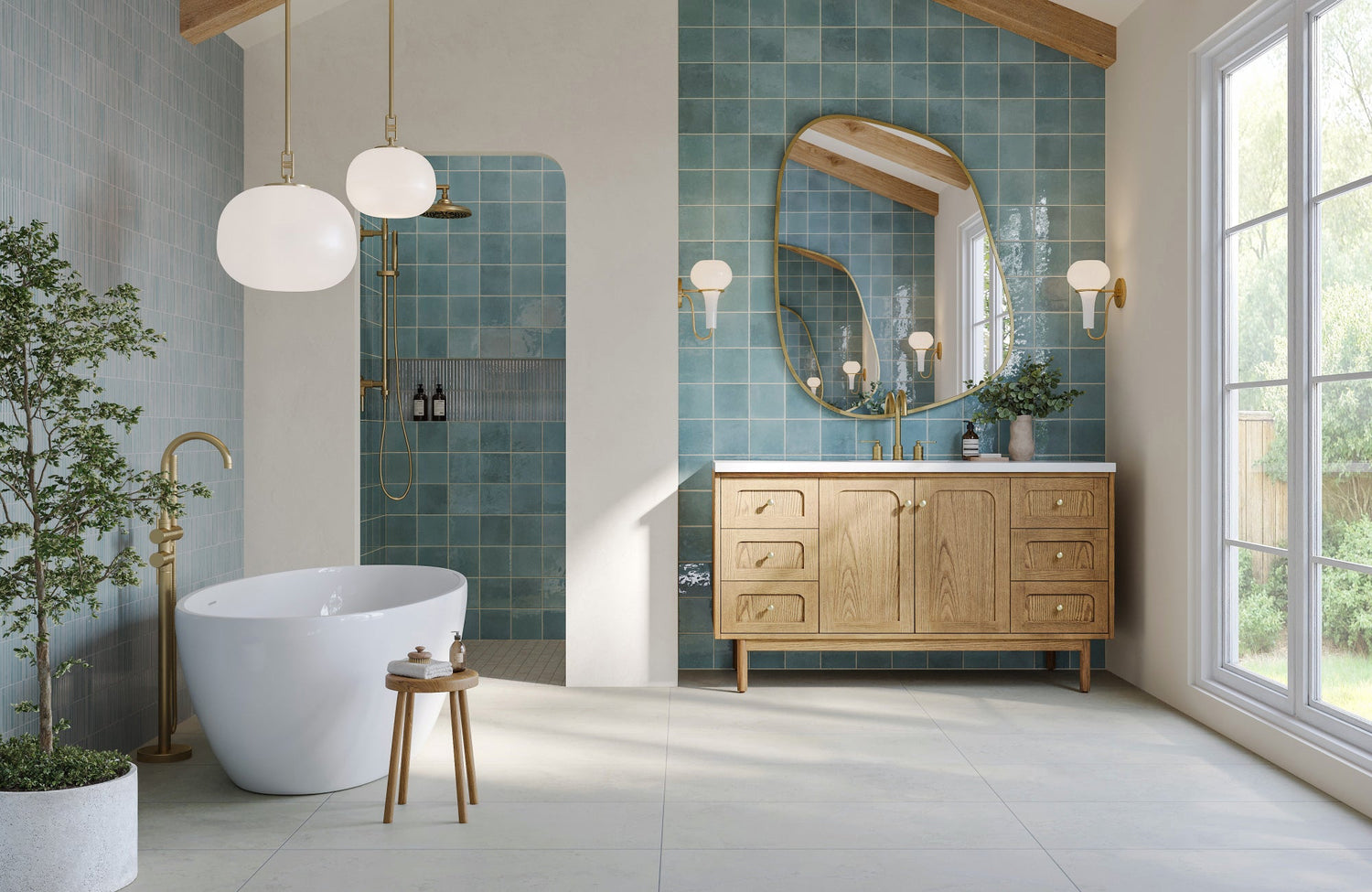
In rooms with ample ceiling height, pendant lights can also be an excellent choice. Edward Martin’s Dempsey Pendant in Hammered Dark Antique Brass, as featured in the photo above, is a great example. Its warm finish and sculptural shape add both depth and character, while the focused downward glow enhances the ambiance over the tub area. This kind of pendant strikes a thoughtful balance between style and function, especially in bathrooms where lighting also serves as a design focal point.
Shower and Tub Lighting
Lighting in moisture-prone areas such as showers and tubs requires special attention. Fixtures in these zones must be rated for wet conditions, specifically wet-rated or vapor-tight, to ensure they can withstand humidity and direct exposure to water. Choosing the right type isn't just about durability; it's also about maintaining both safety and performance in challenging environments.
Recessed lighting is a practical choice for these areas, as it stays out of the way while still delivering focused illumination. A single waterproof downlight centered above the tub or shower is often enough for standard spaces. However, in larger or enclosed showers, installing two smaller fixtures can also help distribute light more evenly and reduce shadows, making the area safer and more visually comfortable. Thoughtful placement and proper fixture selection in these zones can make a noticeable difference in how usable and inviting the space feels.

Light Placement and Spacing Essentials
Even the best lighting plan falls apart if the placement is off. Understanding how to space and position each fixture properly ensures that the lighting works as intended, both visually and functionally.
Ideal Placement Over Vanities
Vanity lighting works best when positioned at eye level, typically between 65 and 70 inches from the floor. Placing sconces on either side of the mirror, ideally spaced 36 to 40 inches apart, helps distribute light evenly across your face. This arrangement minimizes shadows and provides a flattering, functional glow that's especially helpful for grooming tasks.
It's best to avoid relying on a single light placed directly above the mirror, unless the fixture is specifically designed to reduce glare and shadows. Overhead-only lighting often casts uneven light, which can make everyday tasks like grooming or applying makeup more difficult and less precise. Proper placement not only improves visibility but also makes the space feel more comfortable and thoughtfully designed.
The lighting setup in the photo above captures this approach beautifully. Edward Martin’s Garnet Wall Sconce in Vintage Brass, flanking the round mirror, offers focused, balanced illumination while also adding a sculptural touch to the design. Its vertical orientation and sleek profile make it a strong example of how form and function can work hand in hand at the vanity. When installed with proper spacing and height, sconces like these enhance both the look and usability of the space.
Ceiling Light Positioning
For recessed lighting, spacing typically falls between 4 to 6 feet apart, depending on the room’s dimensions and ceiling height. In smaller bathrooms, two recessed fixtures often provide sufficient coverage, while larger spaces may require four or more to achieve even illumination. It's equally important to keep fixtures at least 12 inches away from walls to avoid casting harsh light around the edges and leaving the center of the room underlit.
Ceiling lights should work in harmony with other fixtures and not compete with them. When thoughtfully spaced, they establish a balanced lighting foundation that supports the overall design. Task and accent lights can also be layered into highlight specific areas, creating a well-rounded and visually cohesive space.
Layer Integration
Once you've established your lighting layers, it’s important to ensure they function cohesively. Avoid concentrating all the brightness in one area while leaving others poorly lit. Let ambient lighting define the room’s general tone, then supplement it with task and accent lights in specific zones that need more focus or visual interest.
Incorporating dimmers and lighting controls can greatly enhance flexibility. Being able to adjust each layer independently allows you to transition seamlessly between bright, task-oriented lighting and a softer, more relaxed atmosphere. Effective integration isn’t just about placement; it’s also about how each source complements the others to create a balanced and adaptable environment.

Considering Natural Light and Windows
Natural light can be a game-changer, both for how your bathroom looks and how many fixtures you need. If you have windows, skylights, or other daylight sources, you may not need as many artificial lights during the day, but that doesn’t mean you can skip planning altogether.
Working With Daylight
Begin by paying attention to how natural light moves through your bathroom throughout the day. An east-facing window may flood the space with morning sun, while a north-facing window typically offers a steady stream of soft, indirect light. Understanding these patterns can help you determine where supplemental lighting is needed and how much of it to include.
Skylights can also bring in a significant amount of daylight, especially to the center of the room, which may reduce the need for overhead fixtures during the day. Still, it’s equally important not to depend entirely on natural light, particularly in areas like vanities or showers, where clear, consistent illumination is essential. Instead, treat daylight as a valuable complement to your lighting design, enhancing visibility and mood when available, but never replacing a well-planned artificial setup.
When Windows Aren’t Enough
In bathrooms with little to no natural light, whether due to small windows, interior layouts, or regional climate, artificial lighting plays a more key role. To maintain both function and comfort, it’s helpful to rely on a layered lighting plan that offers full coverage and flexibility. Focus on using fixtures with color temperatures that mimic natural daylight, especially around key areas, like the vanity.
It’s also worth accounting for seasonal changes. What feels bright enough during the summer may fall short in the darker months. A well-designed lighting layout should remain effective year-round, ensuring the space stays inviting, functional, and properly lit regardless of the time of day or season.

Energy Efficiency and Light Output
Good lighting isn’t just about how it looks; it’s also about how it performs over time. Balancing brightness and energy use ensures your bathroom stays efficient without compromising quality.
Lumens Over Watts
Many people ask about wattage when choosing light bulbs, but it's equally important to remember that wattage only indicates energy consumption; it doesn’t reflect how much light the bulb gives off. Instead, focus on lumens, which measure the brightness a bulb produces. As a general guide, a small bathroom typically needs around 4,000 lumens in total, while larger bathrooms may require 6,000 or more, depending on the layout, color scheme, and surface materials.
Equally important is selecting the right color temperature. For a warm, inviting feel, look for bulbs in the 2700K to 3000K range. If you prefer a brighter, more energizing effect, especially in the morning, a cooler temperature around 3500K to 4000K may be more suitable. The goal is to strike a balance: your lighting should be bright enough to support daily tasks without being so intense that it overwhelms the space.
LED and Smart Lighting Options
LED bulbs remain one of the most efficient and versatile lighting choices available today. They consume significantly less energy than traditional bulbs, have a much longer lifespan, and are offered in a wide range of brightness levels and color temperatures. Whether you're installing sconces, recessed lights, or decorative fixtures, there's an LED option to match nearly every application.
A perfect example of how LED lighting can blend performance with design is Edward Martin’s Ezekiel Wall Sconce in Vintage Brass, as featured in the photo above. With its clear, textured glass shades and integrated LED light, it delivers crisp, efficient illumination while adding a refined, modern touch to the space. Fixtures like Ezekiel show how LED technology can be seamlessly incorporated into stylish, high-functioning bathroom lighting.
To take things a step further, smart lighting systems offer added flexibility and convenience. With these, you can adjust brightness, set schedules, or even change color temperature using a smartphone or voice control. This level of customization also allows you to adapt your lighting throughout the day, bright and focused in the morning, softer and more relaxed in the evening, all while staying energy-efficient.
Balancing Form and Function
Determining how many lights your bathroom truly needs involves more than just counting fixtures. It’s also about creating a space that supports your routine and feels cohesive from morning to night. By taking into account the layout, task zones, layered lighting, access to natural light, and overall energy use, you design a bathroom that works efficiently and feels intentionally put together. When everything is in balance, the lighting fades seamlessly into the background, enhancing the space without drawing attention to itself.
If you’re planning a lighting update or starting from scratch, we’re here to help. Contact us to explore lighting options or speak with our design team about creating a bathroom that looks great and works beautifully, down to the last detail!