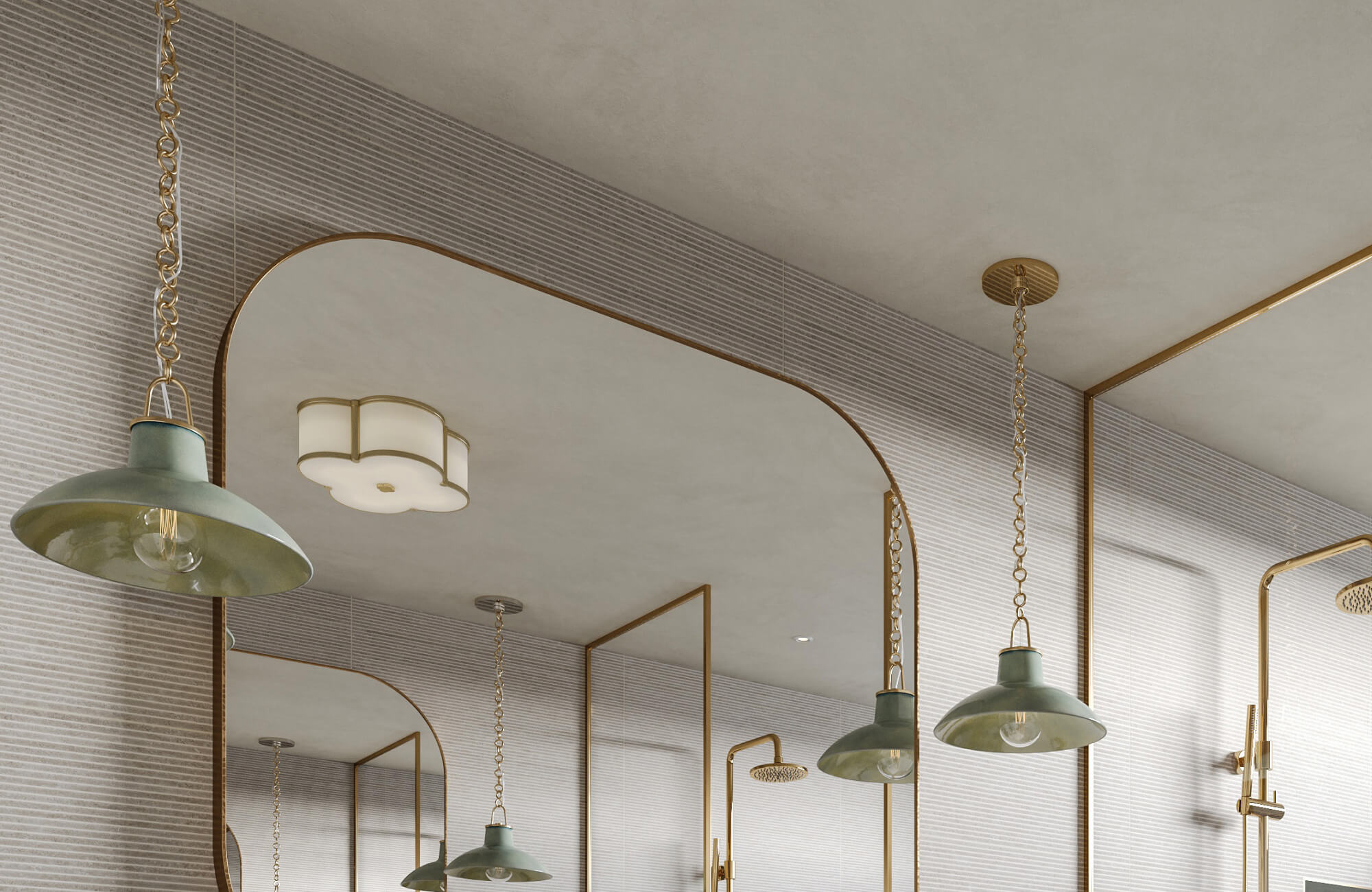
A double vanity adds both function and design impact to a bathroom, but proper lighting determines how well it performs. From reducing shadows during daily routines to creating a balanced aesthetic, the number and placement of lights play a crucial role in determining the effectiveness of the setup. In this article, we’ll examine double vanity lighting from a practical perspective, considering not only brightness but also comfort, mood, and the way lighting complements the overall design of the space.

The Role of Vanity Lighting
Lighting over a double vanity does more than provide brightness. It further influences how the bathroom functions daily, how comfortable the space feels, and how well the design comes together. Before deciding on the number of fixtures, it also helps to understand the different roles lighting plays in this setting.
Task vs Ambient
Vanity lighting generally serves two purposes: task and ambient. Task lighting provides the focused illumination needed for grooming activities such as shaving, skincare, or makeup, helping you see clearly without harsh shadows. Ambient lighting, in contrast, spreads more evenly throughout the room, softening the overall look and adding comfort. In a double vanity, both are important. Task lighting ensures each sink is well-lit, while ambient lighting keeps the space from feeling flat or uneven.
This balance can be seen in the photo displayed above, where Edward Martin’s Colette Wall Sconce in Aged Brass plays the role of task lighting for the Paxton 72" Double Vanity in Pebble Oak with a 3 cm White Zeus Quartz Top. Positioned at face level, the sconces provide clear illumination for daily routines while also softening the overall atmosphere, showing how the right fixture can serve both functional and aesthetic roles in a double vanity.
Eliminating Shadows
One of the most common challenges with vanity lighting is shadowing on the face. Light that comes only from above often creates dark areas under the eyes or chin, making everyday grooming more difficult. Evenly distributing light on both sides of the vanity helps reduce these contrasts and provides a clearer, more natural reflection. With a double vanity, this becomes even more important because both sinks need consistent coverage. Well-placed fixtures can also ensure each side is equally functional at any time of day.
Balancing Style and Function
Lighting is another design element that ties the double vanity into the rest of the bathroom. The number and type of fixtures influence the overall impression, whether that’s symmetry from a pair of sconces or a sense of continuity from a wide overhead bar. A modern bathroom might call for sleek LED strips, while a traditional setting could feel more complete with decorative multi-bulb fixtures. When lighting is chosen with both function and style in mind, the result feels intentional and cohesive rather than added as an afterthought.

Measuring the Vanity and the Space
The size of the vanity and the layout of the room both play a major role in determining how many lights are needed. A compact double vanity in a smaller bathroom will have different requirements than a wide counter in a spacious master suite. Taking accurate measurements further helps ensure the fixtures feel proportional to the space while still providing effective lighting.
Width of the Vanity
The width of the vanity is the first factor to consider when planning lighting. Double vanities are typically between 48 and 72 inches wide, though some extend even further. A 48-inch vanity may work well with just two sconces or a single multi-bulb fixture, while a 72-inch vanity often benefits from multiple light sources to ensure both sinks are evenly lit. The broader the counter, the more coverage is required, since relying on a single fixture often results in uneven lighting or dark spots.
Ceiling Height and Wall Space
Ceiling height also has a big influence on lighting choices. Lower ceilings can feel cramped with oversized fixtures, while taller ceilings open the door to more creative options, such as pendant lights. Wall space matters just as much. When there’s enough room beside the mirrors, sconces can provide flattering light at face level. In tighter layouts, an overhead bar can also deliver even coverage without crowding the walls. Matching the number and type of fixtures to these conditions helps the vanity area feel balanced and well-proportioned.
Mirror Shape and Size
The shape and size of the mirrors also guide how fixtures should be placed. Two separate mirrors often work best with individual sconces or lights above each, giving both sinks their own defined lighting. A single wide mirror, on the other hand, can usually be lit with fewer centralized fixtures, such as a continuous light bar or a pair of evenly spaced multi-bulb lights. Considering the mirror style further helps ensure the lighting feels cohesive rather than disconnected.

Fixture Placement Strategies
Placement is just as important as the number of fixtures you choose. The way lights are positioned affects how flattering they are, how evenly the vanity is illuminated, and how comfortable the space feels. Different approaches work better for different layouts and styles, each offering its own advantages.
Overhead Only
Overhead lighting is one of the most common setups, typically with a light bar or multi-bulb fixture above the mirror. It’s straightforward and works well when wall space is limited, but it often casts shadows under the eyes and chin. For a double vanity, relying on just one overhead source can result in uneven lighting between the two sinks. While this approach may be sufficient in smaller bathrooms, everyday grooming typically benefits from adding more lights to create balanced coverage.
Side Sconces
Placing sconces on either side of the mirror offers some of the most flattering and practical lighting for a vanity. This setup provides even illumination across the face, reducing shadows and making colors appear more accurate. Mounting sconces at about eye level, with a small gap between the fixture and the mirror edge, is a practical way to achieve balanced and comfortable lighting.
In the photo shown above, Edward Martin’s Tyson Wall Sconce in Aged Brass is placed between and beside the mirrors on the Colton 72" Double Vanity in Sable with a 3 cm White Zeus Quartz Top, showing how sconces can frame each sink and ensure even coverage across a double vanity.
Layered Approach
A layered approach combines different types of fixtures to create the most versatile lighting plan. Overhead lights can provide broad coverage, sconces add focused task lighting, and recessed ceiling lights help fill the room with ambient light. This mix makes it easier to adjust brightness to suit the moment: bright, clear light for morning routines and softer levels for a more relaxed atmosphere at night. In a double vanity setup, layering also ensures both sinks are evenly lit without relying on a single type of fixture to do all the work.

Choosing Fixture Styles That Match Needs
Understanding how fixture styles affect both coverage and performance is an equally important step in deciding how many lights a double vanity really needs. The right style can help you achieve proper coverage with fewer fixtures, while the wrong one may leave gaps or force you to add more lights than necessary.
Light Bars and Strips
Light bars and strips are well-suited to wide vanities because they can spread illumination across the entire surface. A single long bar can often replace several smaller fixtures, simplifying the setup while still covering both sinks. They are especially effective with one large mirror, since continuous lighting reduces the risk of dark spots. LED strips add another advantage by providing strong, even brightness in a slim design, making them a practical solution when you want full coverage without extra fixtures.
Multi-Bulb Fixtures
Multi-bulb fixtures offer flexibility by covering both sinks with one central installation. A three- or four-bulb fixture can span much of the vanity, ensuring both sides are bright enough without requiring extra wall space. This style also allows you to choose decorative bulb shapes or shades that complement your bathroom’s overall design.
In the photo shown above, Edward Matin’s Lennie 12" Pendant in Patina Brass/Bronze works well with the Gwen 72" Double Vanity in Pebble Oak with a 3 cm White Zeus Quartz Top; its three-bulb arrangement extends across the vanity, providing balanced lighting for both sinks while also adding a refined design element.
Modern LED Options
LED technology expands the options for how many fixtures you need. Integrated LED mirrors often provide sufficient brightness on their own, eliminating the need for separate sconces or overhead bars. Similarly, slim LED bars mounted on or beside the mirror offer shadow-free illumination that works well for grooming tasks. Because LEDs deliver high brightness while using less energy, they can achieve the same coverage with fewer fixtures, making them both efficient and space-saving choices.

Deciding by Bulb Type and Brightness
Even after selecting the right fixture style for a double vanity, the type of bulb and its brightness also play a major role in how many lights you’ll actually need. Output, color temperature, and control options all affect whether both sinks are lit evenly and whether the space feels comfortable for daily use. Understanding these factors helps you choose a setup that works efficiently without adding unnecessary fixtures.
Lumen Recommendations
Brightness is best measured in lumens rather than wattage. For a double vanity, a total output of about 1,600 to 2,700 lumens usually works well, depending on the size of the bathroom. Smaller vanities often fall toward the lower end of this range and can get by with fewer fixtures, while larger vanities typically need multiple sources to provide balanced coverage. The goal is to light both sinks clearly without creating glare.
Color Temperature
The quality of light is just as important as its brightness. Warm light around 2700K creates a relaxed, spa-like feel, while cooler light closer to 4000K provides sharper clarity that’s helpful for grooming. For most double vanities, a neutral white around 3000K often strikes the best balance, offering enough brightness for detail work while still feeling natural and comfortable.
Dimming and Control Options
Adding dimmers or smart controls gives a double vanity more versatility. Bright, clear light is ideal in the morning when you need energy and focus, while lower levels work better at night when you want a softer atmosphere. With dimming features, the same set of fixtures can also serve multiple purposes, reducing the need for extra lights and making the vanity area adaptable to different times of day.

Avoiding Common Mistakes
Even when you’ve chosen the right number of fixtures and placed them carefully, certain mistakes can undermine the lighting around a double vanity. Being aware of these pitfalls helps ensure both sinks are equally functional and the overall setup feels polished.
Overcrowding Fixtures
Adding too many fixtures to a double vanity doesn’t guarantee better lighting. Instead, it can overwhelm the space, create glare, and make the bathroom feel cluttered. The goal is balance; enough lights to cover both sinks clearly, but not so many that the design loses proportion.
Uneven Distribution
Uneven placement is another common issue. When fixtures are clustered too closely or only installed on one side, one sink may end up brighter than the other. This not only disrupts the symmetry of the vanity but also makes daily routines less convenient. Spacing fixtures evenly and choosing a consistent style further helps both sinks feel equally well-lit.
Ignoring Energy Efficiency
Fixture selection for a double vanity also affects long-term efficiency. Overlooking energy use can lead to higher utility bills without improving performance. LED options are particularly effective because they provide strong, even brightness while consuming less power. By considering efficiency from the start, you’ll save energy while still achieving reliable coverage across both sinks.
Making the Final Decision
There isn’t a single rule for how many lights a double vanity should have. The right answer depends on how size, placement, fixture style, brightness, and efficiency all come together in your space. By considering each factor step by step, you can create lighting that is practical for daily routines while also enhancing the look of the bathroom. With the right balance, a double vanity becomes more than just a functional area; it can also serve as a focal point that adds comfort and character to the entire room.
If you’re planning a bathroom update and want tailored guidance, feel free to contact us. Our design team can help you explore options, visualize layouts, and choose lighting that makes your double vanity both functional and beautiful.