

)
)
)
)
)
)
)
)
How Many Decorative Pillows Should You Have On A Couch?
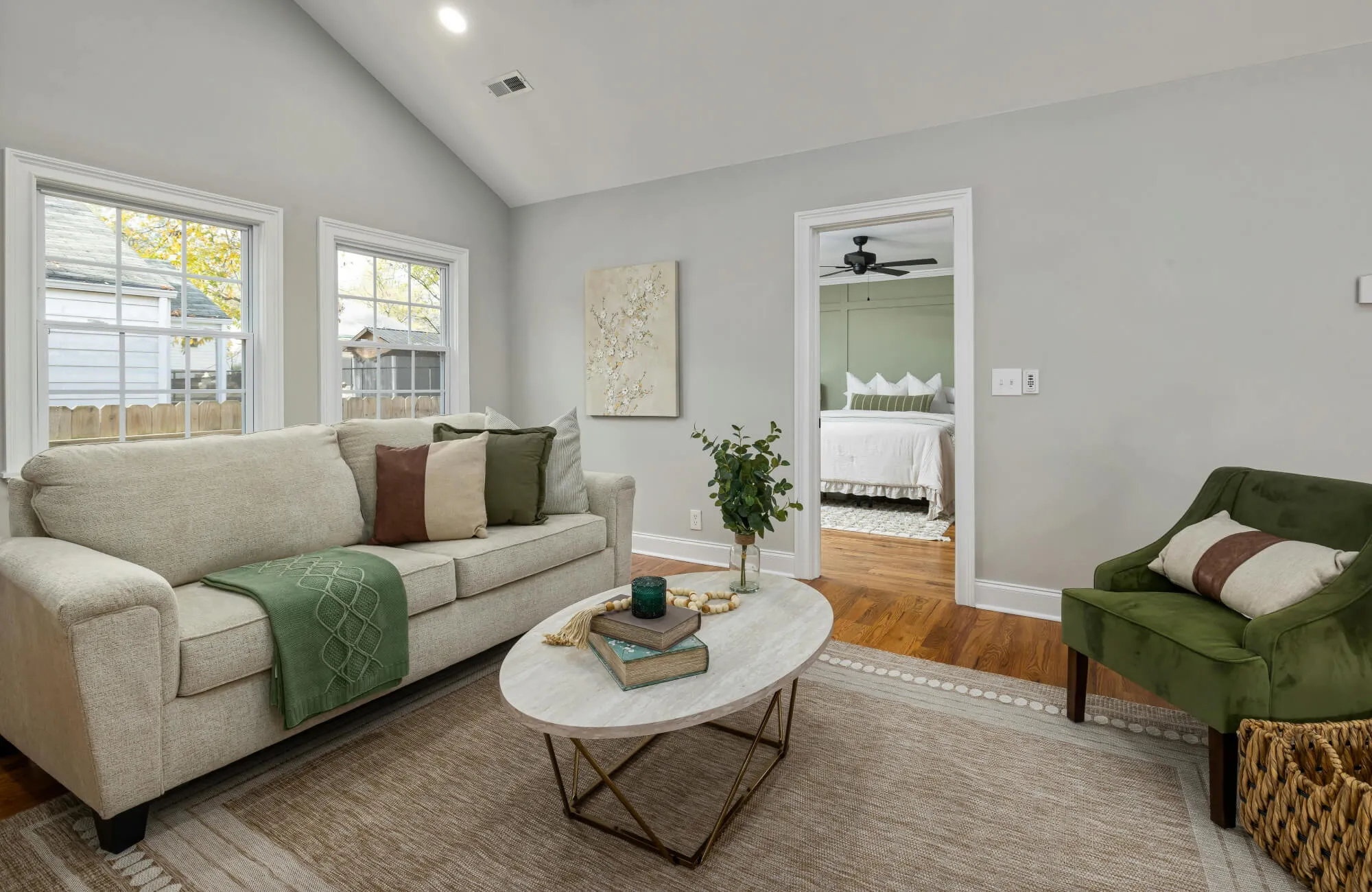
Decorative pillows can significantly influence how your couch looks, feels, and functions within your living room. They may seem like simple accents, but the number you choose affects proportion, comfort, and visual balance. Many people find themselves unsure whether they have too few, too many, or just enough decorative pillows. In this article, we’ll walk you through the key factors that shape that decision so you can make an informed decision about your pillow arrangement.
Start With Couch Size and Proportion
Before considering style or color, it is important to evaluate scale. The size and structure of your couch provide the foundation for determining an appropriate pillow arrangement.
Measure the Width
Start by looking at your sofa from arm to arm and consider the full visual span it occupies. On a standard 72-inch sofa, three to five pillows usually create a balanced look, allowing you to frame the ends without covering every seat cushion.
If your sofa falls between 84 and 96 inches wide, five to seven pillows often feel more proportional. The additional width can support extra layering while still maintaining clarity. For larger sectionals, particularly those that extend across a wall, seven to nine pillows may be appropriate since the longer profile carries more visual weight.
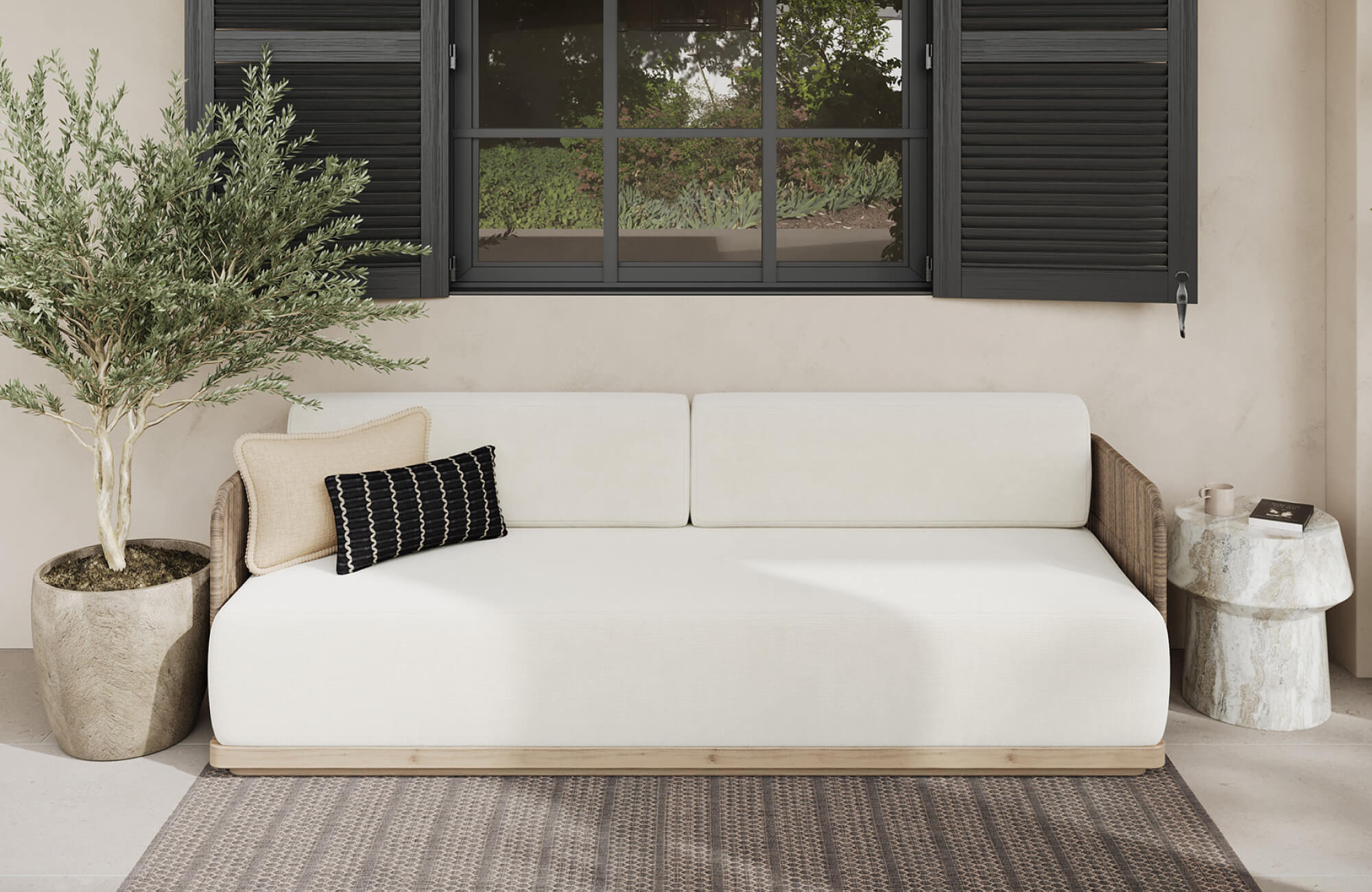
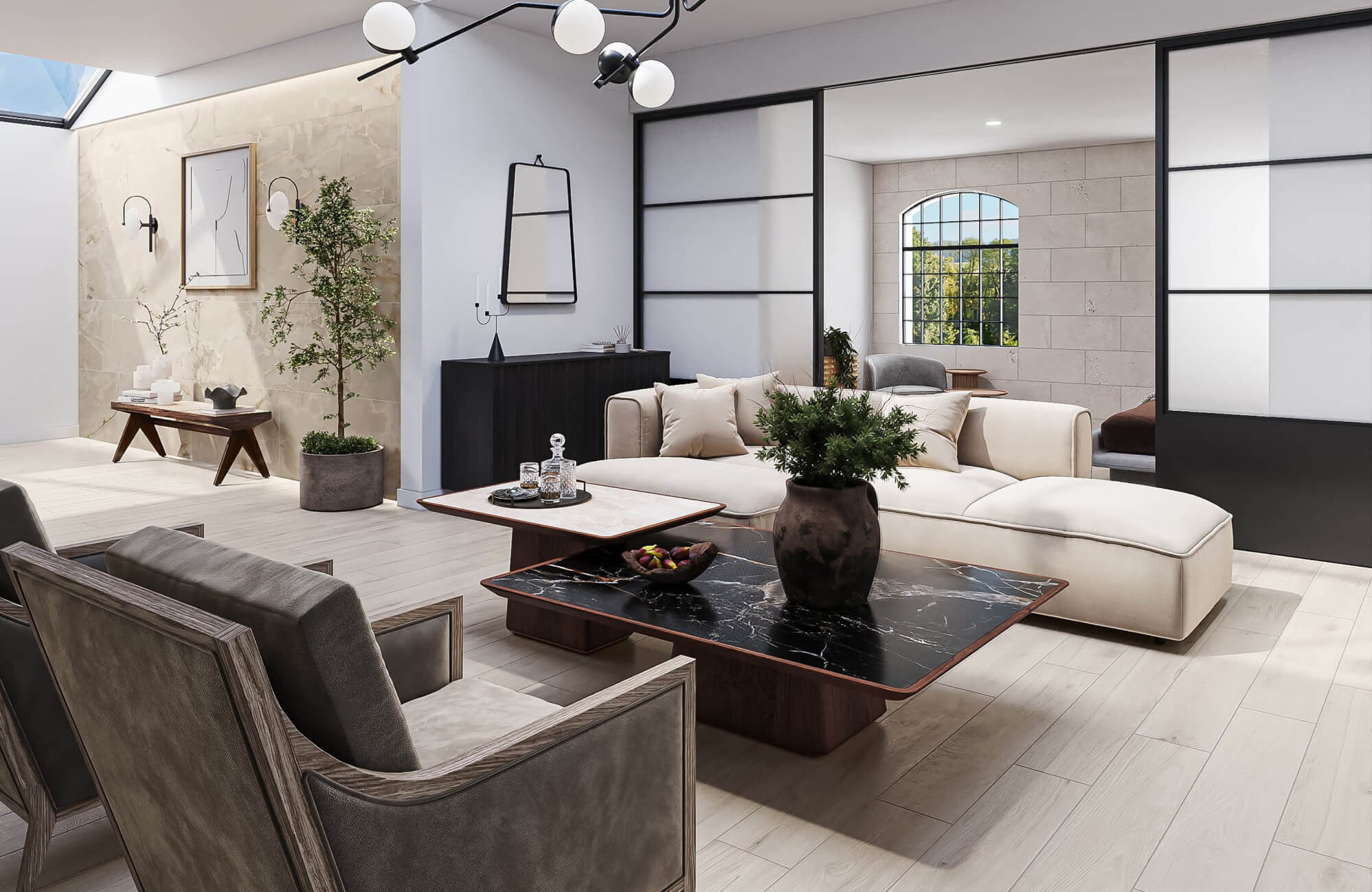
The setting in the photo featured above offers a helpful example of restraint and spacing. The combination of Edward Martin’s Merelle 13" x 21" Pillow Cover in Tan and Marisette 12" x 27" Pillow Cover in Black demonstrates how a single, well-scaled lumbar layer can define one side of the sofa without overwhelming its width. Rather than filling the entire span, the placement leaves visible upholstery between the pillow and the opposite arm, reinforcing proportion and allowing the sofa’s full silhouette to remain clear.
Equally important is spacing. When pillows are pressed tightly together, the arrangement can appear dense and undefined. Leaving small sections of upholstery visible between groupings helps maintain structure and keeps the composition visually clear.
Consider Seat Depth
Next, consider the depth of your sofa from front to back. A deeper lounge-style sofa can accommodate fuller, thicker pillows without compromising your sitting position, allowing for more generous layering while maintaining comfort.
On a standard-depth sofa, however, oversized pillows can take up valuable seating space and push you forward. In this case, slimmer inserts or a more edited arrangement work better. The objective is to preserve natural support while ensuring the pillows still contribute to the overall look.
Account for Arm Style
The style of your sofa arms naturally influences how many pillows will feel right. Rolled arms can create a defined boundary, making symmetrical stacks at each end feel natural and contained. In contrast, track arms, with their clean lines, tend to pair well with more structured and evenly spaced arrangements.
If your sofa is armless or has very low arms, adding too many pillows can make the edges feel undefined and slightly out of balance. In those cases, a slightly reduced count helps preserve the outline and maintain clarity. The overall shape of your couch quietly guides how many pillows will feel balanced.
Match Pillow Count to Design Style
Once the proportion is established, look at your design direction. The number of pillows should support your aesthetic rather than compete with it.
Minimalist Spaces
If your space leans minimalist, restraint becomes a design strength. In most cases, two to four thoughtfully selected pillows are enough to complement the sofa without overwhelming it. Rather than increasing the number, focus on intentional shapes and refined textures that can subtly add interest.
In minimalist interiors, negative space plays an important role. Leaving portions of the sofa visible allows its structure and clean lines to remain the focal point. When too many pillows are introduced, that sense of clarity can fade, and the simplicity that anchors the space may begin to feel diluted.
Traditional Interiors
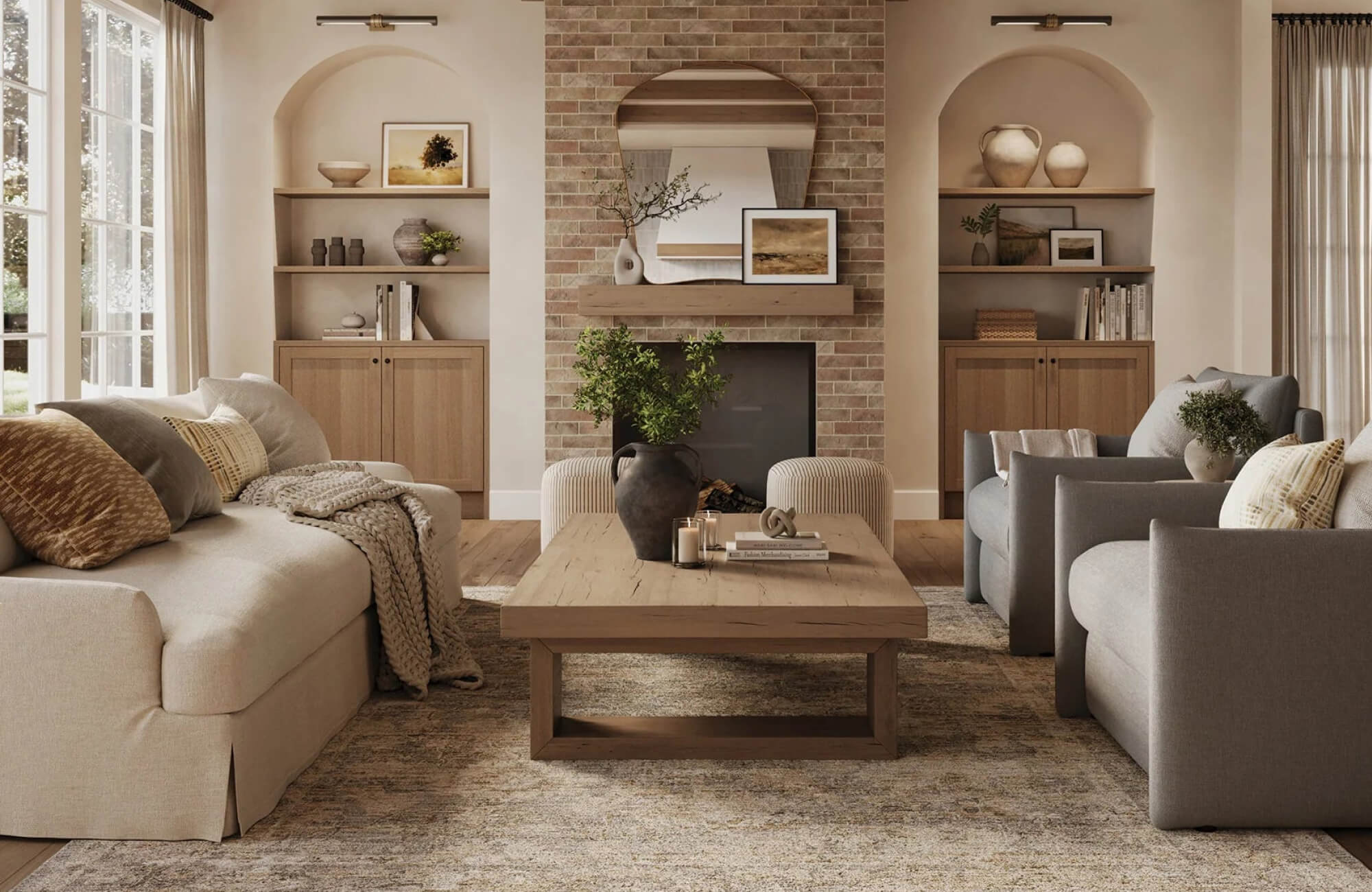
Traditional rooms often call for a stronger sense of structure and order. In these spaces, four to six pillows arranged symmetrically usually create a look that feels balanced and well considered. A common approach is to place matching larger squares at each end and layer slightly smaller pillows in front to create dimension.
This method establishes a clear hierarchy without overwhelming the sofa. Because traditional interiors often include molding, tailored upholstery, and classic patterns, a slightly fuller pillow arrangement tends to feel consistent with the room’s overall character.
Eclectic and Layered Looks
If your style feels more eclectic and layered, a grouping of five to eight pillows can appear intentional and well-suited to the space. In this case, variation becomes essential. Mixing shapes, such as classic squares with lumbar pillows, introduces dimension and keeps the arrangement visually engaging.
At the same time, keep at least one element consistent, often color or undertone, so the combination does not appear disconnected. Even in a layered setting, thoughtful repetition creates cohesion and ensures the overall look remains purposeful rather than accidental.
Balance Visual Weight and Symmetry
After considering size and design style, the next step is refining the layout itself. The number and placement of your pillows directly affect how balanced and grounded your couch appears within the room.
Even Numbers vs. Odd Numbers
Even numbers often create a structured and formal impression. Placing two pillows on each end establishes clear symmetry, which helps the sofa feel composed and orderly within the space. This approach works especially well in rooms where balance and consistency are priorities.
In contrast, odd numbers introduce a sense of subtle movement. A grouping of three, for example, can feel relaxed while still appearing intentional. If you prefer a look that is less rigid but still thoughtfully arranged, odd numbers tend to achieve that balance naturally.
Anchor the Corners
Start by anchoring the corners of the sofa. Larger pillows, often in the 22 to 24 inch range, help frame the ends and visually establish the sofa’s full width. A piece such as the Merelle 22" x 22" Down Pillow in Navy works well in this role, offering enough scale and structure to define each side. Once those are in place, slightly smaller pillows can be layered in front or positioned closer to the center.
This approach creates a stable foundation and keeps the arrangement from feeling top-heavy. Without clearly defined ends, the grouping can appear uneven or unintentionally weighted to one side.
Leave Breathing Room
No matter how many pillows you decide on, it is important to keep at least one seating area comfortably accessible. After all, a sofa is meant to be used. If someone has to remove several cushions just to sit down, the arrangement may lean too heavily toward decoration rather than function.
For that reason, it is important to maintain a thoughtful balance between style and usability. Ideally, pillows should enhance both comfort and visual appeal. When arranged carefully, they complement the sofa without interfering with its purpose.
Consider How the Couch Is Used Daily
Beyond size and style, everyday function plays a decisive role. How your couch is used daily should ultimately guide how many decorative pillows make sense for your space.
Family Rooms
In rooms where the sofa is used frequently, a practical approach usually works best. In most cases, three to five well-chosen pillows provide comfort and style without getting in the way. They can be adjusted easily and returned to place without much effort.
Durability is also important in these settings, since the pillows will be handled regularly. Keeping the number manageable not only preserves comfort but also makes everyday upkeep far simpler.
Formal Living Rooms
In spaces that are used less frequently, you may have more flexibility to increase the pillow count. Since the sofa is not in constant use, a fuller arrangement can remain neatly styled for longer periods. In these settings, layering can be used more intentionally to enhance visual interest. While comfort should never be overlooked, the emphasis often shifts slightly toward presentation and overall aesthetic balance.
Multifunctional Spaces
If your sofa serves multiple purposes, such as a reading spot by day and a guest bed at night, flexibility becomes essential. Rather than increasing the number of pillows, it often makes more sense to select versatile shapes, such as lumbar cushions, that can be repositioned easily.
Lightweight inserts further simplify rearranging when needed. With this approach, you can preserve a well-styled look while ensuring the sofa adapts smoothly to different uses.

Work With Color, Texture, and Pattern Strategy
At times, the real consideration is not simply how many pillows to use, but how much visual dimension you want your sofa to convey. Color, texture, and pattern choices can influence whether a smaller or larger grouping feels complete.
Build a Color Story
A helpful starting point is selecting two or three core colors to guide your pillow choices. Repeating those tones throughout the arrangement helps the pillows feel cohesive, even if you decide to use more pillows. When those colors connect to other elements in the room, such as artwork, rugs, or upholstery, the sofa feels integrated into the overall design. This connection keeps the arrangement cohesive rather than visually separate from its surroundings.
Vary Scale Intentionally
When mixing patterns, it is important to vary their scale. Pairing a larger print with a smaller motif helps prevent visual competition and keeps the arrangement dynamic. If every pillow features a pattern in a similar scale, the grouping can feel overly uniform and lose visual definition.
Introducing contrast in scale adds clarity and structure. It allows multiple pillows to sit together comfortably without blending into one another or feeling repetitive.
Use Texture to Add Depth
Incorporating texture can often lessen the need for additional pillows. For instance, combining linen with velvet or a woven fabric introduces contrast and dimension without increasing the overall count.
It is easy to overstate this effect with too many descriptive words. Rather than calling the result rich, luxurious, soft, layered, and dynamic all at once, it is more accurate to say that contrasting textures create tactile interest and make even a smaller grouping feel intentional. A clearer explanation strengthens the impact and keeps the focus on how texture truly works.
Adapt the Count for Sectionals and Unique Layouts
Large seating arrangements require thoughtful distribution rather than simple stacking. Because these sofas extend across multiple angles or seating zones, pillow placement must respond to the layout to maintain visual balance throughout.
L-Shaped Sectionals
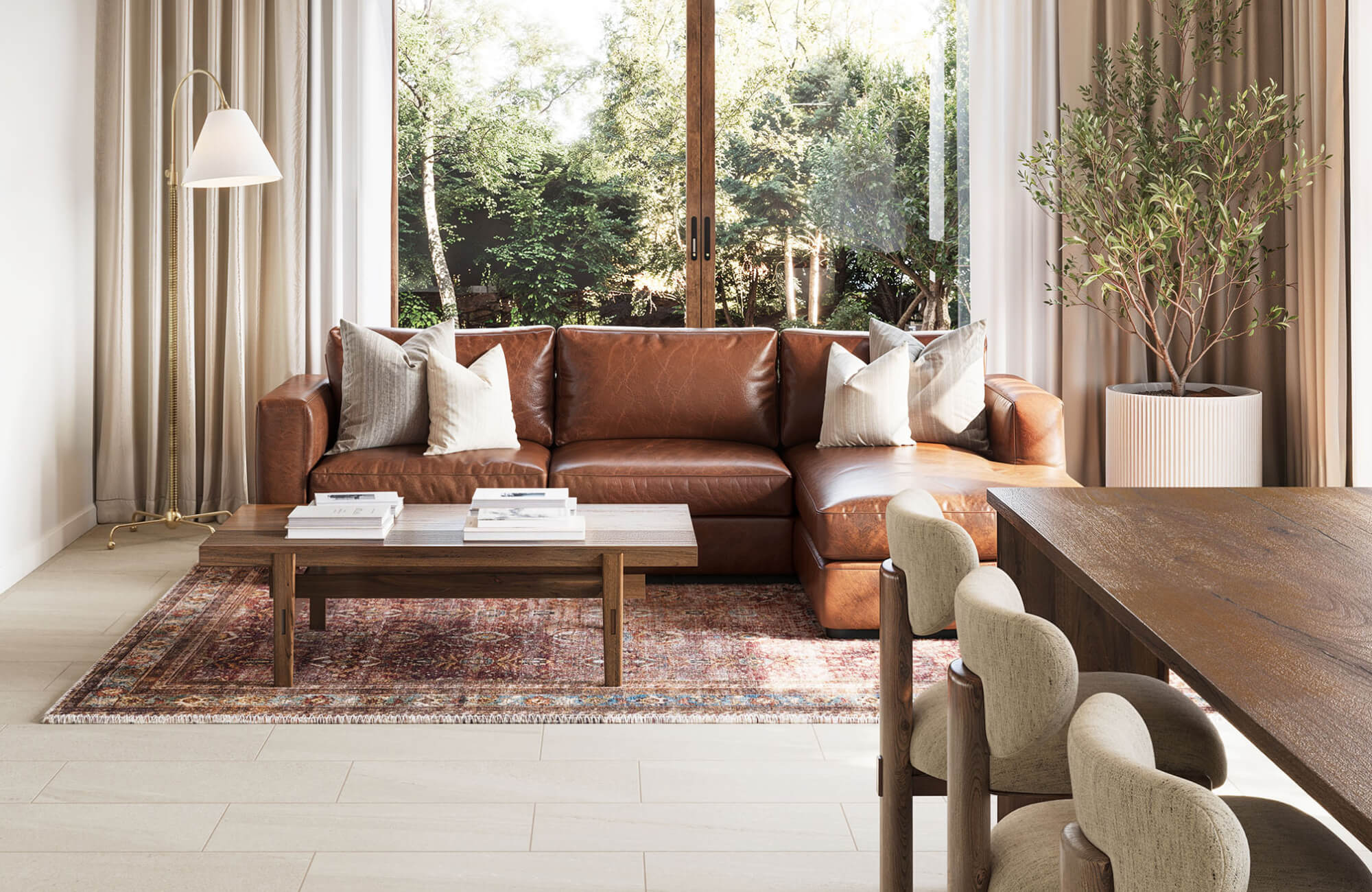
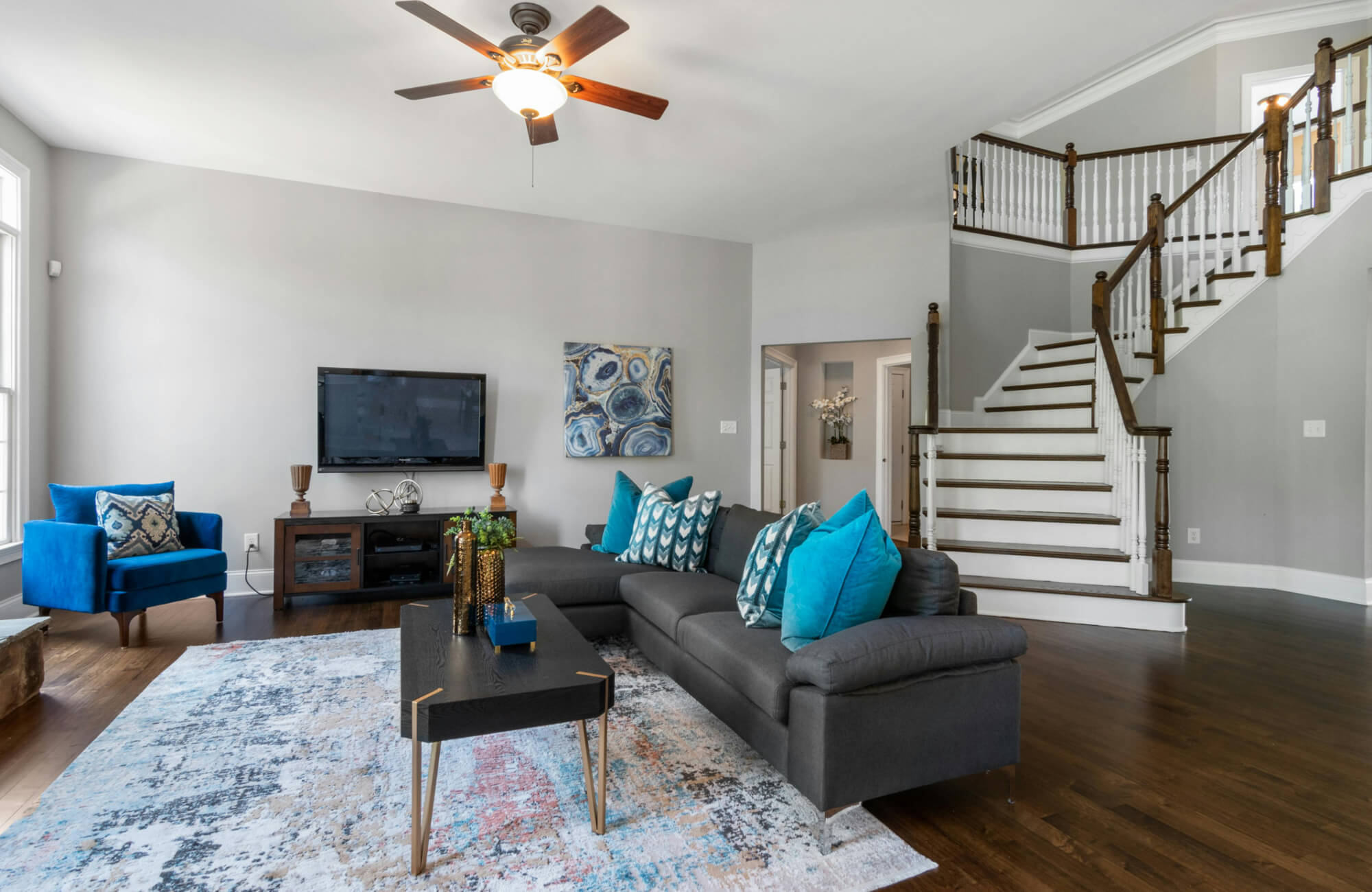
With an L-shaped sectional, it is best to distribute pillows evenly across both sides to maintain visual balance. The corner where the two sections meet often benefits from a single supportive pillow that bridges the angle and creates a smoother, more cohesive transition. This approach ensures that neither side feels visually heavier, allowing the entire section to appear cohesive and well-proportioned.
U-Shaped or Modular Seating
With U-shaped or modular sofas it helps to repeat pillow groupings at key visual endpoints. Rather than concentrating everything on one section, maintaining similar proportions across the layout keeps the seating arrangement balanced. This measured repetition introduces rhythm while still allowing for subtle variation. As a result, the overall look feels cohesive without appearing overly uniform.
Loveseats and Compact Sofas
On smaller sofas, restraint makes a noticeable difference. In most cases, two or three pillows are sufficient to add comfort and style without overwhelming the seating area. Adding too many can quickly reduce usable space and throw off the proportions. Compact furniture may look best when the arrangement is clear and simple. Taking a measured approach helps maintain balance while preserving both comfort and visual order.
Find the Right Number for Your Couch
In most homes, a balanced arrangement typically includes three to seven decorative pillows on a standard sofa, with larger sectionals comfortably accommodating a few more. The ideal number is determined by how scale, design style, daily function, and layout work together within your space. When these elements are considered collectively, the choice feels deliberate rather than random. A well-considered pillow count enhances comfort, supports the room’s design, and maintains visual balance without overwhelming the sofa.
If you would like more personalized guidance, contact us for tailored recommendations. Our design service can help you refine proportions, select complementary styles, and create a pillow arrangement that fits your space with clarity and confidence.
Follow us on Instagram
@EDWARD.MARTIN
)
)
)
)
)
)
)
)
)
)
)
)
)
)
)
)