
)
)
)
)
)
)
)
)
How Many Chairs Should a Dining Room Table Set Have?
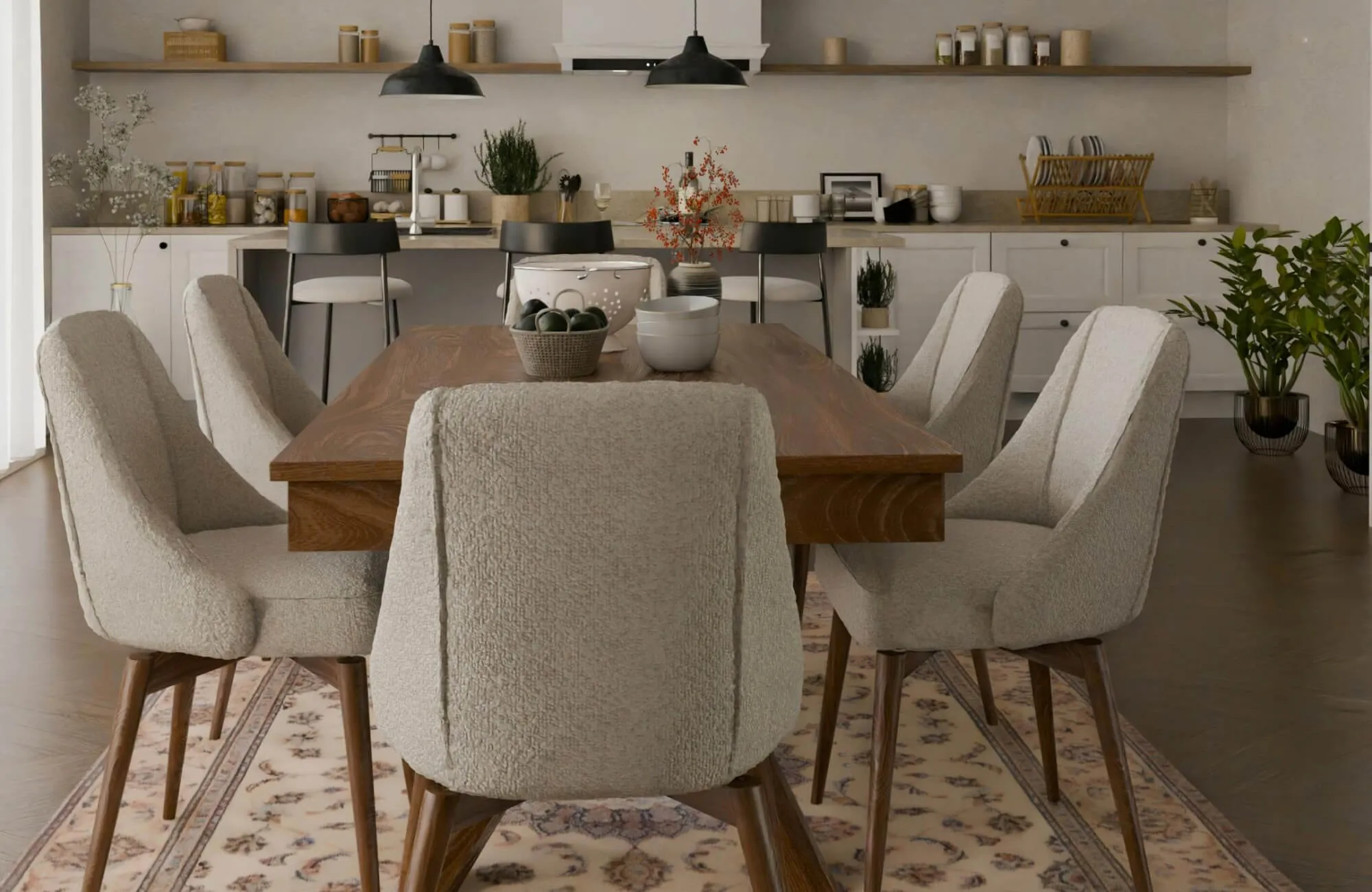
A beautifully arranged dining room unfolds through balance, where proportion, comfort, and intention quietly work together to shape the experience of the space. The number of chairs surrounding a dining table influences not only how the room functions, but also how it feels as people gather, linger, and move through it over time. From quiet weekday meals to extended evenings of entertaining, seating capacity subtly guides interaction, circulation, and visual harmony. When these decisions are informed by professional standards and thoughtful spatial planning, the dining room feels effortless rather than crowded or unresolved.
This article explores how table dimensions, shape, room planning, lifestyle needs, and design proportion collectively determine the ideal number of dining chairs with clarity and refinement. Together, these considerations form dining environments that feel welcoming, composed, and intuitively designed, supporting both everyday living and long-term aesthetic value.
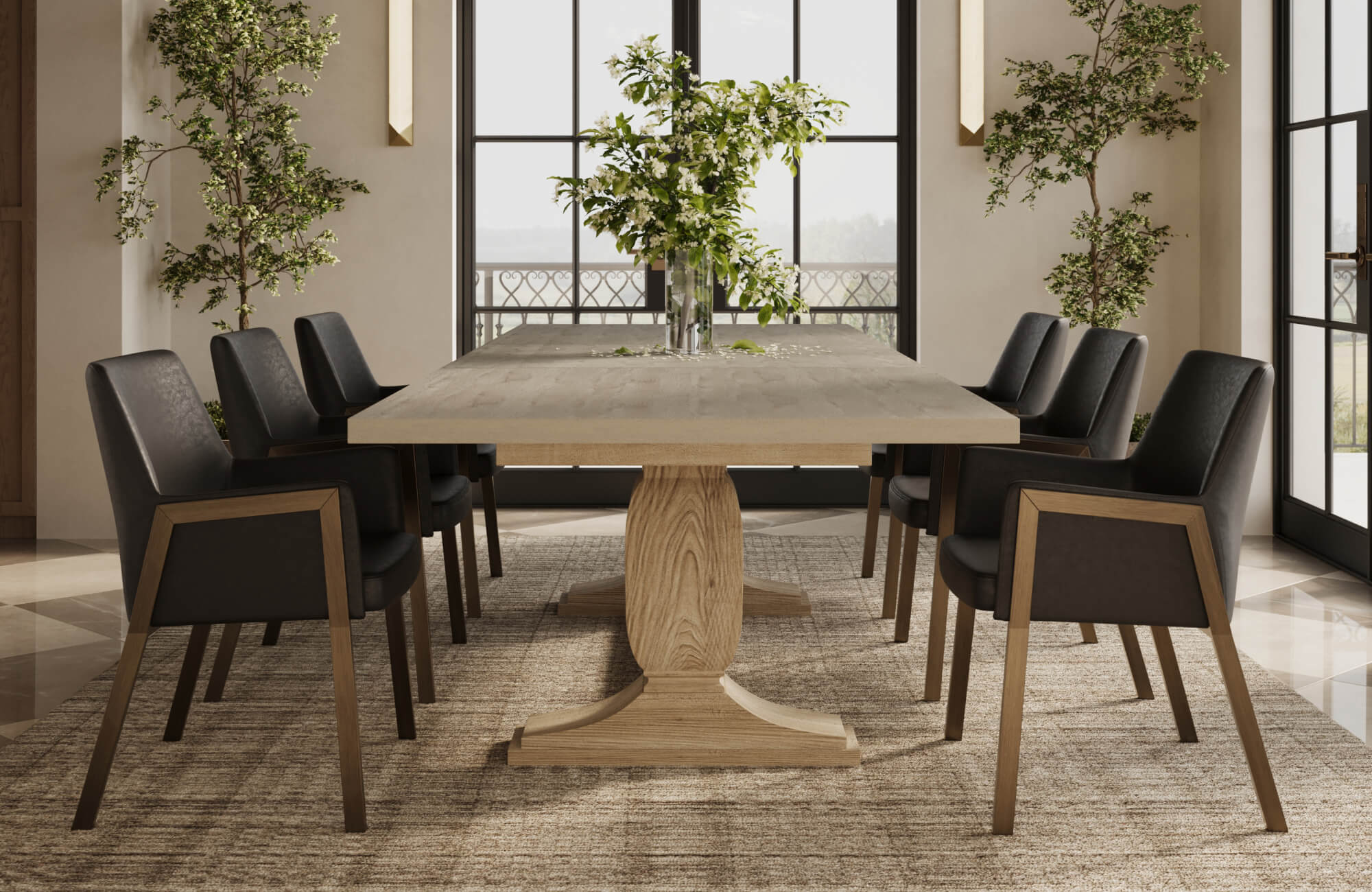
Table Dimensions as the Primary Determinant of Chair Coun
Dining table dimensions establish the foundational framework that ultimately governs how many chairs can be placed comfortably and responsibly around the table. When proportion and spacing are addressed early in the design process, seating decisions align naturally with ergonomic comfort and visual balance.
Linear Seating Allocation Standards
Industry furniture standards consistently recommend allowing approximately 24 inches of linear table edge per seated adult, a guideline grounded in anthropometric research and ergonomic testing. This spacing accounts for shoulder width, elbow articulation, and natural posture, creating a dining experience that feels relaxed rather than restrictive. When applied consistently, it also prevents the subtle discomfort that arises from overcrowded seating during longer meals. Designers rely on this measurement because it balances human comfort with seating efficiency across a wide range of table sizes. Moreover, reducing the spacing may allow additional chairs, yet it often leads to constrained movement and visual tension around the table. By respecting this standard, dining layouts feel intuitive, composed, and professionally resolved.
Rectangular and Oval Table Capacity Benchmarks
Rectangular dining tables are widely favored because their straight edges allow chairs to be distributed evenly and predictably along each side, supporting both comfort and visual balance. A 60-inch rectangular dining table typically seats six, while longer formats expand capacity without disrupting circulation when proportioned correctly. An extendable design, such as the Rebecca 86" to 120" Dining Table in Greige, exemplifies this adaptability, offering seating for eight at its standard length and comfortably accommodating up to ten when fully extended. As displayed in the photo above, its elongated rectangular silhouette also maintains clean alignment for dining chairs, even as the table expands for larger gatherings. The solid pedestal base further enhances leg clearance, allowing chairs to be positioned freely along the extended edges. This balance of scale, structure, and extension capability ensures the table remains visually grounded and functional at every size. This makes rectangular and oval formats especially effective for dining rooms that require flexibility without sacrificing refined proportions.
Round and Square Table Seating Limits
Round dining tables encourage conversational flow by positioning diners equidistant from one another, yet they offer less usable edge length than rectangular forms. For example, a 48-inch round table comfortably supports four chairs, while a 60-inch diameter table accommodates six without compromising elbow room. Beyond this size, spacing also becomes less intuitive and can disrupt both comfort and balance. Moreover, square dining tables introduce additional challenges due to corner placement, where legroom and alignment are more constrained. Larger square tables may seat eight, though only with careful attention to chair profile and spacing. Without this planning, seating can feel compressed rather than cohesive, diminishing both comfort and visual harmony.
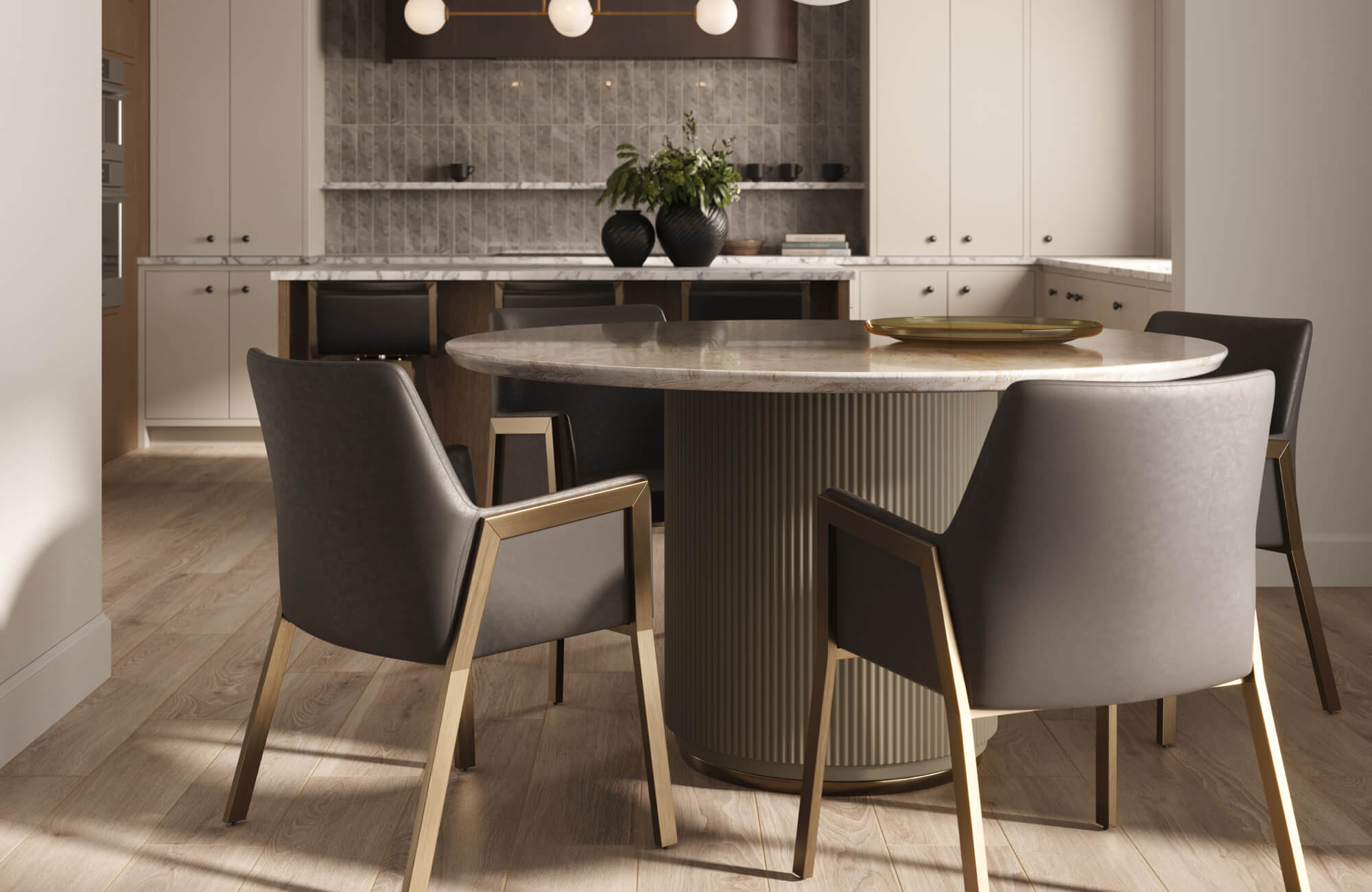
Table Shape and Chair Distribution Efficiency
While dimensions define overall capacity, table shape determines how efficiently chairs can be arranged around the dining surface. Geometry influences both physical comfort and the visual rhythm of the dining space.
Edge Continuity and Chair Alignment
Straight-edged dining tables create a continuous perimeter that allows chairs to align naturally and evenly along each side. This alignment supports consistent spacing, which reinforces ergonomic comfort during everyday use. Rectangular tables also maximize usable edge length while minimizing spatial waste. Chairs can be placed symmetrically without awkward gaps or forced adjustments. This predictability simplifies seating calculations for larger dining rooms and extended tables. Over time, the consistency of alignment contributes to a dining space that feels orderly, intentional, and visually calm.
Pedestal Bases and Seating Flexibility
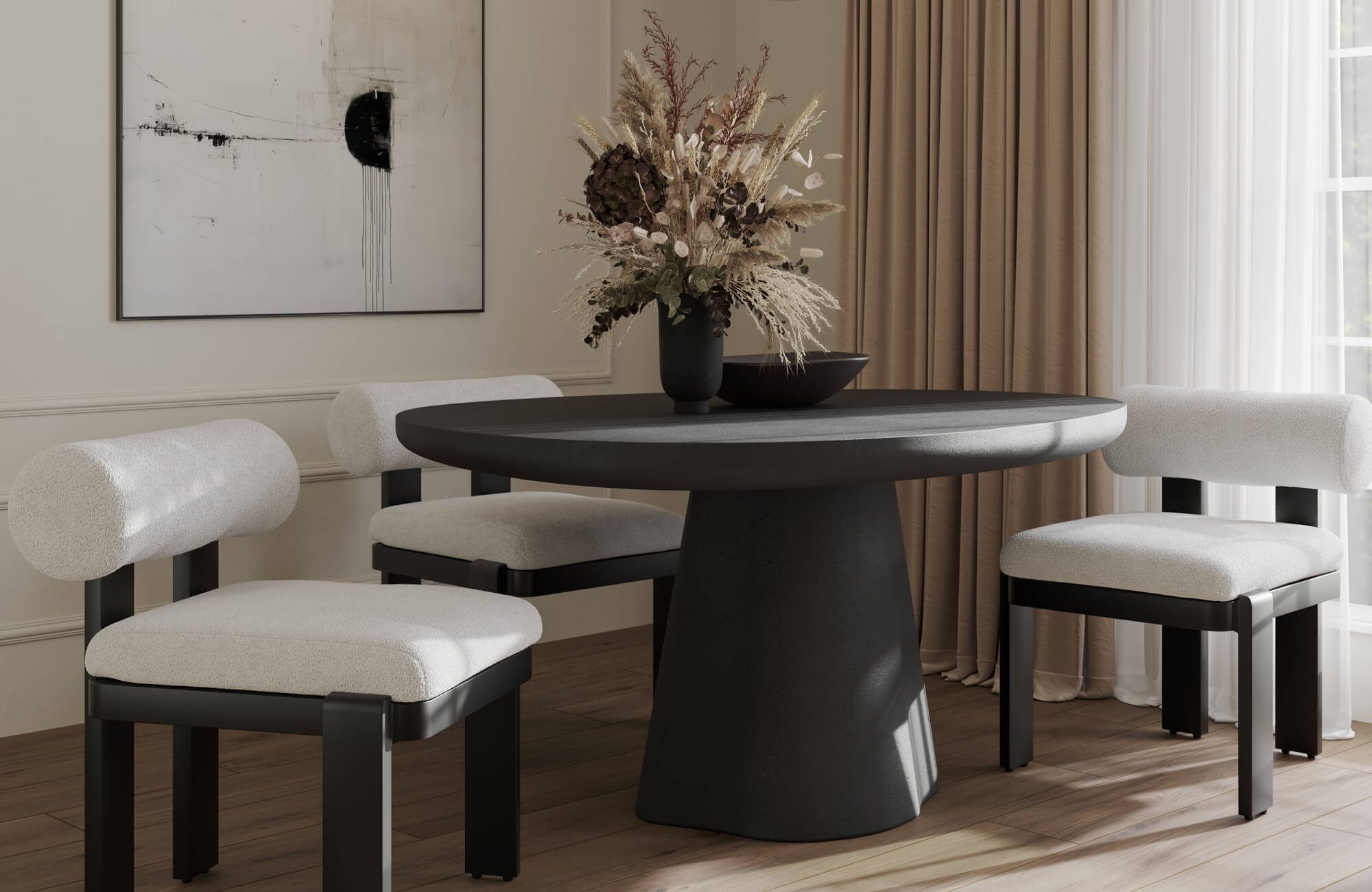
Pedestal dining tables remove the visual and physical interruption created by traditional corner legs, allowing chairs to be positioned more freely around the table. This increased under-table clearance improves legroom and makes it easier to adjust seating without obstruction, especially in round table configurations. As shown in the photo above, the Anastasia 59" Dining Table in Taupe exemplifies this advantage through its sculptural pedestal base, which supports flexible chair placement while maintaining a balanced footprint. The round surface paired with a central pedestal also allows four dining chairs to sit comfortably without crowding or awkward spacing. This configuration enhances circulation while encouraging conversational flow between diners. Pedestal-based round tables like Anastasia are particularly effective in kitchens and open dining areas where adaptability and visual softness are essential.
Corner Constraints and Visual Balance
Tables with pronounced corners require greater sensitivity to spacing and proportion in order to remain comfortable and visually balanced. Square and compact tables, for example, often struggle with efficient chair placement at corner positions. Reduced legroom and awkward angles can subtly diminish the dining experience. To counter this, designers frequently limit chair count rather than compress spacing. This restraint also preserves circulation while reinforcing visual clarity around the table. When corners are allowed to breathe, the dining arrangement feels more intentional and refined.
Dining Room Size, Clearances, and Circulation Planning
Seating capacity must always be evaluated within the broader context of the dining room itself. When circulation, clearances, and room proportions are thoughtfully addressed, the space functions effortlessly rather than feeling constrained.
Minimum Clearance Requirements
Professional space-planning standards emphasize the importance of maintaining a minimum of 36 inches between the dining table edge and surrounding walls or furniture. This clearance allows chairs to be pulled out fully while enabling diners to stand and move without restriction. In dining rooms with frequent movement, increasing this distance to 42 or even 48 inches also supports smoother circulation patterns. These expanded clearances become especially important during gatherings, when multiple people are moving simultaneously. When spacing is reduced below recommended thresholds, movement becomes awkward and visually disruptive. Over time, respecting proper clearance standards preserves comfort, accessibility, and long-term functionality.
Impact of Room Proportions
Room proportions play a critical role in how seating capacity is perceived, even when table dimensions technically allow for additional chairs. Narrow dining rooms, for example, may accommodate a large table on paper, yet feel immediately constrained once chairs are occupied. Balanced width and length also allow seating to be distributed evenly without obstructing natural walkways. Ceiling height and sightlines further influence how open or compressed the space feels during use. When seating density exceeds what proportions can support, visual depth and comfort diminish noticeably. Thoughtful evaluation of the room scale ensures the dining area remains composed, breathable, and welcoming.
Integration with Open-Concept Layouts
Open-concept dining spaces offer greater flexibility due to the absence of enclosing walls, yet they require greater discipline in seating planning. Visual boundaries often replace physical ones, allowing dining areas to blend seamlessly into adjacent living or kitchen zones. Despite this openness, circulation paths must remain clearly defined and unobstructed. Chairs that encroach on primary walkways also disrupt flow and diminish usability. In addition, strategic furniture placement maintains functional separation without sacrificing openness. When properly planned, open layouts feel cohesive, balanced, and intuitively navigable.

Lifestyle Use and Flexible Seating Strategies
How a dining space is used on a daily basis should meaningfully shape decisions around seating quantity and arrangement. When lifestyle patterns are thoughtfully considered, the dining room remains both functional and visually composed.
Everyday Seating vs. Entertaining Needs
Most households rely on their dining table for daily meals, yet many spaces must also accommodate larger gatherings without feeling overcrowded. Designing seating around everyday use ensures the room remains comfortable and visually balanced during routine dining. However, homes that frequently host benefit from tables scaled to support additional chairs when needed.
Edward Martin’s Kyla 94.5" Dining Table exemplifies this entertaining-ready approach, offering generous surface length that comfortably seats eight while maintaining proper spacing. As featured in the photo above, the elongated rectangular form allows chairs to be arranged along both sides without compressing circulation or visual clarity. This balance also ensures the dining space functions effortlessly for daily use while transitioning seamlessly for hosting. Tables like Kyla support flexible lifestyles by combining everyday comfort with elevated entertaining capacity.
Extendable Tables and Leaf Systems
Extendable dining tables provide an elegant solution for accommodating fluctuating seating needs without compromising proportion or spatial clarity. Integrated leaf systems allow the table to expand seamlessly during gatherings and return to its original footprint afterward. This adaptability also supports long-term functionality, particularly in dining rooms where space is limited. In addition, well-engineered extension mechanisms maintain structural stability and surface alignment when deployed. When closed, the table retains its visual balance and design integrity. As a result, extendable tables align naturally with modern lifestyles that value flexibility without visual excess.
Chair Profile and Upholstery Considerations
The physical profile of dining chairs plays a critical role in determining seating capacity and overall comfort. Slim-profile, armless dining chairs allow tighter spacing while maintaining ergonomic support for everyday use. Upholstered chairs also introduce additional visual and physical mass, which requires more clearance between seats. Armchairs further reduce seating density due to their width and lateral projection. In addition, seat depth, back curvature, and leg placement influence how efficiently chairs fit around the table. Selecting chair designs with proportional awareness ensures capacity, comfort, and aesthetics remain seamlessly aligned.
Visual Proportion, Design Intent, and Chair Quantity
Beyond function, the number of dining chairs contributes significantly to the visual character and emotional tone of the space. When seating decisions are guided by proportion and restraint, the dining room feels curated rather than crowded.
Scale, Massing, and Visual Weight
Dining chairs contribute visual mass that must be carefully balanced with the scale of the table and surrounding furniture. An excessive number of chairs can overwhelm the table and compress negative space, making the room feel visually heavy. Designers often assess massing to preserve openness and maintain a sense of spatial hierarchy. Lighter chair silhouettes also help reduce visual density without sacrificing function. Material finishes and color tones further influence perceived weight and presence. When scale and mass are aligned thoughtfully, the dining room feels composed, elegant, and visually resolved.
Symmetry and Furniture Pairing
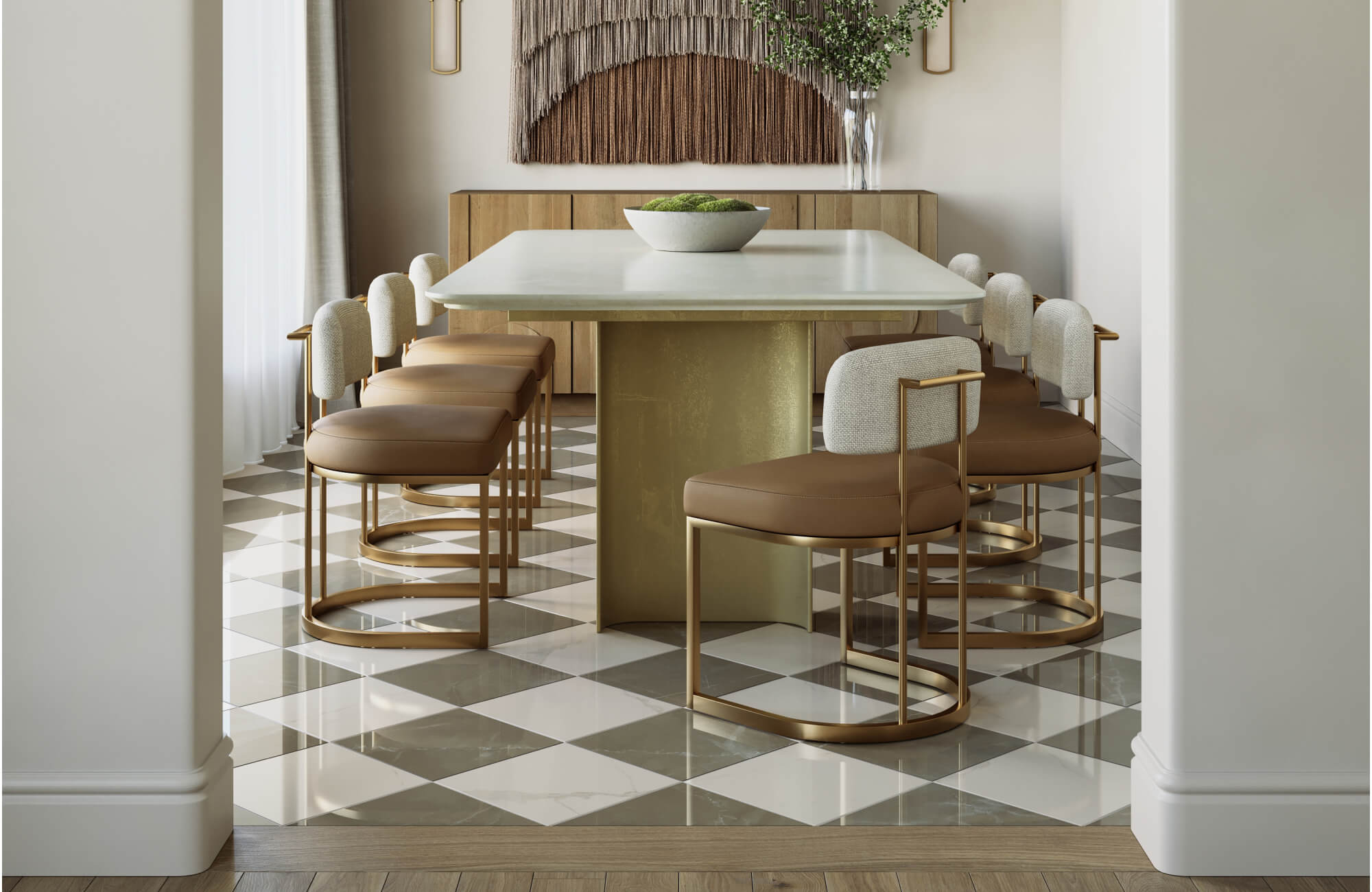
Even distribution of chairs reinforces symmetry, which plays a critical role in creating visual order and compositional balance within a dining space. Symmetry establishes a sense of calm and intentionality, particularly in formal or design-forward dining rooms. As shown in the photo above, the Dominic 95" Dining Table in Dark Mango exemplifies this principle through its long, linear form, which allows chairs to be placed evenly along both sides while maintaining proportional harmony. The table’s substantial length also supports paired seating arrangements that feel deliberate rather than crowded. This balanced placement enhances the relationship between the table, surrounding furniture, and architectural elements such as lighting and wall art. When chair quantity and spacing are aligned with a table of this scale, the dining room achieves a refined sense of order that feels cohesive, grounded, and visually resolved.
Intentional Under-Seating as a Design Choice
In many thoughtfully designed interiors, fewer chairs are used than a dining table can technically accommodate. This intentional approach prioritizes comfortable circulation, visual breathing room, and a greater sense of openness, especially in smaller dining areas or open-plan layouts. Rather than matching chair count to maximum capacity, designers often consider how the table is used day to day, seating only what’s needed for regular meals. Under-seating also works especially well in minimalist, modern, and editorial-style interiors, where restraint allows the design to make a stronger impact. Extra chairs can be stored nearby and brought out only when needed, reducing everyday wear while offering greater flexibility. Ultimately, intentional under-seating reflects a disciplined design approach that elevates the dining room’s presence.
A Balanced Approach to Dining Room Seating
The ideal number of dining chairs emerges from a deliberate alignment of table dimensions, room scale, circulation planning, lifestyle needs, and visual proportion. When these elements work in harmony, the dining room feels comfortable, functional, and visually resolved. Seating decisions guided by professional standards also support effortless movement and long-term usability. Moreover, flexible solutions allow the space to adapt gracefully as household needs evolve. Ultimately, a well-considered dining table set enhances everyday living while reinforcing timeless design integrity and lasting comfort. By approaching chair count as both a spatial and aesthetic decision, the dining room becomes a setting that supports connection without compromise. This balance ensures the space remains inviting, practical, and visually cohesive for years to come.
For those seeking a tailored approach, Edward Martin’s design services offer expert guidance in creating dining spaces that balance aesthetics, ergonomics, and architectural context. Contact us today to bring thoughtful, professionally curated dining room design to life!
Follow us on Instagram
@EDWARD.MARTIN
)
)
)
)
)
)
)
)
)
)
)
)
)
)
)
)