
)
)
)
)
)
)
)
)
How Long Do Cement Tiles Last Compared To Porcelain Tiles?
When you think about longevity in tiles, both cement and porcelain stand out as durable choices, but the way they age and perform tells two very different stories. Cement tiles are celebrated for their artisanal charm and evolving character, while porcelain tiles, especially concrete look designs that replicate the visual appeal of cement, are admired for their consistency and resilience.
This article explores how these two materials compare in terms of structure, wear, environmental response, aesthetics, maintenance, and overall value. By looking closely at these factors, you will gain the insight you need to choose a tile that not only lasts for decades but also suits your lifestyle and design goals.
Material Composition and Structural Integrity
The foundation of tile longevity lies in how the tile is made. Cement and porcelain tiles both achieve strength through different production methods, and these differences explain why they age and wear in such distinct ways.
Cement Tile
Cement tiles, often referred to as encaustic tiles, are crafted through a process that emphasizes pressure and curing rather than heat. A mixture of Portland cement, fine sand, powdered marble, and mineral pigments is poured into molds and then compacted with powerful hydraulic presses. This immense pressure creates a dense tile body with very few voids or weaknesses. After pressing, the tiles are left to cure naturally, during which a chemical process called hydration hardens the cement and locks in strength.
Because of this method, cement tiles are incredibly sturdy and capable of lasting for decades. However, their structure remains porous, meaning they can absorb water or stains if left unsealed. Over time, they also develop a soft patina that adds depth and character, making them even more appealing as they age. This natural aging process is one of the reasons cement tiles can endure for decades while remaining visually distinctive.
Porcelain Tiles
Porcelain tiles are created through a process rooted in high heat and precision. They begin with a carefully refined blend of clay enriched with feldspar and silica. Once shaped, the tiles are fired in kilns at temperatures often exceeding 1,200°C. At this stage, vitrification occurs, which is a transformation where the minerals melt and fuse together, producing a glass-like internal structure. The result is a tile body that is exceptionally dense and remarkably strong.
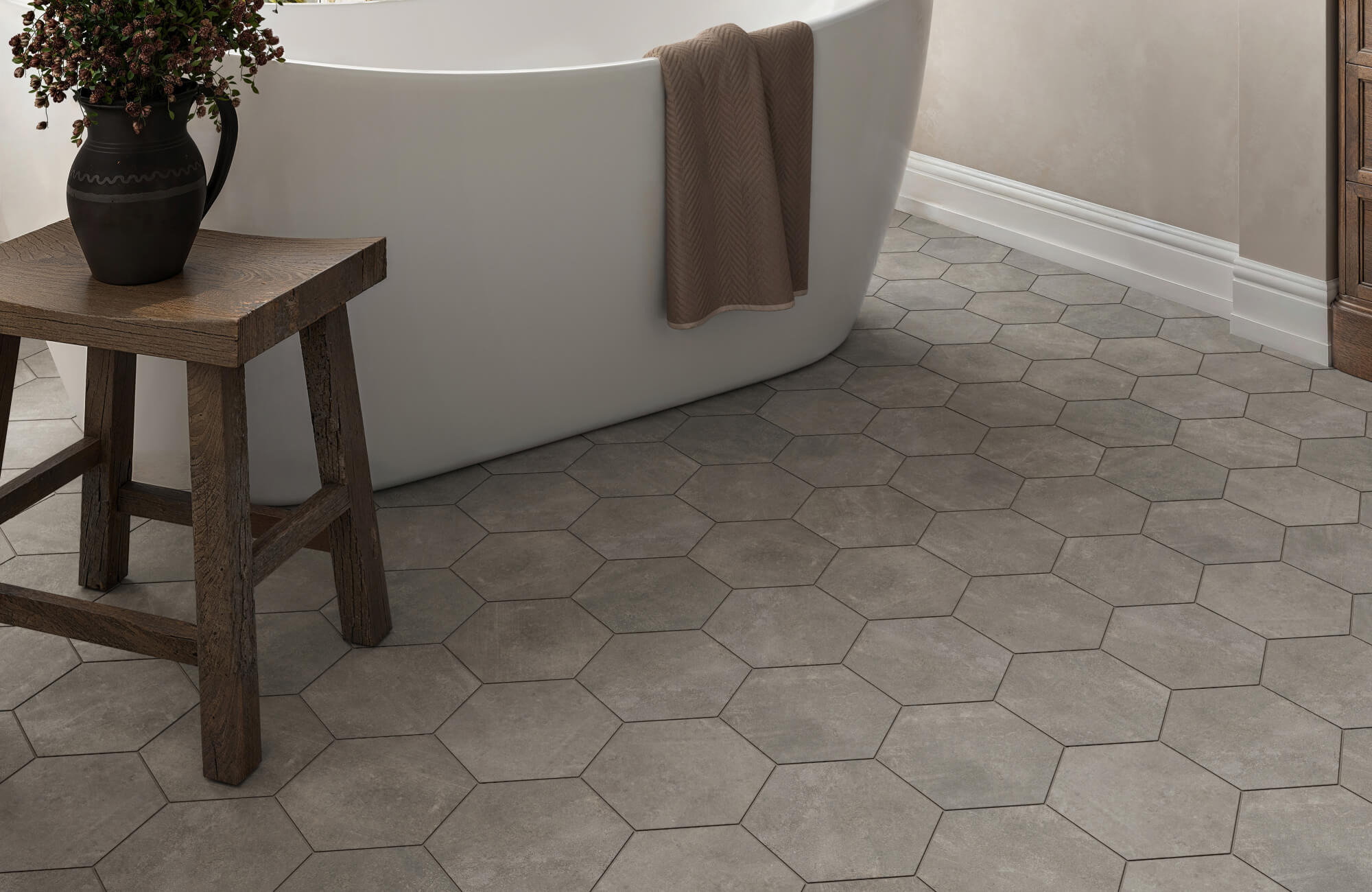
This vitrification process is what gives porcelain tiles their outstanding durability. With a non-porous surface, porcelain is impervious to moisture, making it resistant to staining, frost damage, and structural cracks. In everyday use, the hardness of porcelain also means it withstands abrasion, chips, and impacts better than most other tile types. For you, this translates into flooring and wall surfaces that retain their original appearance and performance for decades with very little maintenance. Whether installed in a busy bathroom, kitchen, or commercial lobby, porcelain tiles consistently deliver long-lasting structural integrity. A great example is our Adrian 7x8.25 Matte Porcelain Tile in Smoke. Shown above in a modern bathroom, its hexagon shape and soft gray tone bring a timeless concrete look with the durability of porcelain. This combination of style and strength makes it a versatile choice, seamlessly blending contemporary aesthetics with everyday practicality.
Resistance to Wear and Everyday Use
How tiles respond to daily life is one of the most reliable ways to measure their true durability. Cement tiles tend to reveal their character gradually, softening in color and texture as usage and grit wear on their surfaces. This evolution produces a patina that many find charming, but it also signals vulnerability. Without resealing and routine care, busy areas can quickly show uneven fading or roughened patches, making cement better suited for spaces where you welcome a lived-in aesthetic and are prepared to maintain it.
Porcelain tiles offer a very different experience. Their vitrified structure makes them dense and resistant to abrasion, which means they can withstand constant activity in kitchens, hallways, or even commercial spaces without losing their polished look. Scratches, when they occur, often blend into the glaze or through-body color, keeping surfaces visually consistent. Over time, this ability to resist wear allows porcelain to remain crisp and stable with far less effort from you.
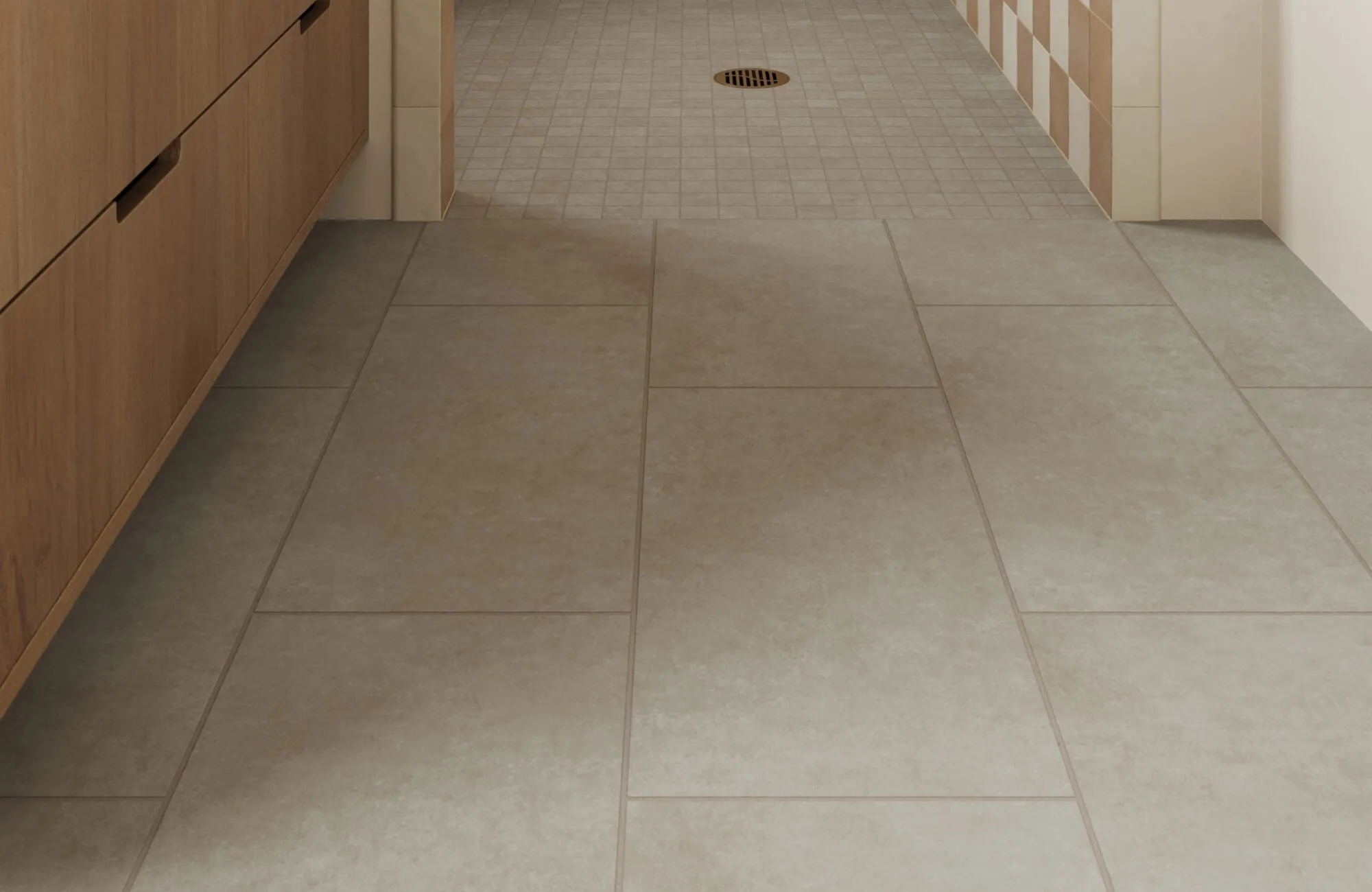
When it comes to impacts, the contrast is equally clear. Cement tiles can handle weight across the surface but are prone to chips or cracks if something heavy drops on them, a drawback in kitchens or workshops. Porcelain, by comparison, disperses impact forces more effectively, making it less likely to break under sudden stress. Our Ramsey 24x48 Matte Porcelain Tile in Smoke illustrates this strength beautifully, as seen in the image above. Its large format reduces grout lines for a seamless look, while the soft gray finish captures the aesthetic of concrete with none of its vulnerabilities. In spaces that demand both resilience and style, it delivers a balance that holds steady over time.
Environmental and Climate Factors
The climate where you install tiles has a direct impact on how long they last. Moisture levels, temperature swings, and exposure to outdoor conditions can either shorten or extend their lifespan, depending on the material you choose.
Moisture and Water Absorption
Cement tiles naturally contain tiny pores that readily absorb water, making them vulnerable in damp or humid environments. Without a proper sealant, this moisture can seep into the tile body, leading to discoloration, structural weakening, or even mold growth beneath the surface. Bathrooms, kitchens, and laundry rooms demand vigilant sealing schedules to keep cement tiles in good condition. In coastal regions, salt carried by the air adds another layer of risk, as salt crystals can penetrate the pores and gradually degrade the surface if maintenance is neglected. The beauty and longevity of cement tiles in these environments depend heavily on how consistently you protect them against water intrusion.
Porcelain tiles present a very different story. Their vitrified body gives them a virtually non-porous structure, meaning they repel water naturally and require no sealing at all. Because of this, porcelain tiles are inherently resistant to mold, mildew, and staining, even in consistently wet environments. Our Wyatt 12x24 Matte Porcelain Tile in Dune, featured in the photo above, shows how well this works in practice. With its soft beige tone and versatile rectangular size, it offers warmth while eliminating the maintenance worries of cement. In bathrooms, shower walls, or kitchens where humidity is unavoidable, porcelain tiles like this deliver dependable performance and a timeless look that stays beautiful year after year.
Thermal Durability and Freeze-Thaw Resistance
When temperatures remain stable, cement tiles perform well indoors. However, problems arise in climates where freeze-thaw cycles are common. If unsealed cement absorbs water and that water freezes, it expands and places stress on the tile. This repeated expansion and contraction can lead to cracks or cause tiles to lift away from their substrate. To use cement tiles outdoors in colder climates, you need high-performance sealants, professional installation, and ongoing monitoring to reduce the risk of freeze-related damage. Even with these measures, long-term reliability can be uncertain in regions with harsh winters.
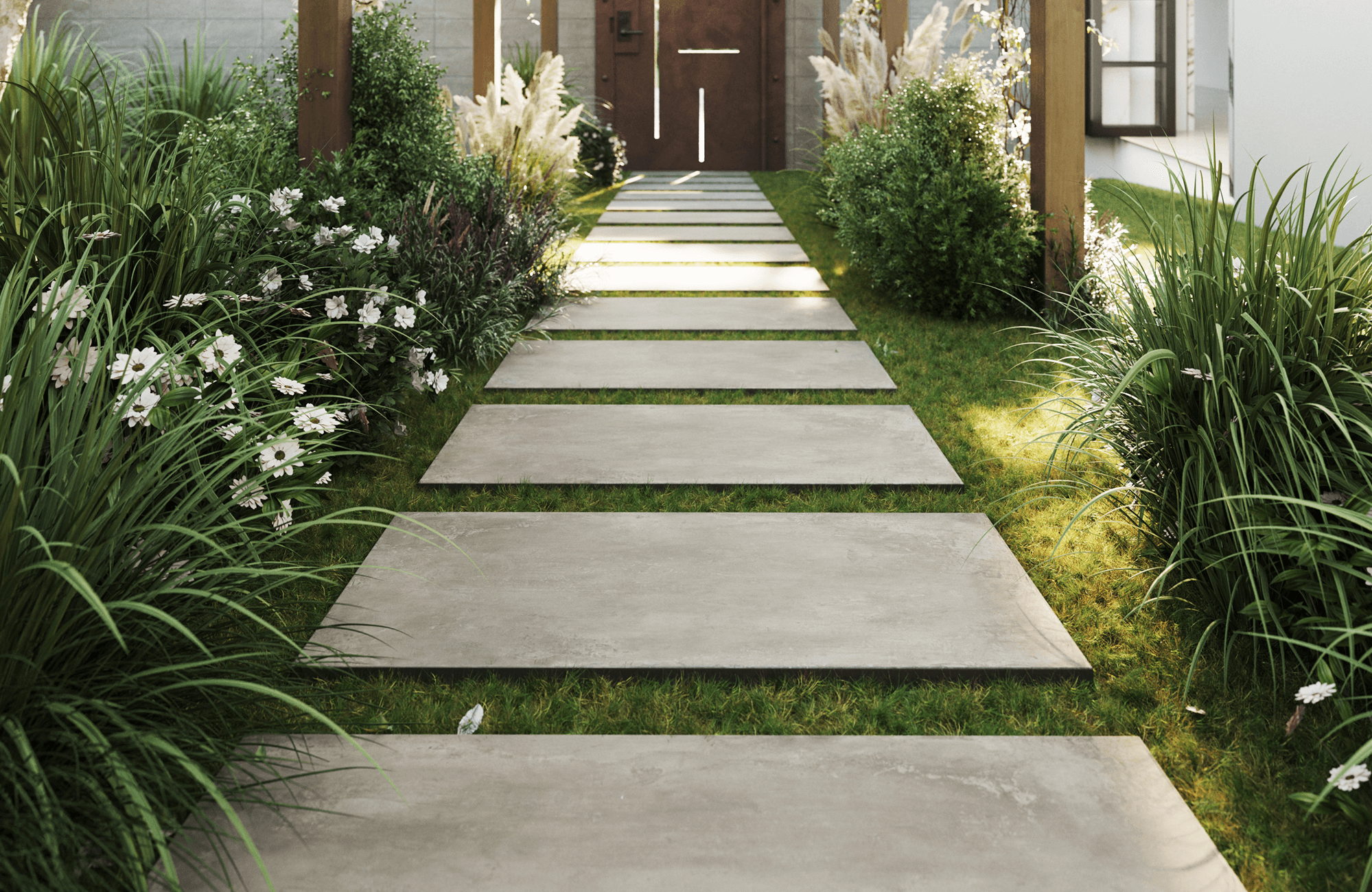
Porcelain tiles, by contrast, are engineered to handle extreme conditions with little effort on your part. Their non-porous surface prevents moisture from getting inside the tile, eliminating the expansion-and-cracking problem altogether. This stability makes porcelain an excellent choice for outdoor patios, pool decks, and façades in areas that experience heavy frost or fluctuating temperatures. Our Ramsey 24x48 Grip Porcelain 2cm Paver Tile in Putty perfectly demonstrates how porcelain performs outdoors. As displayed in the image above, its thicker profile and textured grip finish make it ideal for open-air pathways and garden settings, while the soft gray color brings a refined, natural look to the landscape. Even under direct sunlight or through deep freezes, it maintains both strength and beauty, offering a level of resilience that cement cannot match in demanding climates.
Aesthetic Longevity and Design Evolution
Cement tiles are admired for their vibrant surface patterns, yet their porous body leaves them vulnerable to fading from sunlight, harsh cleaners, or heavy abrasion. To preserve their brilliance, you need to reseal them regularly. When well cared for, they can maintain their artistry for decades, but their appearance gradually mellows into a soft patina. This natural transformation, often celebrated in rustic or eclectic interiors, gives cement a sense of lived-in warmth and authenticity.
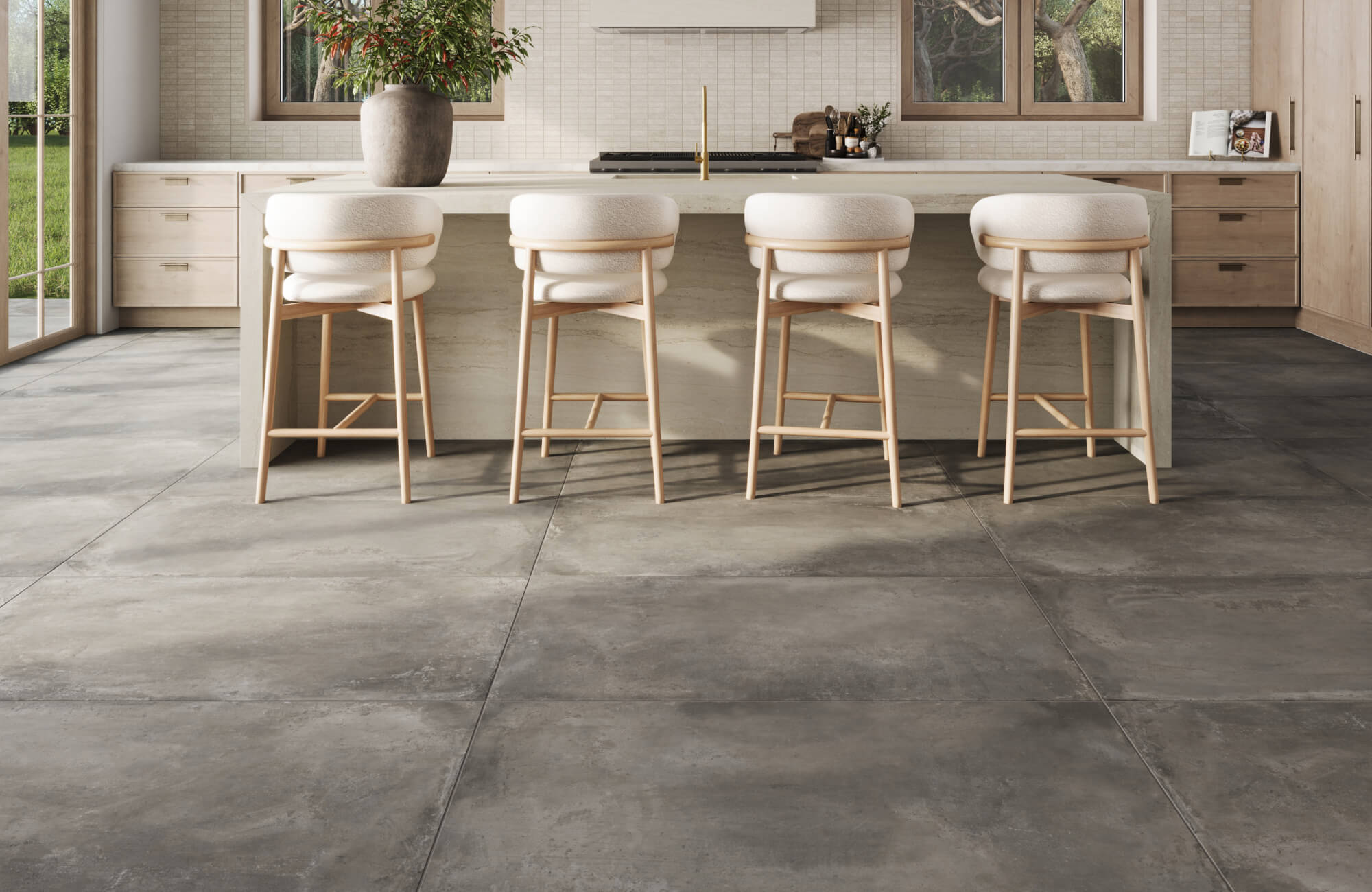
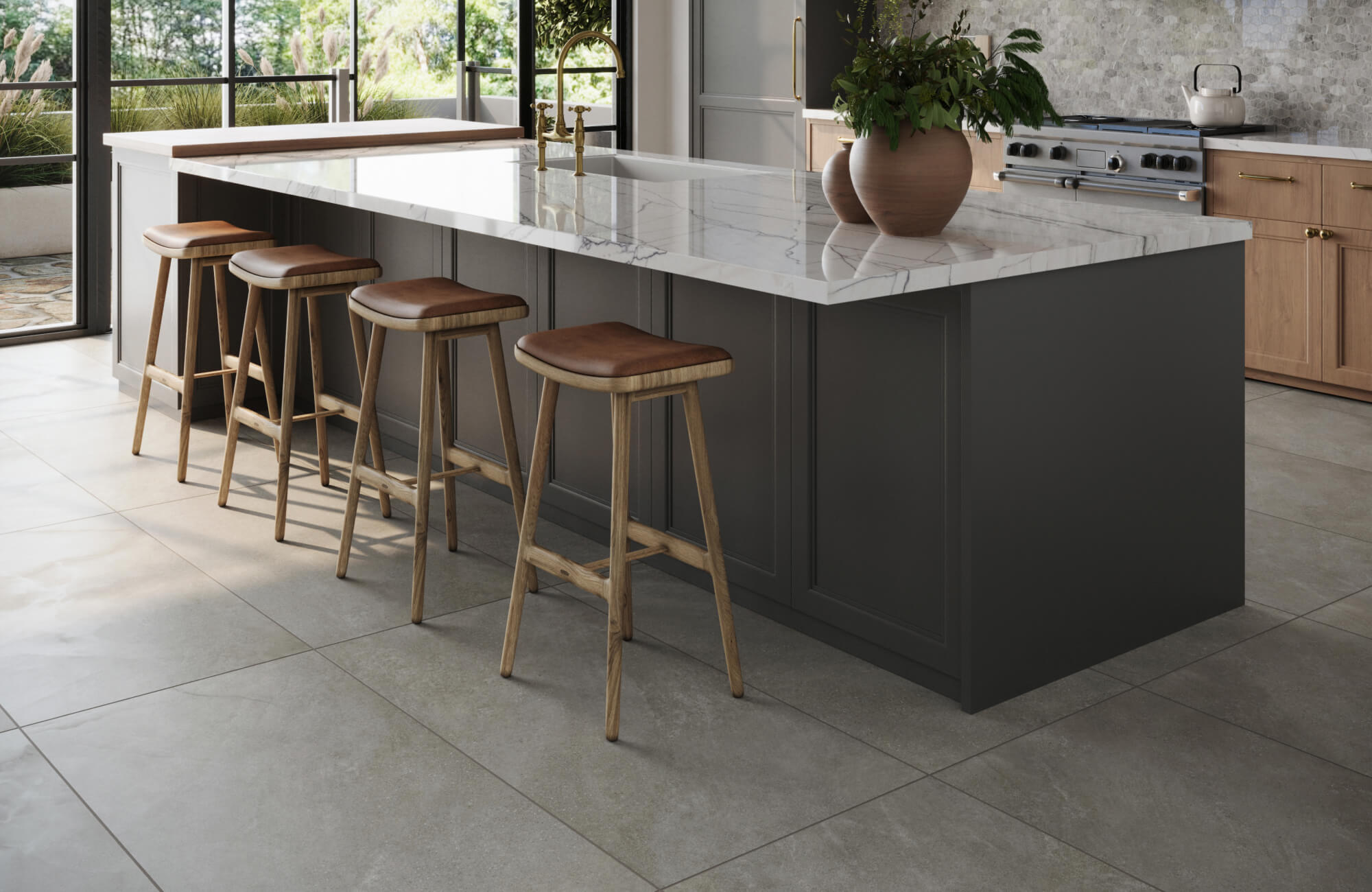
Porcelain tiles, in contrast, are designed for visual permanence. High-definition prints and through-body coloration are locked under a durable glaze, making them highly resistant to UV rays, chemicals, and surface wear. This means porcelain keeps its crisp, consistent look for decades with minimal effort, providing predictability for spaces where stability matters most. In modern kitchens like the one pictured above, our Shea 24x48 Matte Porcelain Tile in Smoke anchors the design with a sleek, concrete look surface. Its soft gray tone and large format layout create an uninterrupted flow that stays beautiful over time, ensuring the space feels just as polished years from now as it does today.
Maintenance Practices That Extend Lifespan
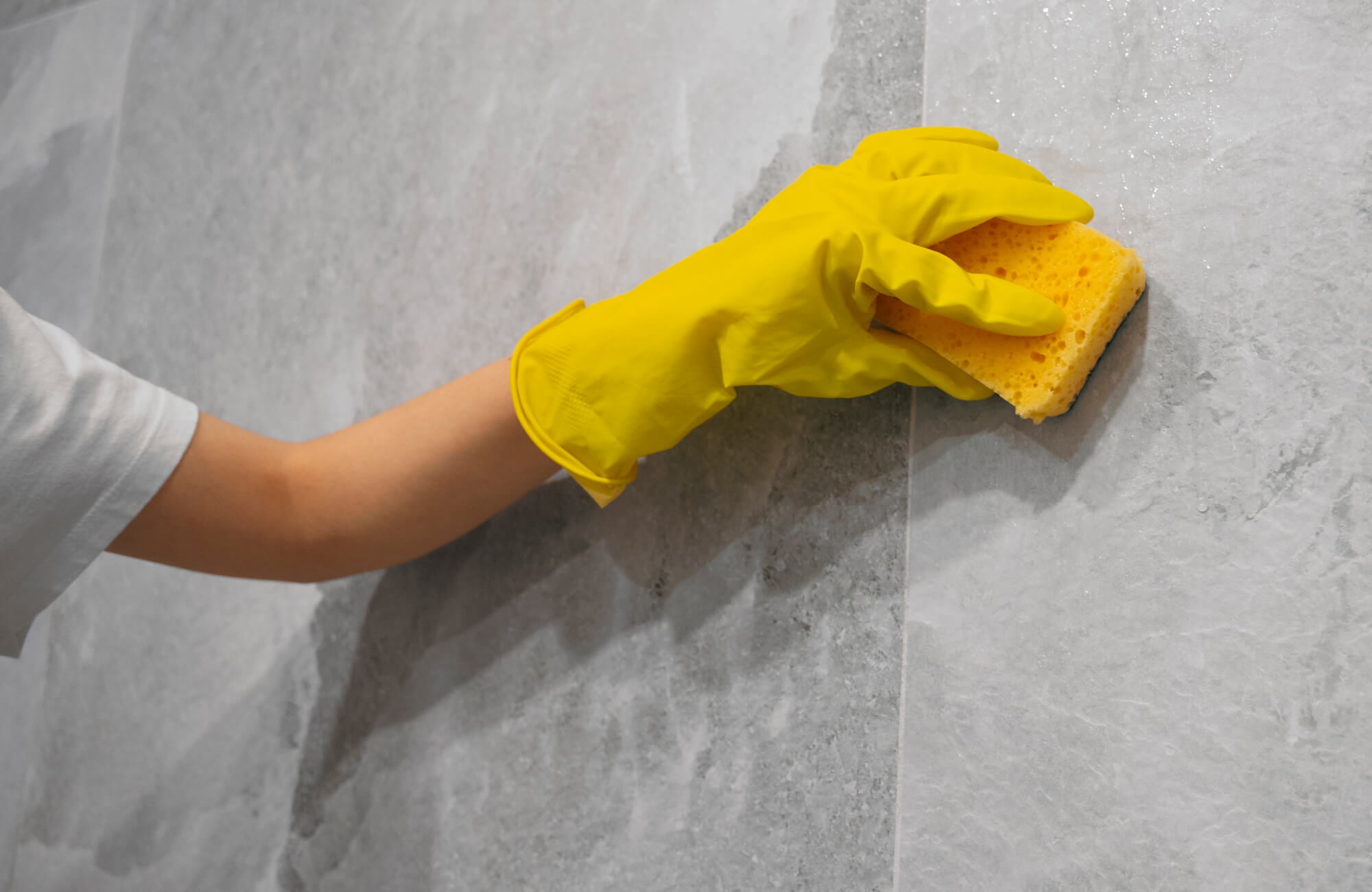
Cement tiles demand regular attention. From the very beginning, they must be sealed with a penetrating product to block moisture and stains, and this layer needs reapplication every few years, depending on use. Daily care also requires mindfulness, such as pH-neutral cleaners are a must, spills should be wiped immediately, and harsh or abrasive products must be avoided. Although this routine may feel labor-intensive, it rewards you with surfaces that not only endure but also develop a patina that adds character over time. In essence, the effort you put in becomes part of the charm cement tiles bring to your space.
Porcelain tiles, on the other hand, are almost effortless to maintain. Their dense, non-porous structure eliminates the need for sealing, so sweeping and an occasional mop with a mild detergent are often enough. The only aspect that may need extra attention is the grout, which can discolor if left unsealed, but the tiles themselves resist stains, scratches, and chemical damage with ease. For you, this means porcelain offers long-term resilience with minimal effort, making it a reliable choice in busy households or commercial environments where practicality is as important as durability.
It is also important to follow the specific care guidelines provided by each manufacturer. Certain tiles may have unique finishes, treatments, or installation requirements, and adhering to these recommendations ensures that your maintenance efforts truly support the long-term quality and performance of your investment.
Making the Right Choice for Your Space
Cement and porcelain tiles may both last for decades, but they do so in very different ways. Cement rewards careful maintenance with an evolving patina full of character, while porcelain offers the same visual appeal without the upkeep. Its dense, non-porous body also resists stains, scratches, water, and weather, ensuring a surface that stays consistent and polished with minimal effort. For those who value both style and long-term reliability, porcelain emerges as the smarter investment, combining durability, versatility, and ease of care in a way cement simply cannot match.
If porcelain’s consistency appeals to you, the next step is to experience it firsthand. With Edward Martin’s request samples option, you can explore porcelain finishes up close, while the augmented reality (AR) tool lets you visualize them directly in your space. Together, these resources give you the confidence to choose a porcelain tile that matches your style and delivers the long-term durability you’re looking for.
Follow us on Instagram
@EDWARD.MARTIN
)
)
)
)
)
)
)
)
)
)
)
)
)
)
)
)