Choosing the right wall mirror size is one of the most common questions when planning a space, and the answer is rarely one-size-fits-all. Mirror size influences how a room feels, how well the mirror functions, and how naturally it fits into the surrounding layout. In this article, we’ll explore the key considerations that influence mirror sizing, from wall proportions and ceiling height to function and visual balance, so you can make informed decisions without second-guessing your choice.

Scale And Proportion Within Wall Space
When considering mirror size, the wall itself becomes the starting point. Before factoring in furniture or function, focus on how much uninterrupted wall area is available so the mirror feels deliberate, balanced, and comfortably placed rather than confined.
Measuring Available Wall Area
Start by identifying the usable portion of the wall. This involves measuring both width and height while accounting for trim, light switches, vents, and architectural details that break up the surface. Although these elements may seem insignificant, overlooking them often leads to mirrors that feel poorly positioned or out of proportion.
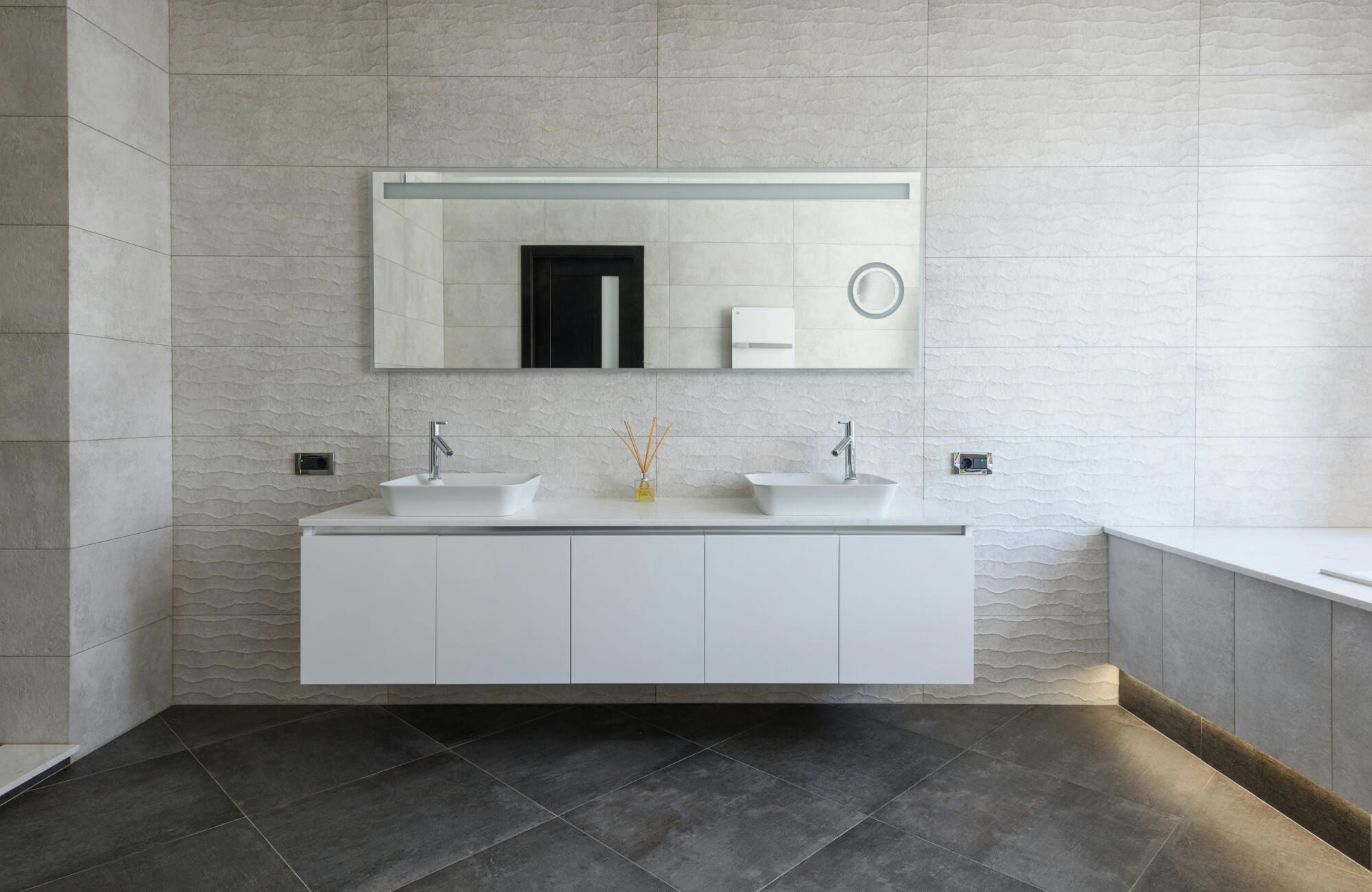
Once the usable area is defined, leaving a visible border of wall around the mirror becomes essential. This surrounding space allows the mirror to sit comfortably within the wall, prevents visual crowding, and helps it read as a considered design element rather than something added later. This approach is clearly illustrated with Edward Martin’s Tristan Round Mirror in Shiny Steel, where the mirror is scaled to fit neatly within the tiled wall section, as shown in the photo featured above. The visible margins around the mirror reinforce how respecting architectural boundaries and allowing breathing room result in a balanced, intentional placement rather than a surface that feels overfilled.
Proportional Guidelines That Actually Work
A practical starting point is sizing a mirror to approximately two-thirds to three-quarters of the wall width it occupies. This range typically creates a balanced look, keeping the mirror visually prominent without overpowering the wall. It also preserves enough surrounding surface so finishes and textures continue to contribute to the overall design.
However, proportion is a guideline rather than a rule. In contemporary spaces or gallery-style settings, intentionally extending beyond these ratios can work well. When the decision is deliberate, a larger mirror can feel integrated and architectural, adding presence without appearing excessive.
When Oversizing Or Undersizing Makes Sense
Oversized mirrors are most effective on large, uninterrupted walls where they can anchor the space and reflect light generously. They work particularly well when a wall feels empty or lacks connection to the rest of the room, helping to create cohesion and visual presence.
Smaller mirrors, however, are often the better choice when walls include paneling, textured finishes, or artwork. In these situations, a more restrained size allows the wall treatment to remain the primary focus, with the mirror adding function and subtle visual support without competing for attention.

Matching Mirror Size To Furniture Below
Once wall proportions are established, attention naturally shifts to what sits beneath the mirror. Furniture establishes clear visual boundaries, and when a mirror does not align with those lines, it can appear disconnected or visually unbalanced within the space.
Mirrors Above Consoles And Sideboards
In most cases, mirrors feel more balanced when they are slightly narrower than the furniture beneath them. This proportion keeps the arrangement visually grounded and prevents the mirror from feeling top-heavy. A width of about 60 to 80 percent of the furniture below typically creates a stable and well-balanced composition.
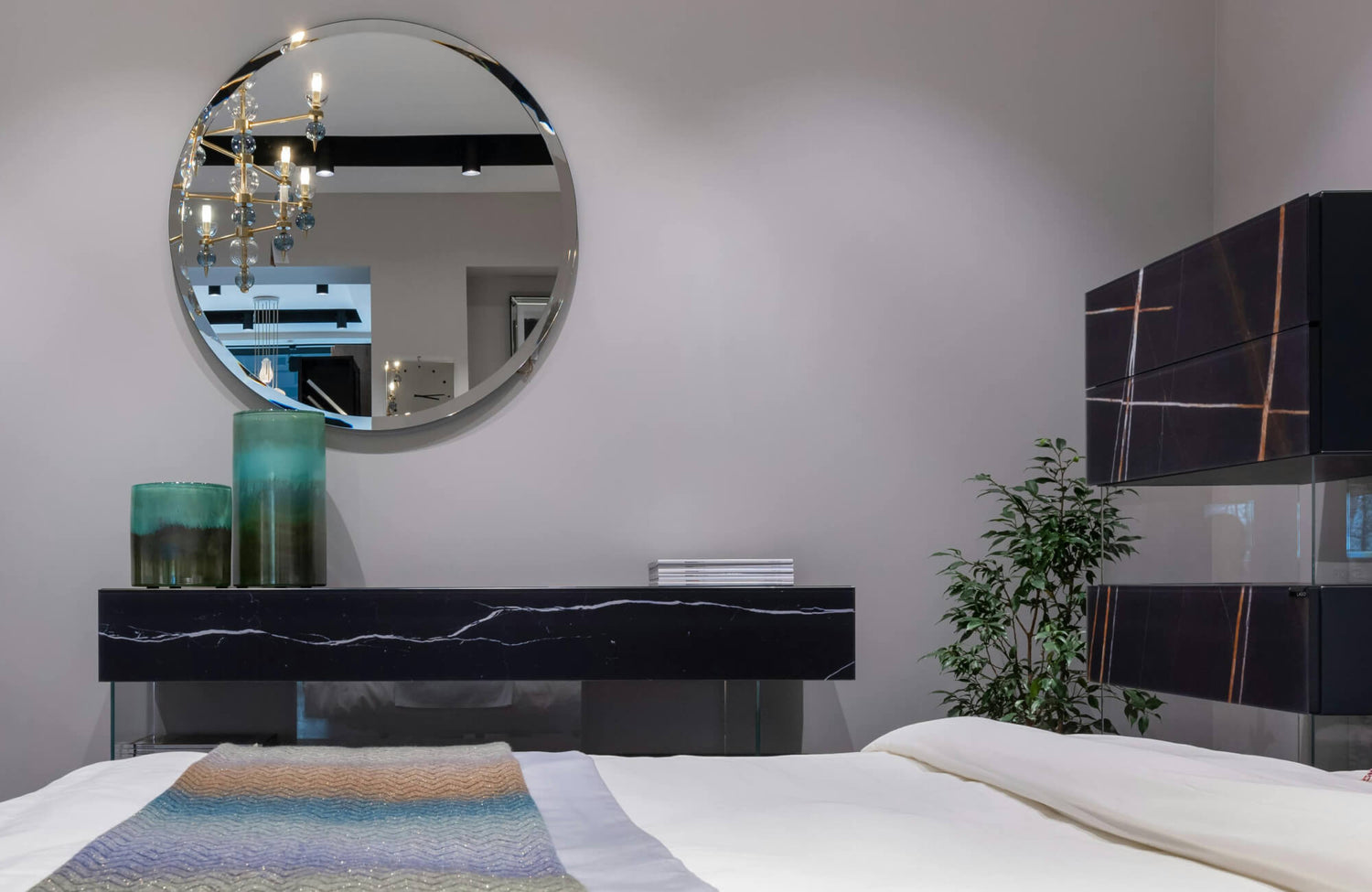
Maintaining this relationship also leaves room for decorative objects, lamps, or artwork on the surface below, allowing each element to feel intentional rather than crowded. This balance is illustrated with Edward Martin’s Esmeralda Round Mirror in Polished Brass paired with the Leonardo Sideboard in Brown, as shown in the photo featured above, where the mirror sits comfortably within the width of the sideboard. The spacing around the mirror and surface accessories reinforces how thoughtful sizing creates a composed, visually cohesive arrangement.
Bathroom Vanities And Functional Alignment
Bathroom mirrors require closer attention to alignment than most other spaces. Vanity width, sink placement, and faucet spacing all play a role in determining the right mirror size. When a mirror extends beyond the vanity edges, it can appear visually disconnected and disrupt the overall balance of the space.
Keeping the mirror aligned with the vanity edges creates a cleaner, more cohesive look. This approach also helps maintain balanced lighting and keeps reflections practical and comfortable for daily use.
Fireplaces And Large Anchors
Fireplaces carry a significant architectural presence, so mirrors placed above them need enough visual weight to feel appropriately balanced. When the mantel width limits the mirror size, increasing the height or selecting a frame with added depth can help create the necessary presence. This approach maintains visual balance while respecting the fireplace’s proportions, avoiding the need to extend the mirror beyond the mantel width.

Ceiling Height And Vertical Proportion
Ceiling height plays a vital role in how mirrors complement the overall space. By paying close attention to vertical proportions, you can use mirrors to enhance the room’s balance rather than highlight its limitations.
Standard Ceilings vs.Tall Ceilings
In rooms with standard eight-foot ceilings, mirrors that extend too high can make the space feel crowded. Choosing a moderately tall mirror helps maintain comfortable proportions without pulling the eye upward too abruptly. Rooms with higher ceilings offer greater flexibility. In these spaces, taller mirrors can reflect the room’s vertical scale and enhance openness when sized intentionally.
Vertical Mirrors And Visual Lift
Vertical mirrors naturally guide the eye upward and subtly increase the perceived height of a room. When placed thoughtfully, positioning them slightly higher than horizontal mirrors enhances this effect without upsetting the overall balance. This approach is particularly effective in spaces that feel compressed or lack strong architectural variation, helping the room feel more open and visually balanced.
Avoiding Top-Heavy Placement
A common mistake is placing mirrors too close to the ceiling, which pulls visual weight upward and leaves the lower portion of the wall feeling sparse. Aligning the mirror’s center closer to average eye level creates a more balanced composition. This placement supports comfortable viewing while keeping the room visually grounded.

Function Driven Mirror Sizing
Function plays a defining role in determining mirror size. Once we understand how the mirror will be used, choosing the right dimensions becomes clearer and far more intuitive.
Full Length And Practical Viewing
Full-length mirrors must meet minimum height requirements to reflect the entire body comfortably. Rather than sizing to the wall, we base height on average user height and typical viewing distance, ensuring the reflection feels natural and complete. This approach keeps the mirror functional and efficient, allowing it to serve its purpose without unnecessary excess or wasted wall space.
Grooming And Task Focused Mirrors
Mirrors used for makeup, shaving, or styling require sufficient width to provide clear, uninterrupted visibility. In shared spaces, added width allows multiple users to see themselves comfortably without overlapping reflections. Equally important, mirror size should account for lighting placement, since proper spacing helps distribute light evenly across the face and reduces shadows during daily routines.
This balance between mirror dimensions and lighting is effectively demonstrated with Edward Martin’s Shirley Large Mirror in Antique Brass Iron paired with the Wilma Wall Sconce in Aged Brass, as shown in the photo featured above. The mirror’s generous size aligns naturally with the vanity and leaves space for wall-mounted lighting on either side, supporting everyday grooming while maintaining comfortable, even illumination.
Decorative Mirrors With Limited Use
When mirrors are primarily decorative, reflection becomes a secondary consideration. In these situations, smaller sizes work well as accents or visual connectors within a space, adding interest without demanding attention. Because function is less critical, placement and proportion take priority. When used thoughtfully, decorative mirrors enhance rhythm and balance without overwhelming the room.

Using Mirrors To Shape Room Perception
Mirror size plays an important role in how a space is perceived. Aside from reflecting, mirrors influence how light moves through a room and how depth is visually experienced.
Making Small Rooms Feel Larger
Larger mirrors enhance perceived depth by reflecting light and extending sightlines. Positioning them opposite windows or open views naturally amplifies this effect. As a result, smaller rooms can feel brighter and more open without requiring any physical changes to the space.
Controlling Visual Weight In Large Rooms
In expansive rooms, oversized mirrors can feel underwhelming when they lack definition. Size alone is not enough, as large mirrors without clear framing or visual context can blend into the wall rather than stand out. Introducing substantial frames or positioning mirrors near architectural elements helps restore balance and gives the mirror a stronger visual presence.
Narrow Walls And Transitional Spaces
Hallways and entryways often benefit from vertical mirrors that emphasize height rather than width. This orientation helps narrow spaces feel more open and less confined. With proper sizing, these transitional areas feel considered and purposeful rather than overlooked or purely functional.

Frame Style And Thickness Impact On Size
Frame style and thickness can affect how large a mirror appears, even when its actual dimensions stay the same. Taking this into account during sizing helps prevent visual miscalculations and ensures the mirror feels proportionate within the space.
Thin Frames And Minimal Profiles
Slim frames reduce visual weight, helping mirrors feel larger and more open within a space. They are especially effective when wall space is limited, but clear reflection is still needed. This approach works well in clean, understated interiors, where emphasis is placed on proportion and function rather than decorative detail. Because the frame remains visually unobtrusive, attention is drawn to the mirror’s placement and scale rather than its border.
Thick Frames And Visual Presence
Bold frames increase perceived size and visual weight. When frames are thick or ornate, we often reduce mirror dimensions slightly to prevent the piece from overpowering the wall. This balance keeps the mirror expressive without becoming dominant, allowing the frame to add character while maintaining overall proportion within the space.
Frameless Mirrors And Edge Considerations
Frameless mirrors depend on clean edges and precise placement to achieve a refined look. Without a frame to soften transitions, even small wall imperfections become more noticeable. Careful alignment and smooth wall finishes are, therefore, essential to ensure the mirror feels intentional and well integrated into the space.
Choosing The Right Wall Mirror Size
Selecting the right wall mirror size becomes clearer when scale, function, and proportion are considered together. By evaluating wall dimensions, furniture alignment, ceiling height, and intended use, you can narrow options with confidence rather than relying on guesswork. A properly sized mirror supports everyday routines while contributing to long-term visual comfort and balance.
When uncertainty remains, taking time to measure carefully and visualize the placement before installation often leads to a more satisfying result. If you would like support tailored to your space, contact us to explore our design services and receive personalized guidance that helps you choose the right mirror with confidence.