
)
)
)
)
)
)
)
)
How High Should You Hang Pendants Over A Kitchen Island?
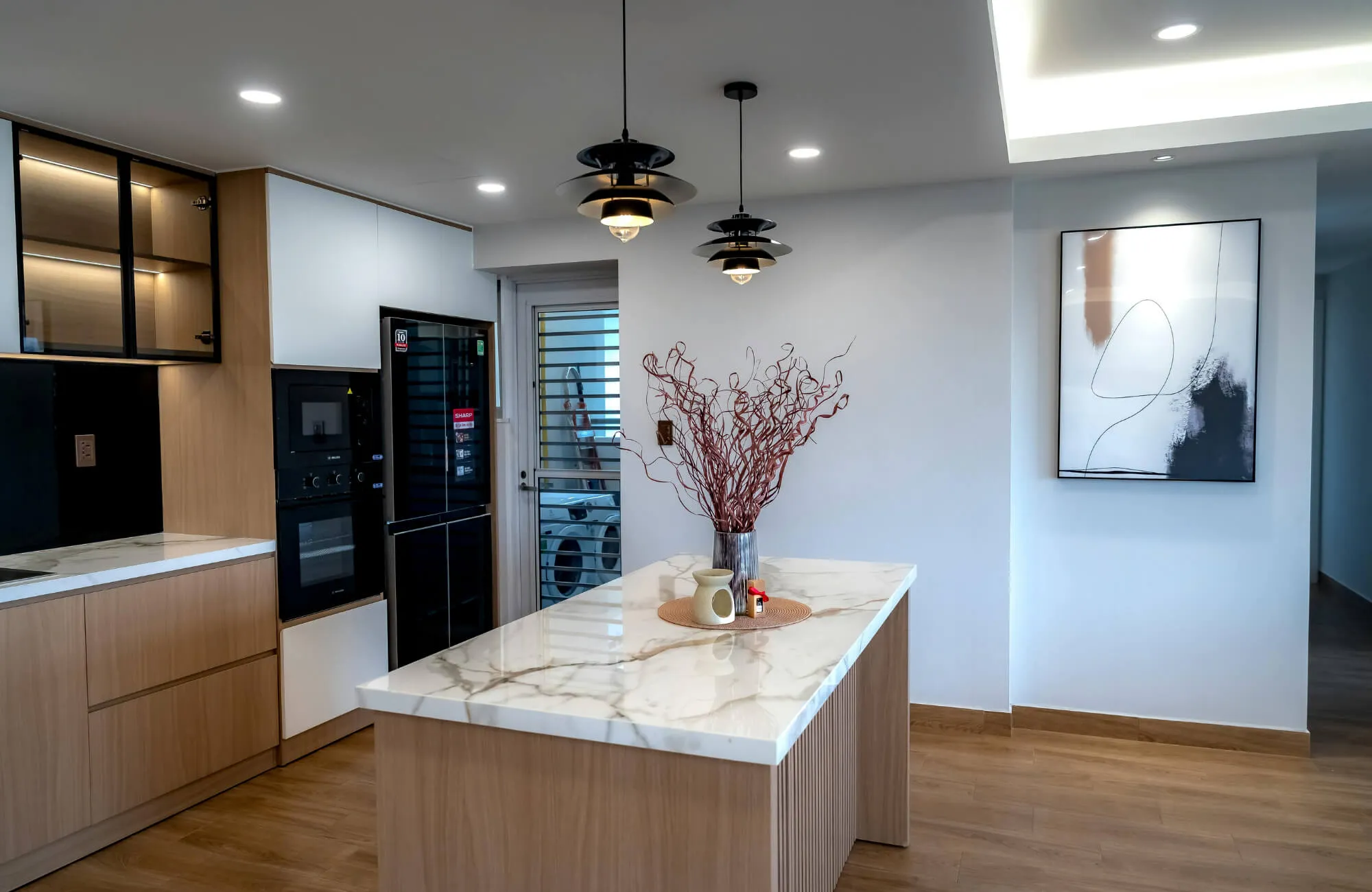
Lighting is one of the most powerful tools in kitchen design. It not only defines the atmosphere but also shapes how the space functions day to day. Among lighting types, pendant lights play a starring role, serving as both sculptural statement pieces and vital sources of task illumination. Yet one question consistently challenges homeowners and designers alike: How high should pendants hang over a kitchen island?
While there’s no single measurement that fits every space, there are proven guidelines that balance function, proportion, and visual comfort. This comprehensive guide will walk you through those standards and help you confidently determine the perfect pendant height for your kitchen island.
The Foundational Rule for Pendant Height
Before you dive into the details of design, it’s essential to start with the universal standard that guides nearly every kitchen lighting plan. This foundational rule gives you a reliable baseline for pendant height, one that balances beauty, function, and everyday comfort.
The 30 to 36 Inch Guideline Explained
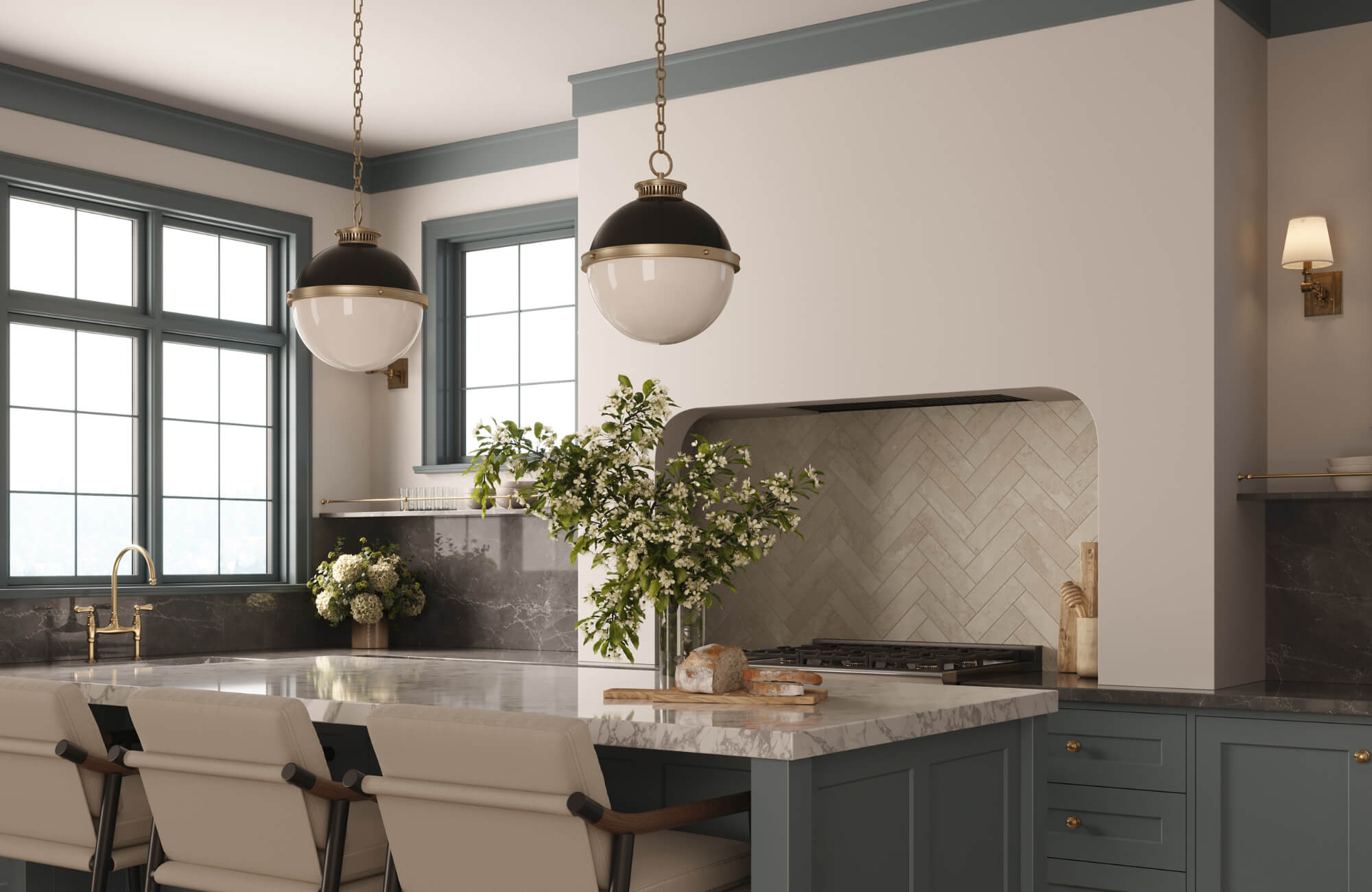
Designers widely agree on a foundational measurement: pendant lights, and even linear lights, should hang between 30 and 36 inches above the countertop surface of your kitchen island. This range is measured from the countertop to the bottom edge of the fixture.
As shown in the image featuring Edward Martin’s Barnes 14" Pendant in Aged Antique Distressed Bronze, pendants at this height strike the ideal balance, close enough to deliver direct, effective task lighting, yet high enough to preserve open sightlines across the island. The range offers flexibility that accommodates ceiling height, fixture style, and how the space is used day to day.
Why This Height Preserves Your Line of Sight
In a kitchen, visual connection matters. Pendants hung too low can block your view of the rest of the room or interfere with conversation across the island. The 30- to 36-inch rule keeps the lights low enough to illuminate your work surface without creating a visual barrier.
This range ensures you can see people across the island whether you’re chopping vegetables, helping with homework, or entertaining guests. It’s particularly valuable in open-concept kitchens where line of sight between the kitchen, dining, and living areas enhances both aesthetics and social flow.
How This Range Creates Optimal Task Lighting
The 30- to 36-inch height isn’t just about appearance, it’s also rooted in light performance. Hanging pendants too high can diffuse light too broadly, reducing brightness where you need it most. Hang them too low, and they can create glare or harsh shadows.
Within the recommended range, light spreads evenly across the island surface, providing excellent illumination for tasks like food prep and cooking. For larger islands, this rule also helps ensure overlapping light pools from multiple pendants, eliminating dark zones.
How Your Ceiling Height Changes the Math
Once you’ve mastered the general rule, it’s time to fine-tune it for your space. Ceiling height can dramatically alter how pendants look and perform, so understanding how to adjust the math ensures your lighting feels perfectly proportioned.
The Standard 8-Foot Ceiling Scenario
For homes with standard 8-foot ceilings, the 30- to 36-inch rule typically works perfectly without adjustment. Most pendant cords or downrods are designed to accommodate this setup straight out of the box.
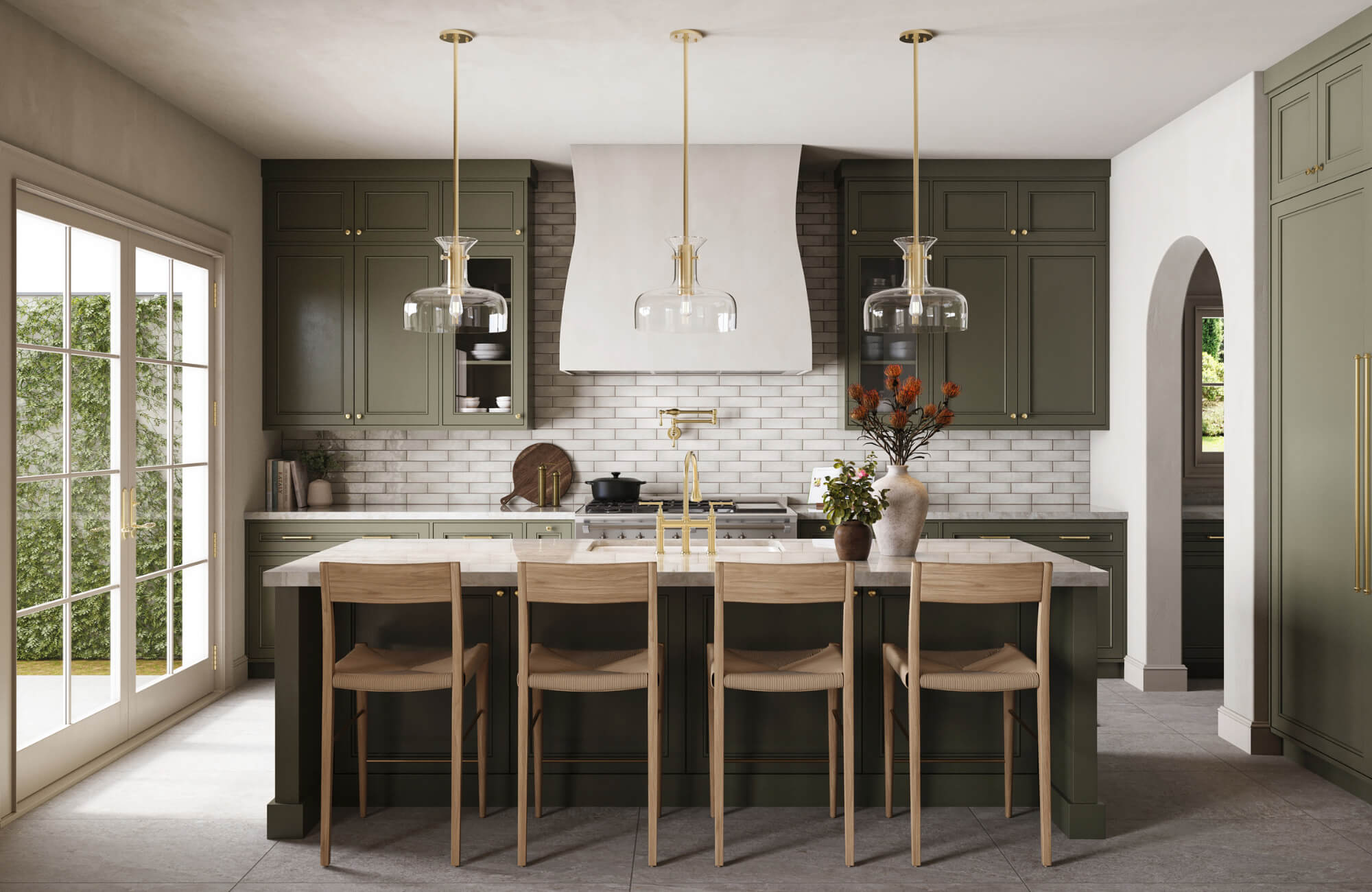
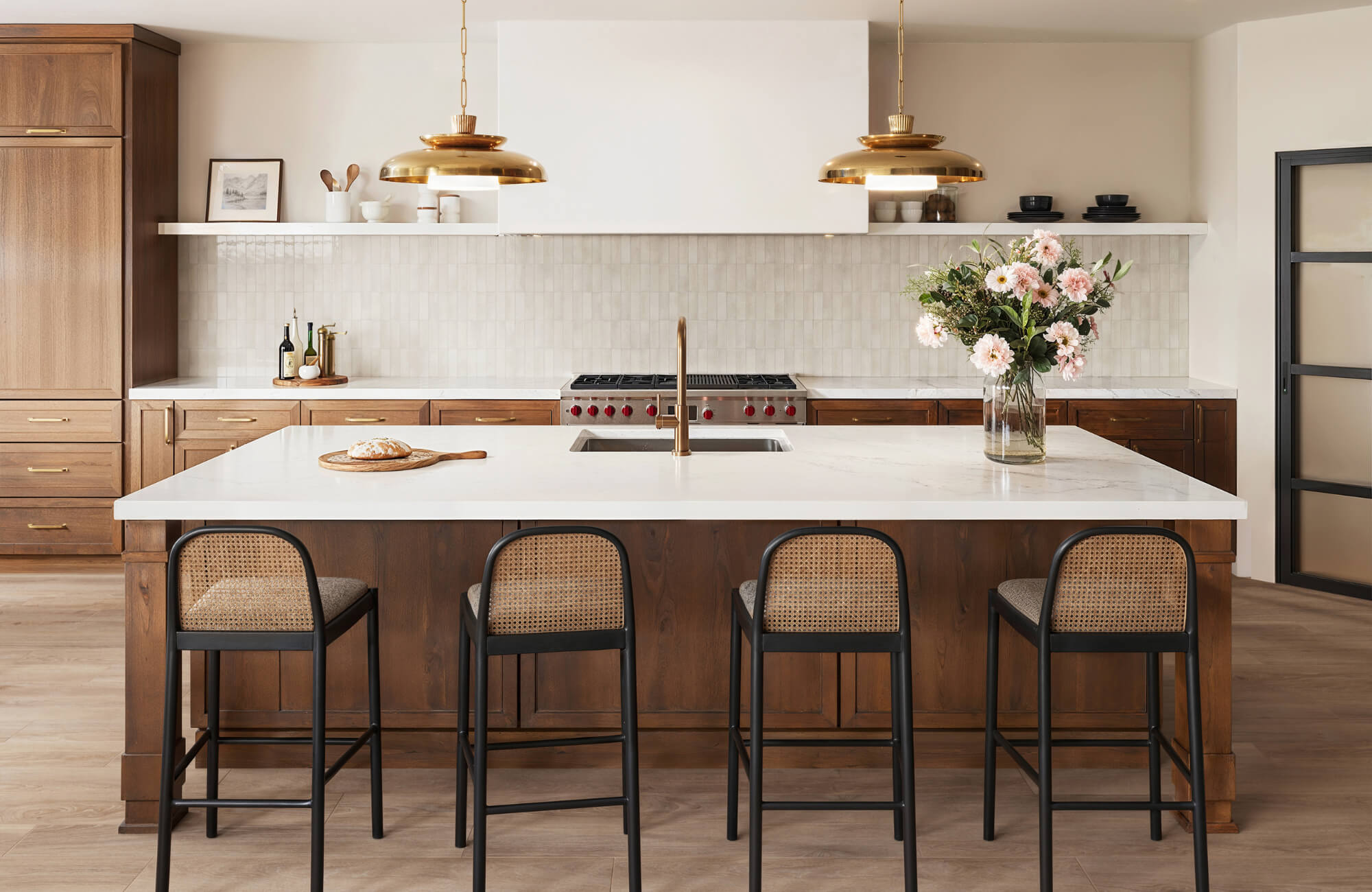
In the kitchen pictured above with Edward Martin’s Otis Pendant in Aged Brass, the fixture sits about five feet above the floor, aligning comfortably with eye level. This height keeps the pendant visually balanced and prevents glare while still providing focused illumination over the countertop, a perfect example of how proportion meets practicality.
Navigating High Ceilings: 9 Feet and Above
When ceilings soar to 9 feet or higher, the visual proportions shift. Hanging pendants at the same 30–36 inches above the counter can make them look oddly low relative to the room’s vertical scale.
A simple rule of thumb is to raise the pendant height by about 3 inches for every extra foot of ceiling height. So, for a 9-foot ceiling, you might hang the fixtures 33–39 inches above the countertop. For 10-foot ceilings, aim for 36–42 inches. This adjustment helps maintain balance and keeps your lights feeling integrated with the room’s architecture.
What About Vaulted or Sloped Ceilings?
Vaulted or sloped ceilings add complexity, and character. In these cases, the key is to maintain consistent visual spacing between the pendant bottoms and the countertop, even if the cords or rods hang at different lengths.
You may need a sloped-ceiling adapter to ensure the pendants hang straight, not at an angle. Always focus on maintaining uniform pendant height relative to the island surface rather than to the ceiling line. This keeps the installation cohesive and intentional, no matter the ceiling geometry.
Adjusting for the Pendant's Size and Style
Height isn’t the only variable, your pendant’s size, shape, and material all influence how high it should hang. Building on your ceiling adjustments, this next step helps you match each fixture’s visual weight and lighting style to your kitchen’s unique character.
Hanging Large or Visually Heavy Pendants
Oversized or visually dense pendants, especially those with wide metal shades or bold materials, tend to dominate the space. For these, raising the fixture slightly (closer to the 36-inch mark or even a bit higher) can help the room feel lighter and prevent the fixture from overwhelming the island.
Larger pendants also cast broader pools of light, so elevating them helps diffuse brightness more evenly across the surface. This adjustment enhances both functionality and balance, especially in kitchens where pendant lighting doubles as a design focal point.
Placing Small or Airy Glass Pendants
Smaller or transparent pendants, such as clear glass globes or minimalist fixtures, can often hang a bit lower, closer to the 30-inch point, without feeling intrusive. Their open or translucent designs allow light and sightlines to flow freely, making them ideal for more intimate, human-scaled lighting.
This lower placement enhances task lighting and helps draw visual warmth into the space without cluttering the view. It’s a perfect strategy for homeowners aiming for a softer, more layered lighting effect.
How the Shade Type Determines the Light
The pendant’s shade design plays a major role in determining both its function and ideal height. Opaque metal or ceramic shades direct light downward, making them ideal for task lighting but requiring careful height adjustment to avoid harsh brightness. Translucent or frosted shades, on the other hand, diffuse light softly in all directions and can hang slightly lower without overwhelming the space.
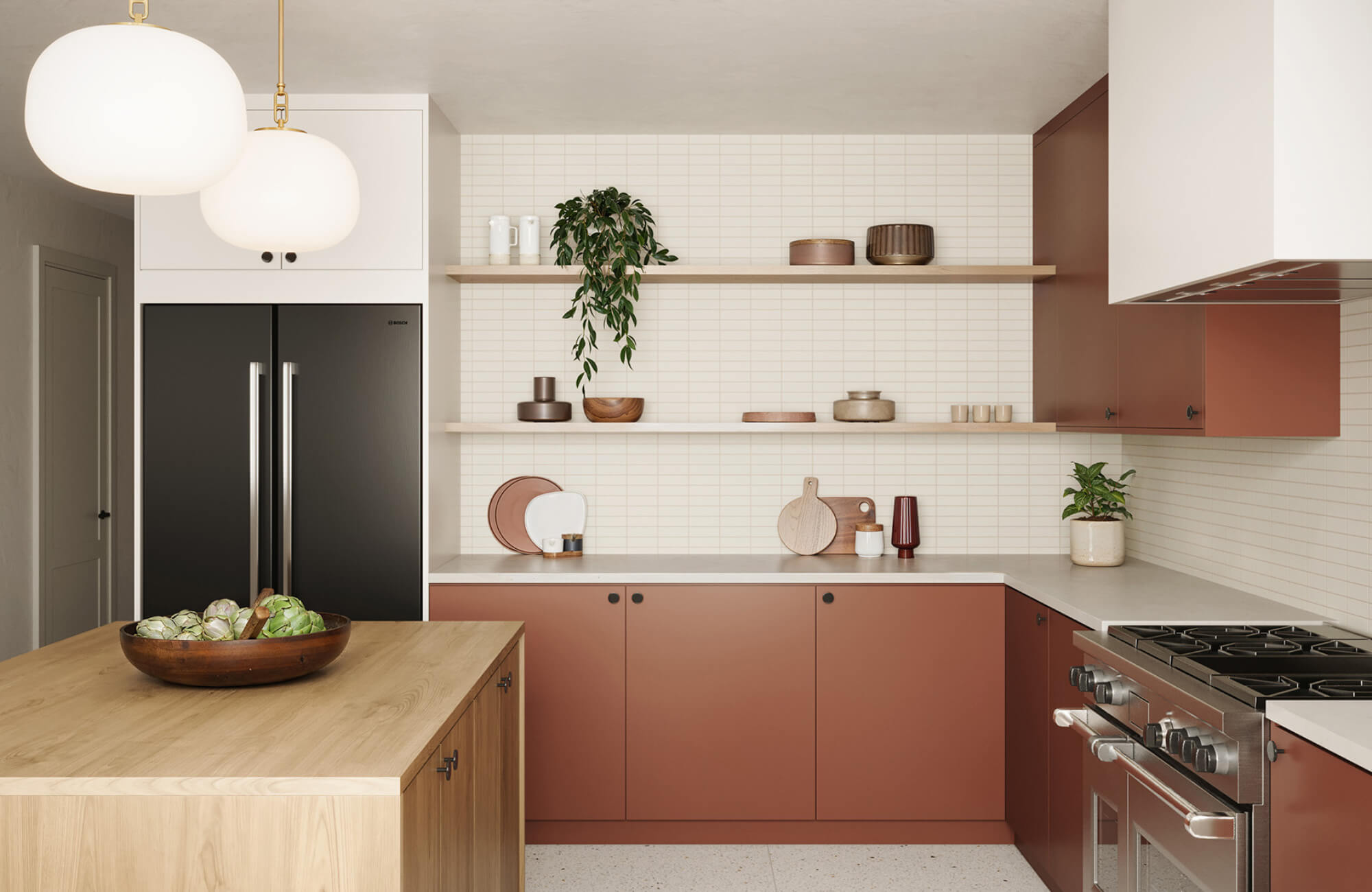
Edward Martin’s Carly 22" Pendant in Vintage Brass, shown above, beautifully illustrates this concept, its clear, open-bottom glass shade creates a broad, natural glow while maintaining clarity and warmth. Positioned at the mid-range of the 30–36-inch guideline, it demonstrates how thoughtful shade design enhances both aesthetics and performance.
Factoring in Your Family and Island’s Function
Of course, even the most perfectly measured pendant won’t work if it doesn’t fit your lifestyle. After considering design and proportion, it’s time to think about how your family uses the island, from cooking marathons to casual dining, and tailor the height to real life.
The Tall Family Consideration
Height isn’t universal, neither for ceilings nor for people. If your household includes taller individuals, pendants that hang at 30 inches might feel obstructive. In these cases, raise them an extra 2–3 inches for comfort and clear sightlines.
A good test: no one should have to duck or tilt their head to see under the light. Function always comes first, and pendant lighting should enhance, not hinder, the daily rhythm of your kitchen.
When the Island Is Purely a Work Surface
If your kitchen island functions primarily as a prep and cooking zone, your lighting should prioritize brightness and precision. Pendants can hang slightly lower within the guideline range to sharpen task illumination and reduce shadows over your workspace.
In the kitchen shown above with Edward Martin’s Kaley 16" Pendant in Aged Brass, the design achieves that perfect task-ready balance. The pendant’s sleek form and wide light spread ensure visibility for chopping, mixing, or plating, while the warm brass tone adds an elevated, professional finish to the kitchen’s working core. Layering with recessed or under-cabinet lighting can further enhance visibility, creating a dynamic and efficient environment.
When the Island Is a Primary Dining Spot
If your island doubles as a casual dining area, ambiance becomes just as important as visibility. In this scenario, hanging pendants toward the higher end of the 30–36-inch range creates a more inviting, open atmosphere and prevents harsh light from shining directly into diners’ eyes.
Combining pendants with a dimmer switch (which we’ll cover later) allows the flexibility to transition easily between bright meal prep and soft evening gatherings.
The Foolproof Way to Test Before You Install
By now, you have the numbers and the theory, but the final step is testing it all in your own space. Before you commit to drilling holes or wiring fixtures, a few simple tricks can confirm that your chosen pendant height truly feels right in your kitchen.
The Balloon and String Trick
Even with all these measurements, visualization can be tricky. Before committing to a final height, use a simple balloon and string test to see how your pendants will actually look in the space.
Start by inflating a balloon roughly the same diameter as your pendant’s shade, then hang it over the island using string or painter’s tape. Adjust the height between 30 and 36 inches, stepping back to view it from different angles and distances.
This quick, inexpensive method helps you confirm whether your planned height feels balanced and proportionate within your kitchen, and saves you from post-installation regret.
The Final Check on Installation Day
On installation day, measure carefully from the countertop up rather than from the ceiling down. Because kitchen ceilings aren’t always perfectly level, using the countertop ensures greater accuracy and visual balance.
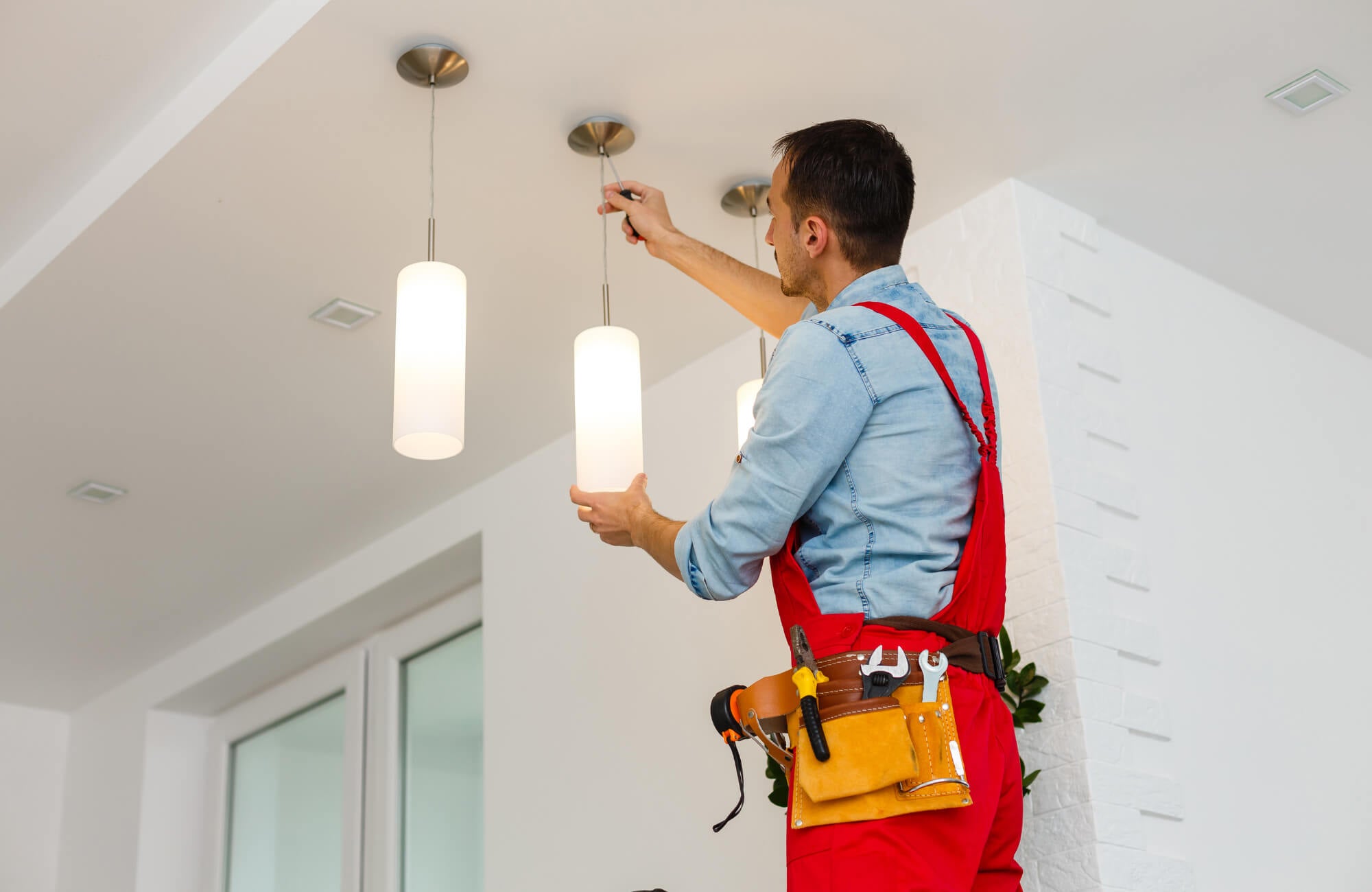
Before tightening any screws, step back to view all pendants together, confirm that they hang evenly, align across the room, and reflect your original design intent. Even a half-inch adjustment can noticeably affect symmetry and flow. For safety and precision, it’s always best to hire a licensed professional electrician to handle the installation and final adjustments.
Why a Dimmer Switch Is Non-Negotiable
A dimmer switch transforms your pendants from static fixtures into dynamic design tools. During the day, brighter light enhances cooking and prep work. In the evening, dimming creates soft, flattering illumination perfect for entertaining or winding down.
Beyond ambiance, dimmers extend bulb life and improve energy efficiency, making them a simple yet impactful investment for every modern kitchen. If there’s one “must-have” accessory for pendant lighting, this is it.
Your Perfect Pendant Height Unlocked
Finding the right pendant height is part science, part art. The 30–36-inch rule is a trusted starting point, but perfection comes from tailoring it to your ceiling height, fixture style, and how your kitchen island fits your daily life. When done right, your pendants enhance both form and function, illuminating the space beautifully without interrupting its flow.
If you’re unsure which height or fixture best suits your design, Edward Martin’s design consultation service offers personalized guidance to help you make confident style choices. For tailored recommendations, expert advice, or assistance with tile, rug, or furniture selections, simply contact Edward Martin, our team is here to help you bring your vision to life with ease and elegance.
Follow us on Instagram
@EDWARD.MARTIN
)
)
)
)
)
)
)
)
)
)
)
)
)
)
)
)