
)
)
)
)
)
)
)
)
How High Should A Circle Mirror Be Hung Above A Vanity?
Choosing the perfect height for a circular mirror above your vanity can completely transform how your bathroom looks and feels. The height you select influences everything from daily comfort to the room’s visual balance, and even subtle shifts can reshape how the space functions. As you explore the nuances behind ideal mirror placement, you will also discover that the process is equal parts practicality and artistry. From the geometry of circular mirrors to the way various lighting setups affect visibility, each decision contributes to a polished and harmonious layout. With the right knowledge, you can confidently choose a height that enhances both function and aesthetics, allowing your vanity to become a focal point that elevates the entire room.
The Functional Sweet Spot for Mirror Height
Finding the ideal height for your circular mirror begins with understanding how it functions in relation to your daily routine. A well-placed mirror should allow you to stand naturally without needing to bend or raise your head, which is why eye-level alignment serves as the foundation for proper placement. Positioning the mirror’s center between 57 and 65 inches from the floor typically accommodates most adults, offering a clear and comfortable reflection zone. However, when multiple users with different heights share the space, this fixed range may require thoughtful adjustments. In such cases, selecting a larger mirror or one with added vertical span can help include a wider range of eye levels, ensuring everyone can use the mirror effectively. Even more, if you have a double vanity, customizing the center height of each mirror allows you to support individual comfort without sacrificing design harmony.
Beyond eye level, the relationship between the mirror and the plumbing elements below it is equally important. Although it may seem like a small detail, the interaction between the mirror, faucet, and sink bowl greatly affects both function and aesthetics. If the mirror is hung too low, the faucet or sink may intrude into the reflection, resulting in awkward sightlines and frequent water marks on the glass. Conversely, placing the mirror too high creates a visual disconnect, making it appear detached from the vanity and weakening the overall composition. To maintain balance, leaving about 6 to 10 inches between the mirror’s bottom edge and the sink’s back rim, or 3 to 5 inches above the faucet’s highest point, ensures a cohesive look and preserves an unobstructed, practical reflection.
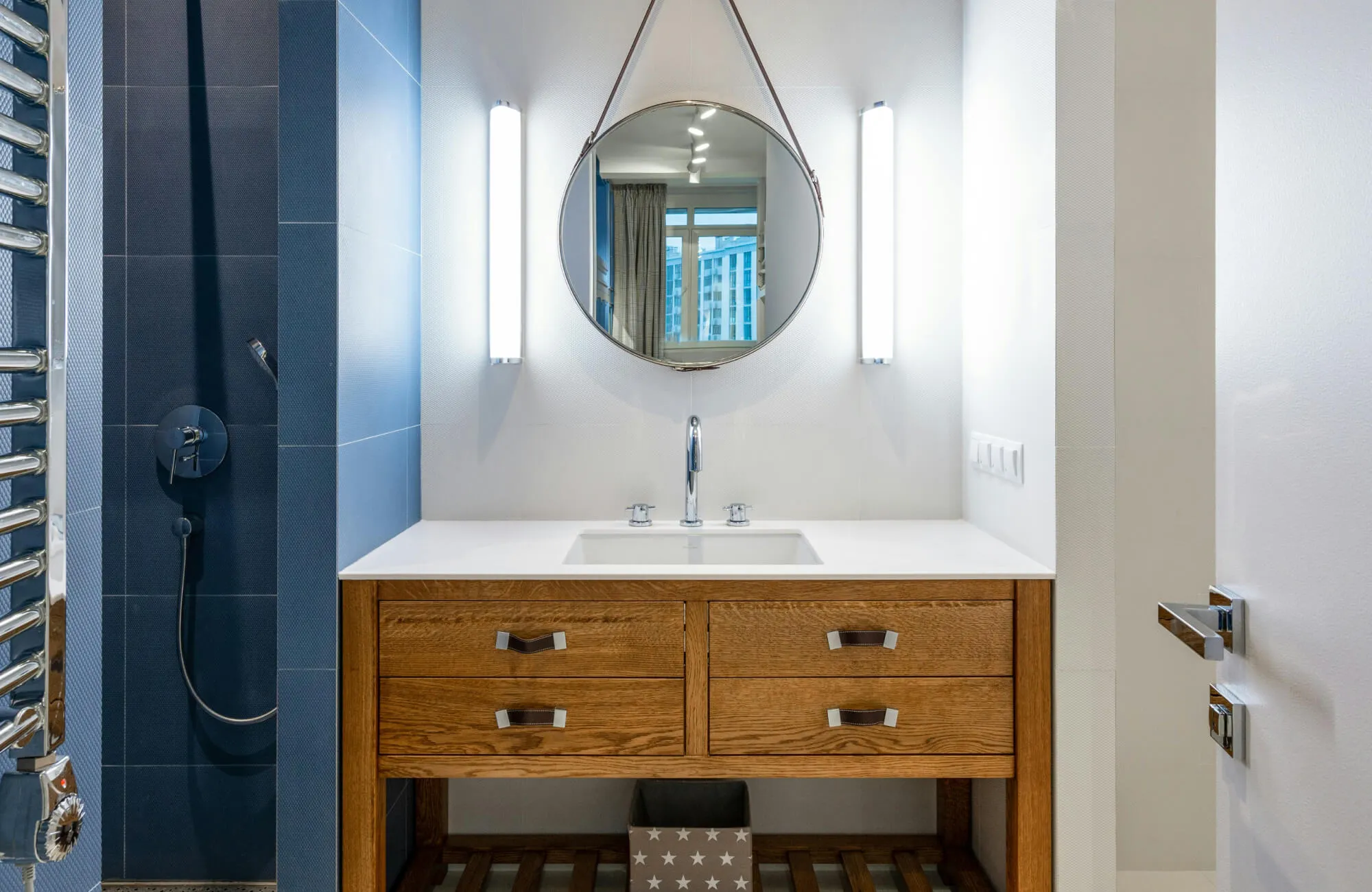
In the design shown above, the mirror featured is our Tristan Round Mirror in Shiny Steel, which showcases how proper scale and height can instantly elevate a vanity area. Its generous diameter fills the alcove beautifully while sitting within the ideal sightline range, creating a reflection zone that feels both natural and visually harmonious. The polished silver tone of the frame adds a refined brightness that complements the wood vanity and wall sconces, making the mirror not only a functional element but also a strong focal point that anchors the entire composition.
How the Shape of a Circular Mirror Changes Ideal Placement
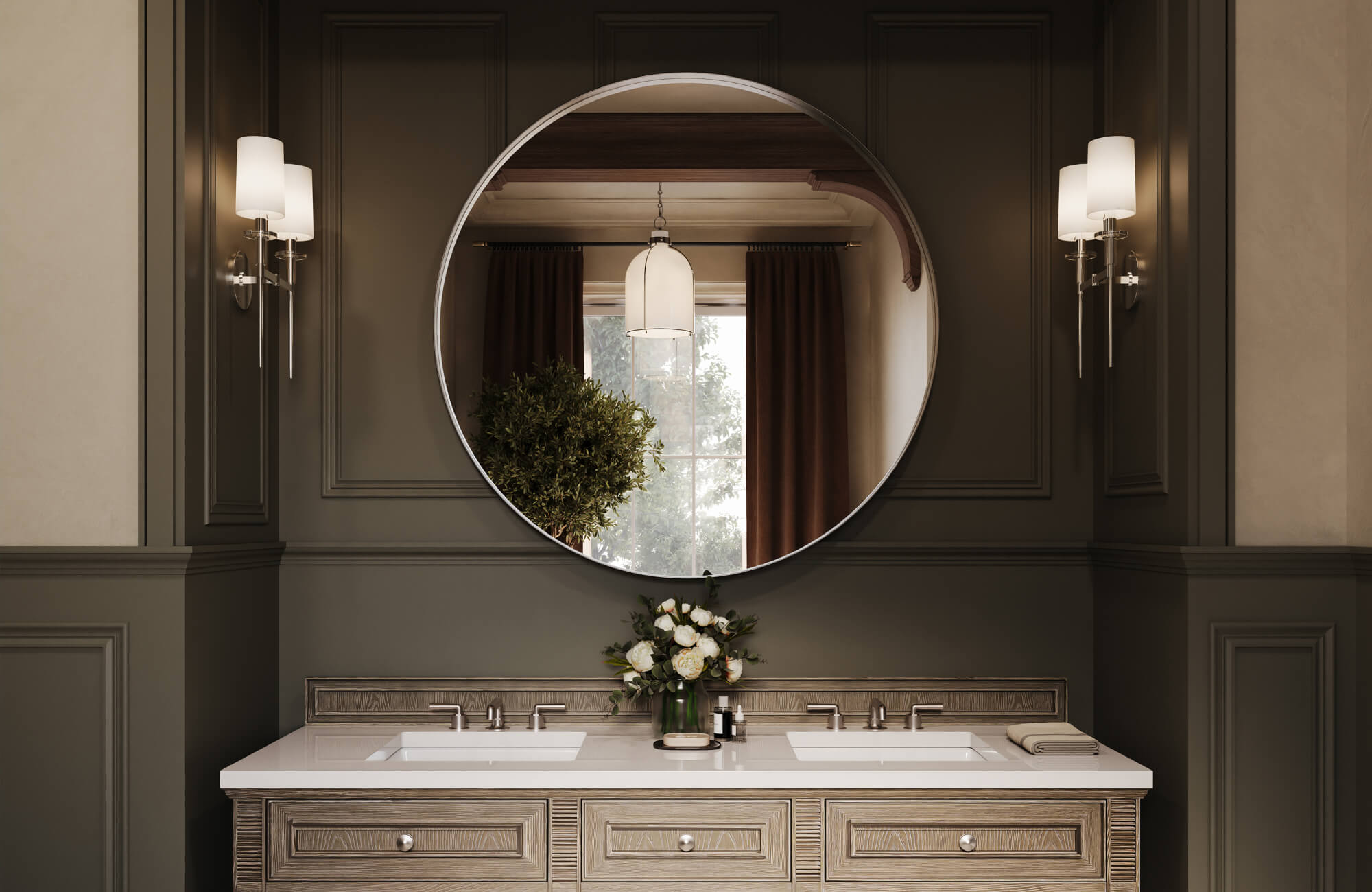
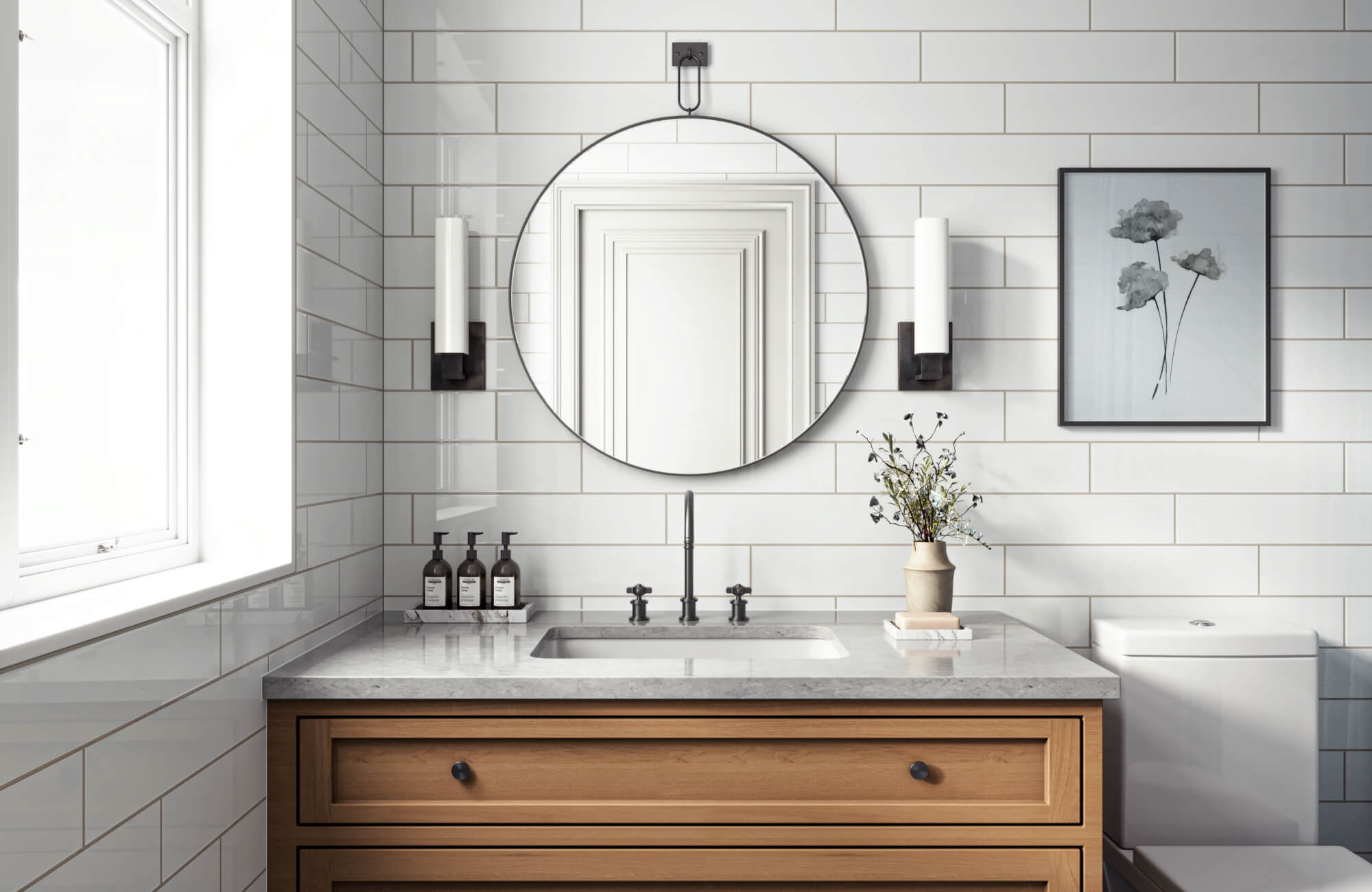
Round mirrors introduce distinct placement considerations because their curved form changes how the eye perceives height, balance, and symmetry. Without corners to establish clear vertical boundaries, the center of the mirror becomes the primary reference point, making placement more dependent on proportion and geometry than with rectangular designs. As a result, understanding how the mirror’s diameter and the surrounding negative space interact with your vanity is essential when determining the ideal hanging height. In the bathroom photo above, a large round mirror like our Esmeralda Round Mirror in Iron Matte Black demonstrates how a slim, dark frame can emphasize the mirror’s perfect geometry, making the center point even more visually prominent and helping guide ideal placement within the wall space.
A significant factor in this process is the mirror’s diameter, since the radius determines where the reflective area actually begins. Rather than starting at the bottom edge, visibility starts several inches above it, which means calculating the center height is far more accurate than relying on the frame. By adding the counter height, the desired clearance, and the mirror’s radius, you create a predictable placement method that adapts smoothly to different mirror sizes. This prevents the mirror from dipping too close to the faucet or sitting so high that your reflection feels distant. Consistently anchoring the placement around the center also allows you to maintain both ergonomic functionality and visual harmony across various vanity setups.
Furthermore, because circular mirrors create generous negative space around their curves, you must consider how they sit within the vertical span of the wall. Centering a round mirror perfectly between the counter and ceiling can cause it to appear suspended or disconnected, as its shape naturally draws the eye outward rather than upward or downward. Introducing a slight downward shift helps visually ground the mirror, tying it back to the vanity below. When the space above the mirror is about one and a quarter to one and a half times the space below, the proportions feel intentional and balanced. This approach ensures the mirror complements the architectural flow of the room, making your design look refined, cohesive, and thoughtfully composed.
The Role of Lighting and Visibility
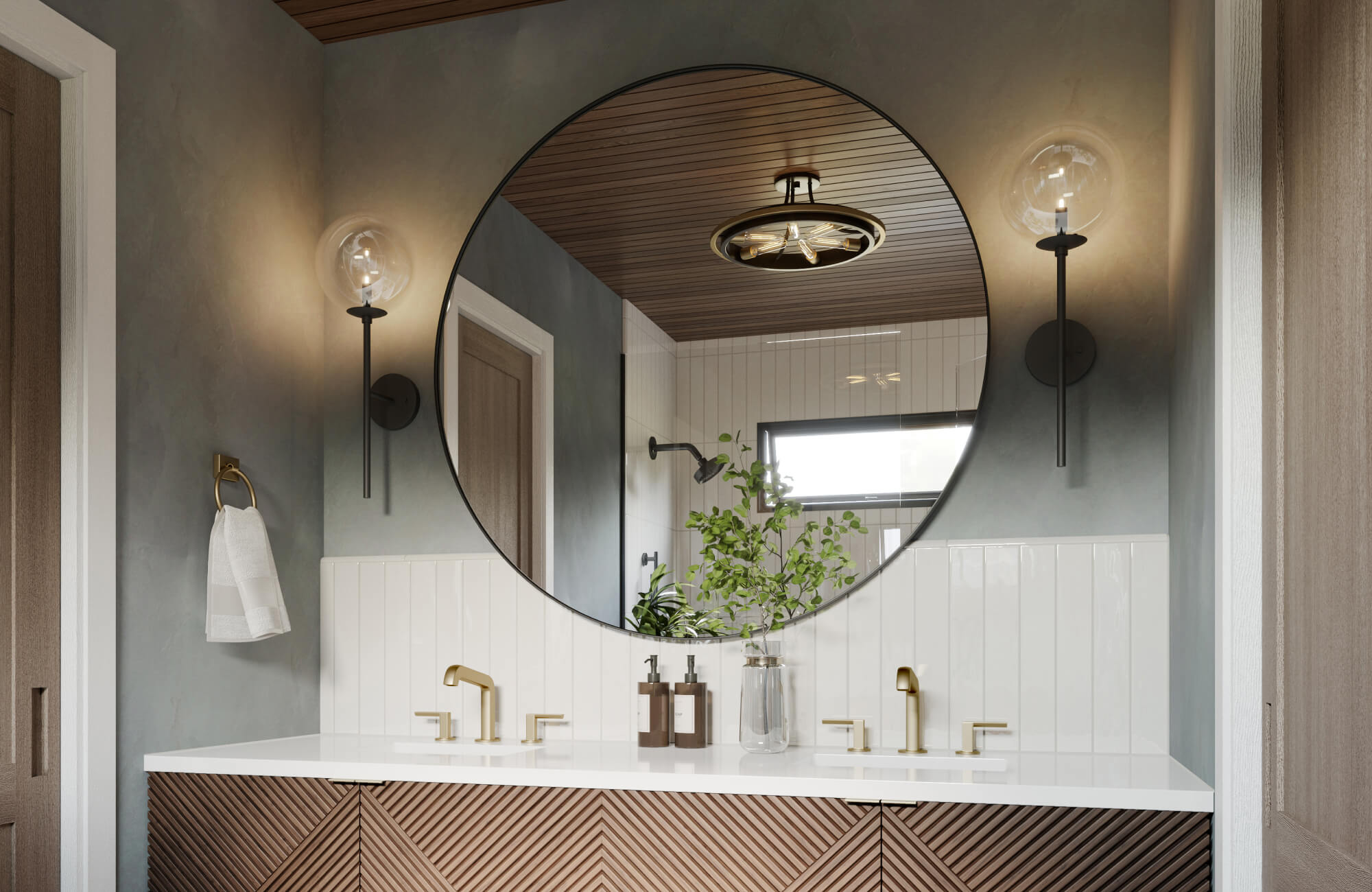
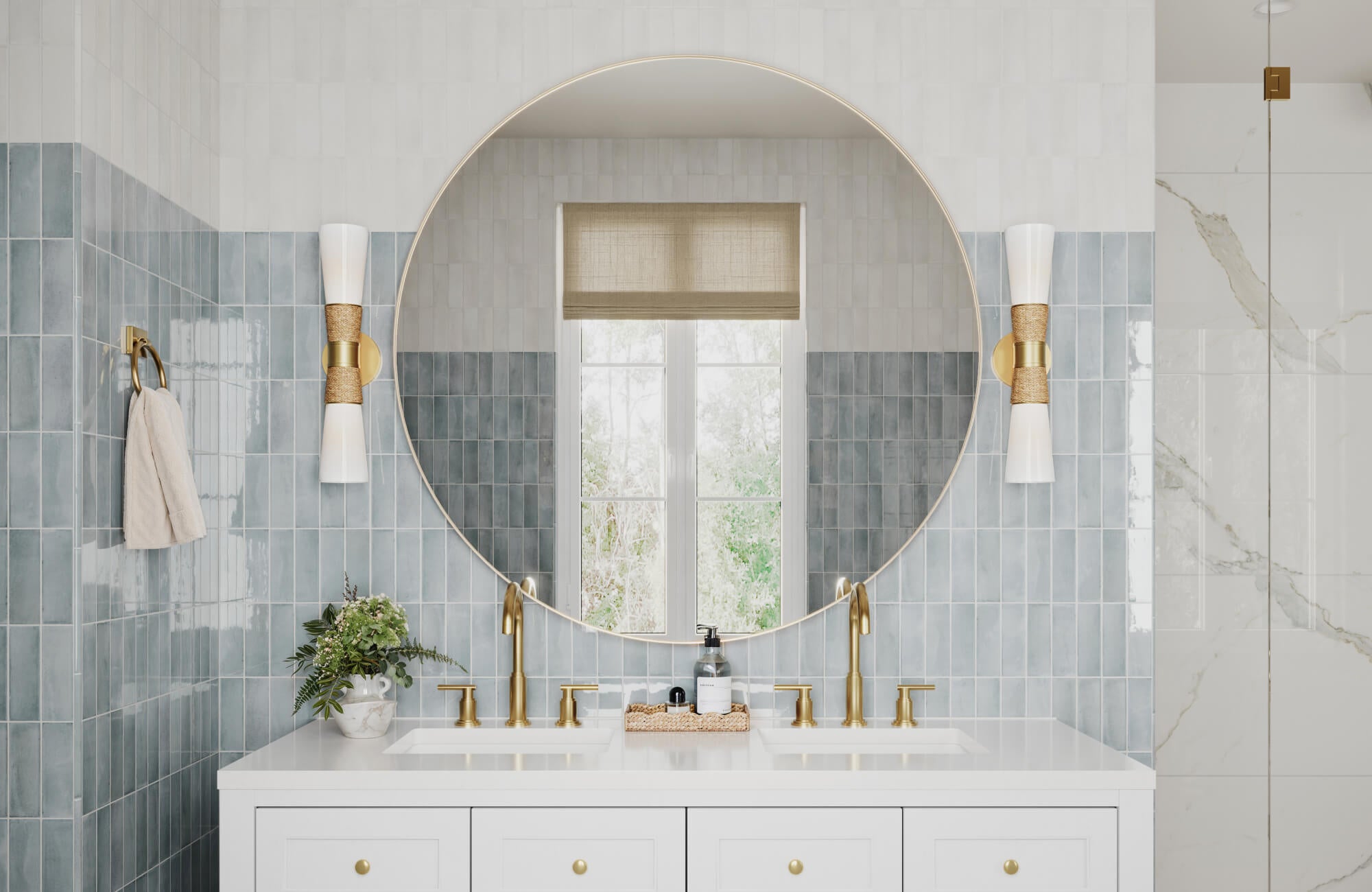
Lighting plays an essential role in determining how effective your mirror placement will be, because even a perfectly positioned mirror can fall short when the illumination around it is poorly coordinated. When sconces are used, for instance, their height and spacing directly shape how evenly your face is lit. Aligning the bulb or diffuser with the vertical midpoint of your face, typically between 60 and 65 inches from the floor, creates balanced, flattering illumination, especially when the mirror’s center falls within this same range. Likewise, keeping sconces about 28 to 36 inches apart ensures the mirror feels framed rather than squeezed, helping maintain a clean visual rhythm and preventing shadows under the eyes, chin, and cheekbones. A perfect example is the polished framed mirror displayed above, featuring our Esmeralda Round Mirror in Polished Brass, which works beautifully with warm-toned sconces to enhance the evenness of the light and deepen the room’s inviting glow.
Overhead lighting also plays a crucial part in visibility, and it must be factored into the mirror’s height to avoid visual clutter or glare. Pendant lights, light bars, and ceiling-mounted fixtures should sit at least 8 to 12 inches above the mirror’s top edge so the area feels open rather than crowded. This spacing is particularly important for highly reflective round mirrors, as their curved surfaces can intensify stray reflections when lights are placed too close. However, when the overhead fixture is installed at the proper distance, it provides bright, functional illumination without creating distracting glare. By coordinating both side lighting and overhead lighting with the mirror’s placement, you create a well-balanced environment where visibility is clear, reflection quality is consistent, and the overall vanity experience feels seamless and visually comfortable.
How Vanity Size and Proportions Impact the Placement
The size and structure of your vanity have a direct influence on how high your circular mirror should be hung, because the mirror must feel visually connected to the elements beneath it. When a vanity includes a vessel sink, for example, the elevated basin naturally raises the functional height of the area you interact with. This means that a standard eye-level rule may place the mirror too low, causing the vessel rim or faucet to intrude into your reflection. By measuring the total height of the countertop and vessel sink and adding a buffer of 6 to 8 inches above the rim or faucet, you ensure the mirror begins at a height that provides both comfort and clarity. This method not only keeps the mirror aligned with your line of sight but also preserves a proportional balance that prevents the sink from visually overshadowing the reflective surface.
Floating or low-profile vanities introduce another consideration because their open, airy design alters how the vanity reads within the room. Even when the countertop height remains standard, the lack of cabinetry reaching the floor makes these vanities appear visually lower, which can cause a mirror hung too high to look disconnected. To counter this effect, reducing the gap between the countertop and the bottom of the mirror helps visually anchor the two elements. Aligning the mirror with surrounding architectural lines, such as a tile border or wainscoting, can further strengthen this connection and create a more intentional composition.
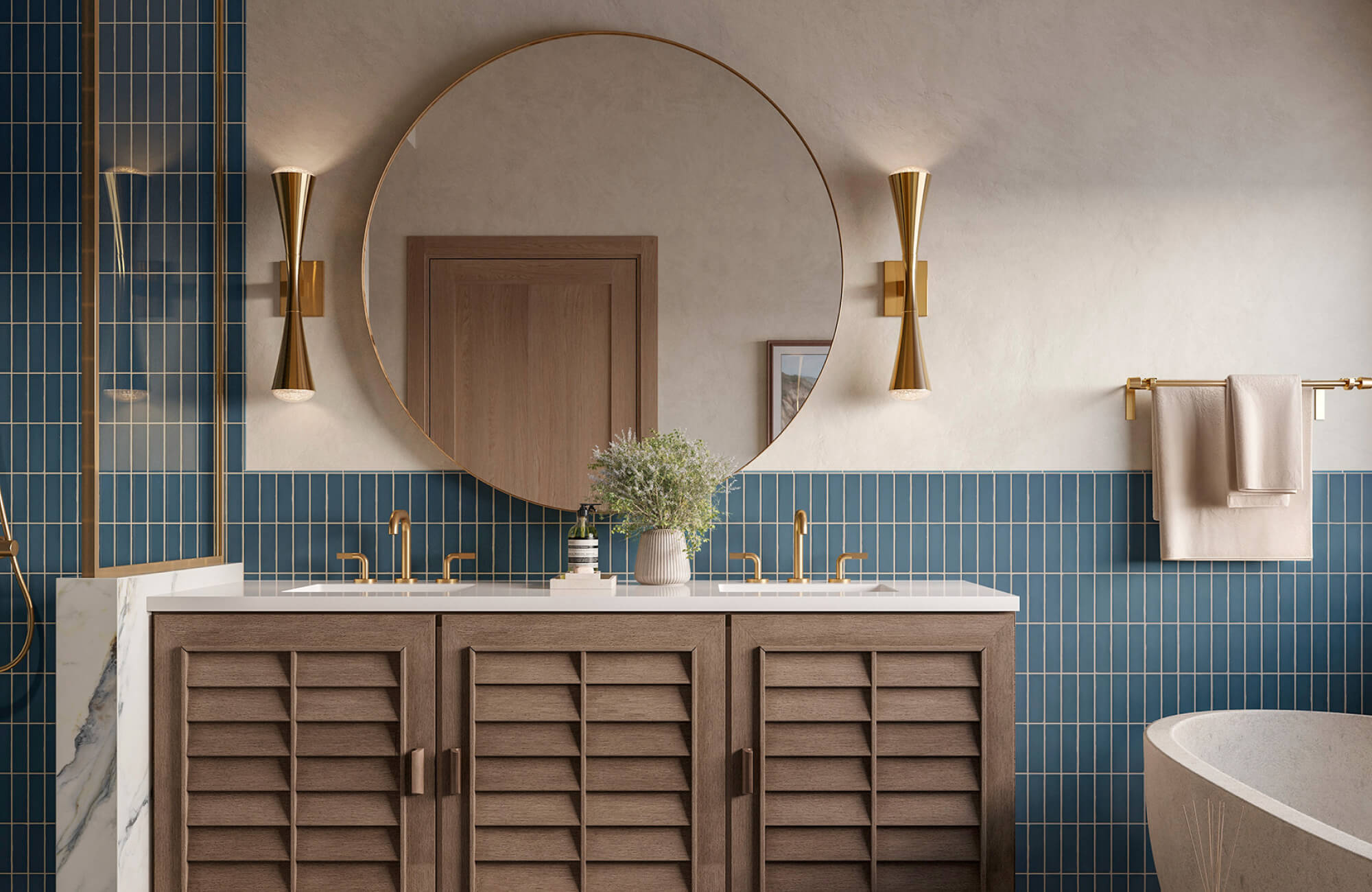
In spaces where the vanity spans a wider footprint, as seen above, choosing a mirror with enough presence becomes essential for maintaining visual balance. A round mirror with a generous diameter, such as our Tristan Round Mirror in Polished Brass, works especially well in these settings because its broad scale and warm brass frame help anchor the length of the vanity. By selecting a mirror that reflects the vanity’s proportions rather than appearing undersized or overwhelmed, you create a cohesive composition where the mirror and cabinetry feel intentionally connected, enhancing both the functionality and the overall harmony of the space.
Aesthetic Value and Timeless Appeal
Mirror height should support the overarching design narrative of your space. The right placement not only ensures functionality but also strengthens the stylistic identity you want to express, whether understated or boldly decorative.
Minimalist Bathrooms
Minimalist bathrooms depend on deliberate visual order, which means every design choice must reinforce clarity and cohesion. When you position a circular mirror just 4 to 6 inches above the vanity, the tight spacing helps anchor the mirror to the counter, reducing any sense of unnecessary visual drift. This close alignment also strengthens the horizontal line created by the vanity surface, making the entire composition feel grounded and uninterrupted. As your eyes move upward, the mirror’s top edge often aligns with nearby cabinetry, shelving, or structural elements, creating a seamless vertical rhythm that embodies minimalist restraint.
This approach works particularly well when you use a frameless mirror or one with a very slim border. A subtly framed option, such as our Tristan Round Mirror in Rustic Black, complements this style beautifully, offering a clean silhouette that blends into the architecture while still adding quiet definition. The simplicity of the round form also becomes part of the larger design flow, encouraging an atmosphere of calm and intentional balance. Over time, this quiet symmetry gives the bathroom a timeless quality, proving that minimalism, when executed thoughtfully, never feels empty—it simply feels complete.
Eclectic or Vintage Spaces
Eclectic and vintage bathrooms invite a more playful and expressive touch, which means you have the freedom to elevate the mirror’s placement for artistic impact. Positioning the mirror’s center at around 68 to 70 inches from the floor draws the eye upward, allowing decorative frames, patina finishes, or unique silhouettes to become focal points. In this elevated role, the mirror acts less like a purely functional tool and more like a curated piece that contributes to the room’s personality. The heightened placement works especially well with circular mirrors because their shape softens the vertical stretch, adding charm rather than imposing formality.
Although the mirror sits higher than usual, the space beneath it shouldn’t be neglected. You can maintain visual balance by incorporating tall décor pieces, sculptural accessories, or even functional items like canisters and trays beneath the mirror. These elements help bridge the gap between the counter and the mirror’s underside, preventing the area from feeling empty or disjointed. Smaller mirrors tend to work best in this style because they keep the elevated placement from overwhelming the wall. A standout example is our Fitz Mirror in Antiqued Iron, featured in the photo above, which adds vintage character while maintaining elegance, allowing the heightened placement to feel intentional, expressive, and beautifully balanced.
The Perfect Mirror Placement
The ideal height for a circular mirror above a vanity comes from blending practical needs with visual balance, and the right placement supports comfort, clarity, and design cohesion all at once. When you consider factors such as eye level, mirror diameter, lighting conditions, and the proportions of your vanity, you create a setup that feels effortless and naturally integrated. As these elements work together, the mirror becomes more than a basic fixture: it becomes a refined feature that enhances the beauty and usability of your bathroom with lasting appeal.
If you want guidance choosing the right mirror style, finish, or size to complement your vanity, our team is always available to assist. Our support specialists can help you explore product options, understand design details, and find pieces that suit both your aesthetic goals and functional needs. By reaching out through our contact page, you can get knowledgeable, personalized help that makes selecting the perfect mirror feel effortless and inspiring.
Follow us on Instagram
@EDWARD.MARTIN
)
)
)
)
)
)
)
)
)
)
)
)
)
)
)
)