Striped wallpaper does far more than introduce pattern and color into a space because it can completely transform how a room is visually experienced. Through the strategic use of direction, scale, spacing, and contrast, stripes influence whether a room feels taller, wider, more balanced, or more intimate. As a result, striped wallpaper has become a powerful interior design tool for improving awkward layouts, refining architectural proportions, and enhancing spatial flow without the need for structural renovation.

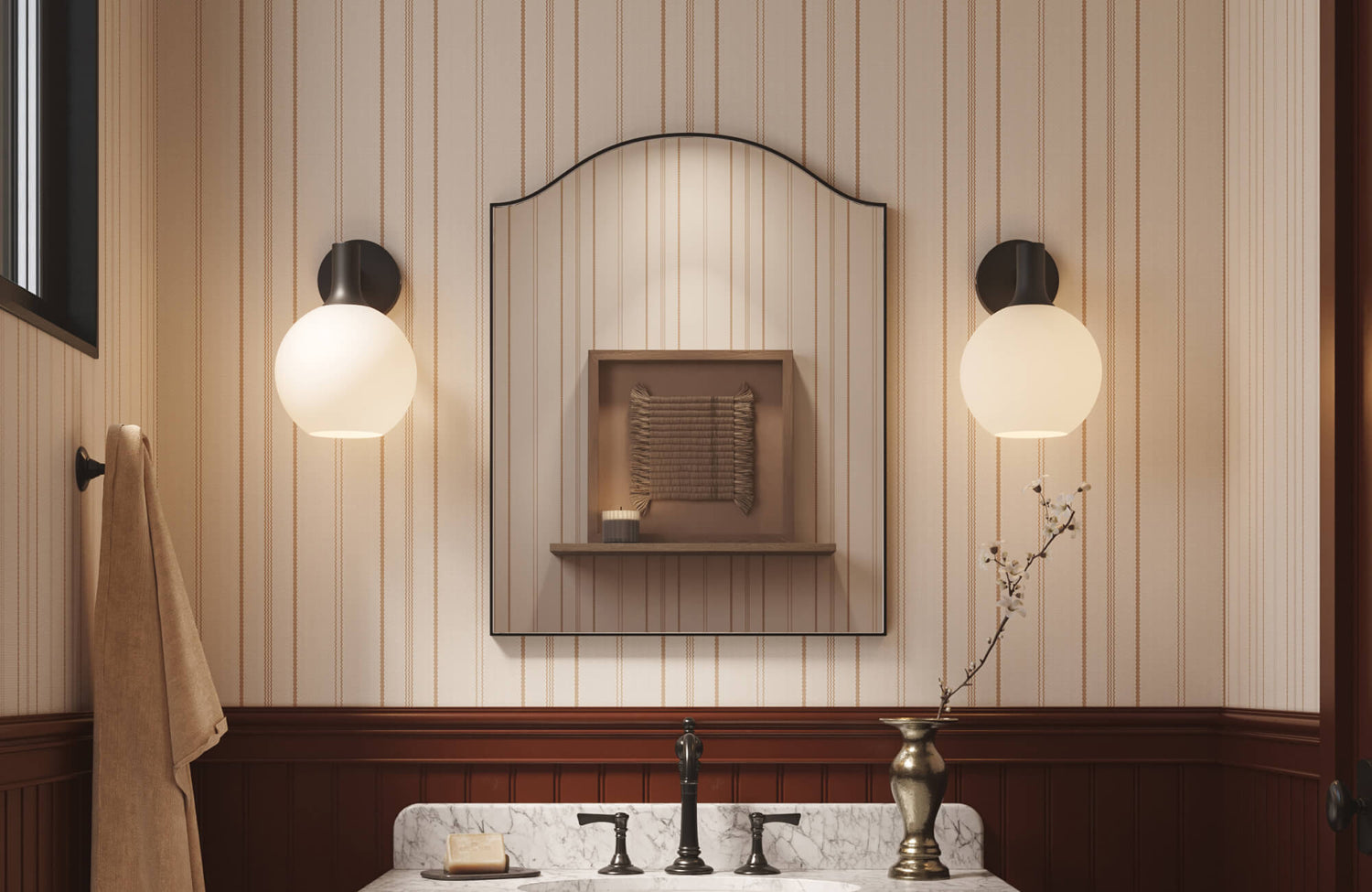
Franklin Wallpaper in Olive, 52" x 132" creates a rich sense of depth behind the vanity, complemented by the soft curves of the Lunette Oval Mirror in White
Vertical Stripes and the Illusion of Height
Vertical striped wallpaper can reshape how a room feels by directing attention upward and creating the impression of taller walls. This optical effect is especially useful in interiors with limited ceiling height, where strategic pattern placement can make the space feel lighter, more open, and visually balanced.
Narrow Vertical Stripes for Small Rooms
Thin vertical stripes work well in compact rooms because they add movement without visually overcrowding the walls. When the stripes are evenly spaced and softly colored, they create a subtle elongating effect that gently stretches the eye upward. In small bedrooms, powder rooms, or narrow hallways, muted shades such as warm beige, pale gray, soft taupe, or off-white help preserve an airy atmosphere while preventing the walls from feeling visually heavy. Designs like the Franklin Wallpaper in Olive, 52" x 132", shown in the powder room above, demonstrate how delicate vertical striping can introduce texture and depth while still maintaining a refined and space-enhancing appearance.
You can further strengthen this spacious effect by pairing narrow striped wallpaper with understated furnishings and minimal wall decor. Matte finishes are particularly effective because they soften light reflection and reduce visual interruption across the wall surface. Slim vertical elements such as tall mirrors, narrow shelving, or elongated curtains also complement the wallpaper pattern and reinforce the room’s sense of height without overwhelming the limited square footage.
Bold Vertical Patterns for Dramatic Elevation
Wider vertical stripes or stronger color contrasts create a more dramatic sense of elevation by introducing sharper visual definition. In dining rooms, entryways, or formal living spaces, bold striped wallpaper can make ceilings appear significantly taller while adding architectural character to otherwise plain walls. Contrasting combinations such as navy and ivory, charcoal and cream, or forest green and beige naturally pull the eye upward and establish a more structured visual composition.
Because bold stripes become a dominant design feature, it is important to balance them with streamlined furniture and restrained decorative accents. Clean-lined seating, simple cabinetry, and uncluttered surfaces prevent the room from feeling visually chaotic. Lighting also influences the overall effect, as wall sconces or upward-facing fixtures can highlight the vertical movement of the stripes and intensify the perception of added height throughout the room.
Ceiling Pairings That Enhance Height
Ceiling treatments play a major role in determining how effective vertical striped wallpaper appears within a room. Light ceiling colors such as soft white, cream, or pale ivory reflect more ambient light and visually lift the upper portion of the space. This creates a smoother transition between the walls and ceiling, allowing the striped pattern to guide the eye upward more naturally and continuously.
Minimal trim details also help maintain the illusion of height. Heavy crown molding or thick decorative trim can interrupt the vertical flow created by the wallpaper and visually lower the ceiling line. You can create a more expansive appearance by using narrow trim profiles, subtle paint transitions, and low-sheen finishes that diffuse light evenly across the ceiling surface. Together, these elements help establish a cohesive vertical composition that enhances the room’s overall proportion and openness.

The fine horizontal lines of the Suffolk Wallpaper in Black II, 52" x 132", create a clean and tailored look
Horizontal Stripes and the Perception of Width
Horizontal striped wallpaper can visually expand a room by drawing attention across the walls rather than upward. This directional movement helps narrow interiors feel broader and more proportionate, making horizontal patterns especially effective in compact apartments, elongated hallways, or confined living areas.
Expanding Narrow Hallways with Horizontal Lines
Horizontal striped wallpaper can soften the enclosed feeling often associated with narrow hallways by visually extending the walls outward. Instead of emphasizing the corridor’s limited width, the stripes encourage the eye to travel laterally across the space, creating a more open and balanced appearance. Soft-toned stripes in shades such as beige, light gray, muted taupe, or pale blue are particularly effective because they reduce visual harshness and maintain a calm, continuous flow throughout the hallway.
Low-contrast combinations also help prevent visual fragmentation, which is important in areas with limited natural light. You can enhance this widening effect by keeping the surrounding decor minimal and avoiding abrupt color transitions between walls, trim, and doors. Incorporating reflective surfaces such as mirrors or satin-finish accents can further distribute light evenly across the striped pattern, helping the hallway feel less confined and more visually expansive.
Wide Stripes Versus Thin Stripes in Compact Spaces
Wide horizontal stripes create a stronger visual statement and can make compact rooms feel noticeably broader by emphasizing lateral movement across the walls. In smaller living rooms or dining spaces with minimal furniture, broader bands establish a bold architectural effect that helps visually stretch the room’s dimensions. Wider stripes also introduce a more contemporary appearance, particularly when paired with simplified furnishings and open floor layouts that allow the pattern to remain visually uninterrupted.
Thin horizontal stripes, however, produce a softer and more refined effect that works better in spaces already filled with furniture, shelving, or layered decor. Because narrower stripes appear more delicate and textured, they add subtle width without overwhelming the room visually. In compact bedrooms, reading corners, or small home offices, fine horizontal striping can create dimension while maintaining a lighter and more understated atmosphere. Choosing between wide and thin stripes ultimately depends on how much visual emphasis you want the walls to contribute within the overall interior composition.
Balancing Long Rooms with Strategic Stripe Placement
In overly rectangular rooms, horizontal striped wallpaper can help correct disproportionate layouts when applied selectively rather than throughout the entire space. Installing horizontal stripes on a single accent wall naturally redirects attention toward the room’s width, helping visually shorten the excessive length that often makes narrow living rooms or home offices feel unbalanced. This targeted application creates a stronger sense of proportion without overwhelming the interior with continuous pattern repetition.
The most effective placement is typically the shorter wall positioned at the far end of the room, as this visually pulls the wall outward and reduces the tunnel-like effect. In living rooms, placing horizontal stripes behind a sofa or entertainment area can establish a broader focal point that anchors the space more effectively. In home offices, applying the wallpaper behind a desk or shelving unit creates a balanced backdrop while helping the room feel less elongated and more comfortably scaled.

Windsor Wallpaper in Black II, 52" x 132" enhances the room’s height and symmetry, while the warm metallic finish of the Esmeralda Round Mirror in Polished Brass adds softness and refined contrast
Stripe Scale and Its Impact on Room Proportion
The scale of striped wallpaper significantly affects how a room’s proportions are perceived. Stripe width and spacing can either create visual harmony or make an interior feel disproportionate, which is why selecting the right scale is essential for balancing architecture, furnishings, and overall spatial flow.
Large-Scale Stripes in Open Interiors
Oversized stripes work particularly well in spacious interiors because they provide visual structure without making expansive walls feel cluttered or overly patterned. In open-concept living rooms, loft apartments, or large dining areas, broad stripes help anchor the space by introducing strong directional movement across wide surfaces. Because larger rooms can sometimes feel visually empty or disconnected, wide striped wallpaper adds definition while maintaining a clean and uncluttered appearance.
To keep the room balanced, large-scale stripes pair best with minimalist decor and simplified furniture arrangements. Clean-lined seating, streamlined cabinetry, and restrained decorative accessories allow the wallpaper to remain the dominant visual feature without competing for attention. Neutral palettes or muted contrasts can further soften the scale of the stripes, ensuring the room feels sophisticated rather than overwhelming. Maintaining generous open space between furnishings also helps preserve the airy quality that large-scale patterns naturally support.
Small-Scale Stripes for Delicate Dimension
Narrow stripes introduce subtle texture and movement, making them ideal for interiors where a softer visual effect is preferred. In nurseries, reading nooks, dressing areas, or transitional spaces such as stair landings, fine striped wallpaper adds dimension without dominating the room. Because the pattern is more delicate, it creates a layered appearance that enhances depth while maintaining a calm and comfortable atmosphere. Wallpapers such as the Windsor Wallpaper in Black II, 52" x 132", featured in the bathroom image above, demonstrate how slim vertical striping can add refined contrast and visual height while still preserving an elegant and understated composition.
Small-scale stripes are especially effective in rooms where multiple decorative elements already exist. Their understated appearance allows them to blend more seamlessly with shelving, artwork, upholstered furniture, or decorative textiles. Soft tonal variations and closely spaced lines can also help diffuse natural light more evenly across the wall surface, creating a smoother and more cohesive visual experience. This makes fine striped wallpaper particularly useful in compact or softly styled interiors that benefit from gentle architectural detail rather than bold visual contrast.
Matching Stripe Width to Furniture Proportion
The scale of striped wallpaper should always complement the size and visual weight of the surrounding furniture. Oversized stripes paired with delicate furnishings such as slim chairs, narrow side tables, or lightweight decor can make the room feel unbalanced because the walls visually overpower the contents of the space. In contrast, very fine stripes may become visually lost behind bulky sectionals, oversized cabinetry, or large entertainment units that dominate the room’s composition.
To create a cohesive interior, you should consider how much visual presence both the wallpaper and furniture contribute within the space. Larger furniture pieces generally pair better with broader stripes because both elements carry similar visual weight, while smaller furnishings benefit from finer patterns that maintain proportional balance. Architectural features also matter, as tall ceilings, expansive windows, and wide wall surfaces can support larger stripe scales more naturally than compact rooms with limited wall exposure.

The bold vertical lines of the Suffolk Wallpaper in Black I, 52" x 132", create a dramatic sense of height
Color Contrast and Visual Spatial Effects
The level of contrast within striped wallpaper plays a major role in shaping how spacious or confined a room appears. Subtle tonal transitions can soften the edges of a space and create visual continuity, while stronger contrasts introduce sharper structure and more pronounced architectural definition.
Low-Contrast Stripes for an Open Atmosphere
Low-contrast striped wallpaper creates a smooth and uninterrupted visual flow by minimizing the distinction between adjacent colors. When the tones are closely related, such as beige and cream, pale gray and white, or soft taupe and ivory, the walls appear less segmented and more expansive. This gentle blending effect allows the eye to move across the surface naturally, helping smaller rooms feel calmer and more open without drawing excessive attention to the pattern itself.
These softer combinations work especially well in serene interiors such as bedrooms, sitting rooms, or spa-inspired bathrooms where a relaxed atmosphere is preferred. You can further enhance the sense of openness by pairing low-contrast stripes with natural textures, light-colored upholstery, and diffused lighting. Matte finishes are also beneficial because they soften shadow lines and reduce glare, allowing the wallpaper to contribute subtle dimension without visually enclosing the room.
High-Contrast Stripes for Structured Definition
High-contrast striped wallpaper creates stronger visual separation between colors, resulting in a more dramatic and structured appearance. Combinations such as black and white, navy and ivory, or charcoal and cream establish crisp boundaries that naturally emphasize wall geometry and architectural lines. Edward Martin’s Suffolk Wallpaper in Black I, 52" x 132", for example, showcases how fine contrasting stripes can bring depth, rhythm, and architectural precision to a space while still maintaining a clean and sophisticated visual balance, as seen in the interior above.
Because bold contrast attracts immediate attention, these striped patterns are best suited for interiors where strong visual impact is desired. Formal dining rooms, powder rooms, entryways, and contemporary living spaces often benefit from the sophistication and depth that high-contrast stripes provide. To prevent the room from feeling overly rigid or visually overwhelming, you can balance the wallpaper with simplified furnishings, restrained decorative accents, and layered lighting that softens harsh transitions across the wall surface.
Warm and Cool Tones in Spatial Perception
The temperature of the colors used within striped wallpaper influences how room dimensions are perceived. Cool tones such as soft blue, sage green, mist gray, or icy taupe tend to visually recede, which can make walls appear farther apart and interiors feel more spacious. These palettes are especially effective in smaller rooms, south-facing interiors, or spaces with abundant natural light where an airy and refreshing atmosphere is desired.
Warm tones, on the other hand, create a greater sense of intimacy by visually advancing toward the viewer. Shades such as terracotta, warm beige, caramel, or muted gold can make large rooms feel more inviting and comfortable without reducing their overall elegance. When selecting warm or cool striped palettes, it is important to consider the room’s function as well as its lighting conditions. Cooler palettes generally complement workspaces, bathrooms, and modern interiors, while warmer tones are often better suited for lounges, bedrooms, or gathering areas where comfort and warmth are priorities.

Franklin Wallpaper in Grey, 52" x 132", adds visual texture and height to the space
Using Stripes to Correct Architectural Imbalances
Striped wallpaper can serve as an effective visual tool for correcting architectural inconsistencies and improving overall room proportion. Through strategic stripe direction, spacing, and color selection, you can reduce the impact of awkward layouts, excessive ceiling height, or uneven wall dimensions without making structural changes. Horizontal stripes, for example, help ground interiors with unusually tall ceilings by redirecting visual movement outward instead of upward, creating a more balanced and comfortable atmosphere. Deeper tones and wider stripe spacing further reinforce this effect by visually anchoring the room and softening the sense of vertical excess.
Striped wallpaper can also help establish order in spaces with asymmetrical walls, sloped ceilings, or irregular layouts by introducing a more controlled and consistent visual rhythm. Careful alignment during installation is essential because properly positioned stripes can subtly minimize architectural flaws while maintaining cohesion throughout the space. Furthermore, stripes can define functional zones within open-concept interiors without disrupting flow or requiring physical dividers. By varying stripe orientation, scale, or color palette between areas, you can distinguish dining, lounge, or workspace sections while still preserving a unified and harmonious overall design.

Windsor Wallpaper in Black II, 52" x 132" creates a crisp architectural backdrop, while the warm metallic finish and soft glow of the Eleanor 26" 3 Lights Vanity Light in Aged Gold/Opal Matte Glass add elegance and balance to the space
Coordinating Striped Wallpaper with Decor and Lighting
Striped wallpaper creates the strongest visual impact when it is balanced with complementary furnishings, lighting conditions, and layered materials. Because stripes naturally introduce movement and structure to a room, the surrounding decor should help soften and support the pattern rather than compete with it. Furniture with curved or streamlined silhouettes, such as rounded seating, oval tables, or softly contoured upholstery, helps offset the rigid linearity of striped walls and creates a more harmonious overall composition. At the same time, limiting excessive geometric decor and heavily patterned accessories prevents the room from feeling visually crowded or overstimulated.
Lighting also plays a significant role in how striped wallpaper is perceived throughout the day. Natural daylight can soften stripe contrast and highlight subtle tonal variation, while artificial lighting may intensify pattern definition and alter the wallpaper’s depth and texture. Testing wallpaper samples under different lighting conditions before installation helps ensure the pattern maintains the desired visual effect in both daytime and evening settings. In addition, incorporating tactile materials such as woven fabrics, warm wood finishes, matte ceramics, and low-sheen surfaces introduces softness and dimension without disrupting the wallpaper’s visual rhythm. By carefully coordinating decor, lighting, and texture, you can create a cohesive interior where striped wallpaper enhances the room’s proportion and atmosphere rather than overwhelming it.
Choosing Striped Wallpaper with Purpose
Striped wallpaper significantly affects room size and proportion by altering the way the eye perceives spatial dimensions, architectural lines, and visual balance. Vertical stripes naturally emphasize height and can make ceilings appear taller, while horizontal stripes visually stretch walls outward to create a broader and more open appearance. In addition, stripe width, spacing, and contrast all contribute to how expansive, structured, or intimate a room feels. Fine stripes often introduce subtle depth and softness, whereas larger or high-contrast patterns create stronger architectural definition and visual impact.
Beyond its visual impact, choosing the right striped wallpaper also involves finding a design that complements your space, lighting, and overall interior style. Whether you are refining a compact room or enhancing a larger open area, selecting the ideal stripe scale, color contrast, and orientation can make a noticeable difference in the final result. If you need guidance narrowing down wallpaper options for your project, our team is always available through our Contact Us page to help you choose a striped wallpaper that fits both your design goals and functional needs.