Hexagon tiles possess an inherent elegance, where geometry meets craftsmanship to create surfaces that feel both timeless and design-forward. When thoughtfully selected and precisely installed, these distinctive shapes bring a sense of curated luxury that rivals far more expensive materials. Through advancements in tile manufacturing and installation techniques, achieving a high-end aesthetic with hexagon tiles has become increasingly accessible. By balancing visual sophistication with material performance, designers can elevate kitchens, bathrooms, and living spaces without inflating renovation budgets. This article explores how strategic choices in materials, layout, color, and installation can transform affordable hexagon tiles into enduring expressions of luxury interior design.

Choosing Hexagon Tile Materials That Deliver Luxury at a Lower Cost
Material selection quietly defines the foundation of a luxury space, particularly when balancing cost and performance. With the right material composition and surface detailing, hexagon tiles can achieve refined aesthetics while maintaining long-term durability.
Porcelain vs. Natural Stone Performance
Porcelain hexagon tiles are central to affordable luxury tile design due to their dense structure and exceptionally low water absorption rates, which typically fall below 0.5 percent. This technical resilience makes them especially well-suited for bathrooms, kitchens, and wet areas where natural stone would otherwise require frequent sealing and specialized maintenance. Advanced digital glazing also allows porcelain to convincingly replicate the nuanced color variation and surface depth associated with natural materials, without their inherent vulnerabilities.
A clear example is Edward Martin’s Juliet 7x8 Hexagon Matte Porcelain Tile in Olive, as shown in the picture above, where the soft, earthy green tones and matte finish bring a stone-like richness to the shower floor while maintaining a calm, spa-inspired atmosphere. The tile’s consistent thickness and factory-calibrated edges support precise alignment around drains and transitions, resulting in a clean, architectural installation that feels intentional rather than ornamental. In contrast to natural stone, which can be prone to etching or moisture sensitivity, porcelain also delivers long-term durability with minimal upkeep. Together, these performance advantages allow porcelain hexagon tiles to achieve the refined aesthetic of stone while offering superior practicality and cost control.
Finish and Edge Details That Signal Quality
Surface finish strongly influences how luxurious hexagon tiles appear once installed. For instance, matte and satin finishes soften light reflection, creating a refined, understated elegance well-suited to modern and transitional interiors. Rectified edges also enable narrow grout joints, visually unifying the surface and reducing pattern interruption. This precision enhances the architectural quality of the installation rather than emphasizing decorative repetition. Color-bodied or through-body porcelain further elevates the finish by minimizing visible edge contrast. Collectively, these technical refinements contribute to a polished look associated with high-end tile craftsmanship.
Sustainability and Long-Term Value Considerations
Beyond aesthetics, material longevity contributes significantly to perceived luxury and overall value. Porcelain hexagon tiles offer exceptional resistance to wear, chemical exposure, and fading, supporting long-term performance in busy environments. Their durability reduces replacement frequency, which directly improves cost efficiency over time. Many porcelain tiles are also manufactured with recycled content, aligning with sustainable interior design principles. This environmental responsibility increasingly factors into luxury purchasing decisions. As a result, sustainability and durability work together to enhance both ethical appeal and investment value.

Designing Strategic Layouts That Elevate Visual Impact
The placement of hexagon tiles often carries more visual weight than the material itself. Thoughtful layout strategies allow geometry to enhance spatial flow while maintaining budget efficiency.
Accent-Driven Tile Applications
Using hexagon tiles as targeted accents rather than continuous surfaces allows their geometry to command attention without overwhelming the space. Applications such as shower floors, vanity surrounds, backsplash zones, and entryway insets naturally draw attention to areas where pattern and detail elevate the overall design. This targeted approach also preserves a custom, design-forward aesthetic while keeping material use efficient.
A strong example is the Quinn 12x12 Matte Porcelain 1x1 Hexagon Mosaic Tile in Black & White Flower, as displayed in the photo above, where the intricate floral-inspired hexagon pattern becomes a focal point beneath the freestanding tub. The contrast between crisp white tiles and black geometric insets introduces rhythm and visual movement, grounding the space while complementing classic fixtures and soft surrounding textures. By limiting this level of detail to a defined zone, the design feels intentional rather than busy. Smaller accent installations also reduce cutting complexity and labor costs, allowing decorative hexagon mosaics to deliver a refined luxury statement through strategic placement and thoughtful restraint.
Precision in Scale and Alignment
Tile scale plays a defining role in how sophisticated a geometric layout ultimately appears. Smaller hexagon tiles, typically ranging from two to four inches, introduce a sense of intricacy that communicates precision and craftsmanship. This effect relies heavily on accurate alignment, as even minor inconsistencies can disrupt visual rhythm. Sheet-mounted mosaics also support consistent spacing and help maintain pattern integrity across larger surfaces. Moreover, careful planning around architectural elements such as drains, cabinetry, and thresholds ensures symmetry and balance throughout the installation. When scale and alignment are treated as design tools rather than technical afterthoughts, affordable hexagon tiles take on a distinctly architectural quality.
Directional Flow and Spatial Movement
The orientation of hexagon tile layouts subtly influences how a space is perceived and experienced. Aligning tiles along primary sightlines encourages natural visual movement and reinforces continuity across connected areas. In elongated rooms, directional layouts can visually extend proportions, making the space feel larger and more open. In contrast, centralized or symmetrical layouts provide stability and structure in compact or square rooms. These choices guide the eye smoothly rather than abruptly, creating a sense of intentional flow. When directional planning is considered early in the design process, hexagon tiles contribute not only pattern but also spatial clarity and cohesion.
To further refine layout decisions before installation begins, Edward Martin’s augmented reality (AR) tool allows you to preview hexagon tile layouts directly within your own spaces, helping translate abstract patterns into a real-world context. This added layer of confidence reduces design guesswork while supporting more precise material planning.

Leveraging Color Theory and Grout Selection for a Refined Finish
Color cohesion determines whether hexagon tiles feel harmonious or visually fragmented. When tile tones and grout selections are aligned, the geometry enhances the space rather than competing within it.
Neutral and Tonal Color Palettes
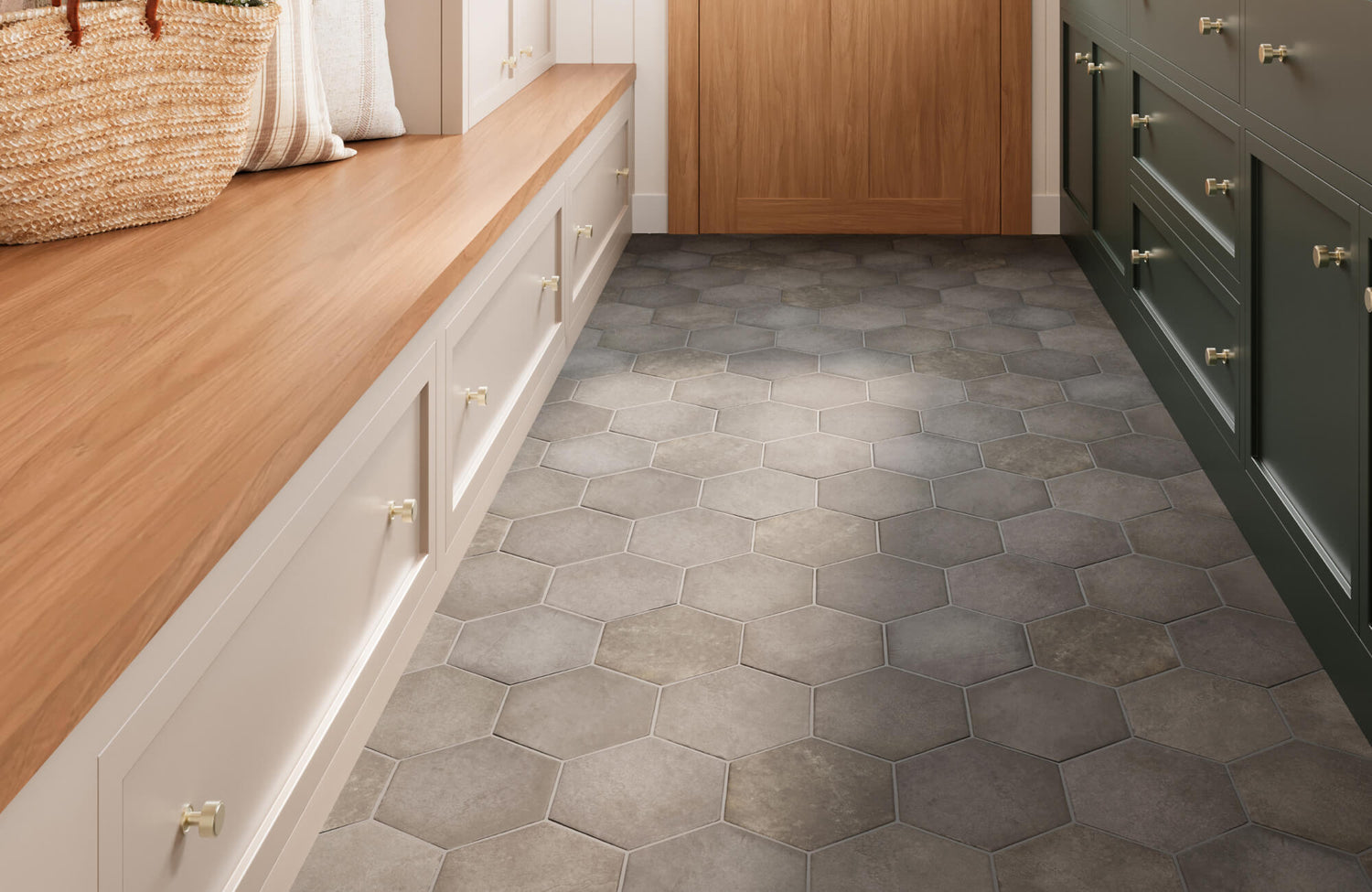
Neutral hexagon tiles in alabaster, warm gray, greige, and soft taupe establish a timeless foundation for luxury interior design. These hues integrate effortlessly with quartz countertops, brushed metal fixtures, and wood cabinetry. Subtle tonal variation also adds depth without overwhelming the visual field. Lighter neutrals reflect ambient light more effectively, increasing perceived openness in compact bathrooms and kitchens. This strategy supports a high-end aesthetic without reliance on bold contrasts. As a result, the space feels cohesive, balanced, and enduring.
Grout as a Design Enhancer
Grout selection plays a critical role in shaping the visual continuity of hexagon tiles. Color-matched grout, for instance, minimizes contrast, allowing the tile field to read as a unified surface, while soft-contrast grout introduces gentle definition without overpowering the geometric pattern. High-performance cementitious grout also ensures consistent color retention and durability over time. In moisture-prone areas, epoxy grout enhances stain resistance and longevity. These technical considerations elevate both the aesthetic and functional quality of the installation.
Light Interaction and Surface Perception
Lighting conditions significantly affect how color and geometry are perceived across hexagon tile surfaces. For example, matte tiles diffuse light evenly, minimizing glare while highlighting subtle texture. In well-lit spaces, tonal tiles appear richer and more dimensional, reinforcing material depth. Artificial lighting can also be layered to accentuate pattern without creating harsh contrast. Understanding how light interacts with tile color supports more intentional design outcomes. This synergy between color and illumination enhances overall spatial refinement.

Pairing Hexagon Tiles with Complementary Budget-Conscious Materials
Luxury design thrives on contrast, balance, and material hierarchy rather than uniform expense. Pairing hexagon tiles with simpler surfaces enhances their visual impact while maintaining cost control.
Material Hierarchy and Visual Balance
Hexagon tiles reach their full design potential when they are balanced against quieter, complementary materials that allow their geometry to stand out. In the photo featured above, our Catalina 7x8 Hexagon Matte Porcelain Tile in Clay grounds the bathroom floor with warm, earthy tones that contrast softly with the smooth curves of the freestanding tub and the clean lines of the wood vanity. The tile’s matte surface and subtle tonal variation also introduce texture without visual noise, allowing surrounding elements, such as the light oak cabinetry and crisp white fixtures, to feel calm and cohesive. By pairing patterned flooring with restrained finishes above, the design maintains a clear material hierarchy that feels intentional rather than decorative. This balance is a defining feature of affordable luxury interiors, where visual impact is achieved through contrast and proportion rather than excess.
Transitional Details That Elevate the Finish
Clean, well-executed transitions between materials play a critical role in conveying craftsmanship and intentional design. Metal edge profiles not only protect exposed tile edges but also introduce crisp visual boundaries that enhance overall polish. Systems such as Schluter profiles help accommodate subtle movement between surfaces, reducing the risk of cracking while maintaining alignment over time. These transition solutions create continuity where different materials meet, preventing the installation from appearing fragmented or improvised. Though often understated, these details strongly influence how finished and professional a space feels. When transitions are handled with precision, even budget-conscious materials take on a distinctly elevated presence.
Texture Contrast for Visual Depth
Incorporating varied textures is an effective way to add depth and sophistication without increasing material costs. Smooth hexagon tiles, for example, gain visual richness when paired with wood-grain cabinetry, softly plastered walls, or matte-painted surfaces that introduce tactile contrast. This interplay of textures also prevents minimalist spaces from feeling flat or one-dimensional. In addition, subtle variations in finish encourage light to interact differently across surfaces, creating movement and interest throughout the room. When thoughtfully balanced, texture contrast enhances the perceived complexity of the design while maintaining a cohesive palette. As a result, the space feels curated and layered rather than purely decorative.

Installation Decisions That Preserve Both Budget and Aesthetics
Installation quality ultimately determines whether hexagon tiles achieve their intended luxury effect. Technical accuracy and thoughtful planning allow budget-friendly materials to perform at a premium level.
Sheet-Mounted Tiles and Substrate Preparation
Sheet-mounted hexagon tiles provide a practical advantage by maintaining consistent spacing and alignment throughout the installation process. This format significantly reduces labor time while minimizing the risk of uneven joints that can disrupt the geometric rhythm. However, successful results depend heavily on proper substrate preparation, as hexagon tiles are particularly sensitive to surface irregularities. Ensuring the subfloor meets ANSI flatness standards helps prevent lippage and uneven transitions across sheets. Adequate thin-set coverage beneath each tile further supports long-term durability and visual continuity. When preparation and installation work together, the finished surface reads as seamless, refined, and professionally executed.
Layout Planning and Waste Reduction
Thoughtful layout planning is essential for achieving both aesthetic precision and cost efficiency. Beginning with accurate measurements and dry-fitting allows patterns to be centered and aligned with architectural features such as vanities, drains, or doorways. This approach minimizes awkward cuts that can disrupt visual balance and draw attention to edges rather than the tile field itself. Reducing waste not only lowers material costs but also streamlines installation timelines. Moreover, selecting readily available tile lines helps avoid premium pricing and long lead times that strain renovation budgets. When layout decisions are made strategically, the final result appears intentional and custom rather than constrained by cost.
Professional Techniques That Improve Longevity
Installation techniques directly influence how well hexagon tiles perform and age over time. Properly placed expansion joints allow the tile assembly to accommodate natural movement caused by temperature and humidity fluctuations. Selecting the correct thin-set formulation also ensures strong adhesion and reduces the risk of tile failure. In addition, allowing sufficient curing time before exposing the surface to use further protects structural integrity. These professional practices minimize long-term maintenance concerns and preserve the original visual quality of the installation. When longevity is prioritized during installation, even budget-friendly hexagon tiles maintain their luxury appearance for years to come.
Timeless Luxury Through Thoughtful Design Choices
Styling hexagon tiles for a luxe look without breaking the bank is rooted in precision, balance, and informed material selection. By combining advanced porcelain tile technology, strategic layouts, and cohesive color planning, designers can create interiors that feel refined and enduring. Thoughtful material pairings and clean transitions further elevate perceived quality without inflating costs. In addition, careful installation techniques protect both aesthetics and long-term performance. Ultimately, luxury emerges not from excess but from intentional design choices executed with technical excellence.
To translate design confidence into tangible decision-making, Edward Martin’s tile sample request option allows homeowners to experience texture, scale, and finish firsthand before committing. Seeing and feeling the tile in its intended environment ensures greater alignment between vision and outcome. In this way, luxury emerges not from excess, but from informed choices executed with clarity, restraint, and technical excellence!