Cool toned bathrooms have become a defining feature of contemporary design. Crisp white tiles, grey marble surfaces, blue undertones, and matte black accents create a sense of clarity and calm that feels refined and modern. Yet within these serene palettes, many still hesitate to introduce warmer metals. A gold framed mirror, with its unmistakable warmth and luminosity, can seem at odds with a cool environment.
In reality, a gold mirror can be the very element that transforms a cool toned bathroom from simply sleek to truly sophisticated. The key lies in intentional styling. By understanding how to mix metals, balance color temperature, select the right finish, and coordinate surrounding materials such as tile, lighting, textiles, and wood, you can integrate a gold framed mirror in a way that feels curated rather than contradictory. When handled thoughtfully, gold does not disrupt a cool palette. It refines it.

The Art of Mixing Metals Intentionally
Blending metals is no longer a design risk; it is a mark of confidence and maturity in a space. A gold framed mirror in a cool toned bathroom becomes successful when it feels deliberate, not accidental. This begins with a clear approach to mixing metals rather than defaulting to perfect uniformity.
Breaking the Matchy Matchy Rule
For decades, bathroom hardware followed a strict formula. Faucets, towel bars, lighting, and mirror frames were expected to match exactly. While this approach created visual order, it often resulted in spaces that felt predictable and flat.
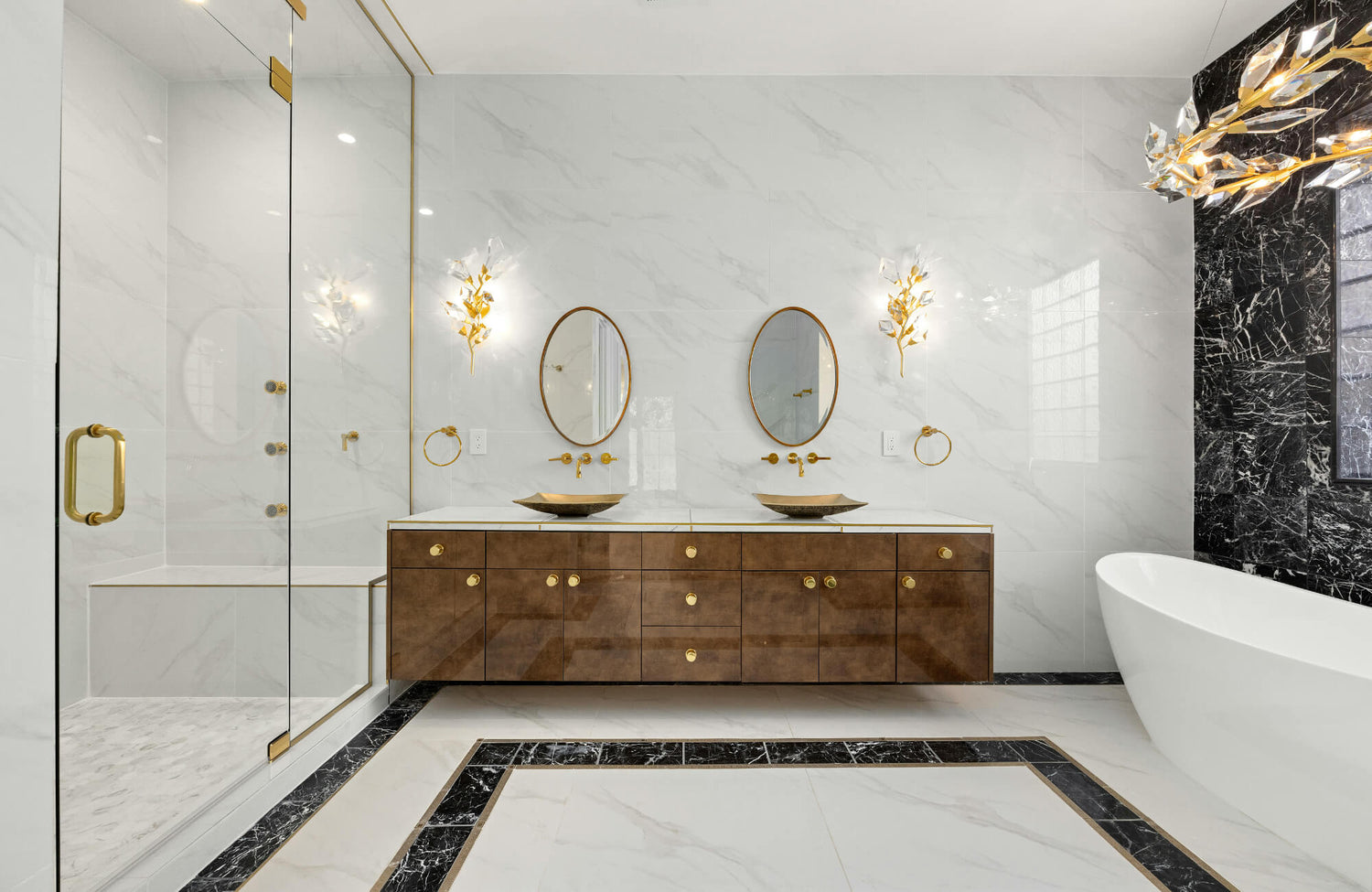
Today’s premium interiors embrace layered finishes. A gold framed mirror paired with chrome plumbing fixtures or matte black hardware creates depth. The contrast highlights each material’s distinct character. In a bathroom dominated by cool hues such as white subway tile, porcelain slabs, or pale grey stone, a gold frame acts as a focal point. It introduces warmth without overwhelming the cool foundation.
The secret is consistency in intention rather than uniformity in finish. If gold appears only once and nowhere else, it may feel disconnected. However, when its presence is subtly echoed through smaller accents such as a soap dispenser, cabinet pull, or the interior lining of a pendant light, it feels integrated. The room begins to tell a cohesive story rather than display a single isolated statement piece.
The Seventy Thirty Split Principle
One of the most effective strategies for styling a gold framed mirror in a cool toned bathroom is maintaining a thoughtful balance between warm and cool metals. A useful design approach is the seventy thirty split. In this context, approximately seventy percent of the visible metal finishes remain cool, while thirty percent introduce warmth.
In practical terms, this might mean chrome or brushed nickel faucets and shower fixtures anchor the space, while the gold mirror frame and a few complementary accents provide warmth. The dominance of cool finishes preserves the bathroom’s crisp identity. The gold becomes a highlight rather than a takeover. This balance is beautifully illustrated by Edward Martin’s Clementine Mirror in Antiqued Gold Leaf paired with Edward Martin’s Brocade Wallpaper in Black/Tan II, 52" x 132" in the image above, where the warmth of the frame is thoughtfully layered against darker, cooler elements without overwhelming them.
This proportional balance ensures harmony. The eye reads the space as cohesive because the primary tone remains consistent. At the same time, the gold element prevents the bathroom from feeling clinical. The warmth softens the edges of marble, porcelain, or polished concrete surfaces, bringing a subtle glow that enhances rather than competes with the cool backdrop.
Bridging the Gap with Matte Black
Matte black has emerged as one of the most versatile finishes in modern bathrooms. It functions as a visual anchor between warm and cool elements. When styling a gold framed mirror, matte black hardware or lighting can serve as a mediator.
Black introduces contrast without leaning warm or cool. Against pale grey walls or white marble tile, matte black fixtures create definition. When positioned alongside gold, the black tempers the brightness and grounds the shine. The result is a balanced composition where the gold feels intentional rather than ornamental.
For example, a bathroom featuring white marble tiles with grey veining, a matte black faucet, and a gold framed mirror achieves a refined interplay of tones. The black prevents the gold from appearing overly glamorous, while the gold prevents the black and white palette from feeling stark. Together, they create layered sophistication.

Pairing Gold with Cool Paint and Tile Colors
The success of a gold framed mirror also depends on the surrounding paint and tile choices. Cool toned bathrooms often rely on whites, blues, greys, and marble finishes. Understanding how gold interacts with these colors allows you to enhance rather than disrupt the palette.
The Crisp Contrast of Bright White and Marble
Bright white walls and marble tiles provide an ideal canvas for a gold mirror. White reflects light, amplifying the warmth of the gold frame and allowing it to stand out with clarity. In bathrooms clad in marble tile, especially those with subtle grey veining, a gold frame adds a layer of elegance that feels timeless.
The contrast between cool marble and warm metal creates visual tension in the best possible way. The gold draws attention to the vanity area, establishing a focal point that feels elevated. In premium bathrooms featuring large format porcelain slabs that mimic natural stone, the gold frame introduces a sense of craftsmanship and detail.
This pairing works particularly well in spaces that prioritize minimalism. A simple rectangular or gently rounded gold framed mirror mounted against white or marble tile becomes a sculptural element. The surrounding simplicity ensures the metal’s warmth reads as intentional luxury rather than excess.
Creating Drama with Deep Navy or Charcoal
Cool toned bathrooms do not have to be pale. Deep navy or charcoal walls can create a dramatic backdrop for a gold framed mirror. Against dark blue or grey surfaces, gold takes on a jewel like quality. The richness of the color intensifies the warmth of the metal.
In a bathroom with navy painted walls and light grey floor tiles, a gold mirror adds brightness without compromising the moody atmosphere. The interplay between dark cool tones and luminous gold feels sophisticated and bold. This combination works particularly well in powder rooms, where smaller spaces allow for stronger contrasts.
Charcoal tiles paired with gold accents evoke a contemporary elegance that feels both urban and refined. The cool depth of the charcoal enhances the gold’s glow, while the gold prevents the dark palette from feeling heavy. The mirror becomes both a functional element and a statement piece.
Softening the Look with Blue Grey Tones
Blue grey walls and tiles offer a softer approach to cool design. These hues create a tranquil environment that benefits from a subtle infusion of warmth. In such settings, a gold framed mirror feels gentle rather than striking.
The key is choosing a gold finish that complements the muted nature of the blue grey. When the warmth is understated, it harmonizes with the serene palette. Paired with pale blue grey ceramic tiles or soft concrete look porcelain flooring, gold introduces dimension without disrupting the calm atmosphere, much like Edward Martin’s Esmeralda Small Mirror in Polished Brass set against Edward Martin’s Kai 3x12 Matte Porcelain Tile in Marine in the image above. The pairing demonstrates how warm metal can quietly elevate cool, vertically laid tile.
In bathrooms designed for relaxation, this balance is essential. The mirror’s warmth counteracts any potential chill in the color scheme, ensuring the space feels inviting rather than austere. The result is a bathroom that feels balanced and thoughtfully layered.

Choosing the Right Gold Finish and Texture
Not all gold finishes are created equal. The specific tone, sheen, and texture of the frame significantly influence how it interacts with cool surroundings. Selecting the right finish is essential to achieving cohesion.
Brushed Brass versus Polished Gold
Brushed brass offers a muted warmth with a soft sheen. It diffuses light rather than reflecting it sharply. In cool toned bathrooms, brushed brass is often more forgiving and versatile than high shine polished gold.
Polished gold, with its reflective surface, introduces glamour. In minimalist spaces dominated by grey tiles or crisp white walls, this shine can feel bold. When balanced carefully, it creates striking contrast. However, in smaller bathrooms or those with abundant reflective surfaces such as glossy tiles, polished gold may amplify brightness to an overwhelming degree.
Brushed brass, on the other hand, integrates more subtly. Its matte texture pairs beautifully with honed marble, matte porcelain tiles, or painted walls. For homeowners seeking a refined, understated effect, brushed finishes tend to complement cool palettes with greater ease.
Using Champagne Bronze for a Subtler Blend
Champagne bronze occupies a middle ground between gold and muted brass. Its slightly desaturated tone makes it particularly suitable for cool toned bathrooms. It introduces warmth without appearing overly yellow.
In bathrooms featuring light grey stone tiles or blue undertones, champagne bronze mirrors blend seamlessly. The softer hue respects the cool environment while still providing contrast. This finish is especially effective in spaces aiming for a transitional aesthetic that bridges classic and contemporary design.
Because champagne bronze is less intense, it allows other materials such as textured tiles, natural stone, or patterned floors to remain prominent. The mirror enhances rather than dominates the composition.
Softening Cool Angles with Organic Shapes
Beyond finish, the shape of the mirror influences how gold interacts with cool elements. Many cool toned bathrooms emphasize clean lines and geometric precision. Rectilinear vanities, linear lighting, and large format tiles create a structured environment.
Introducing a gold framed mirror with an organic shape, such as a rounded rectangle or oval, softens these angles. The gentle curves balance the sharpness of cool materials. This contrast between shape and color adds visual interest without introducing clutter. Edward Martin’s Rory Mirror in Antique Brass Iron, as seen in the image above, exemplifies how a subtly curved silhouette can temper strong vertical tile lines and crisp architectural edges.
An arched gold mirror above a floating vanity clad in grey tile, for example, creates harmony through contrast. The warmth of the gold and the softness of the curve counterbalance the rigidity of the surrounding lines. The bathroom feels intentional and composed.

Harmonizing with Lighting and Accessories
A gold framed mirror does not exist in isolation. Its success depends on the surrounding lighting, textiles, and organic materials. When these elements echo its warmth, the mirror feels seamlessly integrated.
Coordinating Sconces and Vanity Lights
Lighting is one of the most influential factors in how gold appears. Warm white bulbs enhance the richness of gold finishes, while cool white bulbs can make them appear brassy or flat. In a cool toned bathroom, selecting a balanced warm white light ensures the gold glows rather than clashes.
Coordinating vanity lights or sconces in complementary finishes reinforces cohesion. They do not need to match the mirror exactly, but they should share a similar undertone. Edward Martin’s Esmeralda Wide Mirror in Polished Brass paired with Edward Martin’s Enola Wall Sconce in Aged Brass in the image above demonstrates how aligned finishes create symmetry and depth without appearing overly coordinated.
The interplay between light and metal elevates the mirror from decorative object to integrated design feature. Illumination highlights the frame’s texture, allowing it to enhance the bathroom’s atmosphere both day and night.
Warming Up the Floor with Textiles
Cool toned bathrooms often feature stone or porcelain tile flooring. While these materials offer durability and sophistication, they can feel cold underfoot. Introducing a high quality rug or bath mat with subtle warm undertones helps bridge the gap between gold and cool surfaces.
A woven rug incorporating hints of beige or taupe can echo the warmth of the mirror without disrupting the cool palette. Texture also plays a part. Plush textiles soften hard tile surfaces and create a layered environment. The gold frame then feels like part of a broader warm narrative rather than a solitary accent.
In larger bathrooms, a carefully selected area rug can anchor the vanity zone. The interplay between cool tiles and warm fibers enhances comfort and visual depth.
Introducing Wood Elements for Organic Balance
Natural wood introduces warmth in its most organic form. In a cool toned bathroom with grey tiles or white walls, a wooden vanity, stool, or shelving element creates continuity with a gold framed mirror.
Light oak or walnut finishes complement gold beautifully. The natural grain provides texture that softens sleek tile surfaces and polished fixtures. Even small details such as a wooden tray or framed artwork can subtly reinforce the mirror’s warmth.
This organic balance ensures the bathroom does not feel overly metallic or sterile. The combination of cool tiles, warm gold, and natural wood creates a layered aesthetic that feels both contemporary and inviting.
The Golden Touch of Warmth
Styling a gold framed mirror in a cool toned bathroom is less about contradiction and more about composition. Gold does not disrupt a cool palette when it is introduced with intention, proportion, and balance. Instead, it enriches the environment. For homeowners refining details such as tile pairings, lighting finishes, or complementary furniture, Edward Martin’s design consultation service offers personalized guidance to ensure each element works cohesively within the space.
If questions arise about product selections or how to coordinate mirrors with tile, rugs, or vanities, you can always contact Edward Martin for tailored support aligned with your project’s vision. In the end, a gold framed mirror serves as more than a reflective surface. It becomes the subtle infusion of warmth that elevates marble, enhances grey tiles, and deepens blue walls.