
)
)
)
)
)
)
)
)
How Do You Reduce Glare From A Large Mirror Facing A Sunny Window?
Large mirrors are a powerful design tool. They amplify light, visually expand space, and add a sense of refinement to interiors. But when a large mirror directly faces a sunny window, that same light-enhancing feature can quickly become a source of discomfort. Harsh glare bouncing across the room can strain the eyes, wash out details, and make otherwise beautiful spaces difficult to enjoy during peak daylight hours. For those who value both aesthetics and livability, reducing mirror glare without sacrificing natural light is a nuanced design challenge worth solving thoughtfully.
The solution rarely lies in a single adjustment. Instead, it comes from understanding how light behaves, how surfaces interact with it, and how strategic choices in placement, materials, and styling can restore balance. By approaching the issue through geometry, light control, mirror selection, and surrounding décor, you can preserve the brightness you love while eliminating the visual harshness you do not.
Mastering the Geometry of Mirror Placement
Light reflects predictably, even if its effects feel overwhelming in a lived-in space. When sunlight strikes a mirror, it reflects at the same angle at which it arrives. This basic principle means that small changes in orientation can produce dramatic improvements in comfort. Before investing in new treatments or materials, adjusting how the mirror sits in relation to the window is often the most efficient first step.
The Art of Tilting the Mirror Downward
A mirror mounted perfectly vertical tends to throw light straight back into the room at eye level, which is where glare is most disruptive. Tilting the mirror slightly downward redirects reflected sunlight toward the floor rather than across seating areas or work surfaces. This subtle adjustment is often imperceptible visually but immediately noticeable in how the room feels.
In living rooms, dining areas, or entryways, a downward tilt can soften the intensity of reflected light while still allowing the mirror to perform its role of brightening the space. The reflected light becomes ambient rather than blinding, contributing to warmth instead of visual fatigue. This approach works especially well with large statement mirrors where replacing or relocating the piece would be impractical.
Off Centering the Mirror from the Light Path
Perfect alignment between a window and a mirror may look intentional, but it often creates the strongest glare. Shifting the mirror just slightly off center from the window’s direct light path can dramatically reduce reflection intensity. Even a few inches to the left or right can change where sunlight lands and how it travels through the room.
This technique preserves symmetry in the broader design while breaking the direct mirror-to-window relationship that causes discomfort. In open-plan spaces common in modern homes, off-centering allows the mirror to continue enhancing depth and openness without acting like a spotlight aimed at the seating area.
Calculating the Reflection Angle for Seating
The most important perspective in any room is where people actually sit or stand. A mirror that reflects sunlight harmlessly onto a wall may still be problematic if it sends glare directly toward a sofa, dining table, or desk. This is especially true with a brass mirror, where the warm-toned frame can visually intensify brightness when paired with strong daylight. Observing how light behaves at different times of day helps determine whether the mirror’s reflection aligns with real human sightlines rather than just the room’s geometry.
Adjusting mirror height or placement so reflected light travels above or below seated eye level can significantly improve comfort. With a brass mirror, even slight repositioning can soften how light interacts with both the glass surface and the metallic surround, preserving its decorative impact without introducing visual strain. This consideration is particularly relevant in spaces used throughout the day, such as family rooms or home offices, where glare shifts as the sun moves across the sky.
Controlling the Light Source with Window Treatments
While mirror placement addresses how light reflects, window treatments determine how much light enters the room in the first place. The goal is not to darken the space, but to refine the quality of incoming daylight so it remains soft and manageable. Thoughtful window solutions allow homeowners to enjoy sunlight without the sharp contrast that causes glare.
The Diffusion Power of Sheer Drapery
Sheer drapery is one of the most elegant ways to soften strong sunlight. Rather than blocking light, sheer fabrics scatter it, transforming direct beams into a gentle glow. When sunlight reaches the mirror after passing through sheer curtains, the reflection becomes significantly less intense and more evenly distributed.
This solution aligns well with interiors that emphasize lightness and airiness. Sheer drapery maintains the connection to the outdoors while protecting interiors from harsh reflections, making it ideal for living rooms, dining spaces, and bedrooms where comfort and ambiance are equally important.
Solar Shades to Cut UV and Glare
Solar shades offer a more technical approach to glare reduction. Designed to filter sunlight and reduce UV exposure, these shades allow natural light to enter while cutting the intensity that causes reflective glare. Their controlled transparency makes them particularly effective in rooms with large windows and mirrors positioned opposite one another.
For homeowners concerned about protecting furnishings from sun damage while maintaining a modern aesthetic, solar shades provide a clean, understated solution. When paired with mirrors, they reduce brightness at the source, resulting in a calmer, more balanced interior light environment.
Using Exterior Awnings or Landscaping
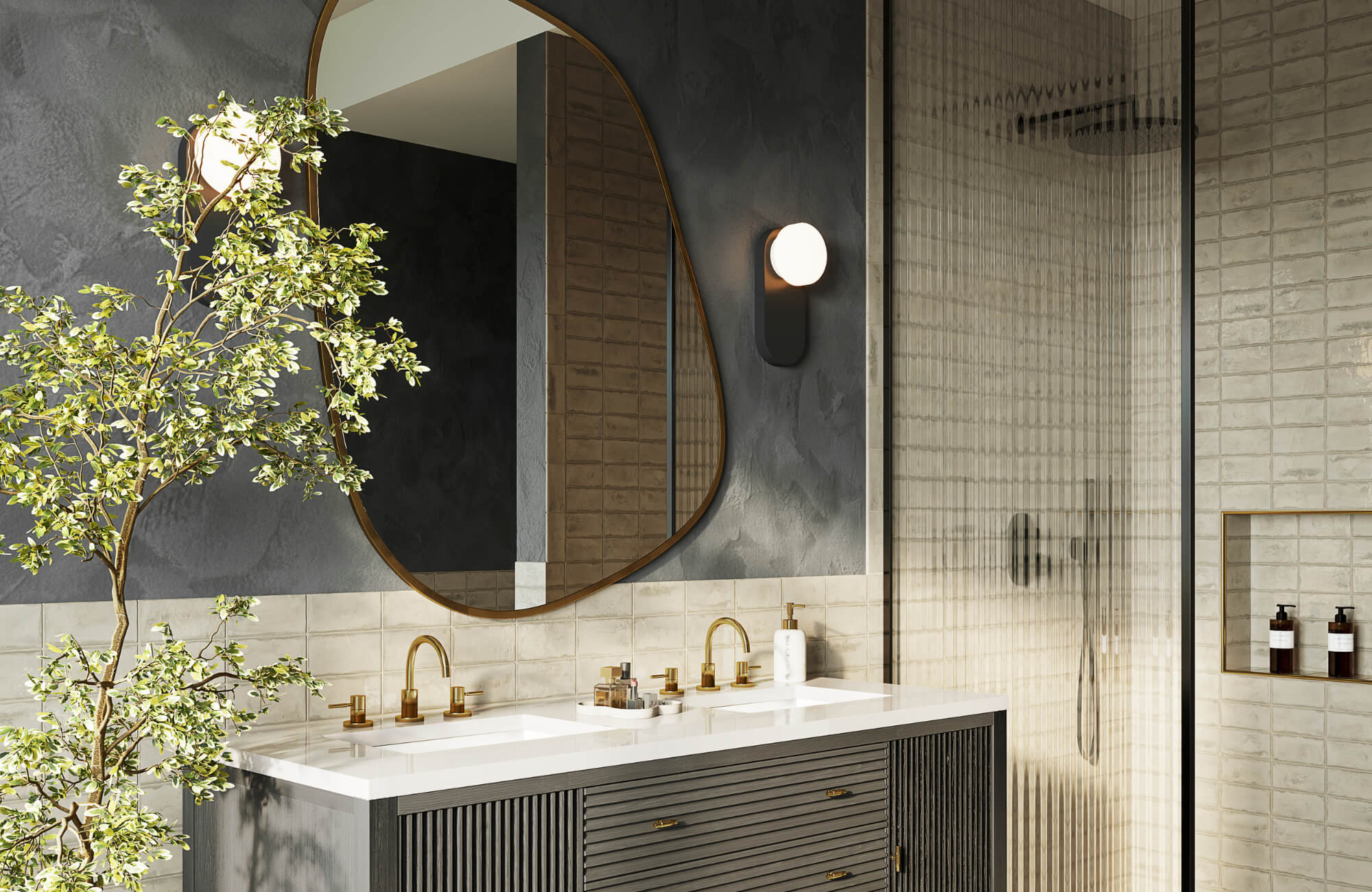
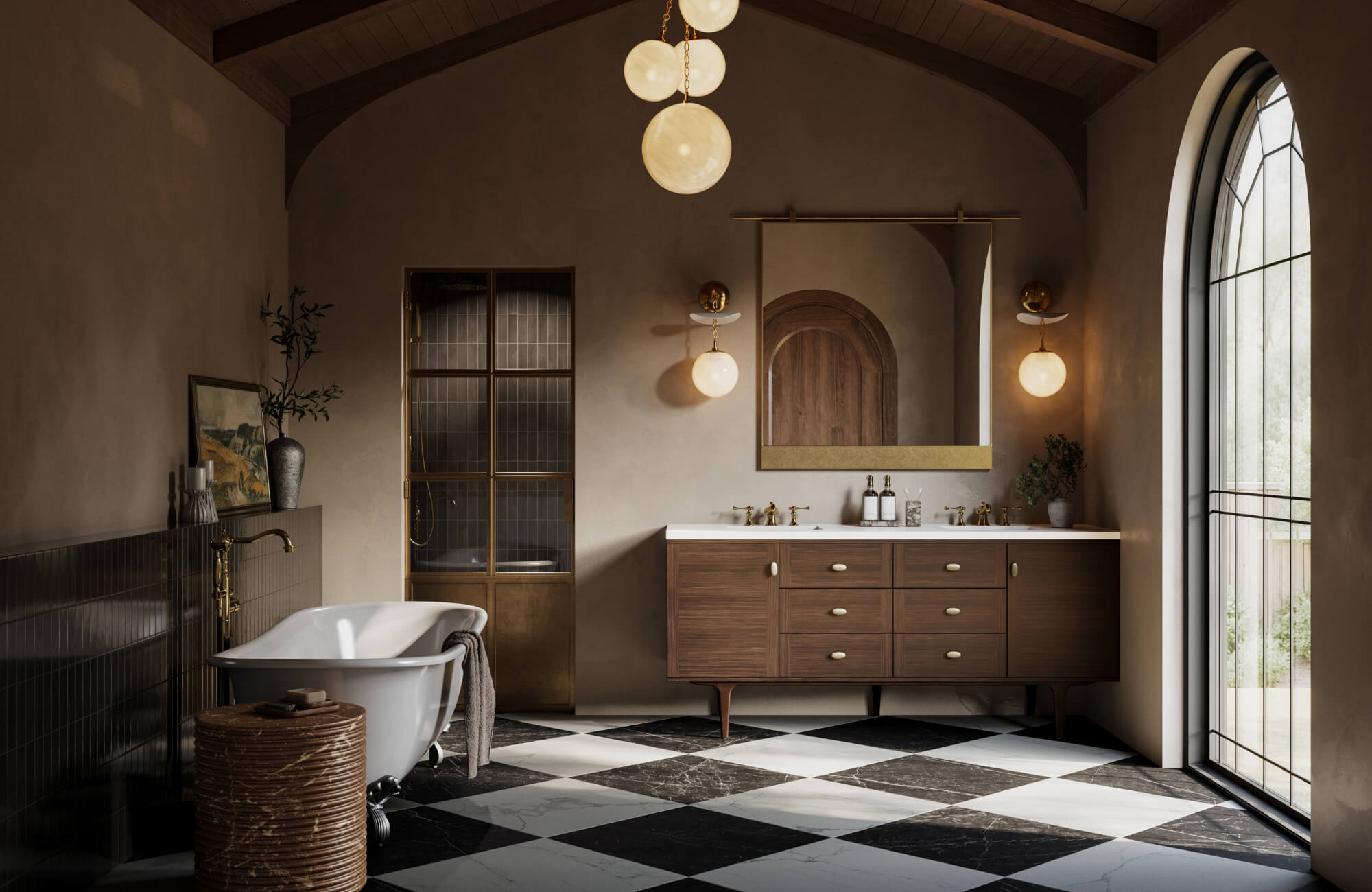
Sometimes the most effective glare control happens outside the home. Exterior awnings, pergolas, or strategically placed trees can limit the amount of direct sunlight entering through a window during peak hours, which in turn softens how light interacts with interior finishes. In spaces styled with reflective accents like Edward Martin’s Shirley Large Mirror in Antique Brass Iron, shown in the image above, reducing direct sunlight before it reaches the glass helps maintain warmth without creating harsh reflections.
Landscaping in particular offers a natural, visually appealing way to filter sunlight. Deciduous trees provide shade in summer while allowing more light in winter, creating a seasonal balance that benefits both comfort and energy efficiency. When less intense light enters the room, mirrors contribute depth and ambiance rather than glare.
Choosing the Right Mirror Surface and Finish
Not all mirrors behave the same way under sunlight. The surface finish, shape, and glass treatment all influence how light is reflected. Selecting or modifying the mirror itself can make a substantial difference, especially when placement and window treatments alone are not enough.
The Softening Effect of Antiqued or Foxed Glass
Antiqued or foxed mirrors feature intentional variations in the reflective surface, which break up light rather than bouncing it back uniformly. These subtle imperfections scatter reflections, reducing sharp glare and adding visual depth that feels layered and intentional. This effect is especially evident with designs like Edward Martin’s Clancy Mirror in Antique Brass, where the softened reflection creates a more atmospheric presence within the space.
In addition to their functional benefits, antiqued mirrors bring character and a sense of history to a space. They work particularly well in traditional, transitional, or eclectic interiors where warmth and texture are prioritized alongside light control.
Why Convex Mirrors Diffuse Light Better
Convex mirrors curve outward, dispersing reflected light across a wider area. Unlike flat mirrors that concentrate reflections, convex surfaces naturally soften brightness by spreading it more evenly. This quality makes them especially useful in spaces where glare is persistent and difficult to manage.
While convex mirrors are often associated with decorative or architectural accents, larger convex designs can function as statement pieces that enhance light without overwhelming the room. Their reflective behavior supports a balanced lighting environment while adding visual interest.
Applying Anti Glare Film to Existing Mirrors
When replacing a mirror is not an option, anti glare film offers a practical retrofit solution. These films reduce reflectivity and diffuse incoming light, minimizing harsh reflections without significantly altering the mirror’s appearance. Properly applied, the film maintains clarity while softening brightness.
Anti glare treatments are particularly useful in modern interiors where sleek mirrors are integral to the design. They allow homeowners to address comfort concerns without compromising the clean lines and polished look that define contemporary spaces.
Strategic Styling to Absorb Excess Light
Beyond mirrors and windows, the surrounding environment has a significant influence on how light behaves. Materials, colors, and objects within the reflection path can absorb or soften light, reducing glare through thoughtful styling rather than structural changes.
Using Large Plants as Light Filters
Large indoor plants act as natural light diffusers. When positioned between a window and a mirror or within the mirror’s reflection line, foliage breaks up sunlight and softens reflections. Leaves absorb and scatter light, creating gentle shadows and a more dynamic, comfortable atmosphere.
In addition to their functional benefits, plants enhance biophilic design, which is increasingly valued by homeowners seeking wellness-oriented interiors. They introduce texture, color, and life while subtly addressing glare concerns.
Why Matte Wall Colors Help Reduce Bounce
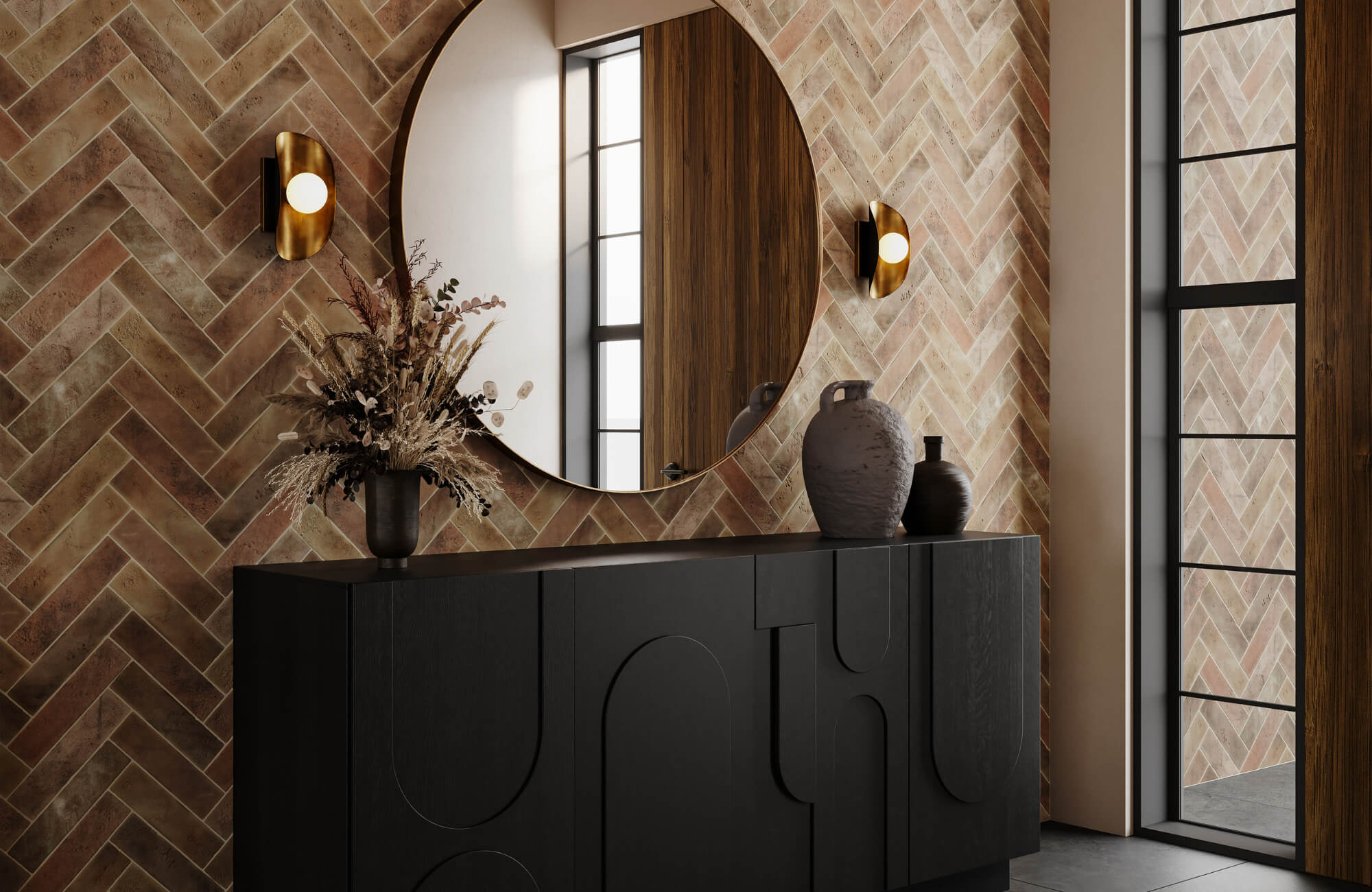
Highly reflective wall finishes amplify glare by bouncing light repeatedly around a room. Matte or low-sheen wall paints absorb more light, reducing secondary reflections that contribute to visual discomfort. When paired thoughtfully, materials such as Edward Martin’s Esmeralda Round Mirror in Polished Brass and Everett 2x10 Matte Ceramic Tile in Almond, as seen in the image above, demonstrate how a subdued wall surface can temper reflections while still allowing brass accents to shine.
Choosing softer, matte finishes for walls opposite large mirrors helps control brightness while maintaining a sophisticated look. Neutral tones with warm undertones are especially effective at preserving natural light without introducing harsh contrast, creating interiors that feel calm, cohesive, and comfortable throughout the day.
Placing Matte Objects in the Reflection Line
Objects within the mirror’s reflection path influence how light travels through the room. Matte-finished furniture, textiles, and décor absorb light instead of reflecting it back, making them especially effective in areas where sunlight is most likely to bounce. Thoughtfully selecting these elements can feel more intuitive with Edward Martin’s design consultation service, which offers personalized guidance to help align finishes, materials, and scale with your specific space.
Upholstered seating, woven rugs, and textured accessories all contribute to a calmer visual environment. For those weighing options or refining details, contacting Edward Martin provides expert support for product questions or assistance with tile, rug, or furniture selections, helping ensure every choice feels cohesive, confident, and well-balanced.
Finding the Balance Between Light and Comfort
Reducing glare from a large mirror facing a sunny window is ultimately about balance. Natural light is one of a home’s greatest assets, but without thoughtful control, it can undermine comfort and usability. By understanding reflection geometry, refining incoming light, selecting appropriate mirror finishes, and styling with intention, homeowners can enjoy bright, inviting spaces that remain comfortable throughout the day.
The most successful interiors do not eliminate light; they shape it. When mirrors enhance daylight without overpowering it, they fulfill their purpose as both functional and aesthetic elements. With careful consideration and layered solutions, it is entirely possible to maintain the brilliance of natural light while creating a space that feels calm, refined, and effortlessly livable.
Follow us on Instagram
@EDWARD.MARTIN
)
)
)
)
)
)
)
)
)
)
)
)
)
)
)
)