Lighting plays a vital role in how your vanity looks, feels, and functions. Whether you're applying makeup, shaving, or simply checking your reflection, the right lighting setup can transform your routine from frustrating to effortless. But choosing vanity lighting isn’t just about picking a fixture that looks good. It’s also about making smart decisions that support clarity, color accuracy, and a cohesive design.
From fixture placement and light temperature to style coordination and performance, every detail matters. In this article, you'll learn how to tailor lighting to your space, grooming habits, and overall bathroom aesthetic. With a few thoughtful adjustments, you can turn your vanity into a well-lit, beautiful space that works for you every single day.

Understanding the Purpose and Function of Vanity Lighting
Before selecting any lighting fixtures, it’s important to first understand how vanity lighting supports your daily routine. Unlike ambient or decorative lights, vanity lighting serves a specific purpose: to provide clear, accurate illumination for grooming tasks like applying makeup, shaving, or skincare.
Identifying Grooming and Lifestyle Needs
To choose the right lighting, think about how you actually use your vanity space each day. If you rely on it for detailed tasks like applying makeup, tweezing eyebrows, or shaving, you’ll need a lighting setup that delivers sharp visibility and excellent color accuracy. In these situations, look for fixtures that accommodate bulbs with a high Color Rendering Index (CRI) of 90 or higher. This ensures you see your skin tone and makeup colors as they truly are, avoiding misjudgments that can happen with poor lighting. On the other hand, if your vanity is primarily used in a guest bathroom or serves a more decorative role, you can shift the focus to ambiance, choosing warmer light temperatures around 2700K that offer a soft, welcoming glow rather than clinical brightness.
Your lifestyle and routine should also guide your decisions on brightness, beam spread, and color temperature. For example, someone with an early morning routine might prefer slightly cooler lights around 3000K–4000K to simulate daylight and help wake up, while evening users may benefit from adjustable dimmable options that reduce brightness at night. By aligning your lighting with how you use the space, you’ll ensure that your vanity serves both form and function effortlessly.
Differentiating Task Lighting from Supplemental Illumination
Understanding the role of task lighting in your vanity area is key to creating a functional and flattering setup. Task lighting’s primary job is to illuminate your face evenly and clearly, reducing shadows that can distort features or hinder visibility. Unlike ambient lighting, which is meant to brighten the entire bathroom, or accent lighting, which adds decorative flair, task lighting focuses squarely on you—your eyes, your skin, your details.
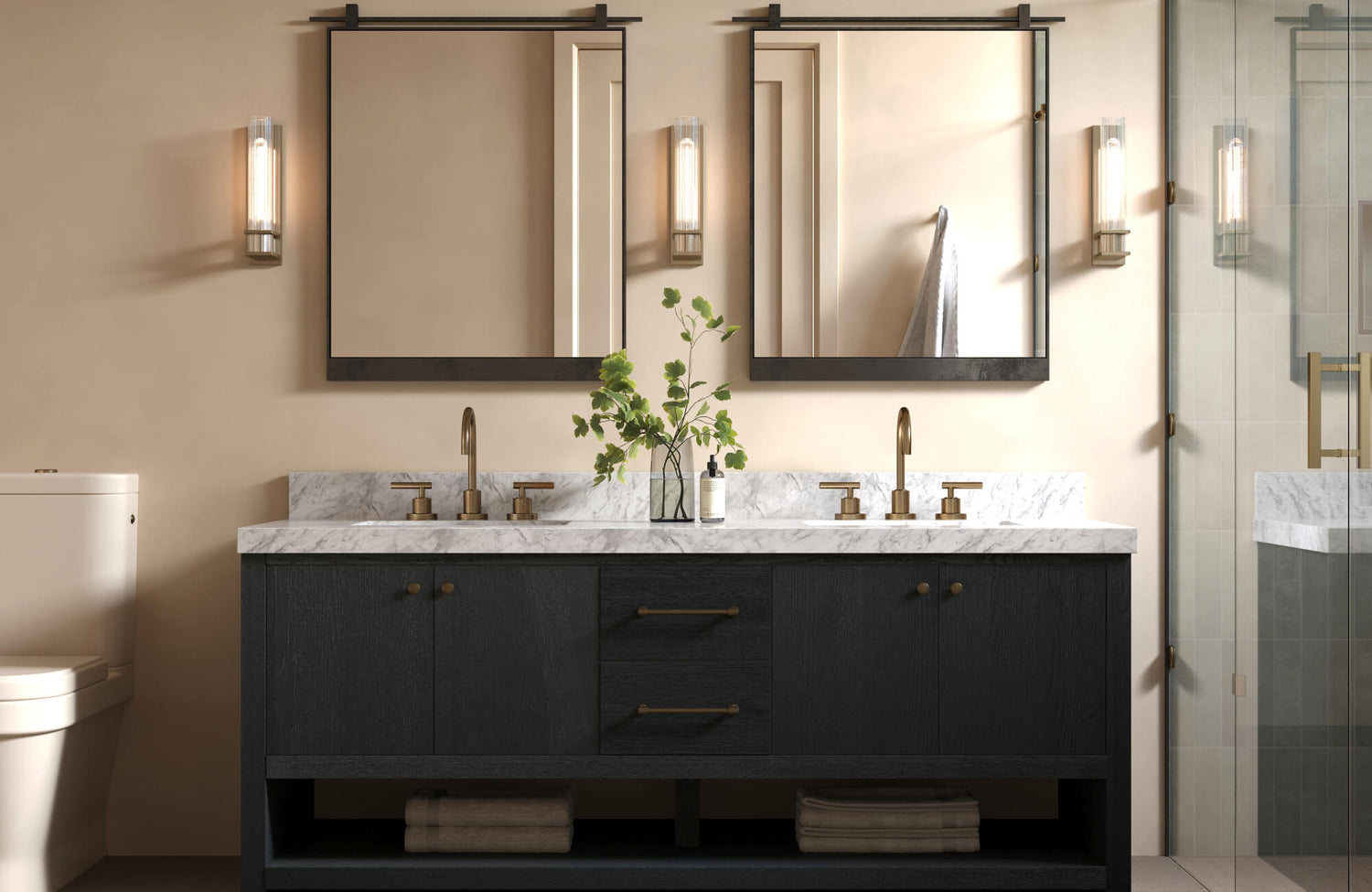
Because of that, placement and intensity matter. You’ll want lighting that hits your face directly rather than from above or behind, as this can create harsh shadows or uneven tones. In the bathroom photo shown above, the wall-mounted sconces flanking the mirror are an excellent example of effective task lighting. Edward Martin’s Ortega Wall Sconce in Patina Brass delivers a warm, brushed gold finish that blends seamlessly with the faucet and hardware while casting a soft, focused light ideal for grooming.
Although it’s tempting to rely solely on ceiling lights or wall sconces that weren’t specifically chosen for grooming, doing so can leave you with inadequate visibility. To avoid this, pair your task lighting with ambient and accent sources that support a layered look, but never let them replace what task lighting is meant to do, which is to deliver targeted, reliable brightness where you need it most.
Avoiding Common Functional Pitfalls
It’s surprisingly easy to make lighting decisions that hinder rather than help your grooming experience. One of the most common mistakes is relying exclusively on overhead fixtures, such as ceiling-mounted lights or recessed cans. These cast shadows downward, often exaggerating features like under-eye circles or creating uneven illumination across the face. As a result, tasks like blending foundation or shaving become far more difficult and error-prone.
Another major pitfall is choosing bulbs with low CRI or insufficient brightness. Low-quality bulbs may distort color perception, making it tough to match makeup or assess skin tone accurately. To avoid this, select lighting with a high CRI and make sure the lumen output matches your needs, typically between 800 and 1600 lumens for task lighting, depending on your space and personal preference. You’ll also want to consider beam angles; a narrow spotlight might look sleek but fail to provide full facial coverage. By paying attention to these technical details, you’ll avoid the all-too-common issue of a beautiful fixture that doesn’t actually work well in practice.

Evaluating Light Placement and Angling Strategies
Correctly positioning your vanity lighting fixtures makes a noticeable difference in how well you see yourself and how naturally you appear in the mirror. Thoughtful placement and angling eliminate harsh shadows and enhance the clarity of your reflection, ensuring both function and comfort.
Vertical Versus Horizontal Mounting
Choosing between vertical and horizontal mounting depends largely on your mirror’s shape and the space available, but each has its own strengths when installed with care. Vertical sconces placed on either side of the mirror, ideally mounted at eye level, around 65 to 70 inches from the floor, are one of the most effective ways to achieve even lighting. This arrangement bathes both sides of your face in light, eliminating the heavy shadows that often occur when light comes from above or behind.
A perfect example of this approach can be seen in the photo displayed above, where sleek cylindrical sconces frame each mirror with symmetry and purpose. The fixture used is the Ryder Wall Sconce in Old Bronze, featuring a deep bronze finish and a luminous alabaster-style shade that casts a soft, flattering glow. This pairing not only delivers balanced task lighting but also complements the room’s warm palette and clean-lined design.
If your setup doesn’t allow for sconces on the sides, a horizontal fixture mounted above the mirror can still work beautifully. To be effective, it should span at least 75% of the mirror’s width and be positioned just a few inches above the top of the mirror frame. When properly chosen and placed, horizontal lighting also provides an even wash of brightness, though it may not offer the same depth or symmetry as vertical lights. Regardless of the orientation, aim to create consistent, face-level lighting that enhances your visibility without overexposing or flattening your features.
Dual-Side Sconces
If you’re seeking the most flattering and functional setup, dual-side sconces offer excellent symmetry and face-focused illumination. By placing matching sconces on both sides of the mirror, you create a balanced field of light that reveals your features clearly and without distortion. This layout also significantly reduces shadows under the eyes, nose, and chin areas that overhead lighting often struggles to handle effectively. A beautifully refined example of this approach is the Noelle Wall Sconce in Vintage Brass, which blends a warm golden tone with a gracefully tapered shade to emit soft, even light. This fixture enhances both style and functionality, making it ideal for grooming tasks that require clarity and precision.
What makes this approach even more versatile is the availability of adjustable sconces. These fixtures can also be angled or tilted slightly to suit your height or specific tasks, whether you're leaning in for detailed makeup work or trimming a beard. With proper placement and the right type of bulb, this strategy delivers precision lighting tailored to your needs, making it easier to see true colors and fine details in your reflection.
Avoiding Ceiling-Only Installations
Although ceiling lights, like recessed or flush-mounted fixtures, serve a valuable role in general bathroom illumination, they’re not enough on their own for vanity lighting. When used as the sole light source above a mirror, they tend to cast uneven, downward shadows across the face. This can also create a harsh and unflattering effect, making everyday grooming more difficult and far less accurate.
To avoid these issues, always pair ceiling lights with dedicated task lighting at face level. Sconces, lighted mirrors, or linear LED strips around the mirror provide the direct illumination you need for close-up work. Supplementing from the sides rather than relying solely on overhead fixtures gives you a far more accurate view in the mirror, one that mimics natural lighting and highlights your true appearance without distortion.

Aligning Lighting with Mirror and Vanity Design
To create a vanity area that feels both functional and visually refined, it’s important to align your lighting choices with the design of your mirror and vanity. Proper proportion plays a key role; fixtures that match the scale of the mirror ensure your face is evenly lit without overpowering or underwhelming the space. Vertical sconces, for instance, work well alongside tall mirrors, while horizontal light bars are ideal for wider layouts. Choosing the right scale also prevents awkward imbalances and improves both the aesthetics and performance of your lighting.
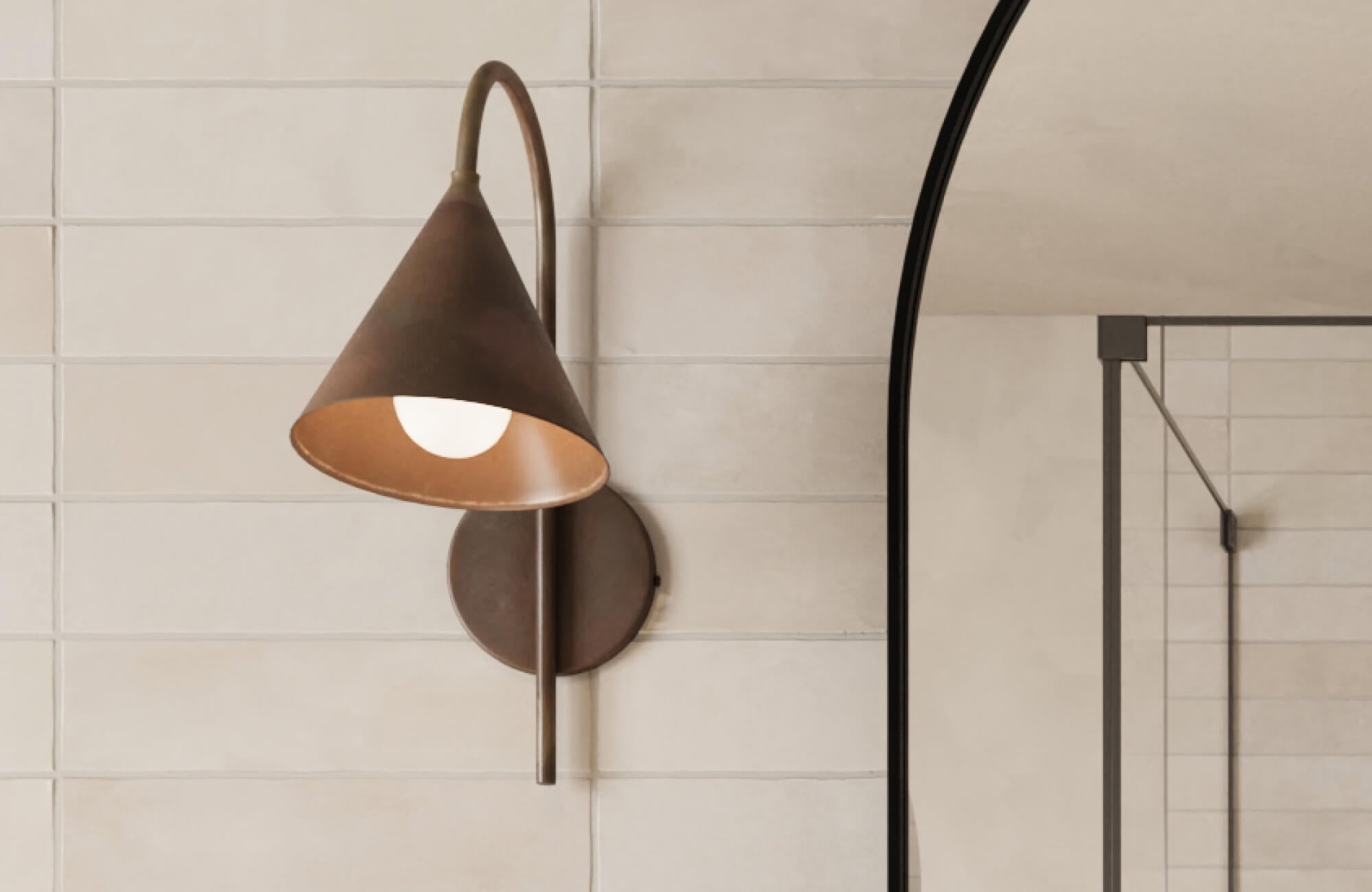
In addition to sizing, consider how your lighting integrates with the overall style and features of your vanity setup. As displayed in the picture above, the Isadora Wall Sconce in Polished Nickel is a great example of how thoughtful fixture selection can enhance a contemporary space. With its sleek, mirror-like finish, it pairs effortlessly with modern vanities and metallic accents, adding both brightness and elegance without distraction.
Mirrors with built-in LED lighting also offer a clean, modern solution that reduces visual clutter and provides soft, even illumination. However, you may need to supplement these with additional tasks or ambient lighting to meet brightness needs. Finally, the finish and style of your fixtures should complement your vanity's design. Whether you're working with rustic wood cabinetry or a sleek, minimalist surface, choosing materials and forms that echo those elements brings a sense of unity to the space. When your lighting feels intentionally connected to the mirror and vanity, the result is a cohesive environment that looks good and performs even better.
If you're unsure how to pull it all together, expert help can make all the difference. Our design services are here to guide you through every detail, from fixture selection to cohesive styling, ensuring that your lighting not only enhances your vanity but also elevates the entire room.

Balancing Aesthetic Impact with Practical Use
Vanity lighting should elevate the look of your bathroom, but never at the expense of function. It’s easy to fall for a stunning fixture, but if it doesn’t provide the right light for grooming, it becomes more of a decorative piece than a useful tool. Striking a thoughtful balance ensures your lighting both looks beautiful and works flawlessly.
Choosing Fixture Styles that Enhance the Room's Theme
When selecting fixtures, focus on designs that naturally blend with your bathroom’s overall aesthetic. If your space leans modern, opt for clean-lined sconces or streamlined LED bars that emphasize minimalism. For vintage or transitional spaces, go with more ornate shapes or warm-toned metals like brass or bronze.
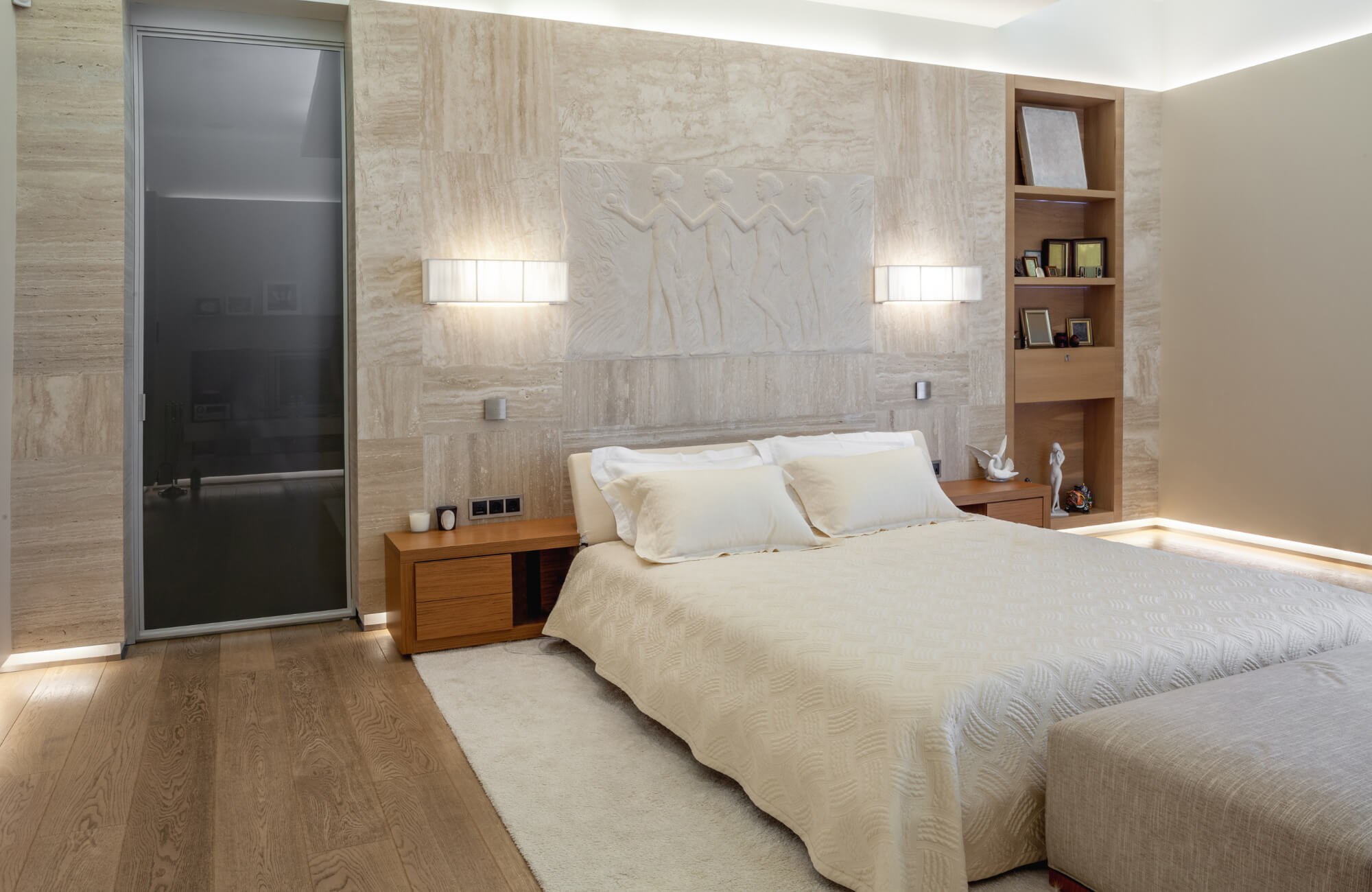
In the bathroom photo shown above, sculptural sconces with softly diffused light perfectly complement the relaxed, coastal-inspired design. Edward Martin’s Wilma Wall Sconce in Aged Brass features an elegant blend of soft gold and a curved alabaster-like shade, adding organic softness and sophistication. This kind of fixture not only enhances the room’s visual warmth but also offers functional, flattering illumination for everyday grooming.
However, regardless of the design direction, the fixture must still fulfill its primary job: to light your face evenly and clearly. Avoid choosing fixtures that prioritize form over function. Overly decorative pieces, such as ones with heavy shades, tinted glass, or intricate metalwork, may diffuse or block the light in ways that hinder visibility. What looks appealing on a showroom wall might perform poorly once installed. The ideal fixture should amplify the room’s theme while still delivering even, flattering illumination across your entire face.
Employing Layered Lighting
Layering different types of lighting around your vanity enhances versatility and comfort. Task lighting ensures precise visibility, but when combined with ambient and accent lighting, the space becomes far more dynamic. Recessed ceiling lights, for example, can fill the room with soft, general illumination, while toe-kick LEDs beneath cabinetry add a subtle glow that helps with nighttime navigation or mood setting.
Meanwhile, your vanity lights do the heavy lifting for grooming, and when layered correctly, they prevent the space from feeling flat or overly clinical. This approach also allows you to adjust the atmosphere depending on the time of day or purpose—brighter when you need clarity, dimmer when you want to relax. By layering thoughtfully, you create a space that adapts as well as it impresses.
Ensuring Design Does Not Compromise Essential Visibility
As tempting as it is to prioritize style, never let a fixture’s appearance outweigh its performance. Lighting that casts heavy shadows, has poor color rendering, or lacks adequate brightness can make even the most beautifully designed bathroom frustrating to use. Before committing to a fixture, it’s essential to evaluate how well it performs in real conditions.
You can try to test for brightness, shadow distribution, and CRI in a setup that mimics your actual bathroom environment. Some fixtures may look bright in a store but appear dim or uneven when installed. Always choose lighting that enhances your ability to see yourself clearly, whether you're applying makeup, shaving, or simply checking your appearance. The best design is one that quietly supports your routine while still contributing to the room’s visual appeal.
Design With Purpose
Great vanity lighting doesn’t happen by accident. It’s the result of understanding your space, your habits, and how light truly works. When you align fixture placement with proper brightness, choose bulbs that render color accurately, and complement your mirror and vanity design, you create more than just an attractive setup. You also build a space that supports precision, enhances comfort, and reflects your style. Ultimately, choosing the right lighting for your vanity brings clarity to your routine and beauty to your bathroom in equal measure.
If you need help bringing your design vision to life, our team is here to guide you. Whether you're selecting the perfect fixture, exploring lighting temperatures, or matching finishes to your vanity style, we’re ready to offer expert recommendations tailored to your space. Visit our Contact Us page to connect with us directly. We’d love to help you create lighting that’s as functional as it is beautiful!