



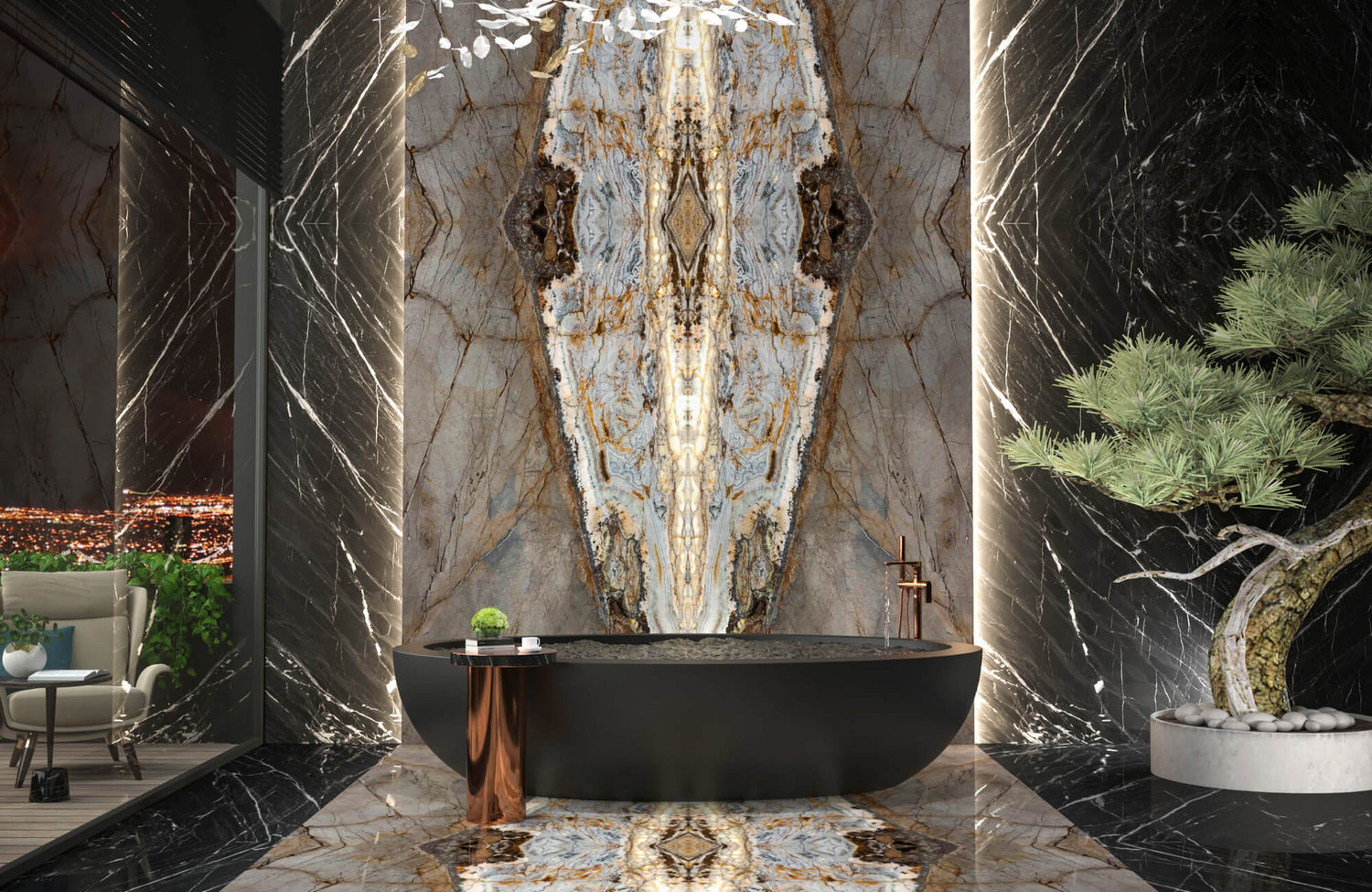
Achieving a bookmatched effect with marble look tiles requires precision at every stage, from tile selection to layout planning and installation. This technique involves mirroring two adjacent tiles to create a symmetrical veining pattern, much like how a slab of natural marble is split and polished. To maintain this effect, proper alignment during installation is equally critical, as even slight misplacement can disrupt the intended symmetry.
Beyond aesthetics, bookmatched marble look tiles offer several practical advantages. Not only do they enhance durability and reduce maintenance needs, but they also provide a more budget-friendly alternative to natural stone slabs. With these benefits in mind, this blog will explore the essential steps to achieving a flawless bookmatched effect, from choosing the right tiles to mastering expert installation techniques.

Understanding the Bookmatching Concept
Bookmatching is a stunning design technique that transforms marble and marble look tiles into eye-catching focal points with perfectly mirrored veining. To fully appreciate its appeal, it’s important to understand what makes this technique so desirable. Additionally, comparing real marble bookmatching to tile replications in terms of aesthetics, installation, and practicality helps you make informed choices when selecting the best option for your home.
Bookmatching is a specialized design technique in which two adjacent tile or stone surfaces are placed side by side to create a mirrored, symmetrical pattern. This effect is achieved by slicing a slab of marble or a printed tile sheet into two sections and carefully aligning them so that the veining flows seamlessly across the surface. As a result, the design creates a striking visual that resembles the pages of an open book, hence the term “bookmatched.”
Because of its dramatic appearance, this method is highly desirable in high-end interior design. Not only does it enhance the natural flow of veining, but it also creates a bold focal point that instantly elevates a space. Traditionally used with natural marble slabs, bookmatching introduces an elegant, artistic quality to feature walls, statement floors, and luxurious shower enclosures. Beyond aesthetics, it also contributes to a sense of balance and symmetry in a room, reinforcing the principles of harmonious design.

Choosing the Right Marble Look Tiles
To achieve a bookmatched effect, start by selecting tiles specifically designed for bookmatching, as this ensures the veining aligns with precision and creates a cohesive visual impact. Beyond pattern alignment, choosing the right tile size and finish also plays a key role in enhancing symmetry and achieving a polished, well-balanced result.
Identifying Tiles Designed for Bookmatching
Achieving a flawless bookmatched effect starts with selecting tiles specifically manufactured for this purpose. Unlike standard marble look tiles, bookmatched tiles are produced in pairs or sets with veining patterns intentionally mirrored to create a symmetrical effect when installed side by side. To ensure proper alignment, these tiles are often labeled as “bookmatch series” or “vein-matched” and are available in both porcelain and ceramic formats.
To further enhance the effect, manufacturers develop designated panel sets, typically featuring four or more variations that align to form continuous mirrored patterns. This controlled design eliminates the inconsistencies commonly found in natural stone, where variations in mineral composition can disrupt symmetry.
For those looking to achieve a similar high-end aesthetic, Edward Martin’s Aniston 24x48 Polished Porcelain Tile in Calacatta Viola, as shown in the photo above, offers a bold alternative. While not a bookmatched marble look tile, its striking veining and semi-mirrored pattern create a visually dynamic effect, making it an excellent option for achieving a cohesive design.
Choosing the Ideal Tile Size and Finish
Tile size helps in the overall impact of a bookmatched installation, as it directly affects the continuity and visual flow of the veining. To achieve the best result, large format tiles or porcelain slabs are the preferred choice, as they minimize grout lines and allow the mirrored veining to remain uninterrupted across the surface. Common dimensions for bookmatched porcelain slabs range from 24x48 inches to expansive 48x96 inches or even larger, depending on the manufacturer.
Aside from size, the choice of finish also influences both aesthetics and functionality. Polished finishes are the most popular, as they enhance the depth of veining and reflect light, creating a luxurious appeal. This glossy surface further accentuates the intricate details of the marble pattern, adding dimension and elegance to any space. However, it’s important to consider that polished finishes can be more prone to showing smudges and water spots, especially in wet environments like bathrooms.
For spaces that require enhanced slip resistance or a more subdued aesthetic, a matte finish bookmatched tile offers an alternative. For example, Edward Martin’s Blair 24x24 Matte Porcelain Tile in Volakas White provides a soft finish while maintaining the natural elegance of marble. While not a bookmatched tile, its subtle veining and muted sheen make it a preferred choice for those seeking a sleek, durable option with minimal maintenance.

Planning the Layout and Design
Next, plan your layout carefully to ensure the veining aligns symmetrically and enhances the overall visual impact of the space. A well-structured approach allows you to refine the placement before installation begins, helping minimize errors and achieve a polished, cohesive bookmatched design.
Measuring and Mapping the Installation Area
Achieving a flawless bookmatched effect with marble look tiles requires meticulous planning, starting with precise measurements of the installation area. Since bookmatched designs rely on symmetrical veining alignment, even minor miscalculations can disrupt the intended visual impact. To prevent such issues, the first step is to take accurate dimensions of the surface where the tiles will be installed, whether it’s a feature wall, flooring, or a shower enclosure. This includes measuring both the height and width while accounting for architectural elements such as corners, niches, and built-ins that may affect tile placement.
Once measurements are recorded, the next step is to determine how many bookmatched tile sets will be required to cover the space. Since bookmatched tiles are sold in pairs or specific sequence panels, understanding their exact dimensions is critical to avoid excess waste or improper alignment. A common best practice is to lay out the tile sequence digitally or on paper before proceeding with installation. This process ensures that the veining flows naturally across the entire surface without abrupt interruptions, particularly at transitions between adjacent walls or floor areas.
In addition to preventing misalignment, mapping the layout also helps in identifying focal points within the space. For example, in a bathroom, aligning the bookmatched pattern at eye level on a shower wall enhances the visual symmetry. In contrast, in a living room, centering the veining pattern on a fireplace or accent wall creates a striking design feature. When planning for floors, careful consideration must be given to room transitions to ensure the veining remains continuous.
Creating a Visual Mockup or Template
Before proceeding with installation, creating a visual mockup or template is an important step in ensuring the bookmatched pattern aligns seamlessly. By providing a preview of how the veining will flow across the surface, a mockup allows for necessary adjustments before the tiles are permanently set in place. Depending on the project’s scale and complexity, this can be done using either physical tile dry-laying techniques or digital rendering software, both of which help refine the layout and eliminate potential errors.
For physical mockups, installers typically lay the tiles out on a clean, flat surface to confirm veining alignment before adhering them to the substrate. This process is particularly beneficial for large format porcelain slabs, where making adjustments after installation becomes far more challenging. Additionally, dry-laying allows for precise marking and numbering of tiles, ensuring that each piece is placed in the correct sequence to maintain a continuous mirrored effect.
Alternatively, digital visualization tools provide an advanced approach to planning bookmatched layouts with greater accuracy. Many tile manufacturers and design professionals rely on 3D modeling software to generate realistic previews of bookmatched installations. This method is also advantageous for large-scale projects where multiple bookmatch sets are needed, as it helps determine the optimal panel arrangement while minimizing material waste.
Beyond aesthetic considerations, creating a template also helps identify potential alignment issues, especially in areas with obstructions such as electrical outlets, cabinetry, or door frames. Addressing these challenges in the planning stage ensures that key design details remain uninterrupted, preserving the integrity of the design.

Installation Techniques for Bookmatched Tiles
Installing bookmatched marble look tiles requires precision at every stage to ensure the veining aligns seamlessly and creates a striking visual impact. By carefully planning and following best practices, you can achieve a flawless, high-end result that enhances the overall aesthetic of your space. However, due to the complexity of bookmatched installations, it is always best to consult a professional to ensure proper alignment, cutting, and placement.
Preparing the Surface and Applying Adhesive
A flawless bookmatched tile installation begins with proper surface preparation, ensuring a stable, even foundation for the tiles. Any irregularities in the substrate can cause misalignment, disrupting the mirrored veining effect and leading to an uneven finish. To prevent these issues, the surface must be clean, dry, and level, with no dust, grease, or debris that could affect adhesion. For walls and floors, substrates such as cement backer board, waterproof membranes (in wet areas), or self-leveling underlayments should be used to provide a strong and uniform base.
Since bookmatched marble look tiles are often large format porcelain or ceramic slabs, selecting the right adhesive is critical. A high-quality, polymer-modified thin-set mortar is recommended to ensure strong bonding and prevent tile movement. For large format installations, using a medium-bed mortar helps accommodate slight variations in tile thickness while providing additional support. To achieve full adhesion and avoid hollow spots, the adhesive should be applied using the back-buttering technique; spreading mortar onto both the substrate and the back of the tile. This method enhances contact and reduces the risk of future delamination, particularly for installations in high-moisture environments like bathrooms and showers.
Consistent adhesive application is also vital for maintaining alignment throughout the bookmatched design. Using a notched trowel with the appropriate groove size ensures an even spread of mortar, preventing lippage (uneven tile edges). Additionally, tiles should be carefully set into place with a slight back-and-forth motion to eliminate air pockets and secure a firm bond. Lastly, proper curing time must be observed before grouting or applying finishing touches to prevent shifting.
Cutting and Aligning Tiles for Perfect Symmetry
Precision cutting and alignment are crucial to achieving a seamless bookmatched effect, as even the slightest deviation can disrupt the mirrored veining. Before making any cuts, it’s essential to dry-lay the tiles and verify the veining continuity, ensuring the pattern flows naturally across the installation area. This step allows installers to identify potential adjustments needed to maintain symmetry, particularly in spaces with architectural obstructions such as corners, niches, or built-in shelving.
When cutting bookmatched marble look tiles, a professional-grade wet saw with a diamond blade is recommended to achieve clean, chip-free edges. However, for large format porcelain slabs, a waterjet cutter or bridge saw may be necessary to handle precise cuts without damaging the tile surface. The goal is to maintain sharp, straight edges that align seamlessly when positioned next to the adjacent tile.
To ensure perfect symmetry, tile leveling systems should be used during installation. These systems, which include wedges and clips, help maintain even spacing and prevent lippage between tiles, preserving the uninterrupted flow of the mirrored veining. Tile spacers should also be chosen carefully to maintain minimal grout lines. Additionally, laser levels and chalk guidelines are useful for aligning tiles precisely, especially when working with floor-to-ceiling installations.
In areas where tiles must wrap around corners or transition between surfaces, special attention should be given to maintaining the veining pattern. If a continuous flow isn’t possible, installers may opt for mitered edges or carefully positioned cuts to create the illusion of an uninterrupted design.
Grouting and Finishing Touches
Once the marble look tiles are properly aligned and set, grouting helps in enhancing the final aesthetic. Since bookmatched installations rely on the flow of veining, selecting the right grout color is important. A shade that closely matches the tile color will create a nearly invisible transition between panels, allowing the veining to take center stage without visual breaks. Conversely, a contrasting grout color can emphasize individual tiles, which may disrupt the desired bookmatched effect.
To maintain consistency, grout joints should be as narrow as possible, typically 1/16 to 1/8 inch, depending on the manufacturer’s recommendations. Using a high-performance, unsanded grout is ideal for achieving smooth, precise lines, especially when working with polished tiles. Epoxy-based grout may also be considered for areas exposed to moisture, as it provides superior stain and water resistance without requiring sealing.
After grouting, excess material should be carefully removed using a damp sponge, ensuring no haze remains on the tile surface. Once the grout has fully cured, you can polish them with a microfiber cloth to enhance the reflective quality of polished bookmatched tiles, bringing out their depth and elegance. To complete the installation, finishing touches such as edge trim, baseboards, or recessed lighting can further enhance the design. Proper lighting placement, particularly with directional or backlit illumination, accentuates the veining and creates a dynamic, high-end aesthetic.

Where to Apply Bookmatched Marble Look Tiles
Bookmatched marble look tiles bring a sense of luxury and sophistication to any space, making them a standout feature in both residential and commercial designs. From statement walls to elegant flooring, this technique enhances interiors with symmetry and visual impact.
Luxurious Bathroom and Fireplace Surrounds
Bookmatching is particularly impactful in bathroom design, where seamless, large-scale veining creates a spa-like atmosphere. When paired with polished finishes, the reflective surface enhances natural light, further emphasizing the depth and richness of the marble effect.
Beyond shower enclosures, bookmatched marble look tiles are an excellent choice for vanity walls and freestanding tub surrounds. By centering the symmetrical veining behind a vanity mirror or soaking tub, the pattern becomes the focal point, adding depth and sophistication. Large format marble look porcelain slabs are especially beneficial in bathrooms, as they provide the aesthetic appeal of natural stone without the porosity, eliminating concerns about moisture absorption or frequent sealing.
For those looking for a similar luxurious aesthetic, Edward Martin’s Aniston 24x48 Matte Porcelain Tile in Calacatta Quarzite, as shown in the photo above, offers a cohesive design with delicate veining and a soft matte finish. Its large format also ensures minimal grout lines, contributing to a clean and seamless look in bathrooms and fireplaces.
Fireplace surrounds also benefit from the dramatic impact of bookmatching. Whether used in a contemporary setting with sleek, minimalist furniture or in a classic design with intricate molding and traditional decor, the mirrored veining can enhance the fireplace’s presence as a central design feature. Since marble look porcelain tiles are heat-resistant, they also provide both beauty and functionality, ensuring longevity even in high-temperature applications.
High-Impact Feature Walls and Backsplashes
Bookmatched marble look tiles are a powerful design element for creating striking feature walls and backsplashes that command attention. By mirroring the veining across a surface, bookmatching introduces a sense of movement and fluidity, transforming an ordinary wall into an artistic statement. This technique works exceptionally well in open-concept living areas, dining rooms, and commercial spaces where a dramatic focal point is desired.
In kitchens, bookmatched backsplashes elevate the overall aesthetic by extending the luxurious appearance of marble while maintaining a refined, low-maintenance surface. Unlike natural marble, which is prone to staining from cooking oils and acidic ingredients, bookmatched marble look porcelain tiles offer the same elegant appeal with better durability and easy upkeep.
For living rooms and lobbies, floor-to-ceiling bookmatched feature walls create a grand visual statement. The symmetrical veining serves as a natural centerpiece, drawing the eye and adding depth to the space. When paired with ambient lighting, such as recessed or directional spotlights, the intricate details of the veining become even more pronounced, enhancing the luxurious ambiance.
Elegant Flooring and Statement Entryways
For those seeking to make a bold impression, bookmatched marble look tiles offer a stunning flooring option that exudes grandeur. When installed in expansive spaces such as hotel lobbies, luxury boutiques, or formal living areas, bookmatched flooring creates a dynamic and visually captivating effect.
Entryways, in particular, benefit from the elegance of bookmatched flooring. As the first area guests encounter, a statement entryway sets the tone for the rest of the home or commercial space. By positioning the bookmatched pattern at the center of the foyer, designers can create a high-impact introduction to the space.
To help you simplify and visualize how different marble look design flooring will look, Edward Martin’s Augmented Reality (AR) Visualization Tool offers an interactive way to explore design possibilities. With just a tap, you can overlay different marble-look tiles onto your floors and instantly see how the veining flows within your space. This tool primarily eliminates guesswork, ensuring the pattern aligns with the room’s proportions and lighting conditions.
Elevating Interiors with Bookmatching Elegance
Achieving a flawless bookmatched effect with marble look tiles requires careful selection, precise planning, and expert installation. For those looking to refine their design, Edward Martin’s design consultation service offers personalized support tailored to every project’s needs. Through curated samples, one-on-one consultations, and dedicated follow-ups, this ensures that bookmatched tile selections complement your design scheme while achieving the desired impact.
By combining the beauty of bookmatched marble with the durability and practicality of porcelain tiles, you can now achieve a luxurious look without the high maintenance of natural stone. Whether used for statement walls, sophisticated flooring, or elegant fireplace surrounds, this technique transforms interiors with a refined and artistic touch. For expert guidance on choosing the right bookmatched tiles, consult Edward Martin today to bring your vision to life!


