The right picture light doesn’t just make your artwork visible; it gives it life. It draws out hidden textures, reveals depth, and guides the eye in ways that alter how you connect with a piece. Whether illuminating a cherished portrait or defining a gallery wall, lighting determines how art is perceived and felt. Every detail, from beam angle to color temperature, shapes the story your artwork tells within its space.
Selecting a picture light, then, is as much about artistry as it is about precision. It requires balancing proportion, brightness, and finish to achieve both harmony and emotion. With today’s lighting technologies, you can also fine-tune every aspect to ensure fidelity, longevity, and mood. This article explores how thoughtful design choices turn a simple fixture into an essential element of storytelling, where art and architecture merge to create an experience that transcends illumination.

Mastering Geometry and Scale for Visual Impact
Getting the geometry and scale of a picture light right is essential to achieving balanced, artful illumination. The process goes beyond simply matching the fixture’s width to the artwork. It involves understanding how beam spread, brightness, and placement interact to shape perception. The angle and reach of the light must also complement the size and proportion of the piece, ensuring that every inch of the artwork receives even illumination without glare or shadows. A narrow beam, for instance, lends focus and drama to small, detailed works, while a wider beam ensures broad, consistent coverage for larger canvases. When you find this equilibrium, the lighting draws attention to the art itself, creating depth and visual continuity without making the fixture the focal point.
Equally important are the technical aspects of luminaire performance. Brightness, color rendering, and adjustability determine how faithfully the artwork’s tones and textures are represented. A high Color Rendering Index (CRI 95+) ensures colors appear vivid and true, while dimmable controls allow you to adapt to natural light changes throughout the day. However, lighting should not exist in isolation. It must also integrate seamlessly with the room’s ambient light. Too much contrast creates a theatrical effect, while too little flattens visual interest. The goal is harmony, where both the artwork and its environment feel unified. Matching color temperatures and maintaining an ideal contrast ratio of about 3:1 to 5:1 produces this subtle equilibrium. When geometry, proportion, and environment align, your picture light becomes part of an orchestrated composition that elevates both the artwork and the surrounding space.

Positioning the Fixture with Architectural Precision
The placement of a picture light is both a technical and artistic decision. It dictates how evenly the artwork is illuminated and how naturally it integrates into the surrounding architecture. When executed with precision, the fixture disappears into the design, leaving the artwork to take center stage under a balanced, glare-free glow. The key lies in the thoughtful coordination of height, angle, and wiring so that the light appears intentional rather than imposed. A well-positioned fixture also allows every detail from texture, tone, and color to emerge clearly, transforming the artwork from a static object into an immersive visual experience.
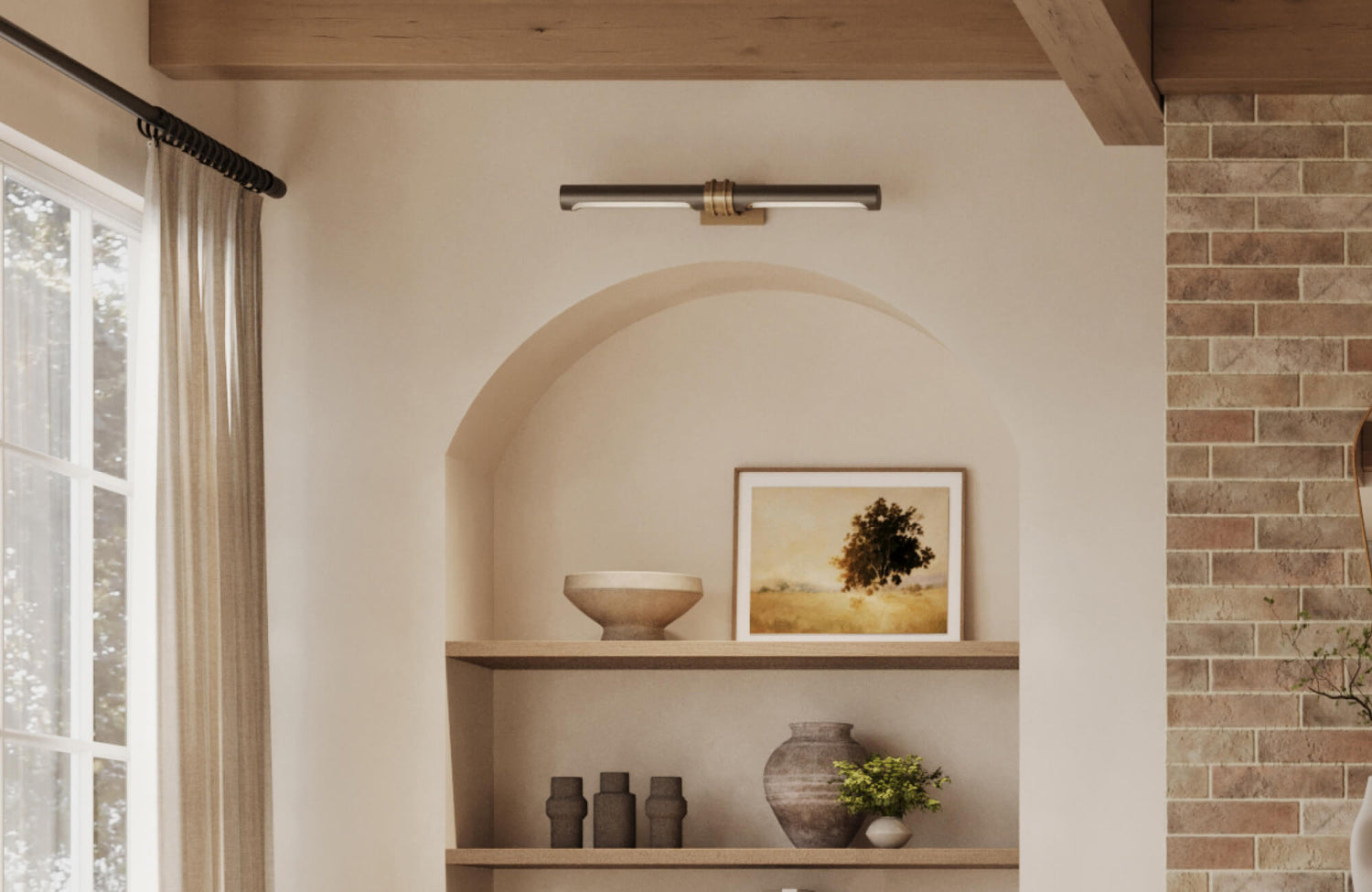
Moreover, mounting height and beam projection define how effectively the light covers the artwork. Smaller pieces typically benefit from fixtures placed two to three inches above the frame, while larger works require aligning the beam’s centerline with the vertical midpoint of the canvas to ensure even coverage. Fine-tuning the tilt also prevents “coving,” or unwanted bright spots, and allows the light to wash naturally across the surface without flattening detail. A well-designed fixture like our McAvoy 24" Picture Light in Aged Brass, shown in the image above, demonstrates how thoughtful engineering and refined aesthetics come together to achieve this balance. Its precise form and warm brass tone complement a range of interiors while delivering even, controlled illumination that enhances the artwork without overpowering it.
Equally important is the beam angle, ideally around 30 degrees, which minimizes glare and reflections, especially on glazed or glass-covered works. For textured or multi-piece arrangements, multiple fixtures may be used with slightly overlapping beams to avoid uneven illumination. Wiring, meanwhile, completes the architectural harmony. Concealed, hardwired installations achieve the cleanest results, while low-profile covers or adhesive-backed solutions offer discreet alternatives for existing walls. For optimal results and safety, professional installation ensures precise alignment, proper wiring, and long-term performance, allowing the lighting to function as invisible architecture that enhances both the artwork and the surrounding space.

Integrating Form and Finish with Design Style
A picture light should never feel like an afterthought, but an organic extension of both the artwork and the room it inhabits. The right fixture bridges functionality and beauty, merging material, finish, and form into one cohesive statement. When thoughtfully selected, it not only enhances the artwork’s visual presence but also reinforces the room’s overall design narrative. For example, our Vicente Picture Light in Aged Old Bronze, displayed in the photo above, demonstrates how refined craftsmanship and timeless detailing can effortlessly tie together art and architecture. Its understated elegance complements a range of interiors, blending warmth and sophistication to illuminate without distraction. This harmony allows the picture light to disappear in plain sight, blending seamlessly into the aesthetic while quietly guiding the viewer’s gaze toward the art itself.
The finish and style of the fixture also play an essential role in achieving this balance. Polished metals like brass or chrome can introduce unwanted reflections that compete with the artwork, while matte or brushed finishes absorb excess light and foster a soft, diffused glow. Additionally, the finish acts as a design connector, tying the light to the artwork’s frame or the surrounding décor. A bronze fixture over a gilded frame, for instance, suggests warmth and tradition, while a satin nickel light above a modern piece conveys precision and minimalism. Likewise, contrast can be used deliberately. A black fixture against a gold frame, for example, can add depth and sophistication. Proportion and style matter just as much. The fixture’s shape and visual weight should align with the artwork’s personality: slender LED bars suit modern geometry, while sculpted arms complement classical compositions. When form, finish, and proportion work in concert, the result is a unified display where the fixture enhances the emotional tone of the artwork and the character of the space; subtle, balanced, and complete.

Creating a Curated Viewing Experience
Picture lighting is more than a technical pursuit—it’s a craft of storytelling. When thoughtfully executed, it transforms the simple act of viewing art into a layered emotional experience. Every fixture, every angle, and every level of brightness contribute to a rhythm that guides the viewer’s perception and mood. How light interacts with the surrounding environment also determines the atmosphere, creating a sense of continuity and intention. A beautiful example of this harmony is our McAvoy 24" Picture Light in Aged Old Brass, featured in the picture above, which combines modern craftsmanship with timeless appeal. Its warm brass tone and balanced proportions bring depth and intimacy to any display, allowing the light to enhance the narrative of both the art and the room.
Layered lighting plays a central role in this transformation. The picture light serves as the focal layer, revealing texture, brushwork, and tonal depth, while ambient lighting softens the overall contrast, ensuring the artwork feels at home within the room. Complementary accent lighting, such as from sconces or recessed fixtures, deepens the scene by adding dimension and atmosphere. Together, these layers create balance so the artwork doesn’t appear isolated but rather part of a cohesive, inviting environment that feels curated rather than staged.
Beyond balance, lighting also establishes rhythm and visual hierarchy within a space. Subtle variations in intensity and placement can direct the viewer’s gaze from one piece to another, crafting a narrative flow. A central piece may glow slightly brighter to anchor the room, while softer light on surrounding works creates pauses that encourage quiet exploration. This interplay of light and shadow builds a sense of movement, leading the eye with grace and intention. When done well, lighting ceases to be a mere background element; it becomes an invisible storyteller. It also evokes emotion, defines atmosphere, and allows you to experience the artwork as part of a broader visual journey, where every piece, every beam, and every shadow contributes to the poetry of the space.
Bringing Light and Art Into Harmony
Selecting a picture light is the final, defining touch that bridges artistry and atmosphere. It’s about finding balance between precision and emotion, between illumination and restraint. When geometry, technology, and design converge, light ceases to be merely functional; it becomes part of the art itself. The right picture light also preserves every pigment, complements every tone, and enriches the rhythm of the space around it. In doing so, it transforms viewing from a passive act into an immersive experience—one where art, light, and emotion exist in perfect harmony.
If you’re ready to bring that harmony into your own space, our team is here to help. Whether you need guidance in selecting the right picture light or tailored design advice, our experts can ensure your artwork is showcased at its best. Visit our Contact Us page to connect with our specialists, discuss your project, and discover how thoughtful illumination can elevate your art and your interior with lasting impact.