A rug does far more than cover the floor; it defines how a room feels, functions, and flows. As a foundational design element, it sets spatial boundaries, anchors furniture arrangements, and adds depth through texture and material.
Whether you're working with a minimalist layout or a richly layered interior, the right rug brings cohesion to every element in the room. In doing so, it bridges architectural features with decor, harmonizes color and proportion, and reinforces the intended mood of the space. Throughout this blog, we’ll explore how to choose a rug that ties your room together with precision, purpose, and visual clarity.

The Role of a Rug in Room Cohesion
To truly understand how a rug ties a room together, it’s essential to look beyond aesthetics and consider how it shapes the flow and purpose of a space. From setting clear boundaries to grounding furniture groupings, the right rug brings structure and intention to any layout.
Defining Your Space and Function
In open-concept, rugs serve an especially important role by naturally establishing visual and functional zones, no partitions required. For example, placing a large rug beneath a seating area in a loft or great room helps distinguish it from adjacent dining or workspaces, bringing clarity and cohesion to the layout.
Beyond placement, size and shape matter. A rug that's too small can fragment a space, while one that accommodates at least the front legs of major furniture pieces fosters inclusion and balance. Rectangular rugs align well with most room layouts, while round or organic shapes can soften angles or highlight architectural features. Additionally, material influences performance; durable, low-pile rugs like wool or synthetics are best for high-movement areas, while plush options like silk suit quieter, more private settings.
Anchoring Furniture and Creating Zones
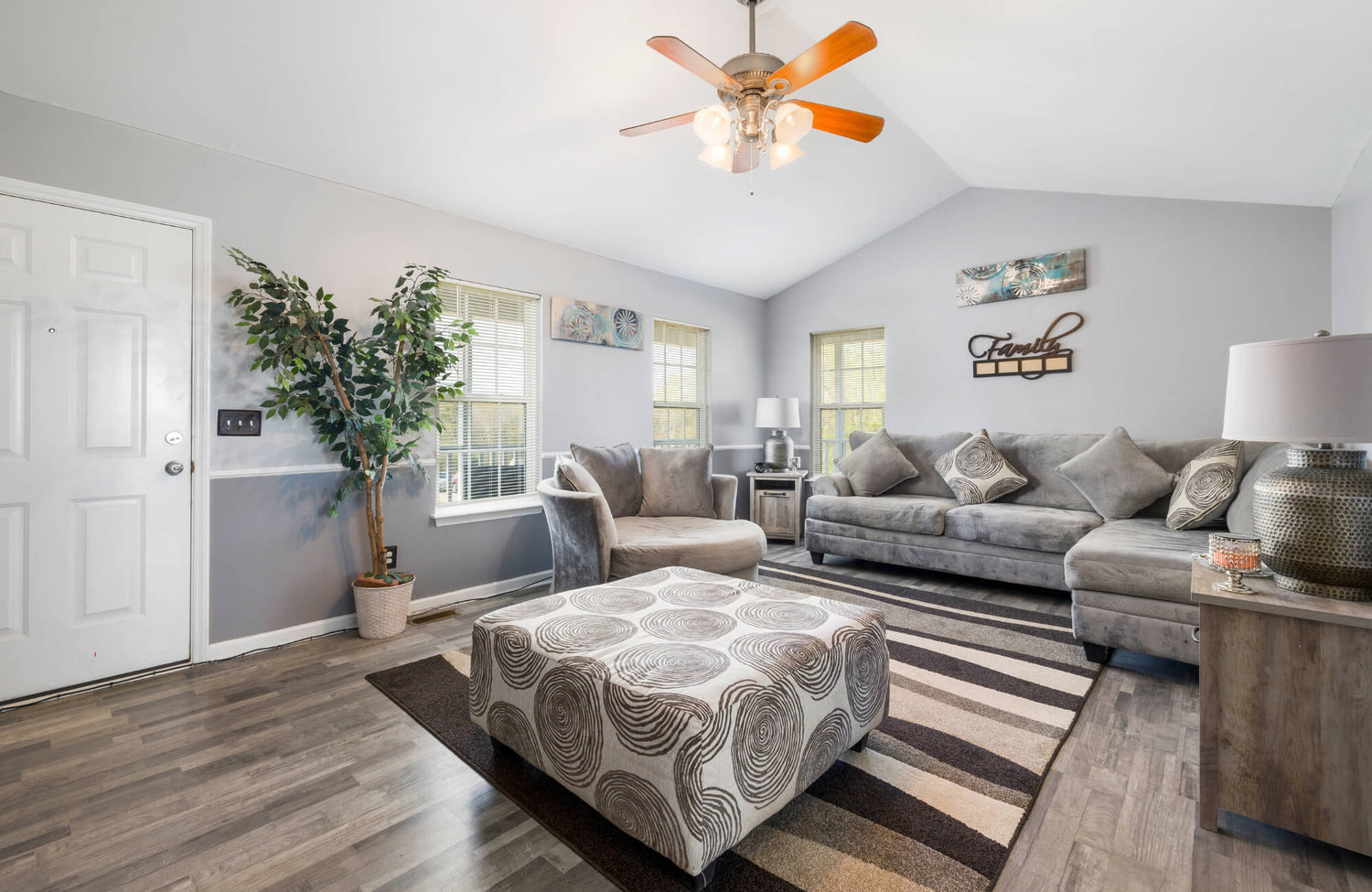
In addition to defining space, rugs also ground furniture arrangements, especially in larger or asymmetrical rooms where furnishings might otherwise feel disconnected. For instance, in living rooms, placing a rug under the coffee table and partially beneath surrounding seating creates a cohesive, intentional layout.
Furthermore, in multi-use spaces, different rugs can be used to define functional areas while still maintaining harmony through coordinated textures, colors, or patterns. Layering techniques, such as placing a patterned rug over a neutral base, introduce visual depth and help reinforce zoning. On a practical level, rugs also reduce floor wear and absorb sound, improving both aesthetics and acoustics in high-activity areas.
A great example of this is Edward Martin’s Hutchinson Polyester Face Rug in Burgundy / Khaki, featured above, which clearly defines a seating area with its warm palette and traditional motif. It anchors the furniture without overwhelming the room, offering pattern and contrast that enhance the overall visual flow.

Sizing It Right For a Unified Look
Getting the size right isn't just about fit; it’s about creating balance, enhancing flow, and supporting the way each room functions. From shared spaces to private retreats, every area has its own sizing considerations that make a rug feel truly integrated.
Living Room Rug
In the living room, perhaps more than any other space, rug size can significantly influence both layout and comfort. A rug should visually anchor the seating area, with common configurations including all furniture legs on the rug, just the front legs, or a centered floating arrangement. For a cohesive look, opt for a rug large enough to accommodate all major pieces with at least 6–12 inches of clearance, especially helpful in open-concept layouts where rugs can delineate space.
If space or budget constraints require a smaller rug, the front-legs-on approach still maintains a unified look without overwhelming the room. Generally, avoid rugs under 5'x8' in standard seating areas, as they often appear undersized. Instead, 8'x10' or 9'x12' rugs are ideal in most average living rooms, with adjustments made for furniture scale and room proportions.
A great example of this approach is Edward Martin’s Georgette Polyester Pile Rug in Desert / Multi, as illustrated in the image above. Its generous size and understated palette tie together neutral-toned seating while adding warmth and texture, enhancing structure without disrupting the room’s clean lines.
Dining Room Rug
Next, in dining spaces, rug sizing must account for both aesthetics and function. It’s important to allow 24–30 inches of extra space on each side of the table to ensure chairs remain fully on the rug when pulled out. For instance, a 60-inch round table pairs well with at least a 9-foot rug to maintain comfort and visual balance.
In terms of construction, low to medium pile heights are best to reduce friction and prevent tripping. Flatweave or hand-knotted rugs offer durability and easy maintenance. Additionally, consider the shape of the table; round rugs complement round tables, while rectangular rugs reinforce symmetry with rectangular tables.
Bedroom Rug
Finally, when it comes to bedrooms, comfort and proportion are key. A king-size bed typically pairs best with a 9'x12' rug, while an 8'x10' works well for queens, and smaller beds may require a 5'x8' or 6'x9', depending on layout. Rugs should extend 18–24 inches beyond the sides and foot of the bed for proper framing.
Alternatively, runners on either side of the bed offer a flexible solution, especially in tighter floor plans or when showcasing hardwood floors. Begin the rug just in front of the nightstands to keep the visual balance intact. High-pile or plush textures enhance comfort, and pairing with a rug pad prevents shifting and prolongs wear.

Material Matters
Material choice significantly influences how a rug looks, feels, and performs over time, so it’s important to match the fiber to both your lifestyle and design goals. Whether you're drawn to natural textures or need something more performance-driven, understanding the strengths of different materials can help you make a smart, lasting choice.
Natural Fibers for Organic Appeal
When exploring rug materials, natural fibers stand out for their timeless appeal and eco-conscious design. Materials such as wool, cotton, silk, jute, and sisal each bring their own advantages in texture, durability, and aesthetic.
Wool is widely considered the benchmark for durability and resilience. Naturally stain- and flame-resistant thanks to its lanolin coating, it handles heavy usage well and often improves in character with age, particularly in hand-knotted or tufted styles.
Cotton, on the other hand, is lightweight, breathable, and easy to maintain. Often used in flatweave constructions like dhurries or kilims, it’s perfect for casual spaces and works well layered over larger neutral rugs. However, it’s less durable than wool.
Silk, whether pure or blended with wool, offers a luminous sheen and exceptional softness. Due to its delicate nature, it’s best reserved for low-activity areas like formal sitting rooms or bedrooms, where luxury and fine detail are the focus.
Jute and sisal introduce an earthy, raw texture that grounds a room naturally. While jute is softer and golden-hued, sisal is more structured and better suited for heavier use. However, neither fares well in humid conditions, making them ideal for dry climates or organically styled interiors.
Synthetic Fibers for Versatility and Value
For those seeking durability, ease of care, or budget-friendly choices, synthetic rugs offer compelling advantages. Modern advancements have made these fibers more appealing both visually and functionally.
Polypropylene is a top choice for high-activity or sunlit areas thanks to its stain and fade resistance. Its solution-dyed construction ensures lasting color, and its affordability makes it suitable for family rooms, play areas, and outdoor use.
Nylon excels in resilience and abrasion resistance. It closely mimics the look of natural fibers while maintaining performance in busy households, particularly when treated with advanced stain-blocking technology.
Polyester is known for its plush texture and vivid color saturation. Though less elastic and not ideal for high-wear zones, it’s excellent for bedrooms or decorative areas. A standout example is Edward Martin’s Pascal Polyester Face Rug in Platinum / Mist, shown in the photo above, which balances softness and subtle elegance in low-use spaces like home offices or reading nooks.
Triexta, a newer option derived from renewable corn-based polymers, merges the softness of polyester with enhanced durability and built-in stain resistance. This makes it an attractive, eco-conscious solution for families wanting comfort without sacrificing practicality.

Harmonizing Your Decor
Color and pattern aren’t just decorative, they're key tools for tying together a room’s visual story. When chosen thoughtfully, they can enhance your existing palette, add depth through texture, and bring a sense of balance to even the most layered interiors.
Complementing Your Existing Palette
As a starting point, a rug should either echo or intentionally contrast with a room’s existing tones to create cohesion. Start by identifying the dominant, secondary, and accent colors, typically found in walls, upholstery, and key furnishings.
In more neutral settings (such as greys, taupes, or creams), tonal rugs help maintain a serene atmosphere. On the other hand, contrasting hues, like navy with tan or rust with ivory, can add depth and energy without overwhelming the space. As a helpful guide, apply the 60-30-10 rule: 60% of the space in the dominant color, 30% secondary, and 10% accent. A well-chosen rug can reinforce the secondary or accent color, helping unify the palette while adding personality.
Moreover, it’s important to consider undertones. Warm hues (reds, oranges, golds) create coziness and intimacy, while cool tones (blues, greens, greys) tend to evoke calm and spaciousness. For more dynamic interiors, multi-colored or variegated designs are particularly effective. They not only tie together disparate color elements but also help mask everyday wear, making them ideal for evolving, eclectic spaces.
The Impact of Pattern and Texture
In addition to color, pattern, and texture greatly influence how a rug interacts with other elements in the room. Specifically, the scale and complexity of a pattern should align with the room’s proportions and its existing visual rhythm. For example, large-scale geometric or abstract designs are well-suited to open, minimalist spaces where they can stand out. In contrast, smaller motifs work better in compact or heavily layered rooms, adding richness without visual clutter.
Texture is just as crucial to a rug’s impact. High-pile rugs bring warmth and softness, ideal for bedrooms, lounges, or reading nooks, while low-pile options offer a crisp, refined appearance suited for busy zones. Additionally, subtle surface treatments like carving or loop pile can add depth and tactile interest, especially in tonal or rustic interiors where texture becomes a defining element.
A prime example is our Rollins Polyester Pile Rug in Cream / Dove, featured in the image above. With its low, plush pile and soft geometric motif, it introduces gentle contrast and visual depth. Its neutral tones enhance comfort and balance, making it an effortless match for minimalist, Scandinavian, or organically styled spaces.

Integrating with Your Aesthetic
Choosing a rug that feels truly at home in your space means thinking beyond color and size; it also needs to align with your overall style and strike the right visual balance. From the way it complements your design theme to how it sits in proportion to the room, every detail plays a part in creating a cohesive look.
Matching Interior Design Styles
At its core, a rug should reflect the room’s overarching design language, whether contemporary, traditional, transitional, or eclectic. In contemporary interiors, clean lines, neutral tones, and simplicity are key. Rugs in this category typically feature low-pile or flatweave constructions with subtle geometric or abstract patterns. Durable materials like wool blends or synthetics enhance performance without sacrificing a sleek profile.
In contrast, traditional spaces often rely on ornate motifs, such as medallions or florals, and rich color palettes like navy, burgundy, gold, or ivory. Hand-knotted wool or silk rugs, particularly Persian or Oriental designs, introduce a sense of heritage and sophistication.
Meanwhile, transitional styles offer a balance between old and new. Rugs with neutral tones, oversized patterns, or slightly distressed finishes work well here, bridging design eras and providing flexibility as tastes evolve.
For those drawn to more expressive interiors, eclectic and bohemian rooms thrive on layering and personality. Globally inspired options like kilims, Moroccan rugs, or overdyed vintage styles bring in saturated color and bold patterns, as long as the elements are unified by a consistent scale, palette, or texture.
A well-curated example is Edward Martin’s Liddy Polyester Pile Rug in Graphite / Pearl, which illustrates contemporary styling with its soft geometric design and muted palette. As shown in the photo above, the low-pile construction keeps the room feeling open, while the rug’s subtle pattern adds definition without visual clutter, an ideal choice for minimalist and modern layouts.
Balancing Visual Weight and Proportion
Of course, design alignment isn’t only about style; the rug’s visual weight and proportional relationship to surrounding furnishings are just as crucial. For instance, in light and minimal rooms, a darker or richly patterned rug can ground the layout and add contrast. Conversely, in more vibrant or heavily furnished spaces, a lighter, low-contrast rug prevents the room from feeling crowded. The key is ensuring the rug enhances, rather than overpowers, nearby elements.
Equally important is scale. A rug that’s too small disrupts visual harmony, making furniture seem disconnected. As a general rule, aim for the rug to extend 6–18 inches beyond the furniture grouping. In long or uniquely shaped rooms, custom-sized or modular rugs can help maintain proportional balance.
To help you navigate these decisions with confidence, Edward Martin’s design consultation service provides one-on-one expert guidance. From selecting scale and material to reviewing room layout, their team helps ensure your rug fits your space both functionally and stylistically.
And if you need further support, whether for sizing, style matching, or care recommendations, the Edward Martin Contact Us team is readily available to assist, making your rug selection process as seamless and informed as possible.

Maintenance and Care Ensuring Longevity and Freshness
Keeping your rug looking its best isn’t just about appearance; it also protects your investment and extends its lifespan. With the right mix of routine upkeep and occasional deep cleaning, you can maintain both the beauty and performance of your rug for years to come.
Daily and Weekly Care Tips
As a foundational step in rug maintenance, regular vacuuming is one of the simplest and most effective ways to extend a rug’s life. It removes abrasive dirt particles that can break down fibers over time. For busy areas, vacuum two to three times per week; for low-activity zones, once weekly will typically suffice. Additionally, use a suction-only vacuum on delicate rugs like wool or hand-knotted styles, avoiding beater bars that may damage the pile.
Beyond vacuuming, rotation is a crucial yet often overlooked practice. Rotating your rug 180 degrees every six months, or quarterly in areas with uneven usage, helps distribute wear evenly and minimize fading, particularly for rugs exposed to direct sunlight.
When spills occur, prompt spot cleaning is essential. Blot the area gently with a clean, white cloth and use a mild detergent or rug-specific cleaner. Be sure to test the solution on an inconspicuous area first to avoid discoloration. Just as important, avoid over-wetting the rug, especially with natural fibers like jute or sisal, which are prone to mildew. For best results, always refer to the manufacturer’s care guidelines to prevent damage and protect your warranty.
Equally important, don’t overlook the role of rug pads. They provide critical support by preventing slippage, reducing friction between rug and floor, and improving airflow, all of which enhance longevity and underfoot comfort.
Deep Cleaning and Professional Care
While routine care addresses surface-level dirt, deep cleaning is necessary to remove embedded debris, allergens, and oils that accumulate over time. Choosing the right method depends on the rug’s fiber content, construction, and condition.
For example, synthetic rugs, such as those made of polypropylene or nylon, can often be deep-cleaned at home using steam cleaning or hot water extraction. However, proper drying is key; fans or dehumidifiers can help prevent mold or odor from developing.
In contrast, delicate rugs like hand-knotted wool or silk benefit from professional care. Services such as submersion washing or dry cleaning with absorbent compounds are designed to clean deeply while preserving the rug’s integrity. These methods are particularly suited for antique or heirloom-quality pieces, where extra care is essential.
Beyond cleaning, professionals can also offer value-added services such as fringe repair, edge binding, and mothproofing. And when it comes time to store your rug, be sure it’s clean, completely dry, and rolled (never folded) before placing it in a breathable storage bag with natural pest deterrents like cedar or lavender.
The Right Rug, Chosen with Intention
Ultimately, a well-chosen rug does more than occupy space; it sets the tone, defines function, and brings clarity to your overall design. From material selection and size to pattern and placement, each decision contributes to the way a room feels and performs. At Edward Martin, we view rugs as the foundation of inspired interiors. Our curated selection and expert support are here to help you find a piece that not only fits your space but also elevates it with confidence, character, and intention.