Outdoor furniture can look beautiful on its own and still feel completely out of place once it sits against your home exterior. The issue is usually not the furniture itself, but the lack of connection between the pieces you choose and the architecture, materials, and overall character already shaping the space. A sleek modern set may feel too sharp against a warmer traditional home, while softer woven pieces may not always support a cleaner architectural direction. In this blog, we’ll help you match outdoor furniture styles more confidently by looking at your home’s exterior, surrounding surfaces, lighting, and the design details that make the whole space feel intentionally connected.

Start By Identifying Your Home’s Exterior Style
Before choosing outdoor furniture, it helps to step back and look at what your home’s exterior is already telling you. The architecture, materials, and design details around your outdoor space often provide the clearest direction for what will feel cohesive, instead of relying only on what looks appealing on its own.
Recognizing The Design Language Of Your Exterior
Your home’s exterior usually gives you more styling direction than you might think once you start paying attention to its overall character. Clean horizontal lines, larger expanses of glass, and minimal detailing often suggest a more modern design language, while decorative trim, symmetrical layouts, and classic rooflines may point toward traditional styling. Coastal homes tend to feel lighter and more relaxed, often leaning into airy finishes and softer detailing, while rustic or farmhouse exteriors usually introduce warmer textures and a more grounded visual personality. Mediterranean-inspired homes often bring stucco finishes, arched openings, and richer architectural character that call for a different design response altogether. Recognizing these broader cues helps you avoid choosing outdoor pieces that feel disconnected from the home they sit beside.
If your exterior does not fit neatly into one category, that is completely normal because many homes blend characteristics from multiple styles. Transitional homes, for example, often combine cleaner architectural structure with warmer, more familiar materials that sit somewhere between traditional and contemporary design. Instead of forcing a label, focus on the dominant visual cues that shape the overall feel of your exterior. Looking at the architecture this way helps you make outdoor styling decisions that feel intentional because they respond to what is already there rather than competing with it.
Modern exteriors often make the design direction much clearer than people expect, once you start paying attention to the architecture’s cleaner lines, restrained palette, and stronger geometric structure. Our Noa Outdoor Sofa in Grey, as seen above, fits that kind of exterior language naturally through its horizontally slatted backrest, dark gray aluminum frame, and defined geometric silhouette, all of which feel aligned with the sharper architectural cues surrounding it. The plush upholstered cushions also keep the setup from feeling too stark or overly rigid, which is a good reminder that matching a modern exterior does not mean choosing furniture that sacrifices comfort just to maintain visual cohesion.
Reading The Materials Already Shaping Your Exterior
The materials already surrounding your outdoor space play a major role in how well future design choices will come together. Brick tends to create a more grounded and familiar visual tone, while stucco often feels smoother and more architectural, depending on the home’s style. Natural wood, stone, painted siding, black metal details, and even roof materials all contribute to the visual language your outdoor furniture will need to work alongside. If you ignore those surrounding finishes, even attractive outdoor pieces can start to feel disconnected because the materials are telling a different story. Paying attention to what is already built into the exterior gives you a much stronger foundation for making cohesive decisions.
It also helps to think about material temperature and texture, not just the material category itself. A cool gray stone exterior may call for a different supporting direction than warm red brick, even though both are substantial architectural finishes. Smooth stucco creates a different visual backdrop than rough-cut stone or horizontal wood cladding, which means your outdoor choices should respond to those differences rather than treating all exteriors the same. The more clearly you read the materials already shaping the space, the easier it becomes to create an outdoor setup that feels naturally connected instead of pieced together.
Deciding Whether You Want A Seamless Match Or A Softer Contrast
Matching your outdoor space to your home exterior does not mean every decision needs to mirror the architecture exactly. Some people prefer a seamless extension where the outdoor styling feels like a direct continuation of the house itself, while others may want a softer contrast that introduces a slightly different but still complementary character. Both approaches can work well, as long as the relationship feels intentional rather than accidental. A complete match often creates a more unified look, while thoughtful contrast can make the outdoor space feel more layered and distinct without losing cohesion. The key is deciding which direction feels right before choosing individual pieces.
If you prefer contrast, the goal is usually to complement the home rather than create a visual clash. A sleek exterior may benefit from slightly warmer textures that soften the overall feel, while a more traditional home may handle cleaner outdoor styling if the contrast still feels balanced. The mistake happens when contrast becomes randomness, where each outdoor choice starts following a completely different visual language from the house. Thinking through this early helps you create a much clearer design direction before the shopping decisions begin.

Matching Outdoor Furniture To The Character Of Your Home
Once you have a clearer sense of your home’s exterior style, choosing outdoor furniture becomes much less overwhelming. A helpful way to narrow your options is to focus on pieces that feel like a natural extension of your home, so your outdoor space looks intentional instead of visually disconnected.
Matching Furniture Silhouettes To Architectural Style
The shape of your outdoor furniture can make a bigger difference than you might expect when it comes to visual cohesion. If your home has clean architectural lines, simpler and more structured furniture shapes will usually feel more natural alongside it, while homes with softer detailing often pair better with silhouettes that feel a little more relaxed and approachable. Even if you are not trying to match a strict design style, the overall shape language should still feel like it belongs in the same environment. When the forms feel too disconnected, your outdoor setup can start to look like separate decisions instead of one cohesive design. Paying attention to silhouette early helps you make stronger furniture choices before you even get into finishes or styling details.
If you are unsure whether a furniture shape works, try comparing it against the strongest visual features of your home. A sleek, contemporary exterior may feel slightly off with overly ornate or bulky seating, while a warmer traditional home may not feel as balanced with pieces that look too rigid or stark. If the furniture feels like it belongs in a completely different property style, that is usually a sign to keep looking. Your goal is not perfect matching, but making sure the shapes feel visually comfortable together.
Letting Material Choices Reinforce The Exterior Design
The materials you choose for your outdoor furniture can either strengthen the connection to your home or make the space feel more disconnected than you intended. If your exterior already includes warm wood tones, black metal accents, stone finishes, or softer natural textures, repeating some of those cues in your outdoor setup can make everything feel much more cohesive. That does not mean every material needs to match exactly, but there should be enough visual overlap for the space to feel intentional. When the furniture materials feel completely unrelated to what surrounds them, the overall design can start to feel less grounded. Material choices often do more work than people realize when it comes to creating a unified outdoor look.
A simple tip is to walk outside and look at the finishes your eye naturally notices first. If your home has dark metal railings, for example, furniture with similar framing details may feel like a natural fit. If the exterior leans warmer through wood cladding or earthy stone, introducing colder or overly industrial materials may create a contrast that feels harsher than expected. Looking for these repeating cues helps you make decisions that feel much more connected to your home.
Our Marinell Outdoor Dining Chair in Faux Hyacinth, as seen above, works especially well in that kind of environment through its sustainably sourced teak frame, warm wood tones, and richly woven faux hyacinth texture, all of which feel naturally aligned with softer stone surfaces and more organic outdoor surroundings. Details like the angular teak base and subtle butterfly joints also keep the piece from feeling overly rustic, helping it bridge warmth and structure in a way that feels intentional rather than overly themed.
Balancing Comfort With Visual Consistency
Matching your home exterior does not mean choosing outdoor furniture that looks right but feels uncomfortable to actually use. Your outdoor space should still support how you relax, entertain, or spend time outside, instead of feeling like a styled display that never gets fully enjoyed. The strongest setups usually balance visual consistency with real comfort, so the furniture feels aligned with your home while still being practical for daily life. If the space looks beautiful but no one actually wants to sit there for long, the design is missing something important. Comfort should feel like part of the design decision, not something you compromise later.
If comfort matters most in the way you use your outdoor space, focus on finding furniture that delivers both support and visual alignment rather than choosing between them. A comfortable outdoor sofa, sectional, lounge chair, or dining setup can absolutely still feel cohesive with your exterior when you choose the right version of it. Instead of asking whether a piece is too comfortable-looking, ask whether it still supports the design language your home has already established. That shift usually leads to much better long-term decisions.
Avoiding Furniture Styles That Feel Out Of Place
Some outdoor furniture looks great on its own, but feels noticeably wrong the moment you picture it against your home exterior. This usually happens when the furniture follows a completely different design direction from the house, making the outdoor area feel less intentional and more like a mix of unrelated ideas. If your home has a warm traditional or rustic character, ultra-stark modern furniture may feel visually disconnected, while softer woven or casual pieces may not feel as convincing against a sharper contemporary exterior. Mixing influences can absolutely work, but the contrast still needs to feel thoughtful instead of random. When the mismatch is too strong, the entire outdoor setup can feel harder to pull together.

Using Outdoor Surfaces To Make Furniture Feel More Intentional
Your outdoor furniture does not exist in isolation, which means the surfaces around it play a major role in whether the entire space feels cohesive. If your flooring, wall finishes, or surrounding materials feel disconnected from your furniture choices, even well-designed pieces can look less intentional than they actually are.
Matching Flooring Materials To The Overall Outdoor Style
The flooring beneath your outdoor furniture has a major impact on how the entire setup is perceived, even if it is not the first thing you consciously notice. If your outdoor flooring feels sleek and contemporary, overly rustic furniture may create a disconnect, while warmer pavers or textured outdoor tile may feel more natural with softer, more relaxed furniture styles. Your flooring helps establish the visual foundation of the space, so the furniture sitting on top of it should feel like it belongs there rather than fighting against it. This becomes even more noticeable in larger patios, pool decks, or open entertaining spaces where the flooring occupies a significant amount of visual real estate. When your surfaces and furniture feel aligned, the whole outdoor area tends to look much more thoughtfully designed.
A good tip is to stop thinking about flooring as background and start treating it like part of the design conversation. If your outdoor floor tile has a cleaner architectural feel, look for furniture that supports that same level of structure. If your pavers feel warmer, more textured, or slightly more relaxed, furniture with a softer material presence may feel more natural. Even details like checkerboard outdoor flooring can shift how formal or playful the surrounding furniture should feel. The stronger your flooring personality, the more intentionally your furniture choices should respond to it.
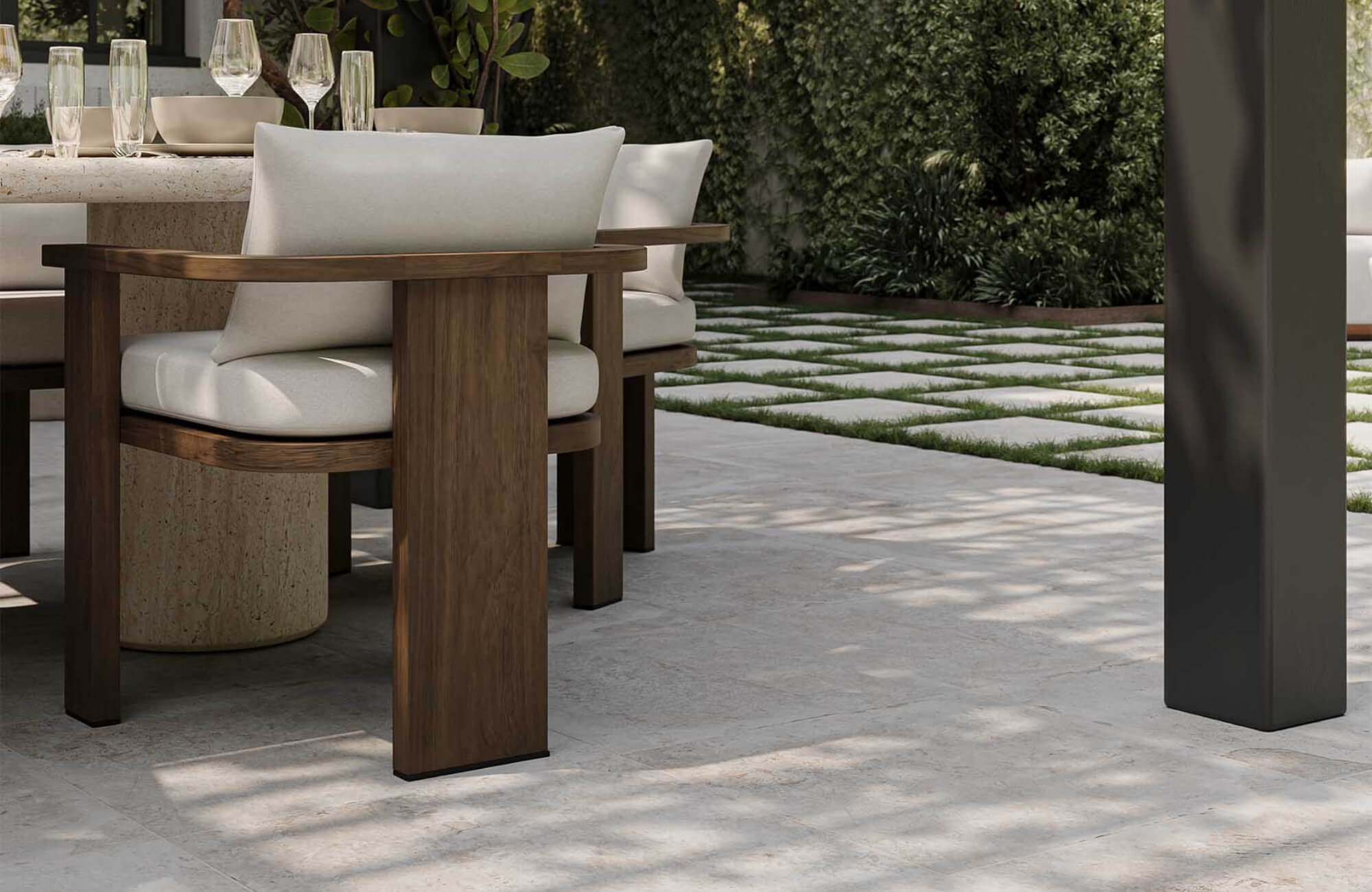
Our Kendra Outdoor Dining Chair in Natural, as you can see above, works especially well with the checkerboard-style outdoor flooring because its clean teak frame and meticulously handwoven brown rope introduce a softer organic counterpoint that keeps the space from feeling overly stark or too architecturally rigid. The chair’s open, woven structure also reinforces the breezy, airy character that works so naturally in outdoor dining settings, helping the overall composition feel intentional, balanced, and visually connected instead of overly formal.
Using Wall Finishes To Create Stronger Visual Continuity
Outdoor walls and vertical surfaces can do a lot to help your furniture feel more connected to the rest of your home. If your patio includes an outdoor kitchen, fireplace surround, accent wall, or covered entertaining zone, those finishes often become some of the strongest visual anchors in the space. Furniture that feels aligned with those surrounding materials tends to create a much more cohesive outdoor environment than pieces that ignore them completely. Even if the furniture itself is attractive, the space can feel less resolved when the wall finishes are telling a completely different design story. Looking at these vertical surfaces helps you make furniture choices that feel intentionally integrated instead of visually separate.
Keeping Pool Areas Visually Connected To The Rest Of The Exterior
Pool areas often end up feeling visually disconnected because they get treated like a separate design zone instead of part of the overall outdoor environment. Different flooring materials, stronger water-focused finishes, and a shift in furniture style can quickly make the space feel fragmented if there is no clear relationship to the rest of your home exterior. That does not mean everything around the pool needs to match exactly, but there should still be enough shared design cues for the transition to feel natural. Furniture, surrounding surfaces, and pool finishes should all feel like they belong to the same broader design story. When those connections are missing, the pool area can feel like an afterthought instead of an intentional extension of the home.
One practical way to avoid this is to repeat at least a few visual elements between the pool zone and nearby outdoor spaces. That might mean carrying similar tones through pool tile and pavers, echoing furniture materials used elsewhere, or maintaining a consistent overall design direction between lounge and dining areas. If the pool area suddenly introduces an entirely different style of language, the contrast can feel more confusing than refreshing. Keeping those transitions in mind helps your outdoor space feel much more unified from one zone to the next.

Matching Outdoor Dining And Lounge Zones Without Making Them Feel Disconnected
If your outdoor space includes both dining and lounge areas, the challenge is making them feel intentionally connected instead of like separate design projects happening side by side. Giving each zone its own function is important, but the overall space should still feel like it belongs to one cohesive exterior story.
Giving Each Zone Its Own Purpose Without Changing Styles Completely
Your outdoor lounge area and dining zone should absolutely serve different purposes, but that does not mean they need to look like they belong in completely different homes. A lounge setup may naturally feel softer and more relaxed, while a dining space often benefits from a slightly more structured arrangement that supports gathering and conversation. That difference in function creates enough variation on its own without forcing a dramatic design shift between zones. If one area feels warm and casual while the other suddenly becomes overly sleek or stylistically unrelated, the transition can feel awkward rather than intentional. Letting the function shape the setup while keeping the overall design language consistent usually creates a much stronger result.
This becomes even more important in outdoor layouts where both zones are visible at the same time, which is often the case with patios, poolside entertaining spaces, or open backyard designs. When your eye moves between the dining and lounge areas, there should be a sense that both belong to the same environment, even if the furniture serves different needs. The difference should feel purposeful, not like one zone was chosen months later without considering the first. Creating subtle variation within a shared visual direction tends to make the entire outdoor space feel much more polished and cohesive.
Repeating Materials Or Shapes Across Different Outdoor Areas
One of the easiest ways to make multiple outdoor zones feel connected is by repeating certain visual cues instead of introducing entirely new ones in every area. If your lounge furniture includes black metal framing, woven textures, warm wood tones, or rounded silhouettes, carrying some version of those elements into the dining zone can make the transition feel much smoother. The repetition does not need to be exact, since that can make the space feel overly matched, but enough consistency should exist for the areas to feel related. Shared design cues help the entire outdoor layout read as one intentional composition instead of a collection of unrelated furniture groupings. This becomes especially useful when your outdoor zones serve very different purposes but still need to coexist visually.
Keeping Scale Consistent Across Seating And Dining Spaces
Scale plays a much bigger role in outdoor cohesion than many people initially realize, especially when multiple furniture zones are visible together. If your lounge area feels oversized and substantial while your dining furniture looks noticeably smaller or visually lighter, the imbalance can make the space feel unintentionally disconnected. The same issue can happen in reverse, where one zone dominates so heavily that the other starts to feel secondary or visually underdeveloped. Keeping the overall proportions relatively aligned helps each area feel like part of the same design conversation instead of competing for attention. Even when the furniture styles are compatible, inconsistent scale can still weaken the overall result.

Using Outdoor Lighting To Support The Overall Design
Outdoor lighting should feel like part of your overall design story, not a last-minute addition chosen only for function. When the fixtures, finishes, and overall lighting style feel aligned with both your home exterior and outdoor furniture, the entire space tends to feel much more intentional once the sun goes down.
Matching Lighting Style To The Architecture
The style of your outdoor lighting should feel like a natural extension of your home’s architecture rather than introducing a completely separate design direction. If your exterior leans modern, cleaner fixture profiles with simpler forms will usually feel more cohesive than highly decorative traditional lanterns or ornate silhouettes. If your home has a more classic or transitional character, overly industrial or ultra-minimal fixtures may create a contrast that feels sharper than you intended. Lighting may seem like a smaller detail compared to furniture, but the wrong fixture style can disrupt the overall visual flow surprisingly quickly. Choosing lighting that reflects the same architectural language as your home helps everything feel more connected from the start.
Using Lighting To Strengthen Seating And Dining Areas
Outdoor lighting does more than illuminate your space, since it also helps define how each outdoor zone feels once the evening sets in. A lounge area that feels inviting during the day can lose that sense of purpose at night if the lighting feels disconnected, while a dining setup may feel less intentional if the surrounding illumination does not support how the space is meant to function. Thoughtfully placed outdoor wall lighting, ceiling fixtures, or supporting accent lighting can help reinforce each zone so the layout still feels cohesive after dark. The goal is not flooding the space with light but helping each area maintain its role within the overall design. When lighting supports how you actually use the space, the entire setup tends to feel much more complete.
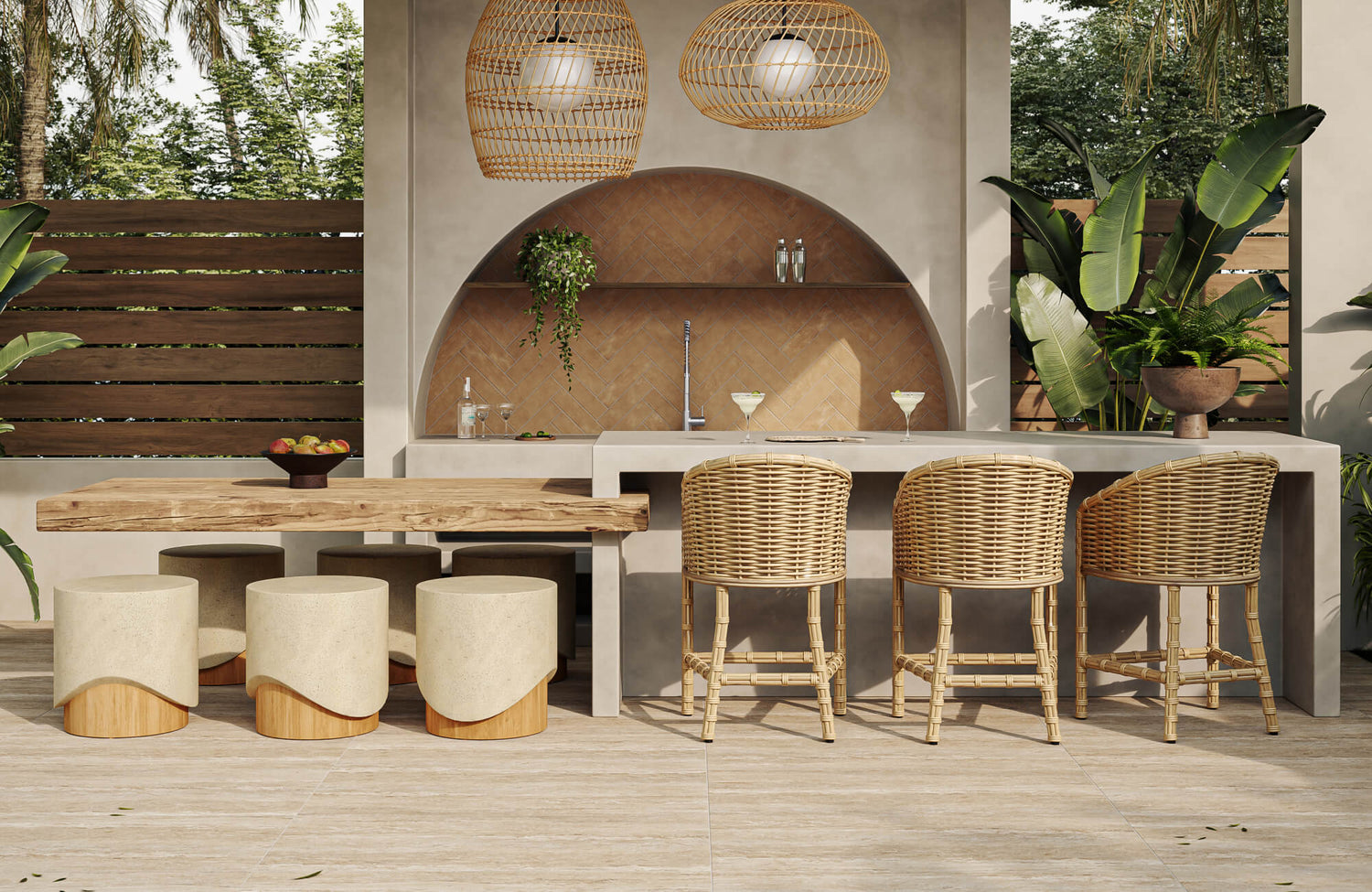
Lighting helps outdoor dining areas feel intentionally defined after sunset instead of becoming spaces that only work well during the day. As seen above, our Finch 20" 1 Light Pendant in Brushed Gold/Opal Glass helps anchor this dining zone beautifully, with its handwoven rattan dome introducing warmth and texture while casting a softer ambient glow that feels far more inviting than harsher overhead lighting. Paired with our Verdanta Outdoor Dining Table in Aged Grey, 60", the combination balances warmth and structure especially well, where the table’s refined monolithic silhouette keeps the setting grounded while the pendant softens the overall mood. Together, they show how lighting and furniture can work as part of the same design language rather than feeling like separate afterthoughts.
Avoiding Lighting Choices That Disrupt The Overall Look
Even well-designed outdoor furniture and thoughtful surface selections can feel less cohesive if the lighting choices pull the space in a completely different direction. This often happens when fixtures are selected based only on brightness, convenience, or isolated appearance without considering how they fit into the larger outdoor design. A sleek contemporary patio can feel disrupted by overly traditional fixtures, while a warmer classic exterior may not feel as balanced with lighting that looks too cold or aggressively industrial. Visual consistency matters because lighting becomes part of what shapes the atmosphere just as much as the furniture itself. If the fixtures feel disconnected, the entire outdoor setup can lose some of its design clarity.
The issue is not that every fixture needs to match perfectly, but there should be enough visual relationship between them for the space to feel intentional. Mixing wall lights, ceiling fixtures, and supporting outdoor lighting can absolutely work when the shared design language remains clear. Problems usually appear when each lighting decision feels like it came from a completely different design plan. Keeping the lighting visually aligned with your home and outdoor furniture helps the entire exterior feel far more cohesive.
Creating An Outdoor Space That Feels Connected To Your Home
Matching outdoor furniture to your home exterior usually comes down to seeing the bigger design conversation instead of making isolated product decisions. As this guide has shown, architecture, surrounding materials, furniture silhouettes, outdoor surfaces, lighting, and how different zones connect all play a role in whether the space feels cohesive or visually disconnected. When those decisions start working together, your outdoor area feels less like separate styling choices and more like a natural extension of your home.
If you are trying to pull all of those moving pieces together but still feel unsure where to start, our Personalized Design Consultation can help you make those decisions with much more clarity. Whether you are coordinating outdoor furniture with your exterior finishes, refining a poolside layout, balancing lounge and dining zones, or choosing materials that feel right for your space, expert guidance can help you create an outdoor setup that feels cohesive, comfortable, and genuinely tailored to your home.