Creating the perfect pairing between your kitchen island and counter stools can completely transform the way your space looks and feels. When the colors, materials, and finishes work together, your kitchen gains a sense of polish and intentionality that instantly elevates the entire room. Instead of feeling like separate pieces placed side by side, the island and stools begin to function as a unified design feature that anchors the heart of your space.
As you explore the principles that shape this relationship, you’ll discover that matching counter stools to your island involves far more than choosing a color you like. Undertones, contrast, material textures, surrounding finishes, and even lighting all play important roles in determining whether your selections feel harmonious or out of place. By understanding how these elements interact, you’ll be able to create pairings that look effortless yet curated, ensuring your kitchen feels both beautiful and thoughtfully crafted.

Coordinating with Surrounding Finishes
Coordinating your counter stools with the surrounding finishes is essential for creating a kitchen that feels visually connected and intentional. Since the island sits among cabinetry, countertops, and flooring, your stools act as the bridge that ties all of these elements together. When you choose materials and tones that respond to the finishes around them, the room feels cohesive rather than fragmented. This thoughtful alignment not only enhances the island’s presence but also creates a sense of rhythm throughout the space.
As you evaluate your cabinetry, countertops, and flooring, you’ll notice how each surface introduces its own color, texture, and visual weight. In the kitchen shown above, for example, the warm wood flooring and cabinetry blend beautifully with stools that feature soft, creamy upholstery, creating a gentle transition across the space. A piece like our Savannah Counter Stool in Cream fits seamlessly into a setting like this, echoing the natural tones while adding lightness around the richly tiled island. Likewise, paying attention to your countertop’s movement helps you decide whether your stools should offer simplicity or added texture, and coordinating with floor tones ensures the room feels grounded. When all these elements communicate with one another, your kitchen becomes unified, polished, and thoughtfully layered.

Using Contrast to Create a Focal Point
Using contrast intentionally is one of the most effective ways to make your kitchen island stand out as the visual centerpiece of the room. Although matching tones creates harmony, contrast introduces definition, depth, and personality. By playing with light and dark values, experimenting with complementary colors, or leaning into gentle tonal differences, you can shape the island’s presence and control how it interacts with the rest of the space. This approach ensures that the island not only functions as a workspace but also becomes a striking design feature that naturally draws the eye.
As you incorporate contrast into your design, you’ll notice how quickly it transforms the atmosphere. Strong value differences, such as pairing a white island with dark stools or a deep-toned island with pale seating, instantly carve out a focal point and give the kitchen a sense of structure. Likewise, bold complementary color combinations add vibrancy and movement, creating a dynamic energy that keeps the space from feeling flat. Even subtle contrast can make an impact, offering a gentler shift in color or texture that adds depth without overwhelming the senses.
In the photo displayed above, the island’s muted sage-green finish provides a rich, grounding backdrop that benefits from a lighter counter stool to create a gentle visual lift. Our Genevieve Counter Stool in Light Oak introduces this contrast beautifully, offering a pale natural wood tone that stands out against the deeper green without disrupting the room’s calm palette. The light oak finish also brings brightness and balance to the island’s color, proving that even a soft, tonal contrast can make your seating feel intentional and subtly eye-catching.

Exploring Materials and Textures that Affect Color Perception
Color is only part of the story when choosing counter stools for your kitchen island. Texture and material dramatically influence how a color appears, often changing its temperature, intensity, and overall presence. When you understand how surfaces reflect or absorb light, you can make more refined choices that enhance both the island and the surrounding space.
How Texture Influences Perceived Color
Texture plays a surprisingly powerful role in how you interpret color because different surfaces interact with light in different ways. Glossy finishes reflect more light, which makes colors look brighter, sharper, and slightly cooler than they truly are. This is why a glossy island in soft gray, for instance, may appear cooler than the paint swatch suggested. In contrast, matte or heavily textured materials absorb more light, softening the color and making it feel more muted and relaxed. When you bring these textures together, such as a polished island paired with stools in boucle, linen, or another low-sheen fabric, you create a pleasing balance that feels dimensional rather than one-note.
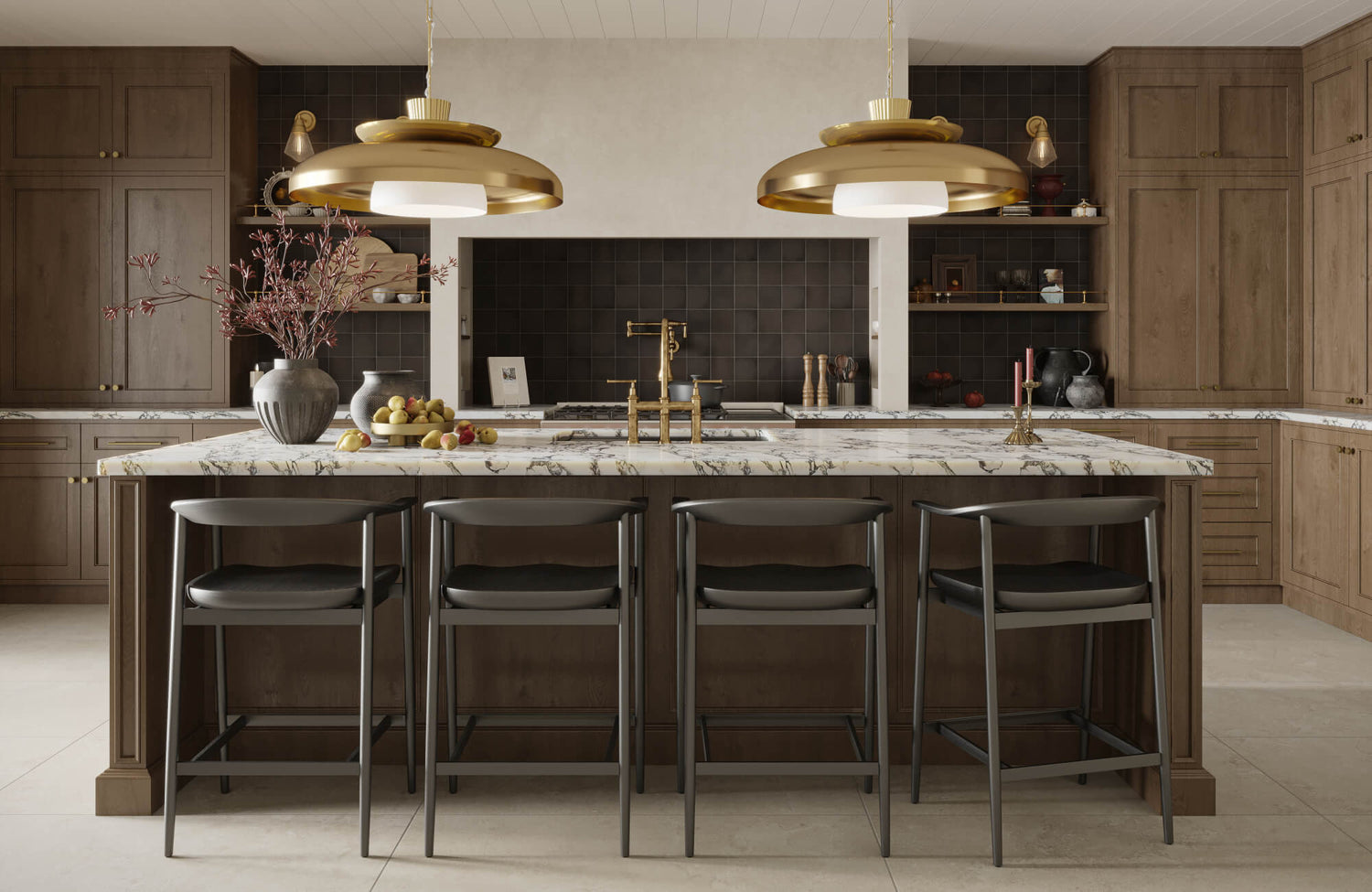
As you experiment with these combinations, you’ll start to notice how texture directly influences the emotional tone of the space. For instance, shiny surfaces communicate sleekness and modernity, while textured upholstery or timber introduces warmth and approachability. In a space like the one seen above, pairing a refined stone countertop and dark island tiles with a stool that combines hammered metal and smooth leather, such as our Shaffer Counter Stool in Charcoal Black Leather, enriches the contrast beautifully. Through this thoughtful interplay, your kitchen gains a layered and intentional feel that invites both the eye and the hand to engage with the space.
Using Natural Materials for Organic Blending
Natural materials have a unique ability to introduce warmth and depth because they carry inherent variations in grain, tone, and texture. Elements like rattan, cane, leather, and raw wood bring a grounded, organic quality that blends effortlessly with many island finishes. When your island leans cool or industrial, such as concrete, charcoal, or matte black, stools in natural materials help counterbalance the coolness and make the space feel more welcoming. Saddle leather, for example, brings a soft richness that instantly warms a concrete-look island and adds a sense of craftsmanship.
In kitchens where deep cabinetry, stone countertops, or patterned tile create a strong visual foundation, choosing stools that combine natural warmth with a modern silhouette can add just the right amount of balance. Our Vivian Counter Stool in Black, featuring a sleek black seat paired with a beautifully textured rattan backrest, is a great example of how natural materials can soften darker tones while still looking refined.
Moreover, natural materials age gracefully, developing patina and character over time. As they soften and deepen, they continue to complement the island in new ways. This evolving quality makes natural materials especially effective when you want your kitchen to feel lived-in rather than strictly polished. By adding these organic textures, you also allow your island’s color to resonate more harmoniously, creating a layered and emotionally inviting environment.
Choosing Metal Accents that Align with Color Temperament
Metal accents may seem like small details, but they significantly influence how your island and stool colors are perceived. Each metal carries its own temperature: brass, gold, and copper project warmth, while chrome, stainless steel, and nickel introduce a cooler, more modern feel. When your island has warm undertones, warm metals enhance that richness and create continuity throughout the space. Conversely, if your island has a cool temperament, cool metals reinforce its sleek, crisp identity.
However, metal can also act as a balancing tool. Warm metals can soften a cool island, adding a touch of elegance and warmth without altering its main hue. Cool metals, meanwhile, sharpen and modernize a warm-toned island, giving it a contemporary edge. A stool that incorporates metal framing, such as our Grant Counter Stool in Black, can highlight this effect beautifully by introducing a refined metallic accent that harmonizes with both warm and cool palettes. Thinking of metal as the jewelry of your kitchen further helps clarify its role: just like accessories in a great outfit, these accents should complement the overall palette, tie everything together, and add just enough sparkle to make the design feel complete.

Applying Color Theory for Cohesive Multi-Color Kitchens
When your kitchen features multiple colors from vibrant islands to contrasting cabinetry and expressive backsplashes, applying color theory becomes the key to creating order and visual harmony. Instead of letting these elements compete, color theory helps you guide them into a unified palette where each color has purpose and balance. By understanding how hues relate to one another, you can also make intentional choices for your counter stools, dining tables, and dining chairs that strengthen the overall design rather than add noise.
As you explore analogous palettes, triadic combinations, and neutral anchors, you begin to see how each approach shapes the character of your kitchen. Analogous palettes create gentle flow and peaceful transitions, making your stools feel naturally connected to the surrounding colors. Triadic combinations, on the other hand, introduce lively contrast while maintaining structure, giving your furnishings a distinct yet harmonious presence. And when your kitchen already leans bold or colorful, neutral stools and complementary dining pieces act as grounding forces, offering visual rest while tying the room together. Color-rich spaces also benefit from seating that can bridge multiple tones without overwhelming the palette. Our Crawford Counter Stool in Brown, featured in the picture above, with its warm leather seat and bronze-finished frame, offers exactly that kind of balance by grounding the room while still complementing a wide range of hues and textures.

Making Selections Based on Lighting
Choosing the right counter stools becomes much easier when you understand how lighting influences color. Both natural daylight and artificial bulbs can shift the appearance of materials, making colors look warmer, cooler, brighter, or more muted depending on the time of day and the type of lighting in your kitchen. Keeping these factors in mind helps you confidently select stools that will look beautiful once they’re in your space.
Lighting conditions can subtly transform how you perceive undertones and textures. Morning light often cools down colors and emphasizes blue or green notes, while late-day sunlight adds warmth that brings out richer golden or reddish hues. Artificial lighting has its own impact as well. Warm bulbs create a cozy, inviting glow that softens wood tones and upholstery, while cooler bulbs enhance crisp finishes and modern palettes. By thinking about the lighting you use regularly and how it interacts with color, you can choose counter stools that harmonize with your kitchen’s atmosphere, ensuring they feel cohesive and flattering from sunrise to evening.
Creating a Cohesive Island and Counter Stool Pairing
Achieving a cohesive look between your kitchen island and counter stools comes down to selecting pieces that complement each other in tone, texture, and presence. When you consider how color behaves in your space, choose finishes that feel connected to the materials around them, and stay mindful of how lighting shapes the final result, your stools begin to feel like a natural extension of the island. With thoughtful choices rooted in clarity and intention, you can create a pairing that enhances the character of your kitchen and brings the entire space together with effortless visual harmony.
If you ever need guidance while exploring options or want help selecting the best pieces for your space, our team is ready to support you. To continue your design journey with confidence, you can visit our Contact Us page to reach out directly for personalized assistance, whether you’re refining your vision, comparing finishes, or looking for expert insight on creating the perfect island and stool combination.