A kitchen renovation is one of the most transformative home improvement projects, combining functionality, durability, and aesthetic design into one cohesive space. Choosing the right materials requires more than visual preference—it involves evaluating performance characteristics, longevity, maintenance demands, and compatibility with your lifestyle. From countertops and flooring to lighting fixtures, rugs, and furniture, every material choice plays a critical role in defining your kitchen’s identity and usability.
In this article, we’ll explore key considerations for selecting materials that balance practicality with design harmony. You’ll learn how to evaluate durability ratings, surface finishes, and structural composition to ensure your investment enhances both beauty and performance for years to come.

Flooring Materials
Kitchen flooring must balance endurance, comfort, and aesthetic consistency, creating a foundation that supports both daily function and visual harmony. By selecting materials that last while seamlessly connecting to adjoining areas, the entire space feels more cohesive and inviting.
Natural Stone Tile
Natural stone tile introduces organic richness and tactile luxury that evolve beautifully over time, allowing its mineral veining, texture, and tone variation to make every floor truly unique. Materials like marble, travertine, limestone, and slate each contribute their own distinctive surface character and depth, creating a layered expression of artistry that naturally extends into the finishes themselves—where honed options lend gentle traction and a muted, velvety sheen, while polished surfaces offer a soft, radiant glow that enriches the stone’s elegance in a more elevated, understated way.
With proper sealing to reduce moisture absorption and staining, these surfaces maintain their beauty as they withstand daily use. Their inherent thermal mass also helps retain warmth, making natural stone an excellent companion for radiant heating systems. Altogether, its enduring quality and graceful aging establish natural stone as a hallmark of luxury and authenticity in kitchen design.
Porcelain and Ceramic Tile
Porcelain and ceramic tiles remain industry favorites for their versatility, precision, and resilience, effortlessly replicating the beauty of natural surfaces with far less maintenance. Their ability to adapt to a wide range of kitchen styles makes them a dependable choice, while porcelain’s fine clay composition and high-temperature kiln firing also produce a dense, vitrified surface that excels in resisting moisture, stains, and impact. This combination of durability and aesthetic flexibility sets the foundation for specialized variations that elevate both performance and design.
Marble Look Tile
Marble look porcelain tiles build on this strength by recreating the opulent veining and clarity of real marble through high-definition glazing, offering the elegance of stone without its demanding upkeep. Their dense, non-porous surface resists wear, moisture, and staining, allowing polished finishes to heighten brightness while matte options cultivate a calmer, modern atmosphere. With large format sizes that minimize grout lines and subtle palettes of white, ivory, and silver-gray enhancing visual openness, these tiles achieve a luxurious effect that remains effortlessly practical.
Wood Look Tile
Wood look porcelain tiles continue this narrative by capturing the texture and warmth of timber without its inherent vulnerabilities. Through advanced embossing and digital printing, they showcase authentic knots and grains while resisting swelling, scratching, and fading, ideal for open layouts that blend kitchen and living spaces. Their matte and hand-scraped finishes also strengthen grip while maintaining natural charm, and long planks visually guide the eye through the room, creating a sense of continuity. Together, these qualities deliver the organic comfort of wood with the enduring strength of stone, completing a versatile and performance-driven flooring solution.
Edward Martin’s Preston 8x48 Matte Porcelain Tile in White Oak exemplifies the balance of realism and durability, recreating the serene beauty of fine oak in a sleek plank format. Its subtle woodgrain texture and soft neutral tone bring warmth and continuity to contemporary kitchen designs, complementing both light cabinetry and natural stone surfaces, while the matte finish reinforces its authentic, handcrafted appeal and ensures long-lasting performance.
Checkerboard Tile
Checkerboard tiles create a dynamic rhythm and timeless sophistication through their high-contrast geometry, establishing an immediate sense of structure and visual intrigue. While classic black-and-white layouts evoke vintage charm, muted neutrals introduce a more contemporary restraint that adapts easily to modern aesthetics. The alternating pattern also naturally guides movement through the space, creating a balance of energy and order that feels both intentional and inviting.
Honed or satin finishes further enhance this effect by gently diffusing light, casting soft reflections that elevate the room’s overall ambiance. When paired with brass hardware or painted cabinetry, checkerboard designs deepen the visual narrative, blending historical character with a refreshed, modern sensibility.
As displayed in the photo above, the Leona 24x24 Checkerboard Matte Porcelain Tile in Calacatta and Amani Grey beautifully captures this timeless pattern with a refined, marble-inspired surface. Its large-format squares create seamless transitions and a sense of architectural openness beneath natural light, while the soft gray and white contrast introduces quiet luxury—grounding warm wood tones and sculptural furniture in a balanced, sophisticated palette.
Subway Tile
Subway tiles embody timeless simplicity, adapting effortlessly to both classic and modern kitchen designs with their clean, rectangular form that brings linear order and visual continuity to walls and floors. Their glossy finishes brighten compact spaces by reflecting light, while matte or textured surfaces introduce a quieter sophistication with added slip resistance.
As variations in scale, such as elongated or beveled-edge profiles, add nuanced texture and depth, they also open the door to creative expressions that remain subtle and cohesive. Installed in patterns like stacked, offset, or herringbone, subway tiles gain a distinctive character without overwhelming the overall aesthetic. With their blend of versatility, durability, and affordability, they continue to be a trusted choice for achieving balanced, harmonious kitchen design.
Our Natasha 2x6 Matte Porcelain Tile in Denim reinterprets this classic format with a refreshing, contemporary twist. Its deep blue tone infuses warmth and personality into the kitchen, offering a striking contrast against white countertops or natural wood cabinetry. The matte finish also softens reflections, emphasizing the handcrafted charm and textural depth of each tile. Perfect for backsplashes or accent walls, this subway tile introduces a subtle pop of color that remains sophisticated and timeless.
Vinyl and Engineered Wood Flooring
Vinyl and engineered wood provide warmth and comfort underfoot while offering reliable durability in moisture-prone kitchen environments, creating a practical foundation that still feels inviting. Their innovative construction balances flexibility, acoustic insulation, and aesthetic realism, making them ideal for busy households. In particular, luxury vinyl plank (LVP) combines rigid SPC or WPC cores for water resistance and dimensional stability with embossed-in-register textures that align the grain to the printed pattern, resulting in a remarkably authentic wood appearance.
Moreover, engineered hardwood, composed of a real wood veneer over a stable plywood base, resists temperature and humidity fluctuations, preserving its beauty over time. Both materials simplify installation and pair well with radiant heating, further enhancing everyday comfort. With finishes ranging from weathered oak to espresso walnut, vinyl and engineered wood also integrate seamlessly with a wide variety of cabinetry tones, striking the perfect balance between natural beauty and modern practicality.
Concrete and Terrazzo Flooring
Polished concrete offers a sleek, light-reflective finish that enhances brightness while its low porosity ensures minimal maintenance and lasting wear. On the other hand, terrazzo, composed of marble or glass aggregates, adds artistic character through its speckled patterning and dimensional depth. Both materials pair seamlessly with underfloor heating to support thermal efficiency and year-round comfort. When sealed to boost stain resistance and enrich color, concrete and terrazzo achieve a level of resilience that doubles as a striking design statement.
To further streamline the decision-making process, Edward Martin’s Augmented Reality (AR) Tool allows you to visualize your selected flooring materials directly within your kitchen. This intuitive technology eliminates guesswork, ensuring your chosen flooring harmonizes seamlessly with cabinetry, lighting, and surrounding architectural features.

Lighting Fixtures
Lighting defines how color, texture, and form interact throughout a kitchen. A layered design incorporating decorative, ambient, and accent lighting creates visual balance and dynamic usability.
Decorative Lighting
Decorative lighting establishes focal points that express the kitchen’s design personality. These fixtures combine sculptural artistry with practical illumination.
Chandeliers
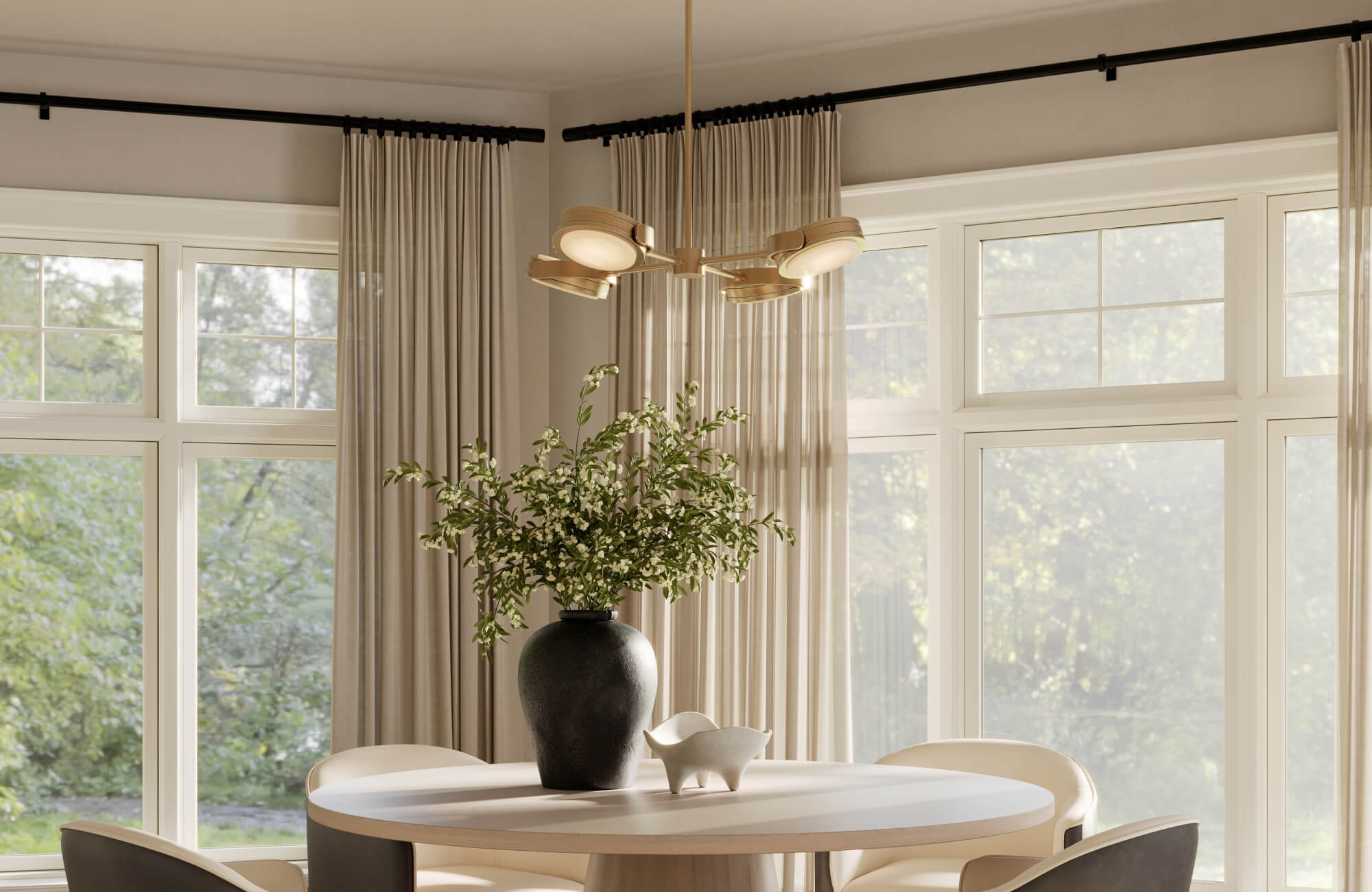
Chandeliers infuse elegance and structure into the kitchen, becoming striking centerpieces that enhance vertical balance and draw the eye upward. Positioned above dining areas or islands, they distribute light evenly across focal zones, creating a warm and inviting atmosphere. Finishes in aged brass, black, or brushed gold also introduce a layer of sophistication, while glass or crystal accents refract light to increase brightness and visual depth.
Multi-tier arrangements build on this sense of refinement, adding grandeur without overwhelming the surrounding layout. Paired with dimmable controls, chandeliers effortlessly shift from bright, functional illumination to a soft evening glow, adapting to the mood and rhythm of daily life.
A perfect example of this fusion of form and function is the Cornelius Chandelier in Vintage Brass, blending sculptural grace with a timeless metallic finish. Its streamlined arms and luminous globes cast a warm, diffused glow that anchors the room’s visual symmetry. Ideal for high-ceiling kitchens or open dining areas, it elevates modern layouts with refined radiance and understated luxury.
Pendant Lighting
Pendant lights define key task areas with focused illumination and a sense of visual rhythm that anchors the kitchen’s layout. Whether in dome, globe, or linear profiles, these fixtures serve both functional and decorative purposes, adapting easily to a variety of design styles. Glass and metal shades further shape the atmosphere by modulating light diffusion and contrast, subtly influencing the room’s overall mood and tone.
When installed in clusters, pendants also introduce proportional interest across wide islands or counters, creating depth without visual clutter. In addition, coordinated finishes seamlessly echo cabinetry hardware and faucet details, strengthening the material palette. Through this balance of precision and modern artistry, pendant lights become sculptural elements that elevate both form and function.
As shown in the picture above, the Oswald Pendant in Dusty Iron captures this refined balance of utility and design, featuring a layered, architectural form that casts warm, even light across kitchen islands. Its deep iron finish complements natural stone countertops and brass accents, as seen in the sophisticated kitchen above. Suspended in multiples, these pendants also create a harmonious interplay of texture and tone, uniting contemporary elegance with timeless craftsmanship.
Linear Light
Linear lights embody contemporary minimalism through their sleek geometry and even light distribution, creating a refined visual line that complements modern kitchen layouts. Positioned above islands or long dining surfaces, they deliver consistent illumination ideal for cooking, dining, or casual gathering. Their aluminum or matte finishes also integrate effortlessly with modern cabinetry and fixtures, reinforcing a clean, cohesive palette.
Integrated LEDs further support this streamlined aesthetic by offering energy-efficient performance within a simple, architectural profile. With adjustable suspension systems that allow precise positioning, these fixtures ensure balanced brightness tailored to each space. Altogether, linear lights enhance spatial clarity and align seamlessly with the linear flow of countertops and cabinetry, contributing to a harmonious and visually continuous design.
Ambient Lighting
Ambient lighting provides the overall illumination that sets the tone for comfort and functionality. It enhances spatial clarity and ensures even distribution throughout the kitchen.
Ceiling Fixtures
Flush-mount and semi-flush fixtures contribute to this balanced illumination by delivering diffuse, uniform brightness across the room. Their frosted diffusers soften glare, while integrated LEDs provide long-lasting efficiency that complements the kitchen’s daily rhythm. Whether rectangular or circular, these shapes also adapt gracefully to varying ceiling heights and room layouts, reinforcing both practicality and proportion. Warm color temperatures (2700K–3000K) further enhance the kitchen’s inviting tone, making cooking and dining feel naturally comfortable. When thoughtfully positioned, ceiling fixtures strengthen symmetry and spatial flow, grounding the lighting plan with a cohesive, well-structured foundation.
Natural Light
Natural light extends this sense of harmony by introducing the most sustainable and transformative form of illumination. For instance, large windows, clerestories, and skylights invite sunlight to reveal true color depth and texture, enriching the materials throughout the space. Orienting openings to the south or east also maximizes daylight exposure, helping reduce reliance on artificial fixtures while maintaining visual vibrancy throughout the day.
Moreover, sheer treatments gently diffuse incoming light to prevent glare, preserving openness and comfort without sacrificing brightness. As daylight interacts with reflective finishes, such as polished tile or light-toned stone, it amplifies luminosity and enhances the room’s natural energy. When seamlessly integrated with the overall lighting design, natural light elevates the kitchen’s mood, creating an atmosphere that feels vibrant, balanced, and alive.
Accent and Task Lighting
Accent and task lighting emphasize functionality and highlight architectural elements. These fixtures add focus, depth, and layered sophistication.
Wall Sconces
Wall sconces extend this layered approach by casting gentle vertical illumination that subtly shapes the room’s architectural character. Their interplay of metal, glass, and diffused light introduces soft contrast, creating texture that complements surrounding materials. Adjustable arms also allow tailored directionality, ideal for spotlighting shelving, artwork, or textured surfaces, while integrated LEDs deliver efficient, controlled brightness. When arranged in symmetrical pairs, sconces frame the space with a sense of balance and rhythm, adding a warm, refined glow that enhances both function and atmosphere.
Our Zia Wall Sconce in Matte White Plaster embodies this understated elegance with its sculptural silhouette and refined materiality. Its soft plaster finish blends seamlessly into neutral walls, casting a diffused, ambient glow that highlights surrounding textures and finishes. Perfect for flanking open shelving or accent walls, this Zia Sconce enhances spatial depth and serenity, balancing modern minimalism with artisanal warmth.
Under-Cabinet and Strip Lighting
Under-cabinet lighting strengthens the kitchen’s layered illumination by delivering targeted brightness exactly where it’s needed most—across countertops and prep zones. Slim LED strips, in particular, provide clean, shadow-free light that remains discreetly hidden, preserving a sleek, uninterrupted aesthetic. With color temperatures near 3000K, these fixtures also enhance task clarity while maintaining the warm ambiance established by the broader lighting design.
Motion sensors and dimming controls add intuitive convenience, adapting effortlessly to different activities throughout the day. When integrated thoughtfully, under-cabinet lighting highlights backsplash materials, revealing texture, pattern, and craftsmanship with subtle sophistication. Together, these features complete a professional-grade lighting hierarchy that balances precision, comfort, and visual refinement.
Picture Light
Picture lights extend this nuanced approach by drawing focused attention to decorative elements and architectural textures, enriching the kitchen with curated visual depth. Their directional beams enhance color accuracy and bring artwork, shelving, or featured materials to life, creating intentional focal moments within the space. Finishes in brass, bronze, or matte black also allow these lights to blend seamlessly with a range of design styles, from classic to contemporary.
In addition, adjustable heads ensure precise angling, minimizing glare while highlighting even the smallest details. With efficient, low-heat LED technology, picture lights offer lasting performance that complements both beauty and function. By elevating accent features into illuminated showcases, they contribute a refined layer of artistry to the kitchen’s overall composition.

Rugs and Textiles
Rugs introduce comfort and tactile richness to balance the hard surfaces typical of kitchens. They define zones, absorb sound, and contribute visual softness that completes the overall design composition.
Wool and Cotton
Natural fibers like wool and cotton bring a welcoming blend of warmth and resilience, offering everyday comfort that pairs beautifully with the kitchen’s hard surfaces. Their rich textures introduce visual depth without sacrificing durability, standing up gracefully to frequent movement. Wool’s natural lanolin also provides built-in resistance to stains and moisture, while cotton contributes breathable softness that adapts easily to changing temperatures.
Handwoven or tufted constructions further enhance this appeal by introducing subtle artisanal detail, lending the space a sense of craftsmanship and timeless character. With neutral palettes that harmonize effortlessly with surrounding cabinetry and flooring, these textiles help regulate temperature and soften acoustics, creating a more balanced and serene atmosphere. Together, their organic textures ground the kitchen in a feeling of comfort and connection, elevating the room’s inviting, lived-in warmth.
Perfectly embodying these qualities, the Mallory Wool Pile Rug in Forest brings earthy richness and depth to kitchen and dining spaces. Its lush wool pile introduces tactile comfort underfoot, while the deep green hue complements natural wood tones and stone finishes. This rug’s organic color palette enhances warmth and sophistication, grounding light interiors with a subtle connection to nature.
Polypropylene and Polyester
Polypropylene and polyester rugs offer a seamless blend of performance, longevity, and modern appeal, making them especially well-suited for the demands of busy kitchen environments. These advanced synthetic fibers replicate the inviting softness of natural textiles while delivering superior resistance to stains, fading, and moisture—qualities that ensure lasting beauty with minimal upkeep.
Polypropylene also provides excellent colorfast stability and a low-pile structure that withstands heavy use without crushing, while polyester adds a smooth, refined hand feel that maintains its vibrancy even after repeated cleaning. Flatweave and looped constructions further enhance durability, preserving the rug’s shape and texture over time. Together, these materials harmonize practicality with elevated design, creating rugs that balance comfort, functionality, and contemporary style.
Blends
Blended rugs build on these strengths by combining the best qualities of natural and synthetic fibers, resulting in a versatile option that excels in both performance and comfort. Wool-polypropylene or cotton-polyester combinations enhance softness while improving resistance to moisture and everyday wear, making them well-suited for busy kitchen and dining areas. These hybrid constructions also retain the tactile warmth and organic feel of natural fibers while offering the easy maintenance associated with synthetics. Their ability to hold dyes more effectively results in rich, long-lasting saturation that preserves the rug’s visual impact.
With compositions that support everything from hand-loomed textures to machine-tufted designs, blended rugs accommodate a wide range of interior aesthetics. The result is a thoughtful fusion of artisanal character and practicality, delivering both beauty and enduring performance in the kitchen.
As featured in the photo above, the McGowan Polyester & Polypropylene Pile Rug in Moss / Sand captures this perfect balance, offering a soft, low-pile surface with rich, organic tones that anchor dining and kitchen areas with warmth and depth. Its mossy green and beige undertones harmonize beautifully with light wood furniture and natural textures, enhancing the room’s serene, grounded atmosphere. This rug blends everyday durability with elevated design, complementing both modern and transitional kitchen aesthetics.

Dining Furniture and Counter Seating
Furniture bridges culinary function and social connection, anchoring the kitchen’s flow and proportion. Each piece contributes to ergonomic comfort, material continuity, and design cohesion.
Dining Tables
Dining tables establish the visual center of the kitchen’s gathering area. Their materials and geometry influence both proportion and atmosphere. Solid wood tables, for instance, offer timeless warmth and grain detail, while veneer and composite surfaces enhance stability. Meanwhile, ceramic and quartz-topped options provide sleek, heat-resistant surfaces ideal for daily use. Rounded corners and soft edges also encourage ease of movement in tight spaces.
Our Selena 55" Outdoor Dining Table in Black extends this balance of form and function to both indoor and outdoor dining environments. Its sculptural silhouette and matte black finish create a striking focal point that complements neutral and natural palettes alike. Crafted for durability, the table’s weather-resistant construction and minimalist design also make it equally at home in open-concept kitchens, patios, or transitional dining areas.
Dining Chairs
Dining chairs balance comfort with stylistic harmony, completing the ensemble with ergonomic precision, while their silhouettes and finishes subtly shape how users perceive scale and cohesion. In addition, upholstered designs in performance fabric or leatherette offer softness without sacrificing practicality, and curved wooden backs echo natural lines to support posture gracefully. Metal or mixed-material frames also introduce modern contrast, while careful spacing maintains circulation and proportion.
As displayed in the photo above, Edward Martin’s Shaffer Dining Chair in Tan Leather perfectly embodies this harmony of craftsmanship and comfort. Its warm tan hue and smooth leather upholstery bring sophistication and tactile richness to both modern and traditional kitchen settings. Supported by a sleek, sculpted wooden frame, the chair’s refined silhouette also enhances visual balance around dining tables or kitchen islands. This composition introduces an inviting tone that complements natural materials like marble, wood, and brass.
Counter Stools
Counter stools define casual dining zones, adding flexibility and sociable energy to the kitchen island, while their design must balance durability, comfort, and visual integration. For strength and contemporary geometry, powder-coated metal frames form the structural backbone, complemented by upholstered seats in textured fabric or faux leather that introduce softness against solid surfaces. Adjustable heights, swivel functions, and footrests also ensure ergonomic adaptability for all users during extended use, while coordinating stool finishes with lighting or faucet metals reinforces design continuity. Together, these features transform counter seating into both a visual anchor and a comfortable retreat.
A perfect example is the Crawford Counter Stool in Brown, featuring a gracefully curved backrest and richly toned upholstery that complement warm cabinetry and metallic accents. Its extended stainless steel frame, powder-coated in brushed gold, resists corrosion, while the highly durable faux leather upholstery resists abrasion and withstands regular use. Together, these elements create a stool that combines lasting comfort with timeless sophistication, enhancing both function and form at the kitchen island.

Countertops and Cabinetry
Countertops and cabinetry anchor both the visual and practical aspects of a kitchen. Their materials and finishes influence durability, workflow, and the overall impression of craftsmanship.
Choosing Countertop Materials
Selecting the right countertop involves understanding how different surfaces perform under daily use. With this, durability, texture, and heat resistance should align with your cooking habits and design preferences. Engineered quartz, in particular, provides a non-porous, resilient surface that resists scratches, stains, and moisture. Its uniform veining complements contemporary interiors with clean lines. Meanwhile, natural granite, known for its density and movement, adds organic depth and individuality. In addition, porcelain and sintered stone elevate performance further, offering resistance to heat, UV exposure, and mechanical wear. Polished finishes also enhance brightness, while honed surfaces provide understated sophistication. Matching the countertop’s undertones to cabinetry or flooring ensures visual harmony across the space.
Selecting Cabinetry Finishes and Framework
Cabinetry defines storage efficiency, structure, and visual rhythm. Its construction and finish must withstand temperature and humidity fluctuations while maintaining design integrity.
Solid hardwoods such as oak, walnut, or maple provide enduring strength and natural texture. On the other hand, engineered cores like plywood and MDF resist warping and deliver a smooth base for paint or veneer. Thermofoil and laminate coatings also add a modern, durable finish that simplifies maintenance. Combining matte and gloss surfaces further introduces balance and contrast within the cabinetry system. Moreover, hardware in brushed brass or nickel ties cabinetry to lighting accents for cohesive design flow.

Sustainability and Long-Term Value in Kitchen Design
Sustainability integrates environmental responsibility with long-term performance, shaping kitchens that are both ethical and enduring. By combining renewable resources, low-emission finishes, and timeless materials, designers create spaces that honor both function and planet.
Eco-Friendly Material Choices
Sustainable design begins with thoughtful material selection that minimizes ecological impact without compromising aesthetics, using renewable, recyclable, and responsibly sourced products to extend the kitchen’s lifecycle while supporting global conservation efforts. FSC-certified wood cabinetry, for example, ensures ethical harvesting and forest preservation, while recycled glass countertops transform waste into luminous, durable surfaces, marrying sustainability with beauty. Rugs and textiles crafted from organic cotton, jute, or wool also reduce synthetic fiber use and offer natural biodegradability.
Moreover, porcelain tiles containing recycled content maintain strength and water resistance with reduced carbon output. Our Shea 32x32 Matte Porcelain Tile in Smoke, as shown in the picture above, exemplifies this sustainable innovation—crafted from 95% locally sourced materials and up to 45% recycled content. Its large-scale format and soft matte finish create a seamless, modern foundation that enhances spatial continuity while lowering environmental impact. The tile’s smoky gray tone also complements both natural and engineered surfaces, blending timeless design with responsible craftsmanship.
Dining and seating pieces made from reclaimed or sustainably harvested wood further introduce warmth and authenticity with minimal environmental footprint. Low-VOC paints, adhesives, and finishes, for example, safeguard indoor air quality while maintaining rich, lasting color. Together, these material choices balance elegance with accountability, reinforcing design integrity through environmental mindfulness.
Maintenance and Lifecycle Considerations
Longevity forms the core of sustainable kitchen design, allowing materials to maintain their structural integrity and visual appeal for decades. When surfaces, finishes, and furnishings demand less upkeep and fewer replacements, both waste and long-term costs naturally decrease. Durable options such as quartz countertops, porcelain tiles, and engineered flooring also resist wear with minimal refinishing, while wool and recycled polyester rugs extend usability and support circular manufacturing.
Moreover, upholstered chairs in performance fabric or natural linen withstand daily use without relying on heavy synthetic treatments, and modular cabinetry systems allow targeted upgrades rather than full replacements, conserving both resources and energy. Refinishable hardwoods and metals that develop a soft patina over time also add character as they age, contributing depth and history to the space. By embracing longevity, reparability, and conscientious sourcing, sustainable kitchens deliver lasting value that supports both homeowners and the environment.
Enduring Balance Between Design and Function
A well-curated kitchen design achieves a rare equilibrium where beauty and functionality coexist seamlessly. When materials, lighting, and furnishings are chosen with precision, the result is a space that transcends trends and evolves gracefully over time. Durable surfaces such as porcelain, engineered wood, and quartz ensure longevity, while sustainable finishes and responsibly sourced textiles support an eco-conscious lifestyle. Cohesion in tone, texture, and proportion also reinforces both aesthetic harmony and spatial efficiency. Ultimately, a thoughtfully executed kitchen renovation becomes more than a visual statement—it becomes a living environment defined by endurance, comfort, and timeless sophistication.
For homeowners seeking expert guidance in achieving this level of harmony, Edward Martin’s design services provide tailored material recommendations and cohesive styling direction rooted in professional insight. By collaborating with their design team, you can refine your vision with confidence, ensuring every selection aligns seamlessly with your kitchen’s long-term beauty and performance!