Lighting plays a quiet yet powerful role in shaping how a dining room is experienced. Long before food is served or conversations begin, light influences mood, focus, and emotional comfort, setting expectations for how people gather and interact. From subtle shifts in brightness to the warmth of color tones, lighting works in the background to guide attention, energy, and connection in ways that often go unnoticed but are deeply felt.
As a result, dining room lighting is not just a decorative choice but a strategic one. When thoughtfully designed, it enhances social interaction, supports functionality, and reinforces the emotional character of the space. This article explores how lighting affects mood and ambiance from multiple angles, helping you understand how intentional choices can transform everyday meals into more meaningful and memorable experiences.

The Psychological Impact of Light on Dining Experiences
Lighting in the dining room shapes how you feel and connect long before the first bite is taken. Beyond basic visibility, it influences emotional comfort, attention, and even appetite by interacting directly with the nervous system. Brighter light supports alertness and energy, making it well-suited for active, daytime meals, while softer illumination signals the body to slow down, encouraging relaxation and deeper engagement. As light levels change, they subtly guide the emotional pace of the meal, helping conversations flow more naturally and allowing the experience to feel less rushed and more intentional.
Equally important, the tone and consistency of lighting shape how meals are remembered over time. Warm light fosters a sense of safety and belonging, encouraging lingering conversations and emotional openness, while cooler tones can feel more task-oriented and emotionally distant if used at the wrong moment. When lighting remains thoughtfully consistent yet adaptable, it becomes a powerful memory cue, linking the dining space to positive shared experiences. In this way, intentional lighting transforms the dining room into more than a functional area—it becomes a setting where emotional connection and lasting memories are quietly reinforced.

Spatial Atmosphere Created Through Light Placement
Where light is placed within the dining room quietly determines how the space feels the moment you step into it. Placement guides the eye, defines boundaries, and shapes how intimate or expansive the room appears. When light is layered with intention, it influences not only aesthetics but also how comfortably you gather, move, and remain present at the table.
Overhead Lighting
Overhead lighting plays a central role in anchoring the dining experience. When a pendant or chandelier is positioned at the proper height above the table, it visually lowers the ceiling and creates a contained zone that feels purposeful and inviting. This subtle sense of enclosure helps draw attention inward, encouraging focus on the meal and the people seated around it rather than the surrounding space.
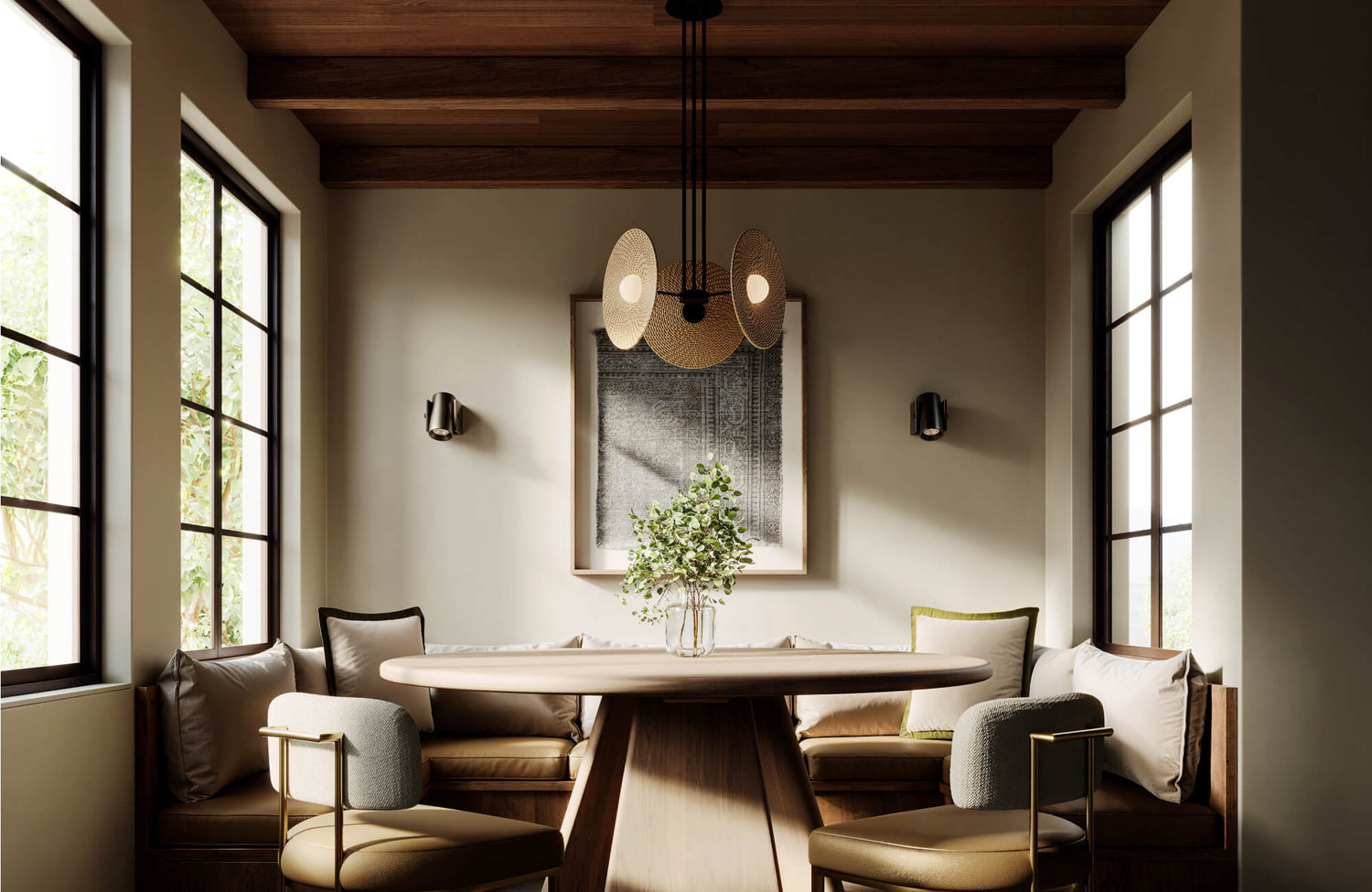
A well-considered example is our Dempsey Pendant in Hammered Antique Brass, shown in the image above, which anchors the dining table while contributing warmth and texture overhead. Its hammered finish subtly softens reflected light, helping to create a focused yet inviting glow that enhances intimacy without feeling heavy. Suspended at the right height, the pendant reinforces the table as the visual center of the room while adding an artisanal presence that complements both the atmosphere and the surrounding architecture.
At the same time, the scale and construction of the fixture determine whether the effect feels refined or overwhelming. A light that is too large can dominate the room, while one that is too small fails to establish presence. Softening the light through diffusers or frosted bulbs also reduces harsh contrasts, allowing faces and food to remain comfortably illuminated without glare. As a result, overhead lighting becomes more than a focal point. It acts as a visual gathering place, and it quietly signals where connection happens, reinforcing the dining table as the emotional and functional center of the room.
Perimeter Lighting
Lighting along the edges of a dining room has the power to reshape how large the space feels. When light washes walls or ceilings instead of shining directly downward, it visually extends the room’s boundaries. This approach minimizes sharp shadows and creates a sense of openness that is especially valuable in compact dining areas.
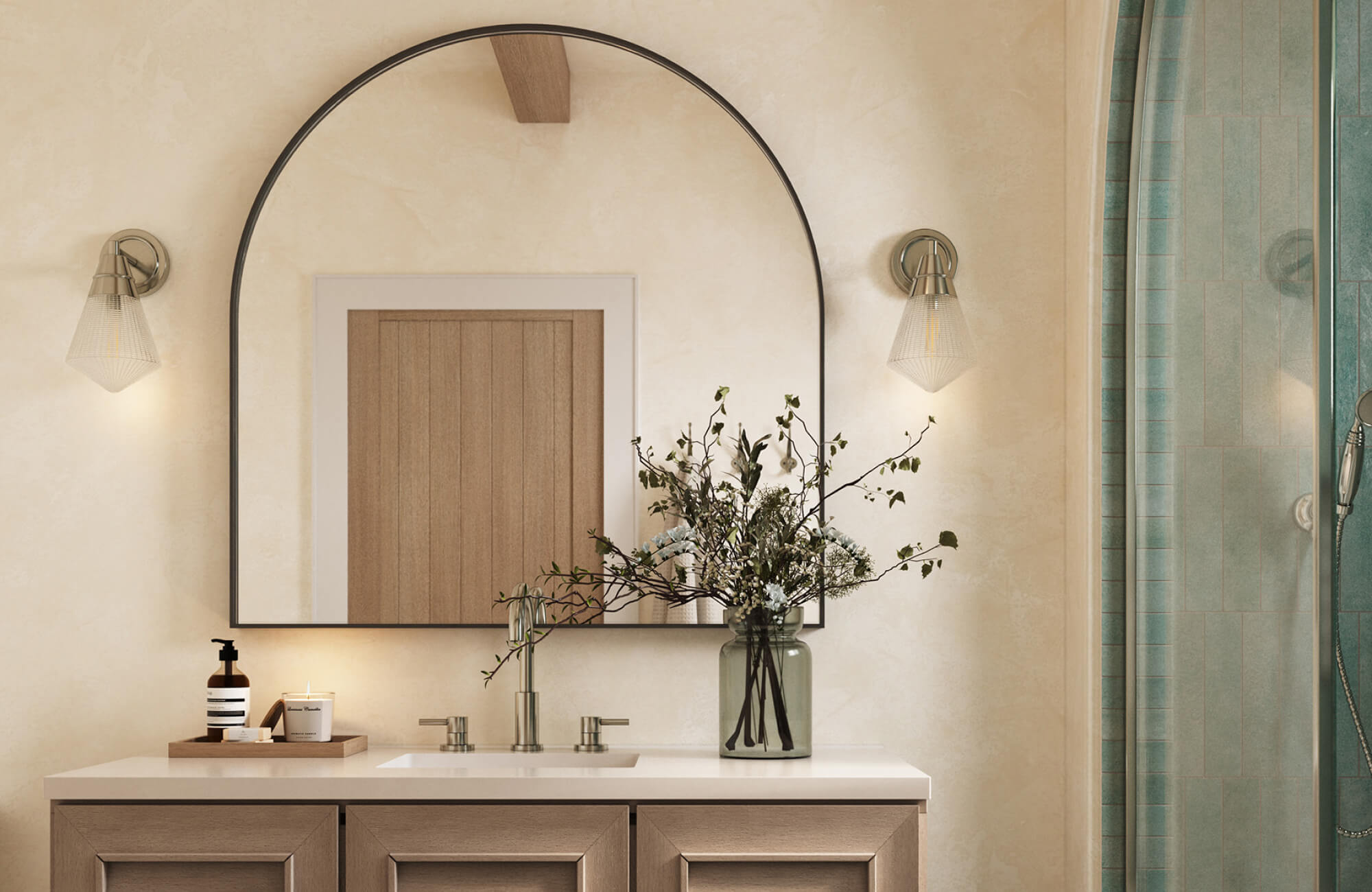
A thoughtful example of perimeter lighting is our Jodie Wall Sconce in Antique Brass Iron, which casts light outward and upward to soften the room’s edges. Mounted along perimeter walls, its warm glow gently washes surrounding surfaces, helping the dining space feel more open without drawing focus away from the table. The antique brass finish also adds subtle character while allowing the light itself to shape the atmosphere in a quiet, supportive way.
By illuminating vertical and horizontal planes near the perimeter, the eye naturally travels outward rather than stopping at the table. This gentle expansion helps the room feel more balanced and less confined, even when furniture placement remains unchanged. As a result, the dining area stays clearly defined without feeling isolated or boxed in. Additionally, perimeter lighting supports architectural features without demanding attention. Because the light is indirect, it enhances the room’s structure in a quiet, supportive way, allowing the dining experience to feel calm and visually breathable.
Vertical Lighting
Vertical lighting introduces dimension by activating surfaces that would otherwise remain visually passive. When light is directed toward walls, cabinetry, or display areas, it adds layers that prevent the room from feeling flat. This depth encourages the eye to move upward and outward, creating a more immersive dining environment.
These vertical accents also help balance the downward focus created by overhead lighting. Although the table remains the center of attention, illuminated vertical elements provide rhythm and visual interest throughout the space. This balance keeps the room engaging without becoming visually busy. Over time, vertical lighting contributes to a curated atmosphere that feels intentional rather than accidental. By giving form and texture to surrounding surfaces, you create a dining space that feels complete, welcoming, and visually dynamic from every angle.
A standout example is our Ernest Picture Light In Aged Brass, which directs focused illumination across walls and displayed surfaces. By highlighting artwork, millwork, or textured finishes, it adds depth and visual rhythm while encouraging the eye to move upward. The warm brass finish also keeps the effect subtle and cohesive, allowing vertical lighting to enhance the dining space without competing with the table as the central focal point.

Lighting Influence on Social Interaction and Conversation
Lighting plays a subtle but powerful role in how you and your guests interact at the dining table. When illumination supports visual comfort, it becomes easier to read facial expressions, maintain eye contact, and stay emotionally present in the moment. Evenly balanced light reduces strain and distraction, allowing conversations to feel more natural and fluid. In contrast, harsh or poorly placed lighting can create shadows and visual tension that quietly disrupt connection, even if no one consciously notices the cause.
An example of lighting that supports this kind of interaction is our McKay Chandelier in Burnished Brass, featured above, which casts a warm, evenly distributed glow across the dining table. Its multi-light composition reduces harsh shadows, helping faces remain comfortably illuminated and expressions easy to read. Moreover, the burnished brass finish adds warmth and presence without overpowering the space, subtly encouraging conversation, connection, and a relaxed sense of togetherness around the table.
At the same time, lighting levels act as an unspoken guide for conversational rhythm and mood. Brighter light encourages energy and lighthearted exchange, while softer illumination invites slower pacing, reflection, and deeper dialogue. These shifts help conversations evolve organically as a meal progresses. Because lighting also signals the formality or intimacy of a gathering before anyone speaks, aligning it with the occasion helps guests intuitively settle into the right emotional space. When thoughtfully chosen, lighting becomes a silent facilitator of comfort, openness, and meaningful connection.

Functional Lighting for Dining Room Activities Beyond Meals
As dining rooms take on multiple roles throughout the day, lighting must support more than just mealtime ambiance. When the table becomes a place for work, study, or creative activities, clear and evenly distributed light is essential for maintaining focus and reducing visual strain. However, this functional brightness must be delivered thoughtfully so it does not overpower the room or strip it of its welcoming character. The goal is to provide clarity when you need it while allowing the space to remain visually comfortable and adaptable.
Long-term comfort also depends on how well lighting responds to changing tasks and conditions. Glare from screens or reflective surfaces can quickly lead to fatigue if light is poorly aimed or too harsh, making adjustability critical. By softening illumination, controlling direction, and allowing brightness and tone to shift easily, the dining room can transition smoothly between productivity and relaxation. In doing so, lighting supports the room’s evolving purpose, ensuring it feels equally suited to focused tasks and meaningful gatherings without compromise.
A well-suited example is our Walsh 7-Light Chandelier in Clear Glass & Burnished Brass, displayed in the picture above, which delivers ample, evenly distributed illumination across the dining surface. Its clear glass shades allow light to travel freely, supporting activities such as working, reading, or creative projects without introducing harsh shadows or glare. At the same time, the burnished brass accents soften the overall effect, helping the space remain inviting and visually balanced while adapting easily to the dining room’s changing uses.

Aesthetic Harmony Between Lighting and Interior Style
Lighting plays a defining role in how cohesive your dining room feels. Beyond illumination, it reinforces the room’s personality by echoing architectural details, finishes, and proportions. When lighting aligns with the overall design language, the space feels intentional rather than assembled.
Matching Lighting Design to Dining Room Style
The style of your dining room sets clear expectations for the type of lighting that feels appropriate. In a modern setting, clean lines and minimal forms complement the simplicity of the space, allowing light itself to become part of the design rather than decoration. In contrast, more traditional environments benefit from fixtures with detail and ornamentation, which reinforce a sense of heritage and formality.
As the style shifts toward rustic or industrial influences, lighting often becomes more tactile. Exposed materials and visible construction elements connect the fixture to the room’s textures, creating continuity between the light source and surrounding surfaces. This alignment ensures that lighting feels like a natural extension of the space rather than a visual interruption. By choosing fixtures that speak the same design language as the room, you create visual harmony. The result is a dining area where every element feels considered, supporting a unified and comfortable atmosphere.
Material Reflection and Light Behavior
The materials used in lighting fixtures play an important role in shaping how light moves through a dining room. For example, reflective surfaces can amplify brightness and add a sense of liveliness, making the space feel more dynamic. By contrast, softer, more absorbent materials gently diffuse light, reducing contrast and creating a calmer, more relaxed visual environment.
When materials are chosen intentionally, they give you greater control over the room’s emotional tone. Warm-toned metals add depth and glow, enhancing a sense of intimacy, while translucent or textured shades help soften harsh edges. Together, these subtle effects influence how the space feels without requiring changes to brightness or placement. As light interacts with different surfaces throughout the room, it also shapes the overall ambiance, ensuring illumination feels balanced while supporting both comfort and visual interest.
A fitting example is our Kylie Lantern in Vintage Gold Leaf, displayed above, which demonstrates how material choice shapes light behavior. Its warm metallic finish reflects light softly, adding depth and glow without harsh glare, while the lantern form helps diffuse illumination evenly throughout the space. This balance enhances visual warmth and intimacy, allowing light to feel layered and intentional as it interacts with surrounding surfaces in the dining room.
Lighting as a Visual Focal Element
In many dining rooms, lighting naturally becomes the centerpiece. A striking fixture draws the eye upward and establishes a sense of scale, anchoring the table below. When thoughtfully chosen, this focal element adds character and elevates the entire space.
However, balance is essential. A bold central fixture works best when surrounding lights play a supporting role rather than competing for attention. This hierarchy keeps the room visually organized, allowing the focal light to shine without overwhelming the setting. Over time, this clarity enhances how the space is experienced. The lighting feels deliberate and expressive, giving the dining room a strong identity that remains visually engaging yet comfortable to inhabit.
Creating Intentional Dining Room Atmosphere Through Lighting
Ultimately, dining room lighting shapes how the space feels, functions, and is remembered. By understanding how light influences emotion, interaction, and adaptability, you gain the ability to create an environment that supports both connection and comfort. When brightness, placement, style, and control work together, lighting becomes more than illumination. It becomes a guiding presence that invites people to slow down, engage fully, and enjoy the moment. Thoughtfully chosen lighting does not compete for attention. Instead, it quietly enhances every gathering, making the dining room a place where people naturally want to linger and connect.
If you’re ready to translate these lighting principles into a dining room that truly reflects how you live and gather, expert guidance can help bring clarity to the process. Our team is available to answer questions, discuss design considerations, and help you select lighting solutions that balance atmosphere, function, and style. Reaching out allows you to move from inspiration to thoughtful execution, ensuring your dining space feels intentional, welcoming, and uniquely yours.