A single-sink vanity may seem like a modest fixture, but with the right design strategy, it can serve as a powerhouse of storage and efficiency. Unlike dual-sink setups that split usable space, a single basin frees up valuable room for purposeful, centralized storage, inviting smarter use of every inch.
From custom drawer systems engineered around plumbing to vertical solutions like wall-mounted shelving and toe-kick drawers, the opportunity lies in integrating utility with thoughtful detailing. Throughout this blog, we’ll unpack innovative and design-forward strategies that turn single-sink vanities into streamlined, storage-smart solutions for any bathroom.

The Single-Sink Vanity's Storage Potential
Maximizing storage begins with understanding what you're working with. To make the most of a single-sink vanity, it’s essential to look beyond what’s immediately visible and assess how the space is truly being used. By first evaluating your current layout and then identifying overlooked vertical areas, you can uncover valuable storage opportunities hiding in plain sight.
Assessing Your Current Vanity Layout
As a first step, identify the key components of your vanity: the sink and plumbing location, cabinetry style (e.g., full-overlay, inset, frameless), and the configuration of drawers and compartments. While central plumbing often limits under-sink space, it also presents opportunities to integrate custom drawers or side storage units designed to work around it.
Next, measure the internal dimensions of each cabinet section to determine what solutions are feasible. For instance, shallow depths (typically 18–20 inches) may benefit from pull-out trays, whereas deeper units can accommodate tiered storage. Frameless cabinets are particularly advantageous here, offering increased accessibility by eliminating the center stile, making it easier to install wider drawers and upgrade with features like soft-close, full-extension glides. Altogether, this audit provides a practical foundation for any customized storage improvements.
Identifying Underutilized Vertical Space
Once the base layout is optimized, turn your attention to vertical space, which is frequently underused. Inside the vanity, tiered organizers, risers, and adjustable shelves can help you build upward without obstructing plumbing. These additions effectively create zones for taller items such as bottles, rolled towels, or stacked bins.
Externally, the surrounding wall area presents additional opportunities. Consider installing recessed medicine cabinets, floating shelves, or toe-kick drawers to add storage without expanding the vanity’s footprint. Where space allows, vertical drawer banks beside the sink can offer narrow but deep compartments, ideal for often-used items like hair tools or skincare products. Collectively, these enhancements extend functionality while maintaining a visually clean and cohesive design.
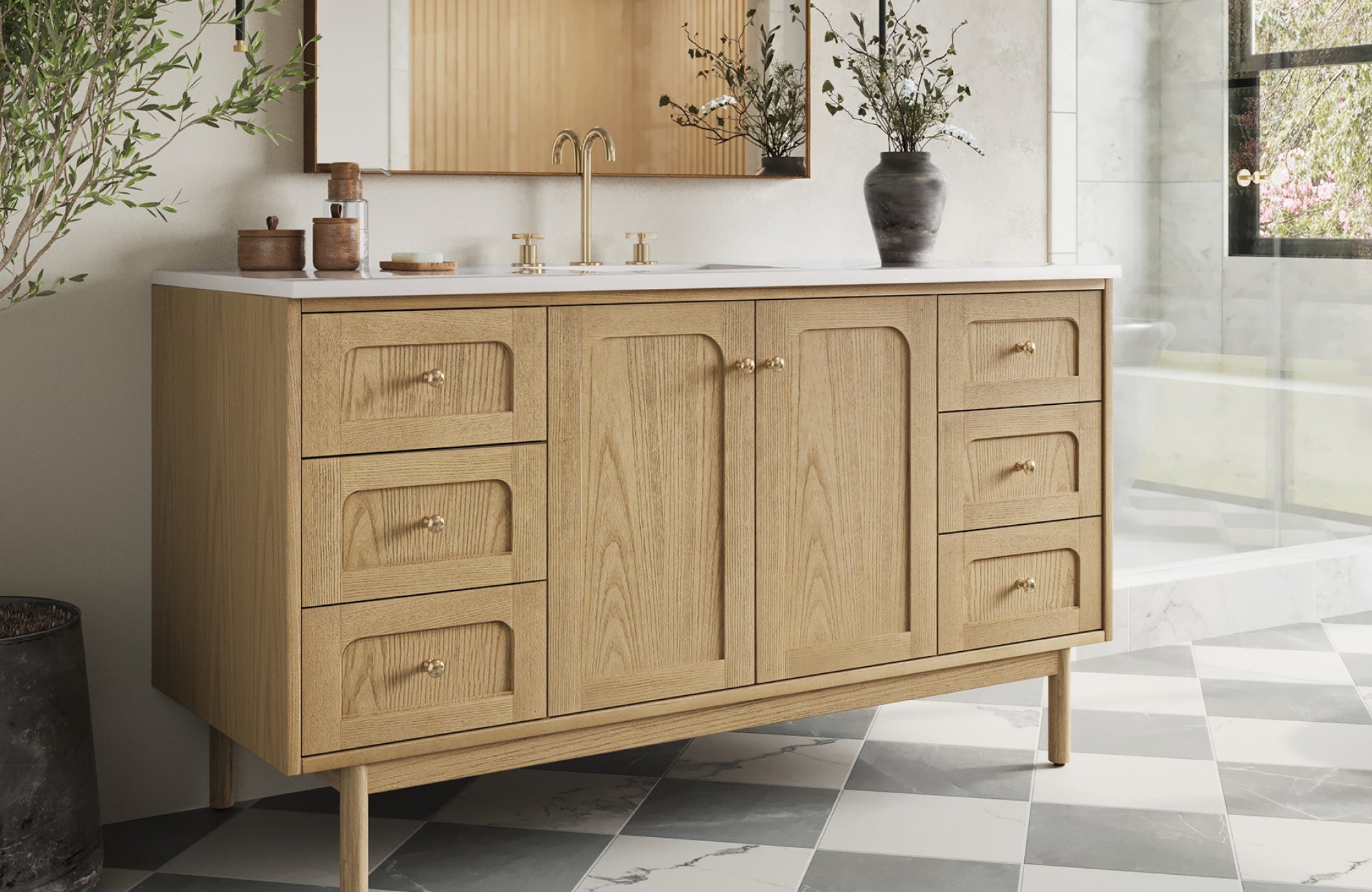
As illustrated in the image above, the Maxine 55" Single Vanity in Washed Natural Veneer with Carrara Marble Top from Edward Martin showcases this strategy in action. With its well-balanced drawer layout and open lower shelf, it highlights how thoughtful vertical design can expand storage capacity while maintaining an airy, uncluttered aesthetic, perfect for maximizing both space and style in any bathroom.

Internal Organization Strategies for Cabinets and Drawers
Once you’ve taken stock of your vanity’s layout and uncovered its full potential, the next step is optimizing the space within. Organizing the interior, from drawers to cabinet compartments and even door backs, ensures every surface serves a functional purpose tailored to your daily routine.
Implementing Drawer Dividers and Organizers
To kick things off, focus on drawer interiors, which can quickly become cluttered without a defined structure. Dividers and custom-fit organizers give each item a dedicated place, improving both functionality and visual clarity. Adjustable inserts, crafted from plastic, bamboo, or acrylic, can be tailored to accommodate grooming tools, cosmetics, and dental essentials.
Furthermore, deeper drawers benefit from tiered inserts that allow contents to be stacked vertically, effectively doubling the usable space. Modular bins also help separate categories, making maintenance simpler and minimizing item overlap. In some high-end vanities, built-in compartments or heat-resistant holders are integrated for added convenience, especially for styling tools. Regardless of the system, full-extension glides are essential for easy access to the entire drawer depth.
Maximizing Cabinet Space Under the Sink
Moving to the under-sink storage, this area is often underutilized due to plumbing constraints, but with thoughtful upgrades, it can become highly functional. U-shaped caddies that wrap around pipes provide a stable storage framework for items like cleaning products or backup toiletries. Similarly, pull-out trays on ball-bearing slides bring contents forward, reducing strain and enhancing visibility.
Additionally, where height permits, stackable bins or tension-mounted shelves make it possible to layer storage vertically without permanent modifications. Using handled or labeled baskets can simplify category-based organization, while materials like powder-coated metal and high-density polyethylene add moisture resistance, ideal for humid bathroom conditions.
One excellent example of these strategies in action is the Gemma 55" Single Vanity in Washed Blonde Oak Veneer with Carrara Marble Top by Edward Martin, featured above. Its soft-close drawers and adaptable center cabinet are thoughtfully designed to work around plumbing while maintaining an elegant, streamlined appearance. This vanity clearly demonstrates how intentional design can transform constrained spaces into efficient, accessible storage zones.
Utilizing Cabinet Door Storage
Finally, don’t overlook the inside of cabinet doors; these slim surfaces offer valuable vertical real estate for frequently used items. Shallow racks or pocket systems are great for storing brushes, lotions, or small containers, and many come with adjustable features to fit a range of cabinet styles.
In addition, integrated storage solutions such as built-in bins or magnetic strips can keep essentials like tweezers or scissors organized and within reach. For tighter spaces, tilt-out trays or flip-down panels offer discreet storage for smaller items like cotton swabs or dental care tools.
To ensure proper functionality, be mindful of door clearance and internal shelf placement. With the right low-profile organizers and careful measurements, you can expand your vanity’s storage capacity without interfering with its operation, adding convenience without compromise.

External Additions and Space-Saving Solutions
After addressing the inside, it’s time to expand your approach outward. Even the most efficiently organized vanity can benefit from smart external enhancements. By leveraging the surrounding space with wall-mounted elements, freestanding pieces, and countertop solutions, you can extend both storage and style well beyond the cabinet box.
Wall-Mounted Shelving and Cabinets
As a starting point, consider your vertical wall space, which is often overlooked but offers excellent storage potential without expanding the vanity’s footprint. Wall-mounted shelving, whether open, closed, or hybrid, can be installed above or beside the vanity to keep daily-use items easily accessible. Floating shelves made from moisture-resistant materials like powder-coated metal, tempered glass, or sealed wood combine durability with visual lightness.
For a more concealed approach, recessed or semi-recessed medicine cabinets provide hidden storage behind mirrored fronts. Many high-end models include adjustable shelves and integrated lighting. Frameless, flush-mount designs blend effortlessly with both modern and transitional aesthetics. Additionally, when ceiling height permits, vertical tower cabinets flanking the vanity can offer ample linen or bulk storage while anchoring the space visually and functionally.
Freestanding Organizers and Carts
Beyond wall-mounted options, freestanding solutions offer flexibility, especially ideal for renters or bathrooms with limited wall space. Slim rolling carts can tuck neatly beside vanities or tubs, offering multi-tiered storage with features like locking caster wheels and rust-resistant, ventilated shelves suited to humid environments.
In addition, ladder shelves, leaning étagères, and cube organizers provide extra capacity without requiring permanent installation. With finishes ranging from white laminate to rattan weave and brushed metal, these versatile pieces can be easily coordinated with existing decor to complement both form and function.
To ensure these freestanding additions align with your design goals, Edward Martin’s design consultation service offers personalized support from concept to delivery. You’ll receive one-on-one guidance to refine every element, from selecting finishes that match your tile to ensuring storage solutions integrate seamlessly with your layout.
If you have questions about product compatibility, color schemes, or accessory pairings, don’t hesitate to contact the Edward Martin team. They’re ready to assist with expert insight and tailored recommendations to help bring your bathroom vision to life, efficiently and beautifully.
Creative Solutions for Countertop Clutter
Finally, don’t forget the countertop, a small but highly visible area that can quickly become cluttered without smart planning. Tiered organizers are an excellent way to lift small items like cosmetics and jars off the surface, maximizing space and improving visibility. For added convenience, look for non-slip designs with removable trays that are easy to clean. Materials like clear acrylic offer subtlety, while brushed metal or ceramic can enhance your vanity’s aesthetic.
To further streamline daily use, magnetic or adhesive holders can be mounted on backsplashes or mirror frames to keep tools like tweezers and brushes close at hand. Trays and catchalls help group everyday essentials and simplify surface cleaning, while small floating corner shelves near windows or tucked into wall junctions provide compact additional storage without crowding the area.
A perfect example of thoughtful countertop design is the Abigail 60" Single Vanity in Light Natural Oak with 3 cm White Zeus Quartz Top from Edward Martin, as shown in the photo above. Its spacious surface and clean proportions make it easy to maintain order while elevating visual appeal. With its tall backsplash, minimalist hardware, and generous counter space, it supports both everyday function and elegant styling, perfect for showcasing accessories like trays, planters, or glass containers without overwhelming the layout.

Long-Term Maintenance and Decluttering for Optimal Storage
Of course, organization isn’t a one-time project; it’s an ongoing process. Maintaining your optimized vanity requires regular upkeep, intentional habits, and the right storage tools to prevent clutter from creeping back in. With a thoughtful maintenance routine, your system can remain both functional and effortless for the long haul.
Implementing a Regular Decluttering Routine
At the outset, it’s important to recognize that even the most organized vanities inevitably accumulate expired products, duplicates, and rarely used items. Establishing a quarterly decluttering routine ensures your storage remains efficient and up to date. Begin by emptying all drawers and cabinets, then group items by category, such as skincare, oral care, or grooming tools, and evaluate each group for necessity and expiration.
To minimize future buildup, consider applying the “one-in, one-out” rule and limiting storage to frequently used essentials. In addition, using labeled bins or color-coded organizers can help the entire household maintain consistent order with minimal effort.
This strategy is especially effective in smaller spaces, like the Colton 36" Single Vanity in Sable with 3 cm White Zeus Quartz Top by Edward Martin. Thanks to its compact footprint and thoughtful layout, it encourages users to be selective, while still providing sufficient room for daily essentials, demonstrating how even modest designs can support impactful organization.
Choosing the Right Storage Products
Once clutter is under control, the next step is choosing storage products that are both durable and practical, particularly for high-moisture environments like bathrooms. Look for materials specifically designed to withstand humidity, such as powder-coated metal, polypropylene, or marine-grade MDF with laminated finishes. In contrast, avoid untreated or low-grade materials that are prone to warping.
Equally important, modular and breathable storage systems, like stackable bins, mesh organizers, or clear acrylic caddies, provide flexibility and airflow. For added convenience, consider vanities with integrated features such as built-in dividers or concealed power outlets, which can streamline your setup and reduce surface clutter.
A great example of this functionality is our Sasha 36" Single Vanity in Mid Century Walnut with 3 cm White Zeus Quartz Top. Its full-width drawer with a removable bamboo organizer accommodates a wide range of items while preserving a clean aesthetic. With the addition of a concealed USB/power outlet, it supports modern routines in a compact, durable design. As always, consult the manufacturer’s guidelines for proper care and maintenance to ensure longevity.
Maximizing Accessibility and Efficiency
To maintain a long-term organization, accessibility is just as important as capacity. In fact, storage that’s difficult to reach often leads to disuse and clutter. Features such as full-extension glides, pull-out trays, and tiered risers make it easier to view and retrieve stored items, reducing the tendency to leave essentials out.
In shared or multi-user bathrooms, clearly delineated storage zones, using labeled bins or intuitive drawer layouts, can streamline routines and reduce confusion. Moreover, for inclusive design, prioritize ergonomic features like soft-close drawers and storing frequently used items between knee and shoulder height, known as the “golden zone” for optimal accessibility, especially for users with mobility limitations.
To enhance usability even further, integrated lighting such as motion-sensor LEDs or under-shelf illumination can improve visibility, especially in low-light conditions. When thoughtfully applied, these upgrades help ensure that your vanity remains not just functional but also intuitive and easy to maintain over time.
Elevating Function Through Strategic Storage Design
Hence, smart storage in a single-sink vanity is less about size and more about strategy. With intentional design choices, ranging from modular inserts to vertical enhancements and moisture-resistant materials, even compact vanities can deliver impressive performance.
Whether you’re upgrading a compact powder room or refining your everyday bathroom routine, investing in practical, well-designed storage solutions elevates both function and aesthetic appeal. For design inspiration and expertly curated pieces that bring these ideas to life, explore the latest offerings from Edward Martin’s collection!