When we think about buying a mirror for a 60-inch vanity, we’re also considering more than simply filling a space on the wall. The right size can determine whether a bathroom feels harmonious or slightly unbalanced. A mirror that’s too small tends to fade into the background, making the vanity appear disproportionately large. On the other hand, an oversized mirror can dominate the space and disrupt its proportions. The goal is to select a mirror that complements both the vanity and the room, while still serving its everyday purpose. In this article, we’ll explore how to determine the right proportions, how design choices can affect sizing, and how proper installation can make the mirror feel like an integral part of the space.

Standard Mirror-to-Vanity Proportions
Before you decide on styles or finishes, it’s worth starting with the tried-and-true measurement rules designers use to get mirror sizing right. These guidelines provide a dependable starting point, allowing you to refine the details later without compromising the fit.
Width Guidelines
For a 60-inch vanity, a mirror that is 2 to 4 inches narrower on each side typically creates a balanced, intentional appearance. This slight margin frames the mirror neatly above the vanity, keeping it visually anchored without overwhelming the surrounding space. By maintaining this offset, you can also prevent the edges from crowding nearby walls or clashing with adjacent fixtures, resulting in a cleaner and more harmonious layout.
Height Considerations
Mirror height is not about adhering to a single standard measurement; it’s also about adapting to the specific dimensions and features of your space. Consider the distance to the ceiling, the faucet placement, and whether a backsplash is present. A taller mirror can guide the eye upward, creating a sense of openness that works particularly well in smaller bathrooms. In contrast, a shorter mirror can bring a sense of intimacy, especially in rooms with lower ceilings or decorative lighting that you want to keep visible.
Centering the Mirror
For a single mirror above a 60-inch vanity, proper centering is key to both visual balance and functional alignment. Positioning the mirror correctly keeps it in line with the sink, faucet, and lighting, creating a cohesive look. In a double-sink layout, a single large mirror should be centered over the entire vanity, while two smaller mirrors should be aligned individually with each sink. Taking this extra step further helps the bathroom feel orderly and well-proportioned every time you enter.

Balancing Style and Function in Mirror Sizing
Once you’ve established the general size range for your mirror over a 60-inch vanity, the next step is ensuring it works seamlessly in daily use. The ideal mirror should be proportionate to the vanity, complement the surrounding design, and meet the practical needs of everyone who uses it. Striking this balance makes the mirror feel intentional while delivering both style and functionality.
Visual Weight
Over a 60-inch vanity, a mirror does more than reflect; it also acts as a visual anchor for the entire wall. The thickness, finish, and color of the frame can significantly influence how large or small the mirror appears, even when its measurements remain the same. For example, a dark, substantial frame can make the mirror feel more compact, which can be useful if you want to reduce its visual dominance, while a slim or light-colored frame can create a sense of openness and greater scale. Being aware of these visual effects allows you to choose a mirror that not only fits your vanity but also complements the room’s proportions.
Lighting Integration
For a 60-inch vanity, the placement of lighting should work with the size of the mirror. When using sconces on either side, the mirror should be narrow enough to allow each fixture comfortable breathing room, preventing the layout from feeling crowded. Overhead options, such as a pendant or integrated LED strips, also require adequate clearance to cast light evenly across the entire vanity.
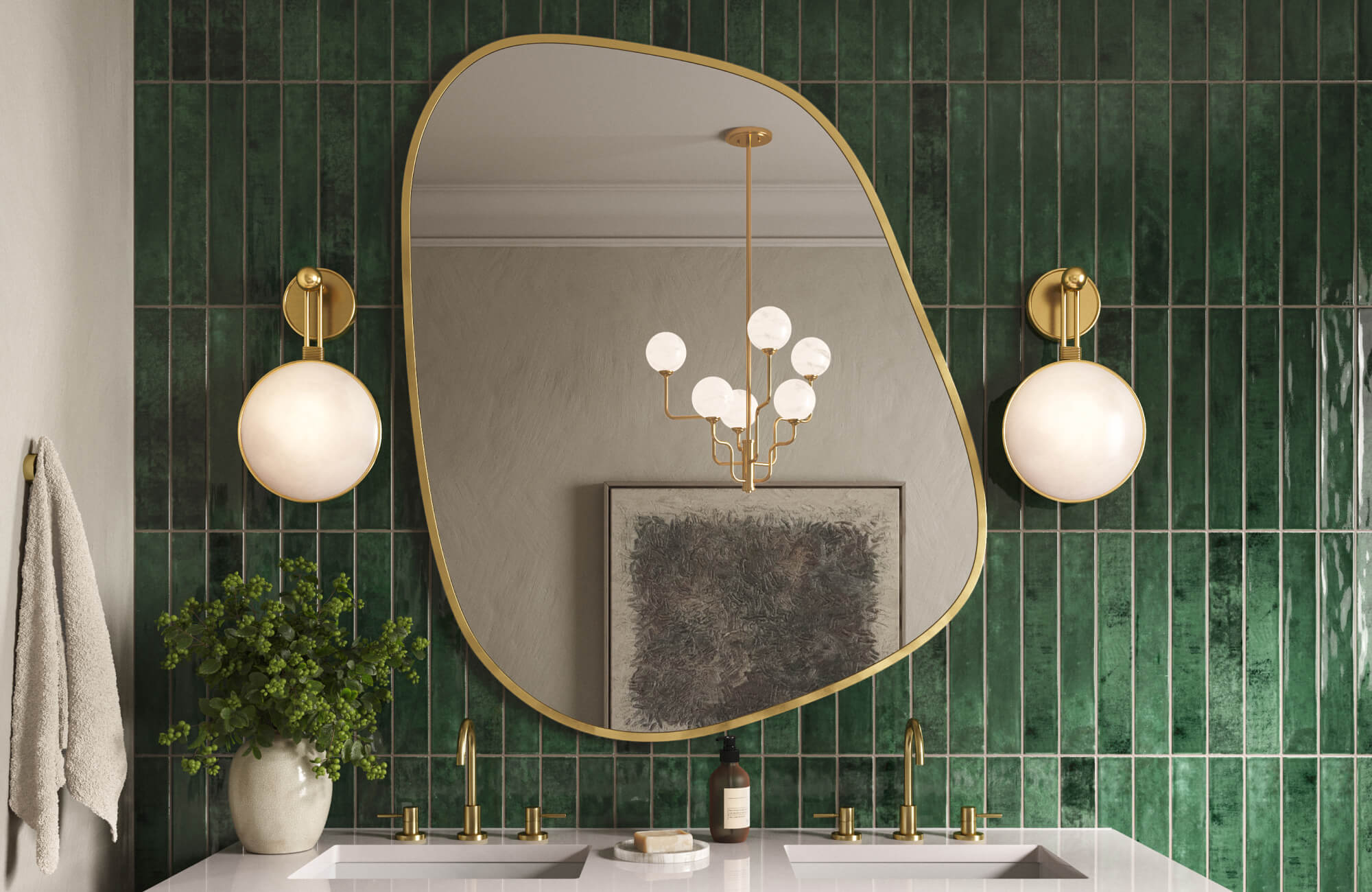
In the photo shown above, Edward Martin’s Tristan Square Mirror in Polished Brass is paired with the Sable Pendant in Aged Brass/Ceramic Moss Crackle, demonstrating how well-planned spacing between the mirror and pendants maintains visual balance while ensuring consistent illumination. Careful coordination between lighting and mirror placement helps the vanity area feel cohesive, functional, and inviting.
Usability Factors
Even the most visually well-proportioned mirror must work comfortably for everyone using the vanity. For a 60-inch setup, whether it’s a single or double sink, the reflective surface should start low enough for shorter users to see themselves easily, yet high enough so taller users don’t have to stoop. Accounting for these height differences during installation also ensures daily comfort and usability, an important consideration in shared bathrooms where multiple people rely on the same mirror.

Exploring Different Mirror Shapes for a 60-Inch Vanity
Shape might seem like a purely decorative choice, but it can further change how your vanity looks and feels. The right shape can soften the lines of a wide vanity, create symmetry, or even make the room feel larger.
Rectangular Mirrors
Rectangular mirrors remain a timeless choice, complementing the clean, straight lines of a vanity. Their shape maximizes reflective surface area, providing both ample visibility and a well-defined, structured appearance. This versatility allows them to integrate seamlessly into a wide range of bathroom styles, from contemporary designs to more traditional settings.
Organic Shaped Mirrors
An organic-shaped mirror brings a softer, more fluid quality to a 60-inch vanity by breaking up the strong horizontal lines and adding visual interest. Its curves reveal more wall space around the edges, which can make the vanity area feel lighter and more dynamic. To maintain both proportion and practicality, choose a size that provides ample reflection while aligning well with the vanity’s width.
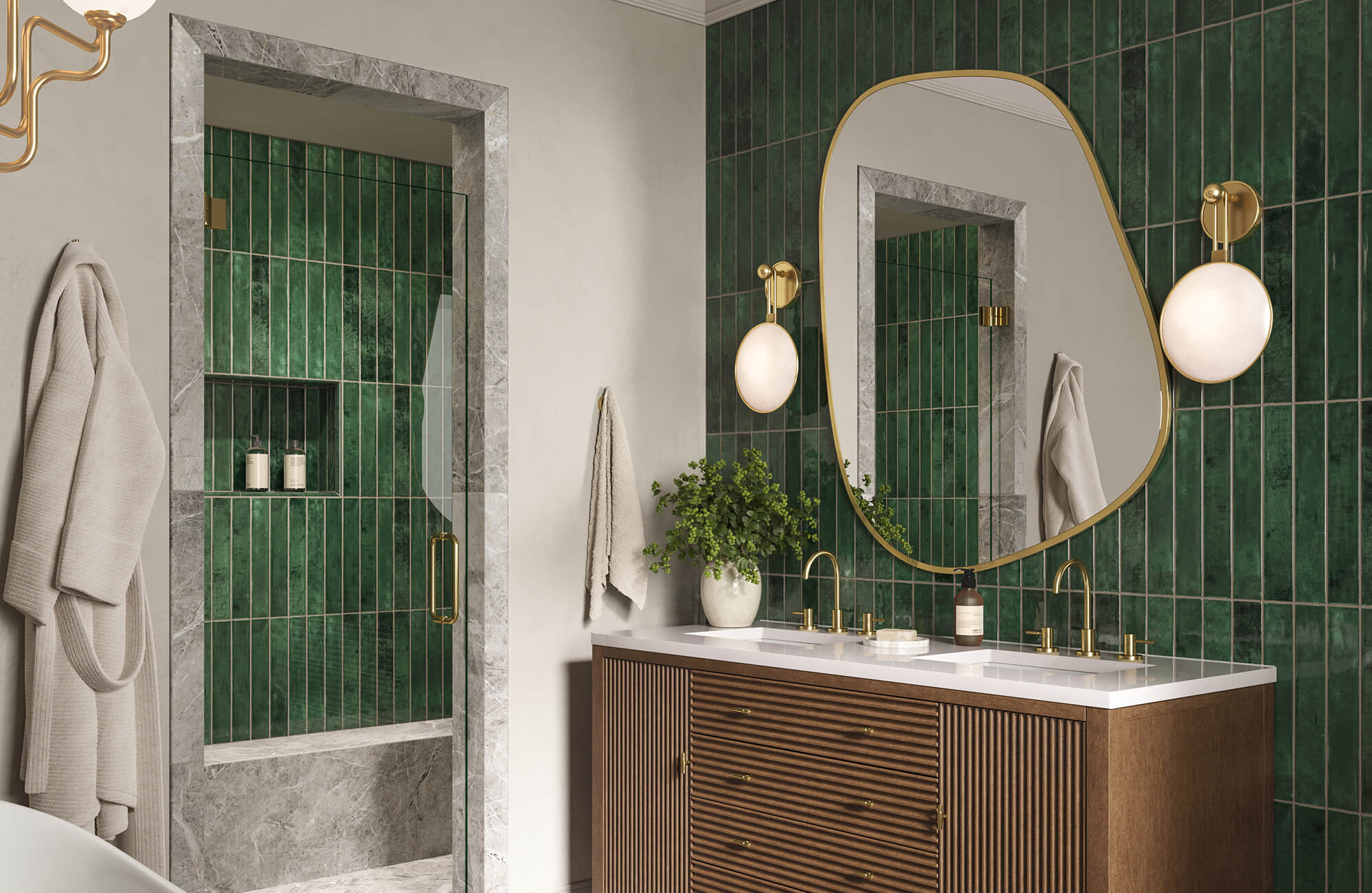
In the photo featured above, Edward Martin’s Shirley Large Mirror in Antique Brass Iron is paired with the Sasha 60" Double Vanity in Mid Century Walnut with a 3 cm White Zeus Quartz Top, The mirror’s free-flowing oval silhouette complements the bold vertical green tile, introducing gentle curves that create movement while still offering generous reflective space for daily use.
Arch-Top or Custom Shapes
Custom shapes, such as arch-tops or distinctive silhouettes, can serve as striking focal points in a bathroom. They introduce personality and reflect a deliberate design choice, but achieving the right effect requires careful measurement to preserve proportional balance with the vanity. With these unique forms, a bit of extra planning also helps ensure they feel seamlessly integrated into the space rather than appearing out of place.

Single Large Mirror or Two Separate Mirrors
Once you have considered both size and shape, the next step is to decide between a single continuous mirror and two separate ones. This decision often depends on how the space will be used and the atmosphere you want to create in the room.
One Large Mirror
A single mirror extending close to the full width of a 60-inch vanity can provide a clean, uninterrupted look. This option works especially well in shared bathrooms, providing ample reflective space for two people to use comfortably at the same time. Because it covers more wall area, it also reflects more light, which can make the room feel brighter and more spacious. This layout integrates naturally with a central light fixture positioned above the mirror, ensuring even illumination across the vanity. If your goal is to create a streamlined, cohesive appearance that emphasizes openness, a single large mirror can be an effective choice.
Two Separate Mirrors
Two mirrors can alter the way a 60-inch vanity is perceived, giving each sink its distinct focal point. This arrangement works well if you plan to mount separate lighting above each sink or tailor the mirror heights to different users. It also leaves room between the mirrors for design accents, such as sconces or wall art, adding depth and interest to the space.
In the photo displayed above, Edward Martin’s Esmeralda Small Mirror in Polished Brass is paired with the Abigail 60" Double Vanity in Light Natural Oak with a 3 cm White Zeus Quartz Top, illustrating how two mirrors can frame each basin beautifully while keeping the overall proportions balanced. Dividing the span into two sections can further help a wide vanity feel more proportionate. For those who prefer a more personalized arrangement without compromising function, two mirrors can be an appealing solution.
Deciding Based on Vanity Configuration
The layout of your 60-inch vanity plays a key role in determining which option will work best. For instance, a single, centrally positioned sink typically aligns better with one mirror, creating a centered, harmonious look. On the other hand, a double-sink vanity can suit either a single wide mirror or two smaller ones, and your decision will depend on factors such as lighting placement, user preferences, and daily routines. If two people frequently get ready at the same time, a single large mirror may offer more convenience, while two mirrors can be ideal for those who value distinct personal space and design flexibility.

Working with Frame Styles and Thickness
Once you have decided on the dimensions, shape, and placement of your mirror over a 60-inch vanity, the frame becomes the next important factor. While it may not change the actual measurements, it can further affect how large or small the mirror appears once installed. The thickness, style, and material of the frame all influence proportion, making it essential to consider how the frame choice interacts with the vanity’s width and the surrounding design.
Thin and Minimalist Frames
A slim frame keeps the reflective surface in focus, making it especially valuable when you want to maximize the mirror width over a 60-inch vanity. In bathrooms where every inch of reflection matters, particularly with double sinks, a narrow border maintains an open feel while still defining the mirror. This style also works well in modern or minimalist spaces that favor clean lines, and its minimal visual presence allows it to blend seamlessly with a wide range of wall finishes and materials.
In the photo featured above, Edward Martin’s Esmeralda Wide Mirror in Polished Brass demonstrates how a thin, understated frame can add just enough definition without overwhelming the space. Its subtle border complements the soft green pendant lights and natural wood vanity, allowing the mirror to feel expansive while still anchoring the design. This balance between simplicity and presence is what makes thin frames so versatile for functional use and visual appeal.
Wide Decorative Frames
A substantial frame adds visual weight, giving the mirror a more prominent presence above the vanity. This effect works particularly well in traditional or transitional interiors, where decorative details contribute to the room’s character. Because a wide frame naturally reduces the reflective surface, it’s equally important to account for this when selecting dimensions. Choosing a slightly larger size helps maintain both function and proportion over a 60-inch vanity. By balancing scale and style, you can enjoy the richness of a bold frame without compromising everyday usability.
Frameless Mirrors
Frameless mirrors present a clean, uninterrupted surface that integrates seamlessly into contemporary spaces. Without a visible border, they create the impression of a larger reflective area, which can be especially helpful when aligning with the width of a 60-inch vanity while maintaining a light, open feel. This seamless design also reduces visual breaks, making smaller bathrooms feel more expansive. The absence of a frame shifts focus to the mirror’s shape, making it an excellent choice if you want the form itself to stand out as a design feature.

Installing Your Chosen Mirror for Best Results
Once you’ve determined the right size for your 60-inch vanity, whether it’s a single large mirror or two smaller ones, installation plays a crucial role in how the final look comes together. Even a perfectly sized mirror can appear out of place if it’s not positioned and secured correctly. For safety and best results, especially with heavier mirrors, it’s always wise to follow manufacturer guidelines or consult a professional installer.
Measuring for Fit
Before starting installation, confirm that your mirror’s dimensions fit the actual space above your vanity. For a 60-inch vanity, the mirror’s width should follow your design plan while allowing clearance for lighting, electrical outlets, and nearby cabinetry. Taking time to check these details further helps prevent issues such as the mirror crowding a sconce or overlapping decorative trim.
Spacing from Vanity and Ceiling
Proportion is key when working over a 60-inch vanity. Leaving about 5 to 10 inches between the top of the faucet and the bottom edge of the mirror usually creates a comfortable balance. This spacing also allows for easy cleaning and ensures the mirror doesn’t feel squeezed beneath pendant lights, ceiling fixtures, or crown molding.
Leveling and Secure Mounting
No matter the size, a mirror that’s slightly off level will disrupt the entire look of the vanity wall. Use a quality level to achieve precise alignment, and mount into wall studs whenever possible. For heavier mirrors, especially those with wide decorative frames, use the proper anchors to ensure they remain stable and secure. This attention to detail not only protects your investment but also maintains the clean, intentional look that a well-sized mirror brings to a 60-inch vanity.
Choosing the Right Mirror Size for a 60-Inch Vanity
Finding the right mirror size for a 60-inch vanity requires a careful balance of measurement, style, and practicality. Starting with reliable proportion guidelines helps establish the right scale, while considering function alongside aesthetics ensures the mirror works well for daily use. Shape, layout, and frame choice all contribute to how the mirror integrates with the vanity and the rest of the room. Installing it with precision completes the process, making the design feel intentional and long-lasting. When all these elements come together, the mirror becomes more than a simple reflective surface; it also transforms into a focal point that unifies the entire bathroom.
If you’re unsure where to begin or want a design tailored to your space, our team can help you explore the right options for your vanity, lighting, and layout. Contact us today to learn more about our personalized design services and create a mirror plan that blends beauty with function!