

)
)
)
)
)
)
)
)
How Big Is A Double Vanity?
A well-proportioned double sink vanity introduces balance, symmetry, and quiet refinement into a bathroom, transforming everyday routines into a shared experience that feels both effortless and intentional. From compact layouts to expansive primary suites, the size of a double sink bathroom vanity plays a defining role in how space is perceived, navigated, and enjoyed over time. Thoughtful dimensions influence circulation, comfort, and storage efficiency while also shaping the overall visual harmony of the room.
Whether selecting a 60 inch double sink vanity for a shared household bath or a 72 inch bathroom vanity to anchor a master retreat, scale becomes inseparable from both function and design. Understanding how big a double vanity should be allows you to create bathrooms that feel cohesive, enduring, and purposefully composed.
Standard Double Vanity Width Ranges
Double vanity width determines how comfortably two users can share a sink area while maintaining proper ergonomic spacing and visual balance across the bathroom wall. Because width directly influences sink placement, storage distribution, and mirror proportions, it becomes the foundational measurement in any well-executed double sink bathroom vanity layout.
Common Industry Width Standards
In residential bathroom design, double sink vanity widths are most commonly standardized at 60, 72, and 84 inches, with each dimension responding to different spatial and functional demands. For instance, a 60 inch double sink vanity like Edward Martin’s Abigail 60" Double Vanity in Light Natural Oak with 3 cm White Zeus Quartz Top (displayed in the [photo above), represents the smallest width that can consistently support two sinks while still meeting clearance requirements for daily use. At this size, counter space is carefully calibrated, which makes it especially suitable for shared or secondary bathrooms where efficiency and practicality are prioritized.
As bathroom footprints expand, the 72 inch bathroom vanity has also emerged as the most widely specified option for primary bathrooms due to its balanced proportions. This width allows for more generous elbow room, improved sink separation, and greater flexibility in drawer and storage configurations. As a result, it delivers a comfortable and visually composed daily experience without overwhelming the surrounding space.
Oversized and Extended Width Options
In bathrooms with long, uninterrupted wall spans, designers often specify a double sink bathroom vanity exceeding 96 inches, typically achieved through custom fabrication. These extended widths make it possible to integrate additional elements such as central storage towers, seated grooming areas, or expanded linen cabinetry while maintaining clear separation between sinks.
As counter space increases, daily routines feel less constrained, particularly when two users occupy the vanity simultaneously during peak hours. Larger widths also allow mirrors to scale proportionally, reinforcing symmetry and avoiding visual fragmentation along the wall. From a spatial perspective, oversized vanities help anchor large bathrooms and prevent fixtures from appearing underscaled within expansive layouts. At this scale, structural wall support and evenly distributed plumbing become essential to ensure long-term performance and durability.
Minimum Width Thresholds for Functionality
Although compact double sink vanity configurations are available, widths below 60 inches frequently introduce ergonomic and functional compromises that affect everyday comfort. Reduced sink spacing compresses elbow room, which can result in overlapping movements and diminished usability when two people share the vanity. Storage capacity is also impacted, as plumbing assemblies occupy a greater proportion of the cabinet interior in narrower configurations.
Designers may attempt to offset these limitations by specifying shallow sink bowls or wall-mounted faucets, yet such measures rarely restore the comfort of standard-width vanities. Circulation around the vanity can also feel restricted as clearance zones tighten. For these reasons, 60 inches remains the widely accepted minimum width for a functional double sink bathroom vanity.
Depth and Front-to-Back Clearance Requirements
Double vanity depth governs how the fixture interacts with circulation paths, door swings, and nearby fixtures within the bathroom. When depth is carefully proportioned, it supports storage efficiency while preserving comfortable movement and an open visual feel.
Standard Depth Measurements
Most double sink bathroom vanity units are manufactured with a depth ranging from 20 to 22 inches, measured from the finished wall to the front edge of the countertop. This depth range accommodates standard sink bowl geometry, faucet reach, and plumbing rough-ins without extending excessively into the room. A depth of approximately 21 inches has also become particularly common because it balances internal storage capacity with spatial efficiency.
When vanities extend beyond this range, they can begin to encroach on walking space, especially in narrower bathrooms. Conversely, maintaining standard depth simplifies installation and supports long-term replacement compatibility. This dimensional consistency also ensures seamless integration with commonly available countertops and sink styles.
Clearance and Walkway Considerations
To support comfortable circulation, industry design guidelines recommend maintaining at least 30 inches of clear floor space in front of a double sink vanity. This clearance allows users to step back, turn, and bend naturally during daily routines without feeling constrained. When vanity depth exceeds what the layout can comfortably support, that clearance is also quickly reduced, leading to a cramped or congested experience. The issue becomes more pronounced in shared bathrooms where multiple users overlap during busy morning and evening hours. Designers, therefore, assess depth in relation to door swing arcs, shower enclosures, and overall movement patterns. Adequate clearance enhances comfort while also contributing to long-term safety and usability.
Slim-Depth and Floating Alternatives
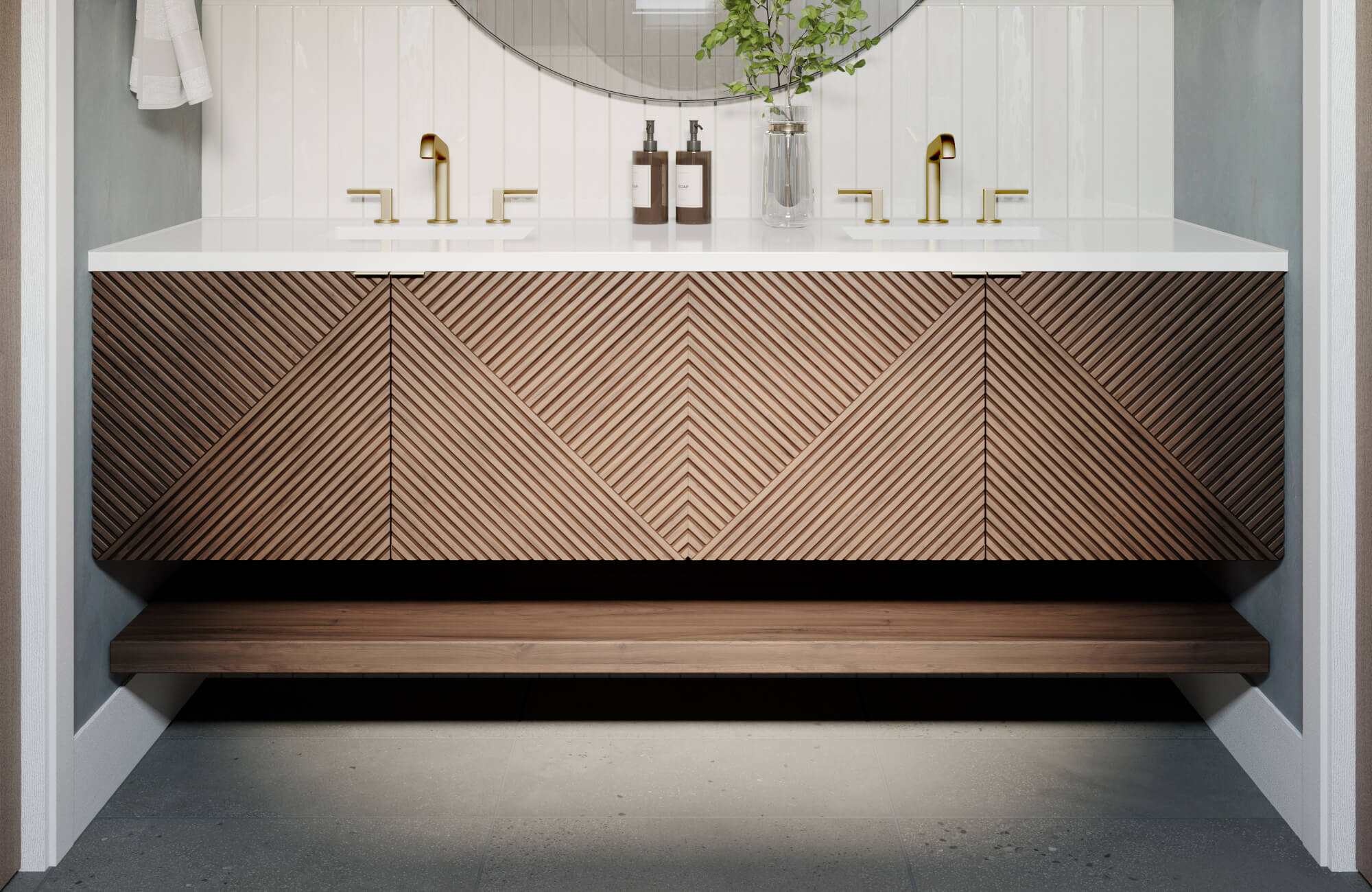
In space-constrained bathrooms, a floating double vanity with a reduced depth of 16 to 18 inches can significantly improve spatial perception by minimizing visual weight and preserving circulation. By lifting the cabinet off the floor, floating designs expose more visible floor area, which helps the room feel lighter, more open, and visually balanced. Slim-depth configurations are also particularly effective in narrow layouts where every inch of clearance matters.
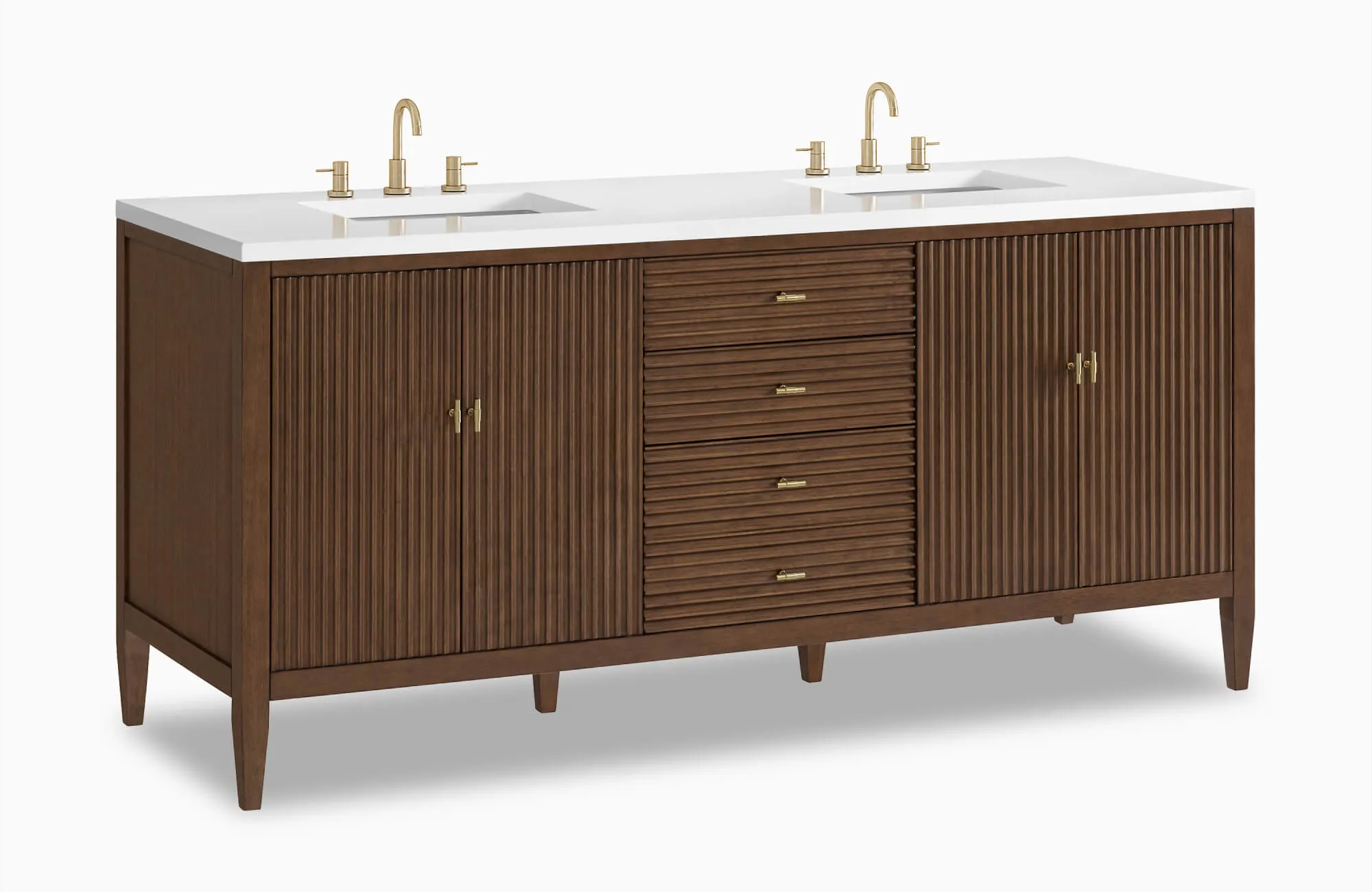
For larger layouts that still benefit from a refined, elevated look, the Royce 72" Double Vanity in Chestnut with 3 cm White Zeus Quartz Top, as shown in the photo above, offers a sophisticated interpretation of streamlined design while maintaining generous storage and counter space. Its clean lines, rich wood finish, and quartz-based surface demonstrate how thoughtful proportions can balance elegance with practicality in a modern double sink bathroom vanity. Whether slim or full-scale, floating-inspired designs perform best when layout constraints and aesthetic intent are carefully aligned.
Height Standards and Ergonomic Performance
Vanity height plays a crucial role in posture, comfort, and accessibility, making it a central ergonomic consideration in double sink installations. Contemporary standards reflect a shift toward proportions that support standing use while accommodating a wide range of users over time.
Contemporary Comfort-Height Dimensions
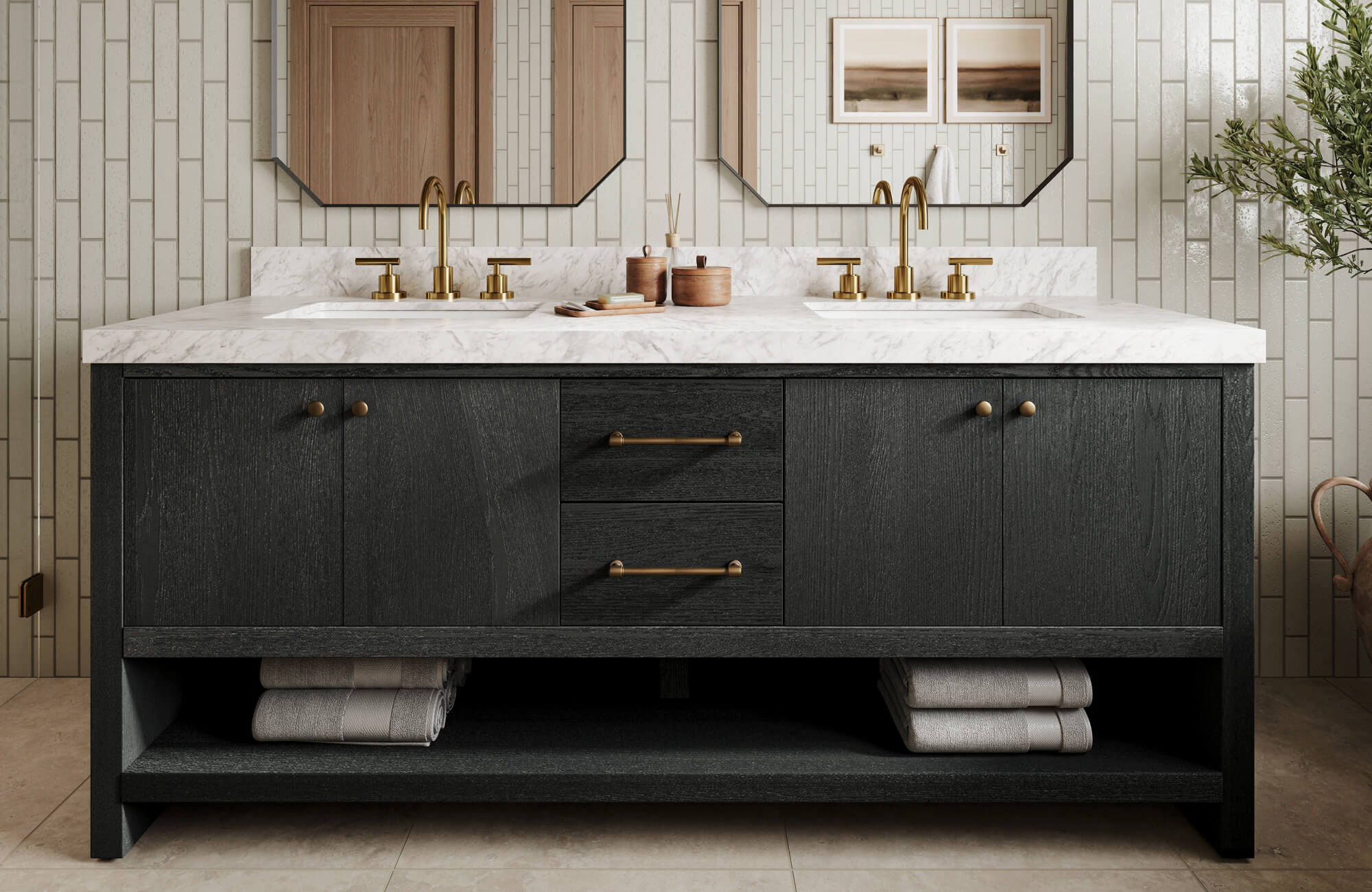
Most double-sink vanity installations today fall within a height range of 34 to 36 inches, measured from the finished floor to the countertop surface. This comfort-height standard helps reduce strain on the lower back and shoulders during everyday grooming and hygiene tasks, making daily use more comfortable over time. It also reflects evolving expectations, as bathrooms increasingly serve as lifestyle-oriented spaces rather than purely utilitarian rooms.
When determining the final vanity height, countertop thickness must be carefully considered, particularly with quartz or natural stone materials. As a result, comfort-height vanities have become the prevailing choice in primary bathrooms, where thoughtful specification can significantly enhance both usability and long-term comfort.
Traditional vs Modern Height Differences
Earlier residential bathrooms commonly featured 32-inch vanity heights, which were originally intended for seated use and smaller-scale layouts. Over time, this lower height has proven less suitable for prolonged standing tasks such as grooming or skincare routines. As a result, many remodels now involve raising vanity height to align with modern ergonomic preferences.
This adjustment can often be achieved without major plumbing relocation, making it a practical upgrade during renovations. The transition toward taller vanities also reflects broader residential design trends focused on comfort, longevity, and usability. Consequently, modern height standards now dominate both new construction and updated bathroom designs.
Accessibility and Universal Design
For accessible bathrooms, finished countertop height is typically limited to 34 inches to accommodate wheelchair users while supporting independent use. A floating double vanity, for example, allows designers to fine-tune installation height while also providing necessary knee and toe clearance beneath the cabinet. These configurations support universal design principles by blending accessibility with contemporary aesthetics rather than treating them as separate considerations.
When thoughtfully detailed, accessible vanities integrate seamlessly into modern bathroom environments without appearing clinical. They also support aging-in-place strategies by ensuring the space remains functional as mobility needs evolve. Height planning, therefore, becomes both a practical requirement and a long-term design investment.
Sink Size, Spacing, and Plumbing Coordination
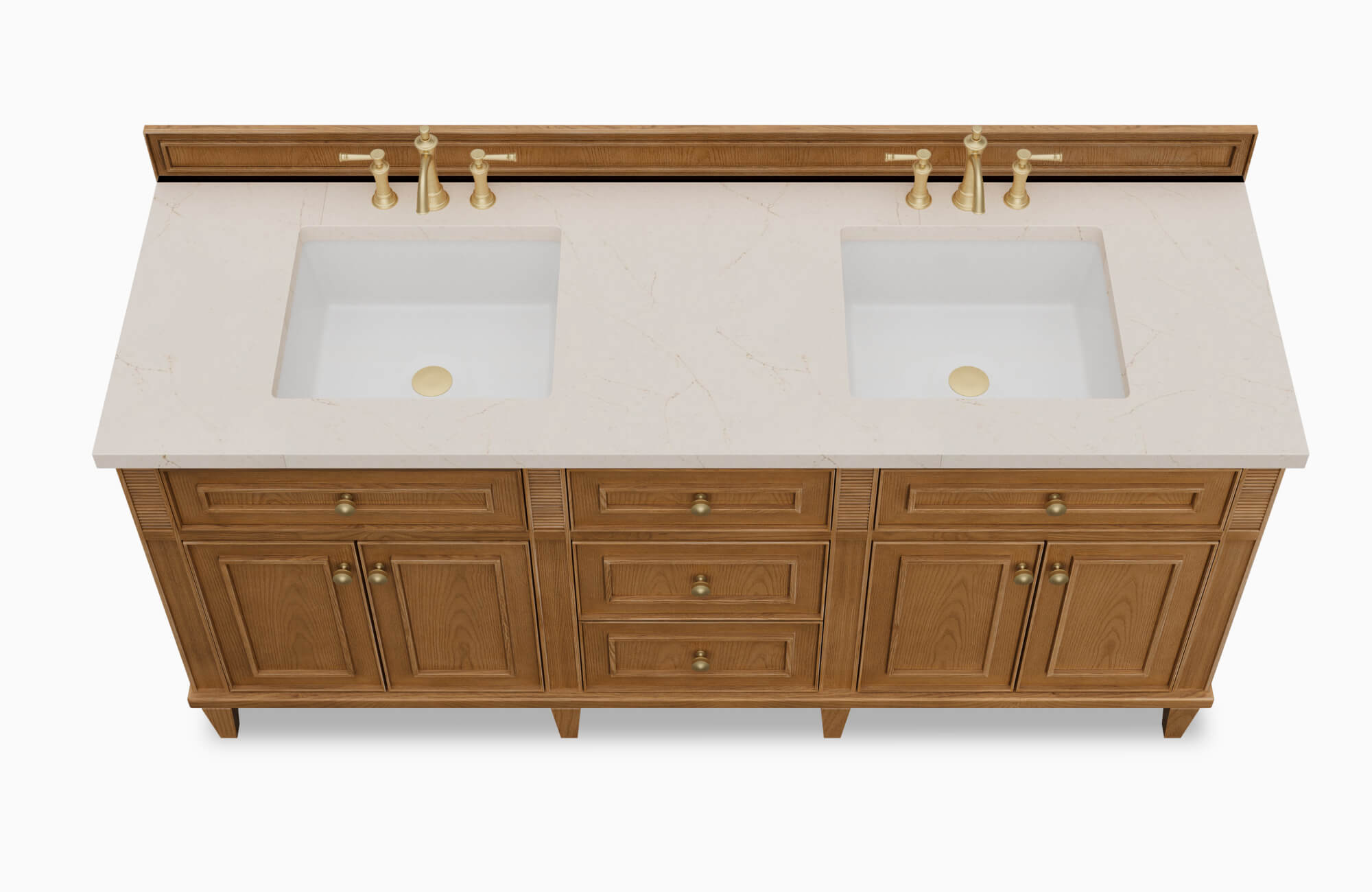
The performance of a double sink bathroom vanity depends heavily on how sink spacing and plumbing systems are coordinated within the cabinet. Proper planning ensures user comfort while preserving storage efficiency and simplifying long-term maintenance.
Sink Spacing and Centerline Standards
Industry guidelines recommend maintaining 30 to 36 inches between sink centerlines in a double-sink vanity configuration, as this spacing allows two users to function comfortably without overlapping movements. Wider spacing improves elbow room and reduces visual congestion across the countertop surface, contributing to a cleaner and more balanced layout.
Each sink should also maintain a minimum clearance of 15 inches from its centerline to adjacent walls or tall cabinetry. These clearances support natural arm movement and help minimize splash interference during use. While narrower spacing may work dimensionally, it often feels restrictive in everyday use; for this reason, spacing standards play a critical role in determining overall vanity width.
Sink Bowl Size and Configuration
Sink bowl dimensions play a critical role in overall ergonomic performance and must be coordinated with vanity depth and spacing from the outset. In most double-sink bathroom installations, undermount sinks are preferred because they integrate cleanly with the countertop and simplify long-term maintenance. Larger basins can further improve splash control, but only when sufficient cabinet depth and internal clearance are available to support their size. Vessel sinks, by contrast, prioritize visual impact and introduce additional height, which directly affects faucet selection and user comfort. Integrated sink-and-countertop units offer the most seamless appearance, though this aesthetic comes at the cost of flexibility should future replacement be required.
Plumbing Rough-In and Cabinetry Coordination
Each sink in a double-sink vanity requires its own supply lines, shutoff valves, and properly vented drain assembly to operate efficiently. Without careful coordination, these components often conflict with drawer boxes and significantly reduce usable storage within the cabinet. For this reason, sink base cabinets are commonly designed with false fronts, modified drawer cutouts, or specialized interiors that accommodate the required plumbing infrastructure.
Well-planned double-sink vanity installations address these constraints through symmetrical plumbing layouts that distribute supply and drain lines evenly across the cabinet interior. This approach not only simplifies installation but also improves long-term serviceability and reduces the likelihood of future modifications. Achieving this level of integration depends on early coordination between designers and plumbing professionals.
Double Vanity Sizing by Bathroom Type and Layout
The ideal size of a double sink vanity is shaped by bathroom function, available square footage, and circulation patterns. Aligning vanity dimensions with layout conditions ensures both functional efficiency and visual cohesion.
Primary and Master Bathrooms
Primary bathrooms typically accommodate a 72 inch bathroom vanity without compromising circulation, comfort, or visual balance within the overall layout. This width provides ample counter space, generous storage capacity, and balanced sink separation that supports daily grooming routines for two users with ease. At this scale, a double sink vanity also allows for clear delineation between personal zones, reducing overlap during busy morning and evening use.
Dual mirrors and layered lighting integrate naturally above a vanity of this size, enhancing both task functionality and ambient atmosphere. Larger vanities further reinforce symmetry along the primary wall, contributing to a calm, cohesive visual composition that feels intentionally designed. As a result, a double sink bathroom vanity in this width range becomes a defining feature of master bathroom design, anchoring the space both functionally and aesthetically.
Shared and Family Bathrooms
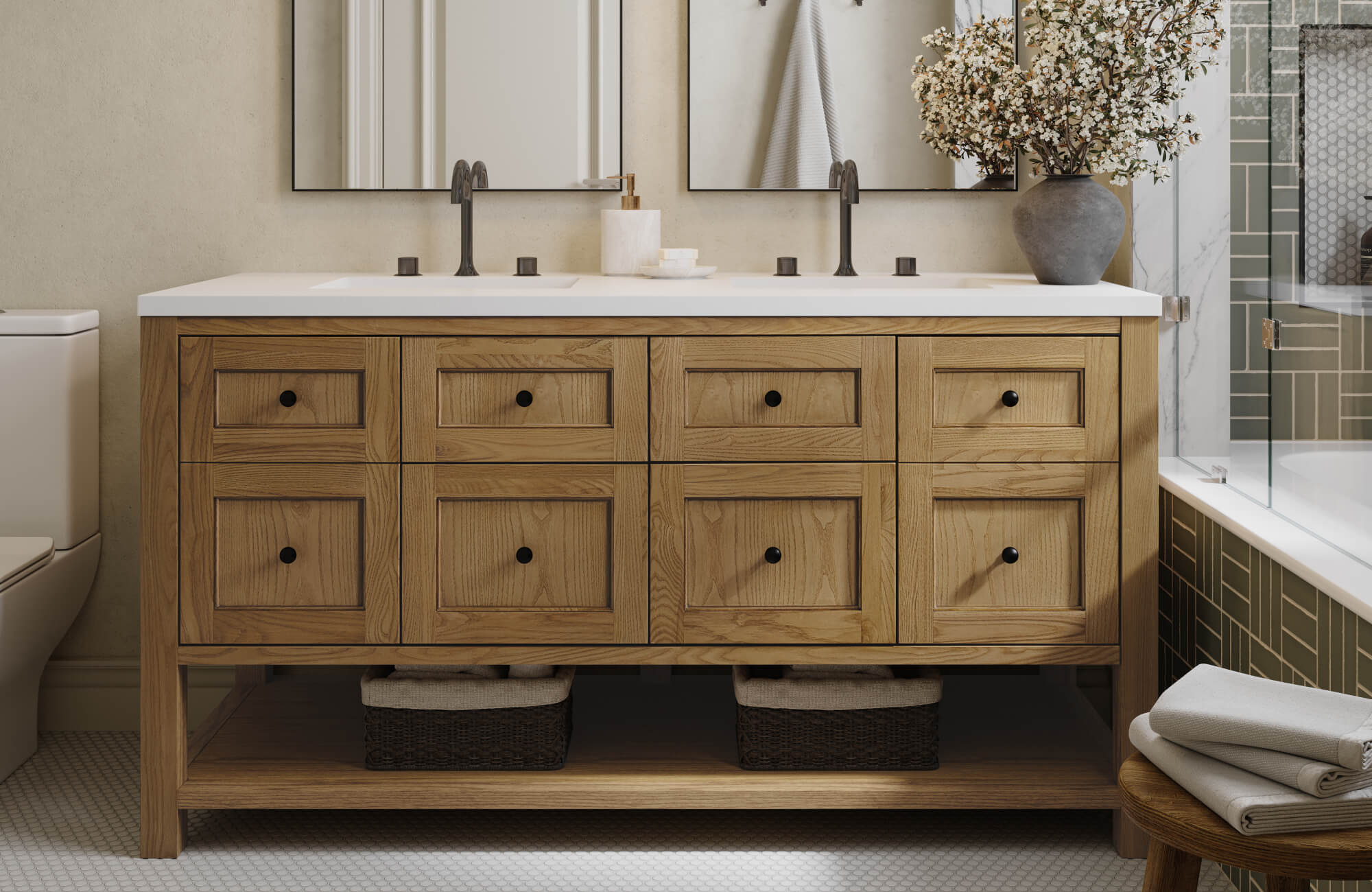
Shared bathrooms require a more measured approach to vanity sizing to balance everyday functionality with space efficiency and circulation. A 60 inch double sink vanity often provides the ideal middle ground, offering two sinks without overwhelming the room or restricting movement. This scale also allows multiple users to share the sink area comfortably during peak hours, such as busy mornings or evening routines.
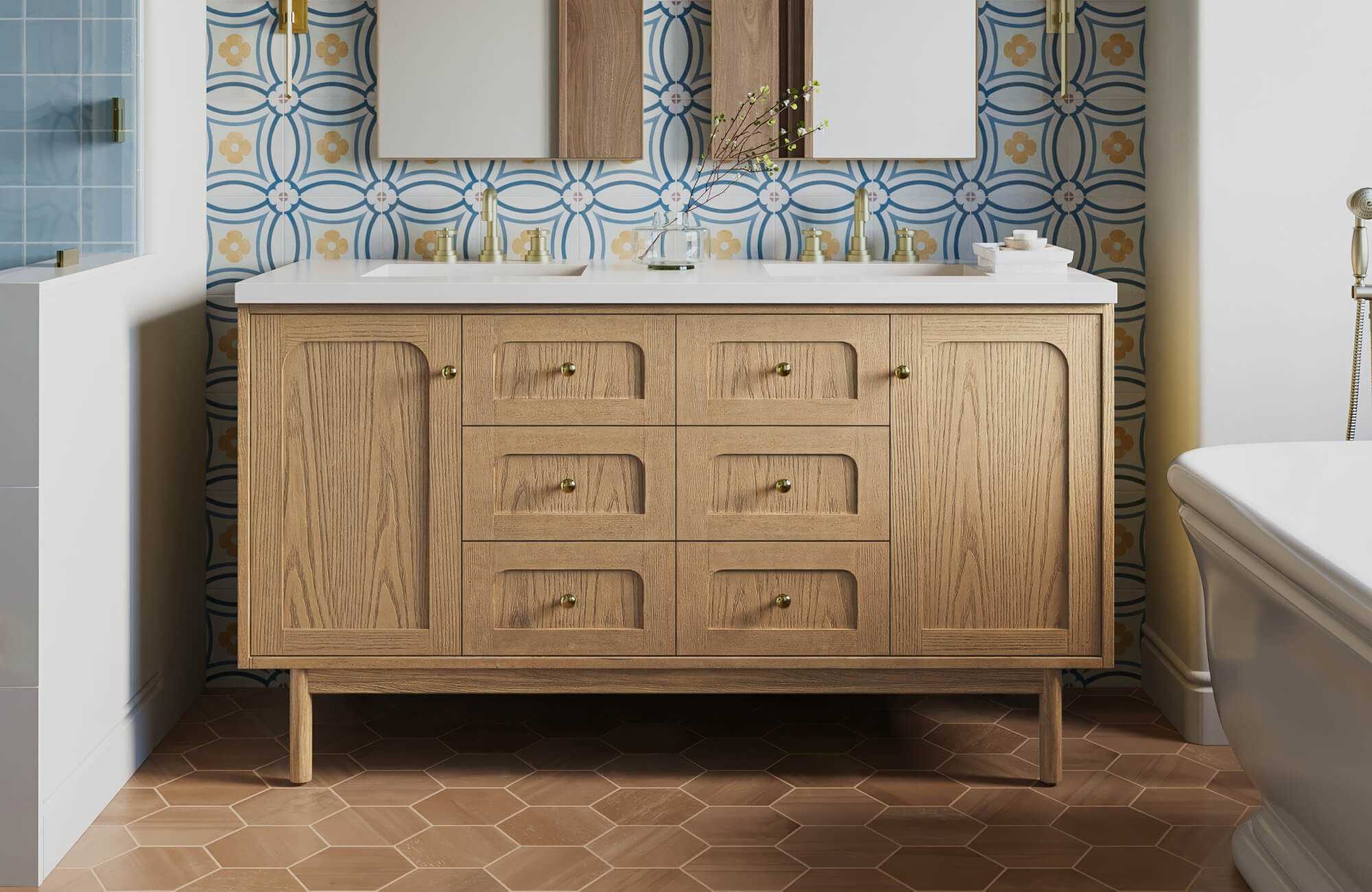
As featured in the picture above, our Bridgette 60" Double Vanity in Light Natural Oak with a 3 cm White Zeus Quartz Top exemplifies how a well-proportioned double sink bathroom vanity can feel substantial yet visually light, especially in family-focused spaces. Its warm wood finish, clean-lined drawer layout, and durable quartz-based surface support daily use while maintaining an organized, uncluttered appearance. When thoughtfully specified, a vanity of this size helps prevent congestion while ensuring shared bathrooms remain functional, inviting, and easy to maintain.
Small and Space-Constrained Layouts
In compact bathrooms, the feasibility of incorporating a double sink vanity must be evaluated with particular care to avoid sacrificing circulation or comfort. A floating double vanity, for instance, can help preserve usable space by reducing both physical and visual bulk, allowing the room to feel more open and breathable. By exposing floor area beneath the cabinet, floating designs also enhance light distribution and improve spatial perception.
In certain layouts, however, a single vanity with expanded counter space may deliver better overall functionality than a tightly fitted double configuration. Designers often prioritize movement, storage efficiency, and long-term usability over sink redundancy in these environments. Ultimately, spatial constraints should guide whether a double sink vanity meaningfully enhances the bathroom or whether a more streamlined solution is the better choice.
Designing with Scale and Balance in Mind
Selecting the right double sink vanity size ultimately requires aligning proportion, performance, and lifestyle needs within the bathroom environment. From a 60 inch double sink vanity in a shared space to a 72 inch bathroom vanity anchoring a primary suite, scale shapes both comfort and visual harmony. Thoughtful consideration of width, depth, height, and circulation ensures the double sink bathroom vanity enhances daily routines rather than complicating them. When dimensions are chosen with intention, the result is a bathroom that feels balanced, refined, and enduring in both form and function.
Thoughtful sizing becomes even more impactful when guided by expert insight, which is why Edward Martin’s design services focus on aligning scale, function, and refined aesthetics for bathrooms of every size. To create a double sink bathroom vanity layout that feels balanced and tailored to your space, contact us to begin a personalized design consultation
Follow us on Instagram
@EDWARD.MARTIN
)
)
)
)
)
)
)
)
)
)
)
)
)
)
)
)