When you start considering wallpaper for a room, it is natural to wonder whether it will make the space look bigger or smaller. Wallpaper has a strong visual presence, so the design you choose can significantly influence how spacious or compact a room feels. Elements such as pattern scale, color tone, and contrast influence how the eye travels across the walls. The direction of a pattern and the way wallpaper is used in the room can also affect how large, narrow, or balanced the space appears.
For this reason, wallpaper does more than add decoration to a room. It can influence how open, balanced, or cozy a space feels. By understanding how these elements affect visual perception, you can choose a piece that enhances your room’s proportions while creating the atmosphere you want.

How Visual Perception Influences Room Size With Wallpaper
Elements such as pattern scale, color tone, and contrast influence how the eye moves across the walls, which can affect how spacious a room appears. The pattern direction and the way wallpaper is used in the room can also influence how you perceive its proportions and balance.
The Role of Visual Continuity
One way wallpaper can make a room feel larger is by allowing the eye to move smoothly around the space. When patterns continue across the walls without abrupt visual breaks, the eye moves naturally along the surface, which helps soften the sense of boundaries within the room. Repeating designs that flow consistently across multiple walls can help the space feel more connected rather than divided. Instead of drawing attention to where one wall ends and another begins, the pattern encourages the eye to see the room as a unified whole, which can make it appear wider and more balanced.
Pattern Density and Spatial Perception
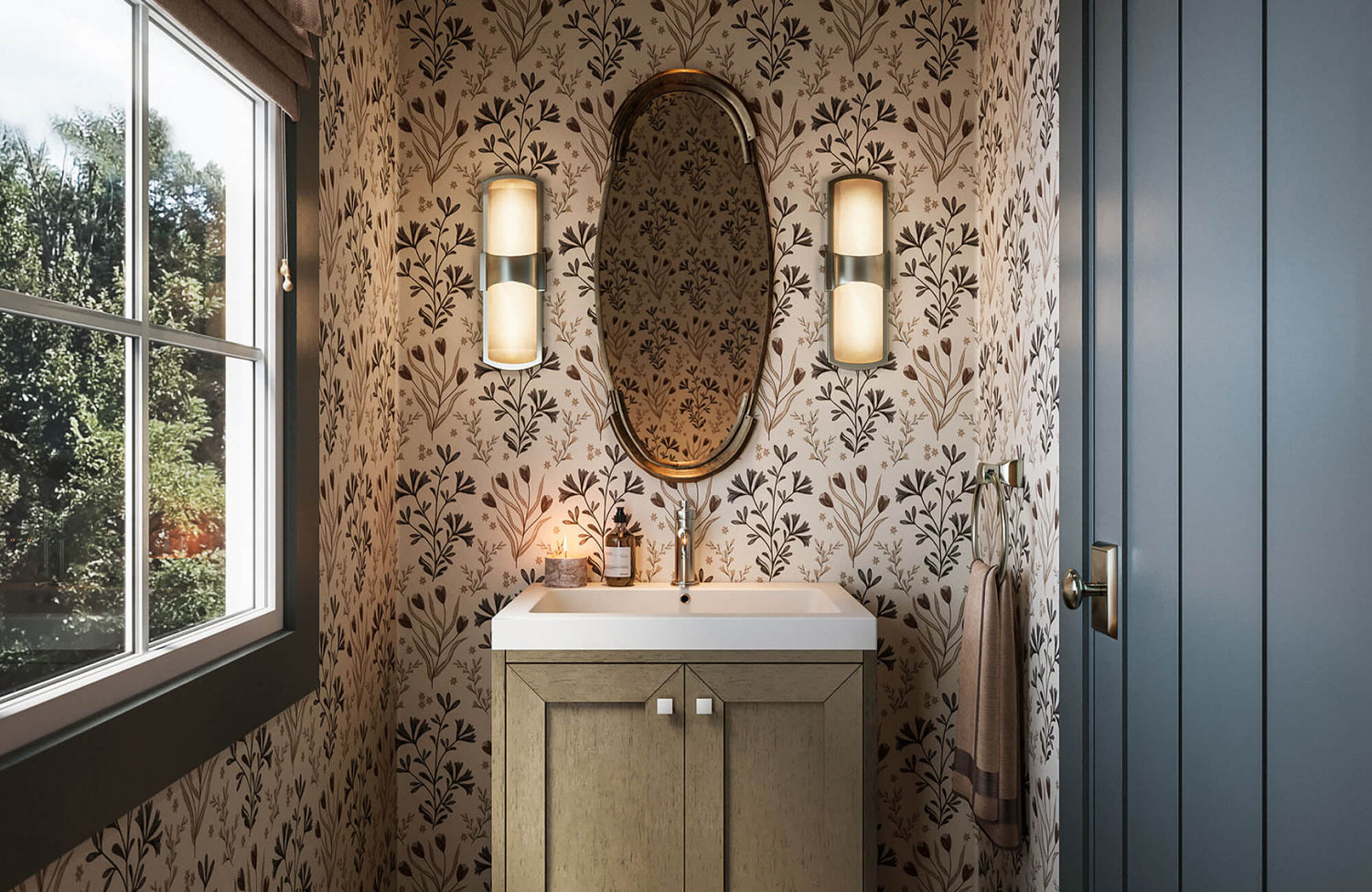
Another aspect to consider is how closely the pattern elements are arranged. Designs with more space between motifs allow more of the background color to remain visible, giving the wall a lighter visual presence and helping the room feel more open. A good example is Edward Martin’s Essex Wallpaper in Black II, 52" x 132", which features a balanced check pattern where the background color remains visible between the motifs. This type of spacing helps the eye move naturally across the walls, reinforcing a sense of openness within the room, as shown in the photo featured above.
By comparison, patterns that are tightly packed with decorative elements can make the wall appear visually heavier. When the surface is filled with dense patterns, the eye tends to pause rather than moving smoothly across the wall, which can make the walls appear closer and the space feel more enclosed.
Contrast and Depth Illusion
Color contrast can influence how close or far a wall appears within a room. When the pattern blends gently with the background color, the design tends to recede slightly, creating a subtle sense of depth that can make the wall feel farther away. Higher contrast often creates the opposite effect. When a pattern stands out clearly against its background, the wall becomes more visually prominent and may appear closer. Because of this, softer tonal designs are often helpful in smaller rooms where maintaining a sense of openness is important.

Choosing Wallpaper Patterns That Make Rooms Feel Bigger
Once you understand how the eye responds to different design elements, the next step is to find wallpaper patterns that support a more open feel. Certain patterns naturally guide the eye across the walls, helping the room appear more spacious and visually balanced.
Vertical Patterns for Height
If a room feels low or slightly compressed, vertical wallpaper patterns can help make the space appear taller. In particular, designs that guide the eye upward naturally draw attention toward the ceiling rather than across the width of the walls. For example, patterns such as vertical stripes or elongated botanical designs direct the gaze upward along the wall. As the eye follows this vertical movement, the ceiling can appear higher than it actually is. As a result, vertical patterns can make a room look bigger, which is especially helpful in spaces with limited ceiling height.
Small-Scale Patterns for Compact Rooms
In smaller rooms, modestly scaled patterns often work best. Small repeating motifs add visual interest while helping the wall feel light and balanced, so the pattern does not overwhelm the space. Because the design elements are smaller, the eye tends to view them as part of the overall background rather than as strong focal points. This helps the wall feel less visually heavy, which can make the room look bigger.
Minimal or Textured Patterns for Openness
In some cases, creating a sense of space is less about bold patterns and more about subtle texture. Wallpapers with linen-inspired finishes, soft tonal prints, or gentle geometric textures can add visual interest without dominating the wall. A good example is Edward Martin’s Strafford Wallpaper in Olive Night II, 52" x 132", which features a refined, texture-like pattern that adds depth while maintaining a calm visual presence, as shown in the photo featured above. Because these designs are more understated, the wall remains visually balanced while still gaining character. This approach helps the room maintain a lighter feel, allowing the space to look bigger.

When Wallpaper Can Make A Room Feel Smaller
While wallpaper can help a room appear larger, certain design choices can have the opposite effect. Understanding how specific patterns, colors, and contrasts influence visual perception can help prevent a room from feeling more enclosed than intended.
Oversized Patterns in Small Spaces
Large motifs can be visually striking, but scale plays an important role in how a room feels. When a pattern is too large for the wall, it can begin to dominate the space rather than complement it. In smaller rooms, oversized patterns reduce the amount of open background space visible on the wall. Edward Martin’s Brocade Wallpaper in Black/Tan II, 52" x 132", illustrates this effect well, with its bold damask motif drawing immediate attention across the walls, as shown in the photo featured above. Because the eye is naturally drawn to the large design elements, the wall can appear closer than it actually is. As a result, the room may feel more confined, making the space look smaller.
Dark Background Colors
Color also affects how light interacts with the room. In general, wallpaper with darker backgrounds tends to absorb more light rather than reflect it. As a result, when less light is reflected into the space, the walls can appear heavier and slightly closer. In rooms with limited natural light, deeper tones may reduce the sense of openness and make the space look smaller. However, these colors can still work well when the goal is to create a warm and more intimate atmosphere.
Heavy Visual Contrast
Another factor that can make a room feel smaller is a strong contrast between the pattern and the background color. When the difference between the two is very pronounced, the eye tends to focus directly on the wall surface. Because the pattern stands out so clearly, the wall can appear more prominent and visually closer. This reduces the sense of depth in the room, making the space feel more enclosed than wallpaper that features softer, more blended color combinations.

Strategic Wallpaper Placement That Expands Space
Aside from the pattern itself, the way wallpaper is placed within a room can also influence how large the space appears. Thoughtful placement can guide how the eye moves through the room, which in turn can help the space feel more open and balanced.
Accent Walls That Guide the Eye
One common approach is to apply wallpaper to a single wall instead of covering the entire room. When the patterned wall is placed at the far end of the space, it naturally draws the eye in that direction. As the gaze moves toward that wall, the room can appear to extend farther than it actually does. Because of this visual effect, accent walls can help narrow rooms feel deeper and more proportionate.
Ceiling Wallpaper for Vertical Expansion
Wallpaper can also be used on ceilings to influence how tall a room appears. When the ceiling features a light pattern or subtle texture, the eye naturally shifts upward. A good example is Edward Martin’s Botanique Wallpaper in Fall, 52" x 132", whose delicate botanical pattern draws attention toward the ceiling while maintaining a soft, airy look, as shown in the photo featured above. As the gaze moves upward, the space can feel taller and more open. This approach often works best when the surrounding walls remain relatively simple, allowing the ceiling design to introduce visual interest without making the room feel crowded.
Half-Wall Wallpaper Techniques
Another approach is to apply wallpaper to only part of the wall, often above paneling or wainscoting. This layout keeps the lower portion of the wall visually grounded while introducing pattern in the upper section. Because the wallpaper covers a smaller portion of the wall, the space can maintain a more open feel. At the same time, the design adds character and visual interest without overwhelming the entire wall surface.

Balancing Wallpaper With Lighting and Furniture
Wallpaper does not work in isolation, as other elements in the room also influence how spacious the space feels. Lighting conditions and furniture arrangement can influence how wallpaper shapes the room’s overall perception.
Natural Light and Reflective Surfaces
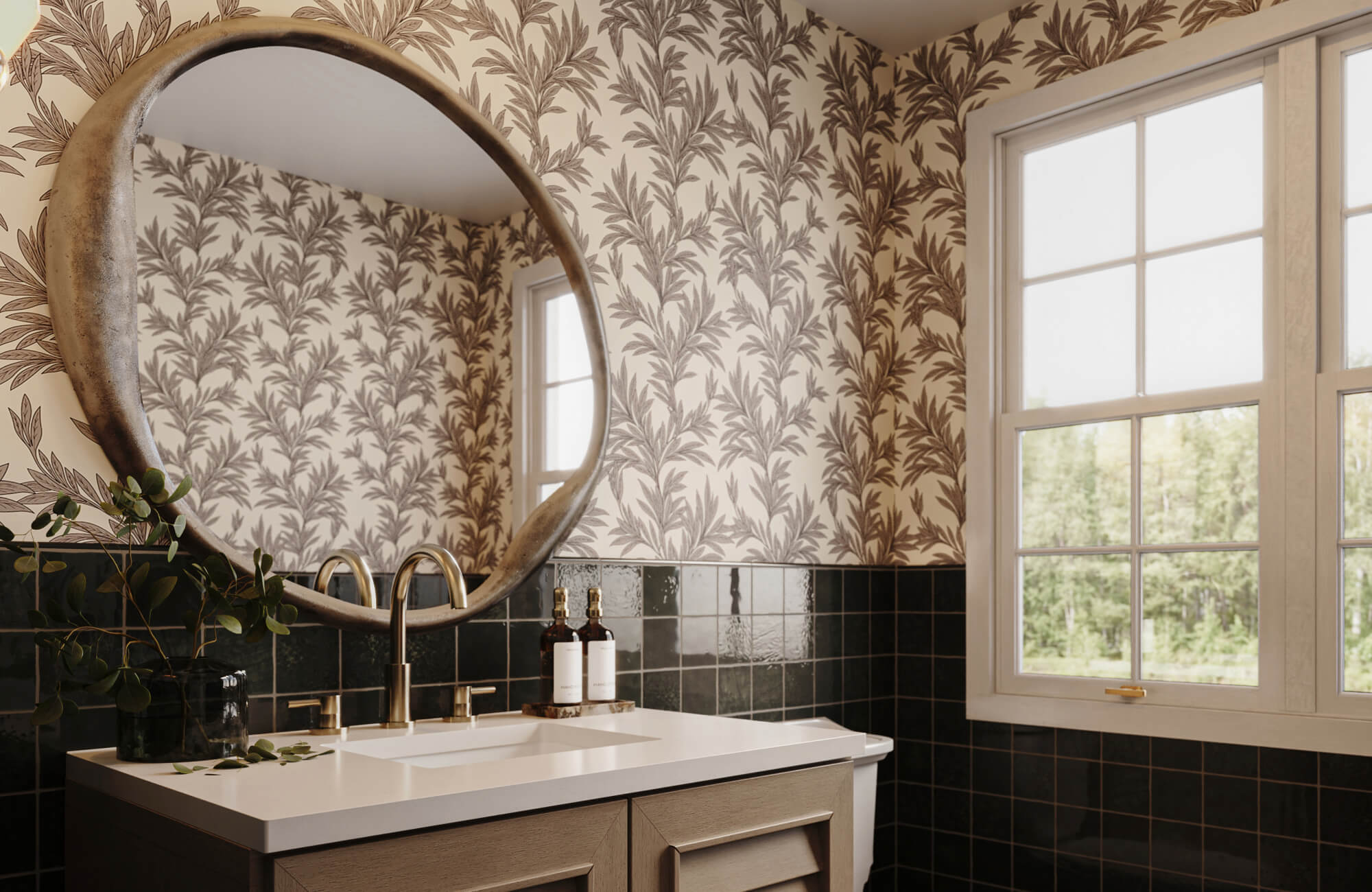
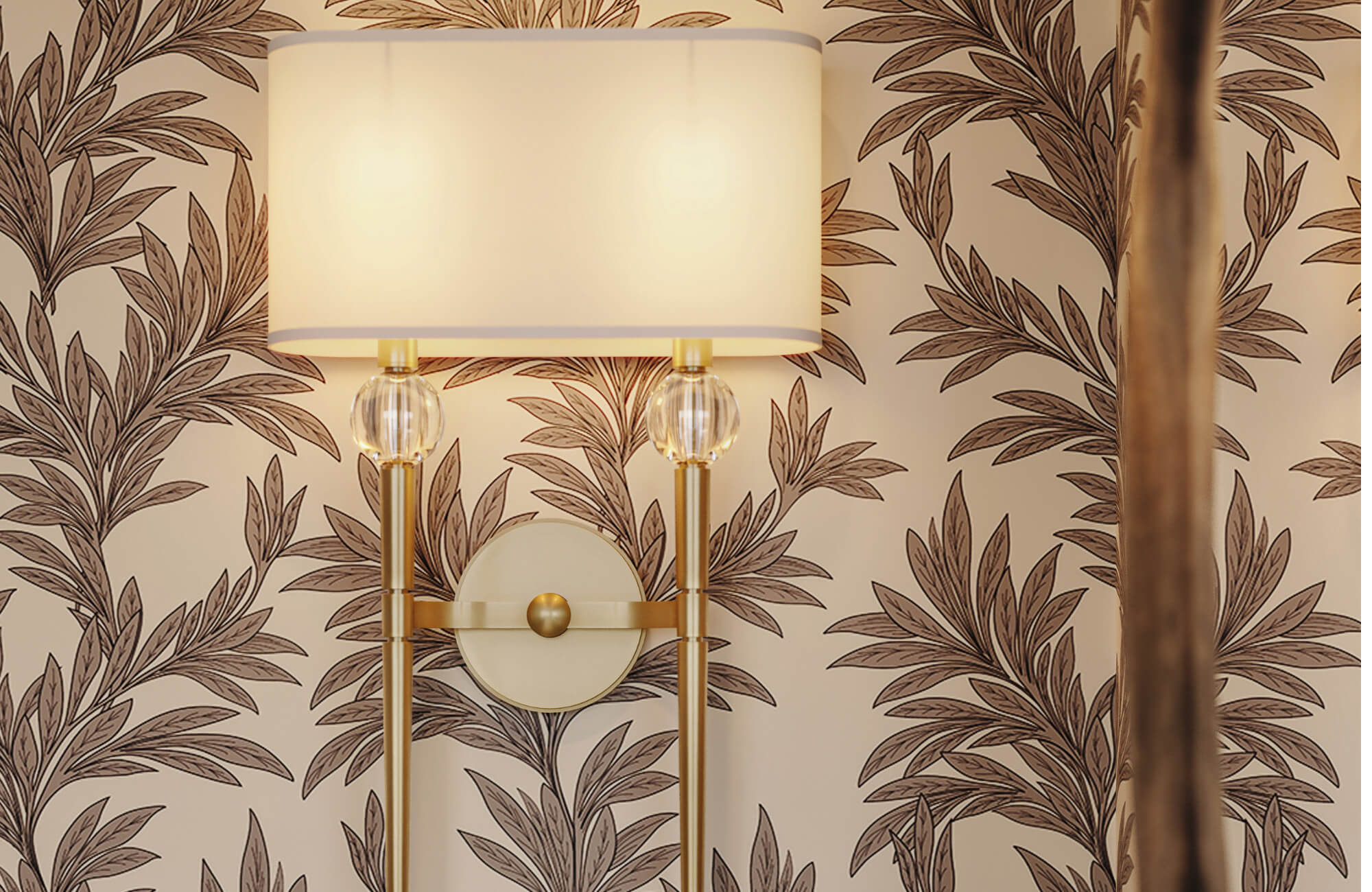
When a room receives ample natural light, wallpaper can help distribute that light more evenly across the walls. Designs with lighter backgrounds and soft patterns tend to reflect illumination, making the room feel brighter and more open. Edward Martin’s Bower Wallpaper in Taupe I, 52" x 132" demonstrates this effect well, with its gentle botanical motif and light tonal background helping bounce natural light throughout the space, as shown in the photo above.
Reflective surfaces can further enhance this effect. Mirrors, glass accents, and polished materials can reflect light throughout the room while subtly echoing elements of the wallpaper pattern. Together, these elements add visual depth and can help the space appear larger rather than smaller.
Furniture Scale and Pattern Balance
Furniture placement can also influence how wallpaper is perceived in a room. When large furniture pieces cover most of the wall, the wallpaper pattern becomes less visible, and its visual effect is reduced. When furniture is scaled appropriately to the room, more of the wallpaper remains in view. This allows the pattern to guide the eye across the walls, helping maintain a sense of openness and balance within the space.
Coordinating Colors With Decor
Color coordination can also influence how spacious a room feels. When furniture and décorshare similar tones with the wallpaper, the space tends to feel more visually unified. This sense of cohesion helps prevent the room from appearing divided into separate visual sections. Instead, the eye moves naturally around the room, which helps the space feel larger and more harmonious.

Practical Tips for Using Wallpaper in Small Rooms
When decorating a smaller room, thoughtful planning can help wallpaper enhance the space rather than making it feel crowded. Taking a thoughtful approach to pattern, placement, and coordination can make the selection process easier and help the room feel more open and balanced.
Test Samples on Multiple Walls
Wallpaper samples can appear quite different depending on where they are placed in a room. Natural light changes throughout the day, and shadows fall differently across each wall. Testing samples on several walls allows you to see how the pattern responds to these changing conditions. This helps you choose a design that keeps the room feeling open once the wallpaper is installed.
Consider Pattern Direction
Pattern direction can also influence how you perceive the room’s shape. For instance, horizontal designs guide the eye from one side of the wall to the other, which can help narrow rooms appear wider. On the other hand, vertical patterns create a different visual effect. By drawing the eye upward, they emphasize height and can make ceilings appear taller, helping the room feel more balanced.
Use Coordinated Adjacent Spaces
Another helpful approach is coordinating wallpaper colors with nearby rooms. When adjoining spaces share related tones or complementary patterns, the transition between them feels more natural. This visual continuity allows the eye to move easily from one room to another. As a result, the overall area can feel more connected and, in many cases, appear larger than if each space had a completely different design.
The Overall Impact of Wallpaper on Room Size
Wallpaper can make a room look bigger or smaller, depending on the design and color choices. Lighter colors, soft contrast, small-scale patterns, and subtle textures can help a room feel more open because they let your eye move comfortably across the walls without visual interruption. Vertical designs can also help ceilings appear taller, while patterns with more space between elements can make the walls seem farther apart.
In contrast, wallpaper with a dark background, oversized patterns, or strong contrast can make a room feel smaller because the walls become more visually prominent. Dense patterns or bold motifs tend to draw attention directly to the wall surface, which can make the walls appear closer than they actually are. When used thoughtfully, wallpaper can either help a room look bigger and more open or create a smaller, more intimate atmosphere. If you need help selecting the right wallpaper for your space, feel free to contact us or explore our design services for personalized guidance.