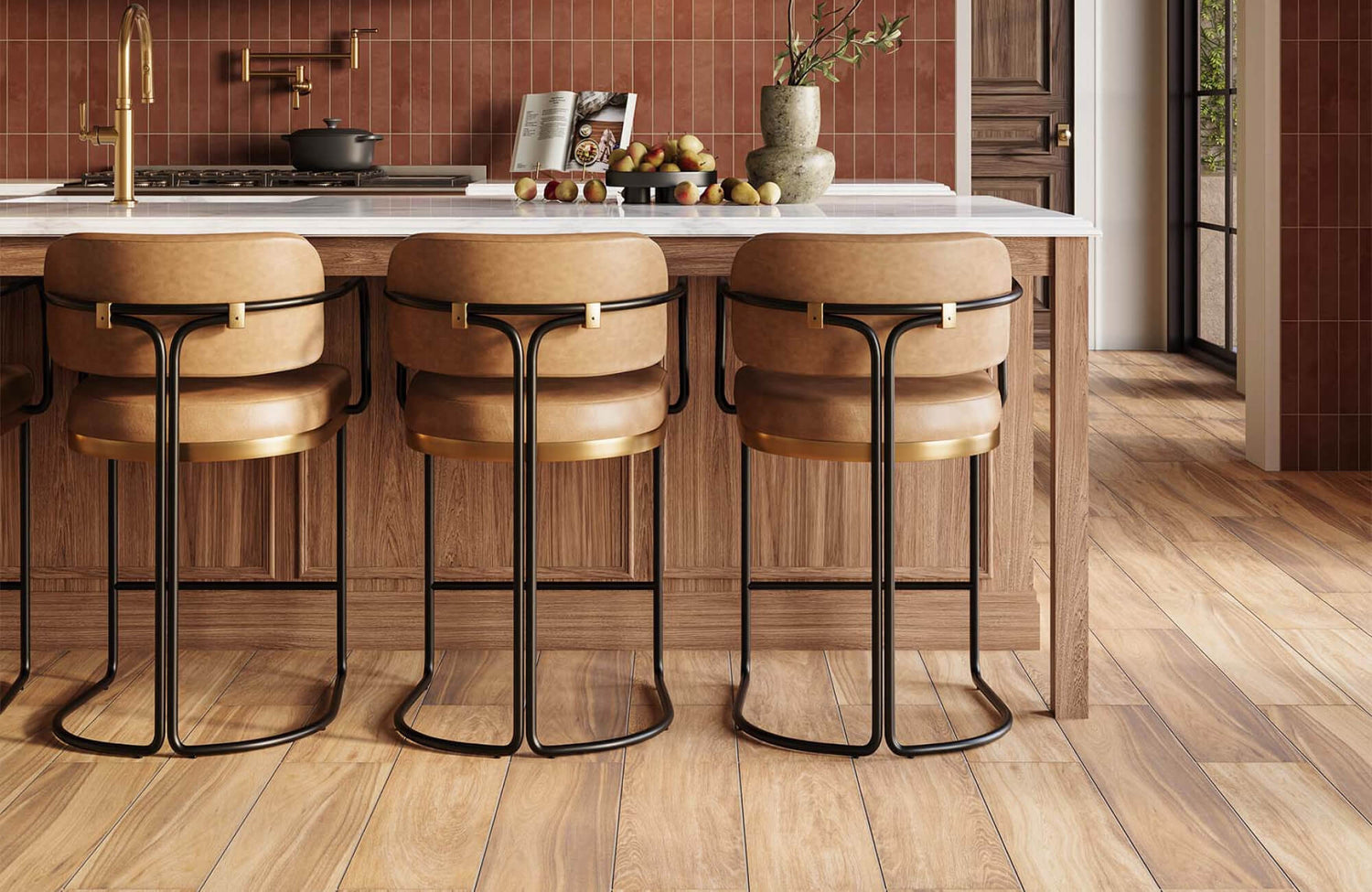
The enduring beauty of natural hardwood, with its warmth and character, often raises the question of how realistic wood look tiles can be. Because of modern advancements in ceramic and porcelain manufacturing, high-definition digital printing now replicates intricate wood grain patterns and subtle imperfections with remarkable accuracy. As a result, wood look tiles have evolved significantly in both appearance and detail.
Aside from surface visuals, the realism of wood look tiles is also influenced by factors such as plank size, grain variation, and species-specific characteristics. Installation details—like staggered layouts and minimal grout lines—also make a noticeable difference in how realistic the finished result looks. With this in mind, this article explores the key elements that make wood look tiles a realistic alternative to natural wood, helping you make a more confident and informed decision.

How Technology Makes Wood Look Tile More Realistic
Wood look tile technology has advanced significantly over the years, steadily closing the visual gap between tile and natural hardwood. From early wood-patterned ceramics to today’s highly refined finishes, modern production techniques now allow tiles to replicate the look of real wood with impressive accuracy.
High-Definition Printing Techniques
One of the most transformative developments in wood look tile production is high-definition inkjet printing. This technology allows manufacturers to transfer detailed images of real wood onto tile surfaces with remarkable precision. Unlike older methods that produced repetitive and artificial patterns, modern printing captures natural variations in tone, grain, and texture.
To enhance authenticity, manufacturers now use extensive design libraries containing numerous unique wood scans. This reduces visible repetition and creates a more natural, varied appearance across installations. As a result, no two tiles look exactly alike, closely mimicking the organic inconsistency of real wood.
Texturing and Embossing Processes
Surface texture also plays a crucial role in realism. Modern wood look tiles often feature embossed finishes that replicate the texture of natural wood grain. Techniques such as registered embossing align the surface texture with the printed design, so the tactile experience matches the visual pattern.
In addition, matte and low-sheen finishes help eliminate the artificial gloss associated with earlier tile designs. These finishes better reflect how real wood interacts with light, further enhancing the overall authenticity.
Plank Size and Shape Variations
Advancements in tile manufacturing have also introduced longer, wider plank formats that more closely resemble real hardwood flooring. Sizes such as 6x24, 8x48, and 12x60 inches allow for layouts that mimic traditional wood installations. A refined example of this can be seen with Edward Martin’s Preston 8x48 Matte Porcelain Tile in White Oak, as featured in the photo above, where the elongated planks and balanced proportions contribute to a natural, hardwood-like appearance.
Rectified edges, which are precisely cut for uniformity, further enable tighter grout lines and reduce visual interruptions. This helps create a more seamless look, reinforcing the illusion of continuous wood planks.

Design Features That Make Wood Look Tiles Look Real
The realism of wood look tiles relies heavily on how well they replicate the natural variation and detail found in real wood. Modern designs focus on capturing these nuances to create a more convincing result.
Capturing Natural Wood Color Variations
Real wood is rarely uniform in color. Instead, it displays a range of tones influenced by species, age, and environmental exposure. To replicate this, manufacturers use multi-layered printing techniques that blend different shades within a single tile. These variations prevent a flat or artificial look, allowing installations to reflect the depth and richness of natural wood.
This layered effect is well illustrated by Edward Martin’s Jameson 8x48 Matte Porcelain Tile in Umber, as shown in the photo above, where natural variation creates a warm, dimensional surface. Layered glazing further enhances depth, helping simulate how real wood absorbs and reflects light.
Incorporating Realistic Knot and Grain Details
The presence of knots, grain lines, and natural irregularities is essential to achieving a lifelike appearance. Modern wood look tiles replicate these features with a high level of detail, from fine linear grains to more pronounced swirls and knots. This level of detailing enhances depth and variation, helping the surface feel more natural and less uniform.
Achieving Different Wood Species Aesthetics
Each wood species has its own distinct character, reflected in its grain pattern, texture, and color. Wood look tiles are designed to capture these differences, allowing them to mirror the unique appearance of woods like oak, maple, or walnut. By capturing these species-specific details, manufacturers can create tiles that go beyond a generic wood look, offering more accurate and recognizable visual identities.

How Installation Affects Realism
Even the most realistic tile design can fall short if it is not installed thoughtfully. Installation choices play a major role in how closely wood look tiles resemble real hardwood.
Selecting the Right Grout Color and Width
Grout selection is critical in maintaining the illusion of wood planks. Narrow grout lines, typically between 1/16 and 1/8 inch, help replicate the tight seams found in real wood flooring. Wider grout lines can disrupt the visual flow and make the installation appear more like traditional tile. Choosing a grout color that closely matches the tile further enhances realism. When grout blends with the tile surface, it minimizes contrast and helps create a more continuous, natural look.
Utilizing Staggered and Random Laying Patterns
Wood flooring is typically installed in staggered patterns, and replicating this layout is essential for achieving authenticity with tile. Randomized staggering avoids repetitive alignment and creates a more organic appearance. Layouts such as one-third or one-fourth offsets tend to look more natural than perfectly symmetrical patterns.
A more elevated approach is illustrated with Edward Martin’s Jameson 8x48 Matte Porcelain Tile in Camel, as featured in the photo above, where the herringbone arrangement introduces movement and visual interest while maintaining a natural flow. Such layouts can further enhance realism when executed with precision.
Considering Transitions and Finishing Touches
Carefully planned transitions and edge details help maintain visual continuity across a space. Smooth transitions between different flooring materials and clean edge treatments prevent abrupt breaks that can disrupt the overall effect. Attention to these finishing details ensures that the installation feels cohesive and reinforces the appearance of real wood.

Addressing Common Misconceptions About Wood Look Tile Realism
Despite significant advancements, some misconceptions about wood look tiles persist. These often stem from outdated impressions of earlier products.
Debunking the Myth of Obvious Repetition
One common concern is that wood-look tiles repeat patterns too frequently. While this was true of earlier designs, modern manufacturing has largely eliminated the issue. Today’s tiles are produced using large libraries of unique wood scans, allowing for greater variation across installations. This reduces noticeable repetition and creates a more natural, randomized appearance.
Examining the Perception of Tile vs. Wood Texture
Another misconception is that wood look tiles lack the tactile depth of real wood. While older tiles often had flat surfaces, modern options incorporate textured finishes that replicate the feel of natural grain. Techniques such as hand-scraped, wire-brushed, and distressed finishes add dimension and character, making the surface feel more authentic underfoot.
Evaluating Performance Benefits Against Perceived Realism Trade-offs
Some assume that choosing tile over hardwood means sacrificing realism for durability. However, advancements in design and manufacturing have made it possible to achieve both. High-quality wood look tiles now combine detailed visuals with textured surfaces, allowing them to closely resemble real wood while offering the practical advantages of tile.
This balance is clearly reflected in Edward Martin’s Nora 8x48 Matte Porcelain Mosaic Tile in Crema, as shown in the photo above, where the natural wood-inspired finish integrates seamlessly into a moisture-prone bathroom setting. Because wood look tiles can achieve a highly realistic appearance while offering better moisture and wear resistance, they are often used in areas where real wood may not perform as well, such as kitchens and bathrooms.
Achieving a Realistic Wood Look with Tile
Wood look tiles can look remarkably realistic, especially when they combine advanced printing, textured surfaces, and thoughtful installation. Details such as natural color variation, aligned grain texture, and minimal grout lines all work together to create a convincing result.
In many cases, modern wood look tiles are difficult to distinguish from real hardwood at a glance. While subtle differences may still be noticeable upon closer inspection, they are more than capable of capturing the warmth and character of natural wood, making them a highly realistic and practical alternative.
To better visualize how different styles and finishes will look in your space, you can explore our AR tool to see how wood look tiles come to life in real time. If you need further guidance, feel free to contact us—our team is always available to help you find the right option for your project.