

)
)
)
)
)
)
)
)
Do Wall Sconces Have To Be In Pairs?
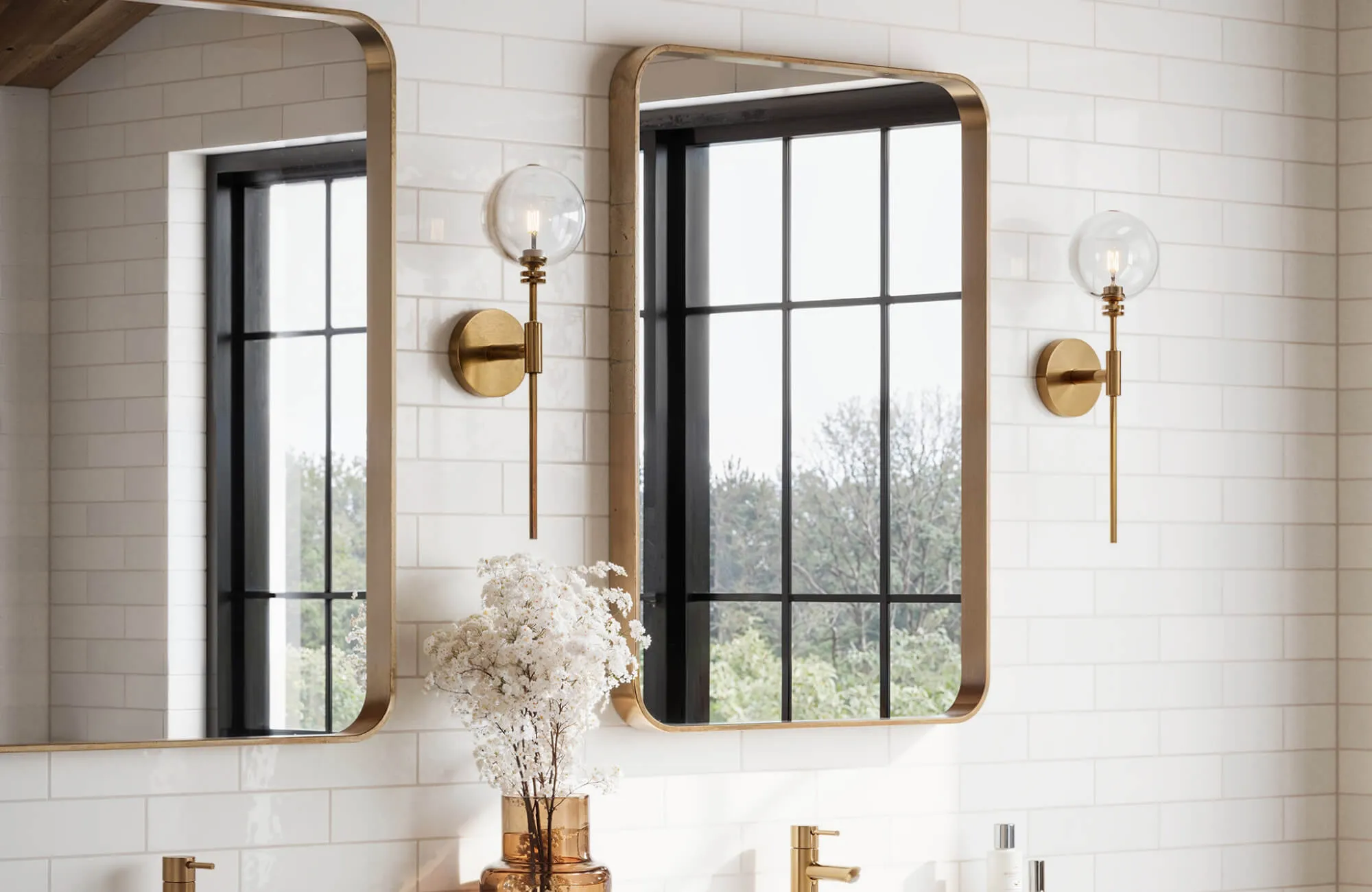
Wall sconces are more than just sources of light—they are sculptural elements that frame space, guide movement, and add depth to the walls they adorn. While traditionally installed in pairs to create symmetry and visual balance, today’s design sensibilities invite a more nuanced approach. The decision to use one or two sconces hinges not on convention, but on the interplay between light, architecture, and intent.
A single, thoughtfully placed fixture can command presence with quiet precision, just as a pair can define a moment with elegance and clarity. The surrounding materials, beam orientation, and overall lighting plan all shape how sconces contribute to the space. Through refined placement and purposeful selection, sconces, paired or not, become integral expressions of both function and beauty.
Design Symmetry and the Visual Language of Balance
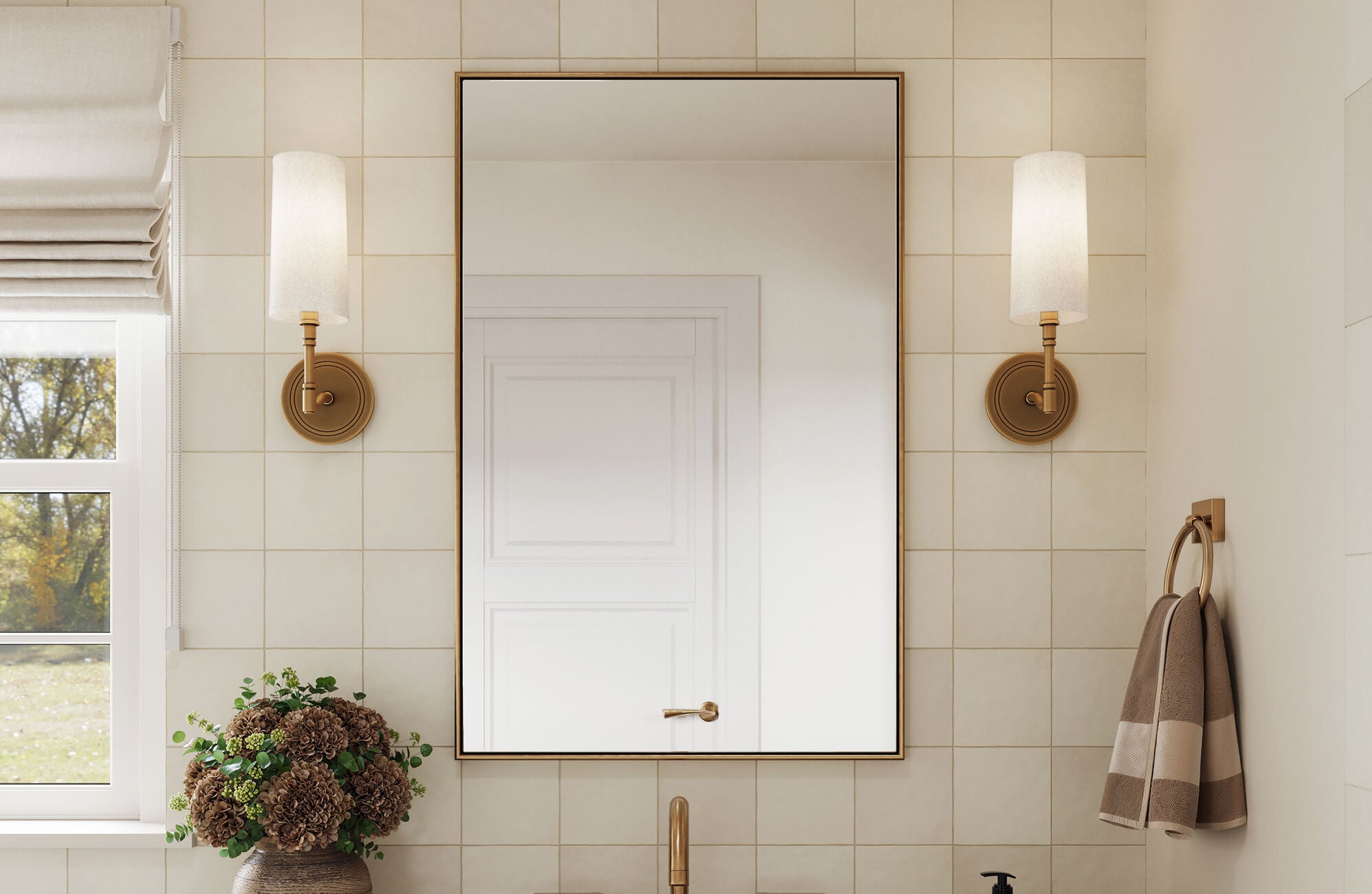
Symmetry has long served as a foundational element in architectural lighting design, with paired wall sconces contributing to a sense of balance and compositional order. Especially in formal or traditional interiors, this mirrored approach reinforces structure and draws attention to focal points.
Framing Architectural Features
When wall sconces flank a mirror, entryway, or fireplace, they create a structured visual anchor that naturally guides the eye to the center. This balanced framing elevates the architectural feature, making it a clear focal point within the spatial hierarchy. The symmetry also reduces visual gaps along the wall, helping to create a cohesive and well-articulated surface. In entry foyers, dining rooms, or along hotel corridors, this approach delivers both visual formality and spatial clarity. It’s particularly effective when paired with other symmetrical design elements like panel molding, drapery, or wainscoting. The outcome is a space that feels organized, grounded, and intentionally composed.
Balancing Scale and Massing
In larger or high-ceilinged rooms, paired sconces play an important role in balancing visual weight across expansive surfaces. Without them, oversized furniture or unbroken wall planes can overwhelm the room and disrupt its sense of proportion. The presence of two evenly spaced sconces introduces a visual rhythm that anchors the wall and restores equilibrium. These fixtures can also mirror the size and placement of nearby furniture, reinforcing harmony between lighting and décor. This method proves especially useful in libraries, galleries, and dining rooms, where symmetry supports a formal ambiance. By carefully managing massing, designers maintain a deliberate relationship between space, furniture, and architectural features.
Lighting Distribution and Performance Specifications
While aesthetics are crucial, lighting design must also account for performance factors like beam angle, light distribution, and brightness. These technical considerations often determine whether a single sconce or a pair can adequately meet the room’s functional requirements.
Light Spread and Beam Orientation
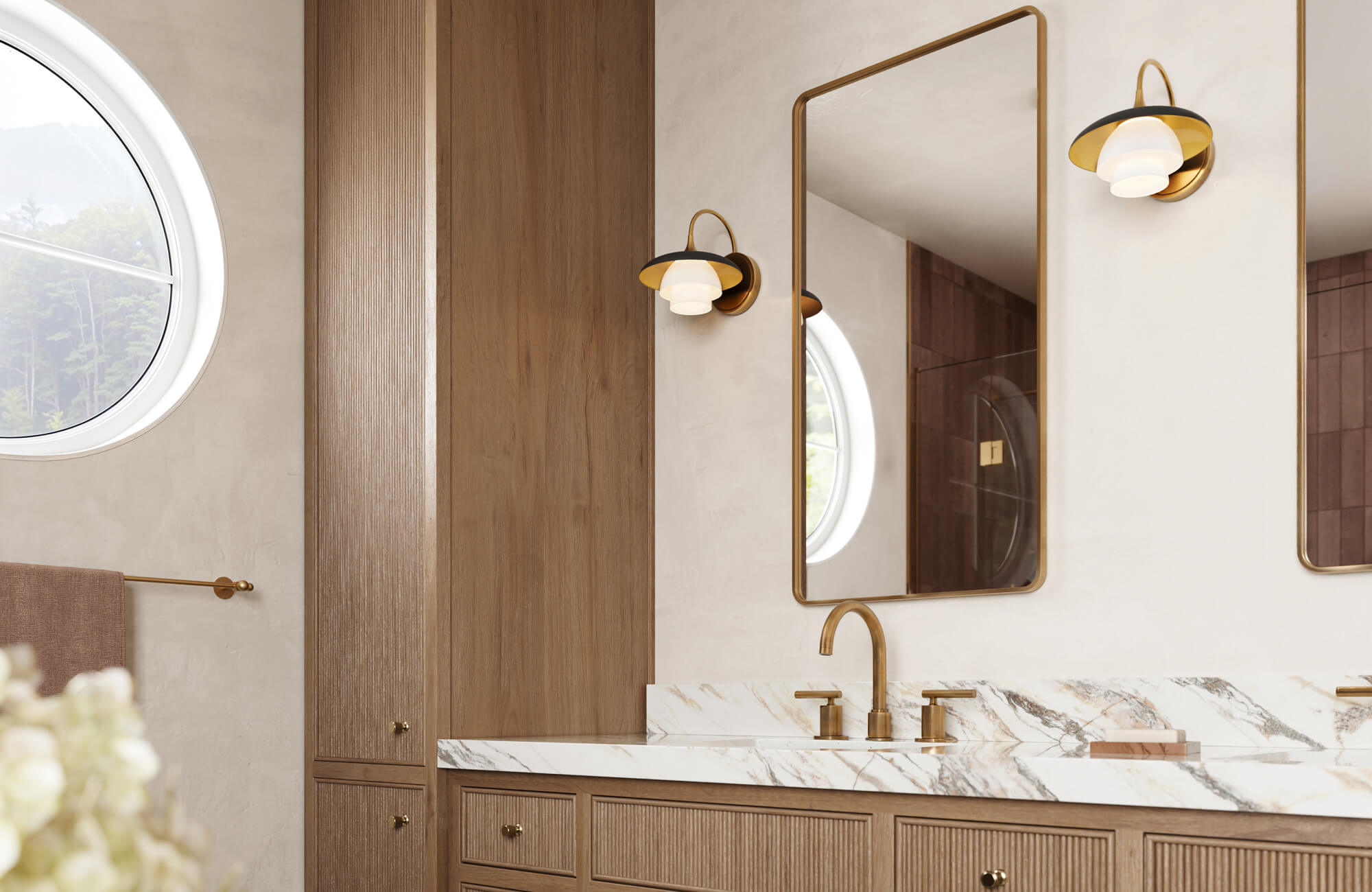
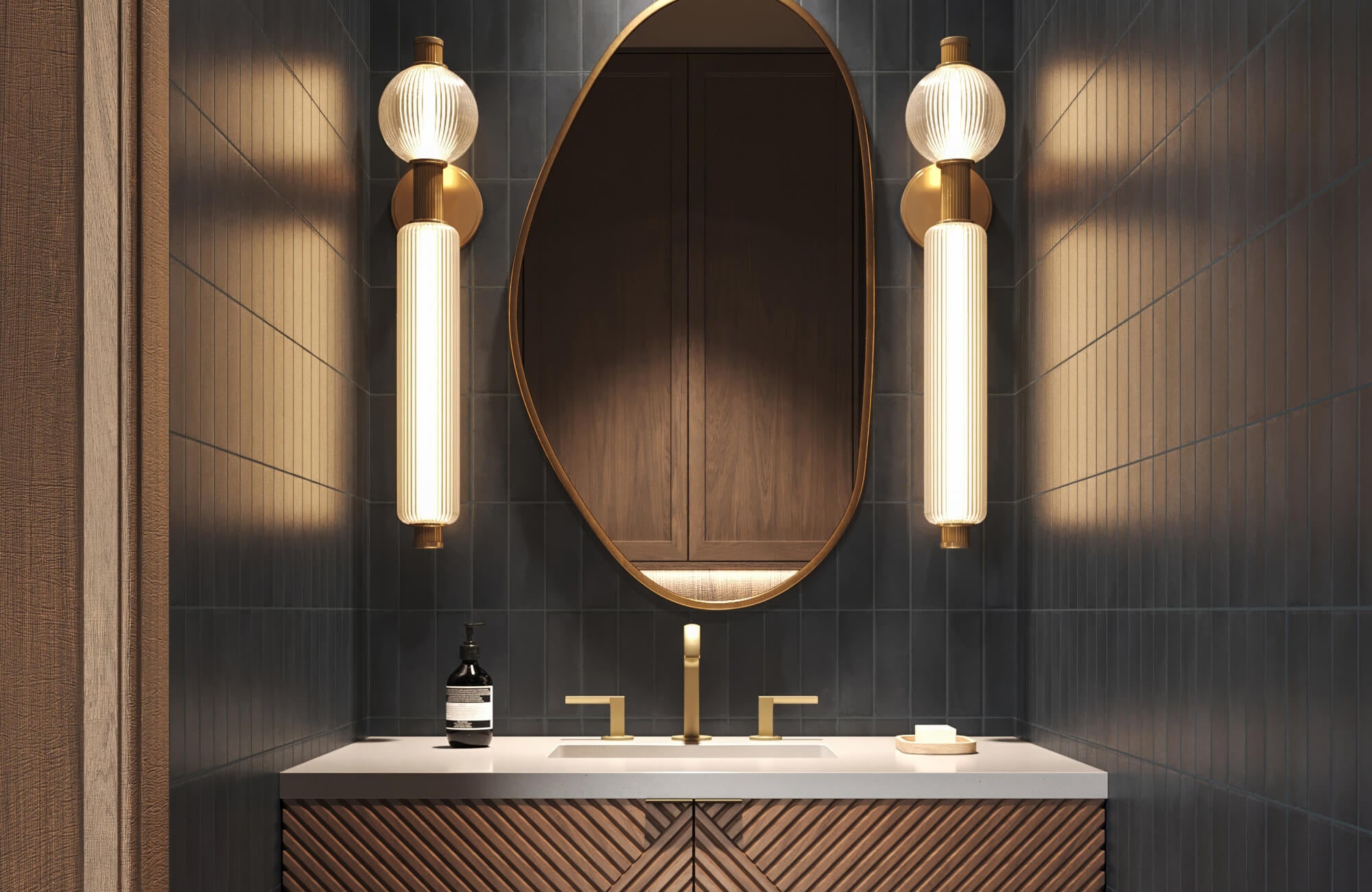
The way a wall sconce directs its light, whether upward, downward, or multidirectionally, affects how far and evenly light travels across a surface. A narrow-beam downlight may concentrate brightness on a small surface, creating dramatic highlights but also pronounced shadowing. To compensate for such limited spread, a second sconce may be required for uniformity. This is demonstrated by Edward Martin’s Dorian Wall Sconce in Aged Brass, as shown in the photo above. Its sculptural shade and opal diffuser direct light softly downward and outward, offering both focus and ambient fill. Because of its defined spread and beam control, it performs best when used in pairs beside a mirror, reducing facial shadows and enhancing task lighting performance in bathrooms or vanities.
In contrast, sconces with broad beam angles and diffusing elements can effectively illuminate larger areas on their own, reducing the need for multiple fixtures. These types of lights distribute illumination more evenly, softening shadows and enhancing overall ambient brightness. Additionally, beam geometry, such as wall-washing or wall-grazing effects, can influence how textures and surfaces appear, impacting both aesthetic and functional outcomes.
Ultimately, beam orientation and spread determine not only how a sconce performs, but also how many fixtures are required and where they should be placed to achieve balanced, task-appropriate lighting.
Lumen Output and Application Type
The brightness of a sconce, measured in lumens, must match the task it’s intended to perform. In spaces like bathrooms or dressing areas, using a pair of sconces ensures balanced, front-facing light that minimizes facial shadows. Single sconces, even when bright, often create uneven lighting that isn’t ideal for grooming or close-up tasks. In contrast, for hallways or quiet transitional zones, a single fixture with moderate output may provide just the right level of ambient glow. The functional role, whether accent, task, or general lighting, should guide fixture selection and count. Matching output with purpose helps avoid both under- and over-lighting, maintaining comfort and efficiency.
Control Systems and Dimming Compatibility
Today’s lighting systems increasingly integrate smart controls, enabling a single fixture to perform multiple roles throughout the day. With dimmable drivers, using TRIAC, 0–10V, or DALI protocols, you can fine-tune brightness levels to match activity or mood. These adaptive systems reduce the need for multiple fixtures while offering flexible lighting scenes. Paired with motion sensors or daylight harvesting, a single well-placed sconce can intelligently respond to environmental conditions. This not only improves energy performance but also minimizes fixture clutter in minimal or high-function spaces. Smart controls effectively expand the capabilities of individual sconces, making thoughtful placement even more important.
Architectural Integration and Spatial Hierarchy
The surrounding architecture plays a decisive role in shaping how sconces function within a room. Their placement must respond to dimensions, circulation patterns, and the hierarchy of architectural features to avoid becoming visually disconnected or underutilized.
Zone Definition and Wayfinding
Sconces are often used to highlight transition points, such as hallway entrances, staircases, or alcoves, reinforcing spatial flow. Paired fixtures create intuitive visual cues that help occupants move through complex layouts with ease. In hospitality or public spaces, this contributes to a subconscious sense of orientation and security. Even in residential settings, strategic sconce placement can delineate open zones without the need for physical partitions. Lighting repetition, when aligned with doorways or furniture transitions, also helps define room boundaries in open floor plans. This gentle guidance improves navigation while preserving aesthetic cohesion.
Proportional Placement and Vertical Emphasis
In rooms with generous ceiling height, sconce layout must respond to vertical scale to avoid awkward spacing or visual imbalance. Rather than sticking to standard heights, designers may opt to stack sconces vertically or align them with architectural lines like beams or trim. This reinforces the room’s vertical rhythm while maintaining a sense of proportion. On tall accent walls or columns, a single elongated sconce may suffice if placed with care. However, in larger voids, dual or staggered arrangements often ensure visual continuity and lighting performance. Ultimately, matching sconce scale and spacing with vertical context helps the fixtures feel integrated rather than arbitrary.
Surface Reflectance and Wall Finish
The material quality and finish of the wall directly influence how light from a sconce behaves. Glossy or polished surfaces, such as marble or lacquer, reflect light more effectively, often requiring fewer or lower-output fixtures. On the other hand, dark or matte finishes like exposed brick or textured plaster absorb more light, potentially necessitating additional sconces for adequate coverage. Wall sconces should be chosen not only for their direct output but also for how they interact with the material backdrop. This relationship can enhance ambiance, highlight craftsmanship, or simply improve lighting efficiency. Considering reflectance allows designers to make performance-driven decisions that support both form and function.
Comparing Brass, Bronze, Plaster, Nickel, and Chrome Wall Sconces
The material of a wall sconce significantly influences its aesthetic character, lighting behavior, and long-term durability. From warm, patinating metals to sleek, reflective finishes and sculptural matte surfaces, each material offers unique benefits suited to different design goals and environments. Understanding these distinctions enables more intentional fixture selection that aligns with both functional demands and stylistic intent.
Brass
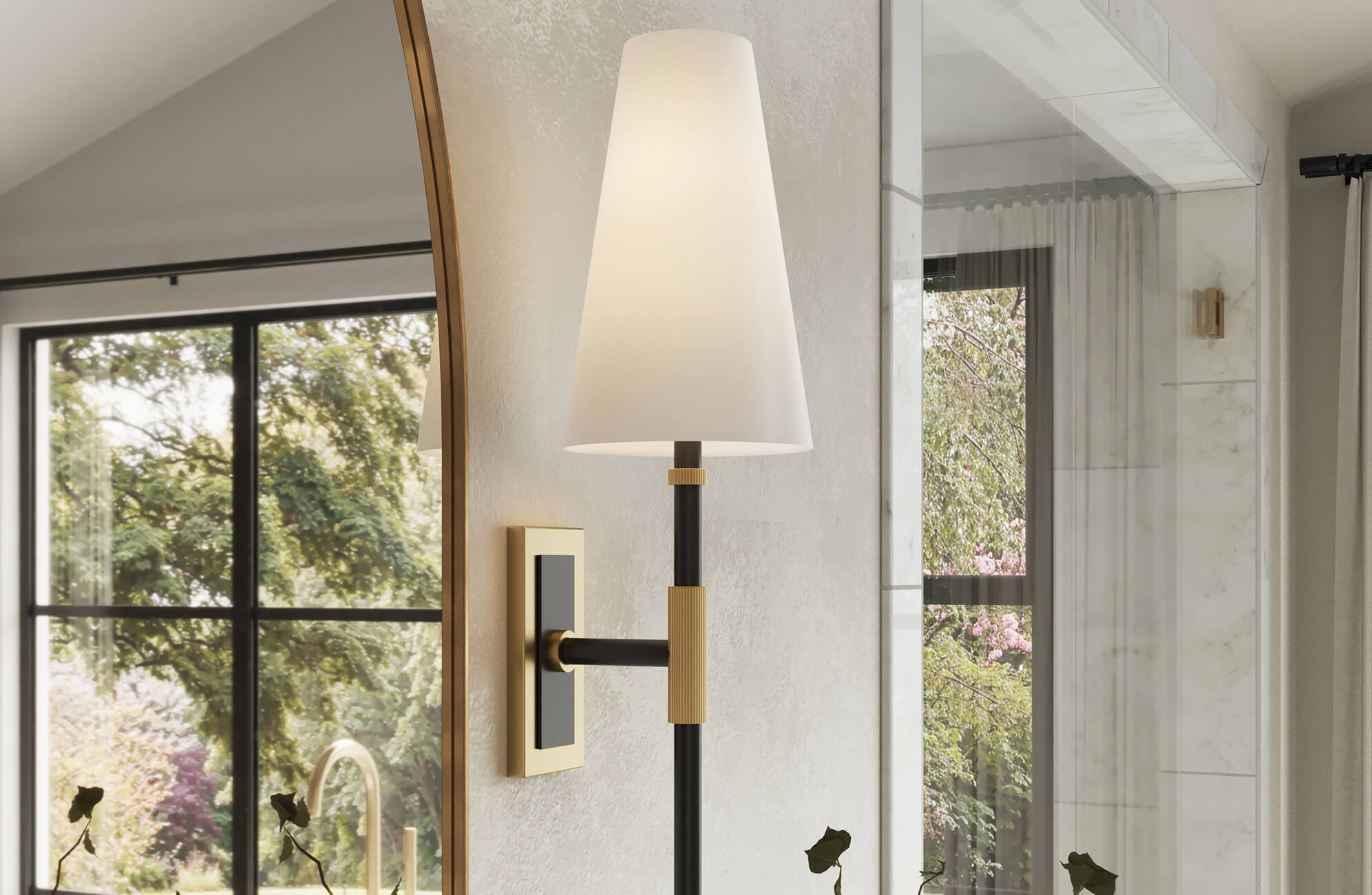
Brass introduces a rich, golden hue that lends warmth and understated elegance to interiors, making it a favored choice in traditional, industrial, and transitional designs. As it ages, unsealed brass develops a natural patina, deepening in tone and adding character that evolves organically with the space. This living finish complements materials like wood, leather, and stone, enhancing the tactile richness of a room. A striking example is the Ezekiel Wall Sconce in Vintage Brass, as displayed in the picture above, where its vertically elongated form and ribbed glass amplify both warmth and height, demonstrating how brass can feel both timeless and architectural in layered interior schemes.
Bronze
With its darker, earth-toned finish and nuanced patina, bronze offers a grounded aesthetic that adds weight and authenticity to a space. Its naturally low reflectivity absorbs ambient light, making it ideal for creating moody, intimate atmospheres in libraries, dining rooms, or hospitality settings. The material’s durability and corrosion resistance also make it suitable for both interior and covered exterior use, even in more demanding environments. Edward Martin’s Ryder Wall Sconce in Old Bronze exemplifies these qualities with its robust profile and minimal embellishment, offering a quiet, confident presence that pairs effortlessly with stone, wood, and other organic finishes. Bronze pairs beautifully with organic textures and aged surfaces, contributing to a sense of timelessness and depth.
Plaster
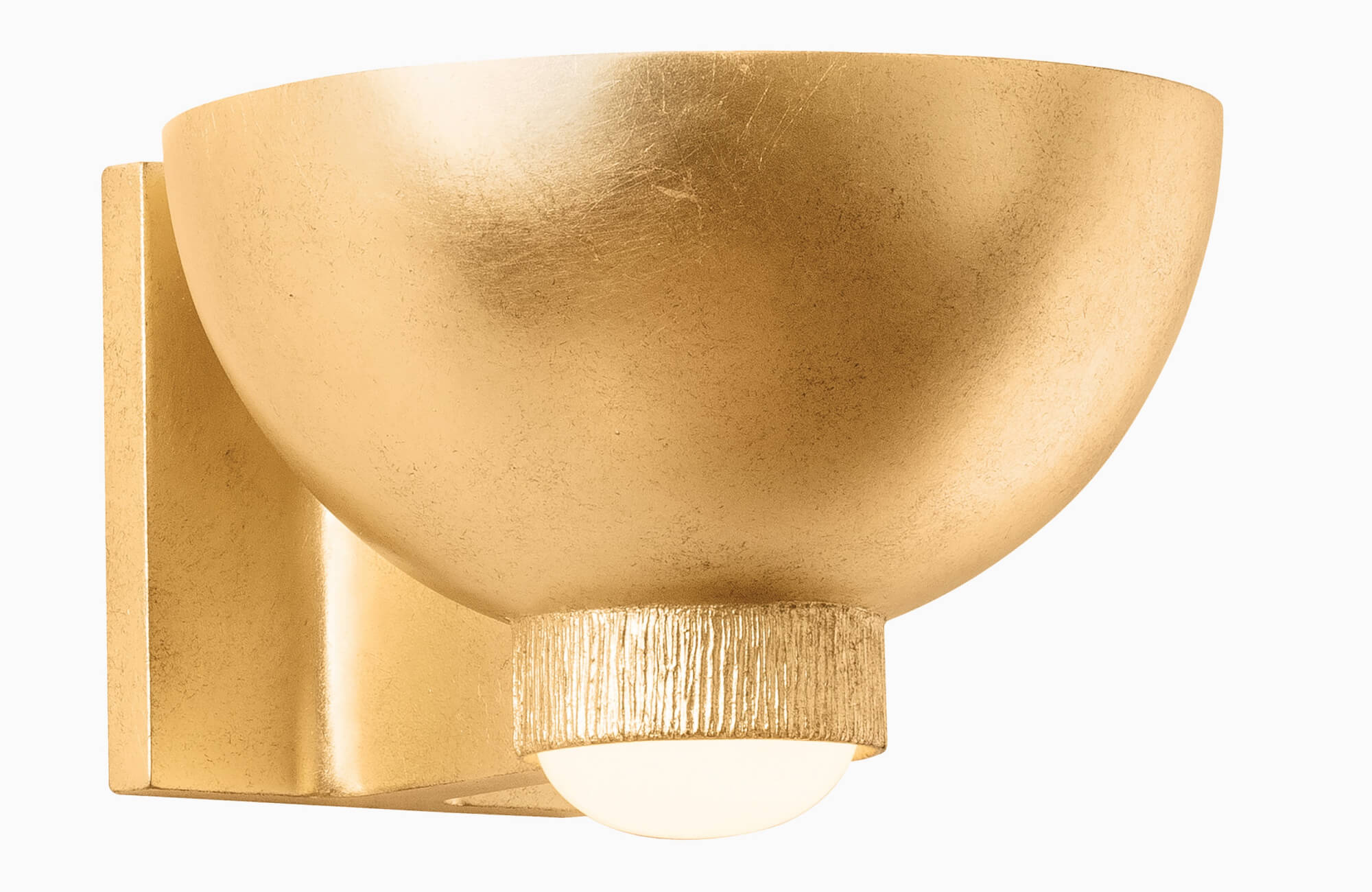
Plaster sconces deliver a matte, tactile finish that diffuses light evenly, resulting in soft gradients and a calm, atmospheric effect. Its pliability allows for sculptural forms that can blend seamlessly into architectural surfaces or stand out as intentional artistic features. Though best suited for dry interiors, modern sealants have expanded their use into slightly more variable conditions with proper care. The material’s natural texture and quiet presence also make it especially well-suited to minimalist, Mediterranean, or contemporary environments that favor subtle elegance.
Nickel
Nickel brings a cool, refined metallic tone that blends effortlessly into both modern and transitional settings, offering a versatile alternative to warmer finishes. Whether in brushed or polished form, it maintains a controlled sheen that reflects light softly without overwhelming the space. Its resistance to tarnishing and corrosion also makes it a reliable option in high-humidity environments like bathrooms or kitchens. Its finish conveys an air of sophistication while remaining understated, supporting clean-lined designs with a crisp, tailored feel.
Chrome
Chrome’s highly reflective surface delivers a striking, mirror-like finish that amplifies light and adds crisp definition to contemporary interiors. It excels in spaces that emphasize contrast, sharp geometry, or high brightness, such as modern bathrooms and gallery-inspired layouts. While the finish is durable and resistant to corrosion, its high-gloss clarity does show fingerprints and smudges more readily, requiring regular upkeep for a flawless appearance. In polished form, fixtures like the Roderick 26" Wall Sconce in Polished Chrome heighten architectural precision and brightness through their elongated silhouette and sleek cylindrical diffuser, delivering both visual impact and high-performance illumination.
Evolving Aesthetics and Non-Traditional Layouts
Current design movements have moved beyond the predictability of symmetrical pairings, embracing a more expressive, personal, and context-driven approach to wall lighting. In this framework, a sconce doesn’t need to be one of a pair to make a significant impact.
Asymmetry as a Design Statement
Intentional asymmetry allows for more dynamic and personalized spatial compositions, especially in eclectic or modern interiors. A single off-center sconce can introduce a sense of surprise, drawing attention to a texture, niche, or artwork that might otherwise be overlooked. This approach encourages viewers to engage with the room in less conventional ways, breaking monotony and enriching narrative flow. Asymmetrical placement can also balance other visual elements like staggered shelving, uneven ceiling lines, or abstract art. When applied thoughtfully, asymmetry doesn’t disrupt harmony; it redefines it. This strategy lends itself especially well to editorial spaces, design-forward residences, and creative studios.
Functional Minimalism and Smart Integration
With the rise of smart lighting systems, one fixture can now perform what once required two or more. A single sconce equipped with sensors or dynamic dimming can adapt to occupancy, daylight levels, or user preference. This reduces energy consumption while also supporting minimal visual clutter, which is central to modernist design principles. These systems enable a more tailored lighting experience without the need for symmetry or redundancy. In small or multifunctional spaces, this flexibility is both practical and visually calming. Functional minimalism is no longer about having less—it’s about doing more with refined, intentional choices.
Contextual Storytelling and Visual Weight
Lighting isn’t just functional; it also contributes to the emotional and thematic storytelling of a space. A solitary sconce can act as a punctuation mark, a moment of focus in an otherwise balanced composition. This is especially impactful in spaces with strong material presence or narrative-driven design, such as galleries or boutique retail. By selectively applying visual weight through asymmetrical lighting, designers can emphasize specific moments within a broader spatial sequence. This approach works best when supported by contrasting materials or layered architectural details. It’s a subtle yet powerful technique for shaping atmosphere and engagement.
Purposeful Placement Defines Effective Sconce Design
The placement of wall sconces is not bound by fixed rules but guided by the subtle language of proportion, light, and architectural rhythm. Whether installed as a solitary gesture or in mirrored pairs, their presence should always respond to the needs and character of the space. Each fixture brings its own dialogue—some quietly sculpting light across textured surfaces, others anchoring focal points with balanced symmetry. When chosen with care and placed with purpose, sconces offer more than illumination; they elevate the atmosphere and enrich the spatial narrative. Materials like brass, bronze, plaster, nickel, and chrome further shape their expression, each contributing distinct tone, texture, and performance. In the end, it is this harmony of function, form, and intention that defines truly enduring lighting design.
For tailored guidance on selecting and placing the right sconces for your project, Edward Martin offers personalized design services rooted in craftsmanship, scale, and spatial harmony. To begin your consultation, we invite you to contact us and explore how we can bring your lighting vision to life!
Follow us on Instagram
@EDWARD.MARTIN
)
)
)
)
)
)
)
)
)
)
)
)
)
)
)
)