Pendant lights aren’t just about style; they’re one of the most efficient ways to deliver focused, functional lighting where it’s needed most. Their downward-facing design and customizable configurations make them ideal for task zones like kitchen islands, home offices, and hobby areas where clarity and precision are essential.
Beyond performance, their diverse sizes, finishes, and materials allow pendants to integrate seamlessly into a variety of interiors, offering both aesthetic impact and practical illumination. With that in mind, this article will break down the technicalities, design strategies, and placement tips to help you use pendant lights for better, smarter task lighting.

Understanding Task Lighting Essentials
To truly understand how pendant lights can enhance task lighting, it helps to first look at what makes task lighting effective in the first place. From there, we can unpack the common pitfalls and limitations that often undermine its performance, especially when relying on outdated or one-size-fits-all solutions.
What Defines Effective Task Lighting
At its core, effective task lighting delivers concentrated, glare-free illumination directly to a work surface. This enhances visibility while minimizing eye strain and unwanted shadows. Its success hinges on three core factors: illuminance, beam control, and light quality.
Illuminance, measured in lux (lumens per square meter), should meet or exceed 300–500 lux for visually demanding tasks such as reading or food prep. This level outperforms general ambient lighting by providing sharper contrast and improved clarity.
Beam angle and directionality are also critical in determining how effectively light is concentrated on the task area. Fixtures with narrow beam spreads (15–30 degrees), such as pendants or gooseneck lamps, direct light precisely where needed, reducing spill into surrounding areas. Adjustable designs further enhance this precision by allowing users to adapt the beam's focus based on their posture or task.
Equally important is the quality of the light itself, determined by color temperature (CCT) and color rendering index (CRI). A color temperature between 3000K and 4000K balances warmth and clarity, suitable for both residential and work-oriented settings. Meanwhile, a CRI of 80 or higher ensures accurate color representation, which is especially critical for detail-focused tasks like crafting, cooking, or working with materials.
Common Task Lighting Challenges
While these principles are well understood in theory, their execution is often compromised by a few common issues. Glare, for instance, arises when light sources are overly bright or poorly shielded, leading to discomfort and reduced visual performance. This is especially problematic in spaces with reflective surfaces like stainless steel or glass countertops.
Closely related is the issue of shadows, which occur when fixtures are improperly placed relative to the user. For example, an overhead light positioned directly behind a person may cast unwanted shadows over the work area. To minimize this, task lighting should be directed at a 30–45 degree angle toward the surface.
Beyond visibility concerns, another major limitation is a lack of adaptability. Fixed fixtures often can't keep up with evolving needs, such as different users’ heights, rearranged layouts, or changing task types. Without features like dimming, swiveling heads, or height adjustment, task lighting can quickly become rigid and outdated.
Why Traditional Task Lighting Falls Short
These shortcomings are especially evident in legacy solutions, such as basic desk lamps or under-cabinet fluorescents. While once considered standard, they now struggle to meet the demands of modern, multifunctional environments. For one, many rely on compact fluorescent lamps (CFLs), a technology known for its poor CRI, delayed warm-up time, and occasional flicker. In contrast, LEDs offer higher efficiency, instant-on performance, and CRI ratings above 90, making them a superior choice for visual comfort and color fidelity.
Traditional fixtures also often feel out of sync with contemporary design. Their bulky form factors and lack of smart system compatibility limit both their aesthetic appeal and user control. Additionally, their static design rarely adapts to the ergonomic and functional variety seen in today’s homes, particularly in hybrid workspaces and open-concept layouts.
Taken together, these limitations underscore the need for lighting that is both flexible and technically precise, qualities that modern pendant lights are uniquely positioned to deliver.

The Unique Advantages of Pendant Lights for Tasks
What makes pendant lights stand out in the world of task lighting isn’t just how they look; it’s how precisely and efficiently they perform. When thoughtfully chosen and well-placed, they offer a level of control and versatility that few other fixtures can match.
Targeted Illumination and Directionality
Pendant lights are especially effective at delivering focused, downward illumination, making them ideal for high-use zones like kitchen islands, countertops, and desks. Their directional design reduces eye strain and enhances visual accuracy by placing light exactly where it’s needed most.
Furthermore, many modern pendants feature narrow beam angles (20–40 degrees), which help concentrate light while minimizing ambient spill, an important factor in layered lighting plans. Options with adjustable drop lengths or rotatable shades also allow users to fine-tune alignment based on task, room configuration, or user height.
Take, for example, the Grady Pendant in Patina Brass and Soft Sand by Edward Martin, as featured in the space above. Its softly contoured shade and focused beam are designed to deliver glare-free, downward illumination, ideal for task-heavy zones like laundry rooms or utility areas. The suspended form not only offers precise light placement but also adds a refined material contrast that enhances the overall design without overwhelming it.
Space Saving and Aesthetic Integration
In addition to precision lighting, pendants offer a space-saving advantage. Unlike desk lamps or track systems, they’re ceiling-mounted, keeping countertops and work surfaces free, an especially valuable trait in compact kitchens, home offices, or multi-use spaces.
Pendant lights can also serve as strong aesthetic elements. From minimalist matte finishes to hand-blown glass designs, they provide architectural character while supporting the room’s visual narrative. Many models now integrate with smart-home systems and dimming controls, allowing lighting to shift seamlessly from high-focus tasks to softer ambient settings.
Versatility Across Different Work Zones
Beyond focused light and visual appeal, pendant lights are remarkably adaptable across a wide variety of environments. Whether installed in kitchens, home offices, reading nooks, or creative studios, they can be tailored to the demands of each task zone.
In kitchens, linear or multi-fixture pendants provide even coverage over prep surfaces. In contrast, for reading areas or solo workspaces, a single pendant with a diffused shade offers glare-free light that supports extended use.
Pendants are also an excellent tool for spatial zoning, especially in open-concept layouts. Varying fixture type, size, or hanging height can help subtly define different areas without using walls or partitions. Whether deployed individually, clustered in multiples, or mounted on a linear track, pendant lights provide both flexibility and cohesion in multifunctional spaces.

Key Factors for Optimizing Pendant Task Lighting
Getting the most out of pendant task lighting means looking beyond the fixture’s form and focusing on how it performs. From brightness and color quality to adjustability and light control, several key factors determine whether a pendant will truly meet the demands of your space.
Lumens, Color Temperature, and CRI
An effective task light starts with delivering the right intensity and quality of illumination. For pendants, aim for a lumen output of 800–1200 lumens per fixture, depending on ceiling height and the nature of the task. This ensures ample brightness without contributing to glare or visual fatigue.
In addition to brightness, color temperature (CCT), measured in Kelvin, affects how the light is perceived. A temperature around 3000K creates a warm, inviting glow, while up to 4000K produces a cooler, crisper effect better suited to task-heavy areas like kitchens or home offices.
Similarly, the Color Rendering Index (CRI) indicates how accurately colors appear under artificial light. A CRI of 80+ is sufficient for most residential spaces, but 90+ is ideal for precision tasks such as food prep, crafting, or grooming, where true color fidelity is essential.
Shade Design and Light Distribution
Equally impactful is the design of the pendant’s shade, which significantly influences how light is distributed. Downward-facing shades, such as cones, domes, or bells, are particularly effective for concentrating light on task surfaces. Some models go a step further with built-in reflectors or baffles that sharpen beam angles and prevent unnecessary spill.
On the other hand, open or translucent shades can introduce a broader, more ambient glow. While this may enhance the room’s atmosphere, it can also lead to glare if not paired with diffusers or carefully positioned. For optimal results in task zones, semi-opaque or frosted materials often strike the best balance between brightness and softness.
Additionally, beam spread is essential for ensuring proper light coverage across the task area. A 15–30 degree beam works well for focused, high-precision tasks, while a 40–60 degree spread is better for general task areas. Some advanced pendants offer interchangeable lenses or adjustable optics, giving users greater flexibility in shaping their lighting environment.
A great example of this balance between form and function is Edward Martin’s Dempsey Pendant in Hammered Antique Brass, as featured in the picture above. Its wide, dish-style shade with a hand-hammered interior directs light downward with precision while minimizing glare, making it a stylish yet practical choice for focused task zones. The metallic finish also subtly reflects ambient light, adding warmth without sacrificing the fixture’s directional intent.
Adjustable Height and Dimming Capabilities
Flexibility in placement and light control is what sets truly optimized pendants apart. Adjustable mounting options, whether through telescoping rods, cables, or swag kits, enable users to position the fixture at the ideal height, typically 28 to 36 inches above work surfaces. This fine-tuning is also crucial for minimizing shadows and optimizing beam focus.
In addition, dimming functionality enhances both usability and comfort. Whether controlled via Triac, 0–10V, or DALI dimming protocols, being able to modulate light intensity allows you to match illumination levels to the time of day, task type, or mood.
For those seeking even more convenience, occupancy sensors and tunable white systems can further elevate performance by adjusting brightness and CCT automatically throughout the day. This creates a responsive, human-centric lighting experience that supports wellness and energy efficiency alike.

Strategic Placement for Maximum Task Efficacy
Even the most well-designed pendant light can fall short if it’s not placed thoughtfully. To ensure both style and functionality, the placement of your fixtures is crucial to how effectively they support everyday tasks throughout the home.
Over Kitchen Islands and Countertops
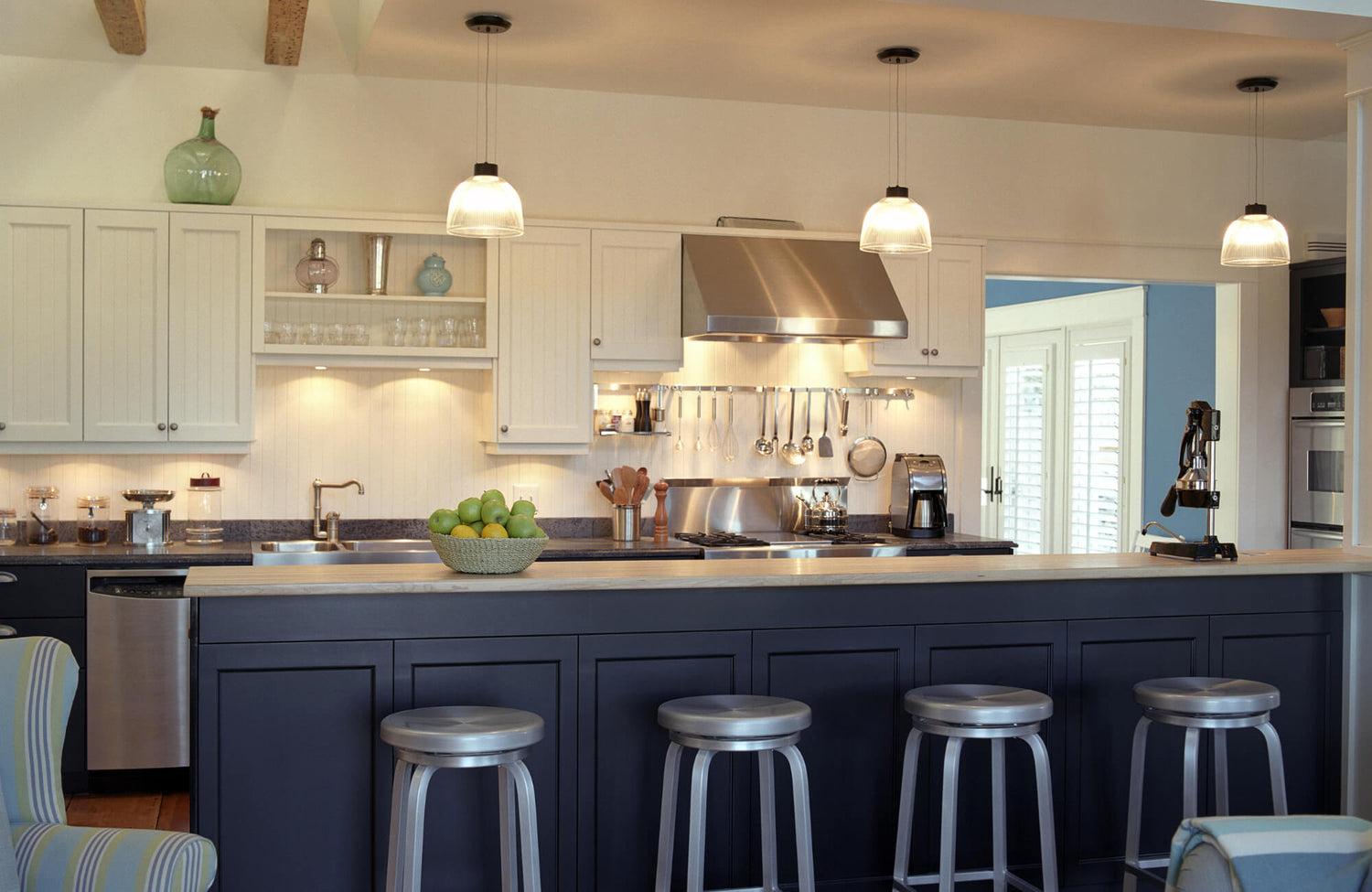
Kitchens are among the most common and most demanding environments for task lighting. Pendant lights are especially impactful in these spaces, particularly above islands and countertops used for food prep, cooking, and casual dining. The ideal hanging height is typically 30 to 36 inches above the work surface, allowing for clear sightlines and direct task illumination.
In addition, proper spacing, usually between 24 and 30 inches apart, depending on fixture size, ensures even light distribution without casting shadows or leaving dark spots. For larger islands, opting for bigger pendants (12–18 inches) or a linear suspension fixture can reduce the number of units needed while still covering the surface evenly.
To create a well-rounded lighting plan, it’s also important to coordinate pendants with recessed downlights or under-cabinet LEDs. This layered approach helps minimize glare and prevents over-reliance on any single light source.
A perfect example of this balanced approach is the Hilda 12" Pendant in Distressed Bronze by Edward Martin, as displayed in the photo above. Its conical silhouette and softly diffused shade provide focused, glare-free lighting directly over the island, while the distressed bronze finish adds warmth and texture that complements natural materials like wood and woven accents. Thoughtfully spaced in pairs, this pendant brings both task clarity and timeless style to kitchen work zones.
Enhancing Home Office Productivity
Moving into home offices, pendant lighting offers a practical alternative to bulky desk lamps, particularly in settings where overhead installation is needed to free up valuable surface space. For best results, mount the pendant approximately 30 inches above the desktop and opt for diffused or frosted shades to reduce screen glare.
Furthermore, a 30–45 degree beam angle is ideal for covering most work surfaces without over-lighting. If the desk is oversized or shared, using two or more pendants arranged in a linear or grid pattern will help maintain even light distribution.
To enhance comfort and control, incorporate dimming capabilities that allow you to adjust brightness based on task type or time of day. When paired with complementary sources like sconces or floor lamps, pendant lights can anchor a layered system that supports productivity while also improving the room’s overall ambiance.
Illuminating Reading Nooks and Craft Areas
For smaller, focused task zones like reading nooks or hobby stations, pendants can bring both clarity and character. In reading corners, position the fixture about 60 to 66 inches from the floor, and aim for a 25–40 degree beam spread to illuminate a book or tablet without unwanted spill into surrounding areas.
When it comes to craft rooms or workbenches, lighting needs are typically more intense. Here, look for pendants with high lumen output (1000+ lumens) and CRI ratings of 90+ to ensure precise color rendering for detailed tasks like painting, sewing, or model-making. Features such as adjustable height or swivel mounting offer the flexibility needed to adapt lighting as activities or layouts shift.
Finally, combining pendants with localized task lamps or wall-mounted fixtures can help build a zoned lighting strategy that enhances visibility across workstations without flooding the entire space with light.

Integrating Pendant Task Lighting into Your Decor
Pendant lights may be hardworking fixtures, but they also significantly influence the overall look and feel of a space. By blending style, layering, and technology, they can enhance your décor just as much as they support your daily routines.
Complementing Your Interior Design Style
Selecting pendants that align with your interior design style is the first step toward achieving harmony between visual appeal and practical function. Thanks to a broad array of materials, finishes, and silhouettes, pendants can seamlessly complement any aesthetic, from minimalist to maximalist, and everything in between.
For instance, modern interiors benefit from streamlined shapes and neutral tones such as matte black or brushed brass, often enhanced by frosted diffusers or integrated LEDs that deliver clean, precise light.
Meanwhile, traditional and transitional spaces pair well with timeless materials like glass or ceramic, along with softer silhouettes and warm color temperatures (2700K–3000K) that evoke the inviting glow of incandescent bulbs.
By contrast, industrial or rustic styles thrive on bolder statements, think exposed hardware, distressed finishes, or caged forms that add texture without compromising task lighting performance.
Similarly, Scandinavian or Japandi designs lean toward natural materials like wood and stone, along with warm, directional lighting that emphasizes serenity and simplicity.
In addition to style, scale, and proportion are essential to achieving visual balance. Oversized pendants can serve as striking focal points in open layouts, while smaller fixtures help maintain rhythm in compact or secondary zones. Choosing the right size ensures the pendant enhances the space without overpowering it.
A striking example is the Carly 34" Pendant in Vintage Brass by Edward Martin, as shown in the photo above. Its wide, low-profile silhouette and rich metallic finish add a refined, modern-industrial edge to the space, while its generous scale anchors the island and draws the eye without overwhelming the room. The warm brass tones echo the cabinet hardware and faucet, tying the entire palette together with effortless cohesion.
Mixing and Matching with Other Lighting Layers
Beyond form, pendants truly excel when they’re part of a layered lighting strategy, one that combines ambient, task, and accent sources for both functional and aesthetic depth.
In multipurpose rooms, for example, pendants provide focused lighting for high-utility zones like kitchen counters or reading chairs. Meanwhile, ambient lighting from recessed cans or ceiling fixtures softens the surrounding space. To enrich the environment further, accent lighting such as wall sconces, LED cove lighting, or under-cabinet strips adds depth and draws attention to architectural or design features.
To ensure visual and functional harmony, it's also important to coordinate color temperature and verify that all fixtures are dimmable. Mixing incompatible tones or light controls can disrupt the ambiance, whereas pairing pendants with smart dimmers or compatible drivers allows for seamless, adaptable lighting transitions throughout the day.
Future Proofing with Smart Lighting Solutions
As lighting technology continues to evolve, integrating smart features into pendant task lighting ensures your system stays functional and future-ready. Smart pendants with built-in or compatible LEDs, enable voice control, mobile app management, and scene customization for tailored lighting experiences.
For those seeking broader automation, pendants that support Zigbee, Z-Wave, or Wi-Fi protocols can integrate effortlessly with systems like SmartThings, Apple HomeKit, Google Home, or Alexa. This connectivity allows lighting to adapt to occupancy patterns, daily routines, or user preferences without the need for manual adjustments.
To further enhance wellness, tunable white technology lets you shift color temperature throughout the day, cooler tones in the morning for increased focus, and warmer hues in the evening to promote relaxation. When paired with long-lasting, energy-efficient LED modules (25,000+ hours), smart pendants deliver not just adaptability and convenience but also long-term value and energy savings.

Common Mistakes to Avoid with Pendant Task Lighting
Even with the right intentions, it’s easy to misstep when choosing or installing pendant lighting. From sizing issues to lighting quality concerns, a few common oversights can quietly undercut both the look and function of your space.
Ignoring Scale and Proportion
One of the most common mistakes is selecting pendants that are disproportionate to the space or task zone. Oversized fixtures can overwhelm a room and obstruct sightlines, while undersized pendants may appear visually lost and fail to illuminate the surface effectively.
To get scale right, it’s important to evaluate fixture diameter, mounting height, and spacing in context. For example, above kitchen islands, pendants should generally range from 10 to 16 inches in diameter, hang 28 to 36 inches above the surface, and be spaced 24 to 30 inches apart, with at least 6 inches of clearance from countertop edges. In rooms with higher ceilings, longer downrods or adjustable cables help preserve proportional balance.
Failing to consider these spatial relationships not only compromises functionality but also disrupts the room’s visual harmony. Fortunately, early-stage planning, including scaled drawings or 3D mockups, can help identify proportion-related issues before installation.
A well-executed example of thoughtful scale is the Phineas Pendant in Historic Bronze by Edward Martin, as featured in the picture above. With its substantial bowl-shaped shade and chain suspension, it holds visual weight appropriate for the expansive island and high ceiling, while still maintaining balance and elegance. Its size, finish, and mounting height work together to reinforce symmetry and proportion, proving that when scale is respected, pendant lighting becomes both functional and foundational to the room’s design.
Overlooking Glare and Shadow Issues
Equally important, but often overlooked, are glare and shadows, two problems that can significantly impact visual comfort and task clarity. Glare typically occurs when the light source is directly exposed, causing discomfort or veiling reflections on shiny surfaces. To avoid this, opt for pendants with opaque or directional shades and a cut-off angle that shields the bulb from view.
Shadows, meanwhile, arise when pendants are placed directly overhead or behind the user, casting the user’s own shadow onto the work surface. Instead, aim for a 30 to 45-degree lighting angle relative to the task area. In setups with multiple pendants, ensure overlapping beam spreads to avoid gaps or dark zones, especially crucial for long countertops or islands.
To help you navigate these lighting nuances, particularly in spaces where tile finishes, surface reflectivity, and beam geometry intersect, Edward Martin offers a one-on-one design consultation. Our experts can guide you through fixture selection and placement strategy to achieve a lighting plan that’s as functional as it is cohesive.
For more detailed support with layout, fixture pairing, or even selecting a complementary rug, you can always contact the Edward Martin team for expert recommendations tailored to your space.
Neglecting Bulb Specifications
Lastly, even the right fixture can underperform if paired with the wrong bulb. Begin by checking lumen output: task zones typically require 800 to 1200 lumens per bulb. However, many decorative pendants default to lower-output options that don’t provide enough brightness for practical use.
Next, assess color temperature and CRI. A 3000K to 4000K range delivers a comfortable balance between warmth and clarity, while a CRI of 80+ (preferably 90+) ensures accurate color rendering, especially important in kitchens, studios, and craft areas where visual detail matters.
Just as crucial is verifying dimming compatibility. Not all LED bulbs work with all dimmers, and mismatched combinations can result in flickering, limited dimming range, or inconsistent performance. Always confirm that your chosen bulbs are dimmable and compatible with your fixture’s driver type (e.g., Triac, 0–10V, or DALI).
Finally, consider bulb size and heat output. Some pendants have tight interior spaces or limited ventilation, which require low-profile, energy-efficient LEDs to ensure safe and reliable operation.
Where Performance Meets Purposeful Design
When selected and installed with intention, pendant lights do more than elevate a room’s design; they deliver targeted, high-performance illumination for real, everyday tasks. With the right combination of beam precision, brightness, and smart control, pendants are a versatile solution that unites form and function.
At Edward Martin, we believe great lighting should work as beautifully as it looks. Whether you're updating a task zone or planning a new space from the ground up, consider how the right pendant can transform the way you live, work, and see your environment.