Mirrors do more than reflect, they shape the mood, depth, and character of a space. While the instinct may be to match them to your existing décor, a mirror doesn’t always need to blend in to belong. With the right balance of scale, proportion, and material intent, even a contrasting piece can enrich a room’s design narrative. From softening minimalism with ornate frames to injecting edge into traditional settings with sleek metal finishes, mirrors can either echo their surroundings or serve as deliberate focal points.
With that in mind, this blog will examine how to thoughtfully integrate, or purposefully contrast, mirrors within your interior. Along the way, we’ll help you navigate the aesthetic and practical decisions that contribute to a space that feels cohesive, expressive, and well-composed.

The Traditional Approach
To create a mirror arrangement that feels intentional and cohesive, it helps to start with what’s already in place. By paying close attention to your room’s style, materials, and proportions, you can select a mirror that naturally integrates into the overall design without feeling forced.
Understanding Your Current Decor Style
Before anything else, unified design starts with identifying your home’s dominant style, be it Colonial, mid-century modern, French Provincial, or transitional. Traditional interiors favor symmetry, ornate details, and rich woods, often pairing well with carved or antique-finish mirrors. On the other hand, modern spaces lean toward minimalism, clean lines, and monochromatic palettes, calling for frameless designs or sleek metal frames. In either case, designers often take cues from architectural elements like cabinetry, molding, and flooring to guide mirror selection.
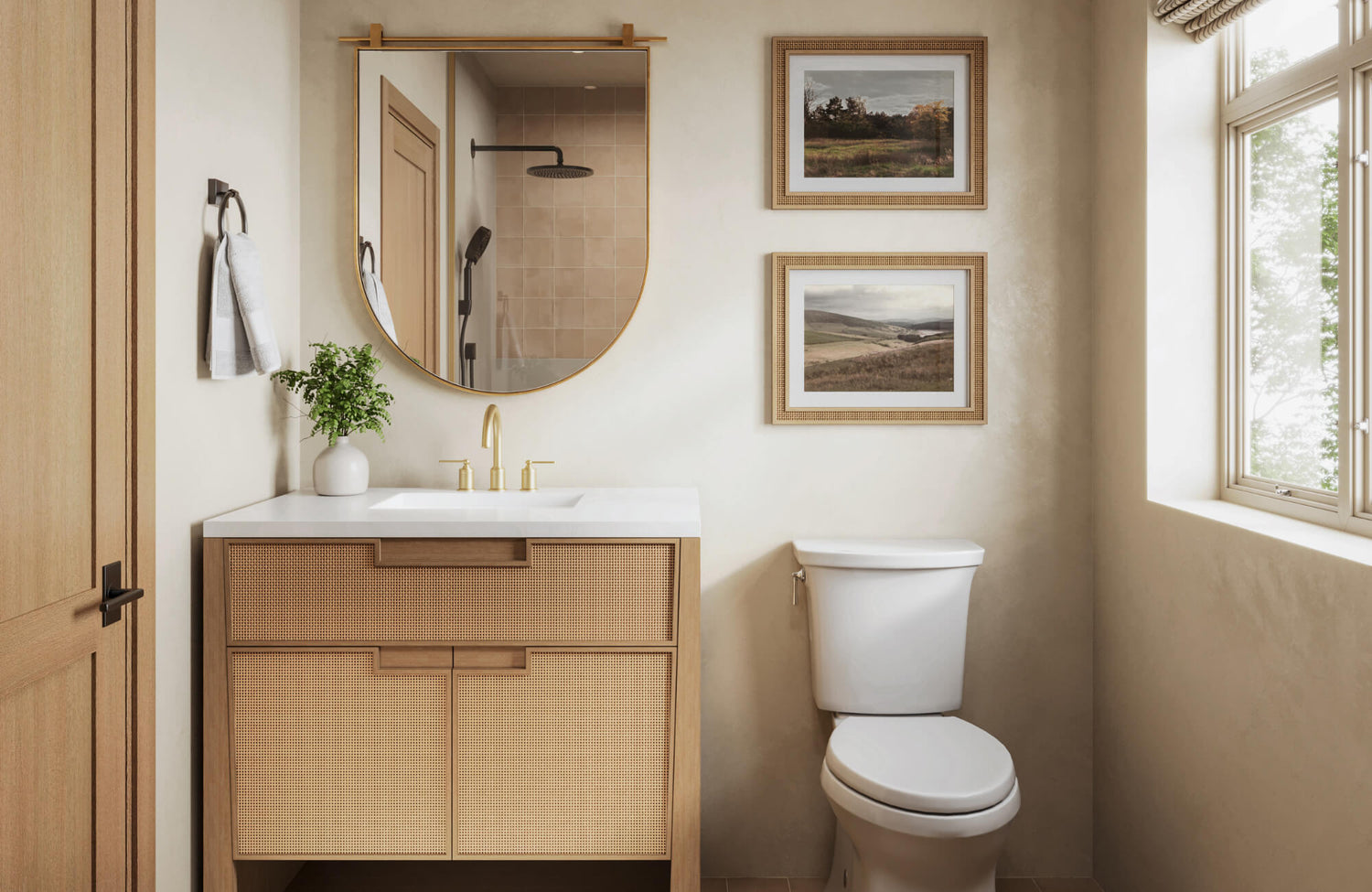
For instance, Edward Martin’s Esmeralda Small Mirror in Polished Brass exemplifies this alignment. Its arched silhouette and warm metallic frame balance classic and contemporary traits, complementing a range of transitional settings with subtle elegance, as illustrated in the image above, where it cleanly ties together traditional finishes and modern forms.
Matching Frame Styles and Materials
Building on that foundation, frame selection further reinforces visual unity. Mirrors in walnut, cherry, or mahogany can reflect the warmth of traditional wood tones, while finishes like brushed nickel, matte black, or chrome blend naturally with modern hardware and lighting. Importantly, cohesion doesn’t require identical materials, and echoing textures or finishes found in furniture or architectural elements often achieves a more refined, layered look. When selected with intention, the mirror becomes part of a broader design language rather than a standalone accent.
Size and Scale in Relation to Existing Furnishings
Equally important is proportion, which significantly influences the overall sense of balance and cohesion in a space. A mirror should relate to surrounding furnishings in size and scale, such as being two-thirds the width of a mantel or sideboard to maintain visual balance. Additionally, vertical mirrors can add height or emphasize symmetry when flanking windows or architectural features. Frame thickness also matters: ornate mirrors may need more wall space, while slim profiles can be grouped or layered with ease. Ultimately, matching the mirror’s scale to nearby elements helps anchor the layout and prevents visual imbalance.
By aligning your mirror with the room’s style, materials, and scale, you reinforce a cohesive and timeless aesthetic. This traditional approach ensures the mirror feels purposefully placed, enhancing both form and function within your space.

The Contrarian Approach
Stepping away from convention opens the door to bolder, more expressive design choices. By thoughtfully introducing contrast, whether through style, material, or placement, you can turn an ordinary mirror into a striking centerpiece that redefines the room around it.
Deliberate Juxtaposition of Styles
As a first consideration, one highly effective tactic involves blending distinct design styles to create intentional visual tension. A Baroque-inspired mirror with ornate detailing, for example, can bring drama to a minimalist Scandinavian interior, disrupting uniformity with elegance. Likewise, in industrial spaces, a Rococo or Chinoiserie-style mirror introduces a refined counterpoint to raw materials and utilitarian lines.
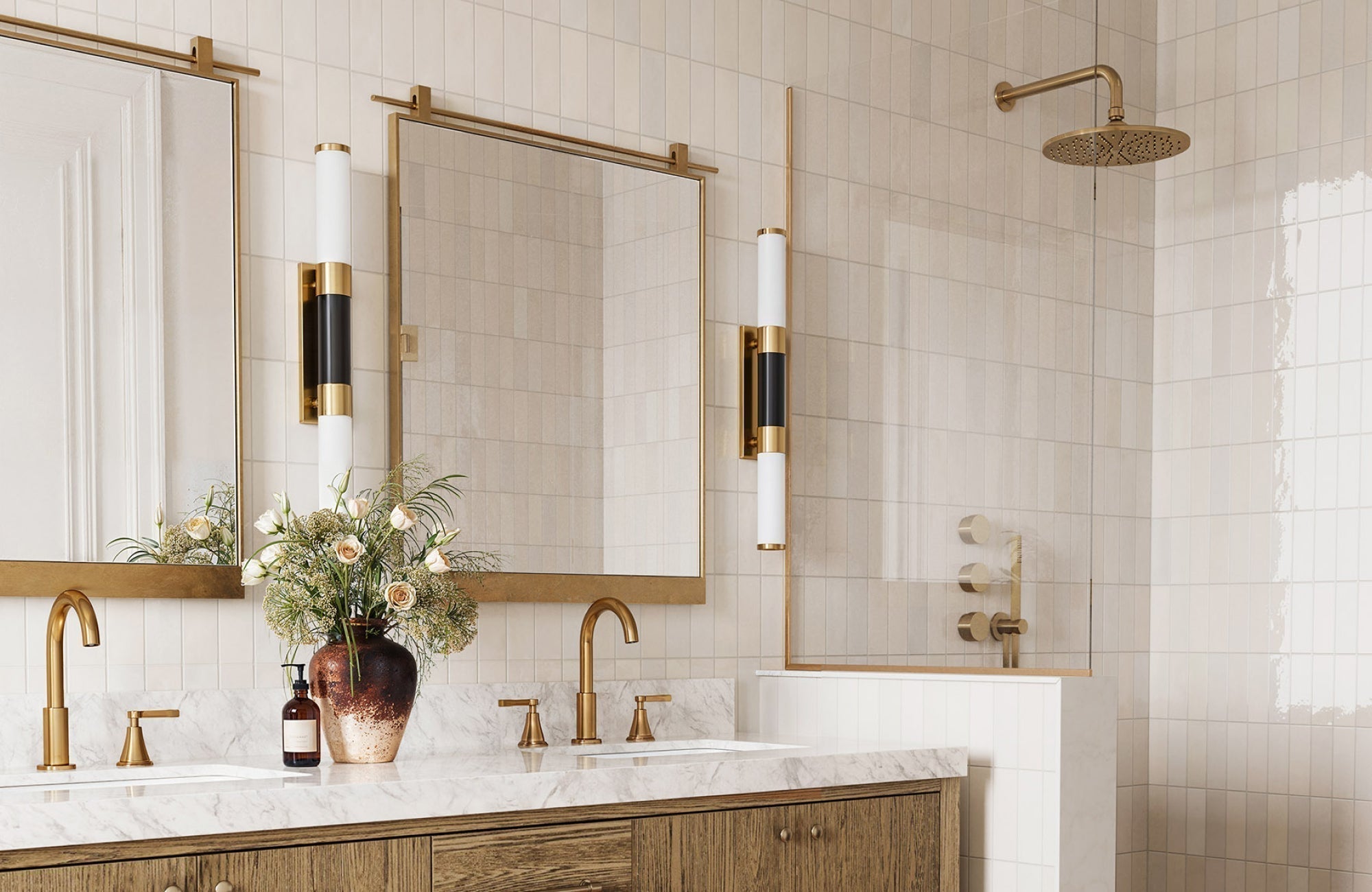
As a case in point, Edward Martin’s Fitz Mirror in Antiqued Iron captures this concept beautifully. Its matte black finish and industrial hardware add structure and contrast to rooms with soft neutrals and polished surfaces, as shown in the photo above, demonstrating how strategic style clashes can elevate a space with bold, intentional character.
Playing with Contrasting Materials and Finishes
Beyond style, contrasting materials and finishes can also heighten interest. For example, a high-gloss or mirrored frame can energize a room dominated by matte textures, while reclaimed wood against lacquered furniture highlights both texture and patina. Moreover, designers frequently explore opposing qualities, matte vs. reflective, warm vs. cool, smooth vs. rough, to add sensory variety and dimension. Mixed-media mirrors incorporating leather, stone, or resin take this idea even further, asserting themselves as sculptural, standalone pieces.
Strategic Placement for Impact
Equally important is where the mirror is placed. Instead of defaulting to conventional spots like over mantels or vanities, consider more unexpected locations. Designers often position mirrors asymmetrically, lean them against walls, or feature them in transitional zones like stair landings and hallways. These placements turn underutilized areas into curated design moments. Furthermore, when aligned with natural light or positioned to reflect focal features, mirrors can enhance depth and dimension, amplifying the room’s overall effect.
For those looking to make bold placement decisions with confidence, Edward Martin’s design consultation service offers expert one-on-one guidance, helping you evaluate layout, lighting, and scale in real time. From initial concept to final delivery, the service ensures every detail, including mirror positioning, contributes to a cohesive design vision.
And if you have questions about sizing, finishes, or how to coordinate your mirror with a specific tile or rug selection, don’t hesitate to contact Edward Martin. Our team is available to provide tailored recommendations, assist with product selection, and support you at every step of the design process.
By combining stylistic contrast, material tension, and purposeful placement, alongside expert support when needed, the contrarian approach transforms mirrors into bold visual anchors. Though this method requires greater design confidence, it results in highly personalized spaces with unmistakable character.

Finding the Balance
Finding the sweet spot between cohesion and contrast can elevate a space with both personality and polish. By weaving in subtle connections, through form, color, or style, you can introduce mirrors that feel distinctive yet perfectly at home within the room.
Echoing Shapes and Silhouettes
At the outset, repeating familiar shapes is a simple yet effective way to maintain visual harmony, even when the mirror diverges in style or material. A round mirror, for example, can complement traditional furniture if the room already features curves, like arched windows, drum tables, or curved-back chairs. Likewise, an ogee or quatrefoil silhouette can serve as a unifying element between classic and contemporary features.
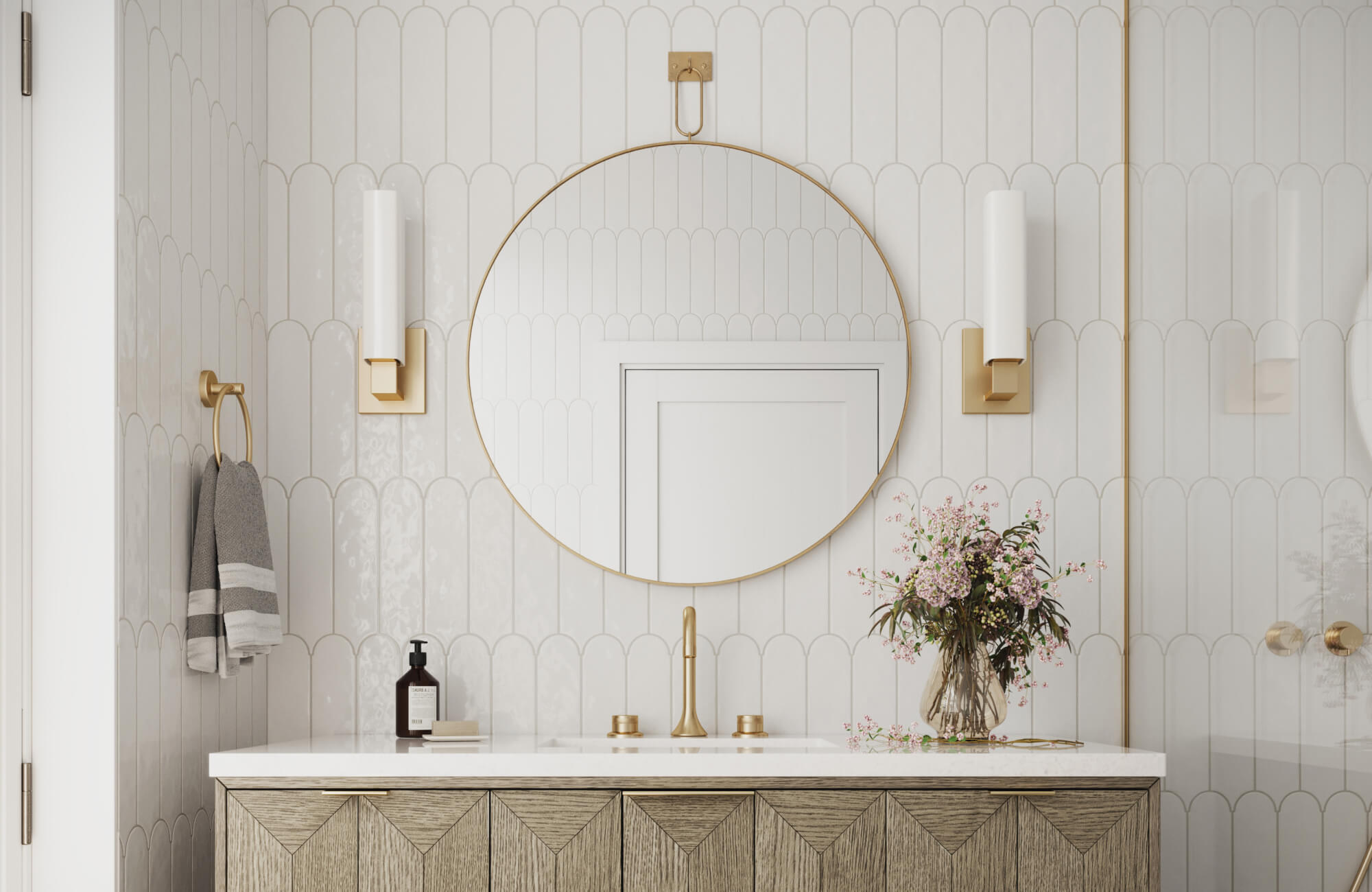
This concept, often referred to as “shape mirroring,” ties diverse design elements together through consistent geometry. Edward Martin’s Everdale Small Mirror in Gunmetal illustrates this principle beautifully. Its arched form echoes architectural curves, featured above in the shower tiles and surrounding details, adding rhythm and contrast while preserving cohesion throughout the space.
Complementary Color Schemes
In addition to form, color is another powerful tool for achieving harmonious contrast. Rather than matching finishes exactly, consider selecting frames in hues that complement the room’s palette. For instance, a brushed brass frame can add warmth to a space dominated by cool greys and blues. Similarly, jewel-toned mirrors, like emerald or sapphire, can inject vibrancy if their tones are subtly repeated in textiles or artwork.
To guide these decisions, many designers apply the 60-30-10 rule: 60% dominant color, 30% secondary, and 10% accent. A statement mirror typically falls into that final 10%, offering a controlled burst of contrast that brings life to the overall composition.
Blending Old and New
Finally, blending different design eras, known as contextual blending, can create a more layered, curated aesthetic. A vintage mirror can serve as an ornate focal point in a sleek, modern loft, while a frameless, contemporary piece can refresh the feel of a more traditional room. The key is to maintain continuity through shared textures, finishes, or craftsmanship.
Edward Martin’s Rory Mirror in Antique Brass Iron is a fitting example of this approach. Its sculptural silhouette and aged finish nod to vintage styling, while its clean form introduces a modern sensibility. In such cases, it softens the symmetry of surrounding fixtures, demonstrating how thoughtful contrast can bring richness and character to a space.

Practical Considerations Beyond Aesthetics
While aesthetics often take center stage, the smartest mirror choices are rooted in practicality. From how a mirror will be used to how well it holds up over time, a few behind-the-scenes decisions can make all the difference in both performance and peace of mind.
Functionality and Purpose
At the core, mirrors must do more than look good, they must fulfill their intended role. In bathrooms and dressing areas, clarity and appropriate sizing are essential. For best results, opt for silver-backed glass with at least 1/4-inch thickness to minimize distortion. Meanwhile, in entryways or living rooms, mirrors can serve a dual purpose by reflecting light and creating a sense of spaciousness, especially when positioned opposite windows or down narrow corridors.
For more specialized settings, such as hospitality or commercial environments, additional features may be required, such as anti-fog coatings, integrated lighting, or ADA-compliant mounting heights to ensure accessibility and code compliance. Illustrating this balance of beauty and function, Edward Martin’s Clancy Small Arch Mirror in Antique Brass delivers generous reflective clarity and a timeless silhouette. Its form works especially well in compact, light-sensitive spaces.
Installation and Safety
Of course, selecting the right mirror is only part of the equation, proper installation is equally critical. The mounting method must align with the wall type, be it drywall, brick, or plaster, and should include anchors or cleats rated to safely support the mirror’s weight. Additionally, in busy zones or seismic areas, options like French cleats or Z-clips provide added reinforcement.
Just as important is the use of safety glass, particularly in bathrooms, gyms, or children’s areas. Tempered or laminated mirrors reduce the risk of injury in case of breakage. To ensure full compliance, installers should adhere to industry standards such as ASTM C1036 and C1503. When in doubt, it’s always wise to consult a qualified professional to handle installation correctly and securely.
Maintenance and Durability
Finally, long-term durability hinges on environmental conditions and routine maintenance. In humid areas like bathrooms, choose mirrors with sealed edges or moisture-resistant backing to prevent desilvering. Copper-free glass offers superior resistance to oxidation, extending the lifespan of the reflective surface.
Equally important is how you care for the mirror. Use non-abrasive cleaners and microfiber cloths to preserve clarity and avoid scratches. It’s also advisable to periodically inspect mounting hardware, especially in coastal or damp regions where corrosion can occur. For mirrors with porous or reactive frames, such as unfinished wood or oxidized metals, occasional sealing may be necessary. As a best practice, always refer to the manufacturer’s care instructions to ensure optimal upkeep.
By factoring in function, secure installation, and long-term resilience, you safeguard your investment while enhancing the mirror’s performance. Ultimately, these practical considerations are just as important as aesthetics in delivering a design-forward solution that lasts.
Reflections That Define Your Space
In the end, choosing whether a mirror should match your décor comes down to more than just visual preference; it’s about design intent. Whether you're drawn to seamless integration, dramatic contrast, or a thoughtful mix of both, every decision, from frame material to mounting hardware, influences how the mirror contributes to your space.
A mirror isn’t merely an accessory, it’s a design tool that can anchor, amplify, or transform a room. As you shape your interior story, let your mirror choices reflect not just your style, but your vision. For curated options and expert insight, explore Edward Martin’s mirror collection and design resources.