
)
)
)
)
)
)
)
)
What Are The Benefits Of Pendant Lights?
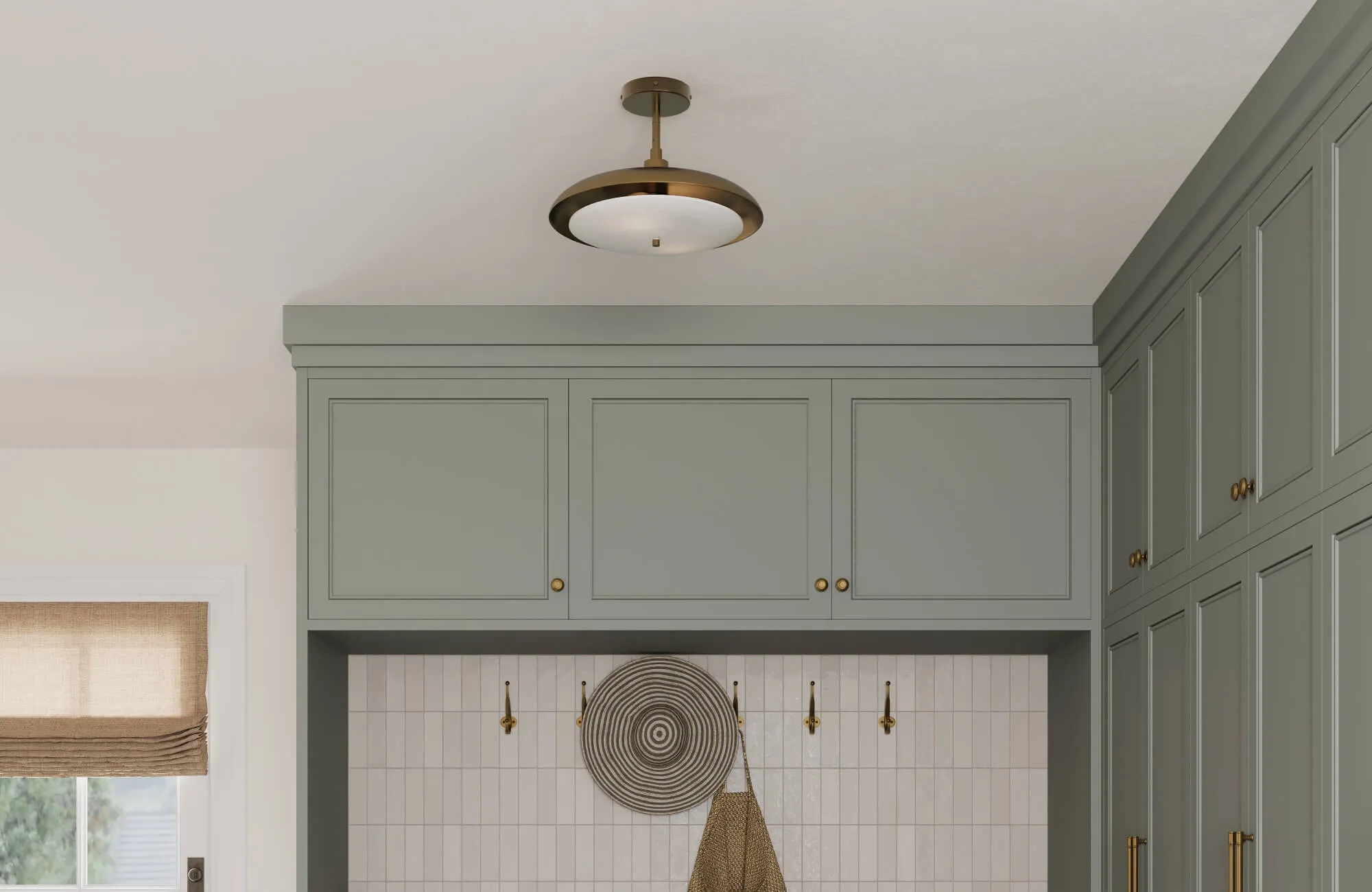
Pendant lights have become more than simple fixtures that brighten a room. They are versatile elements that shape the way you experience and interact with your environment. From creating ambiance to improving functionality, pendant lights adapt to different spaces with ease, offering solutions that balance style, efficiency, and personalization.
As you explore the possibilities of pendant lighting, you discover how it can transform ordinary areas into inviting, functional, and expressive spaces. With the right choice, it becomes not only a source of illumination but also a design statement that enhances comfort and reflects your lifestyle.
The Strategic Role of Pendant Lighting in Interior Design
Pendant lighting goes beyond illumination; it becomes a key component of spatial and visual storytelling. Unlike flush mounts or recessed lights, pendant fixtures interact with vertical space, allowing you to shape the room's narrative, flow, and focal points.
Defining Zones and Spatial Relationships
In open-concept layouts, pendant lights are powerful tools for creating structure where walls are absent. When you suspend a row of pendants over a kitchen island, the light instantly defines it as a culinary hub, separating it visually from surrounding living or dining areas. In the same way, a single pendant over a dining table or reading nook anchors the activity below, giving it purpose and identity. This technique, often referred to as light zoning, also allows you to manage multiple functions within the same room without building physical barriers.
The beauty of this approach is its subtlety. Instead of relying on furniture arrangements or architectural divisions, pendant lighting gives you an elegant way to guide attention and shape experiences. The eye naturally follows the glow and placement of pendants, which creates coherence and rhythm in spaces that might otherwise feel scattered or undefined.
Impact on Scale and Proportion
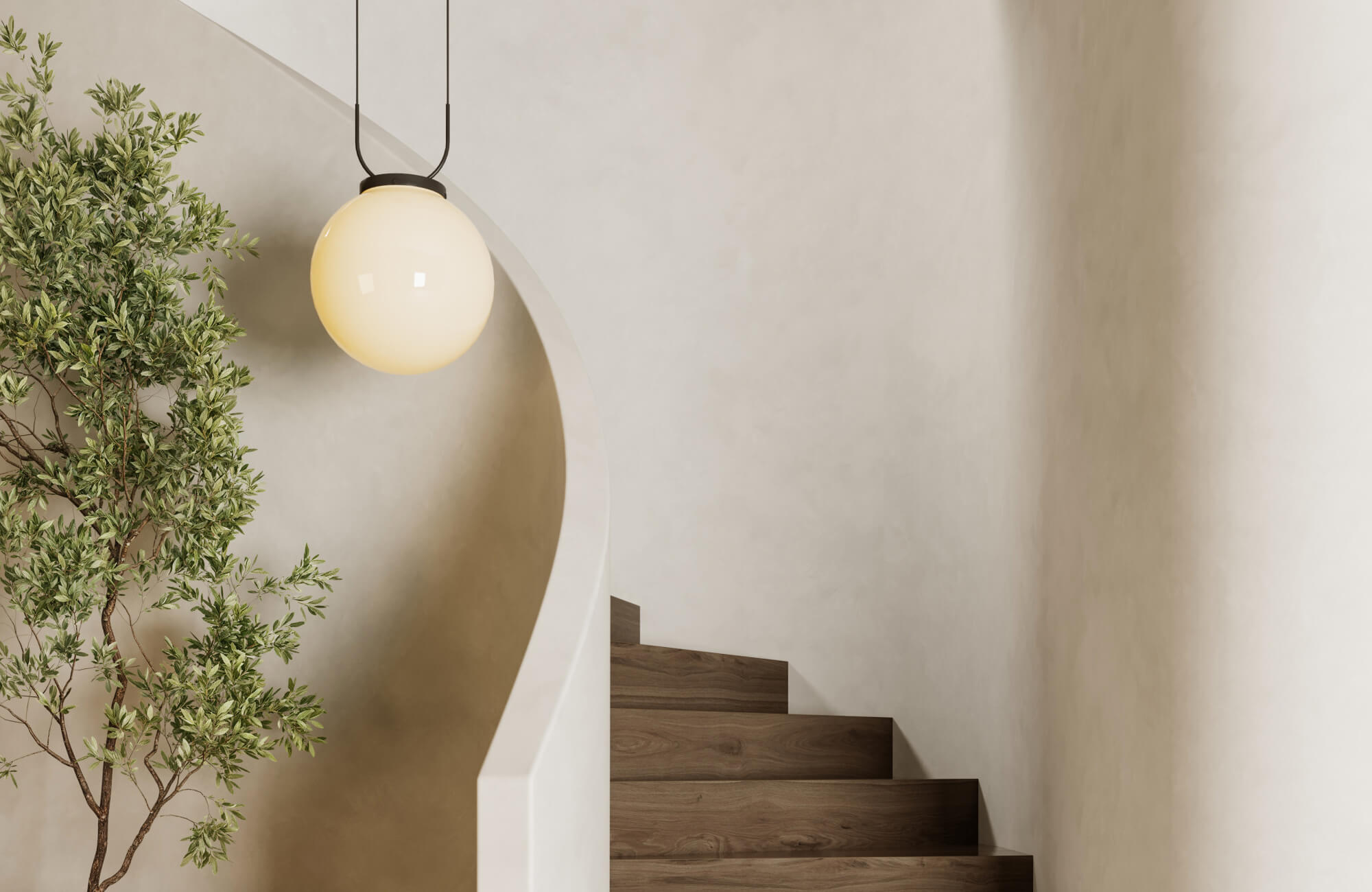
Pendant lights influence how you perceive scale within a room. A dramatic, oversized fixture in a tall entryway, for instance, pulls the gaze upward, showcasing the full height of the ceiling and adding grandeur. The image shown above illustrates this perfectly with Edward Martin’s Hemingway Pendant in Matte Black, a globe-style fixture finished in a classic black tone that contrasts beautifully against soft plaster walls and patterned tile. Its round form draws the eye upward along the staircase, highlighting the architectural curve while adding warmth and sophistication to the space.
On the other hand, using smaller pendants clustered together in a high-ceilinged room softens the sense of vastness, making the environment feel more welcoming and intimate. These variations allow you to control whether a space feels expansive or cozy. When proportion and placement are carefully considered, pendant lighting does more than illuminate. It also ties the room together, harmonizing size, style, and function so the space feels cohesive and intentional.
Enhancing Functionality with Purposeful Illumination
Pendant lighting is a practical solution for precision task lighting. By delivering focused illumination directly where it’s needed, pendants improve functionality in busy areas, from kitchens to workstations.
Optimized Illumination for Productivity and Detail
When you’re working at a desk, sewing table, or any surface that requires concentration, the quality of light makes a noticeable difference. Pendant lights, when properly positioned, direct illumination onto the exact area you need, minimizing shadows that often occur with general ceiling fixtures. This clear, targeted light also reduces eye strain and makes it easier to stay focused for longer stretches, whether you’re reading, writing, or working on intricate projects.
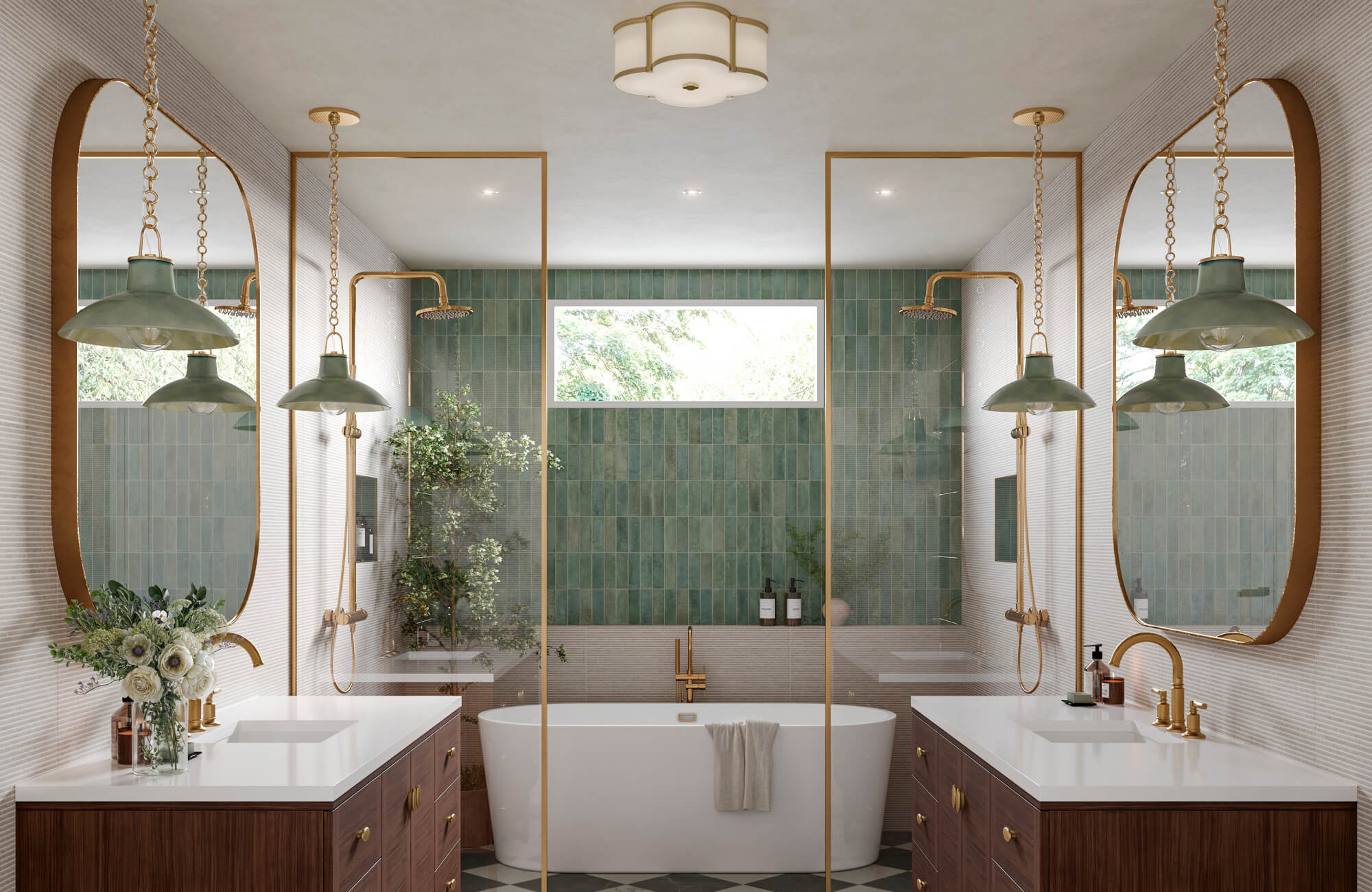
The psychological effect is equally important. A well-lit workspace feels more intentional and organized, which in turn supports better productivity. Edward Martin’s Sable Pendant in Aged Brass / Ceramic Moss Crackle is a perfect example, combining warm brass tones with a textured green finish that adds character while providing reliable illumination. As shown in the image above, its balanced design makes it ideal for task-oriented areas, offering both clarity and visual appeal so your workspace feels efficient yet inviting.
Specialized Lighting for Culinary Tasks
The kitchen is one of the most practical spaces for pendant lighting, especially above counters and islands, where tasks like chopping, mixing, and plating require accuracy. Unlike recessed lighting, which can create uneven illumination, pendants direct their glow precisely where your hands are at work. This eliminates shadows that might otherwise make cooking more difficult and enhances safety when handling sharp utensils.
Light quality also plays a role in elevating your experience. A cool white pendant light reveals the natural colors and textures of ingredients, allowing you to better judge freshness and doneness while preparing meals. At the same time, pendants bring warmth and atmosphere to the kitchen, striking a balance between functional necessity and inviting ambiance. Edward Martin’s Carly 34" Pendant in Vintage Brass exemplifies this balance, pairing a classic brass finish with generous scale to provide both elegance and practical coverage. Positioned above an island, it transforms cooking areas into well-lit, welcoming spaces that encourage both efficiency and togetherness.
Optimizing Space and Reducing Clutter
Because they’re ceiling-mounted, pendant lights preserve valuable surface area, making them ideal for small spaces and minimalist designs. They provide overhead illumination without the bulk of floor or table lamps.
Enhancing Visual Flow and Reducing Clutter
One of the most practical advantages of pendant lighting is how it clears away unnecessary bulk. By suspending light from above, you eliminate the need for table lamps that occupy precious surface space. In bedrooms, for instance, pendants on either side of the bed remove the requirement for large nightstand lamps, leaving the tables free for essentials such as books, a glass of water, or personal devices. This instantly makes the room feel less crowded and more intentional in its design.
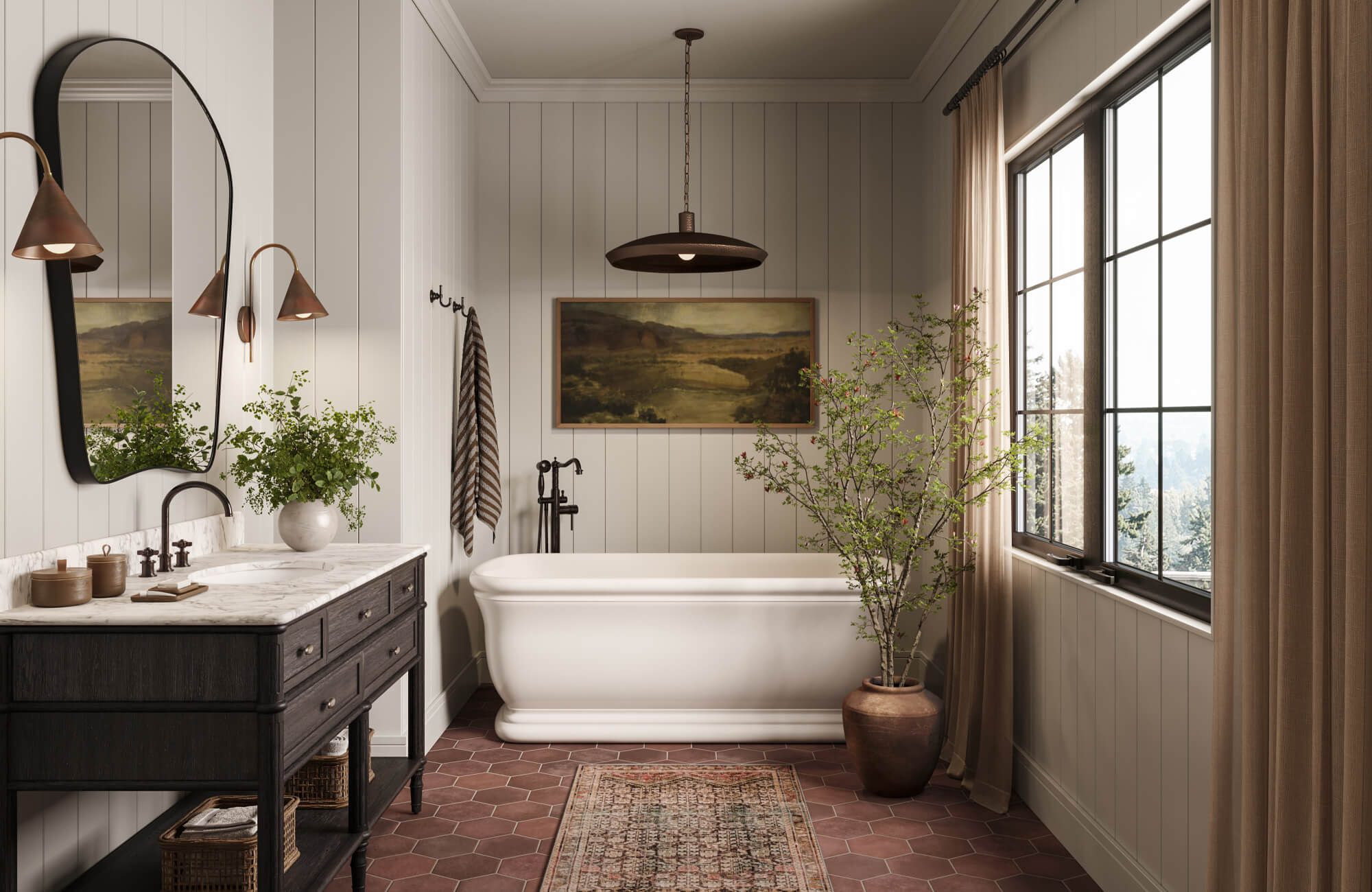
This effect goes beyond functionality as it creates a visual flow that supports a minimalist aesthetic. When surfaces remain uncluttered, your eye naturally focuses on the architectural features of the room and the pendant itself, which becomes both a light source and a design statement. In the photo shown above, the Dempsey Pendant in Hammered Dark Antique Brass illustrates this perfectly. Its hammered texture and deep antique brass finish introduce richness and warmth, while its overhead placement keeps counters free and highlights the symmetry of the space.
Strategic Illumination in Confined Spaces
In smaller homes or apartments where every square foot matters, pendant lights bring illumination without compromising movement. Hanging a pendant in an entryway, hallway, or corner ensures the space remains bright while keeping pathways completely clear. Unlike floor lamps, which can obstruct or make tight spaces feel narrower, ceiling-mounted pendants also preserve openness.
Smaller-scale fixtures work especially well in these environments. A piece like the Barnes 9" Pendant in Aged Antique Distressed Bronze shows how thoughtful design can merge practicality with atmosphere. Its compact size keeps it proportionate to tighter spaces, while the aged bronze finish introduces a touch of warmth and texture that elevates the room without overwhelming it. By drawing the eye upward, it also enhances both brightness and perceived height, making even narrow spaces feel more inviting and expansive.
Tailoring Ambiance Through Personalized Design
Pendant lighting offers a high degree of creative freedom, allowing you to shape not only how a room looks but also how it feels. From the choice of materials to the way pendants are arranged and suspended, every detail contributes to the overall character and mood of a space, allowing lighting to become a deeply personal design element.
The material of a pendant plays a central role in defining its aesthetic and impact. Sleek metals and clear glass lend a refined, contemporary edge that makes interiors feel crisp and modern, while woven fibers, ceramics, or reclaimed wood introduce warmth and texture for a more natural and inviting atmosphere. The material also determines how light interacts with the room—glass pendants may scatter intricate reflections that add visual drama, while fabric or frosted shades diffuse illumination into a soft, ambient glow. These subtle variations make pendant selection less about choosing a fixture and more about curating an experience that resonates with your style.
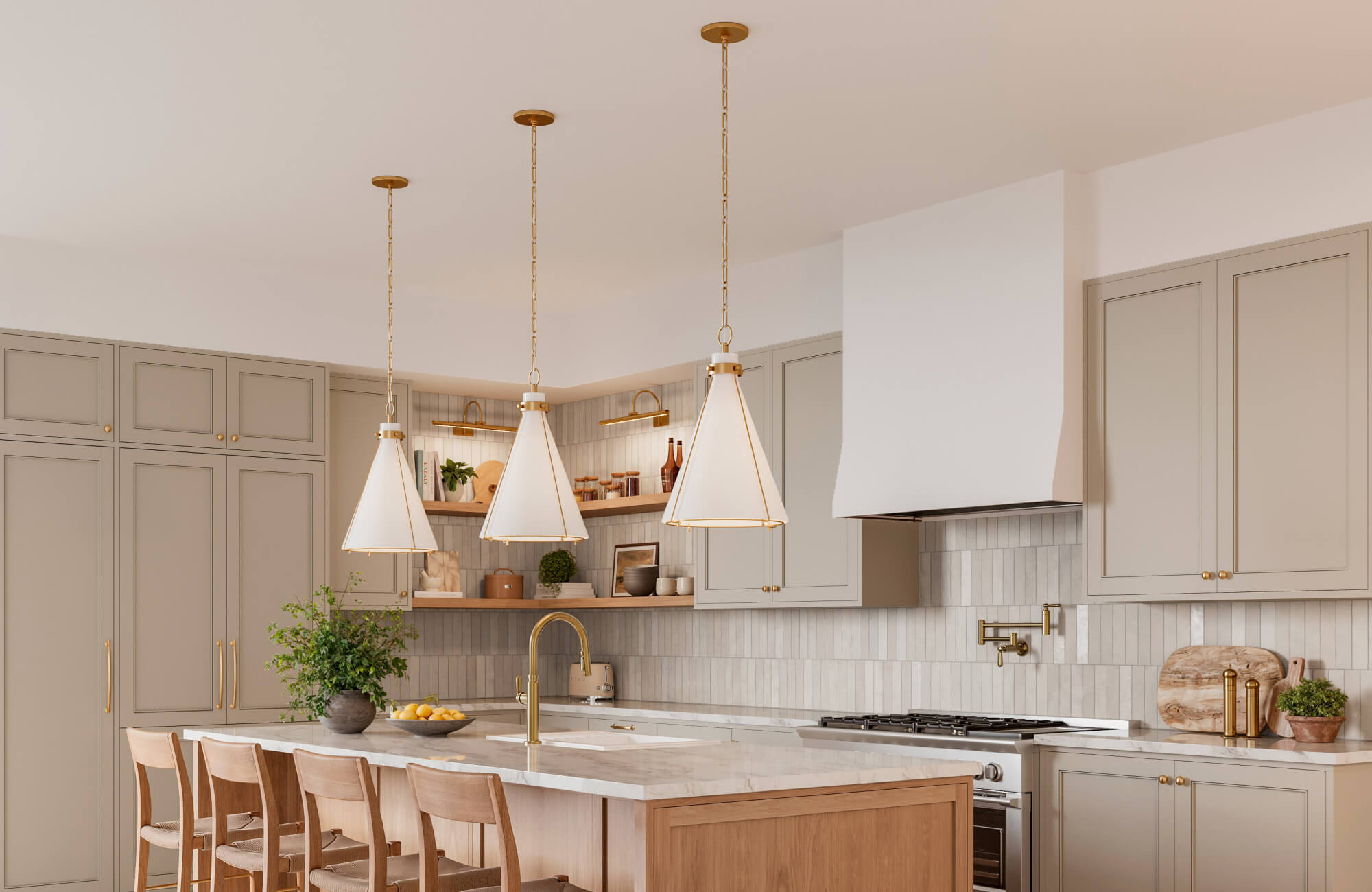
Arrangement and spacing are equally important. Adjustable drop lengths and clustering options allow you to create rhythm and balance in your lighting design. A staggered installation over a stairwell, for example, can produce a dynamic cascading effect, while a clean, even row above a kitchen island brings structure and symmetry. The trio of Rosa Triangular Pendants in Aged Brass shown in the picture above demonstrates how pendants can double as both functional task lighting and statement décor. Their sculptural triangular shades and warm brass finish also complement the cabinetry and natural wood tones, unifying the kitchen’s aesthetic while casting a bright, focused glow across the island.
To bring all of these elements together seamlessly, our design services can help you refine your vision and transform it into a cohesive lighting plan. With expert guidance, you can ensure every pendant complements the room’s proportions, enhances ambiance, and reflects your unique style, turning lighting into one of the most powerful expressions of your interior design.
Supporting Sustainable and Energy-Efficient Living
Modern pendant lighting not only elevates the look of your space but also supports a lifestyle centered on sustainability and energy efficiency. With advancements in technology and materials, pendants allow you to make design choices that are both stylish and environmentally responsible. This balance between function and eco-consciousness makes them an intelligent option for anyone seeking long-term value in their lighting solutions.
A key factor in this sustainability is the synergy between pendant fixtures and LED technology. Unlike traditional bulbs, LEDs consume far less electricity while offering brighter, more consistent illumination. They also last significantly longer, meaning you don’t have to replace them as frequently. This extended lifespan reduces both the financial cost of constant replacements and the environmental toll of manufacturing and disposing of bulbs. By simply pairing pendant lighting with LEDs, you’re reducing your carbon footprint and contributing to a greener, more cost-effective space.
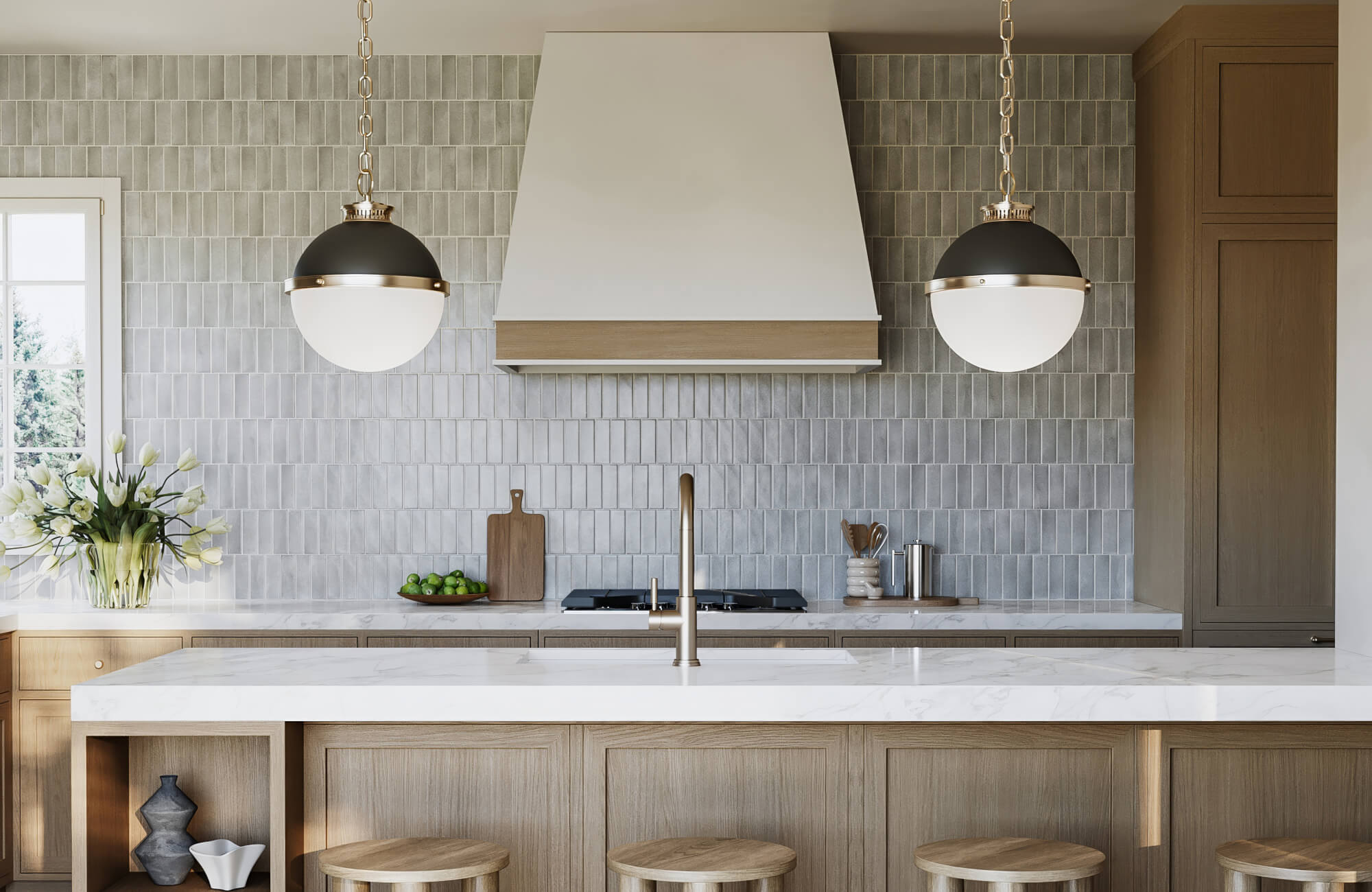
Beyond the technology itself, pendant lights also minimize energy waste through their ability to focus illumination where it is most needed. Instead of over-lighting an entire room with a single ceiling fixture, pendants cast targeted beams that enhance visibility in specific areas such as kitchen counters, reading corners, or entryways. In the photo displayed above, the Barnes 14" Pendant in Aged Antique Distressed Bronze demonstrates this balance beautifully. Its generous size ensures ample task lighting over the island, while the aged bronze finish adds character and contrast to the modern cabinetry and surfaces. This combination of style, efficiency, and practicality makes pendants like this an ideal choice for spaces that value both design and sustainability.
Making the Right Lighting Choice for Long-Term Impact
Pendant lights bring together beauty, practicality, and sustainability in ways few other fixtures can achieve. They define spaces, enhance productivity, optimize small areas, and even support eco-friendly living, all while offering you endless opportunities for personalization. By integrating them into your design, you create lighting that elevates both the function and atmosphere of your space. Ultimately, choosing pendant lights is about making an investment that enriches your daily life while adding lasting value to your space.
If you’re ready to explore pendant lighting solutions tailored to your needs, reaching out directly can help you take the next step with confidence. Our team is available to answer your questions, guide you through style and sizing options, and provide expert insight on how to bring your vision to life. By connecting with us, you ensure that your choice in lighting is not only beautiful but also perfectly suited to your space and lifestyle!
Follow us on Instagram
@EDWARD.MARTIN
)
)
)
)
)
)
)
)
)
)
)
)
)
)
)
)