Mirrors are more than simple reflections; they also influence the way we experience our homes every day. They can brighten a room, create the illusion of more space, and even serve as striking focal points that complete a design. Aside from their visual impact, mirrors also play a practical role in daily life, whether for grooming, getting dressed, or adding clarity to routines. Although wall mirrors and bathroom mirrors may seem alike at first, their design, construction, and everyday use highlight distinct differences. Recognizing these distinctions further helps you to choose a mirror that fits both your needs and your space. In this article, we’ll explore the contrasts in purpose, style, materials, installation, lighting, and maintenance, giving you the insight to make a confident and informed choice.

Placement and Purpose of Mirrors
A mirror’s placement directly affects both its appearance and its function. Wall mirrors can be used in nearly any room, giving you freedom to experiment with style and placement, while bathroom mirrors are shaped by the daily tasks they support in one of the home’s most practical spaces. Knowing where a mirror belongs helps explain why it’s designed the way it is.
Everyday Use
Wall mirrors are all about versatility. For example, a full-length mirror in the bedroom makes it easy to check outfits, while a framed piece in the hallway can brighten the space by reflecting light. Additionally, placing an oversized mirror in the living room creates depth and makes the area feel more open. Because they adapt so well to different settings, wall mirrors can also serve both practical and decorative purposes, especially when paired with stylish frames.
Grooming and Utility
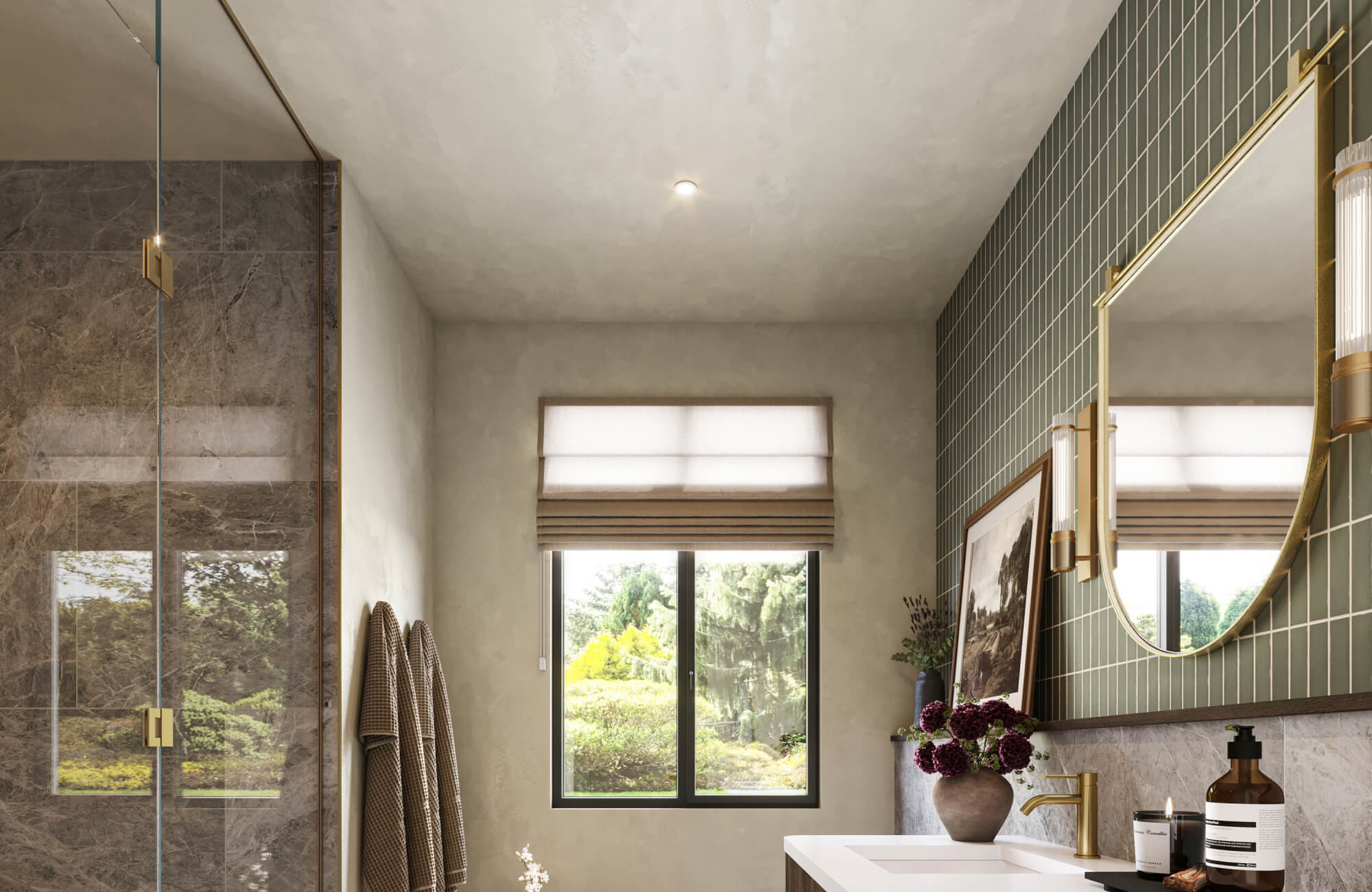
Bathroom mirrors play a more focused role. When positioned above sinks and vanities, they provide the precision needed for tasks like shaving, applying makeup, or washing your face. The clarity and placement of the mirror directly affect how easy and comfortable these routines feel. A good example is Edward Martin’s Fitz Mirror in Antiqued Iron, as pictured above, which demonstrates how a well-proportioned design can combine functionality with style. Its placement above the vanity shows how a bathroom mirror is less about casual reflection and more about supporting everyday routines where detail truly matters.
Decorative Versus Functional Roles
Wall mirrors are often chosen for their decorative value, giving you the freedom to explore shapes, frames, and styles that complement your interior design. Bathroom mirrors, in contrast, are shaped by practicality. While they can still contribute to the room’s style, their main purpose is to provide a reliable surface for grooming. This balance between design flexibility and functional necessity marks one of the most distinct differences between the two.

Design and Style Differences
The design of a mirror shapes how well it fits into a room. Wall mirrors invite bold experimentation with form and detail, while bathroom mirrors tend to favor simple, clean lines that support the space without drawing too much attention.
Shapes and Frames
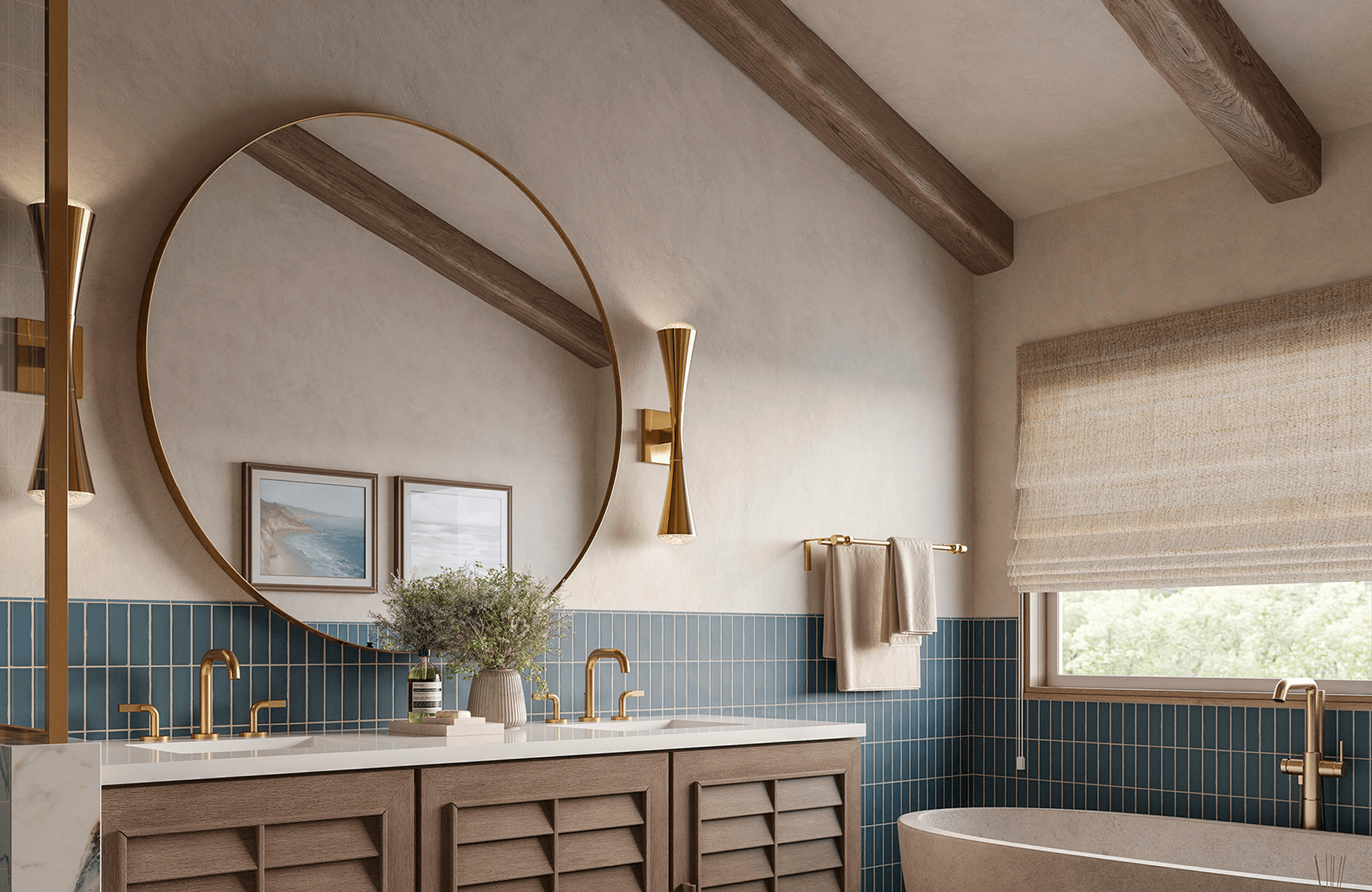
Wall mirrors come in a wide range of shapes, like round, rectangular, oval, arched, or even irregular, often paired with frames made of wood, metal, or resin. Some include carvings or layered textures that can turn them into striking statement pieces. Bathroom mirrors, on the other hand, usually keep to simple shapes like rectangles, circles, or occasionally asymmetrical forms, and are often frameless. Their streamlined design further makes them timeless and easy to coordinate with sinks, vanities, and surrounding tile patterns.
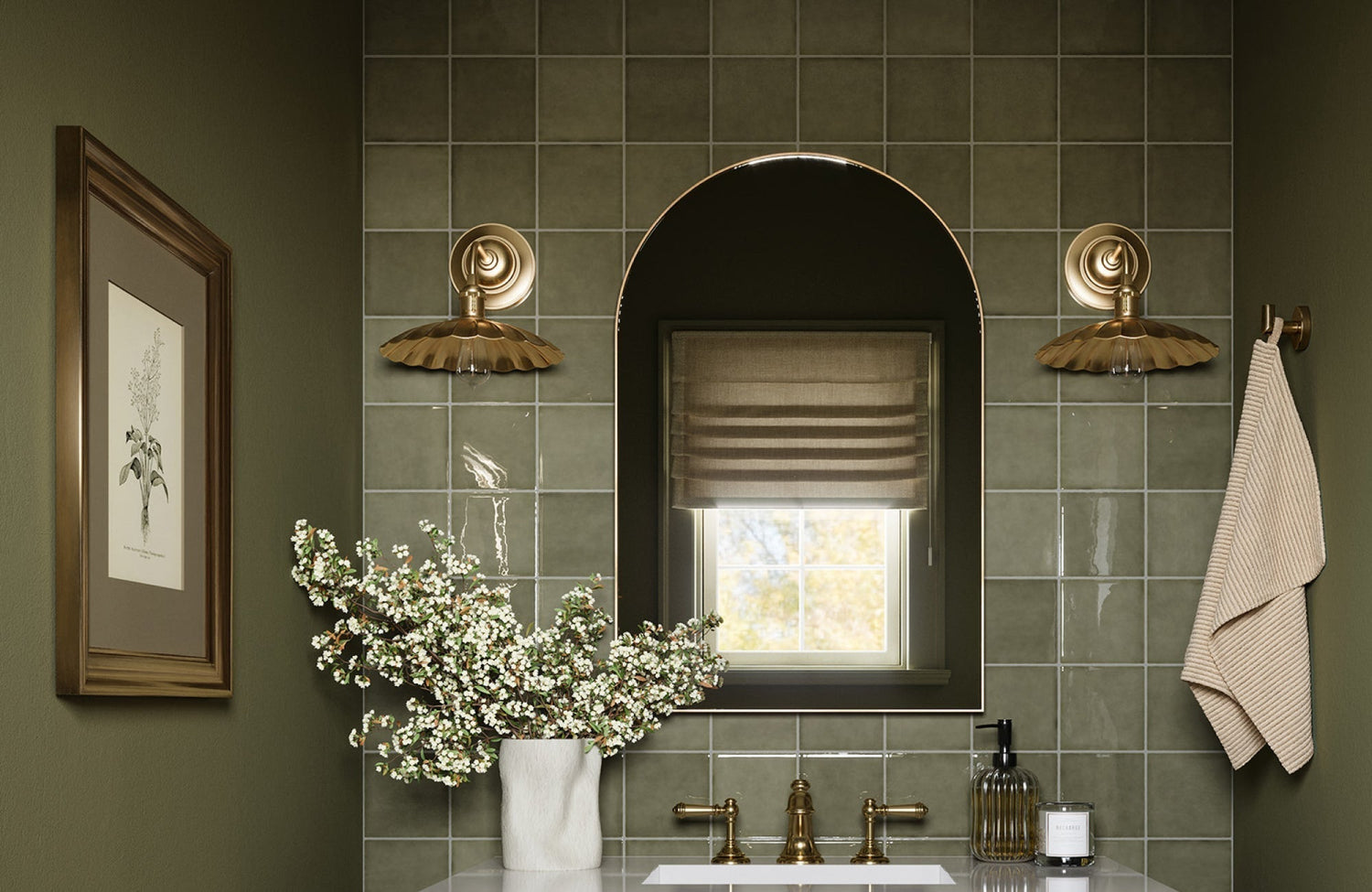
A good example is Edward Martin’s Shirley Small Mirror in Antique Brass Iron, as pictured above, which demonstrates how an asymmetrical form can bring subtle character to a bathroom while still maintaining balance and harmony with the surrounding elements.
Aesthetic Goals
The design of each mirror serves a different purpose. For instance, a wall mirror might be chosen to brighten a dining room or to give the impression of more space in a narrow hallway. In contrast, the focus in the bathroom shifts toward clarity and simplicity. In this setting, mirrors typically avoid heavy frames or ornate shapes that might interrupt daily routines, opting instead for sleek lines and clear reflections.
Customization Options
Wall mirrors offer an extensive range of customization options, from antique finishes and oversized proportions to designs with decorative inlays. Bathroom mirrors, in contrast, are generally produced with a more streamlined approach. The most common variations include frameless styles, subtle borders, or integrated features such as shelving or lighting. The difference is clear: wall mirrors highlight creative expression, while bathroom mirrors focus on balancing style with practical function.

Material and Construction Features
Materials play a major role in how well a mirror functions in its environment. Wall mirrors prioritize variety in materials, while bathroom mirrors are engineered to withstand humidity and daily use.
Glass Quality
Wall mirrors are typically made with standard float glass, which performs well in the dry areas of a home. The thickness may vary depending on the mirror’s size, but maintaining clarity is usually the main priority. Bathroom mirrors, in contrast, are often constructed with tempered glass for added safety and include coatings that resist fogging and moisture. This added durability allows them to withstand steamy conditions while preserving a clear, reliable reflection.
Frame Materials
Wall mirrors are available in a wide variety of frame materials, including solid wood, brass, iron, and resin, each adding its own character to a room’s style. Bathroom mirrors, however, are built with durability in mind. To withstand constant humidity, they often feature aluminum, stainless steel, or metallic finishes such as brass and bronze, along with specially treated wood designed to resist warping and moisture damage. A fitting example is Edward Martin’s Clancy Small Mirror in Antique Brass, as displayed in the photo above, which demonstrates how metallic frames can bring both strength and elegance to a bathroom while ensuring long-term performance in a humid environment.
Protective Treatments
Protective features are one area where bathroom mirrors stand apart. Many are designed with sealed edges to prevent blackening, water-resistant backings to extend their lifespan, or anti-fog technology that keeps the surface clear after a hot shower. Wall mirrors, in comparison, rarely include these treatments since they are not typically exposed to steam or direct water contact.

Installation and Placement Considerations
The way a mirror is installed affects not only safety but also comfort and appearance. Bathroom mirrors require precise positioning, while wall mirrors offer greater flexibility and freedom in placement.
Mounting Methods
Wall mirrors can be installed using hooks, brackets, or even adhesive strips, depending on their size and weight. They might also be centered over a piece of furniture or arranged in groups to create a gallery-style display. Bathroom mirrors, however, typically need sturdier support, often anchored into studs or secured with specialized mounts to withstand frequent use and the effects of moisture.
Height and Positioning
In bedrooms and living areas, wall mirrors can be placed at whatever height works best, such as above a sofa, near a doorway, or low enough for children to reach. A mirror can also be positioned higher on the wall to highlight architectural features, like a mantel. Edward Martin’s Raelynn Mantel Mirror in Polished Brass, as pictured above, shows how a well-placed mirror above a fireplace can enhance symmetry and draw the eye upward, making the entire room feel more balanced.
Bathroom mirrors, on the other hand, require more careful planning. They are usually mounted at eye level above the vanity so that anyone using the sink has a clear and comfortable view. Additionally, their height and width are selected to align with the vanity’s proportions, creating a sense of balance while ensuring practicality.
Safety Aspects
Because bathrooms are exposed to constant changes in temperature and humidity, mirrors in these spaces often require added safety features such as tempered glass and reinforced mounts. Wall mirrors also need secure installation, but the standards are usually less demanding. As a result, they are easier to move or replace when you decide to update your décor.

Lighting and Reflection Impact
The way a mirror interacts with light can completely change the atmosphere of a room. Bathroom mirrors are often designed with built-in lighting in mind, while wall mirrors usually work to enhance the natural or ambient light that’s already there.
Integrated Lighting
Many bathroom mirrors now feature LED or backlit options that deliver even, consistent illumination, ideal for tasks such as shaving or applying makeup. This built-in lighting minimizes shadows and provides a level of clarity that standard room fixtures often cannot achieve. Wall mirrors, in contrast, rarely incorporate lighting, as their role is to reflect the light in the space.
Reflection of Natural Light
Wall mirrors are especially effective at amplifying natural daylight. For example, placing one across from a window can brighten a dim room, making the space feel larger and more open. This effect is equally useful in compact living rooms, hallways, or dining areas where natural light is limited. Bathroom mirrors, while reflective, are usually confined to smaller areas and are less often positioned to take advantage of outdoor light. In these cases, they rely more on artificial lighting to provide the clarity needed for daily routines.
Edward Martin’s Esmeralda Small Mirror in Polished Brass, as shown in the photo above, illustrates how a bathroom mirror placed near a window can still harness natural light, helping the room feel brighter and more welcoming.
Room Ambience
Mirrors also play an important role in setting the mood of a space by interacting with artificial light. For instance, a wall mirror can reflect the glow of a chandelier to soften the atmosphere in a dining room, or it can bounce lamplight around a living area, creating a warm, inviting feel. In bathrooms, mirrors work closely with task lighting to provide accuracy during grooming, often supported by overhead or side fixtures that help minimize shadows.
In both cases, mirrors contribute to ambience, yet their goals differ: wall mirrors aim to enhance comfort and atmosphere, while bathroom mirrors prioritize precision and clarity. Ultimately, this distinction highlights how mirrors influence not only what you see but also how a room feels.

Cost, Maintenance, and Longevity
Choosing between a wall mirror and a bathroom mirror also involves considering budget, upkeep, and longevity. These factors can make a significant difference in both the overall value and the day-to-day convenience of your choice.
Price Range Differences
Wall mirrors span a wide range in cost, with simple designs often starting around $75.00 and more elaborate, statement-making pieces reaching several hundred dollars or more. Bathroom mirrors, in comparison, usually cost more when they include advanced features such as integrated lighting or fog-resistant coatings. The specialized construction required to withstand humidity can also increase the price; some bathroom mirrors start at around $199.00, depending on their style and size. Because of these differences, it’s helpful to think about whether you’re investing mainly in style or in function. In many cases, the right choice depends on how much weight you place on durability and convenience over decorative impact.
Cleaning and Care
Maintaining a wall mirror is straightforward: a streak-free cleaner and a soft cloth are usually needed to keep the surface clear and polished. Bathroom mirrors may require more careful attention, especially those with anti-fog coatings or integrated electrical features. Using the wrong cleaning products can damage protective layers, so choosing the right method is essential. In addition, mirrors exposed to humidity benefit from regular wiping to prevent moisture buildup. Over time, this extra care further helps preserve both their appearance and their functionality. To ensure the best results, it’s always recommended to follow the manufacturer’s cleaning and maintenance guidelines.
Durability Over Time
A wall mirror in a hallway or bedroom can last for decades with minimal wear since it is not exposed to harsh conditions. Bathroom mirrors, while engineered to withstand humidity, may eventually show signs of wear if not properly maintained. Protective edges and moisture-resistant backings can extend their lifespan, but placement in a damp room naturally reduces longevity compared to mirrors in drier spaces. Regular cleaning and proper ventilation can slow this process, helping bathroom mirrors stay clear and functional for longer. In many homes, the difference in durability often comes down to the environment rather than the quality of the mirror itself.
Choosing the Right Mirror
Wall mirrors and bathroom mirrors serve the same core purpose, yet their differences become equally important when you consider performance, style, and longevity. Wall mirrors give you the freedom to experiment with shapes, sizes, and decorative frames, and bathroom mirrors provide the clarity and durability needed in one of the home’s most practical spaces. Understanding these contrasts makes it easier to choose a mirror that meets both your functional needs and your design goals.
If you’re planning a project or need guidance choosing the right mirror for your space, feel free to contact us. Our design service can help you explore options that balance style and practicality, ensuring your mirrors not only look great but also work perfectly for your everyday needs.