Hex tiles have a long history in bathroom design, admired for their versatility and timeless appeal. Their geometric form works in both classic and modern spaces, offering endless flexibility to personalize your bathroom. Among the many choices they present, size is one of the most important decisions because it shapes not only the look of the bathroom floor but also how the space feels in everyday use.
The size you choose also influences visual spaciousness, style, ease of installation, and long-term upkeep. Small tiles can bring intricate detail, large tiles can create openness, and mid-sized options strike a balance between the two. In this article, we’ll explore different perspectives to help you choose a hex tile size that enhances both the beauty and function of your bathroom.

The Impact of Tile Size on Bathroom Design
When you look at a bathroom floor, the size of the tiles is one of the first things you notice. It can make the space feel detailed and decorative, wide and open, or comfortably balanced. Understanding how different hex tile sizes change the overall look and atmosphere will help you choose the option that feels right for your bathroom.
Small Tiles Create Intricate Detail
Small hex tiles, typically ranging from 1 to 2 inches, can bring texture and detail to a bathroom floor. Due to their compact size, they naturally form repeating patterns that feel artistic and decorative. If you admire vintage or traditional interiors, these tiles also offer a timeless appeal that connects with retro influences. Additionally, they allow for more creative layouts, such as contrasting borders or custom mosaics, which larger tiles cannot achieve as easily. The result is a floor that feels personal and carefully crafted, making small hex tiles a great choice if you want your bathroom to stand out with its own character.
Large Tiles Expand Visual Space
Large hex tiles, often 6 to 8 inches across, can create a sense of openness by minimizing grout lines. With fewer interruptions on the floor, the bathroom feels calmer and more expansive, which is particularly valuable in compact homes. Large tiles also suit modern or minimalist interiors because they highlight clean geometry without overwhelming the eye. In addition, if your goal is to make your bathroom look bigger and more contemporary, larger hex tiles will deliver that effect while keeping the layout simple and fluid.
Mid-Size Tiles as a Balanced Choice
Mid-sized hex tiles, usually in the 3 to 4 inch range, provide the best of both worlds. They offer enough detail to keep the floor interesting while still giving a sense of space and openness. In transitional bathrooms that blend traditional and modern elements, this scale feels particularly fitting.
Edward Martin’s Blair 3x3 Matte Porcelain Hexagon Mosaic Tile in Volakas White, as shown in the photo above, demonstrates how mid-sized hex tiles adapt effortlessly to different design settings. Because they can work well with a wide range of color palettes and finishes, they also allow you to achieve a comfortable middle ground between decorative richness and streamlined simplicity.

Matching Tile Size to Bathroom Dimensions
Every bathroom has unique proportions, and choosing the right tile size means paying attention to how the floor relates to the room itself. A size that feels perfect in one bathroom may look out of place in another. By considering the scale of your space, you can achieve a balanced, cohesive result.
Small Bathrooms
In a small bathroom, hex mosaics can be an advantage because the extra grout lines improve slip resistance and add visual detail. They can further bring texture and charm, making even a compact space feel thoughtful and well-designed. However, too many grout lines may also create a busier look that reduces the sense of openness. In contrast, larger hex tiles can provide smoother surfaces with fewer interruptions, helping the floor feel cleaner and the room appear more spacious. They’re an excellent choice if your goal is to maximize every inch without changing the layout.
Medium-Sized Bathrooms
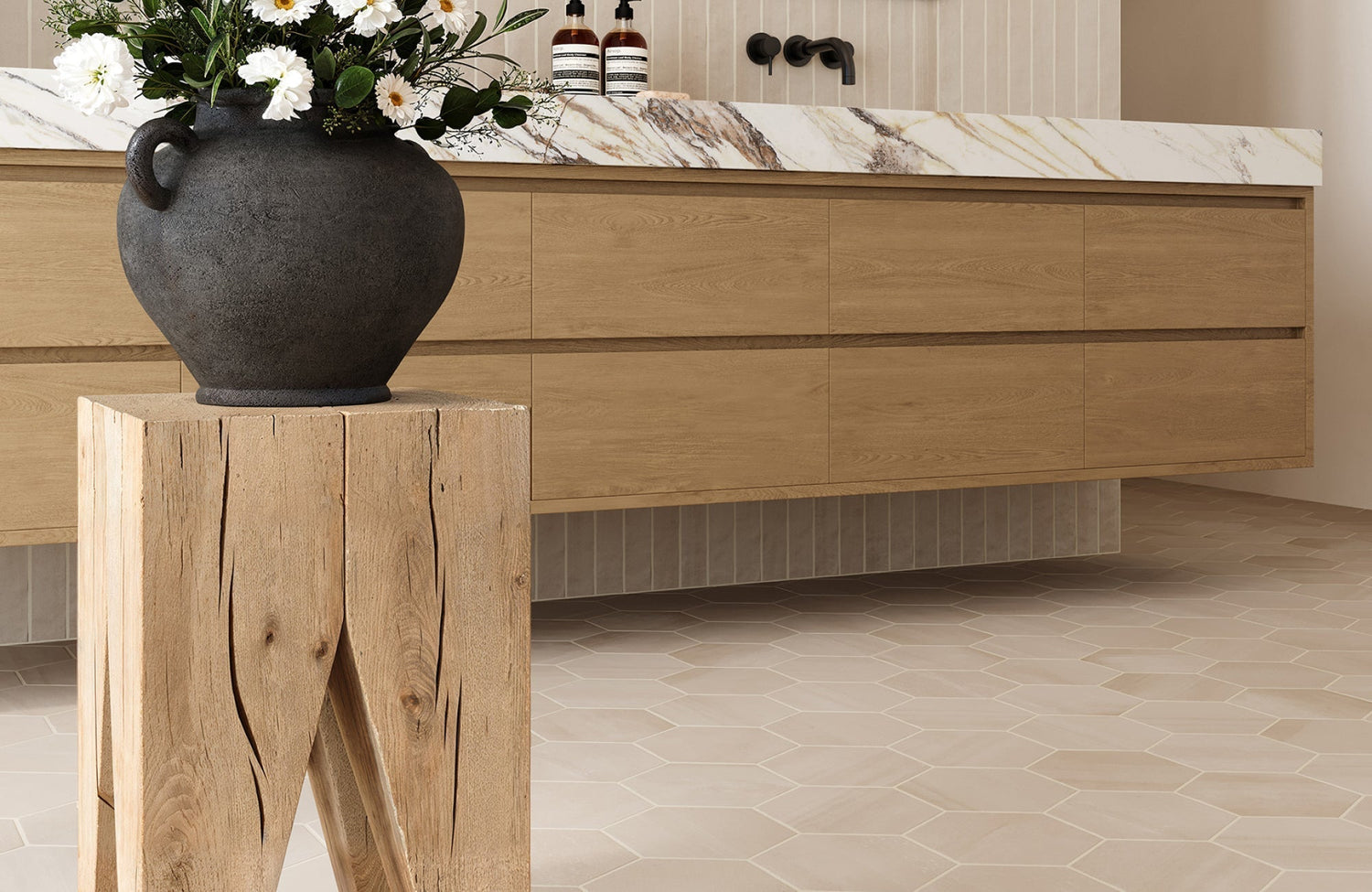
With medium-sized bathrooms, you have more flexibility in choosing tile sizes. Smaller hex tiles can bring personality and decorative detail, while medium or larger tiles can emphasize openness and flow. Your decision depends on whether you want the floor to act as a bold feature or blend seamlessly into the background. This balance of proportion becomes a creative choice rather than a limitation, allowing you to experiment with different effects. Edward Martin’s Juliet 7x8 Hexagon Matte Porcelain Tile in Pearl, as shown in the photo above, illustrates how a larger hex tile can make a medium bathroom feel more expansive while still maintaining warmth and character.
Large Bathrooms
In a large bathroom, the floor has more room to act as a design feature. You can combine different tile sizes to create zones or add visual hierarchy. For example, using smaller hex tiles in a shower area and larger ones in the main space helps define each zone naturally. Another approach is to use mid-sized tiles across the floor, but add a border of smaller tiles to frame the layout. Larger bathrooms allow for these creative mixes without overwhelming the design.

Style and Mood Created by Different Sizes
Aside from space and proportion, tile size further sets the tone of the bathroom. The right size can make a room feel historic, modern, or somewhere in between. By aligning hex tile size with your desired atmosphere, you can ensure your bathroom feels intentional and harmonious.
Classic and Vintage Looks
Small hex tiles are the hallmark of classic and vintage bathrooms. Their compact size allows for intricate patterns, especially in black-and-white or colored accents, that reflect early 20th-century style. Contrasting grout lines heighten their mosaic effect, giving the floor both decorative appeal and slip resistance. Medium hex tiles can work in vintage-inspired spaces, as well, offering a softer and less detailed look while still keeping the design rooted in tradition. Larger hex tiles are less common in this style, but when used in muted tones, they can also provide a fresh twist on a classic design while maintaining a sense of timeless simplicity.
Modern Simplicity
Large hex tiles are most at home in contemporary bathrooms. Their broad surfaces can reduce grout lines, which also keeps the floor uncluttered and contributes to a spa-like calmness. Light tones can brighten the room, while darker shades can add depth and bold character. Similarly, mid-sized hex tiles work in modern designs, particularly when you want a touch of pattern without making the space feel busy. Small hex tiles, however, tend to feel too busy for modern simplicity, unless they’re used sparingly as an accent.
A great example of this approach is shown in the photo above, where Edward Martin’s Catalina 7x8 Hexagon Matte Porcelain Tile in Mushroom demonstrates how large hex tiles in soft neutrals can create a streamlined look while keeping the space warm and elegant.
Transitional Spaces
Transitional bathrooms can bring together classic detail and modern simplicity, and mid-sized hex tiles are often the best fit for this balance. Their scale adds pattern without the busyness of tiny mosaics or the boldness of oversized tiles. They also adapt well to farmhouse, eclectic, or tailored transitional looks, and pair just as easily with soft neutrals as they do with richer tones. Small hex tiles can be used as accents or borders to add character, too, while larger tiles are useful when you want to highlight openness. Even so, mid-sized tiles often offer the greatest flexibility for creating a balanced, harmonious design.

Practical Factors Beyond Aesthetics
Though size influences design and mood, it also affects how your bathroom floor performs in everyday use. Choosing wisely means considering maintenance, safety, and installation requirements. These factors ensure your investment looks good and functions well over time.
Grout Maintenance Varies with Tile Size
The amount of grout your floor needs depends on the size of the hex tiles you choose. Smaller tiles create more grout lines, which can require extra attention during cleaning. Larger tiles can reduce the number of grout joints, making maintenance easier overall, though any inconsistencies in spacing or color may be more noticeable. Always check the manufacturer’s recommendations for the best care practices, as proper maintenance will also help to keep your tiles looking their best over time. Understanding how grout maintenance varies with tile size makes it easier to choose the option that best fits your lifestyle.
Slip Resistance and Safety
Safety is another important factor to consider. Smaller hex tiles naturally offer better traction due to their grout lines, which makes them ideal for wet areas. Larger tiles can still perform well when finished with matte or textured surfaces, but they don’t provide as much grip as smaller ones. If slip resistance is a priority, especially in homes with kids or older adults, small hex tiles are often the safer choice.
Installation Difficulty
Tile size also influences how easy or challenging the installation will be. Small hex tiles, often sold in sheets, require careful alignment to keep a consistent pattern. Larger hex tiles can go down more quickly, but they also need a perfectly level subfloor to prevent uneven edges. For the best outcome, it’s always recommended to work with a professional installer who can handle alignment and leveling with precision. Understanding these differences further helps you plan for installation time, cost, and the level of expertise needed for a polished result.

Using Hex Tile Sizes in Patterns and Layouts
After you’ve decided on a tile size, the way you arrange it can completely change the look of the floor. Different patterns and layouts highlight certain areas or bring a sense of movement, and each tile size contributes in its own way to the overall design.
Borders and Accents with Smaller Tiles
Smaller hex tiles can work beautifully for creating borders around larger tiles or adding decorative accents within a layout. They can frame a vanity area, highlight a freestanding bathtub, or bring detail to open stretches of flooring. Because of their scale, they can also break up larger surfaces without overwhelming the overall design. Additionally, this technique works especially well when you want the floor itself to guide the eye toward a feature, such as a statement tub or a custom vanity.
A great example is Edward Martin’s Quinn 12x12 Matte Porcelain 1x1 Hexagon Mosaic Tile in Black & White Flower, as shown in the photo above, which demonstrates how small hex tiles can form intricate patterns that turn the floor into a striking design element.
Mixing Sizes for Zoning
In larger or more open bathrooms, combining different tile sizes is another smart way to define zones. For instance, smaller hex tiles in the shower can transition into larger ones in the main area, creating a smooth flow between spaces. This not only looks intentional but helps each zone feel distinct, too, while still fitting into the same overall design. Aside from function, this method also allows you to introduce subtle contrasts in scale, keeping an expansive bathroom from feeling too uniform.
Playing with Scale in Patterns
Another way to use tile size creatively is by varying scale within a single pattern. Alternating small and medium hex tiles in a repeating layout adds depth and movement to the floor. This approach also keeps the design lively while still organized, resulting in a floor that looks both customized and carefully planned. Additionally, it’s an effective choice if you want your flooring to become a focal point without relying on bold colors or complicated motifs.

Budget and Material Considerations
Cost and availability are additional practical realities that can influence your tile decision. Different sizes come with different price points, material options, and installation expenses, all of which should be considered before making your final choice.
Material Options by Size
Different tile sizes often come with certain materials. Small hex tiles are typically available in ceramic or porcelain, while larger hex tiles are more commonly offered in porcelain or natural stone. Ceramic is generally better suited for walls because it can chip more easily when used on floors, though it still provides an affordable option in areas with lighter use. Porcelain, being denser and non-porous, is highly resistant to moisture, stains, and wear, making it one of the most reliable choices for bathroom floors.
In contrast, natural stone, often available in larger hex tiles, delivers a distinctive, high-end look and impressive longevity; however, its porous nature means it may require sealing to protect against water absorption. Your choice of material will influence not only cost but also the safety, durability, and appearance, so it’s equally important to select an option that supports both your style and everyday needs.
Price Differences by Size
Smaller hex tiles may cost less per sheet, but installation can be more expensive since laying them takes extra time and precision. Larger tiles, in contrast, cover more ground quickly and reduce labor costs, though the material itself can be pricier depending on the finish. Keeping these trade-offs in mind will also help you plan a budget that supports your design goals without unnecessary surprises.
Balancing Long-Term Value
Tile size influences more than just the upfront cost; it also affects the long-term value. Floors that are easy to maintain and versatile in style can boost your home’s resale appeal. Additionally, selecting the right size improves durability and reduces the risk of expensive replacements later on. In this way, investing in hex tiles further becomes a decision that pays off for years, not just in the moment.
Making the Right Choice
Every bathroom can benefit from hex tiles, but the best size depends on your space, style, and how you use the room each day. Smaller tiles can add charm and extra grip, larger ones create openness and modern simplicity, and mid-sized tiles provide a versatile balance. When you take proportion, style, upkeep, and budget into consideration, you can make a choice that feels both practical and personal. Whatever size you choose, hex tiles can also bring timeless character and geometry to your bathroom floor, creating a foundation that’s beautiful and built to last.
To help you visualize the possibilities, explore our AR tool for an instant preview in your own space. And if you’d like tailored guidance, our design service is ready to help you choose the perfect hex tile size and style for your bathroom.