
)
)
)
)
)
)
)
)
Choosing The Perfect Green Tiles For Your Bathroom Space
When it comes to designing a bathroom that feels refreshing and personal, green tiles are an inspired choice. Green connects us to nature, offering a sense of renewal, calm, and balance, everything we want in a space dedicated to daily rituals. Whether you envision a spa-like escape or a bold, personality-filled retreat, green bathroom tiles offer the versatility to achieve it.
In this article, we’ll walk you through the essentials from selecting the right tile materials, understanding Green’s wide-ranging palette, pairing it with your style, and using smart tools to plan a space that looks and feels just right.
Choosing the Right Material for Your Bathroom
The foundation of your tile project begins with the material. Each bathroom tile type offers unique advantages, from moisture resistance to textural character. The right choice supports your design vision and ensures your bathroom remains beautiful and functional for years to come.
Ceramic Bathroom Tiles
If you’re looking for a decorative option that’s easy to work with, ceramic bathroom tiles might be exactly what you need. Ceramic is a time-tested material that offers a variety of colors and shapes, especially when you’re drawn to classic or expressive green tones. It’s particularly well-suited for walls and areas with lighter use, giving you the flexibility to experiment with layouts, whether a herringbone design or a clean vertical stack.
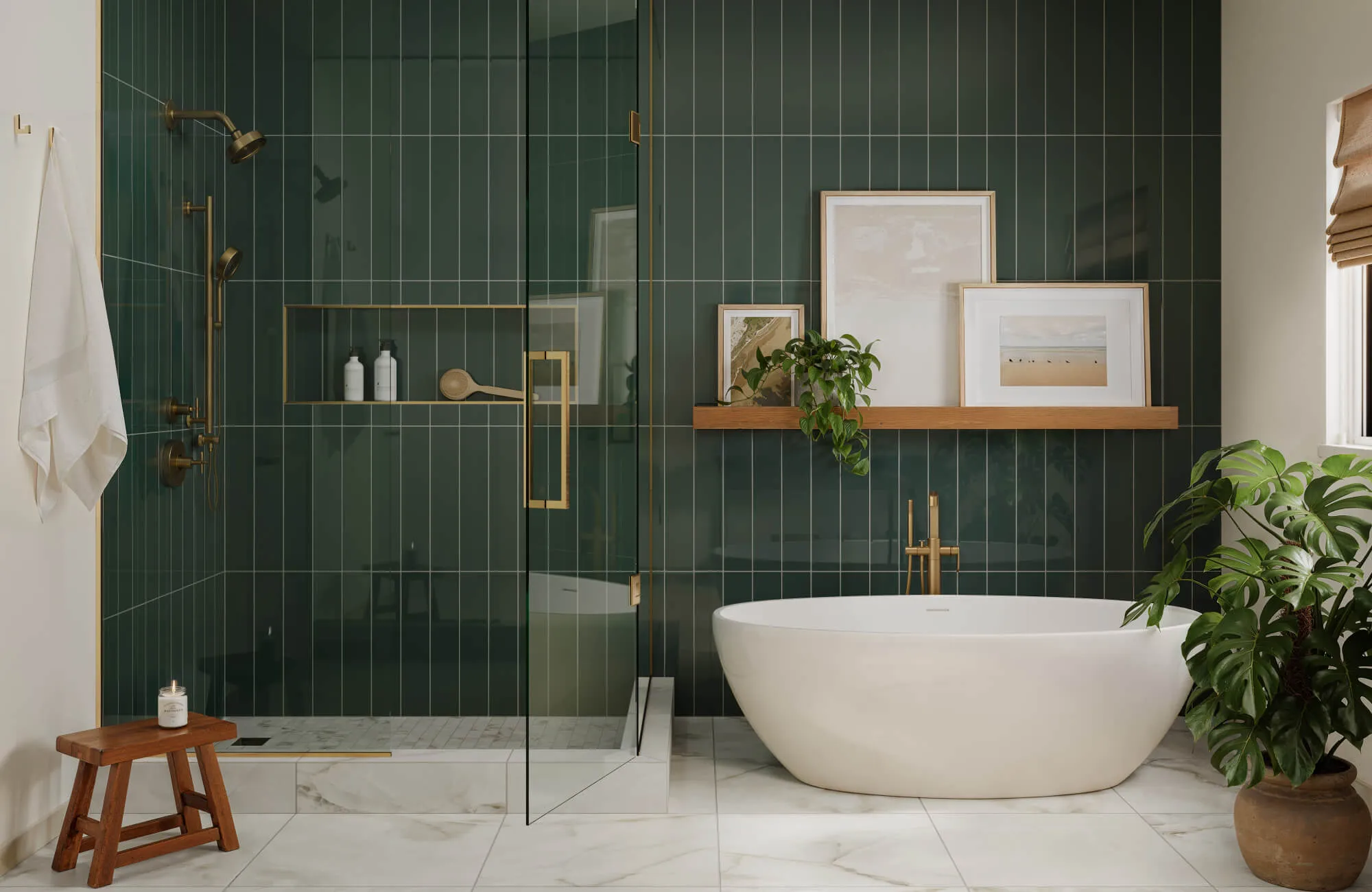
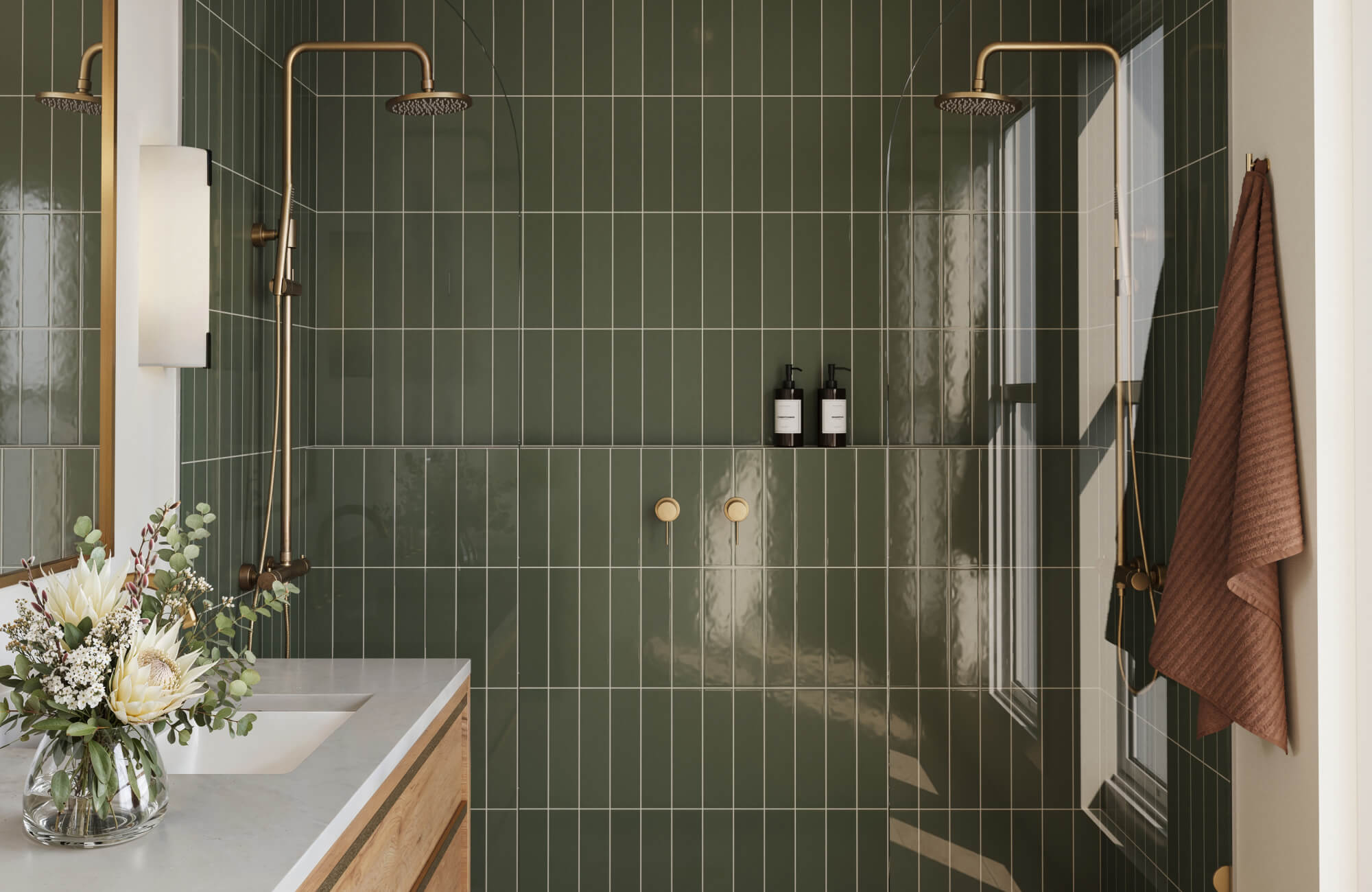
When paired with the right finish and tone, ceramic tiles can elevate your bathroom in subtle yet striking ways. A great example is Edward Martin’s Teagan 3x12 Glossy Ceramic Tile in Moss, featured in the photo above. Its rich green hue and vertically stacked layout create a modern, tailored look while still feeling organic and welcoming. The gloss finish enhances natural light and brings out the depth of the mossy shade, adding visual interest and softness to the space.
When used thoughtfully, ceramic tiles like Teagan blend effortlessly into both modern and transitional settings, offering a versatile solution for bathrooms that value both design and personality.
Porcelain Bathroom Tiles
When durability is a top priority, porcelain is a dependable choice that doesn’t sacrifice style. It’s significantly denser and non-porous, making it more resilient in high-moisture environments. Because of this, porcelain is especially well-suited for bathroom floors, shower walls, and even full wet room applications where water resistance is critical.
In addition to its practical strengths, porcelain bathroom tiles offer impressive design versatility. You’ll find a wide range of finishes: matte, glossy, and textured, which allow you to tailor the mood of your space with precision. Whether you’re aiming for soft and subtle or bold and reflective, there’s a finish to match your vision. What sets porcelain apart is brings together durability and design flexibility, offering a long-lasting solution that still feels refined and beautifully considered.
Natural Stone Bathroom Tiles
If you're drawn to an organic, elevated aesthetic, natural stone bathroom tiles offer a luxurious, authentic finish that stands apart from manufactured options. Whether it's the soft, refined veining of marble or the bold, tactile surface of granite, stone brings a richness that immediately adds depth and character to your space.
Marble often features muted green tones that feel elegant and serene, making it a popular choice for traditional or upscale designs. Its smooth surface and subtle color variation enhance a room’s sense of calm. Granite, on the other hand, delivers a stronger visual presence with more pronounced texture, well-suited for bold designs and busier environments.
That said, natural stone does come with a few trade-offs. Compared to ceramic or porcelain, it’s more porous and can be prone to discoloration or surface wear if not properly protected. It’s also heavier and often more challenging to install, requiring careful handling and a well-prepared substrate. In high-moisture areas, stone tiles, especially polished marble, can become slippery, so it’s also important to consider a honed or textured finish for better grip and safety.
While these factors make natural stone less forgiving than other materials, its visual payoff is substantial. When used thoughtfully, it offers a timeless, one-of-a-kind look that can elevate the entire feel of your bathroom.
Glass Bathroom Tiles
If you’re aiming to enhance brightness and bring a sense of airiness to your bathroom, glass tiles are a striking option worth considering. With their luminous, often translucent surfaces, glass tiles naturally reflect light, helping smaller spaces feel more open and inviting. Green glass tiles, whether in deep jewel tones or soft mints, can introduce a crisp, modern edge that adds sophistication without overwhelming the space.
Although glass excels in aesthetics, it does require some careful consideration. The surface is more prone to scratching than other materials, it demands gentle cleaning and a bit of mindfulness in frequently used areas. For this reason, we typically recommend using glass tiles on feature walls, backsplashes, or accent strips rather than full flooring, where durability is more critical.
Another factor to keep in mind is installation. Because glass is transparent or semi-transparent, imperfections behind the tile, such as uneven adhesive, can sometimes show through, so professional installation is highly recommended for a flawless finish.
Despite these limitations, glass tiles, when used strategically, can also deliver an eye-catching, upscale effect that transforms your bathroom into a space that feels fresh, polished, and thoughtfully designed.
Exploring the Perfect Green for Your Space
Now that you know your materials, let’s talk about color. Green isn’t just one note, it’s a full symphony of shades that can dramatically influence how your bathroom feels. The key is understanding which shade supports your goals for the space.
Choosing Your Shade
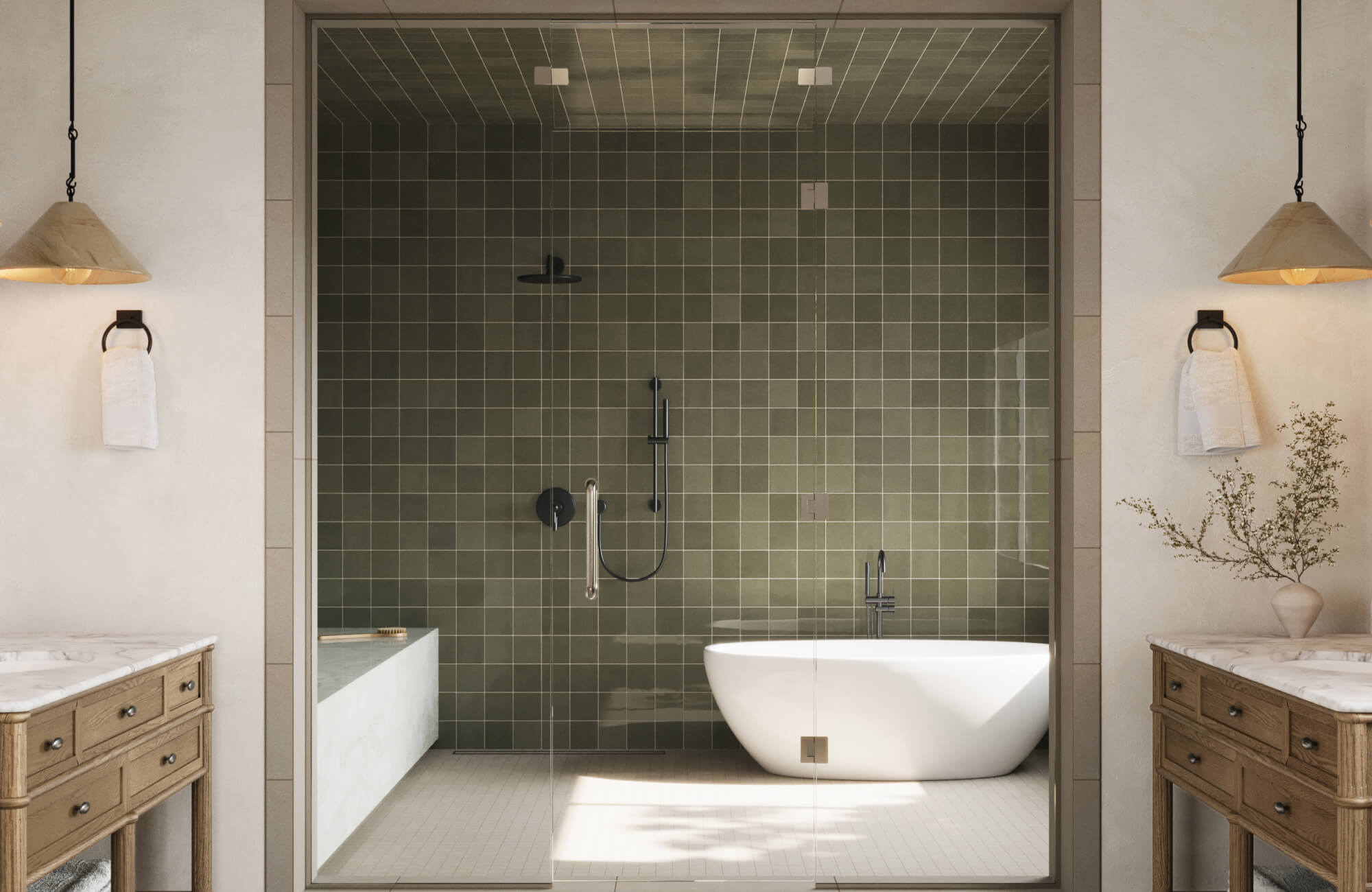
Green exists on a wide spectrum, and where your chosen shade lands can completely shape the atmosphere of your bathroom. Softer tones like mint, sage, pistachio, and olive feel light, natural, and clean, making them ideal for bathrooms where space and brightness are a priority. These colors evoke a sense of calm and simplicity, creating a peaceful backdrop for your daily routine. A perfect example is the Mikayla 5x5 Glossy Ceramic Tile in Olive by Edward Martin, featured in the photo above. Its muted green hue and compact, glossy format bring a warm, organic presence to the room while still enhancing brightness, especially when paired with soft lighting and natural textures.
In contrast, darker greens such as emerald, forest, or pine introduce depth and drama. These rich tones are perfect if you're aiming for a moody, high-end look. In larger bathrooms, they can also feel grounding and luxurious, especially when balanced with lighter finishes or reflective surfaces to keep the space visually open.
Exploring Undertones
Green tiles come in both warm and cool undertones, and understanding the difference will help you build a space that feels cohesive. Warm greens, think olive, chartreuse, or moss, tend to have yellow or brown notes, making them feel earthy and inviting. They also work beautifully with rustic woods, brass fixtures, and natural textiles.
Cooler greens, like teal, jade, or seafoam, carry hints of blue and are often found in spa-like designs. These shades also pair well with chrome, white marble, and minimalist layouts. You’ll want to match your green’s undertone with surrounding materials to keep your palette balanced and intentional.
Maximizing Light and Space
Lighting has a profound impact on how green tiles look in your bathroom. Natural light will bring out the truest form of any green, while artificial lighting can shift its tone. For example, a sage tile may appear warmer under incandescent lighting and cooler under LED.
You also need to think about where the tile is placed. Glossy green tiles reflect light, helping small or dim spaces feel brighter, while matte finishes absorb light, adding softness and richness. In low-light bathrooms, aim for lighter greens with semi-gloss finishes. In naturally bright rooms, deeper greens with textured finishes create gorgeous shadow and depth.
Blending Green Tiles with Bathroom Styles
The beauty of green bathroom tiles lies in their adaptability. No matter your aesthetic preference, there’s a green tile style that will fit right in or stand out in just the right way.
Traditional and Rustic Designs
For a timeless look, traditional and rustic styles rely on classic shapes like subway, penny, or hex tiles in gentle, earthy greens. These tones work harmoniously with wood cabinetry, vintage fixtures, and soft neutral walls. Think of a Victorian-style bathroom with sage tile wainscoting, or a farmhouse design accented by olive-green mosaic floors. The key here is texture. Matte or hand-glazed tiles can also bring authenticity and depth to the space, making everything feel intentionally aged and inviting.
Modern Minimalist Aesthetic
Minimalist bathrooms thrive on clean geometry, uncluttered surfaces, and high contrast. Here, green becomes a statement rather than a backdrop. Large format emerald tiles in a vertical stack can elongate the walls, while glossy hunter green paired with matte black fixtures feels bold yet composed.
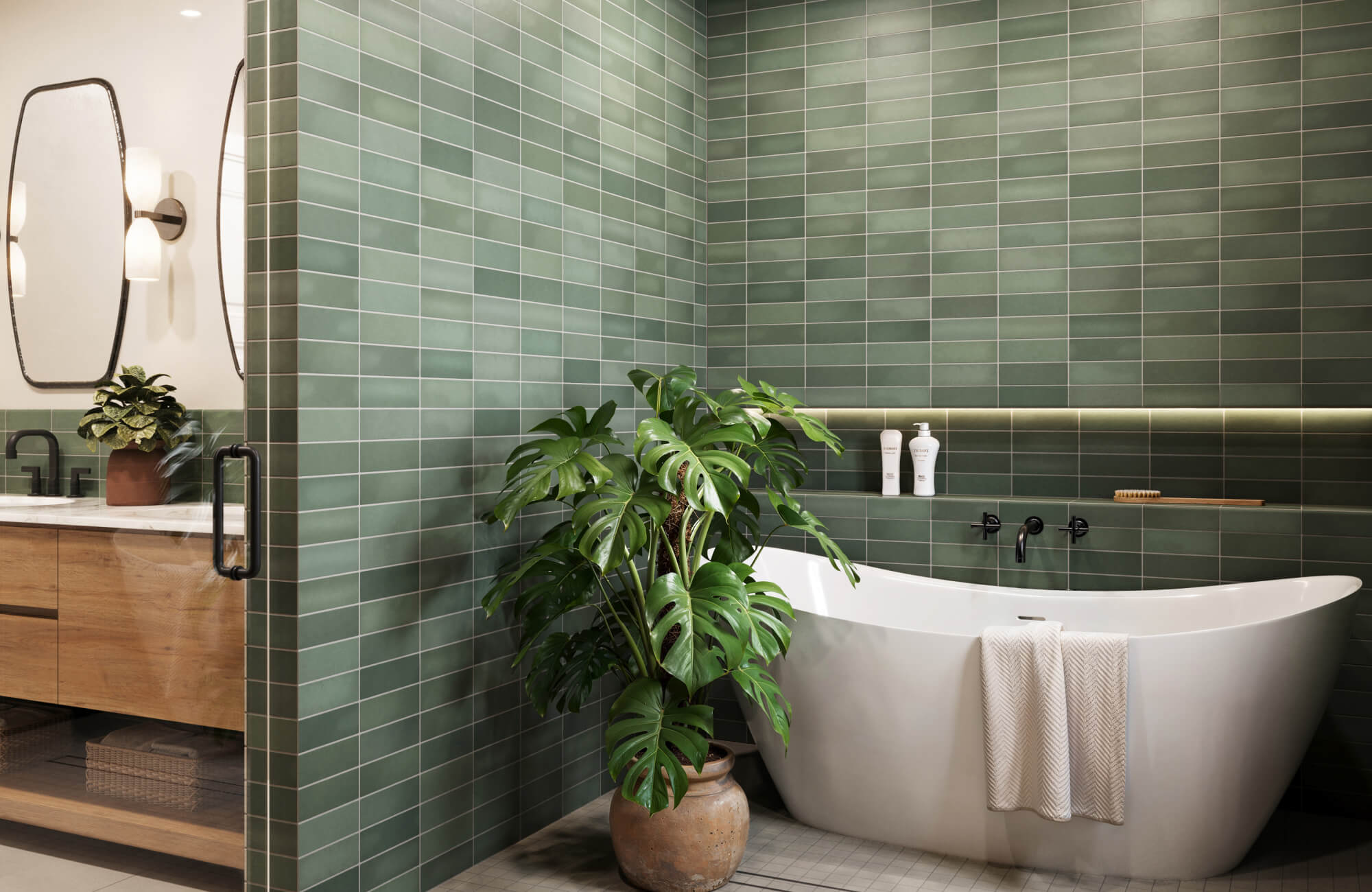
To keep the space grounded, balance green with crisp white surfaces or gray concrete details. Let the green tile be the star, with minimal décor and strong lines guiding the eye. In this setting, Edward Martin’s Ellie 2.5x8 Matte Ceramic Tile in Moss, featured in the photo above, offers a perfect example. Its muted, matte finish softens the intensity of the green while maintaining a sleek, structured look. When arranged in a clean horizontal layout, the tile adds quiet texture and rhythm to the walls without disrupting the minimalist flow. Paired with black fittings, light flooring, and organic elements like the potted monstera, the result is a space that feels modern yet calming, precisely the balance this style is known for.
Mid-Century Modern Style
Muted greens like avocado and eucalyptus are signature shades in retro-inspired design. When paired with geometric patterns or mosaic tile arrangements, they effortlessly capture the charm and character of mid-century interiors. Elements like brass fixtures, natural wood vanities, and terrazzo flooring also help reinforce the nostalgic feel while still keeping the space stylish and relevant.
Additionally, this aesthetic welcomes a sense of playfulness. Rather than sticking to traditional layouts, consider bold tile placements such as diagonal arrangements or color-blocked walls. These small risks can also add visual interest and echo the creative spirit of the era, allowing your bathroom to feel both timeless and full of personality.
Coastal and Spa-Inspired Retreats
In a spa-style or coastal-inspired bathroom, green should feel soft, fluid, and restorative. Shades like seafoam, mint, and pale jade work beautifully to create this effect, especially when used in glass mosaics, handcrafted zellige tiles, or understated subway formats. These tiles respond beautifully to natural light, casting gentle reflections that enhance the sense of calm. They're especially well-suited for open showers, niche walls, or areas behind floating vanities where subtle detail can truly shine.
To complete the look, pair these greens with warm whites, sandy neutrals, and delicate blue accents that echo oceanic tones. Introducing organic elements, such as bamboo shelving, linen textiles, or carved stone basins, further grounds the space in nature. Together, these elements can also create a soothing, breezy atmosphere that invites you to slow down and unwind.
Industrial and Urban Chic
For those drawn to a more raw, urban aesthetic, dark matte greens provide a strong foundation. These deeper tones can introduce a sense of structure and intentional grit, especially when paired with square tiles laid in a precise grid or staggered rectangles outlined in charcoal grout. This approach also reinforces the industrial vibe with clean lines and bold contrast.
To fully embrace the look, layer in complementary materials such as exposed plumbing, concrete flooring, and minimalist metal frames. Each element contributes to the stripped-back, utilitarian feel while allowing the green to soften the harshness just enough. In this setting, green can also become an unexpected but well-integrated accent, modern, grounded, and perfectly suited to elevate an otherwise monochromatic palette.
Eclectic and Artistic Vibes
This is the style where rules take a back seat and creativity takes the lead. Patterned or hand-painted green tiles, unconventional shapes like scallops or diamonds, and bold, layered color palettes can give you the freedom to design a bathroom that feels entirely your own. Whether you choose to use green as a grounding backdrop or a vibrant focal point, the flexibility is all yours.
Rather than striving for uniformity, lean into variation. Mix different shades, experiment with unexpected layouts, and treat each tile as part of a larger visual narrative. In an eclectic space, imperfection isn’t a flaw, it’s a feature that also adds depth and authenticity, allowing your personality to shine through in every detail.
Design Tips for a Cohesive Look
Choosing the right materials and colors is only the beginning. The true magic of a well-designed bathroom comes from how seamlessly those elements work together. A cohesive space feels calm, balanced, and thoughtfully composed, where every detail supports the overall vision. These tips will help you bring your green tile design to life with clarity and confidence.
Visualizing Your Design
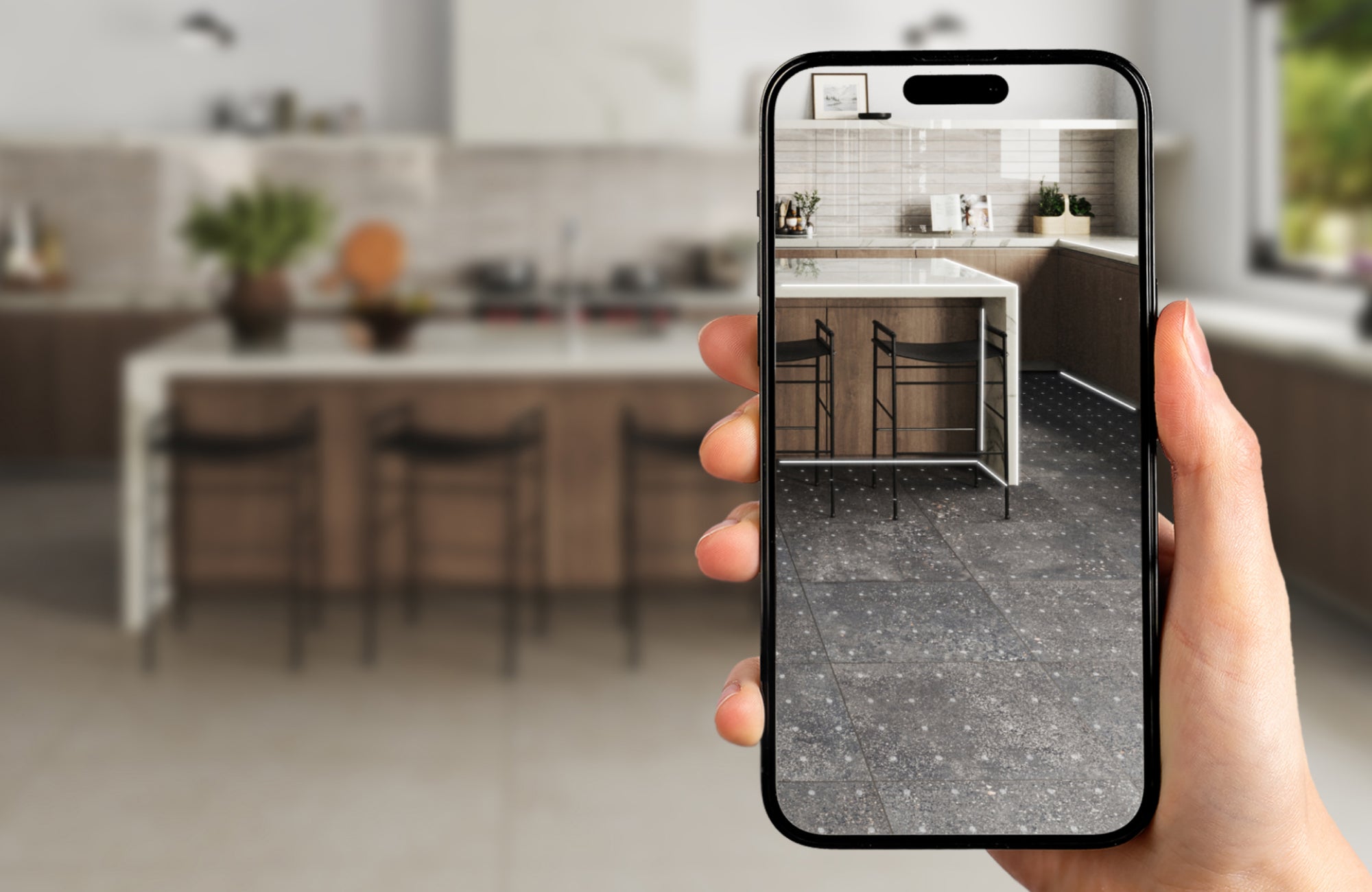
Before moving into installation, it’s essential to preview how your design choices work together visually. Tools like augmented reality allow you to see how green tiles will look in your actual bathroom space, helping you make well-informed decisions about color harmony, layout, and scale. These tools can take the guesswork out of planning and allow you to explore various combinations with confidence.
In addition to digital previews, we highly recommend creating a physical mood board. Order samples of your chosen green tiles and evaluate them under your bathroom’s natural and artificial lighting. Place them next to paint swatches, hardware finishes, and countertop materials to get a full sense of how everything interacts. This simple yet effective step also helps identify potential clashes early and allows you to refine your selections before making permanent decisions.
During this phase, don’t underestimate the impact of grout and trim. Matching grout can create a seamless, cohesive look, while a contrasting grout can highlight tile shapes and patterns. Similarly, trims and edge pieces should feel intentional and well-integrated into the overall design. When thoughtfully chosen, these finishing touches can also enhance the final result rather than distract from it.
Creating Balance with Color Pairings
Once you’ve chosen your green tile, the next step is to thoughtfully consider how it will interact with the other colors in your bathroom. The surrounding palette plays a major role in shaping the overall atmosphere, so it's important to approach it with intention.
For a soft, unified look, consider a monochromatic scheme that layers different shades of green, from light sage to deep forest. This technique creates a sense of harmony and depth without overwhelming the space. It works especially well in minimalist or spa-inspired bathrooms, where the goal is to evoke calm and continuity.
On the other hand, if you're drawn to a more dynamic look, use contrast to make your green tiles stand out. Pair them with crisp whites for a fresh, clean effect, or introduce natural wood tones to bring warmth and texture. Black accents can add sharp definition and a modern edge. For an unexpected twist, consider incorporating small touches of accent colors like coral, mustard, or navy. When used sparingly, these bolder hues can also add personality and visual interest without disturbing the overall balance of the design.
Balancing Texture and Finish
Achieving a cohesive design involves more than just coordinating colors, it also means thoughtfully balancing how materials feel and interact with light. The way a surface reflects or absorbs light can significantly influence the mood of your bathroom. Combining glossy and matte finishes, for example, can add depth and dimension without creating visual clutter, as long as the contrast is intentional. Glossy green wall tiles can help reflect light and open up the space, while matte flooring can anchor the room and introduce a soft, tactile layer.
It's also important to consider how surrounding materials contribute to the overall texture story. Elements like smooth countertops, brushed metal fixtures, or woven textiles can either complement or contrast with your tile surfaces. The goal is to create a layered but harmonious environment, one where every finish adds to the design without competing for attention. Strive for a balance where each material plays a clear role in supporting the visual and sensory flow of the room.
Maintaining a Unified Look Over Time
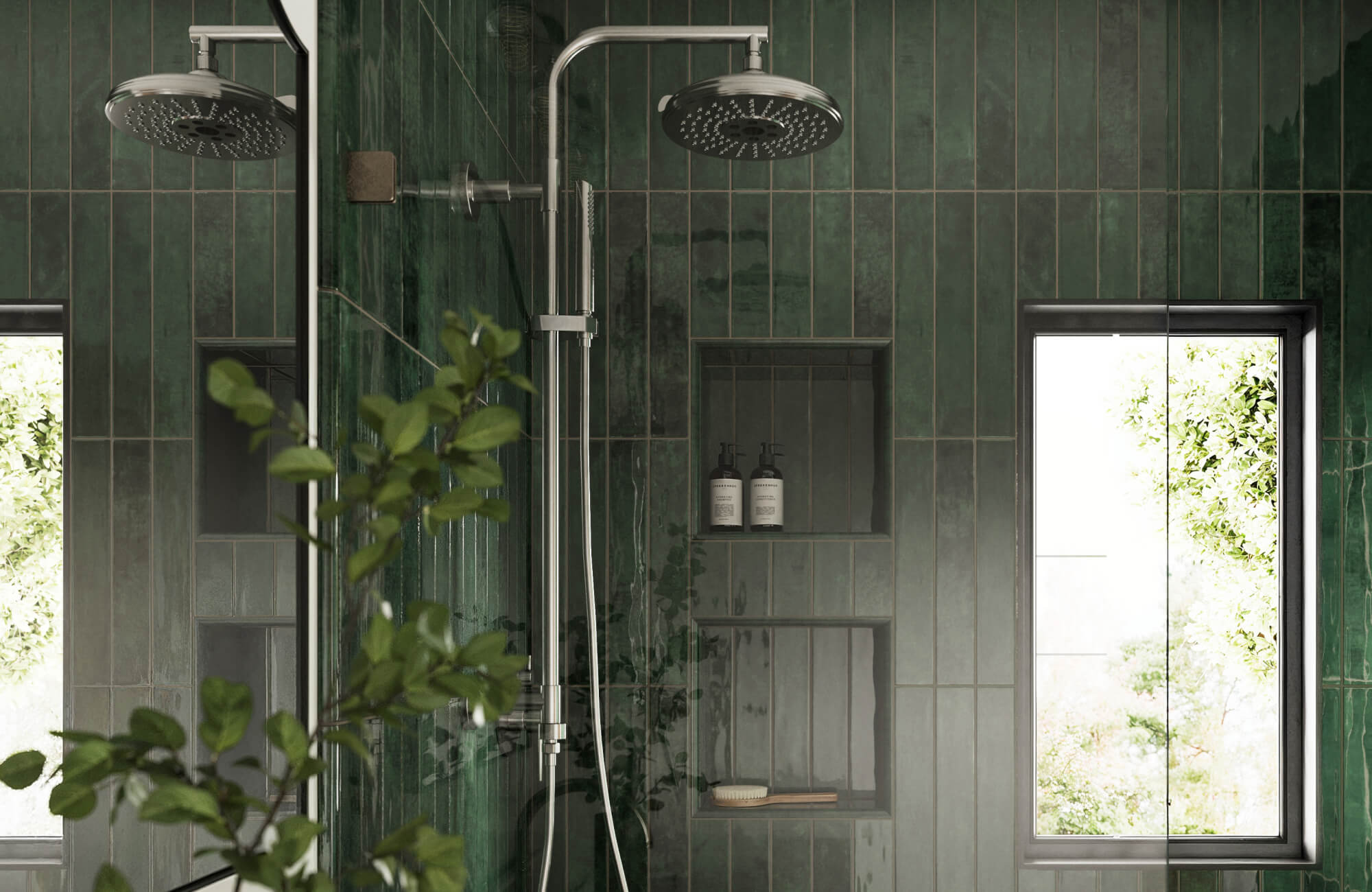
No matter how thoughtfully designed your bathroom may be, its cohesive appearance can fade if regular care is overlooked. Different tile materials age in different ways, and understanding how to properly maintain each type is essential for keeping the space looking intentional and well-maintained.
Ceramic and porcelain bathroom tiles, both non-porous and highly durable, are among the easiest to care for. Routine cleaning with a mild, non-abrasive cleaner and water is typically all you need to preserve their appearance. These materials do not require sealing for maintenance, which makes them especially convenient for everyday use.
Natural stone, by contrast, is more porous and requires a bit more diligence. To prevent discoloration, staining, or surface wear, it should be sealed regularly and cleaned using only pH-neutral products that won’t degrade the surface. Failing to use the right cleaner can dull the finish or damage the stone over time. Glass tiles, though less porous, are more fragile and should be wiped down gently with non-abrasive cloths to maintain their shine and avoid scratches.
In addition, grout plays a critical role in maintaining your bathroom's visual integrity. Dirty, cracked, or stained grout lines can undermine even the most beautiful tilework. Sealing grout and cleaning it consistently helps prevent buildup and surface damage. Choosing the right grout color can also affect long-term appearance, darker tones tend to mask signs of wear, while lighter ones enhance the pattern and geometry of your tiles.
As a final reminder, always follow the manufacturer’s care recommendations for both tiles and grout. Each product may have specific cleaning or sealing guidelines that are important to follow for long-term durability and aesthetic consistency. By caring for your materials with the correct methods, you’ll preserve the beauty of your bathroom and extend the life of your design.
Making the Right Green Tile Choice for Your Bathroom
Selecting the right green tile for your bathroom involves more than visual preference, it also requires aligning performance characteristics with your design intent. Key considerations such as porosity, slip resistance, and surface finish play a critical role in how the tile will perform over time. Ceramic and porcelain bathroom tiles stand out in this regard, offering low water absorption, excellent durability, and a wide range of aesthetic options. Their non-porous nature makes them especially well-suited for wet areas, providing a balance of practicality and style.
Equally essential is the thoughtful selection of shade, undertone, and finish. Undertones determine how well the tile complements surrounding materials, whether you're aiming for warmth or cool contrast. When combined with technical reliability, these design elements can also make ceramic and porcelain green tiles a refined and lasting choice. Take this opportunity to assess your space, clarify your vision, and select a tile that delivers on both performance and personality.
Follow us on Instagram
@EDWARD.MARTIN
)
)
)
)
)
)
)
)
)
)
)
)
)
)
)
)