

)
)
)
)
)
)
)
)
Can You Put A Double Vanity In A Small Bathroom?
Small bathrooms no longer have to compromise on luxury, thanks to the rise of space-saving double vanity designs tailored for compact layouts. With careful planning and the right combination of form, function, and innovative materials, a double sink vanity can bring both elegance and efficiency to even the most modest bathroom. These thoughtfully crafted solutions blend modern aesthetics with essential practicality, offering shared usability without overwhelming the space.
Whether it’s a floating double vanity, a dual-faucet trough sink, or a custom-built configuration, today’s options make refined bathroom upgrades more accessible than ever. Embracing a double vanity in a small bathroom not only elevates daily routines but also enhances the room’s visual harmony and long-term value.
Minimum Dimensions and Spatial Planning
Successfully fitting a double vanity into a small bathroom begins with a careful evaluation of spatial constraints and essential clearance standards. These initial measurements set the foundation for both a practical layout and a smooth renovation process.
Standard and Compact Vanity Widths
While standard double vanities typically span between 60 and 72 inches, many manufacturers now offer compact double vanity units starting at just 48 inches in width. These scaled-down alternatives often feature slimmer sink basins and shallow cabinet depths, which help conserve precious floor area in narrow bathrooms.
To further optimize space, vanities with minimal countertop overhang can reclaim a few extra inches without compromising functionality. Many compact models also include vertically stacked or integrated storage, allowing homeowners to store essentials without increasing the vanity’s overall footprint. In addition, integrated sink designs reduce bulk and streamline the visual profile, contributing to a cleaner, more open feel.
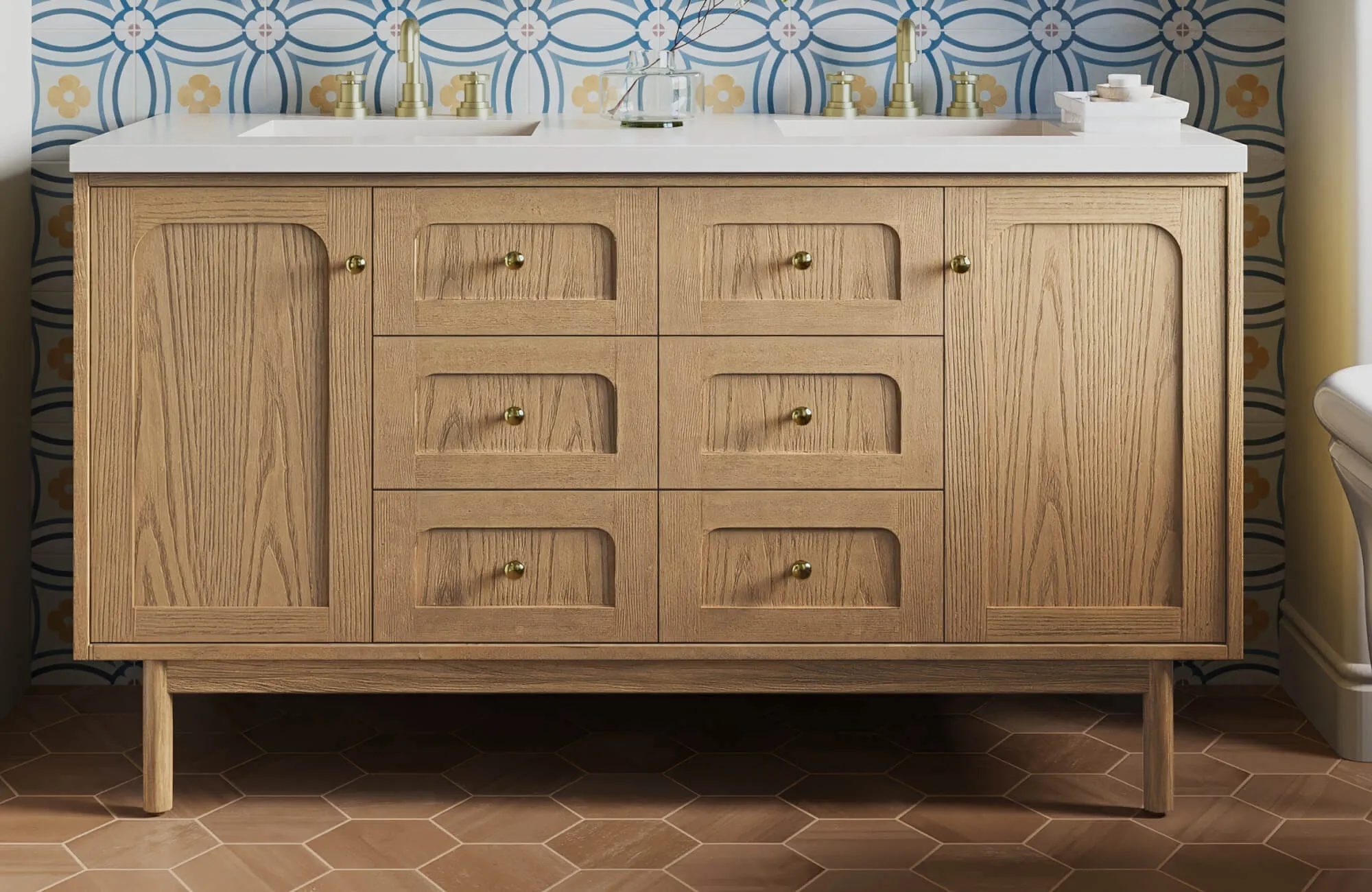
A refined example, as displayed in the picture above, is the Gabriella 60" Double Vanity in Light Natural Oak with 3 cm White Zeus Quartz Top, which pairs a space-conscious footprint with high-end materials and modern styling—ideal for small bathrooms seeking both elegance and efficiency.
Code-Required Clearance and Ergonomics
Beyond just width, it’s important to consider how the vanity fits into the overall room flow, particularly in terms of accessibility and movement. A minimum of 30 inches of clear floor space in front of the vanity is recommended to allow for comfortable navigation and use. To ensure both users have adequate room, a center-to-center spacing of at least 36 inches between the two sinks is ideal.
Additionally, when the vanity is adjacent to a toilet, maintaining at least 15 inches from the centerline of the toilet to the edge of the vanity is essential for both comfort and code compliance. These measurements not only support daily usability but also help avoid costly rework due to non-compliance during inspections. Ultimately, respecting these clearance guidelines ensures that a compact double vanity can function efficiently and legally in a small bathroom.
Floor Plan Optimization Techniques
In many cases, strategic reconfiguration of the bathroom layout can unlock just enough space to accommodate a double vanity. For instance, replacing a full-sized bathtub with a walk-in shower often frees up valuable wall space, which can then be dedicated to the vanity area. Positioning the vanity along the room’s longest uninterrupted wall also promotes symmetry and reduces visual congestion.
Meanwhile, in galley-style bathrooms, aligning all major fixtures along one side can further optimize flow while simplifying plumbing runs. In addition, utilizing alcoves, niches, or even slightly recessed walls allows for the integration of custom or semi-custom vanities that make use of every available inch. With a thoughtful approach to spatial planning, even tight bathrooms can successfully host a compact double vanity without feeling overcrowded.
Functional Design Strategies
When square footage is limited, thoughtful design decisions become essential to maintaining both function and comfort. Through smart fixture choices and creative layouts, a small bathroom can still benefit from a fully operational double vanity.
Floating and Wall-Mounted Vanity Designs
One of the most effective ways to open up visual space in a small bathroom is by installing a floating vanity, which creates the appearance of a larger room by exposing the floor beneath. These wall-mounted designs can also be customized in height, ensuring ergonomic access for users of different ages or mobility needs.
In addition to their visual benefits, floating double vanities make cleaning more convenient and can be paired with under-cabinet lighting to improve visibility and ambiance. Many slim-profile floating models come with shallow drawers or shelves that maintain storage functionality without extending far into the room.
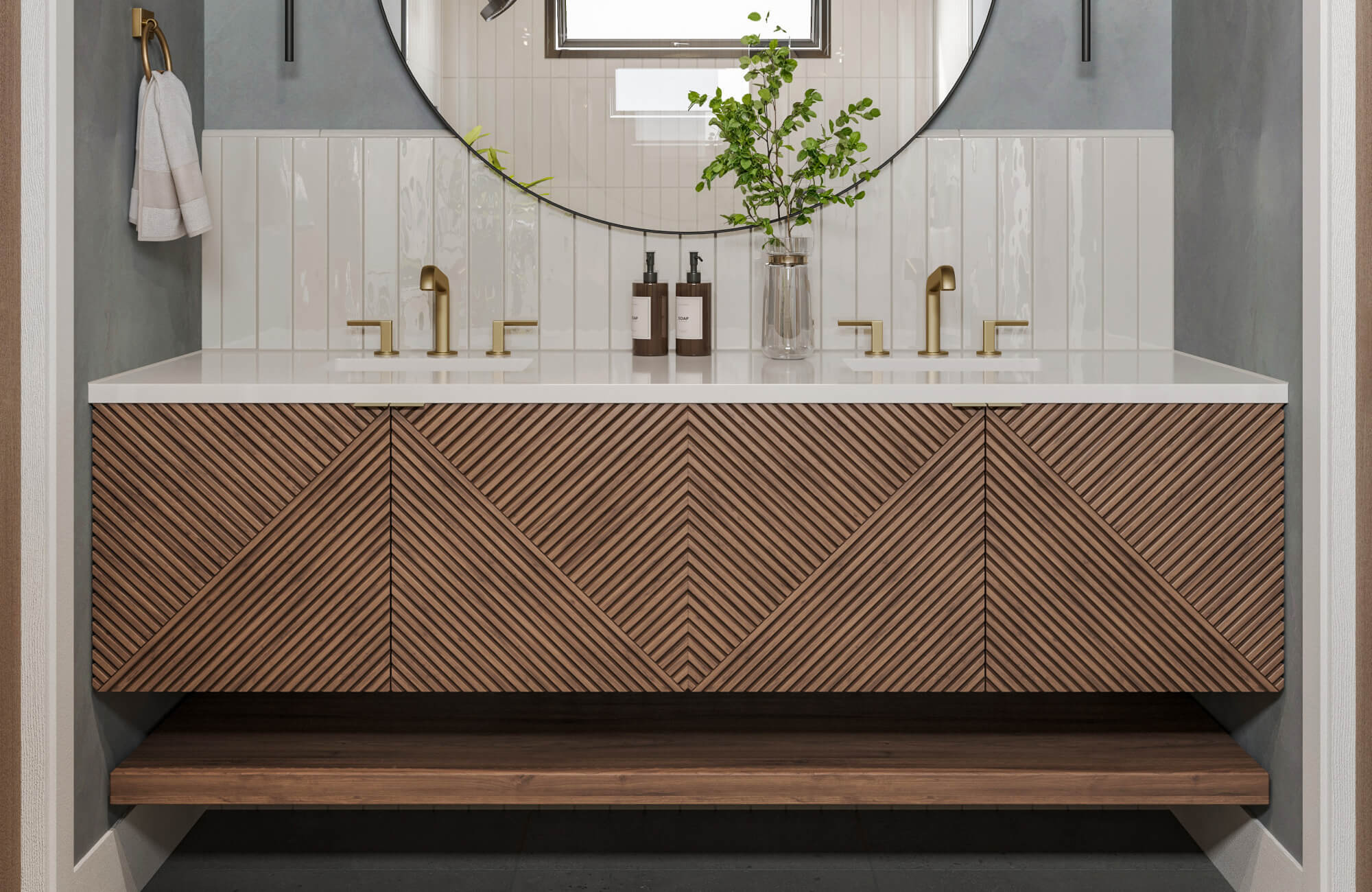
For those seeking a slightly larger, more substantial option that still maintains visual lightness, the Royce 72" Double Vanity in Chestnut with 3 cm White Zeus Quartz Top, as shown in the photo above, offers a striking floating silhouette, warm wood tones, and a sleek quartz-based surface, bringing a bold yet balanced look to more spacious small bathroom layouts. By reducing the perceived bulk of the fixture, floating vanities strike a balance between style and practicality while elevating the overall ambiance.
Trough Sinks with Dual Faucets
For bathrooms where wall length is limited, a trough sink with dual faucets presents a highly efficient alternative to two separate sink basins. These long, narrow sinks allow two users to share the same basin simultaneously, reducing the overall width required while maintaining personal space.
The shared drain configuration also simplifies plumbing work, making installation faster and potentially more cost-effective. When installed with a floating cabinet below, the trough sink can still offer ample storage without increasing the footprint. The minimalist aesthetic of these sinks complements both modern and transitional interiors, making them a versatile design choice. As a result, trough-style double vanities are among the best solutions for shared use in small bathrooms.
Split Sink Configurations
In layouts where a traditional side-by-side double vanity won’t fit, exploring alternate configurations can yield surprisingly functional results. For example, placing sinks at either end of a shared counter with central storage in between creates two defined workstations without demanding extra width. Alternatively, in corner or L-shaped bathrooms, installing angled sinks allows better use of walls that would otherwise remain underutilized.
Staggered placement of sinks also allows homeowners to work around architectural features like doors, windows, or low soffits that restrict standard vanity dimensions. These unconventional layouts can be custom-designed to match the specific shape and limitations of the room. By thinking beyond standard linear placement, split sink configurations make it possible to introduce a small double vanity in bathrooms with unique spatial challenges.
Plumbing Infrastructure and Mechanical Feasibility
Even the most space-efficient vanity design must be supported by a plumbing system that can accommodate two sinks. Evaluating existing water supply, drainage lines, and access points early in the process is essential for a smooth installation.
Water Supply Line Configuration
Adding a second sink to a bathroom often means branching the existing hot and cold supply lines to serve both basins. This typically involves running PEX or copper tubing through the wall or floor cavity, depending on the home’s construction. In older homes, reaching these lines may require removing sections of drywall or accessing crawl spaces, which can increase labor costs.
It’s also critical to ensure balanced water pressure and temperature between the two faucets, especially in shared-use scenarios. Installing dedicated shut-off valves for each sink provides an added layer of control and facilitates future maintenance. With proper planning and quality materials, configuring supply lines for a compact double vanity is entirely achievable even in tight spaces.
Drainage and Venting Requirements
Proper drainage is just as important as water supply when installing a double vanity in a small bathroom. Both sinks must be connected to the main drain using a fitting such as a double sanitary tee, ensuring that waste flows efficiently and does not back up. Maintaining the correct slope, generally ¼ inch per foot, is critical to prevent standing water and drainage issues.
Venting must also be addressed, whether through an existing vent stack or the addition of an air admittance valve, to equalize air pressure in the drain system. Each basin requires its own P-trap, which acts as a barrier against sewer gases while allowing water to flow. Addressing these components properly ensures the new double vanity will function without long-term plumbing complications.
Access Considerations for Remodels
In renovation projects, gaining access to existing plumbing systems often presents a unique set of challenges, particularly in homes with slab foundations or limited crawl spaces. Cutting through flooring or opening tiled walls can add time and cost to the project, making early assessment critical. In some cases, surface-mounted plumbing or flexible drain kits can serve as practical alternatives that minimize disruption.
Retrofit-friendly vanities, which include rear cutouts and adjustable plumbing channels, can also help streamline installation. When access is especially limited, working with a licensed plumber ensures code compliance and avoids unforeseen issues. Ultimately, understanding and addressing mechanical constraints is a key step in any successful small bathroom double vanity upgrade.
Material Specifications and Custom Fabrication
Material choice becomes even more critical in compact bathrooms, where durability, water resistance, and efficient design all play an outsized role. Custom fabrication allows these materials to be tailored precisely to the room’s layout and use needs.
Countertop and Sink Integration
Integrated countertops with built-in sinks are a highly practical solution for small bathrooms, as they eliminate seams where water can accumulate. Materials such as quartz, solid-surface acrylic, and cultured marble are excellent choices thanks to their non-porous qualities and resistance to moisture damage.
These seamless designs not only simplify cleaning but also create a unified visual appearance that helps the bathroom feel more spacious. Rear-set faucets and low-profile basins can further reduce countertop depth without sacrificing usability. For especially narrow vanities, choosing rectangular basins with tight corners allows for maximum use of surface area. These integrated double sink countertops are a standout feature in space-conscious bathroom designs.
Cabinetry Construction and Storage Solutions
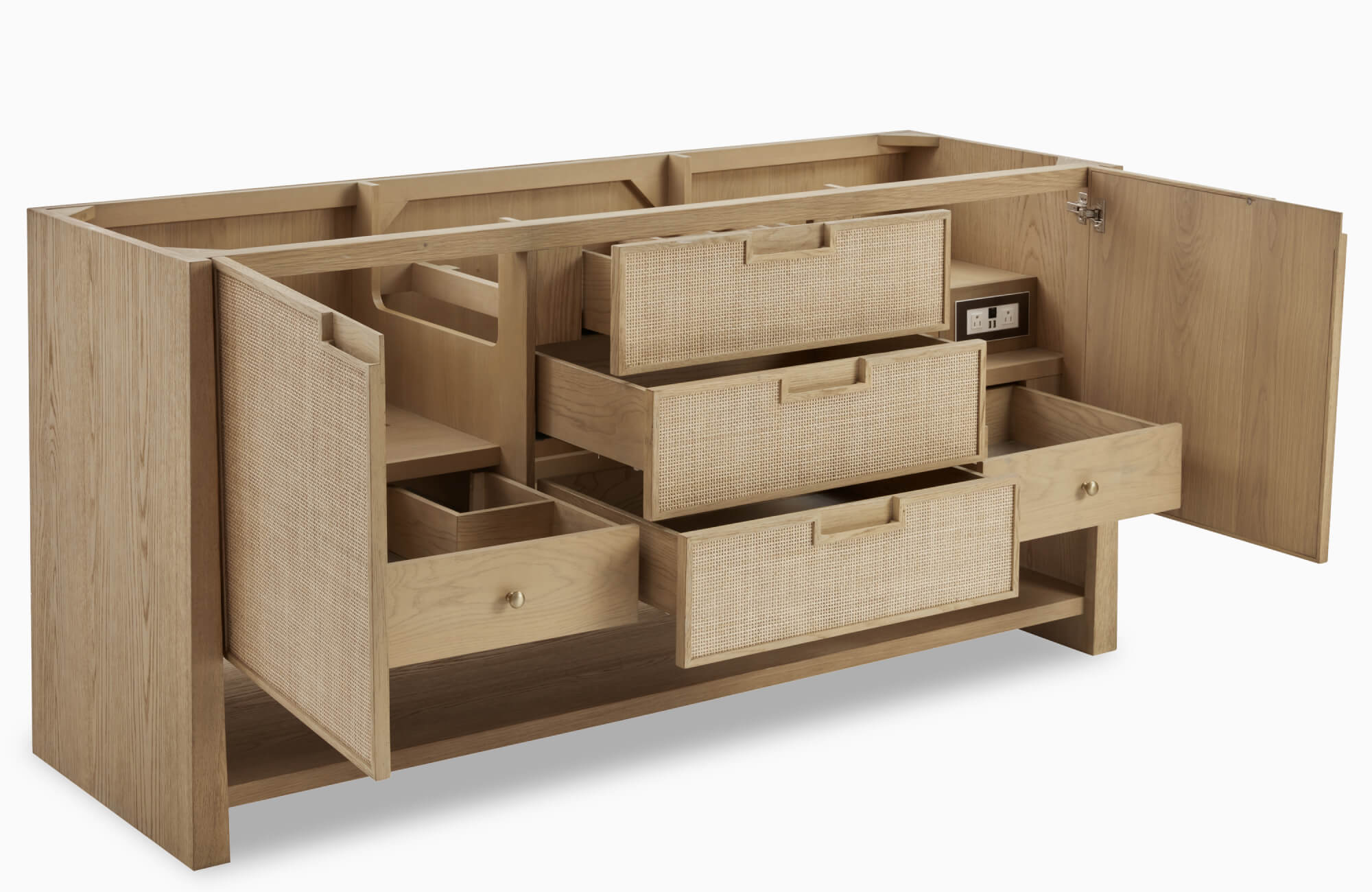
In moisture-prone environments like bathrooms, vanity cabinetry must be built to withstand daily wear and tear. Using materials such as high-density plywood or marine-grade MDF helps prevent warping and damage from humidity. Smart storage features, such as soft-close drawers, tilt-out trays, and full-extension glides, also make accessing supplies easier, even when cabinet depth is limited.
Additionally, vertical storage towers and wall-mounted organizers can supplement drawer space without increasing the vanity footprint. Similarly, built-in drawer dividers provide personalized organization for shared spaces, reducing clutter on the counter. Together, these thoughtful storage elements enhance the usability of a compact double vanity in a small bathroom.
Customization Around Architectural Constraints
Off-the-shelf vanities rarely fit perfectly in bathrooms with irregular shapes, sloped ceilings, or awkward obstructions. Custom fabrication addresses these challenges by tailoring the vanity’s size, orientation, and features to match the space exactly. For example, a semi-recessed vanity can extend slightly into an alcove or wrap around an architectural element without losing functionality.
Custom drawer placement or cabinet door orientation can also be adjusted to avoid interference with nearby fixtures. With the right fabricator, even vanities in highly constrained areas can look clean, intentional, and high-end. For small bathrooms with unconventional layouts, customized double vanities offer a precise and elegant solution.
Value, Usability, and Design Balance
A double vanity’s success in a small bathroom ultimately comes down to how well it balances function, design, and long-term value. Making the right choices during planning ensures the space works just as well in daily life as it does on paper.
Shared Use Efficiency
Double vanities dramatically improve the functionality of shared bathrooms by allowing two users to access the space simultaneously. This can help minimize morning congestion and streamline daily routines for couples, roommates, or siblings. Personalized storage drawers and side-by-side mirrors also make the space feel individualized, even in compact layouts. Adding separate lighting zones or outlets for each user can further enhance convenience and reduce interference.
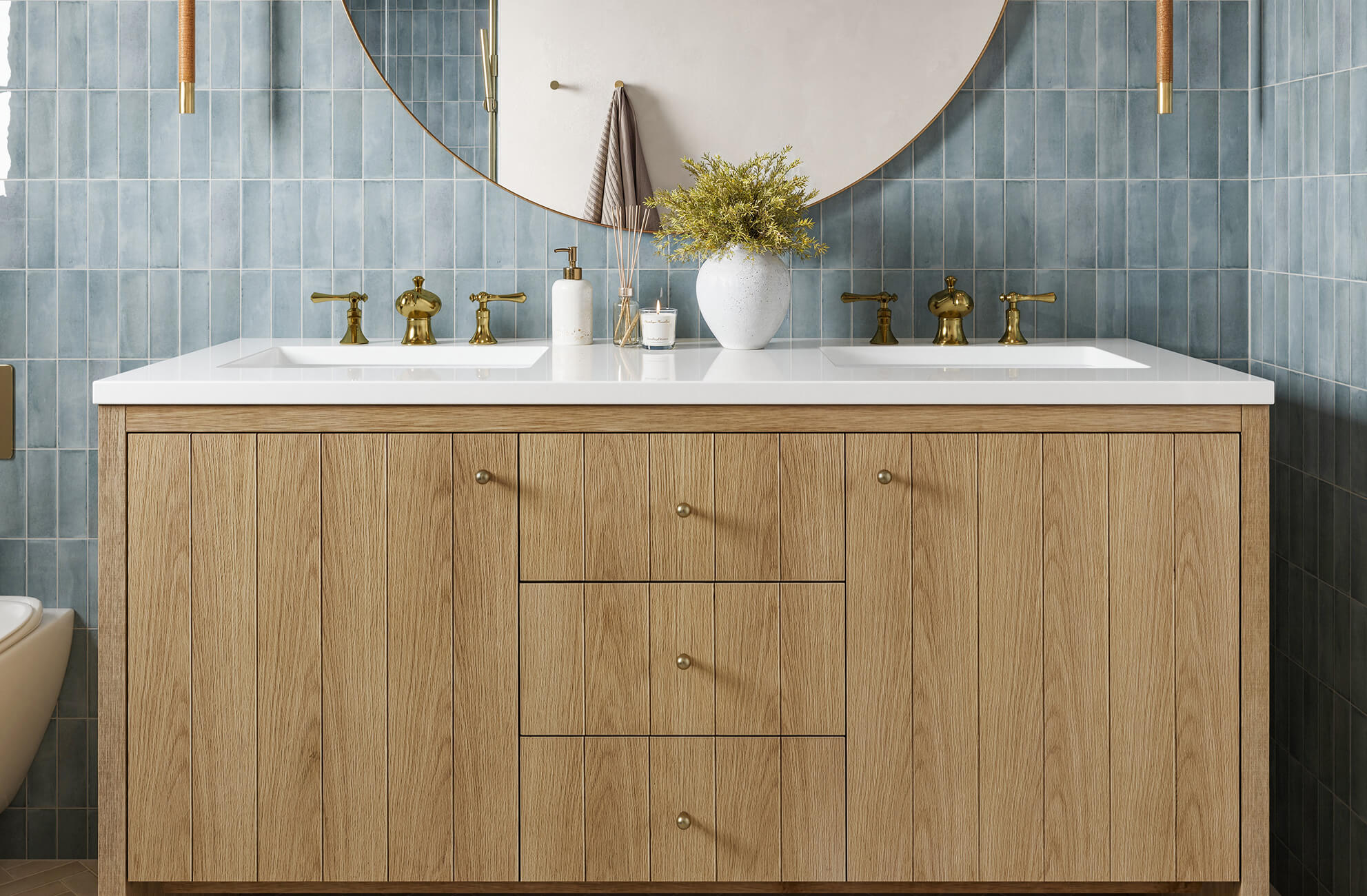
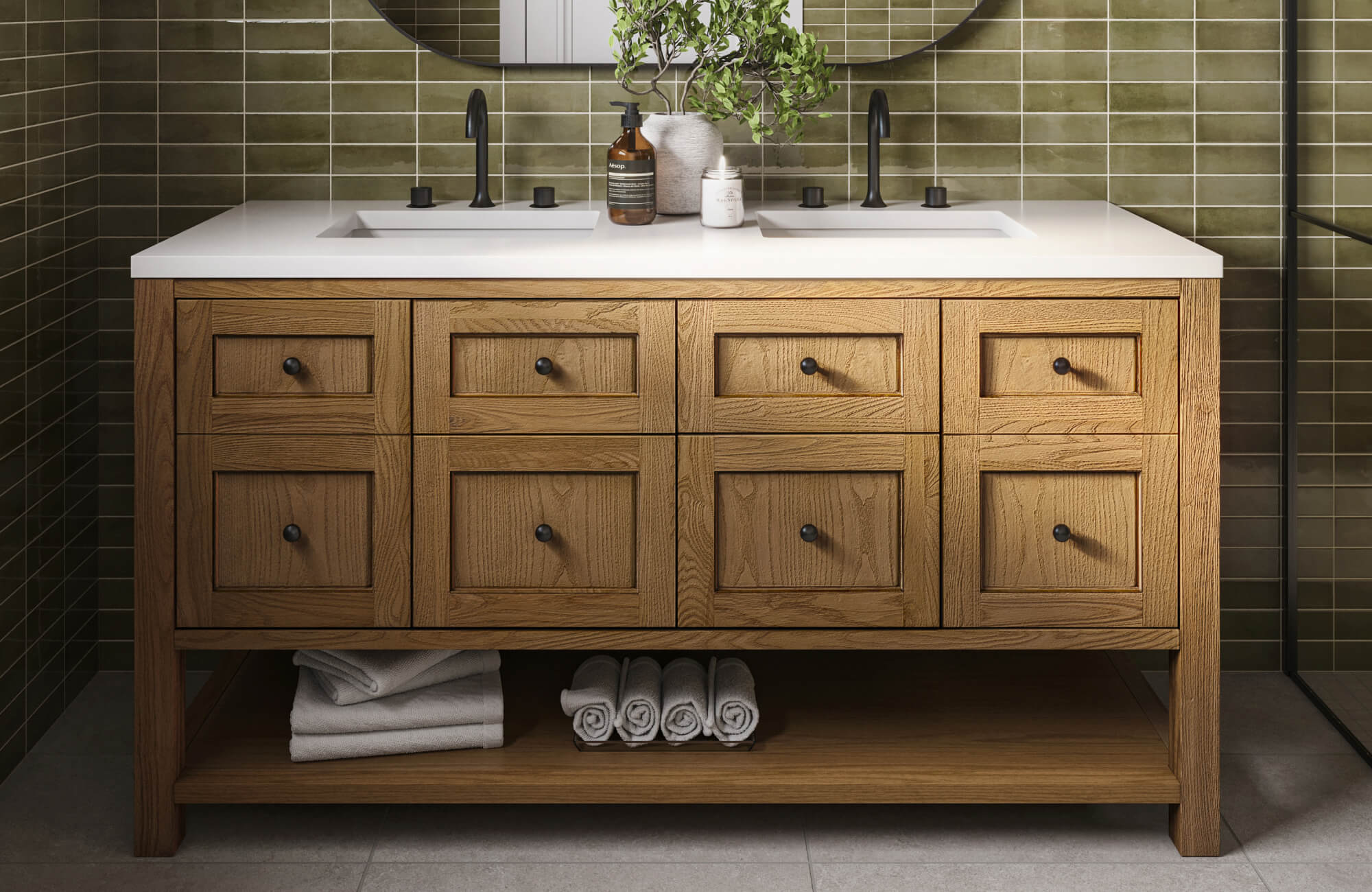
A great example of a vanity designed with shared usability in mind is our Bridgette 60" Double Vanity in Light Natural Oak with 3 cm White Zeus Quartz Top. As featured in the photo above, this Bridgette vanity combines practical drawer organization with warm, natural textures and a clean white quartz-based surface, making it a beautiful and highly functional solution for small bathrooms shared by two users.
Resale and Appraisal Implications
From a real estate perspective, bathrooms with double vanities tend to appeal to a broader pool of buyers, especially in master suites or guest bathrooms. Even in small homes, a dual-sink setup signals luxury, attention to detail, and practical design. Properties featuring upgraded bathroom layouts also often see higher appraisal values and shorter time on the market.
However, the double vanity must be proportionate to the room, or it risks feeling cramped rather than impressive. Executing the installation with balanced dimensions and cohesive finishes ensures a positive impression. For resale-conscious homeowners, a small bathroom with a double vanity offers both functional and financial returns.
Design Cohesion and Spatial Flow
Incorporating a double vanity into a small bathroom requires careful attention to visual balance and flow. To achieve this, coordinating materials, color palettes, and fixture styles helps maintain unity throughout the space. In addition, mirrors above each basin can enhance natural light and create a sense of symmetry that makes the room feel larger. When it comes to lighting, ambient, task, and accent layers should be arranged thoughtfully to provide both clarity and mood. Furthermore, floating vanities and reflective finishes support a clean, uncluttered look, which is especially important in confined spaces. Ultimately, by harmonizing design elements, a double vanity can enhance, not disrupt, the overall feel of a compact bathroom.
Fitting a Double Vanity in a Small Bathroom
Choosing a double vanity for a small bathroom is no longer a question of “if,” but rather “how,” as tailored options continue to evolve with space-conscious innovation. With seamless design integration, efficient plumbing solutions, and high-performance materials, compact bathrooms can enjoy the benefits of dual sinks without sacrificing comfort or style. Every element, from layout to lighting, works in harmony to transform limited square footage into a refined and highly functional retreat. A well-executed small bathroom double vanity is more than a design feature—it’s a statement of thoughtful living.
At Edward Martin, our design experts can help you navigate layout challenges, material selections, and custom solutions to ensure your space is both functional and beautiful. To begin planning your perfect double vanity, contact us today and let our team bring your vision to life!
Follow us on Instagram
@EDWARD.MARTIN
)
)
)
)
)
)
)
)
)
)
)
)
)
)
)
)