Chandeliers are no longer limited to formal dining rooms or dramatic entryways. More and more, they are finding their way into kitchens, where they bring personality, elegance, and a touch of drama to the most hardworking space. By combining beauty with practicality, a chandelier can transform an ordinary kitchen into a striking environment that feels both inviting and functional.
With thoughtful selection and placement, chandeliers not only illuminate but also anchor the design of a kitchen, enhancing its character while meeting daily demands. This article explores how chandeliers can work in kitchens, what styles complement different layouts, and the key considerations to ensure your choice blends style, safety, and usability.

Understanding the Practicality of Kitchen Chandeliers
Chandeliers can be a striking addition to the kitchen, but their success depends on how well they combine style with everyday functionality. Once seen only in dining rooms or formal entryways, chandeliers now bring warmth, personality, and elegance into the heart of the space. To work effectively in such a high-activity zone, however, they must be thoughtfully planned. This means considering how the chandelier contributes to layered lighting, ensuring it provides ambiance without neglecting the task-oriented needs of a kitchen. With the right balance, a chandelier becomes more than a decorative flourish; it turns into a central feature that adapts to different activities, from cooking to entertaining.
Equally important are proportion and placement, which determine whether the fixture enhances or overwhelms the room. Selecting the correct size ensures harmony with the kitchen’s scale, while proper installation height and clearance protect sightlines and keep the space safe for daily use. Positioned above an island, breakfast nook, or central area, a chandelier not only illuminates but also anchors the design, giving structure and flow to the layout. When chosen and placed with care, a chandelier in the kitchen delivers both practical lighting and a sense of refinement, transforming the space into one that feels functional, comfortable, and undeniably stylish.

Exploring Design Possibilities with Chandeliers
Chandeliers are more than simple light sources. They are sculptural, expressive, and often the focal point that defines a room’s personality. In the kitchen, a chandelier can serve as both a statement piece and a subtle unifier, anchoring the overall design while complementing the space’s functional purpose.
Traditional and Ornate Designs
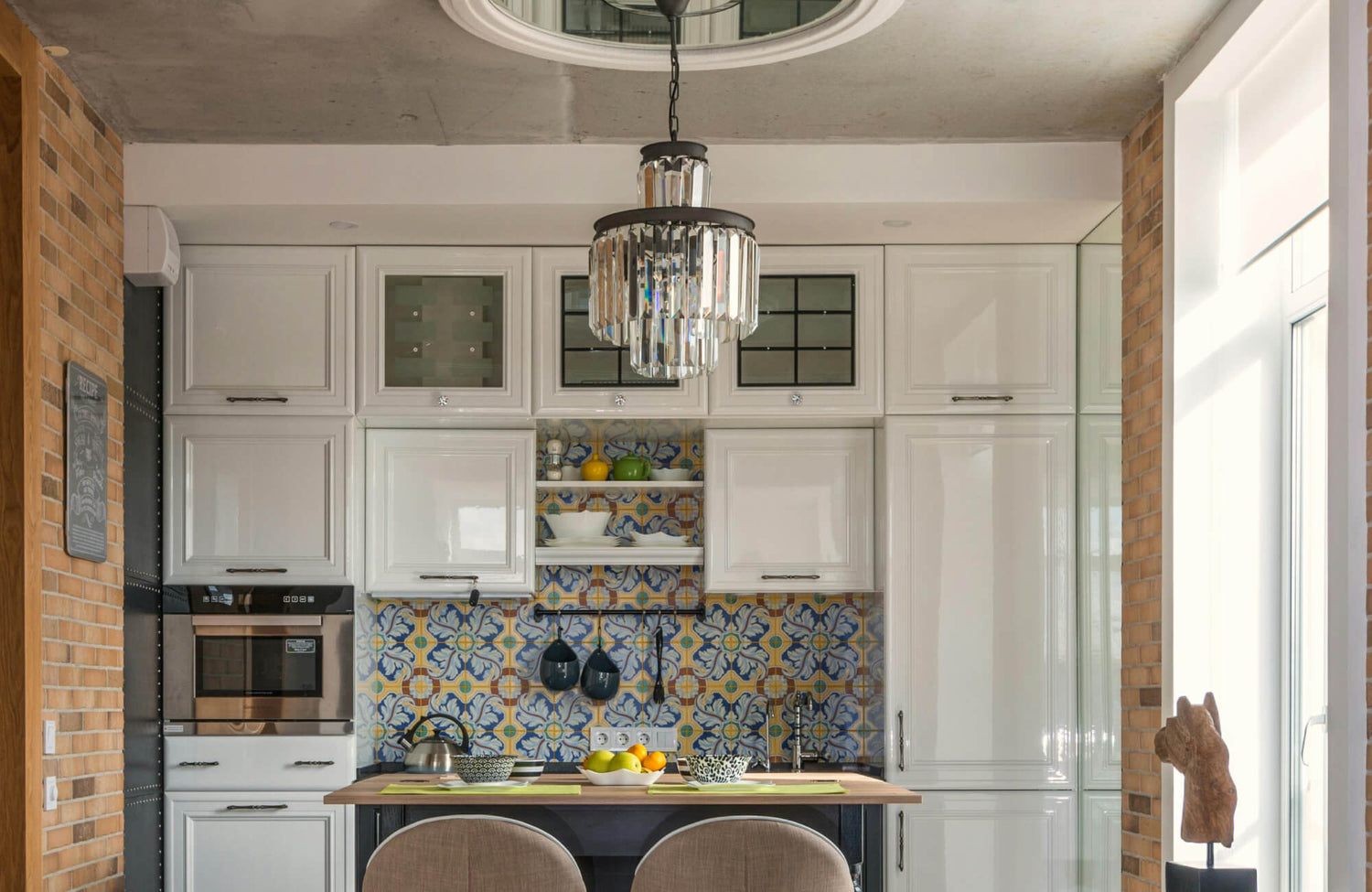
If you want your kitchen to feel elegant and timeless, traditional chandeliers are a perfect fit. Crystal designs, tiered silhouettes, or ornate detailing bring formality and grandeur into the space. These fixtures thrive in kitchens with architectural details such as crown molding, raised-panel cabinetry, or luxurious surfaces like marble countertops.
The reflective quality of crystal and glass not only adds sparkle but also amplifies light, making the kitchen feel brighter and more spacious. By introducing this level of sophistication, you turn the kitchen into an extension of the formal living space. A chandelier such as our Clement Chandelier in Aged Old Bronze captures this timeless aesthetic beautifully, combining rich bronze tones with classic design that elevates the room with refinement. A traditional chandelier doesn’t just illuminate; it elevates, reinforcing a sense of elegance every time you step into the space.
Modern and Minimalist Fixtures
For a contemporary aesthetic, modern chandeliers offer clean lines, geometric forms, and materials like matte black, brushed nickel, or polished chrome. Many modern designs incorporate integrated LEDs, which reduce bulk and add energy efficiency, making them practical as well as stylish. Their low-profile structures also blend seamlessly into streamlined spaces, offering drama without clutter.
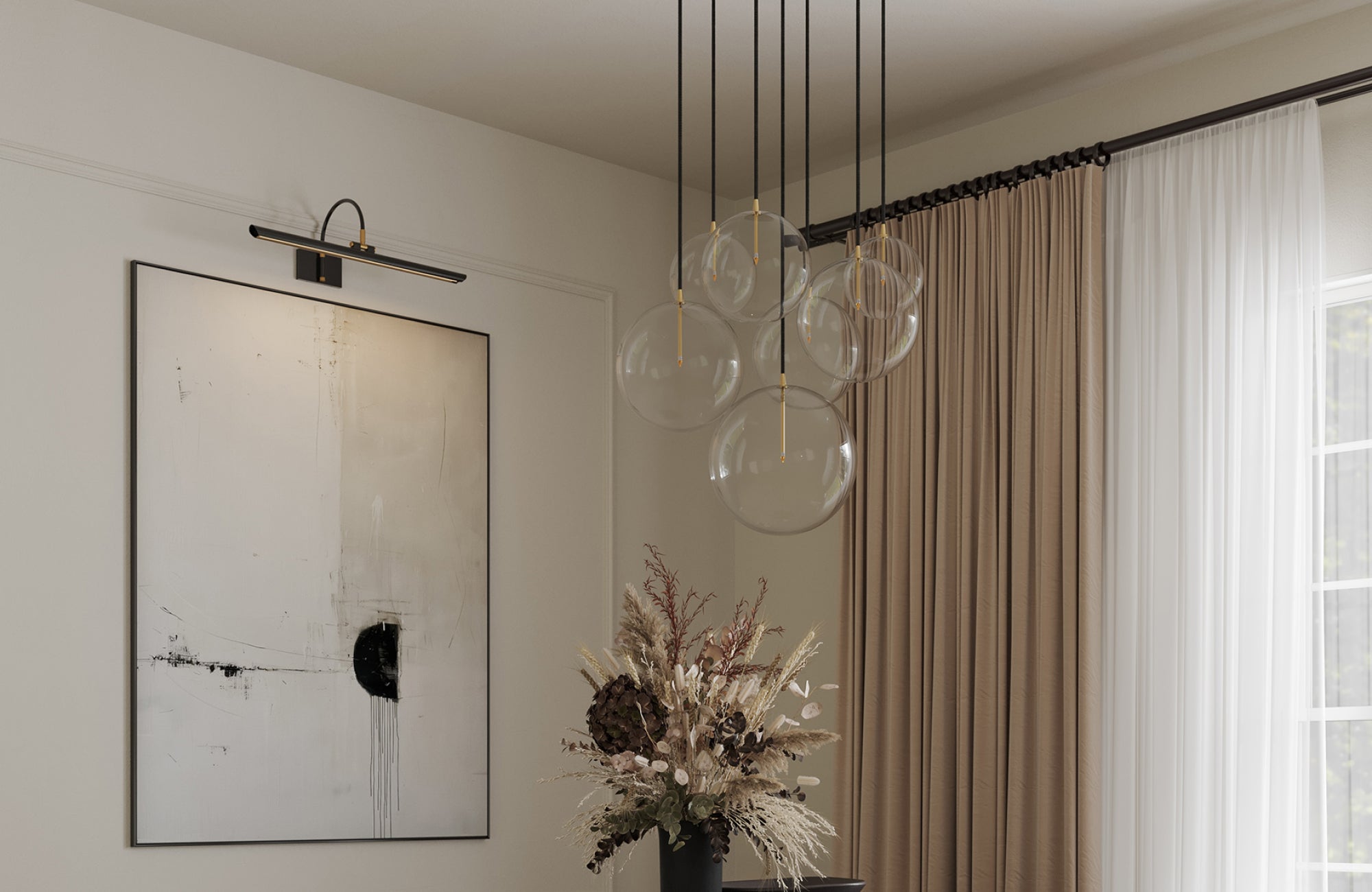
These fixtures work beautifully in kitchens with flat-panel cabinetry, waterfall countertops, and neutral palettes. Instead of overpowering the room, they complement the architecture by keeping the design cohesive and restrained. Choosing a modern chandelier also allows you to maintain a minimalist atmosphere while still introducing an element of artistry overhead. An excellent example of this style is our Cressida 32" Chandelier in Vintage Gold Leaf. As seen in the image above, with its sculptural form and radiant gold finish, it strikes the perfect balance between bold artistry and minimalist sophistication. In a modern kitchen, this type of chandelier becomes a centerpiece that enhances clean-lined cabinetry and sleek countertops while infusing the space with elegance and warmth.
Rustic and Farmhouse Appeal
Rustic chandeliers create warmth and character, making them ideal for kitchens designed around comfort and hospitality. Fixtures crafted from weathered wood, wrought iron, or lantern-inspired frames echo the farmhouse aesthetic. Exposed Edison bulbs and artisanal touches further emphasize authenticity and charm.
These chandeliers shine when paired with butcher block countertops, shiplap walls, or open shelving, reinforcing the kitchen’s role as the heart of the space. The combination of raw materials and soft, inviting light also creates a lived-in feel that is both stylish and welcoming. A piece like our Magnolia Chandelier in Silver Leaf blends the organic charm of rustic design with the sophistication of a metallic finish, making it a versatile choice for farmhouse kitchens that aim to balance coziness with refinement. With the right chandelier, your kitchen becomes more than a workspace; it becomes a place that invites gathering and connection.

Safety and Functionality in Kitchen Chandelier Use
Although chandeliers can elevate the look of a kitchen, they must also withstand the demands of a busy environment where heat, steam, and grease are constant. Choosing the right materials is essential, as resilient finishes like powder-coated steel, sealed brass, or glass resist corrosion and staining far better than unfinished metals or porous surfaces. Fixtures such as our Reece Chandelier in Polished Nickel, displayed in the picture above, illustrate this balance perfectly, offering a durable finish and a clean-lined design that performs well under kitchen conditions. Proper ventilation, such as a reliable range hood, further plays a major role in protecting the chandelier from buildup and damage, while safety-rated fixtures are necessary in areas prone to moisture. These precautions ensure that your chandelier not only maintains its elegance but also performs reliably over time.
Additionally, installation and upkeep are equally important to long-term functionality. A licensed professional should always handle chandelier installation to guarantee secure mounting, proper wiring, and compliance with electrical codes. The chandelier should be hung at the correct height, typically 30 to 36 inches above an island or table, and at least 7 feet from the floor in walkways, to preserve sightlines, spread light evenly, and maintain safety. Because kitchen chandeliers are more exposed to grease and airborne particles than those in other rooms, regular cleaning is also crucial. Simple designs with smooth surfaces make maintenance easier, while more ornate fixtures may require extra care to preserve their sparkle. For best results, always follow the manufacturer’s cleaning recommendations.

Alternatives and Complementary Lighting Options
Chandeliers can create a stunning focal point in the kitchen, but they should rarely stand alone. A well-designed kitchen lighting plan combines multiple fixture types, each serving a specific purpose to balance beauty with functionality. Although a chandelier may anchor the design, layering other forms of light ensures the space works seamlessly for cooking, cleaning, and entertaining.
Pendant Lights Over Islands
Pendant lights are one of the most versatile companions or substitutes for chandeliers, especially when placed above kitchen islands. They provide targeted, directional illumination that is perfect for meal prep or casual dining. Because pendants come in a wide range of shapes, sizes, and finishes, you have the freedom to choose designs that either complement your chandelier or introduce contrast for visual variety. A standout example is shown above, with our Rosa Rounded Pendant in Old Bronze, which blends timeless curves with a rich finish, making it ideal for kitchens that embrace both functionality and style.
Grouping pendants in twos or threes can also create symmetry while offering more focused light than a single chandelier. If your chandelier anchors the main dining area, pendant lights over the island can provide functional balance, ensuring both spaces are well-lit while maintaining a cohesive style throughout the kitchen.
Recessed Lighting for General Illumination
Although chandeliers and pendants are visually impactful, they don’t always provide uniform coverage across the entire room. That’s where recessed lighting becomes invaluable. Installed directly into the ceiling, these fixtures create even illumination without drawing attention away from decorative pieces. They are particularly effective in eliminating shadows in corners or work zones that may not fall under a chandelier’s reach.
Recessed lights also offer flexible control when connected to separate switches or dimmers. This allows you to brighten the room fully for cooking or cleaning, then lower the levels when entertaining. When paired with a chandelier, recessed lighting ensures your kitchen is not only stylish but also consistently functional.
Mixing Chandeliers with Other Fixtures
The most dynamic kitchens embrace a layered approach, combining multiple fixture types to achieve both depth and versatility. A chandelier might provide a warm, ambient glow at the center of the room, while under-cabinet lighting delivers task illumination directly onto countertops where precision matters most. Adding wall sconces, such as our Fenton Wall Sconce in Light Antique Brass, or toe-kick lighting also introduces subtle accent layers that enrich the room’s atmosphere and create an inviting balance between elegance and practicality.
This layered lighting strategy allows you to customize the feel of your kitchen throughout the day. In the morning, you might rely on bright recessed lights for activity, while in the evening, dimmed chandeliers and accent lights create a more intimate environment. By blending these fixtures thoughtfully, you end up with a kitchen that is highly functional yet inviting, where every light has a role to play.
Bringing It All Together with a Kitchen Chandelier
A chandelier in the kitchen is more than a decorative flourish; it is a design choice that balances ambiance, function, and style. When you consider proportion, select durable materials, and integrate the fixture into a layered lighting plan, the result is a kitchen that feels elevated yet practical. No matter the size or layout of your space, the right chandelier has the power to add warmth, create focus, and transform the room into one that feels both beautiful and effortless to live in.
If you are ready to explore how a chandelier can redefine your kitchen, guidance from lighting experts can make the process easier and more rewarding. From choosing the right style to ensuring proper installation, our team can help you find a fixture that suits your space and lifestyle. Visit our Contact Us page to connect with us directly and take the next step toward creating a kitchen that combines beauty, functionality, and timeless appeal.