Bathroom vanity lighting is more than a practical necessity—it is the defining element that shapes both the atmosphere and the functionality of your space. When thoughtfully designed, it casts a flattering glow that enhances daily rituals, from precise makeup application to evening skincare routines. The interplay of light, mirror, and finish also transforms the vanity into a focal point that blends beauty with utility. By selecting the right fixtures, perfecting placement, and balancing brightness, you create an environment that feels sophisticated yet inviting. And with a carefully planned approach, bathroom vanity lighting elevates the entire room, merging technical precision with timeless design elegance.

Fundamentals of Bathroom Vanity Lighting
Every effective bathroom vanity lighting plan begins with understanding how light interacts with mirrors, skin tones, and the spatial layout of the room. By establishing the right foundation, you create a lighting environment that feels both functional and visually balanced.
Task vs. Ambient Lighting
Task lighting provides the precision needed for grooming activities such as shaving or makeup application, while ambient lighting ensures the entire bathroom is evenly illuminated. Without task-specific fixtures, overhead lighting alone can cast shadows that distort facial features and make grooming difficult. Moreover, incorporating both task and ambient sources prevents these imbalances and supports visual comfort. A layered approach also reduces the strain of harsh contrasts that often occur in poorly lit bathrooms. When task and ambient lights are integrated seamlessly, the bathroom achieves both utility and elegance. Ultimately, combining the two types creates a well-rounded lighting solution that elevates everyday routines.
Optimal Mounting Height and Positioning
Placement has a direct impact on how evenly light falls across the face and the mirror surface. The most effective approach is to mount sconces or vertical bars at eye level, generally between 65 and 70 inches from the floor. Positioning fixtures on either side of the mirror also ensures light spreads evenly and eliminates the harsh under-eye shadows caused by ceiling-only illumination. Designers recommend leaving 28 to 36 inches between sconces to accommodate different mirror sizes while maintaining symmetry.
An excellent example, as displayed in the picture above, is Edward Martin’s Fenton Wall Sconce in Light Antique Brass, whose refined cone shape directs light at just the right angle for balanced illumination. When paired with the Maxine 72" Double Vanity in Black Wash Oak Veneer with Carrara Marble Top, the placement of the sconces not only flatters reflection but also enhances the vanity’s bold design. This thoughtful pairing illustrates how correct height and positioning elevate both the lighting performance and the aesthetic harmony of the bathroom.
Importance of Lumens for Clarity
Brightness levels should always be measured in lumens rather than wattage, as lumens indicate the true amount of light output. A bathroom vanity typically requires between 1,500 and 2,500 lumens, adjusted based on the size of the mirror and the reflectivity of surrounding finishes. Light-colored walls, for example, may require fewer lumens, while darker finishes absorb more and therefore need higher levels. Achieving the right brightness also prevents the frustration of a dim vanity while avoiding the discomfort of excessive glare. When carefully calibrated, lumens provide crisp clarity for daily grooming tasks. In addition, focusing on light output ensures that your bathroom vanity lighting delivers both functionality and comfort.

Layering and Placement for Balanced Illumination
A bathroom feels most inviting when its lighting design integrates multiple sources to create depth and dimension. Layering different fixtures and placing them strategically prevents harsh shadows and establishes a more refined atmosphere.
Side Lighting for Shadow-Free Reflections
Side-mounted sconces or vertical light bars remain the most effective solution for shadow-free illumination. Positioned at eye level, these fixtures cast light evenly across the face, eliminating dark areas under the eyes or chin. This arrangement also provides a clear and natural reflection, which is especially important for detailed grooming. Designers often recommend placing sconces 28–36 inches apart to ensure balanced distribution for mirrors of various widths. Additionally, a symmetrical layout improves function and enhances the room’s visual balance. By prioritizing side lighting, you establish a vanity area that is both practical and flattering.
Overhead Lighting for Wide Vanities
For wide or double vanities, overhead lighting becomes a useful supplement to side-mounted fixtures. Installing a horizontal bar above the mirror helps spread illumination across larger surfaces, preventing uneven brightness. Positioning these fixtures closer to the mirror also minimizes downward shadowing that can disrupt grooming accuracy. While overhead lights should never replace side lighting, they serve as valuable secondary sources that complete the layered effect.
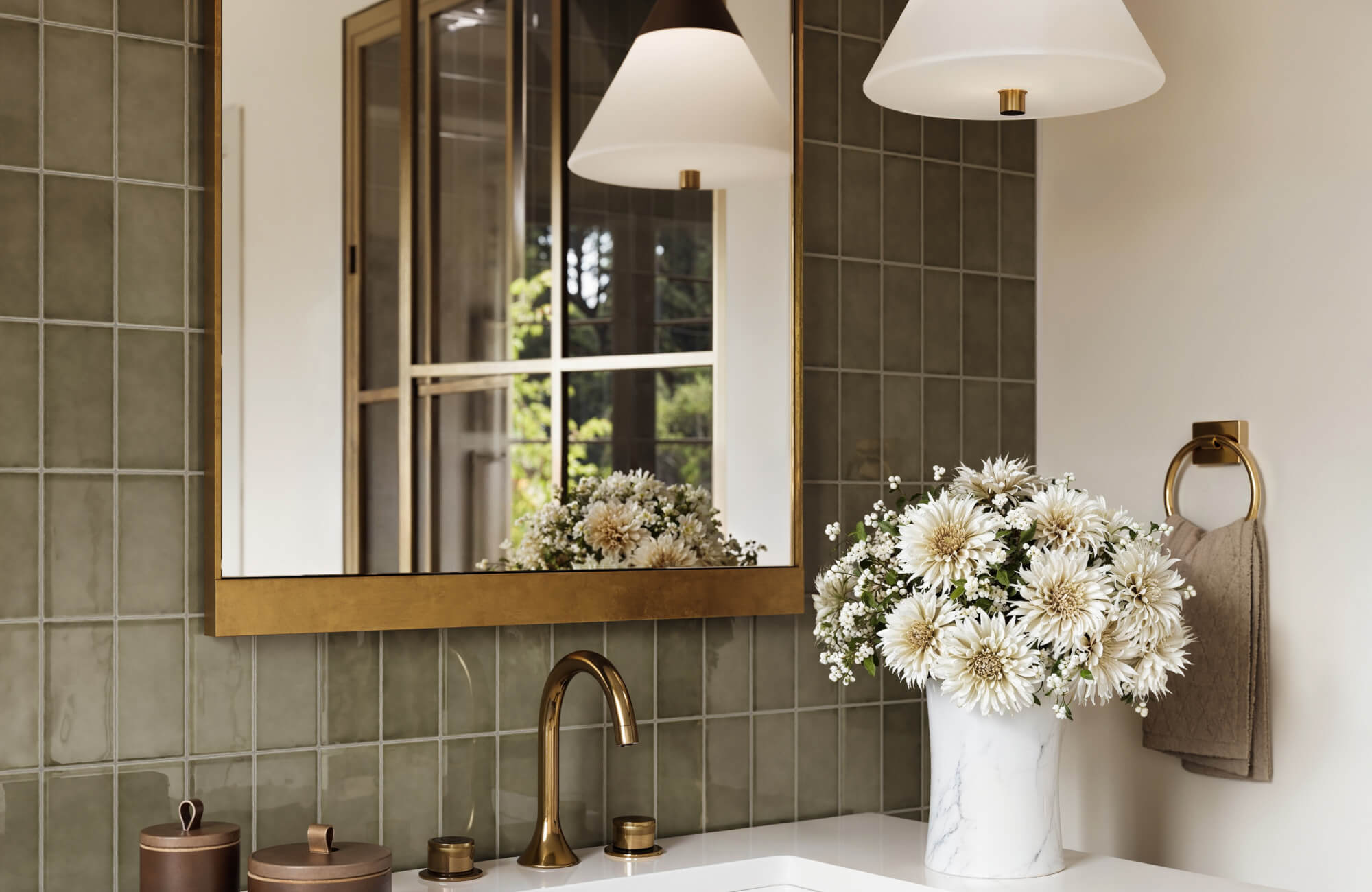
In spaces with abundant daylight, natural light can sometimes fulfill the role of side illumination, provided it enters at face level and distributes evenly—much like the serene balance shown in the photo above. Our Alma Pendant in Ecru Marble Solid adds sculptural elegance and warm overhead glow, while the Gemma 55" Single Vanity in Washed Blonde Oak Veneer with Carrara Marble Top anchors the design with timeless natural wood. Together, they demonstrate how thoughtful integration of pendants and natural light can elevate vanity lighting, creating both clarity and atmosphere without sacrificing design harmony.
Accent and Decorative Lighting
Accent lighting introduces an additional layer that transforms the bathroom from purely functional to visually striking. Options such as under-cabinet LEDs, recessed spotlights, or cove lighting highlight architectural details while reducing contrast in the space. These features also create a spa-like ambiance, enhancing relaxation without sacrificing task performance. Decorative elements like pendant lights or sculptural sconces further personalize the bathroom while contributing to overall illumination. With this, the interplay between accent and task lighting prevents the room from feeling flat or clinical. When balanced correctly, accent lighting enriches the vanity area with both elegance and depth.

Fixture Selection and Style Considerations
Choosing the right bathroom vanity lighting fixtures requires balancing technical efficiency with design aesthetics. Every fixture should serve a practical purpose while reinforcing the overall theme of the bathroom.
Sconces and Vertical Bars
Sconces and vertical light bars remain among the most reliable and versatile fixtures for vanity lighting. Their upright orientation naturally aligns with the human form, allowing light to fall evenly from forehead to chin for a clear, flattering reflection. When paired with frosted glass shades, the illumination becomes softer and more diffused, reducing harshness and enhancing comfort. Modern spaces often benefit from the sleek profile of slim LED sconces, while more traditional interiors may favor ornate designs with decorative detailing. Regardless of style, placing sconces on either side of the mirror ensures balanced coverage and eliminates the uneven shadows that ceiling lights often create. This thoughtful positioning makes sconces indispensable for both functional performance and timeless visual appeal.
A beautiful illustration of this principle is our Johansson Wall Sconce in Aged Brass, whose timeless design provides balanced illumination and a touch of sophistication. Unlike modern LED sconces, this wall sconce embraces a classic aesthetic that complements warm finishes and traditional interiors. When paired with the Abigail 60" Double Vanity in Light Natural Oak with 3 cm White Zeus Quartz Top, the result is a composition that unites function and style—ensuring the reflection is both accurate and flattering while reinforcing the vanity’s natural warmth. This pairing demonstrates how sconces placed with precision can define the vanity area as both practical and elegantly composed.
Pendant Lights and Statement Fixtures
Pendant lighting introduces a dramatic and stylish dimension to bathroom vanity lighting. When installed in pairs or trios, pendants frame the mirror beautifully while adding architectural interest. Careful positioning is also essential, as pendants hung too low may obstruct the mirror or cause glare. Furthermore, selecting materials such as smoked glass or metallic finishes adds richness and visual warmth. These statement pieces serve as both decorative accents and functional light sources. With the right placement, pendants become a defining feature that elevates the overall bathroom design.
Backlit and Integrated Mirrors
Backlit mirrors provide a sleek, modern solution for bathrooms that prioritize minimalism and efficiency. Integrated LED strips, for instance, offer consistent illumination across the mirror surface without bulky external fixtures. This approach eliminates harsh shadows while reducing wall clutter for a cleaner appearance. In addition, energy-efficient LEDs enhance sustainability and extend the lifespan of the lighting system. Many models also include dimming functions and adjustable color temperatures for personalized control. By combining style and advanced technology, backlit mirrors redefine modern bathroom vanity lighting.
Material and Finish Coordination
The finish of a fixture significantly influences the cohesion of the bathroom design. Brushed nickel and polished chrome, for example, create a streamlined, modern look, while oil-rubbed bronze and antique brass introduce warmth and vintage charm. Matte black, on the other hand, has become a popular option for bold, contemporary interiors that emphasize contrast. Aligning fixture finishes with faucets, cabinet pulls, and shower hardware also creates visual consistency across the room. This attention to detail ensures the lighting feels integrated rather than disconnected. Coordinated finishes help the entire bathroom achieve a polished and professionally designed appearance.

Technical Lighting Specifications
Technical details define how well bathroom vanity lighting performs over time. Considering brightness, efficiency, and accuracy ensures both reliable function and long-term satisfaction.
Lumens and Wattage Efficiency
LED technology has revolutionized bathroom vanity lighting by combining maximum brightness with minimal energy use. For instance, a 15-watt LED can deliver the same output as a 75-watt incandescent bulb while using only a fraction of the power. This efficiency not only lowers utility bills but also reduces how often bulbs need to be replaced, making LEDs a practical long-term choice. Their high lumen-per-watt ratios further guarantee that the space is well illuminated without wasting energy. Adding to their benefits, LEDs produce significantly less heat, which is especially important for safety in moisture-prone bathroom environments. With these combined advantages, LEDs stand out as the preferred option for modern vanity installations.
Color Temperature for Grooming Accuracy
The color temperature of bathroom vanity lighting plays a key role in how natural and flattering the light appears. A range between 3500K and 4000K is generally considered ideal, as it closely replicates daylight and provides the clarity needed for grooming. Within this range, colors render more accurately, which is essential for tasks like makeup application and skincare routines. In contrast, warmer tones below 2700K may create a cozy atmosphere but often distort natural skin tones, while cooler tones above 5000K tend to feel harsh and clinical, reducing comfort. Striking the right balance ensures the vanity area is both functional and visually appealing. As a result, the bathroom feels bright, natural, and inviting, supporting daily routines with ease.
Color Rendering Index (CRI)
The Color Rendering Index measures how faithfully a light source reveals colors in comparison to natural daylight. For bathroom vanity lighting, a CRI of 90 or higher is strongly recommended, as it ensures accuracy in skin tones, hair colors, and makeup shades. With a high CRI, reflections appear true to life, allowing grooming tasks to be performed with confidence and precision. By contrast, lower CRI lighting can cause muted or distorted appearances, often leading to frustration during daily routines. Fortunately, most quality LED fixtures clearly list their CRI ratings, making it easier for homeowners to select the right option. Choosing high-CRI lighting not only improves functionality but also enhances the overall comfort and satisfaction of the bathroom experience.
Dimmable and Smart Lighting Options
Dimmable bathroom vanity lighting introduces flexibility by allowing users to adjust brightness levels to match specific needs and moods. A bright setting works best for energizing morning routines, while a softer glow creates a calming atmosphere for evening relaxation. This adaptability is taken even further with smart lighting options, which enable seamless control through mobile apps or voice commands. Some advanced fixtures also allow adjustments to color temperature, offering a customized lighting experience throughout the day. In addition, scheduling features can help reduce energy waste by automatically dimming or turning off lights when not needed. Together, dimmable and smart fixtures create a modern, responsive lighting environment that enhances both convenience and comfort.

Avoiding Mistakes and Following Best Practices
Professional-quality bathroom vanity lighting requires avoiding common pitfalls and following proven design standards. By addressing details such as placement, sizing, and color quality, you ensure the lighting enhances both form and function.
Over-Reliance on Overhead Fixtures
Ceiling lights on their own are insufficient for vanity tasks because they cast downward shadows across the face. These unflattering shadows make grooming less precise and often distort the reflection. To counter this, side-mounted sconces provide balanced, even illumination that highlights facial features more accurately. In this arrangement, overhead fixtures still have value, but they should serve as supportive sources within a layered scheme rather than the primary light. When combined thoughtfully, side and overhead lighting add both depth and visual balance. This layered approach ensures the vanity remains highly functional while also enhancing the overall aesthetic of the bathroom.
Incorrect Fixture Sizing
Proportion is key to achieving well-balanced bathroom vanity lighting. Oversized fixtures, for example, can overpower a small vanity area, while undersized ones fail to provide adequate coverage. As a guideline, fixtures should typically span about three-quarters of the mirror’s width. This ratio ensures both visual harmony and sufficient illumination. A perfect example, as featured in the picture above, is our Colton 72" Double Vanity in Sable with 3 cm White Zeus Quartz Top, which provides ample width to support correctly scaled lighting. Paired with the Tyson Wall Sconce in Aged Brass, the balance of size and proportion creates a cohesive design where the vanity and lighting complement each other seamlessly. When the scale is correct, the design feels intentional and professionally executed, enhancing both aesthetic cohesion and practical performance.
Poor Color Temperature Selection
Choosing the wrong color temperature is one of the most common vanity lighting mistakes. For instance, extremely cool light above 5000K makes the space appear sterile and uninviting. Conversely, overly warm tones below 2700K distort skin tones and makeup colors. Additionally, a balanced range of 3500K to 4000K provides the most natural and flattering results. This range supports detailed grooming while still maintaining a comfortable atmosphere. Avoiding extremes also ensures the bathroom remains versatile and user-friendly.
Safety and Compliance Standards
Bathrooms are moisture-prone environments, making safety a top priority in lighting design. With this, all fixtures should be UL-listed for damp or wet locations to ensure they withstand humidity. Choosing products with appropriate IP ratings further protects against moisture damage and extends fixture life. Furthermore, electrical work should always comply with local building codes for safety and reliability. Using certified bathroom-rated fixtures also prevents costly issues and guarantees long-term performance. Following these standards provides both peace of mind and lasting value.
Creating a Lasting Impression with Bathroom Vanity Lighting
The right bathroom vanity lighting does more than provide clarity for daily routines—it sets the tone of the entire space with a sense of refinement. When fixtures, finishes, and technical specifications work together in harmony, the vanity evolves into both a practical tool and a striking design feature. Through thoughtful layering of light, careful balance of color temperature, and the selection of styles that reflect your vision, the bathroom becomes a place of comfort as well as sophistication. With this level of planning, vanity lighting transcends utility and becomes an enduring design element that elevates the beauty and function of the home.
For those seeking expert guidance, Edward Martin’s design services provide personalized solutions that merge timeless style with technical precision. To begin creating a beautifully lit bathroom tailored to your needs, we invite you to contact us today!