Finding the right rug size for your dining room table can feel like a small detail, but it makes a big difference in how the space looks and functions. A rug that is too small leaves chairs unsteady and the table feeling disconnected, while one that is too large can overwhelm the room. In this guide, we’ll walk through standard rug sizes, measuring tips, and style ideas to help you choose a rug that works perfectly for your space.

Why Rug Size Matters in Dining Rooms
The size of a rug in a dining room does far more than simply cover the floor. It sets the stage for how comfortable the space feels and how well it functions during everyday meals or gatherings. A rug that fits properly makes the room look complete, while one that’s too small or oversized can throw off the balance of the entire setup.
Comfort is one of the first things to think about when it comes to rug sizing. Chairs should be able to slide in and out without catching on the rug’s edges or wobbling on uneven flooring. When the rug allows for smooth movement, it creates a dining experience that feels natural and relaxed. Guests notice the difference too, since they aren’t constantly adjusting their chairs to stay level.
Beyond comfort, rug size plays a huge role in proportion and design. The right rug anchors the dining table, making it feel centered and intentional within the room. It also helps define the dining area, especially in open-plan spaces where visual separation is important. By choosing a rug that’s scaled to both the table and the room, you bring harmony to the entire setting.

Standard Rug Sizes for Dining Tables
While every dining room is unique, there are a few standard rug sizes that work well for common table shapes and seating arrangements. Knowing these guidelines helps narrow your options and ensures the rug feels balanced with both the table and the room.
Rugs for 4-Seater Dining Tables
A 4-seater dining table is often best paired with a rug around 6x9 or 8x10 feet. This size gives enough room for the chairs to slide back comfortably without leaving the back legs off the rug. It also creates a visual frame for the smaller table, making the dining area feel more anchored. Going too small can make the space look cramped, while slightly larger sizes still keep the balance right.
Rugs for 6-Seater Dining Tables
For a 6-seater dining table, an 8x10 rug is typically the best fit. It provides the right amount of clearance around the table so that chairs can move easily while staying on the rug. This size also keeps the table centered, which makes the room look more polished. In medium-sized dining areas, it strikes a balance between function and proportion without overwhelming the space.
Rugs for 8-Seater or Larger Dining Tables
Larger dining tables often require a 9x12 rug to feel properly scaled. This size allows all chairs to remain fully on the rug, even when pulled out, which adds comfort and cohesion. A rug that is too small under a big table can make the furniture look cramped or uneven. With a 9x12, the table feels grounded, and the dining area gains a sense of spaciousness and intention.
Round Rugs for Circular Dining Tables
Circular dining tables pair naturally with round rugs, which mirror the table’s shape. A rug that extends at least two feet beyond the edge of the table on all sides usually works best. This keeps chairs stable while also enhancing the symmetry of the design. Round rugs are especially effective in smaller dining spaces, as they create a soft, balanced look without adding bulk.

Measuring Your Dining Area the Right Way
Taking time to measure your dining area before choosing a rug makes a big difference in how the space feels. Without the right measurements, a rug can easily end up looking too small for the table or overpowering the entire room. Careful measuring ensures the rug supports both comfort and style.
Allowing Extra Space for Chairs
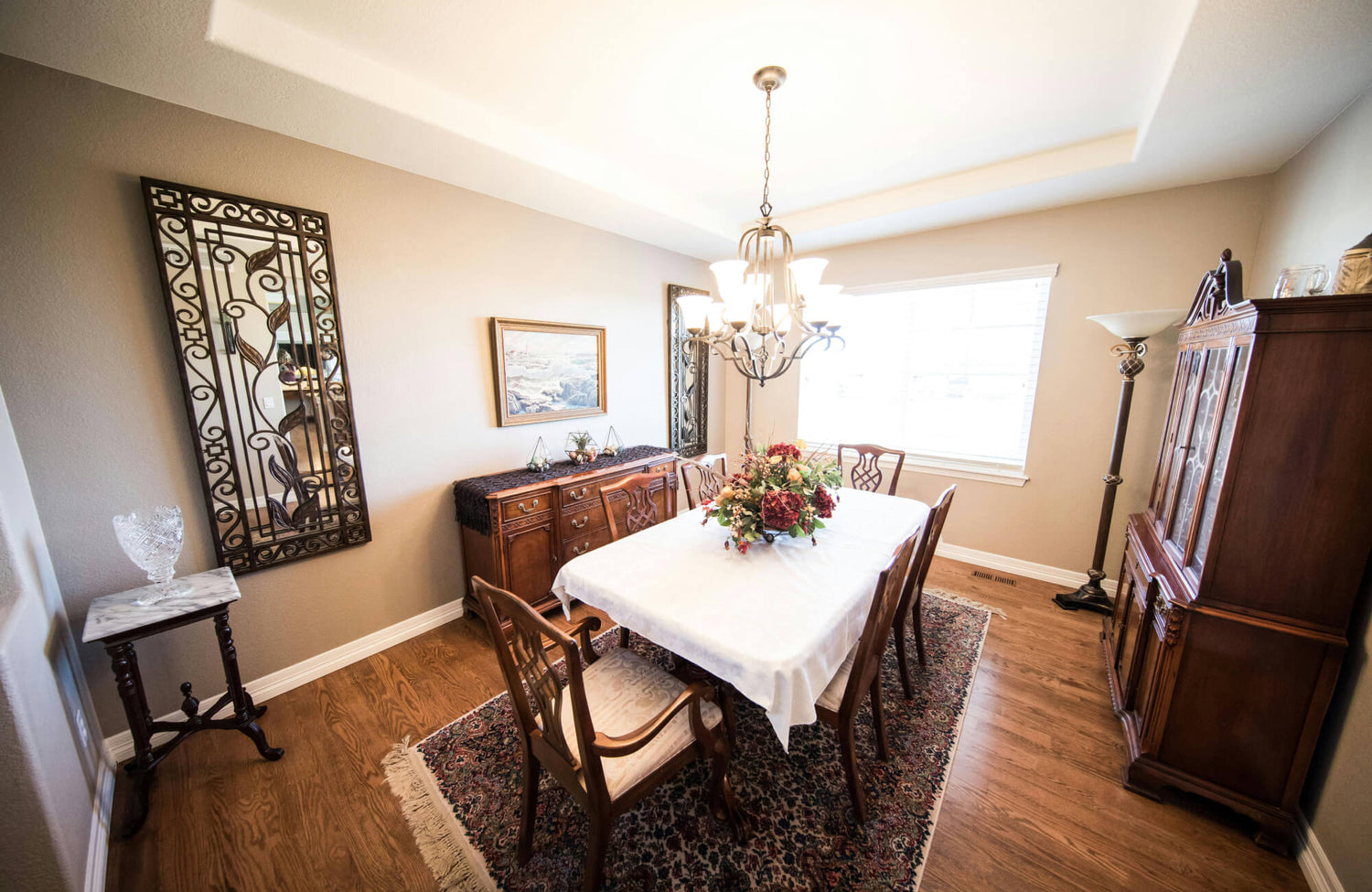
One of the most important things to remember is leaving enough room for chairs to move in and out. A good rule is to add about 24 inches beyond each side of the table so the back legs stay on the rug. This prevents chairs from tipping or catching on the edges, which can feel awkward for guests. It also helps protect your floors, since chairs aren’t dragged on bare surfaces. With enough clearance, dining feels more comfortable, and the rug functions as it should.
Factoring in Room Size and Shape
The overall size and shape of the dining room should guide your rug choice. A rug that looks perfect under the table may still feel awkward if it crowds walls or extends unevenly in the room. Measuring the area and leaving at least 12–18 inches of visible flooring around the edges creates balance. This border helps separate the rug from the walls and makes the space look intentional. Keeping scale in mind ensures the rug enhances the dining area rather than overwhelming it.
Creating a Balanced Border Around the Rug
Leaving a consistent border of floor visible around the rug adds symmetry and polish to the space. It frames the dining area, which is especially helpful in open layouts where rugs act as natural dividers. Without a balanced border, the rug may feel like it’s “floating” or sitting off-center. A properly measured rug grounds the table and creates harmony between furniture and flooring. This simple detail can make the difference between a space that feels thrown together and one that feels complete.

Best Materials for Dining Room Rugs
The right rug material can make a big difference in how practical and stylish your dining area feels. Since dining rooms are prone to spills, food crumbs, and chair movement, you’ll want a rug that’s both durable and easy to maintain. Certain materials stand out for their ability to balance comfort, stain resistance, and long-lasting performance.
Wool for Durability and Comfort
Wool is a classic choice for dining room rugs because it combines strength with softness underfoot. Its natural fibers bounce back from chair marks and foot usage, helping the rug look fresh for longer. Wool, such as our Mallory Wool Pile Rug in Primrose, is also naturally resistant to dirt and staining, making cleanup easier than you might expect. The fibers hold dye beautifully, which means the colors stay vibrant even after years of use. While wool rugs can cost more upfront, their durability makes them a solid long-term investment.
Polypropylene for Stain Resistance
Polypropylene rugs are a popular option for families and busy households. This synthetic material is highly resistant to stains, making it easier to handle food and drink spills. It’s also more affordable than many natural fibers, which makes it a budget-friendly way to cover larger dining areas. Polypropylene rugs are lightweight, so moving them for cleaning is less of a hassle. They’re a practical choice for those who want a stylish rug without worrying too much about messes.
Flatweaves for Easy Cleaning
Flatweave rugs are thin, lightweight, and easy to shake out or vacuum. Their low pile means food crumbs and dirt don’t get trapped as easily, which is especially helpful in a dining space. Many flatweaves are reversible, so you can flip them over if one side gets worn or stained. They come in a wide range of patterns and colors, giving you flexibility in design. Flatweaves are perfect for casual dining rooms or households that want convenience above all else.
Indoor-Outdoor Rugs for High Functionality
Indoor-outdoor rugs are another smart choice for dining rooms, especially if spills are a frequent concern. Made from durable synthetic fibers, such as our Pascal Polyester Face Rug in Rust / Multi above, they’re designed to withstand moisture and can often be cleaned with a simple hose-down. Despite their durability, many now come in stylish designs that look just as good indoors as outside. They’re also fade-resistant, which is useful in dining rooms with lots of natural light. If practicality is your top priority, indoor-outdoor rugs strike a great balance between form and function.
Natural Fiber Rugs for Organic Texture
Rugs made from natural fibers like jute or sisal bring a warm, organic feel to a dining room. Their textured look adds depth and pairs well with both rustic and modern furniture. While they aren’t as stain-resistant as wool or polypropylene, they’re strong and wear well in lower-spill households. A seagrass rug, for instance, can be surprisingly resilient while still offering that earthy appeal. For homeowners who value texture and eco-friendly materials, natural fiber rugs are an attractive option.

Choosing the Right Rug Style for Your Dining Space
The style of your dining room rug has just as much impact as its size. Color, pattern, and texture all work together to shape the mood of the space, helping the rug either blend in for harmony or stand out as a focal point.
Coordinating Rug Colors With Dining Furniture
The colors in your rug should complement your dining furniture to create a cohesive look. A neutral rug can balance bold furniture finishes, while a more vibrant rug can bring life to a simple table and chairs. Matching undertones like warm wood paired with earthy rug shades helps the design feel intentional. For those who prefer contrast, pairing dark furniture with a lighter rug can brighten the space and prevent it from feeling heavy. Once the color palette feels balanced, it’s easier to experiment with patterns for added interest.
Using Patterns to Hide Spills and Wear
Patterns work well in dining rooms because they serve both a decorative and a practical purpose. A rug with a subtle design can mask everyday crumbs or light stains until it’s time for cleaning. Bolder patterns, as seen with our Pascal Polyester Face Rug in Rouge / Lake above, meanwhile, can act as a design statement while still hiding signs of wear. Choosing the right pattern depends on how much attention you want the rug to draw compared to the rest of the space. After settling on a pattern, texture becomes the next tool for bringing warmth and personality to the room.
Texture Choices That Add Warmth
Texture completes the picture by giving the rug dimension and a tactile quality that enhances the dining area. A soft, plush rug creates a cozy, formal feel, while flat or woven textures lean casual and easygoing. Textured rugs also balance out sleek dining furniture, making the room feel less stark and more inviting. The key is subtlety; too much texture can overwhelm the space, but just enough adds depth without distraction. Together with thoughtful color and pattern choices, texture helps create a dining room that feels both stylish and comfortable.

Styling Tips for Dining Room Rugs
How you style a rug in your dining room can be just as important as the size or material you choose. Placement and arrangement affect not only how the space looks but also how comfortable it feels day to day. With the right approach, your rug can become a design feature that also works seamlessly with your dining routine.
Centering the Rug Under the Table
Centering the rug under the dining table is the first step to creating balance in the room. A well-centered rug ensures the table feels anchored, and it helps the overall layout look intentional rather than accidental. The edges of the rug should extend evenly around the table, giving each chair the same amount of space. This small detail makes the dining area feel polished and welcoming. Once the rug is properly centered, you can explore layering and other styling techniques to add personality.
Layering Rugs for a Custom Look
Layering rugs is a creative way to add depth and dimension to your dining room. A neutral base rug, for instance, can be paired with a smaller patterned rug on top to create visual interest without overwhelming the space. This approach works especially well if you want to experiment with bold designs but still keep the overall look grounded. It also adds flexibility; you can swap the top rug seasonally for a fresh update. After layering, the next step is making sure the setup is practical for everyday use.
Keeping the Rug Functional for Everyday Dining
A dining room rug should look beautiful, but it also needs to support the way you live. Keeping furniture properly placed on the rug prevents shifting and helps maintain a stable dining area. It’s also smart to leave enough space for chairs to move in and out comfortably, so the rug never feels like it’s in the way. When style and function work together, the rug enhances both the design and usability of the room. This balance ensures the rug remains an asset in daily life rather than a hassle.
Creating a Dining Space That Feels Balanced
Choosing the right rug size for your dining room is about more than just numbers. It shapes how comfortable the space feels, how easily chairs move, and how well the table is anchored within the room. When the rug fits properly, it helps the entire dining area look intentional and inviting, turning mealtime into a setting that feels complete and welcoming.
If you are still deciding which rug will work best in your home, our design consultation service can give you the guidance you need. Whether you are leaning toward a classic wool option, a low-maintenance synthetic, or a textured natural fiber, we can help you select a rug that matches both your lifestyle and your design goals. With expert support, you can feel confident that your rug choice will bring both comfort and style to your dining room.