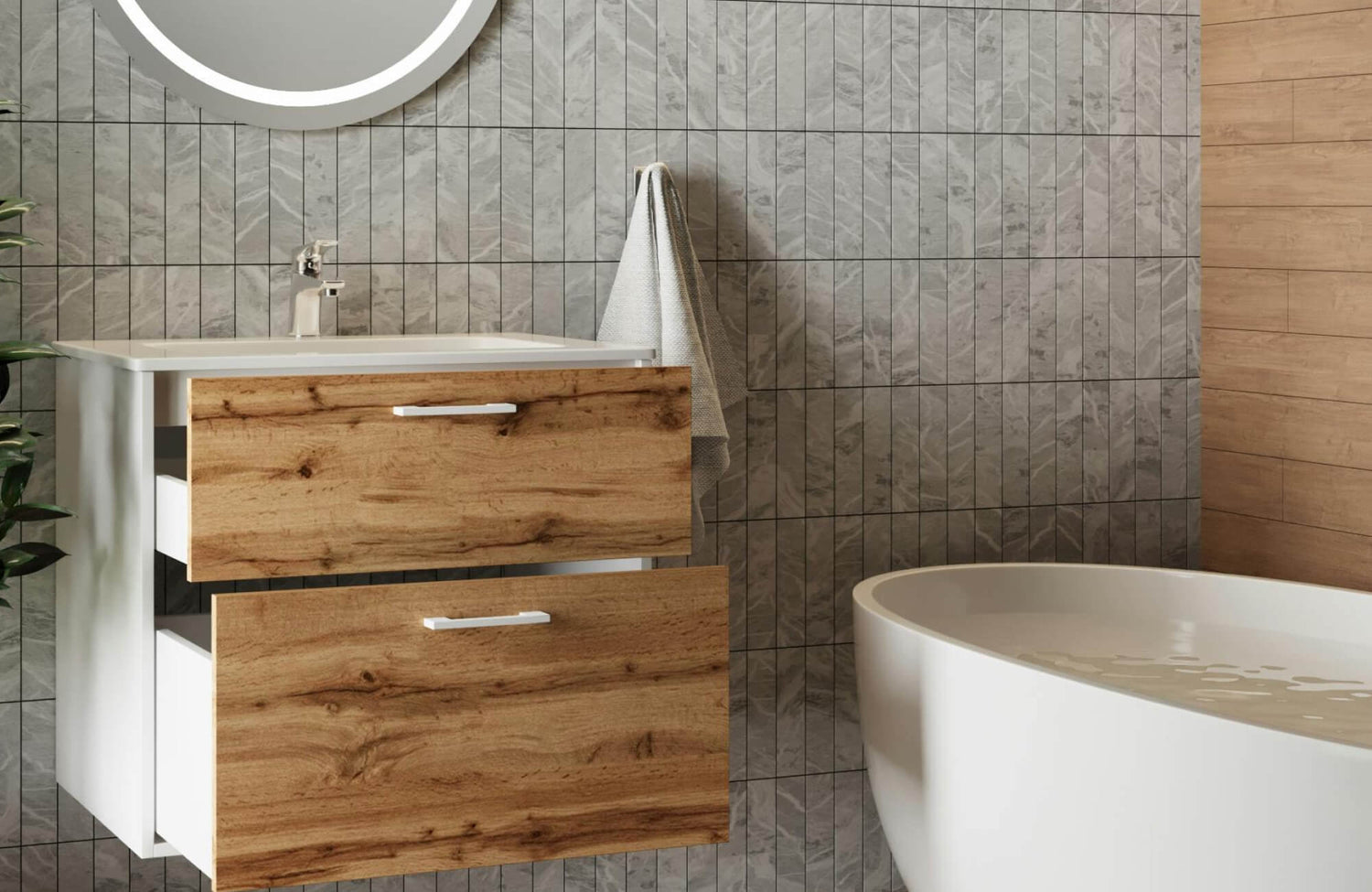
Wood bathroom vanities bring warmth, craftsmanship, and character to interiors, and their natural beauty often elevates even the most streamlined spaces. When selected thoughtfully, their refined textures and tailored silhouettes can offer remarkable longevity, even in moisture-heavy bathrooms. Yet the relationship between wood and humidity is nuanced, shaped by material composition, construction precision, and environmental stability. Understanding how these factors work together also allows you to confidently choose vanities that balance visual sophistication with performance in wet areas. With the right knowledge, a wood vanity becomes not only a design statement but a durable investment built to thrive in real, everyday bathroom conditions.

Material Behavior of Wood in High-Moisture Bathroom Environments
Wood reacts to moisture through gradual shifts in fiber saturation and dimensional movement, which together influence how reliably it performs in bathrooms where humidity routinely fluctuates. As these environmental conditions interact with each material’s structural makeup, they reveal clear differences in long-term durability among hardwood, plywood, MDF, and other engineered substrates.
Solid Hardwood Moisture Response
Solid hardwoods such as teak, white oak, and maple offer naturally dense grain structures that slow down moisture absorption and promote dimensional stability over time. As humidity levels rise and fall, these tightly aligned fibers respond in controlled increments, preventing sudden expansion that could strain nearby joints. This measured movement also helps finishes remain intact, since the wood beneath does not shift abruptly enough to cause surface cracking.
Because hardwoods maintain a more predictable reaction to vapor changes, their internal structure stays balanced even during daily bathroom use. When kiln-dried before fabrication, their moisture content stabilizes further, reducing internal stress that might otherwise lead to warping. Combined, these characteristics allow solid hardwood vanities to withstand wet-area conditions with a level of reliability few natural materials can match.
Engineered Plywood Stability Advantages
Plywood’s cross-laminated construction creates opposing grain directions that naturally counterbalance each other, allowing the panel to maintain its shape even as humidity rises. As moisture attempts to influence one ply, the adjacent layer resists the movement, resulting in a remarkable level of dimensional stability. This interplay also becomes especially valuable in bathrooms, where temperature shifts and steam cycles place continuous stress on cabinet materials.
Marine-grade versions push this performance further by using waterproof phenolic adhesives that resist delamination under vapor pressure. Because these layers are bonded with precision under controlled pressure, the resulting core remains rigid without becoming brittle. This engineered consistency makes plywood an exceptionally dependable choice for moisture-resistant bathroom vanities.
Moisture Limitations of MDF and Particleboard
MDF and particleboard, despite their smooth surfaces and budget-friendly appeal, respond poorly when exposed to even modest amounts of moisture. Their porous fiber networks absorb water quickly, causing swelling that exceeds acceptable tolerances for cabinetry. As this moisture moves inward, the internal binders also weaken, leading to softening and eventual loss of structural cohesion.
Even when finishes are applied, exposed edges behave like open pathways that allow moisture to enter with little resistance. Over time, this leads to bubbling, delamination, and visible distortion that compromises both usability and appearance. Because they lack the reinforcing structure found in plywood or hardwood, these substrates consistently underperform in bathrooms with routine steam and splash exposure.

Construction Techniques That Strengthen Wood Bathroom Vanity Durability
The structural integrity of a wood vanity depends on how well its components are engineered to withstand mechanical stress created by moisture, temperature shifts, and daily use. When construction techniques support natural expansion while preventing structural distortion, the vanity becomes far better equipped to perform in wet environments.
Joinery Engineering for Moisture-Resilient Construction
Advanced joinery techniques such as mortise-and-tenon, dovetail, and dado systems distribute mechanical forces smoothly across thicker wood sections, giving the vanity a more resilient foundation. As the wood subtly expands with humidity, these interlocking joints flex in harmony rather than pulling apart. This compatibility also reduces stress at connection points, ensuring the structure remains aligned even under repeated moisture cycles.
Because the joints rely more on precise geometry than metal fasteners, they respond naturally to the wood’s internal movements. Moisture-resistant adhesives like PVA Type II or Type III reinforce this stability by creating bonds that remain strong under elevated humidity. Together, these methods produce a cabinet framework that stays secure and true over many years of wet-area use.
Moisture-Controlled Lumber Selection and Conditioning
Properly conditioned wood materials, whether solid or engineered, form a stable foundation for bathroom vanities by maintaining consistent moisture content throughout fabrication. Engineered panels such as MDF or high-quality wood composites benefit greatly from controlled manufacturing environments, where fibers and resins are uniformly balanced to minimize internal stress.
Because these substrates do not rely on natural grain patterns, they also experience far less unpredictable movement, making them inherently resistant to warping, cupping, or seasonal expansion. When paired with veneers crafted from responsibly selected lumber, the finished surface achieves the warm, authentic look of wood while gaining the stability of a dimensionally consistent core.
This thoughtful approach to material conditioning, as shown in the photo above, is reflected in designs like the Rosalie 72" Double Vanity in Amber Birch, which integrates its wood components with precision to ensure reliable performance in moisture-rich settings. By combining stable core materials with carefully selected and properly acclimated wood surfaces, the vanity maintains its refined appearance while resisting the fluctuations common in humid bathrooms.
Through this balance of engineered stability and elevated craftsmanship, the resulting structure offers long-term durability that supports both functional reliability and timeless visual appeal.
Edge Protection and Structural Reinforcements
Edge banding acts as a crucial barrier by sealing exposed end grain, which would otherwise absorb moisture at a much faster rate than the rest of the panel. This protective layer helps slow the onset of swelling, allowing the vanity to maintain its form even with everyday splashes. Internal sealants on hidden surfaces, such as the underside of the cabinet base, further reduce vapor infiltration in places where humidity often collects.
Moreover, reinforced back panels add rigidity, preventing the cabinet from shifting as moisture encourages small, natural movements elsewhere in the structure. Waterproof adhesives also enhance these reinforcements by ensuring that bonded surfaces remain secure over time. When these protective strategies work together, the vanity achieves a level of durability that extends its lifespan far beyond unprotected wood cabinets.

Protective Wood Finishes and High-Performance Coating Systems
A wood vanity’s water resistance largely depends on the protective finish surrounding its exterior, as this barrier determines how effectively moisture is repelled rather than absorbed. With modern coating technologies, designers can achieve long-term protection without compromising visual clarity or tactile refinement.
Polyurethane and Conversion Varnish Moisture Barriers
Polyurethane forms a dense, flexible film that shields the wood from direct water contact while allowing subtle movement beneath the finish, while oil-based versions penetrate deeply into the fibers, strengthening the top layers so they react evenly to humidity changes. At the same time, waterborne polyurethane adds clarity and color stability, making it ideal for lighter hardwood species. Conversion varnish, with its chemically cured structure, also provides an even harder film that resists abrasion, cleaning agents, and daily wear. This durability is especially valuable in busy bathrooms where splashes and frequent cleaning are unavoidable. Together, these finishes create a dependable moisture barrier that preserves both the appearance and structural integrity of wood vanities.
UV-Cured and Two-Part Epoxy Finishes
UV-cured coatings undergo instantaneous crosslinking when exposed to ultraviolet light, creating an exceptionally durable film that shields surfaces from moisture intrusion, stains, and daily wear. Because they cure so quickly and consistently, these finishes also eliminate the soft-film vulnerability common in traditional coatings, resulting in a harder, more resilient protective layer. Two-part epoxy systems extend this performance by forming a dense, glass-like barrier that is nearly impervious to liquid water, chemical exposure, and vapor diffusion. Their long-term clarity and abrasion resistance make them ideal for bathrooms where humidity levels fluctuate and surfaces are routinely cleaned.
This level of advanced protection aligns seamlessly with our Paxton 72" Double Vanity in Pebble Oak (featured in the picture above), which features a multi-stage coating inside and out to reinforce UV stability, moisture resistance, and everyday durability. Paired with its quartz-based sinktop that naturally repels stains and mildew, reinforced drawer interiors, and premium hardware, this Paxton vanity also benefits significantly from these high-performance finishing technologies. Together, these protective layers allow the vanity to maintain its refined appearance and structural reliability even in moisture-intensive environments, supporting a long-lasting, modern bathroom design.
Penetrating Oils and Internal Surface Sealants
Penetrating oils such as tung and polymerized linseed oil bond with the wood’s cellular structure, creating internal reinforcement that stabilizes the substrate. As these oils cure, they minimize uneven moisture absorption, helping keep internal stresses balanced. Applying these treatments to drawer interiors and concealed panels also brings moisture control to areas where film finishes are less effective. In addition, internal sealants limit vapor migration in high-condensation zones, such as beneath sinks and behind plumbing. By strengthening both visible and hidden surfaces, the vanity maintains a consistent equilibrium even under ongoing humidity exposure. With these layered protective treatments, long-term stability becomes far easier to sustain.

Environmental Controls and Installation Methods for Moisture Protection
Even the most resilient vanity depends on environmental stability, as proper ventilation and strategic installation collectively determine how well the wood withstands daily moisture cycles. When these factors work together, the vanity can age gracefully while maintaining consistent structural integrity.
Ventilation and Relative Humidity Regulation
Strong ventilation systems reduce lingering steam, preventing moisture from settling into the wood’s surface or seams. High-CFM exhaust fans, for instance, draw humid air out of the bathroom, helping maintain a stable moisture content within the vanity. Humidity sensors also provide additional consistency by activating ventilation during peak moisture events. As the air remains balanced, the wood’s natural expansion and contraction occur gradually rather than abruptly. This environmental stability helps finishes last longer without cracking or peeling. Ultimately, reliable humidity control forms a foundational defense that supports the long-term durability of wood bathroom vanities.
Splash Management and Perimeter Sealing
Silicone caulking acts as a protective perimeter, blocking water from seeping into vulnerable joints where moisture exposure often begins. As it forms a continuous seal around sinks, backsplashes, and wall junctions, it directs splashes away from the cabinet’s structure. This prevention of moisture pathways also helps reduce hidden swelling and internal degradation. Because properly applied silicone remains elastic, it adapts well to seasonal movement in both the wood and the surrounding surfaces. Over time, this flexibility becomes essential to keeping the seal intact through humidity shifts. With these protections in place, daily bathroom use is far less likely to compromise the vanity’s performance.
Elevated Bases and Floating Vanity Designs
Lifting a vanity off the floor, whether through leveling feet or a true wall-mounted configuration, helps prevent direct contact with standing water that can accumulate near sinks, tubs, or shower areas. This elevated placement promotes continuous airflow beneath the cabinet, allowing moisture to dissipate more quickly and reducing the likelihood of bottom-panel swelling or finish stress. Floating designs go a step further by removing the toe-kick and eliminating ground-level splash exposure entirely, supporting greater long-term stability in bathrooms that experience heavy steam cycles. The open space below also enhances visual lightness, making the room feel more expansive while allowing finishes and substrates to dry evenly after humid conditions.
This approach is exemplified in the Royce 72" Double Vanity in Chestnut, as displayed in the photo adobe. Its wall-mounted construction keeps its re-sawn acacia doors, marine-grade MDF core, and premium multi-stage coating system well protected from floor-level moisture. The floating base not only reinforces the vanity’s mid-century modern silhouette but also helps maintain the integrity of its ribbed veneer detailing by minimizing contact with ambient humidity and standing water. Paired with a stain- and mildew-resistant quartz sinktop, durable interior laminates, and soft-close hardware, this Royce vanity benefits significantly from its elevated installation. By combining an airy, off-the-floor profile with thoughtfully engineered materials, the vanity achieves both aesthetic refinement and dependable moisture resilience in demanding bathroom environments.

Long-Term Performance and Maintenance Practices for Wood Bathroom Vanities
The lifespan of a wood vanity depends not only on its material quality but also on consistent care and early problem detection. With thoughtful maintenance and following the manufacturer’s care guidelines, even heavily used bathroom vanities can retain their structural integrity and visual beauty for many years.
Expected Service Life in Moisture-Rich Bathrooms
Hardwood and plywood vanities constructed with moisture-resistant finishes often achieve service lives of 15–25 years, even in bathrooms with daily steam exposure. Their engineered stability allows them to navigate humidity shifts without suffering structural distortion. Protective coatings further extend this resilience by slowing wear and preventing water intrusion. As long as environmental conditions remain reasonably controlled, these materials preserve both form and function. This extended performance also places wood vanities on par with many synthetic alternatives marketed for moisture-heavy spaces. For those seeking long-lasting natural beauty, this durability makes wood an appealing and dependable choice.
Routine Cleaning and Finish Preservation
Gentle cleaners help maintain the clarity and strength of protective coatings, ensuring the finish does not weaken under daily use. In the same way, avoiding harsh or abrasive chemicals prevents surface deterioration that could expose the wood beneath. Regularly wiping away splashes also minimizes prolonged water contact, reducing stress on both the finish and the substrate. For natural finishes, periodic conditioning further preserves their water-repellent qualities and keeps the vanity looking revitalized. Likewise, monitoring changes in sheen or texture offers early clues when maintenance may be needed. When these practices are followed consistently, the vanity’s protective layers remain durable and effective for years.
Detecting Early Signs of Moisture Intrusion
Subtle swelling around edges or corners often serves as the first indication that finish protection has weakened. Drawer misalignment or increased friction may point to deeper expansion within the frame. As finishes begin to dull or show micro-cracks, these visual cues also highlight areas becoming vulnerable to moisture. Addressing these issues early prevents more advanced damage that could compromise structural stability. Moreover, light refinishing or resealing can restore full protection before permanent harm occurs. By staying attentive to these early signs, homeowners can prolong the life of their wood vanities significantly.
Enduring Confidence in Wood Vanity Performance
When crafted with high-quality materials and protected through precise construction methods, wood bathroom vanities can perform exceptionally well even in moisture-intensive environments. Their combination of natural beauty and engineered resilience allows them to serve as both functional fixtures and timeless design elements. With proper ventilation, thoughtful installation, and consistent maintenance, these vanities maintain stability and elegance for many years. Modern finishes and moisture-resistant substrates further expand their suitability across a wide range of bathroom styles. Ultimately, choosing a well-built wood vanity brings lasting value, durability, and aesthetic warmth to any bathroom space.
To help you choose with confidence, Edward Martin’s design services offer expert guidance in selecting the right vanity style, construction, and finish for your specific bathroom conditions. Whether refining an existing vision or seeking a fully curated design direction, our specialists ensure that every selection balances long-term durability with elevated craftsmanship. For personalized recommendations, project support, or product inquiries, you can easily contact us to begin designing a bathroom that blends lasting performance with refined visual warmth!