At first glance, shower floor and wall tiles may look alike, but their differences are quite substantial. Each serves a specific purpose; floor tiles are designed to provide grip and support proper drainage, while wall tiles focus on enhancing appearance and simplifying upkeep. Understanding these distinctions helps you select materials that achieve the right balance of performance, safety, and style. In this article, we’ll break down what truly sets shower floor and wall tiles apart, exploring how factors like construction, safety, design, and maintenance come together to create a bathroom that feels cohesive, durable, and effortlessly functional.

The Core Differences Between Floor and Wall Tiles
Before selecting your tiles, it’s important to understand how their design and construction are tailored to specific functions. Shower floors and walls face different levels of use and moisture exposure, so each tile type is engineered to meet those unique demands effectively.
Material Composition
Shower floor tiles are designed to endure constant moisture and physical impact. For that reason, they’re typically made from dense porcelain, natural stone, or other low-absorption materials that offer both durability and traction. These compositions resist wear and retain their integrity even with frequent cleaning.
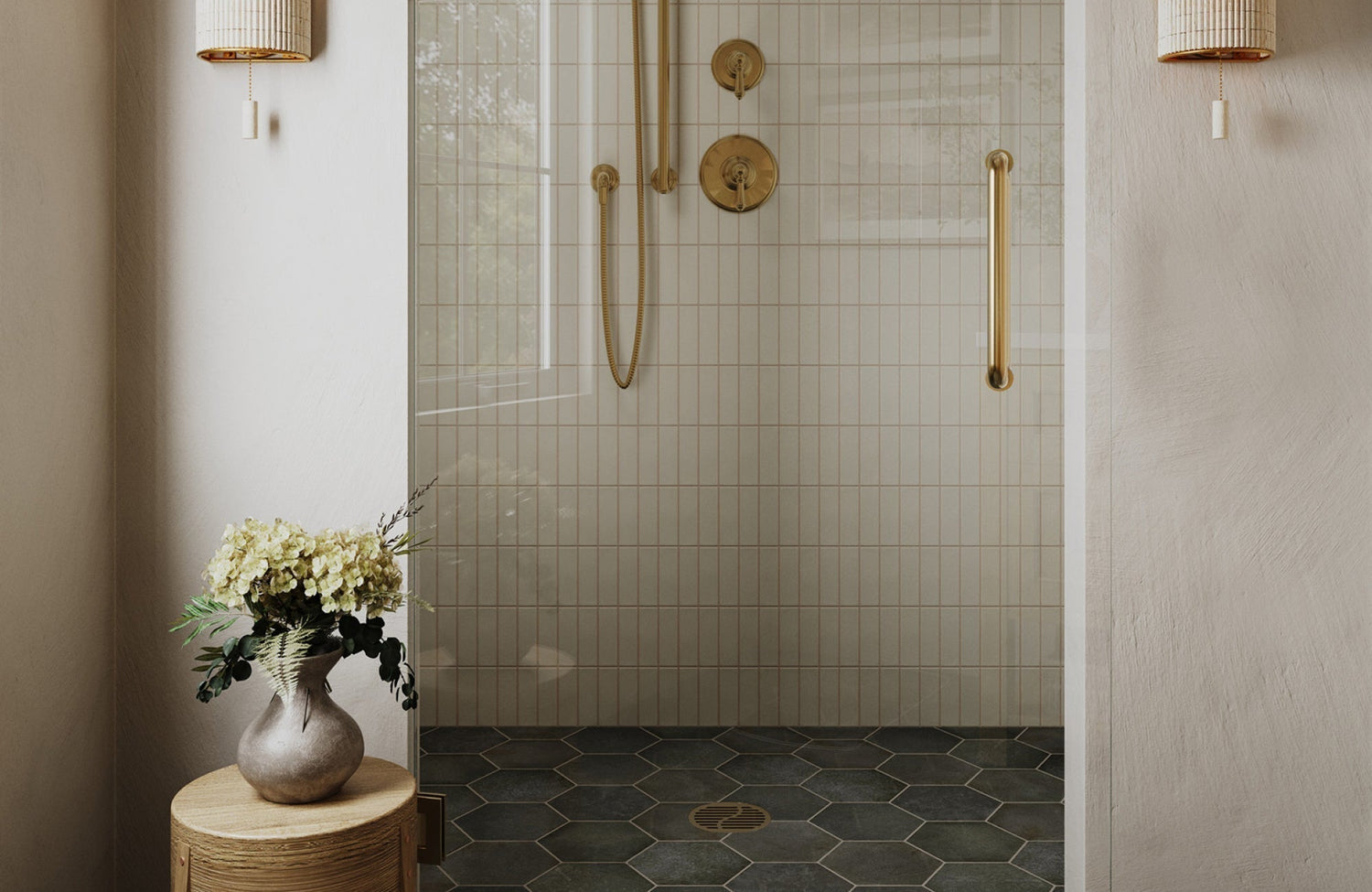
In the photo displayed above, Edward Martin’s Shea 2x2 Matte Porcelain Mosaic Tile in Dune illustrates how small-format porcelain provides reliable grip and water resistance underfoot. Meanwhile, the Mikayla 5x5 Glossy Ceramic Tile in Olive on the walls adds a reflective surface and rich tone that enhances depth and warmth. This combination demonstrates how floor and wall materials can work together, one for performance, the other for visual impact, creating a shower that’s both practical and beautifully balanced.
Thickness and Weight
Tile thickness greatly influences performance and installation. Shower floor tiles are made thicker and denser to withstand pressure and resist cracking over time. Wall tiles, on the other hand, are thinner and lighter; they can adhere securely to vertical surfaces without slipping or needing extra support. Their lighter build also makes them easier to cut and fit neatly around fixtures such as shelves or showerheads. Selecting the proper thickness for each surface ensures a stable installation, smooth alignment, and long-lasting results.
Slip Resistance and Surface Texture
One of the key distinctions between shower floor and wall tiles is their surface finish. Floor tiles typically feature a textured or matte surface that provides traction and stability when wet, enhancing safety and comfort. Wall tiles, in contrast, often have a smooth or glossy finish that’s easier to clean and helps reflect light, making the shower feel brighter and more open. When you combine matte tiles on the floor with sleek finishes on the walls, you create a design that seamlessly blends safety, practicality, and visual balance.

Functional and Safety Requirements in Wet Environments
Because showers are continually exposed to water, steam, and soap residue, safety and functionality should guide every material decision. Choosing the right type of tile helps prevent problems such as moisture damage, slipping, and grout deterioration, ensuring your shower remains both durable and comfortable to use over time.
Water Absorption and Grout Lines
In wet areas such as showers, a tile’s water absorption rate is an equally important factor in long-term performance. Porcelain tiles are an excellent choice for floors because they absorb very little moisture, minimizing the risk of warping or mold growth beneath the surface. Properly sealed natural stone tiles can also perform well while adding a rich, organic look. Grout lines, though essential for installation, are more porous and can allow water to seep through if left unsealed. Regularly sealing the grout helps prevent staining and mildew, keeping both your floors and walls clean, watertight, and easy to maintain.
Slip Ratings and Safety Standards
Safety in a shower goes beyond texture; it also involves measurable performance. Tiles are tested for slip resistance using standards such as the Coefficient of Friction (COF) or the Dynamic Coefficient of Friction (DCOF). For shower floors, choosing tiles with a higher DCOF rating provides better traction and stability when wet. Wall tiles don’t require this rating since they aren’t underfoot, but it’s still worth considering how the overall surface feels when barefoot. Reviewing these ratings before making a purchase ensures your shower remains both comfortable and secure.
Drainage and Slope Compatibility
Effective drainage is essential to a well-functioning shower floor. Tiles must align with the slope of the surface to direct water smoothly toward the drain. Smaller-format tiles or mosaics work best for this purpose, as the additional grout lines provide better traction and make it easier to shape the slope accurately during installation. This careful alignment prevents puddling and helps maintain a surface that stays dry, stable, and comfortable underfoot.

Design and Aesthetic Considerations for Cohesive Spaces
A well-designed shower should not only perform well but also feel visually balanced and inviting. Thoughtfully coordinating your floor and wall tiles creates a cohesive look that unites practicality with refined style, resulting in a space that feels both functional and beautifully composed.
Matching or Contrasting Surfaces
A thoughtful way to create visual harmony is by using the same tile in different finishes. For instance, choosing a matte version for the floor and a glossy one for the walls maintains a unified color palette while ensuring safety underfoot. In the shower above, the combination of Edward Martin’s Maisie 2.5x16 Glossy Ceramic Tile in Ocean on the walls and Astrid 2x2 Matte Porcelain Mosaic Tile in Pearl on the floor demonstrates how contrast in texture and tone can elevate a space. The glossy blue herringbone wall tile adds depth and light, while the soft matte mosaic floor anchors the design with subtle elegance. Together, these surfaces create a refined balance that feels cohesive, inviting, and timeless.
Size and Pattern Coordination
Tile size and layout play an equally important role in shaping the look and feel of a shower. Large-format tiles on the walls can reduce grout lines, creating a clean, modern appearance that visually expands the space. Smaller tiles on the floor, such as mosaics or hexagonal designs, are ideal for following slopes and providing added grip. Coordinating these patterns enhances visual flow; for example, a vertical wall layout can draw the eye upward, while a grid-patterned floor anchors the design, creating a balanced and cohesive look.
Color, Light, and Visual Flow
Color plays a vital role in defining the brightness and sense of space within a shower. Glossy wall tiles reflect light, helping smaller showers appear more open and airy, while slightly darker or warmer floor tones add depth and contrast. Neutral shades such as beige, gray, or soft white can create a timeless foundation that pairs easily with changing décor. For a touch of character, accent walls or subtle borders can introduce personality without overpowering the space. When color, tone, and reflectivity are balanced thoughtfully, the shower feels brighter, more cohesive, and visually inviting.

Installation Techniques and Challenges for Each Surface
Installation brings planning and precision together. Since shower floors and walls face different challenges, such as gravity and constant moisture, each requires the right techniques and materials. For durable, watertight results, it’s always best to consult a professional installer.
Substrate Preparation
A successful tile installation begins with a properly prepared foundation. Shower floors need a solid, level base that’s fully waterproofed with membranes or underlayment systems to prevent cracks and leaks. Walls rely on moisture-resistant backer boards or cement boards to provide strength and stability. Taking the time to prepare each surface correctly ensures lasting support for the tiles and safeguards the structure behind them from water damage.
Adhesives and Setting Materials
The adhesive you choose is just as important as the tile itself. For shower floors, a modified thin-set mortar provides a strong, flexible bond that endures daily use and moisture exposure. Wall tiles, on the other hand, benefit from lightweight or non-sag mortars that keep them securely in place without slipping. Using the right adhesive for each surface ensures a stable installation and clean, even lines throughout the shower.
Grouting and Sealing Practices
In wet areas, grout plays a crucial role in maintaining both durability and appearance. Epoxy or stain-resistant grout is ideal because it resists moisture and discoloration. At edges and corners, flexible silicone sealants should be used instead of grout to accommodate slight movement and prevent leaks. While porcelain and ceramic tiles themselves don’t require sealing, grout lines still benefit from regular maintenance to keep the surface protected, hygienic, and long-lasting.

Durability, Maintenance, and Longevity
The lifespan of your shower depends not only on the materials you choose but also on how well you care for them. Since shower floors and walls are exposed to different levels of moisture and wear, their maintenance needs naturally vary. For best results, always follow the manufacturer’s recommendations for both tiles and grout to ensure proper care and long-lasting performance.
Cleaning and Upkeep Differences
Smooth, glossy wall tiles are easy to maintain; typically, a mild cleaner and a soft cloth are enough to remove soap or water marks. Floor tiles, however, often feature textured finishes for added grip, which can trap residue more easily. Regular cleaning with a soft brush helps lift buildup without damaging the surface. It’s best to avoid harsh chemicals, as they can dull finishes and weaken grout over time, reducing the overall longevity of your tiles.
Wear Resistance and Lifespan
Shower floor tiles are exposed to constant moisture and regular use, making durability an essential consideration. Porcelain tiles with a PEI (Porcelain Enamel Institute) rating of 3 or higher are ideal, as they’re built to withstand long-term exposure and wear. Wall tiles don’t require the same level of strength, but opting for high-quality materials helps maintain their finish and appearance. Choosing properly rated tiles ensures lasting performance and keeps your shower looking its best over time.
Repair and Replacement Considerations
When damage occurs, wall tiles are generally easier to replace since they’re lighter and don’t affect the waterproofing underneath. Floor tile repairs, however, demand more care because removing them can disrupt the slope or protective membrane. To make future repair easier, it’s wise to keep a few extra tiles from the same batch to ensure a consistent color and finish.

Choosing the Right Tile Combination for Your Shower
Selecting tiles that complement one another creates a thoughtful balance between function and style. Aside from color coordination, it’s about choosing finishes, proportions, and materials that work together seamlessly to achieve a cohesive and visually appealing design.
Coordinated Material Pairings
A timeless and effective approach is to pair matte porcelain floor tiles with glossy ceramic or glass wall tiles. The matte surface provides reliable slip resistance underfoot, while the reflective finish on the walls catches light, creating a brighter and more spacious feel. This subtle contrast in texture and tone further brings balance and harmony to the overall design without overwhelming the space.
Mixing Finishes and Formats
Blending different tile sizes and finishes brings character to your shower while keeping it practical. Small-format floor mosaics can provide better traction and help water drain efficiently, while larger rectangular or square wall tiles minimize grout lines, making cleaning easier. In the photo shown above, the combination of Edward Martin’s Karina 5.5x5.5 Matte Porcelain Tile in Cotto and Palmer 24x24 Matte Porcelain Tile in Natural demonstrates how mixing proportions and finishes can create both depth and cohesion. The warm, earthy tones of the Cotto tile ground the design, and the larger-format wall tile adds balance and simplicity, resulting in a shower that feels effortlessly refined and visually connected.
Practical Examples and Inspiration
For a calm, spa-like atmosphere, try pairing stone-look porcelain floors with smooth white wall tiles to create a soothing, natural feel. If you prefer something more striking, patterned or geometric floor tiles paired with simple wall tiles can also add personality without overwhelming the space. The best designs can bring together function and personality, creating a balance between simplicity and detail that feels both timeless and inviting.
Creating a Balanced Shower Design
Shower floor and wall tiles may serve different functions, but together they can shape the performance and character of your space. Floor tiles provide strength, traction, and water management, while wall tiles enhance light, texture, and visual appeal. When selected with care, these elements work in harmony to create a shower that feels cohesive, safe, and lasting. In the end, a well-designed shower isn’t just about looks or function; it’s about achieving the perfect balance between the two for a space that stands the test of time.
For expert guidance in selecting the right tile combination, contact our team to discuss your project. You can also explore our AR Tool to visualize how different tile styles and finishes will look in your space before making your final decision.