Rugs have long been the quiet foundation of great design, but today, they’re stepping into the spotlight with fresh relevance. As your living room evolves into a space that blends style, function, and wellness, the role of the rug is being reimagined, from purely decorative to deeply intentional.
Now more than ever, rugs are making a statement. They define space in open layouts, ground visual schemes, support sustainability goals, and offer a canvas for self-expression. Whether you lean toward minimalist neutrals or crave rich color and cultural detail, rugs are not only still in style. They’re also setting the style standard in modern interiors.

The Design Impact of Rugs in Modern Interiors
Rugs play a much larger role in interior design than simply adding decoration. They shape how a room feels and functions by influencing layout, color harmony, and overall ambiance. In many ways, a rug serves as the foundation of a space, helping to define its structure while enhancing the emotional tone of the room.
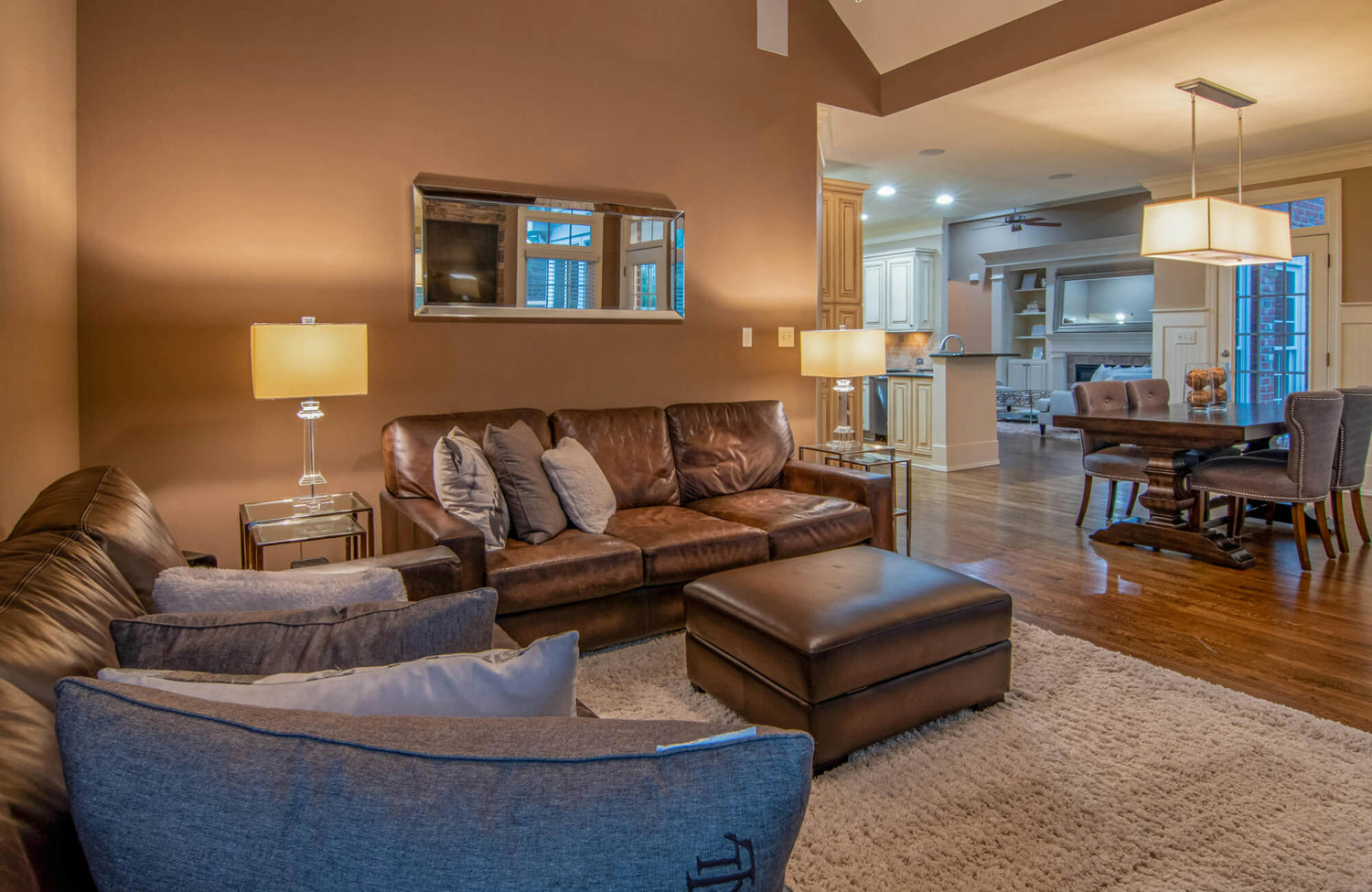
When thoughtfully placed, a rug acts as a visual anchor, pulling furniture into a cohesive arrangement. Especially in open-concept spaces, it creates clear zones for lounging, dining, or working without the need for walls or dividers. In the image above, the living room’s warmth and cohesion are beautifully achieved through a richly textured rug layered beneath the coffee table and leather sectional. To achieve this look, the space above features our Hutchinson Polyester Face Rug in Burgundy / Denim, with its rich blend of earthy red and deep navy tones. These classic colors help define individual zones within an open layout while adding a sense of depth and visual interest.
Beyond layout, rugs are often the catalyst for a room’s color scheme and material palette. Choosing a rug early in the design process gives you a tactile starting point that can inspire everything from upholstery to wall art. Whether it’s a specific hue or a natural texture, the rug sets a rhythm that ties all elements together, making your space feel intentional and complete.

The Return of Bold, Patterned, and Expressive Rugs
After years of neutral dominance, bold and expressive rugs are reclaiming the spotlight, giving living rooms depth, identity, and vibrancy. With color, pattern, and storytelling woven into every fiber, these rugs offer a fresh way to personalize and energize your space.
Rejection of the Beige Aesthetic
You may have noticed the shift—beige, gray, and overly muted interiors are slowly giving way to color-rich environments filled with character. Although neutrals brought a calm, minimalist look for years, many are now craving interiors that feel more alive and individual. Bold rugs have become a low-commitment yet high-impact way to introduce this shift.
By simply rolling out a vibrant, patterned rug, you can radically alter the energy of your living room. Whether it's a saturated red, a deep emerald, or a multicolor geometric design, a bold rug becomes the room’s statement piece. It also draws the eye, adds emotion, and brings a sense of completeness, no paint or construction needed.
In the serene yet stylish living room shown in the photo above, our Georgette Polyester Pile Rug in Desert / Multi adds the perfect balance of warmth and subtle expression. With its earthy, weathered taupe tones, this rug quietly commands attention without overpowering the soft neutrals of the space. It’s also a great example of how even understated color and pattern can create an inviting focal point.
Cultural and Global Influences
From Persian medallions to Moroccan lattices and Turkish kilims, culturally rooted rugs are reentering modern spaces with new relevance. These designs carry centuries of history and craftsmanship, offering more than just surface beauty; they bring narrative, meaning, and artistry.
By layering a traditional rug into a contemporary setting, you introduce contrast that feels both sophisticated and grounded. The visual tension between sleek furniture and intricate patterns tells a richer story. These globally inspired pieces not only add warmth and texture but also reflect a curiosity for culture and heritage that can instantly elevate your living room.
Pattern Play Beyond the Conventional
Today's rug trends push beyond symmetry and traditional motifs. You’re seeing irregular shapes, abstract compositions, and optical illusions that turn rugs into true focal points. These designs refuse to blend in; they demand attention and invite interaction.
Geometric patterns, watercolor effects, and even brushstroke textures are also redefining what a rug can be. Instead of complementing the rest of the room, these rugs often set the tone for it. They challenge you to think differently about space, encouraging bolder furniture choices or art pairings that match the rug’s intensity and imagination.
Rugs as Art and Expression
A rug can be a window into your personality, travels, or creative instincts. Much like hanging a painting or curating a gallery wall, placing an expressive rug in your living room allows you to tell a story. It might be the pattern you discovered on a trip, the colors that represent your mood, or a custom design that reflects your style evolution.
When chosen thoughtfully, a rug becomes a living artwork underfoot. It invites conversation and appreciation while setting a tone that's unmistakably yours. In this way, rugs have moved beyond decoration into the realm of self-expression, turning ordinary rooms into deeply personal environments.

Sustainability, Wellness, and the Rise of Natural Materials
Today’s rug choices reflect a deeper concern for the environment, ethical production, and healthy indoor spaces. As design trends align with sustainability values, rugs are no longer just decorative; they’re part of a mindful lifestyle.
Natural vs Synthetic Fibers
The demand for natural materials has never been higher, and rugs are at the forefront of that shift. When you choose options like wool, jute, sisal, or cotton, you're making a deliberate move away from synthetics that are often petroleum-based and non-biodegradable. These natural fibers not only align with eco-conscious values but also bring visual and tactile richness into your space.
Wool, for instance, offers durability, thermal insulation, and a luxurious feel underfoot. Jute brings an earthy, textured element that pairs beautifully with organic design styles. Unlike synthetic rugs that can trap heat and off-gas chemicals, natural rugs age gracefully and can return to the earth without harm. They don’t just look good. They also support your environmental intentions and help shape a more grounded, biophilic space.
Rug Certifications and Ethical Sourcing Pillars of Trust
You no longer have to guess where your rug came from or how it was made. Certifications like GoodWeave and fair-trade labeling give you clear indicators that your purchase supports ethical labor and responsible sourcing. These seals of approval are the result of third-party audits, transparency commitments, and social accountability.
When you prioritize brands that disclose their production methods, you become part of a growing movement that values fair treatment of artisans and communities. It’s a shift that transforms rug-buying from a simple transaction into a conscious choice. Knowing your rug was made under humane and sustainable conditions makes it feel more meaningful and helps you create a space rooted in integrity.
The Circular Economy and Rug Longevity
Rugs are increasingly viewed through the lens of circular design, where durability, repairability, and recyclability define product value. Rather than treating rugs as fast-fashion items, you’re encouraged to invest in high-quality pieces that stand the test of time. A well-made wool rug, for instance, can last decades, becoming softer and more beautiful with age, while also staying out of the landfill.
This shift requires a mindset change: instead of replacing a rug every few years, you care for it, repair it when needed, and eventually recycle or compost it, depending on the materials. In doing so, you contribute to a system that values longevity and resource conservation. A rug becomes more than decor. It also becomes part of your commitment to sustainable living.
Health and Wellness as a Driving Factor
Your rug affects your indoor air quality, comfort, and daily wellbeing. Natural fiber rugs contain fewer volatile organic compounds (VOCs), which means they don’t release harmful gases. This is especially important if you or your family members are sensitive to allergens or chemicals.
In addition to cleaner air, these rugs often feel warmer and more breathable underfoot, which enhances the sensory experience of your space. If you’re focused on wellness, whether through mindful design, minimal toxin exposure, or simply creating a more peaceful environment, a natural rug is a valuable ally. It supports both the health of your space and the people who live in it.

Structure and Comfort to Multiuse Living Room
As living rooms serve more purposes than ever before, rugs help organize, soften, and optimize these spaces for real life. Whether you’re hosting, relaxing, or working, the right rug can bring clarity and comfort to even the most complex layouts.
Acoustic and Comfort Benefits
Open spaces with hardwood, tile, or concrete floors can quickly become echo chambers. Rugs help absorb sound, making the room feel quieter and more intimate. You’ll notice the difference immediately—conversations feel less hollow, and ambient noise becomes more manageable, especially in busy households.
Beyond acoustics, rugs add a layer of physical comfort that hard surfaces can’t match. Whether you’re walking barefoot, stretching out on the floor with a book, or gathering with friends and family, a rug brings warmth and softness to every step. It’s a subtle but powerful upgrade that turns a hard-edged room into a cozy, welcoming space.
A perfect example is our Hutchinson Polyester Face Rug in Burgundy / Khaki, displayed in the picture above, anchoring a light-filled, wood-framed living room. Its vintage-inspired pattern and warm tones introduce depth and softness that balance the clean lines of modern furniture. Not only does it visually warm the space, but it also absorbs sound and adds underfoot comfort, making the room feel both peaceful and lived-in.
Enhancing Durability and Floor Protection
Floors take a lot of abuse, especially in busy living rooms. Chairs drag, pets scurry, and spills happen. A well-placed rug acts as a protective barrier, shielding your hardwood or tile from scratches, dents, and stains. Over time, that protection pays off in both maintenance and longevity.
If you’ve invested in quality flooring, a rug is a smart layer of defense. It not only preserves the surface underneath but also disguises everyday wear in areas that get the most use. With the right rug, your living room stays looking fresh while withstanding the realities of daily life.
Designed with both durability and design in mind, our Charlise Polypropylene & Polyester Pile Rug in Bone / Denim brings a relaxed, lived-in look that can handle real-life messes. Its soft yet resilient construction is perfect for busy spaces, while the bone ivory and washed denim palette adds a cool, casual elegance that protects your floors without sacrificing style.
Defining Flow and Pathways
In large or open rooms, it’s easy to feel unsure of where to walk, sit, or move. Rugs provide subtle cues that guide your eye and your feet. A runner along a hallway or a rug between two seating areas naturally steers movement and helps establish clear pathways. This visual organization makes your space feel more intuitive and inviting. Instead of scattered furniture and undefined areas, you get a structured flow and balanced movement. It’s not just about appearance. It’s also about making your living room function as smoothly as it looks.

Customization, Vintage Finds, and DIY Creativity
Beyond mass production, you’re likely seeing a growing appreciation for personal, artisanal, and handcrafted rug options that speak to more than just trends. These rugs bring narrative, texture, and individuality into spaces, allowing your space to reflect who you are, not just what’s popular.
The Rise of Bespoke Rug Design
When your space has unique dimensions or a specific palette, mass-produced rugs often fall short. That’s where bespoke rug design comes in. From custom sizing to handpicked colorways, you have the freedom to tailor a rug that fits your space and your aesthetic perfectly. It’s not just about filling a floor; it’s about designing with intention.
Bespoke rugs also bring a level of harmony that’s hard to replicate. You might select a specific weave to complement your lighting or choose a border detail that echoes architectural lines in the room. This level of personalization makes your living room feel considered and elevated, turning functional flooring into thoughtful design.
DIY and Artistic Rug Trends
Because of social media and the rise of maker culture, DIY rugs are no longer niche; they’re a creative movement. You’ve probably seen videos of tufting guns creating fluffy patterns or tutorials on turning old t-shirts into hand-woven mats. These hands-on projects allow you to bring your vision to life in a way that feels authentic and expressive.
Making your own rug isn’t just about saving money. It’s also about infusing your space with meaning. Every loop and color choice becomes part of a larger artistic expression. Whether it’s your first attempt or a passion project, the result is a functional artwork that reflects your personality and creativity, something no store-bought rug could ever match.
Curated Vintage and Artisanal Discoveries
There’s something captivating about a rug that’s already lived a life. Vintage and artisan-made rugs carry a sense of history, authenticity, and craftsmanship that mass-produced options can’t replicate. Their slight fading, irregular patterns, or worn edges aren’t flaws but evidence of stories that came before yours.
Finding the right vintage or artisanal rug is a bit like treasure hunting. Whether you’re sourcing from global markets, online dealers, or small studios, you connect to a lineage of craftsmanship rooted in culture. These pieces not only add warmth and uniqueness to your living room but also support traditional artisans and keep meaningful techniques alive.
Rugs as Narrative Elements in Interior Storytelling
Every room tells a story, and rugs have become key narrators in that process. Whether you select a handmade piece from a local artist or inherit a family heirloom, your rug carries meaning beyond aesthetics. It might remind you of a place you visited, a tradition you admire, or a design philosophy you hold dear.
In this context, the rug becomes part of your personal timeline. It anchors not just furniture, but memories, values, and identity. As your area evolves, that rug remains a constant thread, weaving together the stories that make your space truly yours.
Our Quinton Wool Blend Rug in Ash above, a richly layered piece full of visual texture, does exactly that. As seen in the image above, its sculptural, tonal pattern grounds the expressive floral seating and curated decor with subtle sophistication. The rug doesn't compete for attention but instead supports the narrative of the room with quiet elegance, reinforcing the sense of history, curation, and comfort that defines a lived-in space.
Why Rugs Still Matter (and Always Will)
Rugs continue to hold an essential place in interior design because they do far more than fill a space. They organize, personalize, protect, and express. As spaces become more fluid, sustainable, and story-driven, rugs rise to the challenge with versatility and meaning. They also adapt to shifting aesthetics while staying grounded in purpose. In every fiber, pattern, and placement, rugs prove they’re not just stylish today—they’re timeless by design.
Need help finding the perfect rug for your space? Contact us to explore timeless pieces that bring both function and meaning to the way you live!