Contemporary bathroom vanities embody the quiet sophistication of modern living, where refined aesthetics meet purposeful design. Defined by clean lines, thoughtful proportions, and performance-driven materials, they transform the bathroom into a space of balance, comfort, and visual clarity. In modern homes, vanities are no longer secondary fixtures but architectural elements that shape how the space is experienced and used. From material innovation to ergonomic planning, contemporary designs respond to evolving lifestyle and spatial needs. This article examines why contemporary bathroom vanities for modern homes consistently set the standard for durability, efficiency, and timeless appeal.

Design Compatibility with Modern Architectural Styles
Contemporary bathroom vanities align seamlessly with modern architecture by emphasizing proportion, restraint, and visual continuity. Rather than drawing attention to themselves, they reinforce the overall spatial narrative through cohesive form and finish.
Minimalist Aesthetics and Clean Geometry
Contemporary bathroom vanities for modern homes emphasize flat-panel construction, refined edges, and balanced proportions to establish a sense of visual order. This disciplined geometry allows the vanity to complement surrounding architectural elements rather than compete with them, particularly in interiors defined by clean wall planes and linear layouts. Neutral finishes such as matte white, warm wood tones, and muted greys also integrate seamlessly with modern materials, reinforcing a cohesive aesthetic. By eliminating ornamental detailing, these designs reduce visual noise and promote a calmer, more composed environment. Over time, this restrained approach proves more enduring than trend-driven alternatives, resulting in bathrooms that feel balanced, intentional, and architecturally grounded.
Floating Vanities and Architectural Flow
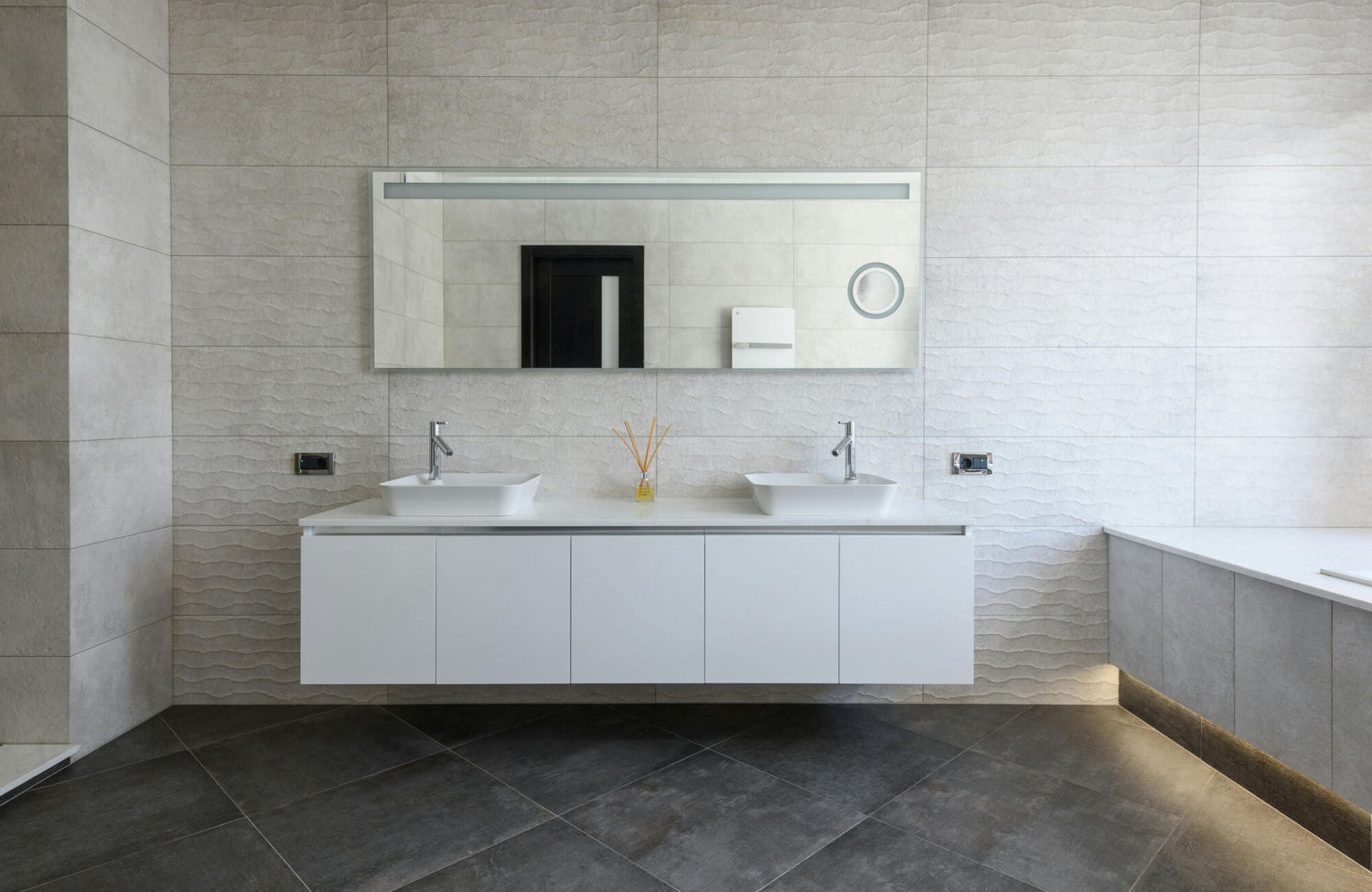
Floating contemporary bathroom vanities enhance architectural flow by visually separating cabinetry from the floor plane, immediately increasing perceived space. This approach supports modern design priorities that favor openness and lightness, especially in compact or urban bathrooms. By reducing visual mass, wall-mounted vanities allow flooring materials to remain uninterrupted, strengthening spatial continuity. The exposed floor plane also enhances cleaning efficiency and long-term maintenance, while contributing to a refined architectural presence.
A design such as Edward Martin’s Royce 72" Double Vanity in Chestnut with a 3 cm White Zeus Quartz Top exemplifies this effect, pairing a floating profile with dimensional wood detailing and a crisp quartz-based surface to elevate both form and function. As displayed in the picture above, its sculptural front and warm material palette reinforce modern bathroom flow while anchoring the space with quiet sophistication.
Seamless Integration with Modern Interiors
Contemporary bathroom vanities are designed to integrate effortlessly with finishes such as large-format porcelain tile, microcement, and natural stone. Their understated profiles create seamless transitions between materials, supporting visual cohesion within the bathroom and continuity with adjacent spaces. When vanity proportions echo the room’s architectural lines, the design feels intentional rather than layered, allowing the piece to become part of the spatial framework. This careful integration enhances the overall harmony and balance of the interior.

Material Innovation and Performance Engineering
Material performance is fundamental to contemporary bathroom vanity design, particularly in moisture-intensive environments. Advances in fabrication allow modern vanities to combine refined aesthetics with structural resilience and long-term durability.
Moisture-Resistant Cabinet Construction
High-quality contemporary bathroom vanities are typically constructed using marine-grade plywood, moisture-resistant MDF, or high-density fiberboard cores engineered specifically for humid environments. These materials offer superior dimensional stability compared to traditional solid wood, significantly reducing the risk of swelling or warping over time. Precision joinery and reinforced drawer construction also help maintain alignment even with frequent temperature and humidity changes. In addition, protective surface treatments such as thermofused laminates and multi-stage polyurethane coatings act as effective moisture barriers. This layered approach prevents water infiltration at seams, edges, and interior surfaces. As daily exposure to steam accumulates, cabinetry maintains consistent structural performance.
A design like the Paxton 72" Double Vanity in Pebble Oak with a 3 cm White Zeus Quartz Top, as shown in the photo above, illustrates this performance-driven construction, pairing multi-stage UV- and moisture-resistant coatings with durable drawer materials and premium undermount slides. Its quartz-based integrated sinktop further repels stains and mildew, reinforcing long-term durability while maintaining a refined, organic aesthetic.
Advanced Surface and Finish Technologies
Modern surface finishes used in contemporary bathroom vanities are engineered to balance durability with visual refinement. Materials such as acrylic, matte laminate, and lacquered finishes create non-porous surfaces that resist staining from cosmetics and common cleaning agents while maintaining color consistency under prolonged exposure to light. Many of these finishes also incorporate anti-fingerprint technologies, reducing visible smudging in high-touch areas and enhancing everyday usability. Their smooth surface structure supports effortless cleaning and helps minimize bacteria retention, contributing to a more hygienic environment. As a result, contemporary vanities retain both their appearance and functionality over time with minimal maintenance.
Engineered Countertops and Integrated Sinks
Quartz composite and sintered stone countertops are widely specified in contemporary bathroom vanities for their low porosity and hygienic performance. These engineered materials resist bacterial growth, chemical exposure, and thermal stress more effectively than many natural stones, making them well-suited to high-moisture environments. Integrated or undermount sinks further enhance performance by eliminating exposed joints where water typically penetrates, reducing long-term maintenance concerns. This seamless construction supports visual continuity, reinforcing the clean lines and clarity associated with modern design. As a result, the countertop serves not only as a high-performance work surface but also as a visual anchor within the bathroom space.

Storage Optimization and Ergonomic Efficiency
Contemporary bathroom vanities are engineered to support modern lifestyles through intelligent storage planning and ergonomic design. Their internal configurations reflect how bathrooms are used daily, balancing efficiency with comfort.
Drawer-Centric Storage Systems
Drawer-centric layouts dominate contemporary bathroom vanities because they offer superior accessibility and organization. For example, full-extension drawer slides allow stored items to be viewed and reached effortlessly, eliminating the need to bend or search through deep cabinets. Soft-close mechanisms further enhance daily use by protecting hardware and adding a sense of tactile refinement. Modular drawer configurations also support evolving storage needs, keeping toiletries, grooming tools, and accessories neatly organized over time. Unlike fixed shelving, drawers adapt more fluidly to changing routines, transforming storage into an intuitive system that streamlines daily tasks rather than interrupting them.
A design like our Abigail 72" Double Vanity in Light Natural Oak with a 3 cm White Zeus Quartz Top demonstrates this approach through its thoughtfully segmented drawers and accessible interior layout, providing clear organization across multiple storage zones. As featured in the photo above, its drawer-forward configuration maximizes usable space while maintaining the clean, modern aesthetic expected in contemporary bathroom design.
Space-Saving Configurations for Modern Bathrooms
Modern bathroom layouts often demand storage solutions that deliver functionality without overwhelming limited space. Contemporary bathroom vanities meet this need through reduced-depth cabinetry and compact footprints that preserve circulation while maintaining practical storage capacity. Slim profiles also help keep the room visually open, and wall-mounted installations further enhance spatial efficiency by creating a sense of lightness and openness. This approach is especially valuable in urban residences, where square footage is carefully planned. As a result, the vanity remains highly functional without appearing bulky or intrusive, reinforcing an open, comfortable interior through a balanced integration of storage and design.
Ergonomic Installation and User Comfort
Ergonomic considerations play a central role in contemporary bathroom vanity design, ensuring comfort is integrated into everyday use. Adjustable mounting heights allow vanities to be positioned to suit individual needs, promoting better posture during daily grooming routines. Floating installations further support accessibility while preserving visual continuity within the space. When properly aligned, vanity height also helps reduce physical strain over time, reinforcing ease of use through thoughtful design. Rather than being treated as an afterthought, comfort is embedded into the structure itself, allowing user-centered vanities to enhance daily interaction while maintaining modern aesthetic integrity and long-term comfort.

Integration with Modern Plumbing, Lighting, and Smart Systems
In modern homes, bathroom vanities must function within complex mechanical and technological systems. Contemporary bathroom vanities are designed to integrate discreetly while supporting advanced performance.
Concealed Plumbing and Fixture Alignment
Contemporary bathroom vanities are designed to accommodate wall-mounted faucets, in-wall carriers, and concealed drainage systems common in modern interiors. Rear access panels and recessed plumbing cavities keep mechanical components hidden, preserving clean wall planes and uninterrupted surfaces around the sink area. This approach also minimizes visual clutter while maintaining practical service access and code compliance. In addition, plumbing integration enhances both function and aesthetics, supporting advanced configurations that contribute to a streamlined, architectural look. In this way, modern bathroom vanities allow design intent and mechanical efficiency to coexist without compromise.
Integrated Lighting Solutions
Lighting integration is a defining feature of contemporary bathroom vanities, allowing them to function as an active component of the overall lighting plan. Built-in LED task lighting improves visibility while maintaining consistent color temperature, supporting daily grooming with clarity and comfort. Under-cabinet illumination introduces additional depth and usability in low-light conditions, while energy-efficient systems help reduce heat output and power consumption. When carefully diffused, integrated lighting enhances surface textures without glare, contributing to visual balance throughout the space. This use of layered lighting within bathroom vanities enhances both task performance and ambient quality, aligning with modern lighting design principles that prioritize efficiency, comfort, and visual harmony.
Smart Bathroom Compatibility
Contemporary bathroom vanities are increasingly designed to integrate with smart bathroom technologies, supporting both innovation and visual restraint. Concealed wiring channels, for instance, allow for touchless faucets, sensor-based lighting, and integrated power access without disrupting clean surfaces or architectural lines. These features also enhance hygiene and convenience while remaining visually unobtrusive, and smart mirrors or automation controls can be incorporated seamlessly into the overall design. As technology continues to evolve, the vanity adapts alongside it, ensuring long-term relevance. This future-ready approach provides flexibility as home automation becomes more prevalent, allowing bathrooms to remain technologically current without compromising design integrity.

Long-Term Value, Sustainability, and Market Appeal
Beyond aesthetics, contemporary bathroom vanities deliver lasting value through durability, sustainability, and broad market relevance. Their design supports both lifestyle performance and real estate appeal.
Sustainable Materials and Low-Emission Finishes
Sustainability plays an increasingly important role in contemporary bathroom vanity manufacturing, shaping both material selection and production methods. FSC-certified wood products support responsible forestry practices while maintaining the structural reliability required for daily use. Meanwhile, low-VOC finishes also help improve indoor air quality in enclosed bathroom environments, and engineered surfaces reduce dependence on resource-intensive natural materials. Efficient fabrication processes further minimize waste, aligning these choices with modern green building standards and long-term residential value. For environmentally conscious homeowners, sustainable bathroom vanities contribute to healthier living spaces while meeting modern performance expectations, reinforcing their place in future-forward residential design.
Durability and Lifecycle Performance
Contemporary bathroom vanities are engineered for extended service life through moisture-resistant construction and reinforced joinery that support consistent performance under daily use. Their durable finishes resist chipping, peeling, and discoloration over time, reducing maintenance demands and limiting the need for frequent renovations. As longevity increases, lifecycle costs are lowered, making reliability a defining advantage rather than a secondary benefit. High-performance bathroom vanities designed for long-term durability also deliver measurable value by minimizing repair and replacement over time, positioning them as a practical investment for modern homes that prioritize quality, longevity, and enduring performance.
Resale Value and Broad Design Appeal
Clean lines and neutral palettes give contemporary bathroom vanities broad appeal across a wide range of buyer demographics, aligning closely with market preferences for modern, move-in-ready bathrooms. Their timeless design language reduces the risk of stylistic obsolescence, allowing these vanities to remain relevant as interior trends evolve. Buyers also tend to associate contemporary vanities with quality craftsmanship and thoughtful design, a perception that can positively influence resale value. As a result, market relevance remains strong across multiple housing segments, and in competitive real estate environments, modern bathroom vanities often enhance buyer confidence and overall property appeal.
Enduring Elegance for Modern Living
Contemporary bathroom vanities represent a refined balance of form, function, and longevity within modern homes. Their architectural compatibility, advanced material performance, and ergonomic efficiency support both daily living and long-term investment value. By integrating seamlessly with modern plumbing, lighting, and smart systems, they remain adaptable as lifestyles evolve. Sustainable materials and durable construction further enhance their relevance in today’s residential design landscape.
For those seeking a thoughtfully curated bathroom, Edward Martin’s design services offer expert guidance in selecting contemporary vanities that align with both architectural intent and lifestyle needs. Contact us to begin crafting a modern bathroom space defined by enduring elegance, performance, and precision!