Checkered tiles have long been admired for their eye-catching patterns and bold contrasts. From ancient Roman floors to Victorian interiors, their appeal has transcended centuries, making them a staple in both traditional and contemporary design. Yet in today’s era of sleek minimalism and understated aesthetics, the question arises: Can checkered tiles still find a place in modern homes, or are they simply too bold for today’s cleaner design trends?
Before exploring how checkered tiles can be incorporated into modern homes, it helps to understand their historical significance. Considering how the pattern evolved across different cultures and eras provides valuable context, helping explain why checkered tiles remain a compelling design element for both designers and homeowners today.

History of Checkered Tiles
Checkered tiles have a rich and storied history, spanning cultures and eras. Their origins date back to ancient civilizations, where they were used to create intricate mosaics and decorative floor coverings. In ancient Rome, checkered tiles were prevalent in villas and public baths, adding vibrant colors and intricate designs to otherwise functional spaces.
As we move into the Middle Ages, checkered tiles saw renewed popularity, especially within Islamic cultures. Moorish influence in Spain elevated the use of checkered tiles as geometric masterpieces, often paired with intricate Arabic calligraphy and symbolic motifs. The Alhambra Palace in Granada is a classic example of the architectural beauty achieved with checkered tiles during this era.
Checkered tiles continued to evolve throughout the Renaissance and Baroque periods. In Italy, grand palaces and churches incorporated them into floors and walls. Eventually, the checkerboard pattern found its way into various decorative elements, from textiles to ceramics. Aside from aesthetics, the pattern also carried symbolic meaning. Across different cultures, it represented balance, duality, and order, with alternating squares often seen as symbols of the balance between opposing forces; light and dark, good and evil.
Having seen their evolution through centuries, we can now focus on the present. As design trends continue to evolve, checkered tiles remain relevant, combining timeless appeal with modern versatility. Today, this classic pattern is being thoughtfully reimagined in contemporary homes.

Checkered Tiles in Modern Design
Checkered tiles are experiencing a resurgence in modern interior design, offering a unique blend of bold statements, classic charm, and creative potential. Their versatility allows them to adapt to various styles, from mid-century modern to minimalist or rustic, making them a perfect choice for those seeking both tradition and innovation in their design.
Classic Charm
While checkered tiles are bold, they also exude timeless appeal. Used for centuries, their familiar pattern brings comfort and nostalgia. In contemporary design, incorporating checkered tiles can connect the present to the past, blending tradition with modern sensibilities. Whether evoking the style of a mid-century modern home or adding a touch of vintage flair to an otherwise contemporary space, checkered tiles can bridge eras effortlessly.
Pairing checkered tiles with mid-century furniture, for example, can create a 1950s retro vibe that is both playful and timeless. On the other hand, when combined with rustic elements like reclaimed wood or exposed brick, checkered tiles can evoke the cozy charm of a farmhouse. The juxtaposition of traditional tiles with modern or rustic décor creates a balance between old and new.
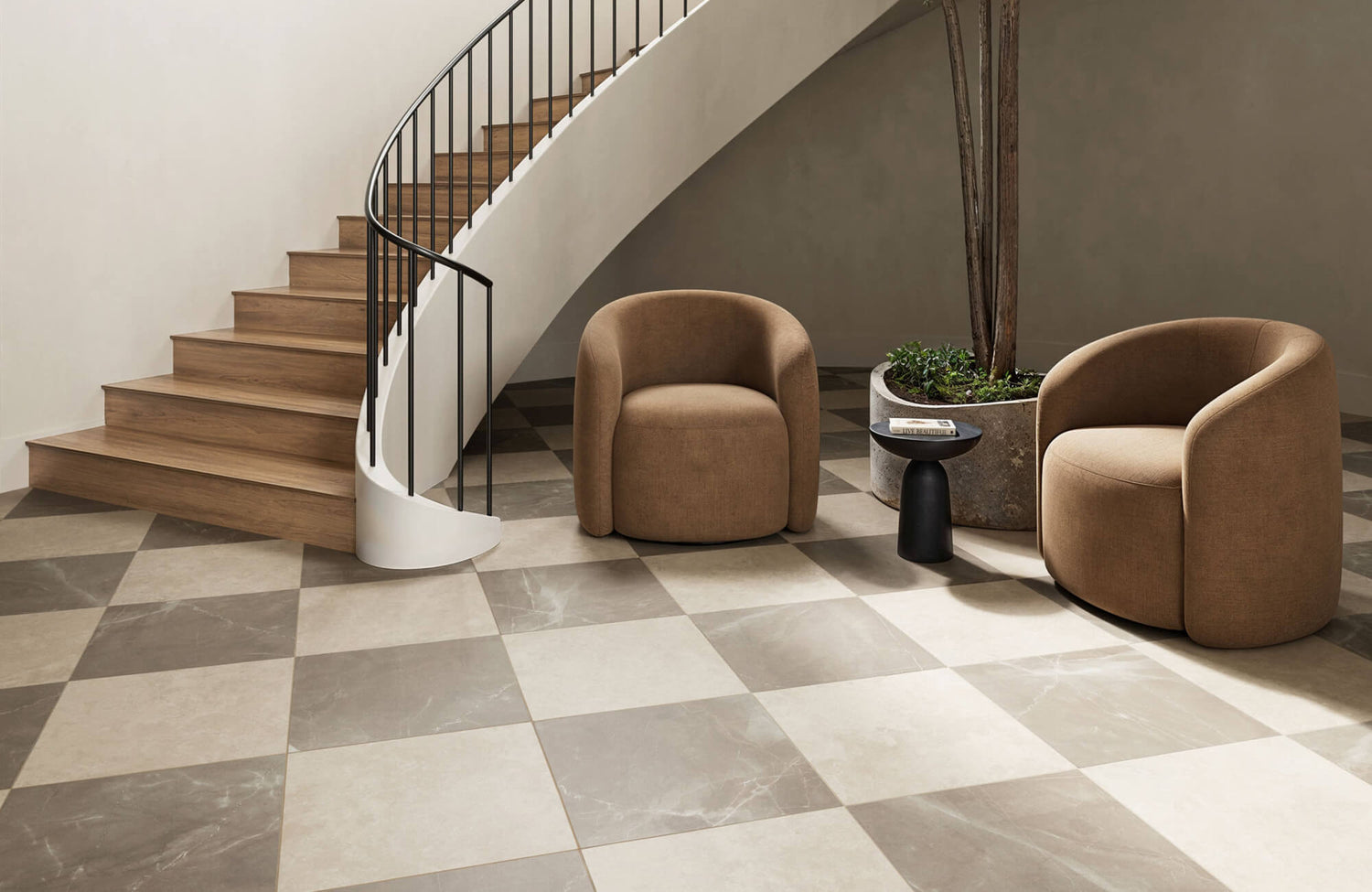
Moreover, checkered tiles work well in minimalist spaces, where their simple, repetitive patterns add texture without overloading the room. The key to maintaining this balance lies in the color scheme. Soft hues or muted tones in a neutral palette can add warmth while keeping the checkered pattern subdued and sophisticated. A refined example of this approach is reflected with Edward Martin’s Leona 12x12 Checkerboard Polished Porcelain Tile in Marfil and Nero Marquina, as shown in the photo above. Its classic black-and-beige checkerboard pattern echoes traditional European flooring while maintaining the polished elegance that complements contemporary interiors, allowing the design to feel both timeless and current.
Unexpected Twist
While checkered tiles are often associated with bold, classic design, they can also be used in creative and unexpected ways. Contemporary designers are increasingly experimenting with this pattern to expand its role in modern interiors. One approach is to create custom layouts by varying tile colors, sizes, and orientations. Through these adjustments, homeowners can develop distinctive patterns that reflect their personal style. Combining tiles in different shades, for example, can form subtle geometric variations or more expressive arrangements such as wave-like or striped effects.
Checkered tiles can also be paired with other materials to introduce greater visual depth. Blending them with elements like wood or natural stone creates a layered look that adds warmth and texture while softening the rigidity of the geometric pattern. Because checkered tiles naturally draw attention, thoughtful integration is essential. When balanced with complementary colors, materials, and surrounding design elements, the pattern can enhance a space without overwhelming it.

Balancing Checkered Tiles with Modern Elements
To effectively blend the bold, geometric appeal of checkered tiles with modern design elements, thoughtful choices in color, materials, and layout are essential. These elements help ensure the pattern enhances the space rather than overpowering it.
Color Palette
A carefully chosen color palette is key to making checkered tiles work in a modern space. Because of their inherent boldness, the surrounding colors play an important role in either balancing or emphasizing the pattern’s visual impact.
For a minimalist approach, a palette of black, white, and gray works particularly well. These neutral tones complement the geometric clarity of checkered tiles while allowing the pattern to serve as a subtle yet striking focal point. For those who prefer a more dynamic look, introducing complementary colors such as red, blue, or yellow can energize the space and add a sense of playfulness.
The overall room tone also influences how the pattern is perceived. Softer pastels or muted earth tones help soften the boldness of checkered tiles, creating a more relaxed atmosphere. In contrast, brighter and more saturated colors can increase the room’s visual energy, making the pattern appear more pronounced. A gentle, balanced effect can be achieved with Edward Martin’s Isabel 6x6 Matte Porcelain Tile in Bone, Isabel 6x6 Matte Porcelain Tile in Cream, and Isabel 6x6 Matte Porcelain Tile in Seasalt, as shown in the photo featured above. The soft, earthy tones blend seamlessly to create a subtle checkerboard pattern that complements the room’s light palette, resulting in a calm and inviting atmosphere.
Materials and Textures
The interplay of materials and textures can significantly impact the overall design when using checkered tiles. Natural materials such as wood, stone, and marble work exceptionally well in balancing the clean lines and geometric rigidity of the tiles. For instance, pairing checkered tiles with a wooden floor or natural stone countertops brings warmth and softness to the room, preventing the space from feeling too clinical or stark.
Minimalist design elements, such as uncluttered surfaces and sleek furniture, can also help balance the boldness of checkered tiles. Maintaining simplicity throughout the rest of the space allows the pattern to stand out without competing with other design features.
Tile Size and Layout
Tile size and layout play an important role in determining how bold or subtle a checkered pattern appears in a modern space. Larger tiles tend to create a cleaner, more refined look because the pattern feels less busy, making them well-suited for open-plan areas or contemporary kitchens. Smaller tiles, by contrast, introduce more visual movement and can make the pattern feel more dynamic.
Layout also affects the overall impact of the design. A traditional straight grid creates a classic, structured appearance, while a diagonal layout introduces a sense of movement and can make smaller spaces feel more expansive. Subtle tonal variations or softer color contrasts can further soften the pattern’s visual impact, allowing it to appear more understated.
By thoughtfully selecting tile size and layout, you can control how prominent the checkered pattern appears, allowing it to complement modern interiors without overwhelming the space.

Where Checkered Tiles Work Best in a Modern Home
Checkered tiles can make a strong visual statement, making thoughtful placement essential in modern interiors. When used strategically in areas such as kitchen floors, bathroom accents, or living room features, the pattern can serve as a focal point without overwhelming the space.
Kitchen
Ceramic or porcelain checkered tiles can be both practical and visually appealing in kitchens. They provide a durable, easy-to-clean surface while adding visual interest to the space. One common application is as a backsplash, where the pattern protects walls from splashes and spills while creating a distinctive focal point.
In modern kitchens, neutral combinations such as black and white or soft gray checkered tiles work particularly well, offering contrast without overwhelming the design. For those seeking a more expressive look, introducing more vibrant colors can add energy and personality to the space. When used on floors, opting for slip-resistant finishes is especially important in busy areas where safety and durability are essential.
Bathroom
In bathrooms, checkered tiles can help create a spa-like atmosphere while offering both visual appeal and practical functionality. A classic black-and-white checkered floor brings vintage charm, while modern designs often incorporate the pattern on accent walls for added character. For a more contemporary approach, checkered tiles can be used in smaller areas such as shower enclosures or around the vanity. In these areas, the pattern adds visual depth while maintaining a clean and organized appearance.
This effect can be achieved with Edward Martin’s Leona 24x24 Checkerboard Matte Porcelain Tile in Calacatta and Nero Marquina, as shown in the photo featured above. The marble-inspired contrast between light Calacatta and deep Nero Marquina tones introduces a refined checkerboard pattern that enhances the bathroom’s classic elegance while complementing its warm, modern finishes.
Living Room
Checkered tiles can bring a bold yet balanced character to living rooms. When used on the floor, large-format checkered tiles help anchor the room and establish a strong visual foundation. For a more understated effect, the pattern can also be incorporated into features such as a fireplace surround or an accent wall, adding interest without dominating the entire space.
To maintain harmony, pair the checkerboard pattern with minimalist furniture and a neutral color palette. Elements such as area rugs, natural textures, and simple décor can soften the overall look while still allowing the checkered pattern to stand out as a distinctive focal point.
Visualizing how checkered tiles will look in your space can make the design process much easier. With our AR tool, you can preview different checkered tile patterns and layouts directly in your home before making a decision. Simply explore different styles and see how they interact with your room’s lighting, colors, and materials, and you can select a tile with greater confidence.
The Classic Appeal of Checkered Tiles in Modern Homes
Checkered tiles are not necessarily too bold for modern homes. When used thoughtfully, their distinctive pattern can bring both character and balance to contemporary spaces. With the right combination of colors, tile sizes, and surrounding materials, the checkerboard pattern can appear subtle or striking while maintaining a refined and cohesive aesthetic.
If you're considering incorporating this classic pattern into your home, our design services can guide you through the process. From selecting samples to providing personalized design support, our team can help you find the right balance of materials, colors, and layout to create a space that feels both timeless and uniquely yours.