Black and white tiles are not simply a passing design preference; they are one of the most enduring visual languages in interiors. Their appeal comes from contrast, rhythm, and adaptability, whether expressed through a marble checkerboard floor, a crisp subway tile wall, or a patterned mosaic that adds structure to a room. Across historic homes, Art Deco bathrooms, mid-century kitchens, and contemporary entryways, the pairing has continually shifted in scale, material, finish, and placement.
Still, today’s interiors often favor quieter palettes, organic surfaces, and layered textures, which can make high-contrast tile feel more assertive than some spaces require. The question, then, is not whether black and white tiles are outdated, but whether they are being used with enough intention. When proportion, pattern, grout color, finish, and surrounding materials are carefully considered, black and white tile can feel classic, tailored, dramatic, or surprisingly understated. This article explores their historical significance, current design context, modern design applications, and practical considerations to help determine where this timeless combination still works beautifully today.

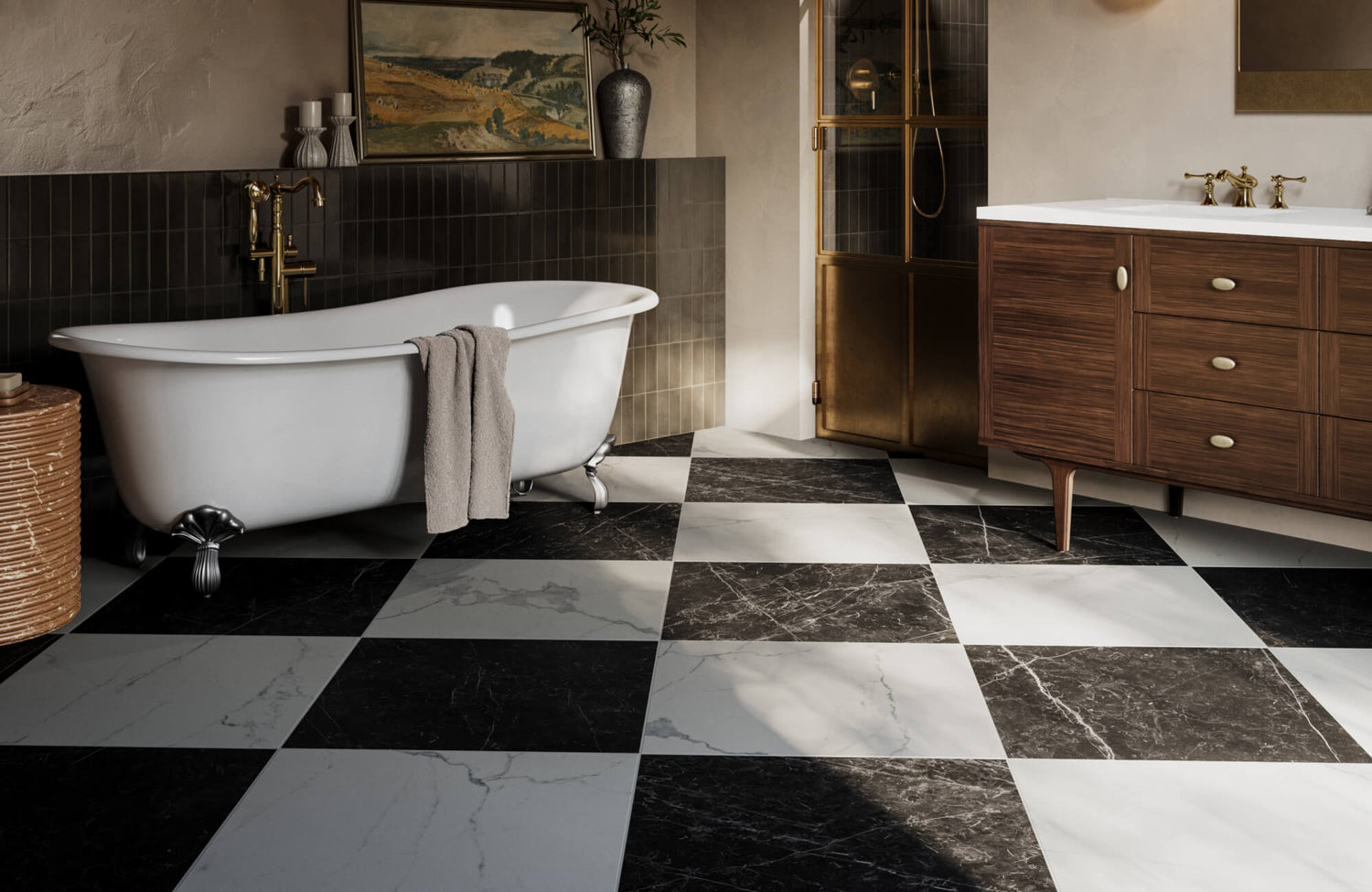
The Rovian Console Table in Black, Selanna Mirror in Bone, and Isabel 2x6 Matte Porcelain Tile in Rust add graphic warmth to the checkerboard floor.
The Historical Significance of Black and White Tiles
Black and white tiles have a history that spans cultures, design movements, and architectural styles. Understanding their origins and evolution explains their lasting popularity and how they continue to appear in modern interiors.
Classical Beginnings in Ancient Civilizations
The use of black and white patterns dates back to ancient Roman and Greek architecture, where mosaics made from marble, basalt, and limestone were crafted into intricate geometric designs. These patterns weren’t just decorative—they also symbolized balance and harmony, reflecting the philosophical values of the time. Mosaics adorned public baths, atriums, and temples, showcasing both artistry and meaning. The craftsmanship and precision of these early designs laid the groundwork for future interpretations in decorative tiling.
Victorian Era and the Rise of Decorative Flooring
In the 19th century, black and white tiles became synonymous with Victorian design, especially in entryways, bathrooms, and conservatories. The classic checkerboard pattern, often crafted from encaustic cement tiles, conveyed elegance and sophistication, while decorative borders and motifs reflected the era’s love for ornamentation. More complex designs like the Greek key and basket weave highlighted symmetry and formality. Beyond aesthetics, these tiles symbolized social status and an appreciation for craftsmanship.
The Art Deco Influence and Mid-Century Modern Revival
The 1920s and 30s ushered in the Art Deco movement, defined by bold contrasts, geometric shapes, and luxurious materials. Black and white tiles were central to this style, gracing grand hotel lobbies and private bathrooms. The sleek designs exuded glamour and modernity, often paired with chrome fixtures and mirrored surfaces. As design trends evolved, black and white tiles continued to adapt, finding new life in different contexts. By the mid-20th century, they experienced a revival, particularly in American kitchens and diners. Specifically, the checkerboard floors of the 1950s and 60s captured the era’s optimism, blending nostalgic charm with a fresh, modern vibe that resonated with the spirit of the time.

Leona 24x24 Matte Porcelain Tile in Amani Bronze softens the entryway with warm stone-like movement beside wood doors and woven accents.
How Design Trends Are Shaping Tile Choices Today
Black and white tiles remain highly recognizable, but the way homeowners and designers evaluate them has changed. Contemporary interiors often prioritize warmth, continuity, and material depth over sharp visual contrast alone. This does not make black and white tile obsolete; rather, it places greater emphasis on scale, finish, layout, and how the tile interacts with surrounding architectural elements.
Minimalism and the Shift to Neutral Palettes
Minimalist design has influenced tile choices by favoring surfaces that create visual clarity rather than excessive pattern. In many modern homes, large-format porcelain, stone-look tile, micro-cement effects, and soft neutral palettes help reduce visual interruption across floors and walls. Whites, beiges, greiges, taupes, and warm browns can make a room feel more open and continuous, especially in kitchens, bathrooms, and entryways where multiple finishes meet.
Against this backdrop, traditional black and white tile can feel too graphic if used without restraint. However, the contrast can still work beautifully when softened through material selection and layout. A honed black tile, a warm white marble-look porcelain, or a checkerboard with subtle grey veining reads differently from a stark glossy black-and-white grid. Larger tiles can also reduce the number of grout lines, making the pattern feel more architectural and less busy. In minimalist settings, black and white tile is most successful when it functions as a controlled design feature rather than an isolated decorative statement.
The Growing Popularity of Natural Materials
The growing preference for natural materials has also influenced how black and white tile is perceived. Wood, travertine, slate, limestone, terracotta, handmade ceramics, and textured plaster bring variation, warmth, and a tactile quality that many contemporary interiors now prioritize. These materials often have tonal movement and surface irregularities, which help spaces feel layered and grounded rather than overly polished.
This shift does not necessarily compete with black and white tile; it can make the combination more compelling when used thoughtfully. A black and white floor paired with oak cabinetry, woven accents, brushed metal, or stone countertops gains warmth and dimension. Similarly, marble-look porcelain with black and white veining can bridge classic contrast with the softer movement associated with natural stone. The key is balance. When black and white tile is surrounded by organic textures, its graphic quality feels anchored rather than severe.
Influence of Scandinavian and Japandi Styles
Scandinavian and Japandi interiors have reinforced the demand for restraint, natural light, warm neutrals, and functional simplicity. Scandinavian design typically favors pale woods, soft whites, cozy textiles, and practical layouts, while Japandi blends Japanese minimalism with Scandinavian warmth through clean lines, earthy tones, and handcrafted textures. Both styles tend to avoid harsh contrast unless it serves a clear architectural purpose.
In these interiors, black and white tiles need a more nuanced application. A high-gloss checkerboard may feel too dramatic, but a matte black-and-white mosaic, a softened stone-look checkerboard, or a small-scale pattern used in a bathroom or mudroom can complement the overall calm. Black can also appear as a grounding accent through grout, trim, fixtures, or cabinetry, while white tile maintains brightness. Rather than dominating the room, the tile becomes part of a larger composition built on proportion, texture, and quiet contrast.

Leona 12x12 Checkerboard Matte Porcelain Tile in Calacatta and Nero Marquina grounds the mudroom’s olive cabinetry and natural baskets.
Innovative Ways Black and White Tiles Are Being Used Today
Black and white tiles continue to feel current because designers are no longer limited to traditional checkerboards or simple subway layouts. The palette has expanded through new formats, surface technologies, printed porcelain, stone-look finishes, mosaics, and unexpected installation patterns. These updates allow the classic color pairing to move beyond nostalgia and into more contemporary, customized applications.
Geometric and Abstract Patterns for a Modern Twist
Geometric patterns give black and white tile a strong contemporary edge because they introduce rhythm without relying solely on color contrast. Hexagons, chevrons, herringbone, basket weave, stripes, and modular mosaics can guide the eye, define zones, or add movement to otherwise simple spaces. In a bathroom, for example, a geometric floor can bring energy while the walls remain quiet. In a kitchen, a patterned backsplash can add structure behind open shelving or flat-panel cabinetry.
Abstract layouts take this further by breaking away from predictable repetition. Irregular shapes, asymmetrical arrangements, and painterly black-and-white motifs can make tile feel more like an architectural surface or graphic installation. These designs work best when the surrounding finishes are restrained, allowing the tile to carry an avant-garde edge. The result is a modern interpretation of a familiar palette—still classic in color, but more expressive in form.
The Reinvention of the Checkerboard Pattern
The checkerboard remains one of the most recognizable black and white tile layouts, but its modern appeal depends heavily on proportion and material. Smaller, high-contrast squares often create a nostalgic or vintage effect, while larger formats feel cleaner and more architectural. A 12x12 or 24x24 checkerboard layout can visually expand an entryway, kitchen, or mudroom by reducing grout density and giving the pattern more breathing room.
Material choice also changes the mood. Marble-look porcelain adds veining and tonal variation, making the pattern feel softer and more elevated. Matte finishes create a relaxed, contemporary surface, while polished finishes emphasize reflection and drama. Diagonal installation can introduce movement and make narrow rooms feel wider, while straight-set layouts feel orderly and traditional. These subtle adjustments determine whether checkerboard tile reads as retro, classic, transitional, or distinctly modern.
Mixing Textures and Finishes for Depth
Texture and finish are among the most effective ways to update black and white tile. A room that uses only flat, high-gloss contrast can feel stark, but mixing surface qualities adds depth and nuance. Matte black tile with satin white tile, polished marble-look porcelain with terrazzo effects, or textured ceramic with smooth trim can create a layered look while keeping the palette disciplined.
Finish selection also affects maintenance, light reflection, and atmosphere. Glossy surfaces bounce light and can make walls feel brighter, which is useful in smaller bathrooms or backsplashes. Matte finishes reduce glare and often feel calmer underfoot, making them well suited to floors and relaxed interiors. Textured surfaces add grip and tactile interest, particularly in wet areas where slip resistance and comfort matter. When black and white tiles are chosen not only for color but also for surface behavior, the design feels more refined and better suited to everyday use.

Leona 24x24 Polished Porcelain Tile in Nero Marquina adds reflective depth to the hallway, echoing the dark window frames and arched doors.
Practical Considerations for Using Black and White Tiles
While aesthetics are important, practical factors like durability, maintenance, and versatility play a crucial role in determining whether black and white tiles are the right choice for your space. Choosing high-quality materials can enhance these benefits, combining timeless style with superior performance.
Durability
Black and white tiles, especially those made from premium ceramic and porcelain, are known for their durability. These tiles resist scratches, stains, and moisture, making them ideal for areas exposed to frequent use, such as kitchens, bathrooms, and entryways. Their dense, non-porous surfaces withstand wear while maintaining their original beauty, ensuring longevity in both residential and commercial settings. A great example is the Leona 24x24 Checkerboard Polished Porcelain Tile in Calacatta and Nero Marquina, as shown above, which not only delivers striking visual appeal with its bold black finish and white veining but also offers the durability needed for high-use areas, making it a stylish yet practical choice for any space.
Maintenance
One of the main advantages of black and white tiles is their low-maintenance nature. Ceramic and porcelain tiles are naturally resistant to stains and moisture, making them easy to clean with mild detergents. They are designed to resist discoloration and fading, preserving their crisp contrast over time. Their dense, non-porous surfaces also minimize grout staining and reduce the need for frequent sealing, simplifying long-term care. However, for the best results and to ensure the longevity of both tiles and grout, it’s always recommended to follow the manufacturer’s care and maintenance guidelines. This helps maintain the integrity of the materials and ensures your tiles look their best for years to come.
Versatility
Black and white tiles are incredibly versatile, seamlessly blending into both traditional and modern design styles. From classic checkerboard floors to subtle geometric patterns, they offer endless creative possibilities, allowing you to create either a bold statement or a more understated, elegant look. Available in durable porcelain and ceramic, these tiles come in a variety of styles, including subway and intricate mosaics, allowing you to customize your space to match your aesthetic. With their timeless appeal and exceptional durability, black and white tiles provide a stylish, long-lasting foundation that enhances any interior.
Black and white tiles are incredibly versatile, effortlessly complementing a range of design styles from traditional to modern. Whether you’re aiming for a bold checkerboard floor or subtle geometric patterns in a contemporary space, these tiles offer endless creative possibilities.

Leona 12x12 Checkerboard Matte Porcelain Tile in Calacatta and Nero Marquina brings crisp contrast to the sunlit entry and woven florals.
Are Black and White Tiles Right for Your Home?
Incorporating black and white tiles into your home requires balancing their timeless appeal with practical considerations. While these tiles complement both traditional and modern interiors, their bold contrast may not suit every design style. To decide if they’re the right fit, consider your home’s aesthetic, the ambiance you want to create, and how well the tiles align with the functional and maintenance needs of each space.
Creating the Desired Ambiance
Black and white tiles create a powerful visual impact, and the ambiance they produce depends on their placement and design. For a bold, dramatic effect, high-contrast patterns like large checkerboards or geometric designs can transform floors and walls into standout features. This approach works particularly well in entryways, bathrooms, and kitchens, where statement designs enhance the overall aesthetic.
In spaces where a more balanced look is preferred, black and white tiles can also be used in smaller patterns or as subtle accents to soften their impact while maintaining their timeless appeal. Incorporating natural textures such as wood, rattan, or soft textiles introduces warmth and depth, helping the contrast feel inviting rather than overpowering. By carefully selecting placement and complementary materials, black and white tiles can seamlessly integrate into a space, creating a cohesive and visually appealing design that enhances the overall atmosphere.
Room-by-Room Suitability
The suitability of black and white tiles varies depending on the room’s function and design goals. In kitchens, they’re a popular choice for both floors and backsplashes. A classic checkerboard floor can add retro charm while contrasting subway tiles provide a sleek, modern look. These tiles complement stainless steel appliances and minimalist cabinetry for a clean, cohesive aesthetic.
In bathrooms, black and white tiles deliver a crisp, fresh feel. Geometric floor patterns or bold shower wall designs elevate the space, while simple details like black grout with white tiles introduce subtle sophistication. Entryways and hallways also benefit from the durability and visual impact of black and white tiles—bold patterns create dramatic entrances, while subtle designs guide the eye without overwhelming the space.
For living and dining areas, black and white tiles can be used selectively, perhaps as a feature wall, fireplace surround, or to define a dining area in open-concept layouts. Their graphic nature serves as a focal point, especially when balanced with soft furnishings and warm accents. Even outdoor spaces can benefit from weather-resistant black and white tiles, adding striking contrast to patios, verandas, or poolside areas while maintaining visual continuity between indoor and outdoor spaces.
Considering Alternative Colors and Patterns
If you’re drawn to the elegance and structure of black and white tiles but are concerned about their boldness, there are plenty of alternatives to explore. Soft monochrome palettes, such as varying shades of beige or taupe, offer visual depth without the stark contrast. Edward Martin’s Leona 12x12 Checkerboard Matte Porcelain Tile in Calacatta and Marfil features a subtle blend of warm beige and soft white, perfect for creating a calming, sophisticated atmosphere. The matte finish also adds texture and warmth, making it an ideal choice for relaxed, elegant spaces.
For a cooler, more understated palette, grey-toned tiles like Leona 24x24 Checkerboard Matte Porcelain Tile in Calacatta and Amani Grey provide a refined alternative as they maintain the timeless checkerboard design while softening the contrast with elegant grey and white hues. This combination offers the structure of traditional tiling with a muted, versatile color scheme suitable for modern and transitional spaces.
Incorporating earthy neutrals like terracotta, warm browns, and soft creams also adds natural warmth while maintaining the clean lines of geometric patterns. These tones blend seamlessly into rustic and bohemian interiors, creating inviting yet refined spaces. Mixed-material mosaics featuring marble, slate, or terrazzo introduce subtle textures and variations in color, adding depth to traditional designs. Additionally, experimenting with shapes like hexagons or elongated subway tiles offers a modern twist, balancing classic elegance with a contemporary feel.
The Lasting Style of Black and White Tiles
Black and white tiles remain a timeless choice, effortlessly complementing both classic and contemporary interiors. Their rich history, combined with durability and adaptability, ensures they stay relevant even as design trends evolve. Through innovative patterns and modern materials, these tiles continue to refresh their appeal, allowing them to seamlessly enhance today’s spaces without losing their signature charm. Whether used to create bold focal points or subtle accents, they bring a sense of enduring style and sophistication to any room.
However, the true impact of black and white tiles depends on thoughtful placement and personal taste. When integrated with the right creative approach, this classic design element can thrive in both traditional and modern homes. To help you visualize how black and white tiles—or any tile selection—will look in your space, our augmented reality (AR) tool offers real-time previews, allowing you to see how different styles and patterns will fit seamlessly into your home. Contact us today to explore these design possibilities and receive personalized guidance tailored to your project!