In the ever-evolving world of interior design, certain elements cycle through periods of prominence. Recently, there's been a noticeable resurgence of arched framed mirrors, appearing in everything from minimalist living rooms to bohemian bedrooms. These elegant pieces, with their soft curves and classic silhouettes, harken back to architectural traditions of bygone eras, yet they feel distinctly fresh and relevant in contemporary interiors. Their presence is notable across social media, design magazines, and showrooms, sparking a key question for anyone considering an update: Are arched-framed mirrors a fleeting trend, or do they possess the enduring qualities of a timeless staple? This article explores their style longevity, versatility, modern relevance, and functionality, ultimately uncovering what makes them both practical and stylish for today’s homes.

The Timeless Appeal of the Arch Shape
The enduring relevance of arched framed mirrors begins with the intrinsic design of the arch itself. With a shape rooted in architectural history and beloved for its visual grace, the arch continues to captivate designers and homeowners alike.
Historical Roots with a Modern Twist
Arches have played a central role in design for millennia, seen in iconic structures from Roman aqueducts to Gothic cathedrals and Moorish doorways. These features symbolized strength and refinement, and this historic legacy adds depth to arched mirrors. When placed in a modern interior, they also reflect more than just the room—they echo a lineage of architectural brilliance, imbuing the space with timeless character.
Soft Geometry and Visual Balance
Most modern interiors are dominated by straight lines—angular furniture, clean window frames, and sharp-edged layouts. The arch introduces a soft, organic contrast. Its gentle curve breaks the rigidity of linear design, fostering a sense of flow and calm. This interplay of lines and curves also creates a balanced visual experience that feels more natural and engaging.
Psychological and Aesthetic Warmth
Research in environmental psychology shows that people are drawn to curves and organic shapes, associating them with comfort and safety. In interior spaces, this translates into warmth. An arched mirror can also soften the starkness of a minimalist room, making it feel more welcoming and less sterile. The presence of curves adds emotional depth and visual gentleness that enhances the ambiance.

Where Arched Mirrors Shine in Modern Interiors
The timeless appeal of arched mirrors translates into practical use across various rooms. They are valued not only for their beauty but also for how well they function within contemporary layouts.
Bathrooms with Spa-Like Vibes
One of the most popular settings for arched mirrors is the bathroom, where they complement spa-inspired interiors. Positioned above a vanity, the soft curve pairs beautifully with natural elements like wood, stone, or woven textures, helping to establish a sense of calm and organic elegance. Unlike rigid rectangular mirrors, an arched version gently softens hard surfaces and reinforces the tranquil tone of the space.
They can also stand alone as sculptural focal points or be paired above double vanities to create symmetry and spaciousness. A refined option like the Esmeralda Small Mirror in Polished Brass from Edward Martin, as featured above, brings a warm metallic accent that enhances both the shape and ambiance, perfect for elevating your bathroom into a luxurious, restorative retreat.
Entryways and Hallways as Statement Moments
Often overlooked, transitional spaces like entryways and hallways benefit greatly from a thoughtfully placed arched mirror. Their elegant silhouette instantly draws the eye, creating a strong focal point upon entering a home. Functionally, they are exceptional at enhancing brightness by reflecting light and making narrow areas appear more spacious. Whether mounted or leaning against a wall, they offer both style and practicality, improving the overall flow and first impressions of the home.
Living and Dining Rooms with Architectural Echoes
In living and dining rooms, arched mirrors echo existing architectural features or introduce softness into angular spaces. When a room already features curved elements, such as arched doorways, built-in niches, or vaulted ceilings, an arched mirror becomes a natural extension of those details. It also reinforces and reflects architectural rhythm, enhancing the space’s visual continuity and elegance.
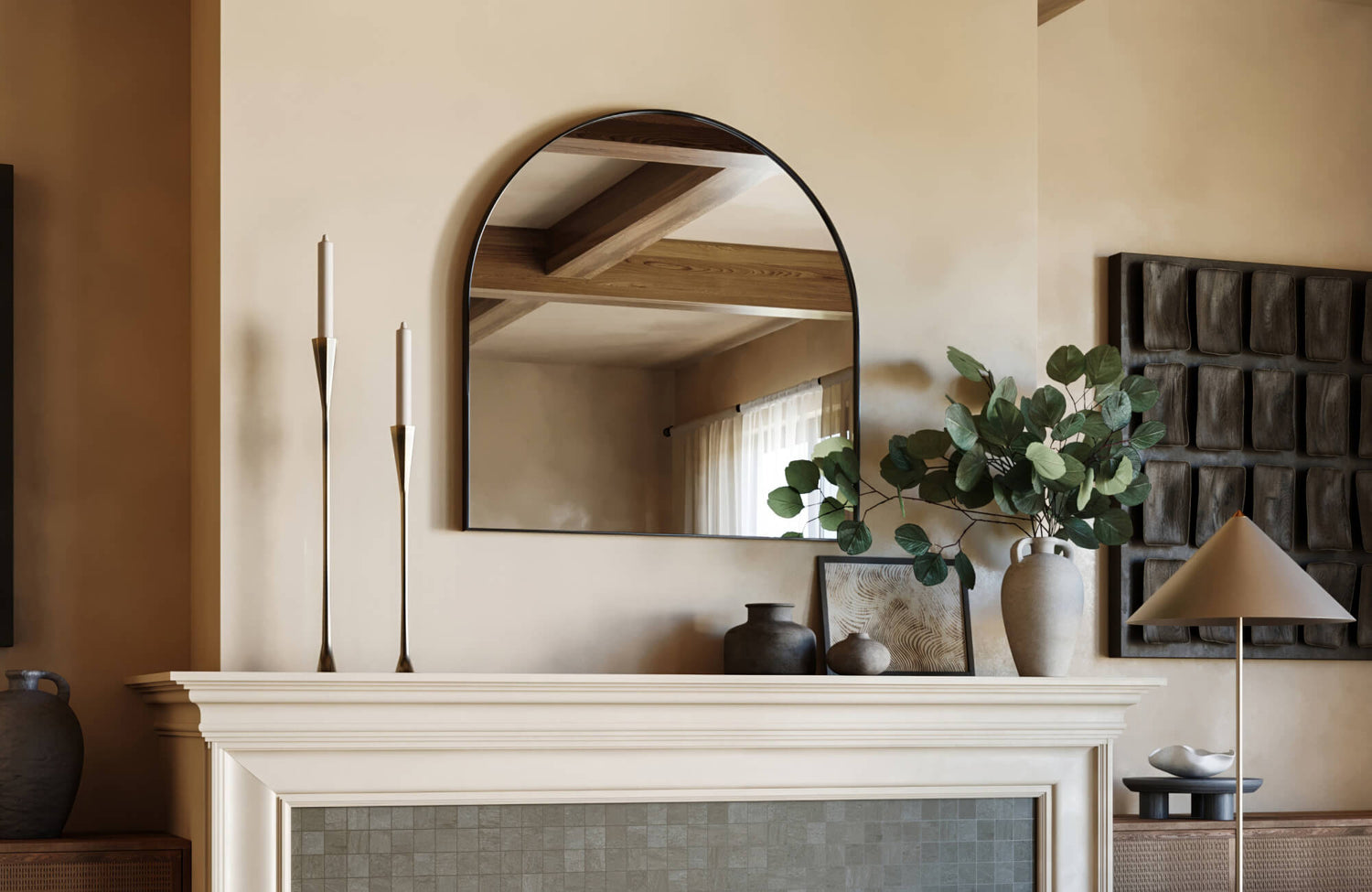
Even in rooms dominated by straight lines, a gracefully arched mirror can soften the geometry and add visual interest. Placing one above a fireplace, for example, balances formality with fluidity, especially when choosing a mirror like our Esmeralda Wide Mirror in Iron Matte Black, which blends classic curvature with a bold, contemporary frame. Whether positioned over a sideboard or anchoring a dining wall, it acts as both a sculptural statement and a light-enhancing tool, helping the room feel more open and grounded at once.

Design Versatility Across Styles and Materials
Another reason for their staying power is their adaptability. Arched mirrors are chameleonic, seamlessly blending into a wide array of styles depending on their frame and finish.
Minimalist to Maximalist Ready
Whether your home leans toward simplicity or richness, there’s an arched mirror to match. A slender black metal frame suits modern, industrial, or Scandinavian aesthetics, offering graphic impact without visual weight. Our Esmeralda Small Mirror in Iron Matte Black is a perfect example. Its clean silhouette and matte finish blend seamlessly into minimalist spaces while still offering architectural presence. For those with more layered or eclectic tastes, ornate gold or carved wood frames also provide texture and decorative richness. This adaptability ensures that the same basic shape can embody entirely different moods depending on the context.
Wood, Metal, and Mixed Finishes
The material of an arched mirror's frame greatly influences its mood and compatibility with a room’s decor. Natural wood like oak adds warmth and an organic feel, perfect for Scandinavian or rustic styles. Brass or antique gold metal frames bring a sense of vintage luxury, while matte black or brushed nickel work well in sleek, modern settings. Some designs feature mixed materials, like metal paired with rattan or leather, for added texture. This range of finishes also allows for thoughtful coordination with furniture and hardware.
Matching or Contrasting the Frame
Choosing whether to match or contrast the mirror’s frame with other finishes adds control over its visual impact. Matching finishes, such as door hardware or fixtures, create a cohesive, understated look. In contrast, a bold frame, like black against a white wall, can add graphic strength and dimension. A notable illustration of this approach is the Everdale Small Mirror in Gunmetal, as shown in the photo above, which introduces contrast with subtle elegance and becomes a sleek focal point without overwhelming the space. Both strategies allow the mirror to either blend in seamlessly or serve as a defining accent in the room’s overall design.

Functionality Meets Aesthetics
Arched mirrors are more than decorative—they enhance how a room feels and functions. From reflecting light to expanding visual space, they serve important practical purposes.
Light Amplification and Space Expansion
Strategically placed mirrors brighten interiors by reflecting light. Arched versions, due to their shape, add elegance to this function. Whether catching daylight from a window or spreading lamp light deeper into a room, they improve brightness. Additionally, their reflections can make tight or dimly lit rooms feel more open and airy, especially valuable in smaller apartments or older homes with limited windows.
Visual Height and Vertical Emphasis
The distinct upward curve of an arched mirror inherently draws the eye, subtly guiding it towards the ceiling. In spaces with lower ceilings, this subtle design cue makes spaces feel taller and less confined. Without any structural modifications, an arched mirror introduces a sense of architectural lift and spaciousness.
Multipurpose Use in Open Floor Plans
In homes with open layouts, large arched mirrors play a multifunctional role. They can visually divide different areas, such as distinguishing a dining zone from a living area, without blocking light or flow. This makes them excellent alternatives to partitions or walls. Their reflective surface also maintains connectivity between zones, supporting both openness and subtle definition.

Why Arched Mirrors Stay Relevant in Design Trends
The ongoing popularity of arched mirrors is supported by broader interior design movements that show no sign of fading. Their form aligns with macro trends focused on softness, nature, and longevity.
Return of Organic and Natural Forms
A major influence behind the appeal of arched mirrors is the growing shift toward organic, nature-inspired forms in design. As interiors move away from rigid, angular aesthetics, curved shapes offer visual relief and a sense of calm. Biophilic design principles, which prioritize natural elements and flow, often incorporate arched features. In this context, arched mirrors contribute not only to visual softness but also to a more serene and nurturing environment.
Instagram and Pinterest Influencer Culture
Arched mirrors have gained traction thanks to their strong presence on platforms like Instagram and Pinterest. Their graceful silhouette makes them a favorite in influencer homes and professionally styled spaces, where their visual impact is instantly recognizable. Repeated exposure through curated content helps reinforce their appeal, keeping them top-of-mind for design-savvy audiences and those embarking on home updates.
Neutral Yet Sculptural Design Elements
Another reason these mirrors remain relevant is their rare ability to combine subtlety with style. Unlike bold statement pieces, arched mirrors enhance a space without overwhelming it. Their neutral function as reflectors, paired with a sculptural shape, also offers lasting flexibility. As homeowners update decor over time, the mirror continues to complement new furnishings, color palettes, and layouts, making it a reliable, timeless feature in long-term design planning.

When Arched Mirrors Might Not Be the Best Fit
Despite their many strengths, arched mirrors may not suit every interior. Certain design languages and spatial conditions can make their use less effective.
Conflict with Strong Angular Designs
In interior spaces defined by strict geometry and linearity, such as some mid-century modern or minimalist industrial spaces, the softness of an arch might feel inconsistent. If your design is based on symmetry, right angles, and a restrained material palette, a rounded mirror may disrupt visual rhythm. In these cases, a rectangular or square mirror may better maintain the design’s integrity.
Scale and Proportion Concerns
The impact of a mirror depends heavily on its size in relation to the room. A small arched mirror can be underwhelming in a large space, while an oversized one might overwhelm a small nook. Always consider ceiling height, wall width, and surrounding furnishings. Choosing the correct scale also ensures the mirror enhances rather than distracts.
Arched Mirrors: A Timeless Design Statement
The resurgence of arched framed mirrors is not just another trend cycle—it reflects their intrinsic value as design elements. With historical roots, aesthetic adaptability, and practical benefits, these mirrors bridge classic elegance with modern sensibility. Their ability to soften lines, reflect light, and create architectural interest also ensures their place in thoughtful home design. For anyone seeking a piece that combines beauty, utility, and timeless appeal, the arched mirror remains a compelling and lasting choice.
If you're considering adding one to your space and need guidance on size, style, or placement, feel free to contact us for personalized recommendations and expert support. We're here to help you find the perfect fit for your home!