
)
)
)
)
)
)
)
)
Why Porcelain Tile Is The Best Choice For Swimming Pools
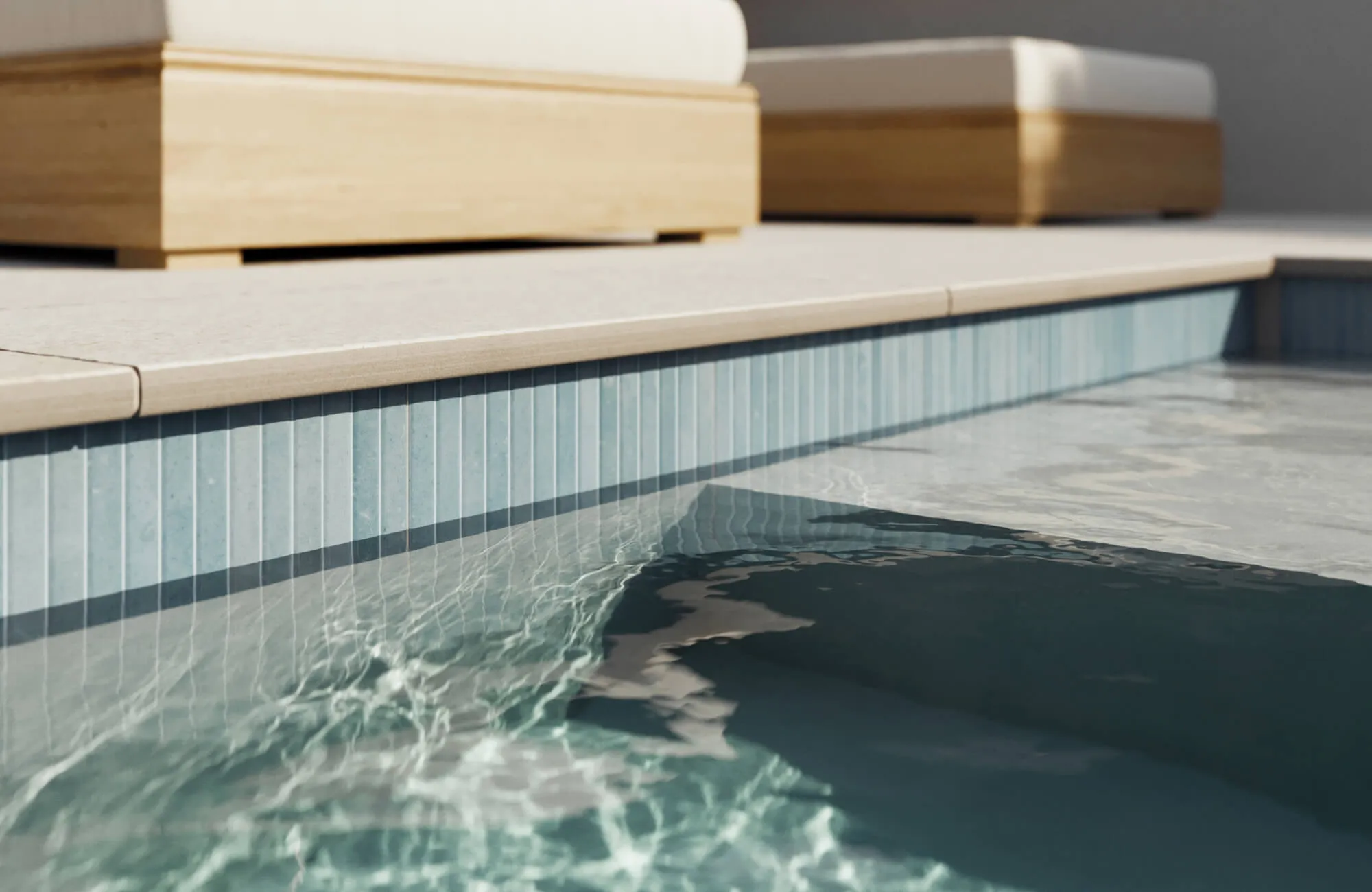
Selecting the perfect tile for a swimming pool is more than a technical decision—it is a design statement that defines elegance, durability, and functionality in equal measure. Whether creating a serene backyard oasis or a refined commercial aquatic center, the choice of tile influences every aspect of the pool’s longevity, safety, and aesthetic harmony.
Among the many materials available, premium porcelain tile for swimming pools stands out as the ideal solution, offering exceptional water resistance, slip-rated finishes, and enduring beauty under even the most demanding conditions. Porcelain tile is not only ideal for the interior of swimming pools but also for pool decks, coping, and other surrounding features, ensuring a cohesive, high-performance aesthetic throughout the entire poolscape. In the sections that follow, we’ll explore the key attributes that make porcelain tile the superior choice for sophisticated, high-performance swimming pool installations.
Water Absorption and Structural Integrity of Porcelain Tile
Porcelain tile’s exceptionally dense structure and near-zero porosity make it a highly dependable choice for continuous water exposure, preserving both the surface integrity and the substrate beneath. These characteristics offer consistent performance under demanding conditions, especially in fully submerged and waterline applications.
Vitrification and Impermeability
Through a specialized manufacturing process called vitrification, porcelain tiles are fired at extremely high temperatures to create a dense, glass-like internal matrix. This results in an absorption rate of less than 0.5%, classifying the tile as “impervious” under ANSI A137.1 standards, ideal for pools.
The low porosity also prevents water infiltration, which in turn reduces the risk of internal damage like swelling, efflorescence, or microbial growth. Unlike traditional ceramic or porous stone, porcelain retains its form and structure even after years of water exposure. This makes it a top performer in both indoor and outdoor pool environments.
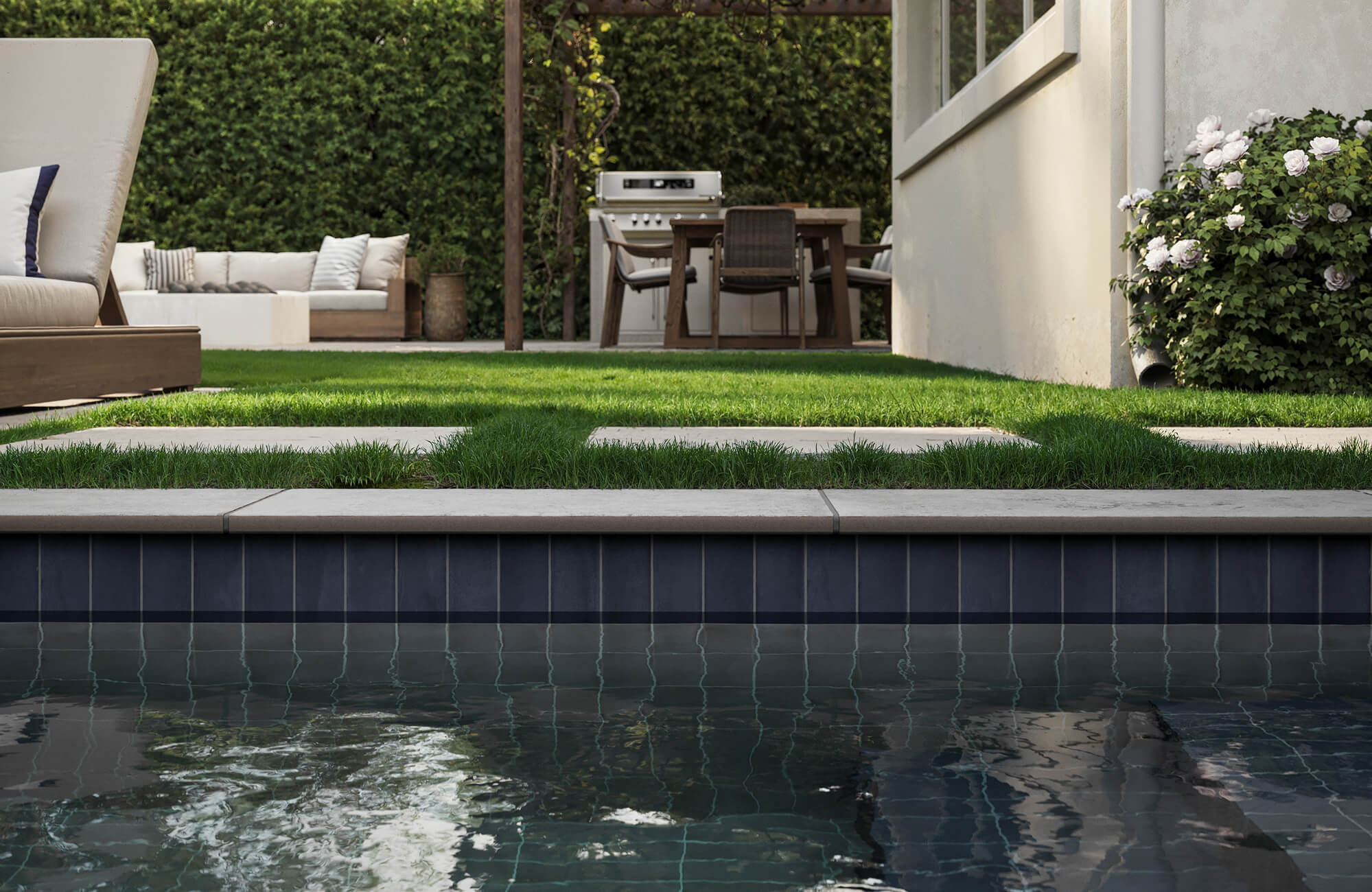
A beautiful example of this performance meets design is Edward Martin’s Natasha 2x6 Glossy Porcelain Tile in Denim, as displayed in the picture above. It offers a richly glazed, water-impervious surface that pairs sophisticated color with technical resilience, making it an excellent choice for stylish waterline or feature wall applications. The long-term benefits of porcelain tile for waterline and in-pool use also include structural security and reduced maintenance requirements.
Freeze-Thaw Cycle Resistance
In regions that experience temperature fluctuations, moisture that seeps into materials can freeze, expand, and cause cracking or surface failure. Porcelain tile resists this cycle due to its impervious body, preventing moisture from ever penetrating deep enough to cause freeze-related damage. Its structural stability remains intact through repeated thermal changes, offering peace of mind in colder climates.
As a result, porcelain is frequently specified in high-end outdoor pools where seasonal durability is a concern. This makes it especially suited for mountain homes, resort spas, and open-air aquatic facilities. Freeze-resistant porcelain pool tiles significantly reduce the risk of climate-related tile failure.
Bond Strength and Mortar Compatibility
Because of its dense body and smooth calibration, porcelain tile forms a strong mechanical bond when installed using high-performance polymer-modified thin-set mortars. This compatibility is particularly important for vertical pool applications, such as waterline borders and interior walls, where a reliable hold is critical.
When paired with ANSI A118.15 mortars and proper surface preparation, porcelain achieves superior adhesion compared to more porous materials. It also reduces the risk of tile delamination caused by water pressure or thermal expansion. By using strong-bond porcelain tiles for swimming pools, you can ensure the integrity of complex or high-stress installations while also enhancing the overall reliability and longevity of the finished poolscape.
Slip Resistance and Safety Standards in Pool Tile Selection
In aquatic environments, the balance between design appeal and user safety is non-negotiable. Porcelain tile offers specialized surface finishes and textures that meet industry safety standards without sacrificing the overall aesthetic harmony of a pool design.
COF Ratings and DIN R-Class Standards
The safety performance of porcelain tile is measured using standardized slip-resistance ratings, such as the Coefficient of Friction (COF) and the German DIN 51130 R-value system. Many porcelain pool tiles are engineered to meet or exceed a wet COF of 0.60, aligning with both ADA recommendations and ASTM standards. For outdoor pool decks, entries, and splash zones, tiles with an R11 or R12 rating are preferred, offering excellent traction even when wet.
These specifications not only help reduce the risk of slips and falls but also ensure regulatory compliance across both private and public pool projects. As a result, specifiers value the consistency and reliability these test-based metrics provide. By choosing non-slip porcelain tile for swimming pools, designers can create environments that elevate safety and comfort without sacrificing aesthetic appeal.
Textured Finishes for Traction
Manufacturers of porcelain tile offer a variety of surface textures designed specifically to increase slip resistance under wet conditions. Options such as structured matte finishes, micro-abrasive glazes, and slip-rated coatings all enhance friction while maintaining a high-end visual look.
These finishes are ideal for walkways, tanning ledges, and zero-entry pool areas where bare feet meet water and tile. Beyond their safety benefits, textured surfaces often contribute to the overall aesthetic by adding depth and material contrast. Their long-term durability also means the slip resistance remains effective even after years of use.
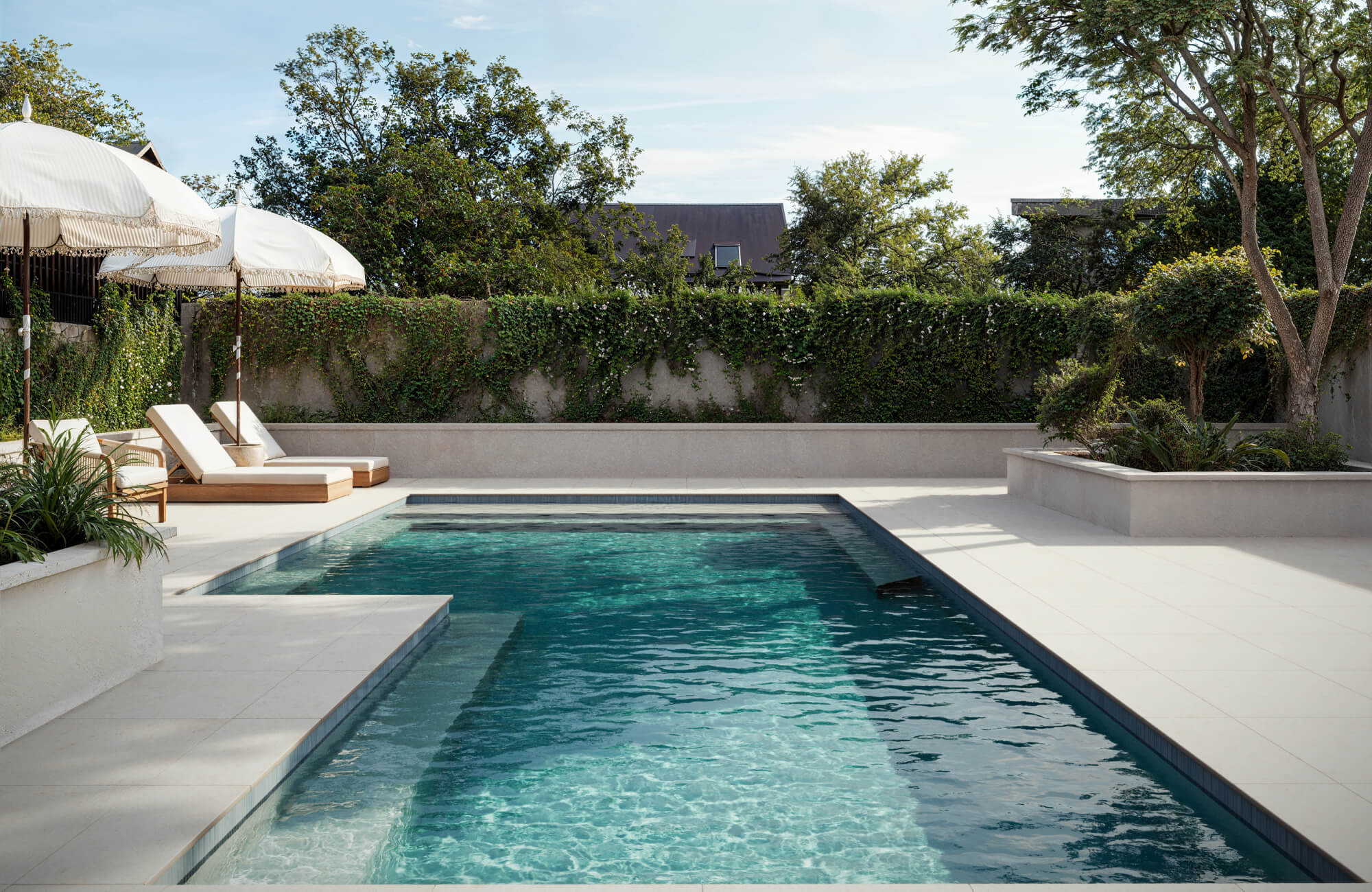
A prime example of this synergy between safety and style is the Bowden 24x24 Grip Porcelain 2cm Paver in Canvas, as shown in the pool deck photo above. It offers a subtle texture and refined tone that enhances traction around pool decks while maintaining a cohesive, contemporary design. Incorporating textured porcelain tiles for pool decks elevates both design quality and functional performance.
Specialized Safety Tile Profiles
To support advanced safety needs, porcelain tile is available in pre-formed profiles such as bullnose edges, rounded step markers, and tactile indicators. These components are especially useful in busy commercial pools or ADA-accessible designs, where both visual and tactile cues are essential for user safety. Designed with functionality and comfort in mind, features like rounded edges also help prevent injury and create smooth transitions between surfaces, while tactile strips enhance navigation for visually impaired individuals.
These specialty pieces integrate seamlessly with the rest of the pool finish, maintaining a cohesive design throughout the space. Their availability helps simplify code compliance for public aquatic facilities, making them a practical choice for homeowners, designers, and builders. By selecting porcelain coping and safety-edge tiles, project teams can confidently meet safety requirements without compromising the visual continuity of the overall pool design.
Thermal Performance and Environmental Resistance
Outdoor pools are subject to intense environmental stress, including UV radiation, thermal expansion, and chemical exposure. Porcelain tile is engineered to withstand these forces while preserving its structural and visual characteristics over time.
UV and Fade Resistance
One of the most sought-after qualities in outdoor pool tile is color retention, especially in full-sun locations. Porcelain tiles are manufactured using UV-resistant pigments, often applied through advanced digital printing and fused during firing for permanent results. This also ensures the surface maintains its original color intensity, even after prolonged exposure to sunlight. Unlike natural stone or polymer surfaces, porcelain does not yellow, bleach, or fade over time. This allows you to specify bold or subtle hues without concern for visual degradation.
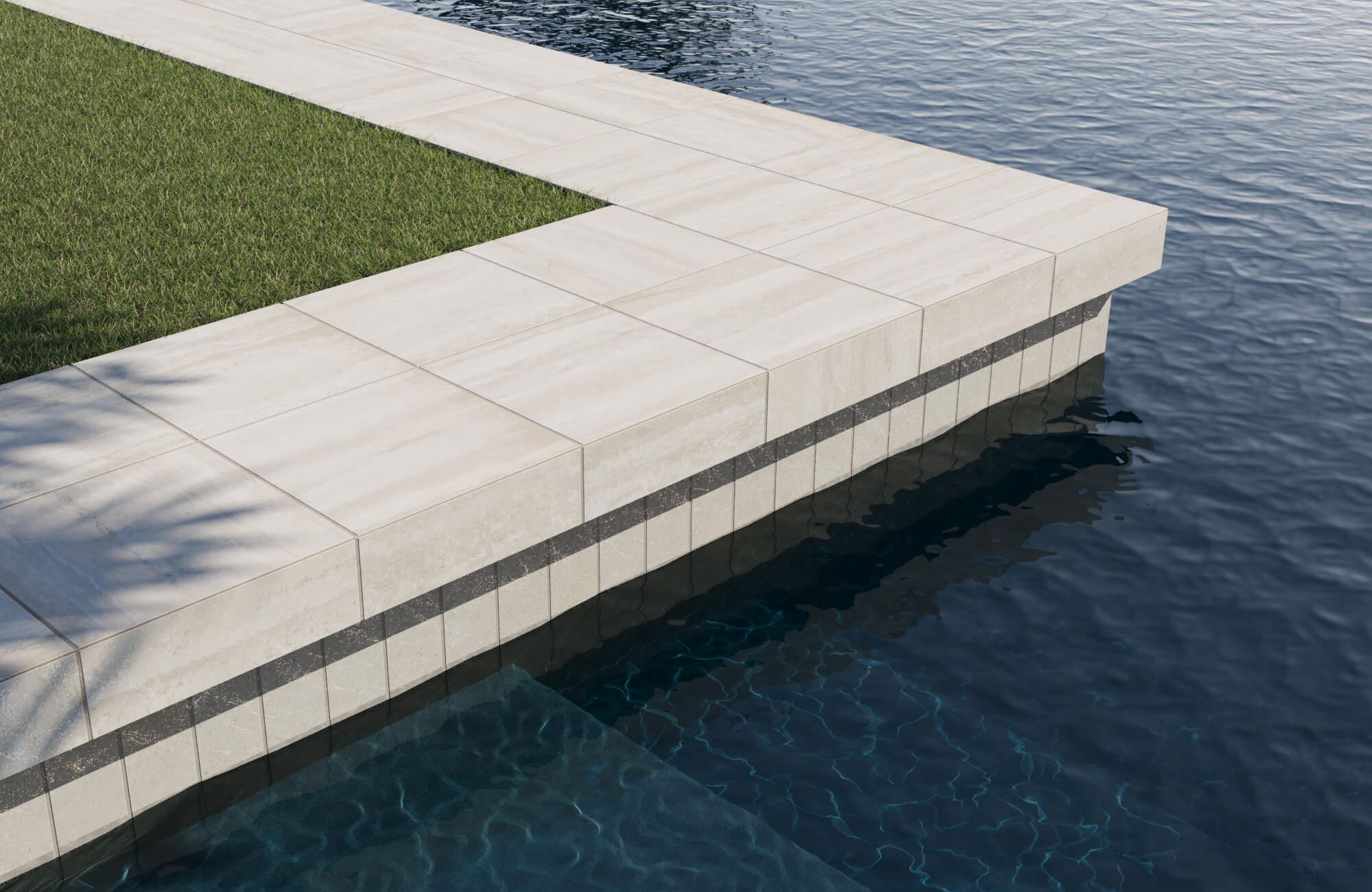
A standout example, as featured in the picture above, is our Wren 24x48 Grip Porcelain 2cm Paver Tile in Oat, used here for both the coping and deck surface. It delivers a warm, sun-washed tone designed to withstand direct UV exposure while providing consistent color and surface integrity in open-air pool environments. Relying on UV-resistant porcelain tiles for swimming pools also ensures lasting aesthetic value.
Thermal Expansion Resistance
Temperature changes cause materials to expand and contract, which can lead to warping or cracking over time. Porcelain tile, however, exhibits a low coefficient of thermal expansion, allowing it to remain stable even under intense sun and fluctuating temperatures. This quality becomes especially critical in regions with hot summers and cool nights or in pools that are regularly heated.
To further enhance this stability, proper installation techniques, such as incorporating expansion joints and using flexible grout, play a key role in supporting long-term dimensional performance. As a result, the finished surface maintains its integrity season after season, without compromising appearance or function. By investing in thermal-stable porcelain tile for outdoor pools, designers and owners ensure lasting surface resilience in the face of environmental stress.
Saltwater and Chemical Tolerance
Modern pools often use saline chlorination systems or aggressive chemical treatments to maintain water hygiene. In these environments, porcelain tile proves especially advantageous, as it is naturally inert and highly resistant to chemical etching, corrosion, and surface breakdown.
Additionally, its glazed surface acts as a protective barrier, effectively repelling salts, acids, and common pool sanitizers. Unlike some natural stones or metals, porcelain won’t discolor or degrade when exposed to chlorine or saline solutions, even over time. This durability not only preserves the visual quality of the pool but also reduces the need for frequent surface repairs or intensive cleaning. By choosing chemical-resistant porcelain pool tiles, designers and pool owners can ensure lasting appearance and performance in even the most demanding water conditions.
Design Customization and Aesthetic Versatility
In addition to its technical advantages, porcelain tile supports a wide range of creative expressions, offering unmatched flexibility in color, size, texture, and layout. You can align aesthetic goals with performance requirements to craft visually stunning and cohesive pool environments.
Realistic Stone and Wood Replication
Thanks to high-resolution digital printing technology, porcelain tiles can replicate the look of natural stone, exotic wood, or poured concrete with striking realism. These printed finishes are fused into the tile’s surface during firing, ensuring they resist wear and UV fading. You can now incorporate textures like teak wood or travertine stone without the maintenance burdens those materials traditionally carry. This allows for organic, spa-like aesthetics in humid, high-use environments. Clients can also enjoy luxury finishes without compromising on performance or longevity. By specifying wood look and stone look porcelain tile for pools, you achieve an elevated, sophisticated appearance without the hassle of ongoing upkeep.
Mosaic Formats for Curved Surfaces
Porcelain mosaic tiles are ideal for detailed and curved surfaces within pools, including spas, benches, radius corners, and fountains. These mosaics are mounted on mesh sheets, which not only make them easier to install but also allow for subtle movement and contouring during application. The small tile size ensures thorough coverage and enables smooth transitions across undulating or irregular surfaces.
In addition to their functional advantages, mosaics support a wide range of creative expressions, including custom patterns, color gradients, and branded design elements. This combination of flexibility and precise coverage makes them a top choice for achieving premium aquatic aesthetics. By using porcelain mosaic tiles for pool interiors, you can ensure both form-fitting durability and visual distinction in complex geometries.
Large-Format and Seamless Designs
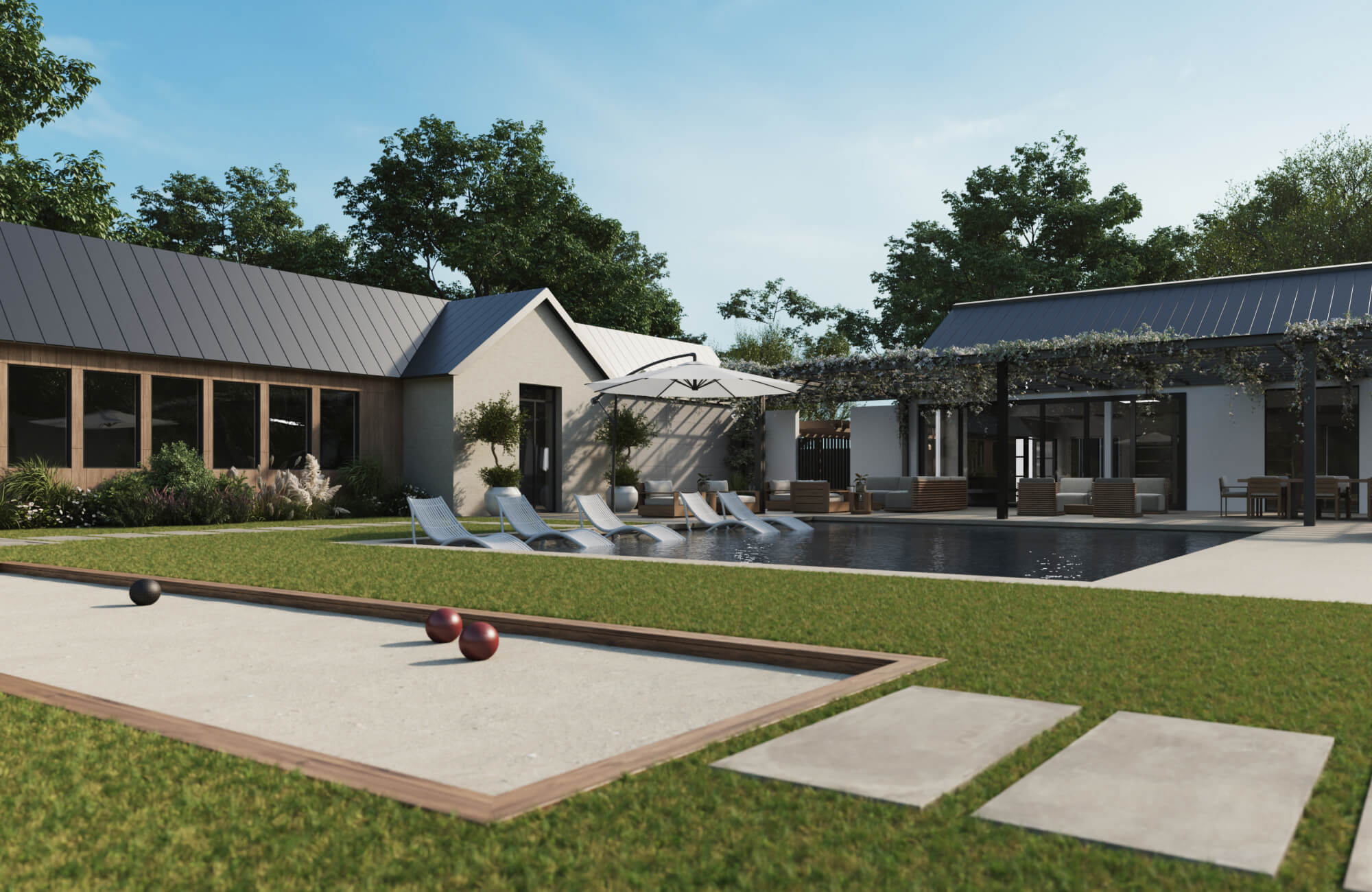
The rise of large-format porcelain tiles has enabled seamless pool designs with fewer grout lines and a more expansive visual feel. These tiles are ideal for infinity edges, decks, or submerged benches where clean lines and minimalist aesthetics are desired. Their size also reduces grout maintenance while creating a bold, uninterrupted surface look. Modern architecture and resort-style pools benefit from these oversized formats, which align with contemporary design trends. Installers appreciate the reduction in labor and time compared to small-format options. By selecting large-format porcelain pool tile, you can achieve sleek, cohesive surfaces that significantly amplify the impact of the overall design.
Porcelain’s design versatility becomes even more powerful when paired with innovative visualization tools. With Edward Martin’s Augmented Reality (AR) tool, you can preview how specific tiles, like mosaics or large-format pavers, will look in real pool settings before installation. This immersive feature also streamlines the selection process, ensuring every design choice aligns seamlessly with the project vision.
Maintenance, Longevity, and Cost-Efficiency
Beyond initial installation, porcelain tile offers long-term economic and practical advantages. Its resilience to stains, chemicals, and mechanical wear makes it one of the most cost-effective materials for pool surfacing over time. For optimal results, following the manufacturer's guidelines for installation and care helps maximize the tile’s performance and longevity.
Stain and Contaminant Resistance
Porcelain’s non-porous surface acts as a shield against oil, sunscreen, dirt, and organic debris, making it highly resistant to staining. Even under heavy use, the tile resists discoloration and biofilm buildup, reducing the need for frequent scrubbing or specialized cleaners. This level of resilience is especially beneficial in commercial pools or backyard installations with frequent activity. Because grime doesn’t penetrate the tile, light maintenance keeps surfaces looking new. This not only preserves aesthetic value but also simplifies facility management. Ultimately, installing stain-resistant porcelain tile for pools ensures lasting cleanliness and appearance.
Durability and Wear Resistance
Engineered for high-performance environments, porcelain tile stands up to heavy use, UV exposure, abrasion, and chemical contact. Thanks to its dense, hard surface, it resists scratching, cracking, and chipping far better than softer or untreated materials. Over time, even after years of exposure and activity, properly installed porcelain tile continues to maintain both its structural integrity and visual appeal.
This lasting resilience makes it an excellent choice for pool floors, steps, and surrounding decks—areas that demand both durability and design continuity. In addition, its ability to withstand wear significantly reduces the need for repairs or resurfacing. By choosing durable porcelain tile for high-use swimming pools, owners and operators can secure long-term operational reliability with minimal maintenance concerns.
Cost-Efficiency Over Lifecycle
While premium porcelain tile may require a higher initial investment than vinyl or basic ceramic, its durability and minimal maintenance needs provide significant cost savings over time. As a result, pool owners benefit from reduced replacement, repair, and cleaning expenses that add up over decades of use.
In addition, porcelain’s resistance to fading, cracking, and chemical damage means fewer interventions are needed to maintain surface quality, reducing both effort and expense. To reinforce this long-term value, many suppliers offer warranties ranging from 10 to 25 years, giving added peace of mind. Ultimately, opting for cost-effective porcelain tile for swimming pools ensures a smart return on investment, delivering lasting performance without compromise.
Elevate Every Pool Project with Porcelain Tile
Porcelain tile continues to define the gold standard for swimming pool surfaces, uniting timeless aesthetics with unmatched technical performance. Its low water absorption, slip-resistant textures, and superior durability make it the most trusted material for both residential retreats and busy aquatic facilities. From waterlines to expansive pool decks, porcelain pool tile offers design flexibility without compromising resilience or safety. Its ability to withstand chemicals, UV exposure, and climate extremes also ensures enduring beauty and structural integrity for years to come.
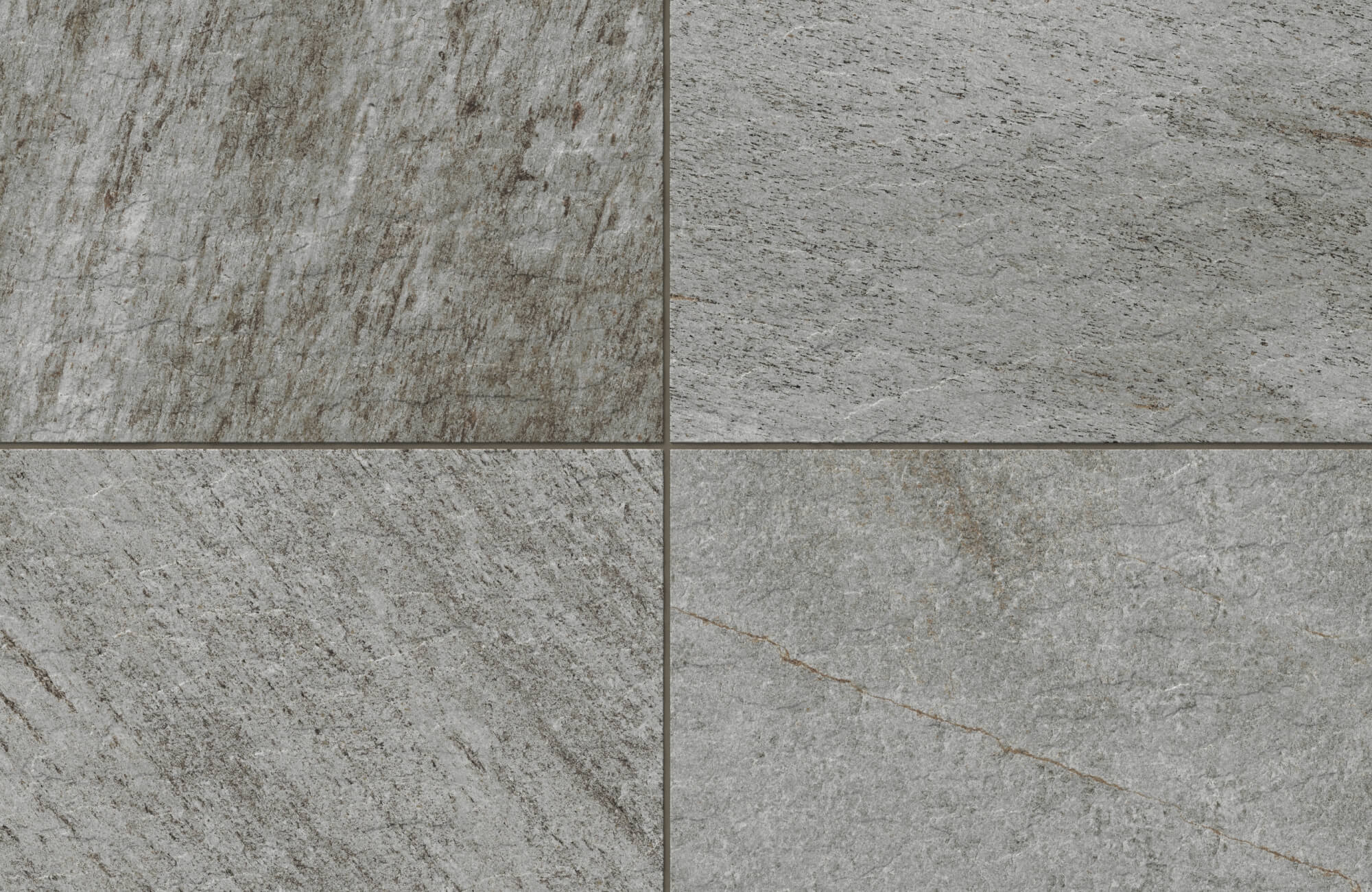
For added confidence in your selection, Edward Martin offers high-quality 4”x4” tile samples for $2 to help you experience the color, finish, and quality in person before finalizing your design. Ordering samples is a convenient way to make informed choices and bring your pool vision to life with clarity and precision.
Follow us on Instagram
@EDWARD.MARTIN
)
)
)
)
)
)
)
)
)
)
)
)
)
)
)
)